APPLIED MICROBIOLOGY
Present Status of Applied Microbiology in India
Anuradha S. Nerurkar
Department of Microbiology and Biotechnology Centre Faculty of Science
The Maharaja Sayajirao University of Baroda Vadodara, Gujarat. - 390 002.
E-mail: [email protected] 13-Apr-2006 (Revised 03-Apr-2007)
CONTENTS Introduction
Wastewater Microbiology Self purification
Characterization of sewage Conventional sewage treatment
Advances in wastewater treatment plants Low cost sewage treatment plants
Water Microbiology
Drinking water microbiology Waterborne diseases
Microbiological examination of water Water purification
Air Microbiology Airborne diseases
Fate and transport of microorganisms in air Microbiological analysis of air
Control of airborne microorganisms Food and Dairy Microbiology
Microorganisms in food
Beneficial effects of microorganism in food Detrimental effects of microorganisms on food Food preservation
Microbiological examination of food
Keywords
Wastewater microbiology; Sewage treatment; Drinking water microbiology; Waterborne diseases; Water purification; Airborne microorganisms; Airborne diseases; Microorganisms in food; Food preservation.
Introduction
In the 1970’s a new era of Microbiology emerged and developed into the field of Environmental Microbiology. It is closely related to Microbial Ecology, which is the study of the interaction of microorganisms within the environment. Primary difference between these two fields is that Environmental Microbiology is an applied field where the study of microorganisms in the environment leading to the benefit of the society is emphasized. It is a subset of Applied Microbiology and interfaces with water, wastewater, air, soil, food, industrial microbiology and others. Microbial Biotechnology encompasses the field which includes the manipulation of the microbes to increase their practical benefit wherein the principles of Applied Microbiology are applied. Improved water and wastewater treatment, clean environment strategies and role of microbes in food availability and quality are some of the significant achievements of Microbial Biotechnologists who are equipped with a detailed knowledge of environment and functioning of complex microbial community. This chapter discusses the present status of Applied Microbiology in India in the context of world scenario including Wastewater, Water, Air and Food & Dairy Microbiology. Some of the national institutions engaged in research in the field of Applied Microbiology are listed in Table 1.
Table1: Institutions in India involved in environment and food related research and development
S. No. Institution Area of Research & Development 1. National Environmental
Engineering Research Institute (NEERI ), Nagpur, Maharashtra.
Environmental Engineering and
Biotechnology that concerns wastewater, water and air
2. Centre for Environmental Science and Engineering (CESE), I.I.T., Mumbai, Maharashtra.
Addresses needs and challenges of major industrial sectors and international agencies
3. Central Food and Technological Research Institute (CFTRI), Mysore, Karnataka.
Food processing, conservation and development of related technology 4.
5.
Food Corporation of India (FCI) Defense Food Research
Laboratory (DFRL), Mysore, Karnataka.
Food security.
DFRL, an FCI laboratory is engaged in the field of food preservation, packaging and analysis
6. National Dairy Development Board
(NDDB), Anand, Gujarat. Promote dairy development. Operation flood is an integrated approach to strengthen dairy cooperative
7. National Dairy Research Institute (NDRI), Karnal, Haryana.
Provides inputs for development to the dairy industry.
Wastewater Microbiology
The new focus of environment as a whole has led to the development of new activities related to application of principles of water, wastewater and air microbiology which forms the scope of Environmental Biotechnology. This part addresses various aspects of wastewater treatment. Agricultural, industrial and everyday human activities produce liquid wastewater termed as industrial and domestic wastewater or sewage, respectively. The old practice was
to discharge the waste into the nearest water body. As the population increases, the discharged waste remains undegraded causing oxygen depletion thereby affecting the aquatic life. The practice of wastewater treatment started in middle of 19th century as the threat of waterborne diseases increased. Wastewater was suitably treated before dumping it in water body. Recently the focus of wastewater treatment has been pathogens and toxic substance removal for water recycling, since the water supplies are limited and there is a need to reuse the water. In India wastewater treatment plants are increasing in cities while the low cost technologies in rural areas.
Self Purification
The fate of the discharged waste is determined by the self purification potential of the receiving water body. Self purification is based on biogeochemical cycling activities and inter-population relationships of the indigenous (autochthonous) microbial populations.
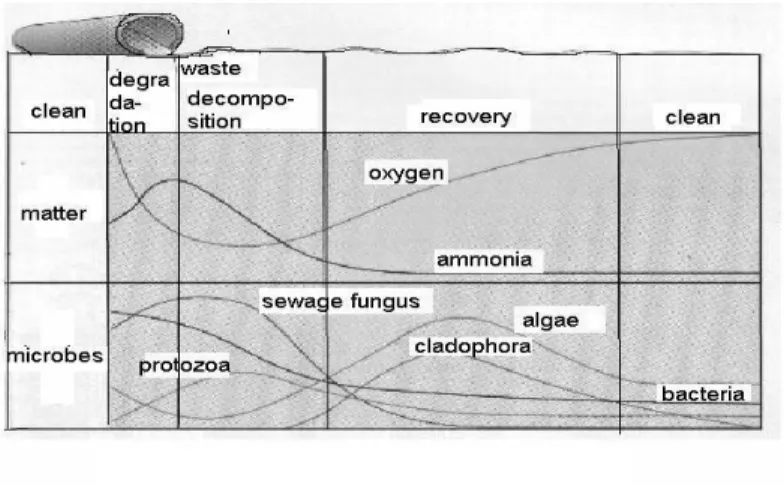
Organic nutrients are mineralized by the heterotrophic aquatic organisms. Ammonia is nitrified and inorganic nutrients are utilized by higher aquatic plants. Non-indigenous (alochthonous) population of enteric pathogens that enter through waste is eliminated by competition and predation of the autochthonous microorganisms. The wastewater may overwhelm the self purification capacity of the aquatic system causing pollution of receiving water. Depending on the climatic and environmental factors the water may attain an acceptable quality level in the stream, downstream from the sewage outfall. A well defined profile of pollution and self purification of the receiving water is obtained by a succession of changes in water quality that occurs on the downstream of the point source of pollution (Figure1). Self purification is a slow process and a heavily polluted stream may have to traverse quite a long distance for days to get purified. Whenever the wastewater is discharged, the suspended matter either settles at the bed near the point of discharge or gets carried away.
Figure 1: Sewage outfall and self purification
The organic matter is utilized by the aerobic microorganisms reducing the dissolved oxygen.
As the organic matter is depleted, the number of microorganisms is also reduced. The reaeration rate of the atmosphere catches up. The water becomes clear and the stream returns to the original condition and the self purification is accomplished. The biochemical oxygen demand (BOD) and the dissolved oxygen (DO) of the receiving waters are parameters that give good measure of pollution that exists in the receiving stream.
Characterization of Sewage
Domestic wastewater or sewage contains human waste like feaces, urine, and gray water.
Gray water results from washing, bathing and meal preparations. Agricultural run-off water and waste from nearby industries may also enter the system. The important physical characteristic of the wastewater is its total solids content. It includes floating, suspended, colloidal and dissolved solids. Total solids are those that remain as residue upon evaporation at 105°C. The Total solids include suspended and filterable solids (about 1 µ size).
Settlable suspended solids are the ones that settle in Imhoff cone in 60 min., while the remaining are non-settlable solids. Colloidal filterable solids impart turbidity to the water, measurement of which gives an idea about the wastewater quality. Dissolved filterable solids cannot be removed by conventional treatment and requires special treatment. Solids are called volatile solids if they are volatile at 600°C. Minerals are non-volatile solids that form ash when heated at 600°C. Depending on the amount of total suspended solids the sewage can be categorized as high strength (>500 ppm ), medium strength (200-500 ppm) and weak (< 200 ppm). The odor in sewage usually is due to presence of amines, hydrogen sulfide, ammonia, mercaptans, skatole, organic sulfide etc. The color of fresh sewage is usually gray.
After the organics are broken down the dissolved oxygen is depleted and the color changes to black. The chemical nature of a typical municipal sewage is primarily due to proteins, carbohydrates and fats. Surfactants, detergents, phenols, pesticides etc. form the minor components. Roughly the composition of the sewage can be represented in terms of its contents (Table 2).
Table 2: Composition of average sewage
S. No. Component mg/L Component mg/L Component mg/L
1. Total solids 700 TOC 200 NO3-N 0-1
2. Dissolved solids 500 COD 400 Total P 10 3. Settled solids 300 Total N 40 Organic P 3 4. Suspended solids 200 Organic N 15 Inorganic P 7
5. BOD 300 NH3-N 25 Grease 100
The need for characterization of sewage arises in order to evaluate its capacity to cause pollution, decide correct type and size of the treatment plants, monitor the efficiency of the plant, and prevent the pollution of the receiving water. It helps to establish an effective and economical waste management system. The components of wastewater are defined under broad categories of organic, inorganic and microbial content since exact chemical composition cannot be determined. Each category requires specialized treatment to render it harmless. To determine the organic content of the wastewater Biochemical oxygen demand (BOD), Chemical oxygen demand (COD), Permangnate value (PV), Total oxygen demand (TOD), Total organic carbon (TOC) and Theoretical oxygen demand (ThOD) tests are used.
BOD or Biochemical oxygen demand is widely used method that exploits the ability of the microorganisms to oxidize organic matter to CO2 and H2O. The indigenous microorganisms in the wastewater are used and DO is measured initially and after a period of five days at 20°C (BOD5). The microorganisms starve after the organics are depleted and are forced to use cellular carbon. This is called endogenous respiration. The less oxidizable organics are utilized over a period of 28 days. This oxygen demand exerted over a period of 28 days is called ultimate BOD (BODu). The nitrogenous organic waste exerts oxygen demand between
5 and 12 days. This is the result of autotrophic nitrification by nitrifiers called nitrogenous oxygen demand or NOD (Figure2). Inhibitors like 1-allyl-2-thiourea (ATU), 2-chloro-6 (trichloromethyl) pyridine or nitrapyrin suppress NOD. Addition of H2SO4 followed by neutralization with NaOH or pasteurization of seed also acheives this. Algae which releases O2 evolution as a result of photosynthesis may interfere with BOD. Incubation in the dark solves this problem. BOD is a bioassay giving an idea about only biodegradable organics.
COD or Chemical oxygen demand measures the amount of oxidizing agent such as dichromate that is utilized to completely oxidize the wastewater to CO2 and H2O in presence of concentrated H2SO4 at 100°C temperature. The unutilized dichromate is titrated with ferrous sulfate using ferroin (1, 10-phenanthroline) indicator. Even in this strong oxidizing environment certain aromatic compounds e.g. toluene, benzene and ammonia are not oxidized. The biodegradable as well as some of the non-biodegradable organics also exert oxygen demand in COD. PV or Permanganate value represents organic material that is chemically oxidized by permanganate in presence of dilute sulfuric acid for 10 min at boiling temperature. Upon oxidation bright pink of permanganate changes to colorless liquid serving as a visual guide. The remaining permanganate is titrated against ammonium oxalate. This procedure is simple and ideal for field testing. TOD or Total oxygen demand is exerted by organic substances and minor amount of inorganic ones and measures the oxygen that is used up in a platinum combustion chamber at 900°C. In TOC or Total organic carbon measurement the organic matter in the wastewater is oxidized at high temperature (900°C) to CO2 which is measured by potentiometric procedure. The biodegradable, non-biodegradable and refractory organics that are not oxidized in COD also exert oxygen demand here. This is fast and automated procedure giving good reproducibility. ThOD or theoretical oxygen demand refers to calculated oxygen demand when the appropriate chemical formulae of the contents of the waste is known. A linear relationship exists in these assay values in the order, PV < BOD < COD < TOD <TOC< ThOD. The inorganic matter of the sewage includes chlorides, alkalinity, nitrogen, phosphorus, sulfur, heavy metals, gases etc. Pathogens and nonpathogens belonging to different groups like bacteria, viruses, protozoa, worms etc. are also present in the sewage. The industry personnel use a thumb rule to assess the amenability of a wastewater to biotreatment. Accordingly the ratio if BOD/COD > 0.6 it is easily biodegradable, between 0.3 – 0.6 means degradable by adapted seed or inoculum, < 0.3 indicates non-amenablility to biotreatment. Generally the character of sewage is constant and hence it can be treated by conventional scheme. This is not the case with Industrial wastewater as it has varying character. The studies regarding the treatability of the wastewater are needed to design a treatment scheme for it.
Conventional Sewage Treatment
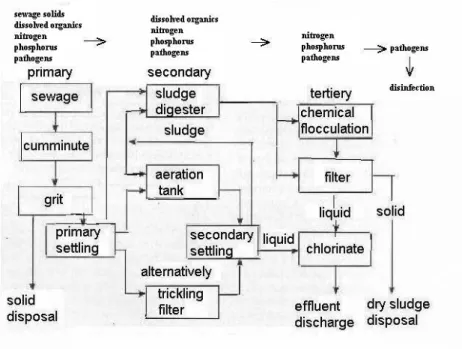
The conventional method of sewage treatment attempts to maintain acceptable BOD before it is discharged into the water body. A combination of physical unit operations and chemical and biological processes are used. In this, the forces that favor self purification are purposefully intensified to get the desired treatment in short time and space. Major steps in the conventional sewage treatment are primary, secondary and tertiary or advanced treatment (Figure 3). Primary treatment is a physical operation that separates large debris followed by sedimentation to settle big suspended solids. 20-30% BOD that is present in the particulate form is removed. Raw sewage passes through a metal grating that removes large debris such as branches, tyres etc. A moving screen filters small items like bottles etc., after which a grit tank is provided where the sewage is kept for some time for sand and gravel to settle out. The waste then is pumped into primary settling or sedimentation tank. If dissolved solids are less, large chunk of BOD is removed with settled sludge in the sedimentation tank. Pathogens adsorbed to solids are removed. The effluent of primary treatment is called settled sewage.
Secondary treatment comprises the biological treatment in which remaining suspended and dissolved organic material along with about 90-95% BOD and pathogens are removed. The settled sewage is pumped into either trickling filter or activated sludge process for biological treatment.
Figure 2: Carbonaceous and nitrogenous BOD
Figure 3: Conventional sewage treatment
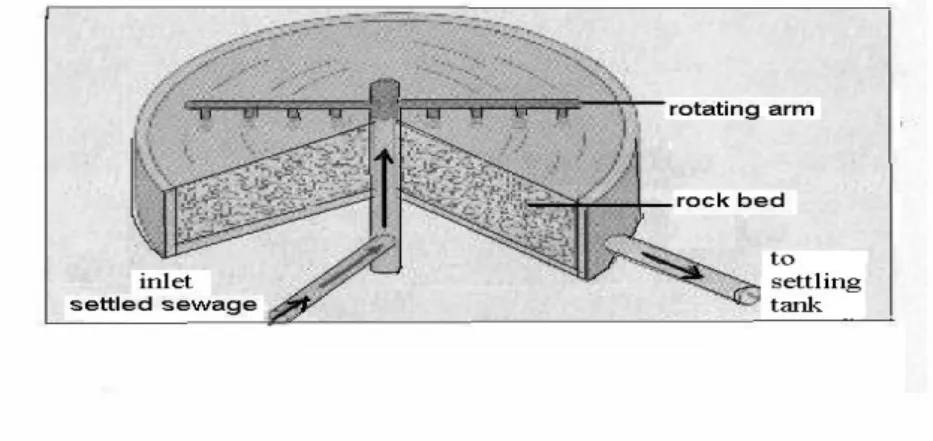
Trickling filter is a biological filter bed made of stones and is one of the oldest system. The sewage is sprinkled by means of an overhead sprayer which is rotating at a constant speed.
The stones are 30-100 mm in size and packed at the depth of 1.8 m. Life of trickling filter is 30-50 years. As the sewage trickles down microbial biomass increases which grows in a form of biofilm on the stones. This is called zoogleal film or schmuzedecke (German). It is composed of bacteria, fungi, algae and protozoa.
Top 0.5 m of the filter is the heterotrophic zone and bottom 1.5 m is the autotrophic zone.
Biofilm microorganisms oxidize the organics from the trickling sewage and its thickness
increases over time. Eventually the biofilm sloughs off and new one starts building. The trickling filter also harbour nematodes and rotifers and birds grazing on the worms. Rotifers are minute aquatic multicellular invertebrates. The commonly found bacterial species in trickling filter are Beggiatoa, Sphaerotilus natans, Achromobacter, Flavobacterium, Pseudomonas and Zooglea ( Figure 4).
Figure 4: Trickling filter
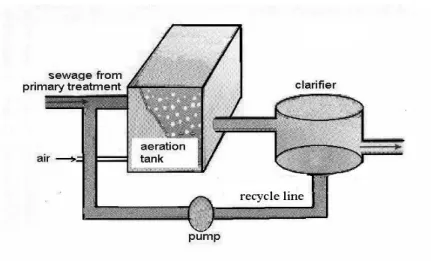
Activated sludge process consists of aeration tank, clarifier and the sludge recycle tank. It employs the microorganisms in suspended growth as opposed to attached growth in the trickling filter. The sewage from primary settling tank is introduced in the aeration tank equipped with aerators and mechanical stirring where digestion of organic matter of sewage occurs. The sludge recycle reintroduces the sludge from the previous batch of the process (Figure 5). This accelerates the development of microbial flocs teeming with actively growing bacteria and is called activated sludge. During the holding period for 4-8h, the heterogenous nature of organics in the sewage allows vigorous development of diverse population predominantly belonging to species of Escherichia, Enterobacter, Pseudomonas, Achromobacter, Flavobacterium, Zooglea, Micrococcus, Arthrobacter, cornyforms and mycobacteria. Filamentous fungi, yeasts and protozoa occur in low numbers.
Suspended bacterial population diminishes and the bacteria associated with flocs increase in number with time. A significant amount of dissolved organic substrate is mineralized by the flocs. The sludge or floc can be removed by settling in the secondary sedimentation tank or clarifier that follows. The settling character of the flocs is critical for their efficient removal.
Poor settling caused by bulking sludge is due to proliferation of filamentous bacteria like Sphaerotilus, Beggiatoa, Thiothrix and the filamentous fungi like Geotrichum, Cephalosporium, Cladosporium and Penicillium. The important parameters that control the operation of the activated sludge process are organic loading rates, oxygen supply and operation of the clarifier where thickening of the sludge is also accomplished. Sludge settlability is determined by sludge volume index (SVI). It is determined by measuring the sludge volume after it has settled for 30 mins. The SVI = Vx1000/MLSS where V is the volume of settled sludge after 30 min (ml/L). A mean cell residence time of 3-4 days in the clarifier is required for effective settling. Sudden changes in temperature, pH, absence of nutrients and presence of toxic metals and organics results in poor settling. A high SVI of 150 ml/g indicates bulking conditions. Low dissolved oxygen, F/M ratio, nutrients (N and P) and high sulfide, carbon : nitrogen ratio or carbon : phosphorus ratio cause filamentous bacteria to proliferate and therefore bulking. Chlorination or H2O2 treatment eliminate filamentous bacteria. A portion of the settled sludge from the clarifier is recycled while the rest is wasted
and is called wasted sludge. The pathogens are reduced due to the direct effect of competition, adsorption, predation and settling. Predation by ciliates like Vorticella, rotifers and Bdellovibrio bacteriovorus affects all bacteria. Pathogens tend to grow poorly in these conditions. Enteroviruses also are removed to certain degree. The content of the aeration tank is referred to as mixed liquid suspended solids (MLSS). The organic part of the MLSS is called MLVSS or mixed liquid volatile suspended solids, which includes non microbial organic matter as well as dead and living microbes. A proper F/M or Food to microorganisms ratio helps to exercise proper control over activated sludge process. F/M is expressed as (Q x BOD) / (MLSS x V) where Q is the flow rate of the sewage in million gallons per day (MGD) and V is the volume of the aeration tank (gallons). F/M ratio can be controlled by rate of wasting of sludge. For conventional processes F/M ratio is 0.2 – 0.5 lb BOD5/day/lb MLSS. A low F/M ratio means that the microorganisms are starved leading to increase in efficiency of wastewater treatment.
Figure 5: Activated sludge process
Tertiary treatment comprises of a series of additional steps after secondary treatment to further reduce organics, turbidity, nitrogen, phosphorus, metals and pathogen. Mostly some type of physicochemical or biological treatment such as coagulation, filtration, activated carbon, adsorption of organics, nutrient removal and disinfection is required. The tertiary treatment is done for additional protection of wildlife after discharge in rivers, lakes etc. or when the water is to be reused. Some of the tertiary treatment processes are given in Table 3.
Disinfection is always done before discarding the sludge. Chlorination, Ozonation, and UV disinfection are commonly used (their mechanism is discussed in part II Water Microbiology). They also react with other organic matter, NH3, Fe, Mn, S compounds and also reduce BOD, color, odor and oxidize cyanides. Ozone reacts with unsaturated organics of wastewater, also reduces foaming in addition to what chlorine does. Basically it opens the ring and brings about partial oxidation of aromatics. Thus the aromatics become more susceptible to conventional treatment.
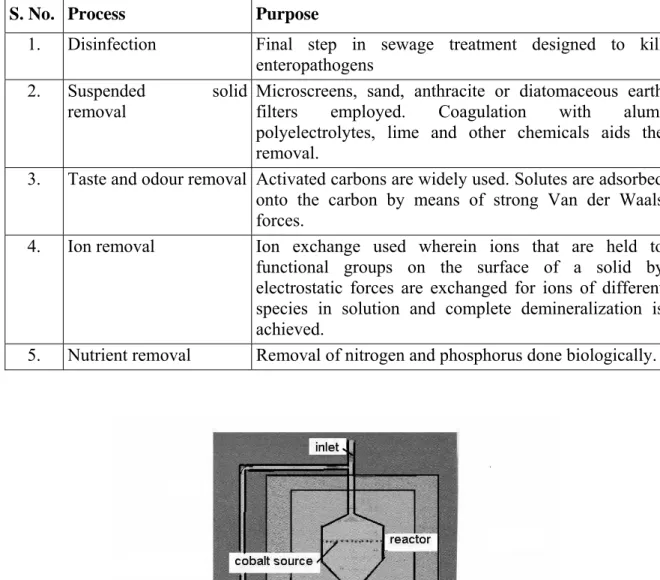
Gamma irradiation to hygeinise sludge uses radioisotopes in batch or continuous mode (Figure 6). Refractory organics (organics difficult to oxidize) and BOD can be removed by this process. In one such plant in Gujarat a moderate dose of gamma rays of 3-5 kGy (300- 500 krads) to kill the pathogens in the sludge is provided. The sludge is exposed for a predetermined time and dose of the source of radiation which is cobalt 60. The source and sludge reactor is housed in a concrete cell to prevent radiations leakage. The irradiation does not leave any residual radioactivity in the treated sludge and therefore is safe.
Table 3: Some Tertiary Treatment Processes
S. No. Process Purpose
1. Disinfection Final step in sewage treatment designed to kill enteropathogens
2. Suspended solid
removal
Microscreens, sand, anthracite or diatomaceous earth filters employed. Coagulation with alum, polyelectrolytes, lime and other chemicals aids the removal.
3. Taste and odour removal Activated carbons are widely used. Solutes are adsorbed onto the carbon by means of strong Van der Waals forces.
4. Ion removal Ion exchange used wherein ions that are held to functional groups on the surface of a solid by electrostatic forces are exchanged for ions of different species in solution and complete demineralization is achieved.
5. Nutrient removal Removal of nitrogen and phosphorus done biologically.
Figure 6: Gamma irradiator
Nutrient removal is achieved by chemical or biological methods. However, for nitrogen removal, biological methods are more cost effective. Activated sludge process is modified to encourage denitrification. Chemolithotrophic nitrifiers that convert ammonia to nitrate are slow growers and require a longer retention time in the aeration tank Anoxic conditions and exogenous carbon are provided in separate tank to encourage denitrification to nitrogen gas which is achieved by heterotrophic denitrifying bacteria. Phosphorus removal is also done similarly. Under anaerobic conditions, the microbes release stored phosphorus to generate energy. The energy liberated is used for the uptake of BOD from the wastewater. When aerobic conditions are restored microbes exhibit phosphorus uptake level above those
normally required to support cell maintenance, synthesis and transport reactions. It is stored as storage volutin or polyphosphate granules (storage of excess phosphate) in wasted sludge containing excess phosphorus.
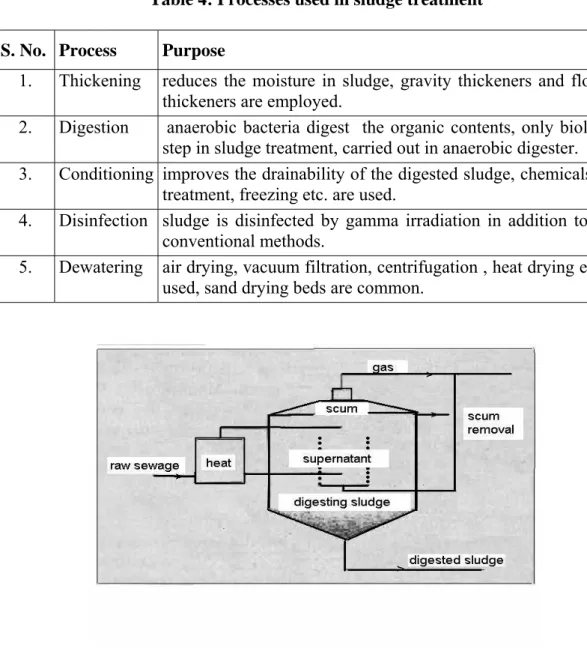
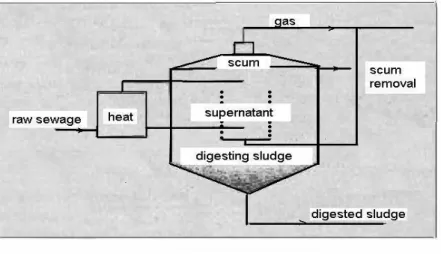
Sludge treatment is generally done anaerobically. The sludge drawn from primary settling tank or wasted sludge of secondary clarifier or trickling filter contains putrecible organics and 92-98% water and resists dewatering. A number of treatments including digestion are used to stabilize the sludge (Table 4). This not only reduces the sludge volume but produces a sludge that is odorless and ready to disperse. Sludge treatment includes all or a combination of processes. Sludge digestion is carried out in anaerobic digester where 50% of carbon over a period of 10-30 days is degraded (Figure 7). Methane is the byproduct. This just simplifies the sludge organics and does not completely degrade them. Resultant stabilized sludge is a good fertilizer and is sold so.
Table 4: Processes used in sludge treatment
S. No. Process Purpose
1. Thickening reduces the moisture in sludge, gravity thickeners and flotation thickeners are employed.
2. Digestion anaerobic bacteria digest the organic contents, only biological step in sludge treatment, carried out in anaerobic digester.
3. Conditioning improves the drainability of the digested sludge, chemicals, heat treatment, freezing etc. are used.
4. Disinfection sludge is disinfected by gamma irradiation in addition to other conventional methods.
5. Dewatering air drying, vacuum filtration, centrifugation , heat drying etc. are used, sand drying beds are common.
Figure 7: Anaerobic digester
The digester has facilities for mixing, gas collection, sludge addition and draw off. Sludge has 20-100 g/L suspended organics. Bacterial counts of 109 -1010 cfu/ml is attained. It is
operated at 35-37°C at pH 6-8. Fungi and protozoa have no role. However, a complex bacterial community is involved. The anaerobic digestion can be summarized as organic matter Æ CH4 + CO2 +H2 + NH3 + H2S. Acid formation followed by methane generation are the sequence of reactions in the digester. Complex organic polymers like proteins, fats, carbohydrates, cellulose, lignin etc. are broken down by hydrolytic bacteria using extracellular enzymes. The simple soluble products like sugars, fatty acids, amino acids are fermented by acid forming or acetogenic bacteria.Volatile fatty acids like acetic, propionic and lactic and gases like CO2 and H2 are the products that are converted to methane by methanogenic bacteria. Thus the four major groups of bacteria involved in succession in anaerobic digester are, Acid forming hydrolytic and fermentative Acetogenic, acetate and hydrogen forming Acetoclastic, methane forming and Hydrogen utilizing methanogens.
Methanogens are slow growers as compared to the hydrolytic and acid forming bacteria. 70%
of methane is formed from acetate.The preceding bacteria provide the nitrogen source to methanogens by reducing organic nitrogenous compounds to ammonia. Methane formation also neutralizes the pH of the digestor slurry.Their reactions are as follows:
Acid formers and acetogenic bacteria substrates → CO2 + H2 + acetate
substrates → propionate + butyrate + ethanol Acetoclastic methanogens acetate + H2O → CH4 + CO2 + energy Hydrogen utilizing methanogens 4H2 + HCO3- + H+ → CH4 + 3H2O + energy Hydrogen utilizing methanogens reduce the partial pressure of hydrogen in the digester which is beneficial for the activity of acetogens. Methanogens being strict anaerobes it is important to maintain reducing environment in the digester. In the digesters where methanogenesis is interrupted, acids accumulate. This is called stuck or sour digester. Many factors like pH, heavy metals, toxic substances can upset the operation of the digester. Subsequently the digested sludge is treated with other physical processes.
Finally drying is accomplished in sand drying beds. It involves air drying in shallow beds and is the cheapest and preferred method for drying the sludge. A bed of about 250 mm of sand over about equally thick well graded gravel layer, underlain by perforated drainage lines spaced 2.5 – 6 m apart is prepared. The bed slopes towards the discharge and at a rate of 1 in 20. For flexibility of operation the bed area is subdivided by partitions, each approximately 6 m wide and 6-30 m long. The digested sludge is applied on to the beds in 200 mm to 300 mm thick layers. The drying time depends on the weather and may vary from 10 days to several weeks. The sludge cake is removed and solid as fertilizer or fuel.
Advances in Wastewater Treatment Plants
In the earlier plants mostly designed by civil engineers, the ‘bio’ component was neglected. A detailed knowledge of Environmental Biology and more particularly of functioning of complex microbial communities is needed to employ strategies that have a holistic approach.
Environmental Biotechnology focuses on the ‘bio’ component leading to efficient environmental systems. The developments are concerned with the extraction of best efficiency of microorganisms. The treatment efficiency is proportional to the amount of biomass and contact time between the waste and the biomass. The developments in wastewater treatment plants have been in the operation as well as design of the plant.
Advances in operation of trickling filter relate to its operation in different modes and at different rates. A scheme of alternating double filtration where the sewage is applied to two filters in series instead of two filters in parallel is one such. Biomass accumulated in the first filter consumes majority of organics. Order of the filter is reversed before the first filter is clogged. The biomass in the first filter is rapidly sloughed off. A filter that drops its excess growth continuously works efficiently. Based on the rate of operation the filters are categorized as low rate, intermediate rate and high rate. The hydraulic loading (amount of liquid applied) of 2-4 mgad ( million gallons per day) is used in low rate filters. 85% BOD reduction is achieved. A well nitrified stable effluent is produced. High rate filter has hydraulic loading of 10 mgad. Recirculation of the sewage is required to get desired lowering in BOD. Its efficiency of organic matter removal is 65-75%. However, since the organic matter is distributed all over, the nitrifiers do not develop. Intermediate rate filters have 4-10 mgad as hydraulic loading rate. This has more chances of clogging since the hydraulic loading is not sufficient to push the excess growth from the stones.
Advances in operation of activated sludge process include a variety of process modifications done to solve specific operating problems. The modifications are tapered aeration, step aeration, high operation rate, biosorption, dispersed aeration, pure oxygen etc. (Table 5). In the complete mix plants as opposed to plug flow the aeration tank contents are completely mixed e.g. extended aeration, high rate plants etc. Plug flow means tubular flow where fluid particles pass through the tank and are discharged in the same sequence in which they enter e.g. conventional plants, step-aeration plants. The particles retain their identity and remain in the tank for a time equal to theoretical detention time. Plug flow occurs in longer tanks with high length : width ratio in which longitudinal dispersion is minimal. In tapered aeration the number of diffusion tubes are increased at the head of the tank and decreased at the end of the tank Step aeration means introduction of wastes into the aeration tank at several points rather than all at once. The high rate plant carries 200-500 mg/L MLSS. BOD reduction is very fast within 2-4 h. Biosorption or contact stabilization is a phenomenon observed when raw sewage is mixed with activated sludge together in aeration tank. An instant drop in the BOD occurs. In dispersed aeration the organisms are dispersed without any flocculation. Thus clarifier is not required. In the Pure oxygen plants as the name suggests pure oxygen is used for aeration.
Table 5: Modifications in operation of activated sludge process
S. No. Process Operational changes 1. Tapered
aeration
aerators are more clustered at the head of the tank than at the end of the tank.
2. Step aeration Introduction of wastes into the aeration tank at several points 3. High rate The F/M is kept high to give maximum biomass.
4. Biosorption or contact stabilization A contact time of 15-30 min is given then the sludge is settles
5. Dispersed aeration
The organisms are dispersed without any flocculation avoiding the need for clarifier.
6. Pure oxygen Aeration done with pure oxygen 7. Extended
aeration
The sludge detention time in the tank is increased where the microorganisms go into the stationary phase and resort to endogenous growth reducing the sludge volume.
The developments in treatment plant design are seen in biotowers, rotating biological contactor, membrane bioreactor and upflow anaerobic sludge blanket. Biotowers are advanced trickling filters using plastic media instead of stones to get high specific surface and void volume. The uniform media gives better liquid distribution and is light weight allowing construction of deep filters. High strength waters are treated satisfactorily. PVC crossflow modules that can be fitted in a circular tank are used. The media have corrugated sheets bonded together to prevent clear vertical openings and distribute the wastewater over the surface of the media. Towers 20 feet high are built. BOD load distribution is vertical rather than horizontal.
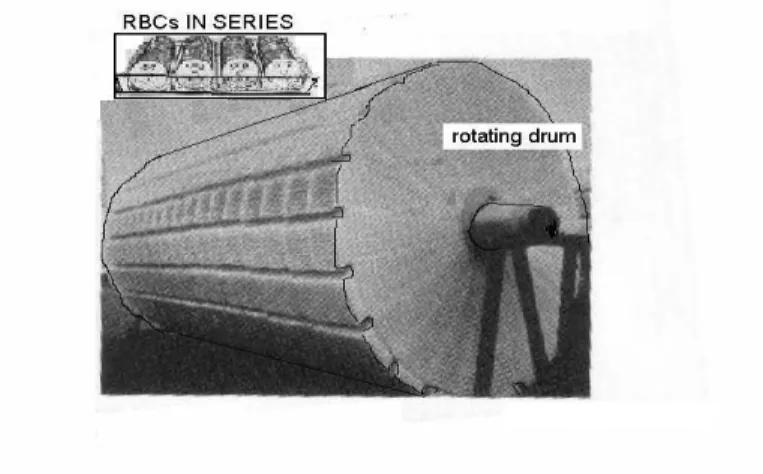
Rotating biological contactor or biodisc is also an advanced system. Closely spaced discs usually plastic are rotated in a trough containing the sewage (Figure 8). The discs are partially submerged and become covered with microbial slime similar to trickling filter. Continuous rotation of the discs keeps the slime well aerated and in contact with the sewage. Biofilm on the discs sloughs off and is removed in the subsequent settling tank. Biodisc can be used to treat both the domestic and industrial wastewater. It requires less space than trickling filters and is more efficient and stable in operation but needs high initial capital. The activated sludge process generates excess sludge which is stabilized in the anaerobic digester. The excess sludge generated in the activated sludge process creates additional burden of treating it.
Figure 8: Rotating biological contactor
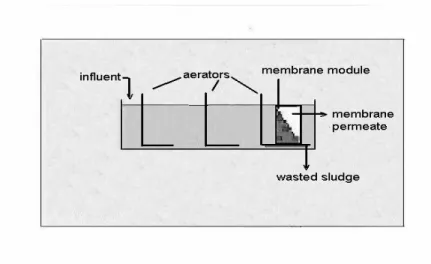
The membrane bioreactor avoids this excess sludge production and is compact. It is a combination of activated sludge process and membrane technology (Figure 9). It consists of suspended growth of biomass with micro or ultrafiltration membrane system which takes place of the clarifier in the activated sludge process.
The turbidity and suspended solid concentration of the effluent is far lower than in the conventional treatment. All biomass is retained and is then returned as sludge The sludge age is 30-60 days which is an advantage. A high sludge concentration is attained upto 30 g/L which allows much larger hydraulic loading rates. Disinfection of the sewage is also not required since the membrane with pore openings generally in the 0.1– 0.5 mm range which retain microbes.
Figure 9: Membrane bioreactor
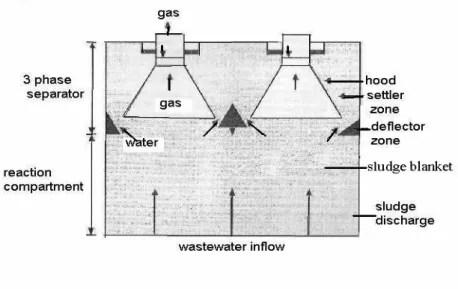
Upflow anaerobic sludge blanket reactor is an advanced anaerobic reactor (Figure 10). It has changed the idea that anaerobic process is slow, unreliable, requires high temperature and removes only 50% BOD. In UASB reactor, a granular sludge with high biomass concentration (50 g/L) can be attained allowing high volumetric loading rates. Waste in the range of 0.3 – 100 g BOD5 /L over a temperature range of 10-35°C can be treated reliably. In UASB reactor, the wastewater enters the reactor from the bottom via a specially designed influent distribution system and subsequently flows upwards through the granular blanket consisting of anaerobic bacteria. The granules settle very well at the 60-80 m/h rate. The mixture of sludge and biogas is separated in a three phase separator situated at the top of the reactor.
Main features of the UASB reactor are effective separation of biogas, a gas solid separator device used for this separation and development of a granular settllable sludge. Even distribution of wastewater in the reactor helps in the fast working. The organics come in contact with the granulated sludge blanket and are degraded anaerobically. The succession of bacteria in the granular sludge blanket is same as in the anaerobic digester. Gas bubbles produced also help in mixing of the contents of the reactor. Gas collected in the gas collector is methane. A good quality treated odorless sludge leaves the UASB reactor.
Figure 10: Upflow anaerobic sludge blanket reactor
Low Cost Sewage Treatment Plants
The low cost plants are particularly relevant to developing countries like India and include oxidation pond, septic tank and biogas plant. Oxidation ponds are also called sewage lagoons or stabilization ponds and are the oldest of the wastewater treatment systems (Figure 11).
They cover a hectare of area and are few metres deep. They are natural stewpots where wastewater is detained while organic matter is degraded. One to four weeks time is taken for the decomposition of the solids. Light, heat and settling of the solids will reduce the number of the pathogens present in the wastewater. The oxidation ponds can be of four categories aerobic, aerated, anaerobic and facultative. These often serve as a pre-treatment for high BOD organic wastes rich in protein and fat with heavy concentration of suspended solids.
Facultative ponds are most common for domestic waste treatment. Waste treatment is provided by both aerobic and anaerobic processes. The depth is 1-2.5 m and there are three zones. The upper aerated zone, middle facultative zone and a lower anaerobic zone. The detention time varies between 5 and 80 days. Mechanically aerated ponds may be 1-2 m deep and have a detention time of less than 10 days. In general treatment depends on aeration time, temperature as well as type of wastewaters.
Figure 11: Oxidation pond
The biodegradable organics and turbidity is not effectively removed as compared to the activated sludge. Given sufficient retention time the oxidation ponds can cause significant reduction in the concentration of enteric pathogens especially helminth eggs. They are promoted for pathogen removal from wastewater used for irrigation in the developing countries. Major drawback of the ponds is the potential for inadequate mixing or short circuiting because of thermal gradients. The algal photosynthesis produces oxygen. The aerobic heterotrophs proliferate in the facultative zone and degrade organics, along with the production of CO2. CO2 serves as carbon source for algae. The anaerobic bacteria at the bottom in anaerobic zone grow at the expense of products of heterotrophs to release CH4, H2S and N2 in the atmosphere.
Septic tank is used by communities where population is less in rural area and ample land is available (Figure12). Its operation is similar to the primary treatment. Sewage is taken to a holding tank and suspended solids are allowed to settle. The sludge in the tank is pumped out periodically and treated. It is slowly acted upon by anaerobic bacteria to organic acids and H2S, while it is in the tank. The effluent flows through a series of buried perforated tubes, the effluent percolates into the soil where the dissolved organic compounds in the effluent undergo biodegradation. Septic tank treatment is not reliable for destroying intestinal
pathogens. It works well when not overloaded and the drainage system is proportionate to the load and the soil type.
Heavy clay soils require extensive drainage system because of the soil’s poor permeability.
The high porosity of sandy soils can result in chemical or bacterial pollution of nearby drinking water supply.
Figure 12: Septic tank
Biogas technology generates biogas or marsh gas as a byproduct of anaerobic decomposition of organic matters. It is an alternative source of energy. Biogas can be used in small family for cooking, heating and lighting and in larger institutions for power generation. The raw material used for biogas generation is the waste material that includes human excreta, animal manure, sewage sludge and vegetable crop residues. All of these are rich in the nutrients suitable for growth of anaerobes.
Biogas comprises of methane 55-65%, CO2 35-45%, N2 0-3%, H2 0-1% and H2S 0-1%.
Methane is most desirable since it has a high calorific value (~ 9000 Kcal/m3). The heat value of biogas is 4500-6300 Kcal/m3 depending on the contents of the other gases besides methane. Sludge produced is odorless and is good fertilizer. Pathogens are reduced, rodents and flies are not attracted. However, there are chances of explosion. Increase in the volume of waste, may add to water pollution. Efficient use of methane requires removal of CO2 and H2S. Floating gas holder digester is designed by Khadi and village industries commission in India (Figure 13). It consists of a cylindrical well, made of bricks. Gas produced is trapped in a floating cover on the surface of the digester which rises and falls on a central guide. This cover is made of steel, ferrocement, bamboo cement, plastic, fiberglass etc. Cover is a major cause of loss of heat. The digester may be buried under the ground to prevent heat loss. The gas holder moves semicontinuously through a straight inlet pipe and displaces an equal amount of slurry through an outlet pipe. The digester in India is fed with cattle dung only.
Agricultural residues if used are chopped into small pieces. The design is simple to make except the gas holder which needs a workshop for fabrication.
Water Microbiology
Study of microorganisms and their communities in water environment is called Aquatic microbiology, while Water Microbiology relates to the study of microorganisms in potable water. The scope of Aquatic Microbiology is wide and includes the habitats like planktons,
benthos, microbial mats and biofilm which may be found in lakes, rivers, streams, seas, groundwater, rain, snow and hail. Planktons are the collection of free living and drifting microorganisms in ponds, lakes and oceans. Algae and cyanobacteria are phytoplanktons while protozoans and microbes are zooplanktons. The transition zone between the water column and mineral subsurface is the benthic zone inhabited by anaerobes. Microbial mat is interfacial acquatic habitat. Microbial groups are laterally compressed into these mats.
Cyanobacteria, sulfate reducing bacteria, nitrifiers, sulfur oxidizers and photosynthetic bacteria form the layers. Biofilms are community of microbes embedded in an organic polymer matrix adhering to a surface which is submerged in water. The freshwater environment study is the scope of Limnology. Lakes, ponds and bogs are called Lentic or standing habitat and running water like streams, rivers are called Lotic habitats. Brackish water is the term used to describe the water the salt concentration or salinity of which lies between 0-0.5% (of freshwater) and 32-37% (of salt lakes). The salt concentration in ocean corresponds to 3.3 – 3.7 g %. Barotolerant, barophilic and psychrophilic bacteria occur in the deep oceans. Legionella pneumophila, Aeromonas hydrophila, Vibrio spp. and Pseudomonas aeruginosa are indigenous aquatic bacteria that cause diseases.
Figure 13: Biogas plant
Drinking Water Microbiology
Drinking or potable water is water that is free from pathogens and chemicals that are dangerous to human health. Any taste, odor and color must be absent from the water to be palatable. Raw water may contain many contaminants derived from sewage and nearby industries. Many enteric pathogens are water borne. Therefore water is treated and disinfected to remove chemicals and pathogens respectively. The raw waste is stored in reservoirs where the oxidizable organic materials are stabilized and discrete particles settle. The collected water or impounded water in the reservoir irrespective of its source contain sufficient nutrients for growth of algae which require only minerals and sunlight. Many phototrophic and chemolithotrophic bacteria grow in the dilute environment. Heteroptrophs flourish on the organic matter of dead autotrophs. Some organic matter is introduced by wind, rain or soil with runoff water. Bacterial activities cause transformation of iron, pH change, CO2 release, mineralization of organics which may lead to corrosion of pipelines and thereby fouling of water. Various algae, protozoans and iron bacteria impart bad taste and odours. Some
produce slime causing clogging of pipes. Iron bacteria include sheathed and stalked bacteria that are typical water organisms. They are aerobic, widely distributed in nature esp. in stagnant water such as reservoir for potable water supply. Siderocapsa, Sphaerotilus, Clonothrix, Leptothrix,Crenothrix, Caulobacter and Gallionella are some common filamentous iron bacteria. Sulfur and sulfate reducing bacteria also contribute to fouling of impounded waters.
Water-Borne Diseases
An important aspect of Water Microbiology is numerous disease causing microorganisms spread through water. Many bacteria, viruses, fungi and protozoa are responsible for waterborne diseases. The recurrence of waterborne illness has led to the improvement in water purification. Some common water borne diseases are listed in the Table 6.
Table 6: Common water borne pathogens
S. No. Bacteria Diseases caused Viruses Diseases caused 1. Salmonella typhi Typhoid Hepatitis A virus Hepatitis 2. Other
Salmonella spp
Salmonellosis (gastroenteritis)
Polio virus Poliomyelitis 3. Shigella spp. Shigellosis
(bacillary dysentery)
Protozoa Diseases caused
4. Vibrio cholerae cholera Giardia intestinalis Giardiasis 5. Vibrio
parahaemolyticu s
Gastroenteritis Balantidium coli Balantidiasis
6. Escherichia coli Gastroenteritis Entamoeba
histolytica
Amoebic dysentery 7. Legionella
pneumophila
Legionnaire’sdisea se
Cryptosporidium parvum
Cryptosporidiosis 8. Yersinia
enterolitica
Gastroenteritis Cyclospora cagetanensis
Diarrhoea 9. Campylobacter
spp. Gastroenteritis Naegleria fowleri Encephalitis 10. Leptospira spp. Jaundice
Microbiological Examination of Water
Heterotrophic plate count (HPC) of more than 500 / ml in tap water indicates variation in water quality and potential for pathogen survival. They also mask the coliforms and fecal coliforms when present in high numbers. Bottled water and charcoal filters of household taps have high HPC. Gram negative bacteria belonging to Pseudomonas, Aeromonas, Klebsiella, Flavobacterium, Enterobacter, Citrobacter, Serratia, Acienetobacter, Proteus, Alcaligenes, Enteroabcter and Moroxella are detected in HPC. Monitoring and detection of indictor and disease causing microorganisms is a major part of Sanitary Microbiology. Intestinal tract bacteria do not survive in the aquatic environment and are under physiological stress and
loose their ability to grow on selective media. Although many pathogens can be detected directly in water, Environmental Microbiologists have generally used indicator or index organisms as an indirect evidence of possible water contamination by human pathogens which are considered to be of fecal origin. The criteria for an ideal indicator organism are 1]
It should be useful for all types of water 2] It should be present whenever enteric pathogens are present 3] The organism should have reasonably longer survival time than the hardiest of pathogens 4] The organism should not grow in water 5] The testing method should be easy to perform 6] The density of indictor organisms should have direct relationship to the degree of fecal pollution 7] The organism should be always found in intestinal microflora of warm blooded animals.
Conventionally coliforms have been used as indicator organisms of fecal pollution. Various indicator organisms are now considered for their different attributes and usefulness as no organism satisfies all the above criteria. Among the various indicators are coliforms, fecal streptococci, Clostridium perfringens, Bifidobacterium and Bacteroides, phages of enteric bacteria, Pseudomonas aeruginosa, Staphylococcus aureus, Candida albicans and Aeromonas hydrophila. Coliforms are defined as facultatively anaerobic Gram negative, non- spore forming, short rod-shaped bacteria that produce acid and gas on lactose fermentation in prescribed culture medium within 48h at 35º C. The group includes Escherichia, Citrobacter, Enterobacter and Klebsiella. Escherichia coli and Klebsiella pneumoniae are the important coliforms. E. coli is a natural inhabitant of the intestine and K. pneumoniae is that of soil. The test for coliforms involves presumptive, confirmed and completed tests (Figure 14). The presumptive test is clubbed with the multiple tube dilution technique which gives an estimate of most probable number (MPN) of coliforms in 100 ml of water sample and is also called MPN test. In MPN test different sample volumes are inoculated in lactose broth or McConkey broth at 35ºC for 48h incubation. The test is based on the principle that a single living cell can develop into a turbid culture. By determining the average dilution at which the tubes do not receive cells, the number of microorganisms most probably present in the original sample can be computed using the MPN table. In the confirmed test typical greenish metallic sheen colonies on EMB indicate fecal coliforms whereas non-fecal coliforms give mucoid pink colonies with dark centers called atypical colonies. The completed test involves confirmation of coliforms. Gram negative non-spore forming, lactose fermenting (within 48h, rod shaped bacteria indicate fecal coliforms.
IMViC includes Indole production (I), Methyl red test (MR), Voges Proskauer (VP) and Citrate utilization (C) tests and helps to distinguish and finally confirm the fecal and nonfecal coliforms. E.coli of fecal origin gives the MR and I positive and Klebsiella pneumoniae of non-fecal origin gives the VP and C positive
Membrane filter technique (MF) is another useful test that consists of passing the water through a membrane filter. The filter with bacteria is transferred to the surface of a solid medium or to an absorptive pad containing the desired liquid medium. Use of appropriate media helps in the detection of total, fecal and non-fecal coliforms. A resuscitation medium may be used to revive injured or stressed coliforms due to chlorination etc. The MF technique gives good reproducibility and the results are obtained in one step, filters can be transferred between different media, large volumes of sample can be processed, is time saving, can be performed on site and bears low cost. While the test is not suitable for high turbidity samples, other bacteria or metals and chemicals adsorb on the filter and may inhibit the growth of coliforms.
Figure14: Scheme of microbiological examination of water
The presen/absence test (PA) is more simplified test for detecting coliforms and fecal coliforms in which 100 ml of water sample in incubated in a single culture flask with a triple strength broth containing lactose broth or lauryl tryptose broth. This test is based on assumption that coliforms should be present in 100 ml of drinking water. A positive test needs confirmation.
Colilert defined substrate test is used to differentiate the E.coli and coliforms. A 100 ml water sample is added in a specialized medium containing o-nitropheyl β-D- galactopyranoside (ONPG) and 4-methylumbelliferyl β-D-glucoronide (MUG) as the only nutrients. If coliforms are present they produce β-galactoside and act on ONPG to release o- nitrophenol, which is yellow. E. coli elaborates glucuronidase that acts on MUG the product of which fluoresces in UV. The test is obtained in 24 h.
The regrowth of coliforms in water after disinfection is the biggest drawback of coliforms as indicator. Fecal streptococci (FS) are group of Gram positive Lancefield group D streptococci, grow in 6.5% NaCl, pH 9 and at 45ºC. The advantages of FS over coliforms as indicator is that they do not regrow in water, are more resistant to environmental stress and chlorination and generally persist longer in the environment. They suggest risk of gastroenteritis for recreational waters and presence of enteric viruses. Streptococcus bovis and S. equinus are found in animals while Enterococcus faecalis (S. faecalis) and E. faecium are specific to human gut. A FC/FS i.e. fecal coliforms to fecal streptococci ratio of four
or more indicates a contamination of human origin whereas a ratio of 0.7 indicates animal fecal pollution. MPN and MF test are also used for FS. Many other organisms are considered as indicators for various reasons (Table 7). Phages due their presence in sewage and similarity with enteric viruses are considered.
Table 7: Other indicator organisms
S.
No.
Indicator organism
Characteristics Significance
1. Clostridium perfringens
anaerobic spore former, gram positive rod shaped and exclusively of fecal origin. Spores are resistant and persist for long periods.
useful indicator of past pollution, a tracer for less hardy indicators, protozoans and viruses.
2. Bifidobacterium and Bacteroids
primarily associated with humans they can distinguish human and animal contamination.
B. bifidus survives for a short time therefore its presence suggests relatively recent pollution
3. F-specific RNA phage, f2,
φx174, MS2, PRD-1
Coliphages, not always seen associated with fecal pollution however their presence in high numbers in wastewater and high resistance to chlorination can be an index of wastewater contamination and indicators of enteric viruses.
useful for evaluation of virus resistance to disinfectants, fate of enteric viruses in water treatment and surface or groundwater tracers and presence of host.
4. Phages of Bacteroides fragilis
of human origin exclusively An advantage over coliphage is they help to detect human fecal contamination.They do not multiply in the water and have decay rate similar to other viruses.
5. Pseudomonas aeruginosa
associated with the diseases of eye, ear, nose and throat infections.
common opportunistic pathogen, causes life threatening infection in
burn patients and immunocompromised individuals.
Folliculitis, dermatitis, ear and urinary infections are common in ill maintained swimming pools.
this organism is of no value as indicator of fecal pollution however coliforms do not suit as indictor of contamination of swimming pool water as the contamination is not of fecal origin.
6. Staphylococcus aureus and Candida
albicans
suggests the sanitary quality of water because it presence is associated with human activities
Useful for recreational waters.
7. Aeromonas hydrophila
occurs in uncontaminated, as well as contaminated waters. also an opportunistic pathogen in humans, animals and fish.
Because of its association with nutrient rich conditions it has been suggested as an indicator of nutrient rich status of the waters.
Water Purification
Water purification forms a critical link in promoting public health and safety. It involves variety of steps which depend upon the type of impurities in the raw water source. The major operations done are sedimentation, flocculation, filteration and disinfection. Raw water becomes potable after this treatment (Figure 15). Impurities in raw water include suspended, dissolved, colloidal solids; bacteria; toxic substances; color; odor and mineral or organic matter. These can be categorized as chemical, physical and microbiological. Table 8 indicates the drinking water standards in India. Different unit processes and operations are performed to remove different impurities (Table 9).
Figure15: Sequence of processes in water purification
Table 8: The Bureau of Indian Standards defined levels of substances in water and their permissible levels
S. No. Substance / Test Unit Desirable limit Maximum permissible limit*
1. Physical turbidity NTU 5 10
2. Chemical pH Number 6.5 – 8.5 No relaxation
3. Hardness as (CaCO3) mg/l 300 600
4. Chloride as Cl mg/l 250 1000
5. Iron as Fe mg/l 0.3 1.0
6. Nitrate as N mg/; 45 No relaxation
7. Fluoride as F mg/l 1.0 1.5
8. Residual chlorine mg/l 0.2 – 0.5 No relaxation
9. Arsenic as As mg/l 0.05 No relaxation
10. Coliforms MPN/100 ml 10** No relaxation
11. E. coli MPN/100 ml 0 No relaxation
* Where there is no alternative source for drinking
** Coliform should not be detected in 100 ml of any two consecutive samples
Table 9: Unit processes and operations and specific impurities removed
S. No. Unit Processes / operations Effect 1. Aeration, chemical oxidation, ion exchange,
sedimentation
Colour and precipitate removal
2. Chemical precipitation, (dosing, mixing,
flocculation, settling) ion exchange Softening (Ca, Mg removal)
3. Chemical coagulation, (dosing, mixing, flocculation, settling) filtration
Turbidity removal 4. Aeration, chemical oxidation, adsorption Taste and odour
removal 5. Irradiation, ozonation, chlorination Disinfection
Sedimentation is separation of suspended particles by natural aggregation and gravitational settling carried out in sedimentation tank or settling basin. Some degree of sedimentation occurs during storage. Quiescent sedimentation for a period of 30-60 days may result in purification equivalent to filtration. Bacteria and viruses still persist. Sedimentation is combined with coagulation. Coagulation brings about destabilization and agglomeration of the particles. Metal salts like aluminium sulfate, ferric chloride, calcium oxide or hydroxide are used as coagulants, metal hydroxide form precipitates in which the colloidal particles get enmeshed and settle along with them. In flocculation the agglomeration of the destabilized particles is induced by mechanical means into compact fast settlable particles called flocs.
The aluminium sulfate added reacts with the natural alkalinity present in water to form flocs.
Betonite, clay, activated silica etc. aid the coagulants. These agents bear negative charge when present with positively charged metal hydroxide gives a tough dense flocs thereby hastening flocculation. Polyelectrolytes which have ionizable carboxyl, amino, sulfonic groups are synthetic coagulants. The flocs are allowed to settle and the supernatant is taken for filtration.
Filtration is a process of separation of suspended matter from water by passing it through porous medium in this case a filter. The filter is filled with media which may be sand, crushed anthracite, coal, diatomaceous earth, activated carbon, plastic spheres, rings or metals fabrics. The gravity filters namely slow sand and rapid sand filters are currently used. In slow sand filters there is a slow passage of water through a bed of sand in which a microbial layers covers the surface of each sand grain (Figure 16). It is a biological process. Wastewater-borne microbes are removed by adhesion to the slimy microbial layer or biofilm Cryptosporidium, Giardia and Cyclospora are protozoans which have cysts that are removed by slow sand filter. Virus levels after filtration goes to 90-99% aided by chemical oxidants, high pH, photooxidation. However none of the processes remove the viruses completely. The slow sand filter is a large sand and gravel bed on acre or more in area of land build up over drain pipes. Coarse gravel (5 mm dia) is at the bottom graduating in size to the top layer of fine sand (0.25 – 0.35 mm dia). About 5 million gallons per day of water is filtered. The organic chemical content is reduced due to biochemical oxidation by the biofilm bacteria. When the biofilm thickens the rate of filtration goes down. It is then stopped and the biomass removed normally before refilling the filter.
Figure 16: Slow sand filtration
About 40% color reduction is observed. Slow sand filter is simple to construct and operate. It gives uniform water quality and effectively removes bacteria. The drawbacks are that it requires large area and turbid waters more than 30-50 ppm cannot be filtered. Since it is biological process, seasonal variation in operation is observed. The rapid sand filter depends on physical trapping of particles and flocs and operates on mechanical basis (Figure 17). It takes less area and no biofilm formation occurs.
Figure 17: Rapid sand filter
The water after coagulation and flocculation is passed through rapid sand filter. As the name suggests it gives about 200 million gallons water per day. Therefore it is more commonly used. The size of sand is 0.35 – 0.5 mm dia. which is larger than the sand grains in slow sand filter. There is an underdrainage over which sand bed is laid. This collects the filtered water.
The arrangement of backwash by reversing the flow of cleaned water and bubbling air through the sand bed helps to clean the sand particles when the filtration rate goes down. The wash water is wasted. The rapid sand filter therefore can accommodate relatively more turbid water than slow sand filter. It can also be operated continuously and requires less maintenance. Though requirement of skilled personnel, less effective bacteria removal and
more operational troubles are its negative aspects. Disinfection is imperative after all filtration processes.
Modern water purification facilities make use of membrane filtration. This is an alternative to distillation. It recovers large quantity of water from dilute solutions of minerals or pollutants as is found in sea or brackish water. This assumes importance in reclamation of domestic or industrial effluents in the event of water scarcity. The reverse osmosis process provides a solution to this problem. It requires low energy and is highly selective in the removal of dissolved solids. Osmosis is a process of selective transport of aqueous solutions through semipermeable membrane. The principle of desalination by reverse osmosis is essentially the same as that of the osmotic process except that the process is reversed. The influent water is forced through a semipermeable cellulose acetate membrane under high pressure upto or greater than 1500 psi. Usually 40 psi for tap water and 1500 psi for sea water is applied. The membrane allows the water to pass through excluding majority of the dissolved solids. It may exclude 90-95% of sodium chloride in salt water while most other salts are excluded to a greater extent e.g. 99-99.7% CaSO4. Discrete and particulate organic material, proteins, bacteria and viruses are excluded to an even greater extent. The process is also used in tertiary sewage treatment. Softening of water is needed when the water has hardness.
Sedimentation and filtration remove suspended and colloidal solids from raw water. The dissolved alkaline minerals like carbonates and bicarbonate when associated with sodium and potassium cause hardness. Hardness in water comes from nearby mining operations or acidic industrial wastes. Removal of minerals from water is known as demineralization process.
Treatment with lime, lime-soda, boiling and ion exchange are methods used to remove minerals. Disinfection refers to reduction of bacterial population to a safe level as opposed to sterilization. As a result of disinfection bacterial, protozoal and viral diseases have been curbed. Chlorination is the least expensive method and easy to administer. Chlorine is a strong oxidizing agent which when added to water as a gas forms hypochlorous and hydrochloric acid. Cl2+H2OÆHCl+HOCl (hydrochlorous acid). The HOCL is very unstable and decomposes quickly by releasing nascent oxygen which is a strong oxidizing agent HOCl Æ HCL + (O). The action of this nascent oxygen on cellular components is indiscriminate. It oxidizes protein and reversibly binds to –SH groups and denatures essential cellular enzymes, alters permeability of cell membrane, interferes with membrane function, and denatures nucleic acids. Chlorine in the form of HOCl is called the free available chlorine while when it is combined with ammonia and nitrogen containing organic substances it forms combined chlorine. The reactions of chlorine and ammonia are of importance in water disinfection.
These form monochlramines ( NH3 + HOCl Æ NH2Cl + H2O ), dichloramines (NH2Cl + HOCl Æ NHCl2 + H2) and trichloramines (NHCl2 + HOCl Æ NCl3 + H2O). These products have disinfecting power of HOCl but much less at a given concentration than chlorine. 1 mg/L (1 ppm) chlorine for 30 min. significantly reduces the bacterial numbers. Presence of interfering substances like NH3 increase the required chlorine dose due to formation of compounds with lesser disinfection power. 30 ppm chlorine inactivate enteric viruses and destroy protozoans. Chloramines are much less effective in the inactivation of viruses.
Chlorine affects the protein capsid and interacts with nucleic acid, 0.8 ppm chlorine inactivates the poliovirus RNA. For the double stranded RNA rotavirus the coat is the target.
A concern with chlorination is the formation of disinfection byproducts (DBPs) such as halomethanes, a group of compounds that may be carcinogenic are formed when chlorine reacts with organic matter. Another factor that affects chlorination is temperature of water (higher the temperature more the dissolved chlorine). Presence of reduced ions or compounds such as nitrite, H2S, Mn, Fe etc. lessen the disinfecting power of chlorine by getting oxidized themselves. Taking this into consideration, enough chlorine must be added to leave a residual of 0.2 – 1 ppm of free chlorine after all microorganisms and extraneous organic matter have
been saturated with chlorine called breakpoint chlorination (Figure 18). Formation of chloramines is dependent upon the ratio of chlorine to ammonia, chlorine dose, temperature and pH. Upto chlorine to ammonia mass ratio of 5 the predominant product is monochlramine which has the best disinfection power out of the three mono, di and trichloramines. Since they are slow acting they have been used as secondary disinfectants when a residual in the distribution system is desired. Usually chloramines are added after ozonation since the latter does not leave any residuals. Otherwise the bacteria grow in the pipelines and develop into biofilms. Chloramines inactivate the –SH containing enzymes and to a lesser extent react with nucleic acid to kill the cells. Viruses are inactivated by chloramines by reacting with nucleic acid.
Figure 18: Breakpoint chlorination
Ozonation is a powerful oxidizing process in water disinfection. Ozone (O3) is produced by passing electric discharge through a stream of air or oxygen. It is more expensive than chlorination. The advantage is that it does not produce trihalomethane or DBPs. Aldehydes or bromates formed by ozone however may have adverse health effects. Its effectiveness is not influenced by pH or NH3. It is more powerful than chlorine. The c.t value for ozone for 99%
inactivation of bacteria is 0.0011-0.2 and for viruses it is 0.04-0.42. c.t value is the product of the concentration of the disinfectant and the time required to inactivate a certain percentage of population under certain conditions of pH and temperature. Mechanism of disinfection of ozone is similar to chlorine.
Heavy metal ions such as Cu, Ag, Zn, Pb, Cd, Ni and Co exhibit what is called their oligodynamic action against bacteria. Cu and Ag are used in water treatment. Cu helps to control Legionella in hospital disinfection system. Silver is used as a bacteriostatic agent. It is added to activated carbon in faucet mounted devices for home use. The antimicrobial range for copper is 200-400 g/L while that of silver is 40-90 µg/L. Unlike other disinfectants metals remain active for long time in water. Their action is enhanced in the presence of low concentration of oxidizing agents due to synergistic action. The inactivation of macromolecules (protein and nucleic acids) is due to site specific Fenton mechanism. The metal ion binds to the biological target and is reduced by superoxide radicals or other reductants and subsequently reoxidized by H2O2 generating hydroxide radicals. Repeated