Synthesis, purification, characterization and prebiotic applications of dextran and oligosaccharides from Leuconostoc mesenteroides NRRL B-1426 dextransucrase” is the result of investigations carried out by me in the Department of Biotechnology, Indian Institute of Technology Guwahati, Guwahati, Assam, India under the guidance of Professor Arun Goyal. It is certified that the work described in this thesis entitled "Synthesis, purification, characterization and prebiotic applications of dextran and oligosaccharides from Leuconostoc mesenteroides NRRL B-1426 dextransucrase" by Damini Kothari (Roll No for the award of the degree of Doctor of Philosophy is an authentic record of the results obtained from the research work carried out under my supervision mainly in the Department of Biotechnology, Indian Institute of Technology Guwahati, Guwahati, Assam, India.
General Introduction
Prebiotics
- Prebiotic concept
- Criteria of prebiotics
- Health benefits of prebiotics
- Source of prebiotics
- Production of prebiotics
However, their strict substrate specificities prohibit the synthesis of more diverse structures ( Wei et al., 2013 ). Furthermore, this class of enzymes does not interact with the products they synthesize (Leemhuis et al., 2012).

Glucansucrase
- Purification of glucansucrase
- Immobilization of glucansucrase
Four different types of GH70 glucansucrases have been identified based on the polysaccharides produced by them (Andre et al., 2010). Affinity immobilization of dextransucrase on Sephadex G-200 was also investigated for leucrose production (Han et al., 2005).
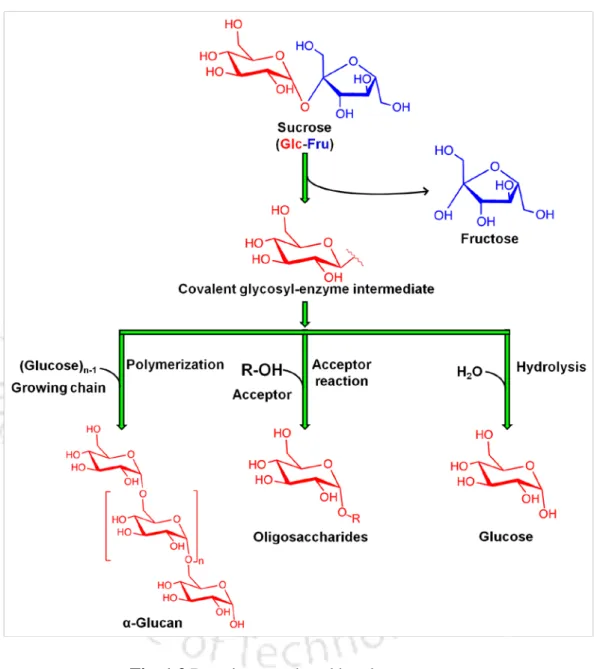
Dextran
- Applications of dextran
- Characterization of dextran
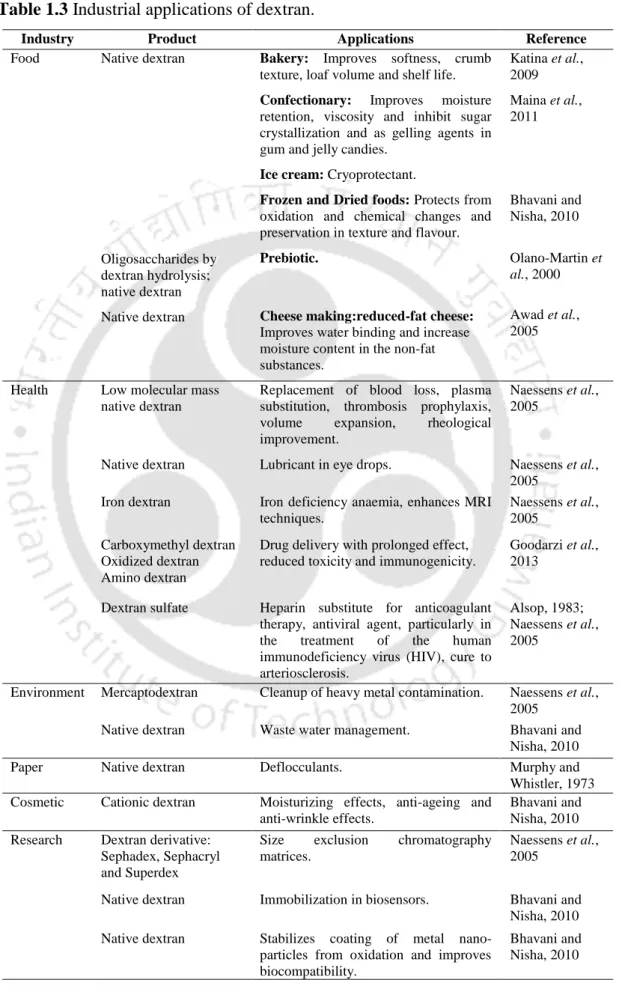
In general, dextran is used as a gelling, viscosifying and emulsifying agent in various food products (Leemhuis et al., 2013). The molecular weight (MW) of dextran is generally determined by viscometry, hydrodynamic chromatography (HDC), high performance size exclusion chromatography coupled to a refractive index detector (HPSEC-RI) or multi-angle laser light scattering (HPSEC-MALLS) Leemhuis et al., 2013).
Oligosaccharides
- Characterization of oligosaccharides
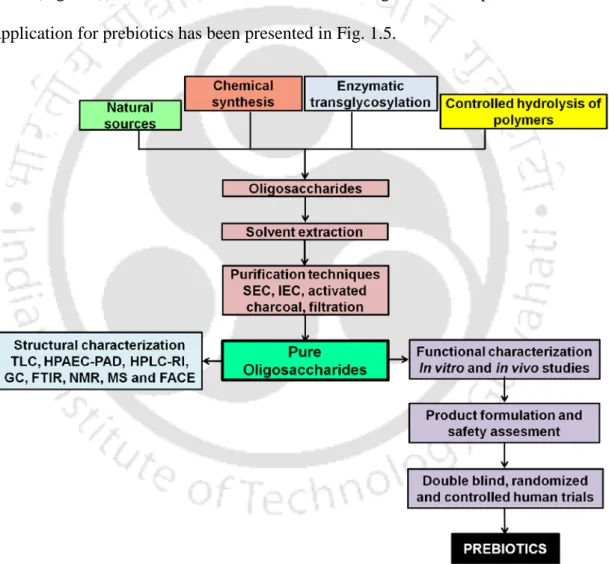
The application of oligosaccharides for human consumption requires a high degree of product purity (Pinelo et al., 2009). Colorectal cancer is one of the most common causes of cancer-related deaths worldwide (Jemal et al., 2011).
Significance and objectives of the present study…
Specific Objectives of the present study
1982) Isolation and partial characterization of an extracellular glucansucrase from Leuconostoc mesenteroides NRRL B-1355 that synthesizes the 1-6, 1-3-α-D-glucan alternation. 1979) Production, purification and properties of dextransucrase from Leuconostoc mesenteroides NRRL B-512F. 2008) Dextransucrase and the mechanism for dextran biosynthesis. 2011).
Production, purification, characterization and immobilization of
Material and Methods
- Chemicals and reagents
- Microorganism and culture conditions
- Inoculum preparation
- Production of dextransucrase
- Enzyme assay
- Preparation of reagents for reducing sugar estimation
- Calculation of enzyme activity
- Determination of protein content
- Reagents for Lowry method
- Estimation of protein
- Partial purification of dextransucrase from L. mesenteroides NRRL
- Denaturing and non-denaturing SDS-PAGE analysis of
- Preparation of SDS-PAGE gels
- Preparation of acrylamide 30% (w/v) solution
- Preparation of sample buffer
- Preparation of SDS-PAGE running buffer
- Silver staining
- Preparation of reagents for silver staining
- Silver staining procedure
- Identification of dextransucrase by Periodic Acid Schiffs (PAS)
- Optimization of reaction conditions of dextransucrase
- Effect of pH, temperature and ionic strength on
- Effect of sucrose concentration on dextransucrase activity
- Immobilization of dextransucrase from L. mesenteroides NRRL B-
- Optimization of sodium alginate concentration and reaction
- Operational stability of immobilized dextransucrase…
- Storage stability of free and immobilized dextransucrase…. 68
- Production of oligosaccharides using free and immobilized
Results and Discussion
- Effect of temperature and aeration on dextransucrase production
- Partial Purification of dextransucrase from L. mesenteroides NRRL
- Identification and molecular size analysis of dextransucrase by non-
- Optimization of reaction conditions for dextransucrase
- Effect of pH, temperature and ionic strength on
- Optimization of sodium alginate concentration for
- Operational stability of immobilized enzyme
- Storage stability of free and immobilized enzyme
- Thermal stability and pH stability of free and immobilized
- Production of oligosaccharides using free and immobilized
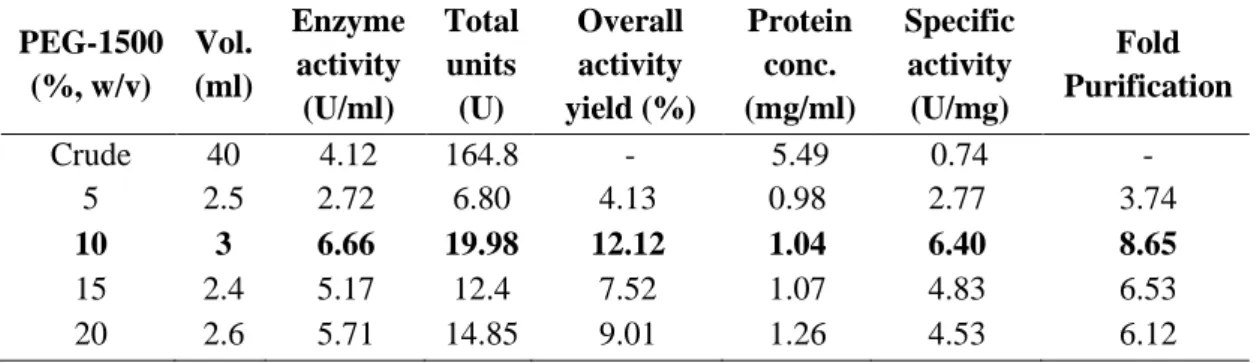
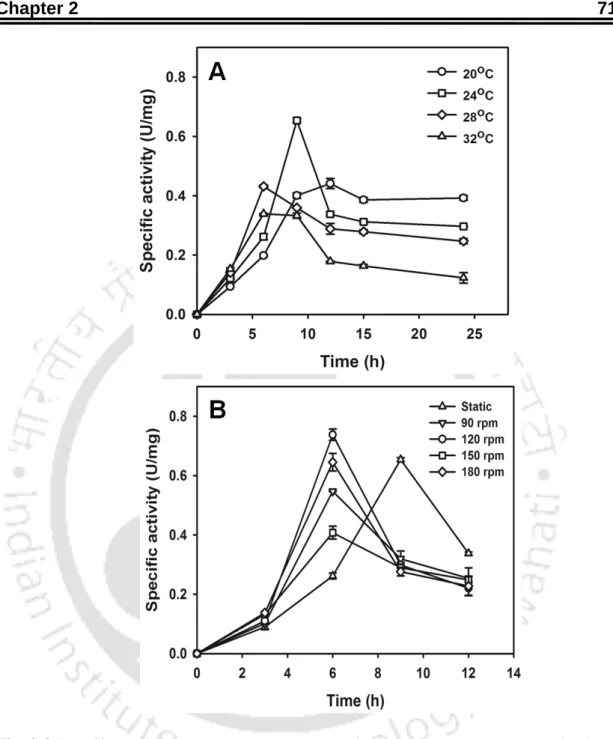
The specific activity of dextransucrase increased with increase in the concentration of PEG-400 from 15 to. The specific activity of dextran sucrase decreased with increase in the concentration of PEG-1500 from 10 to 20% (w/v) as shown in fig. PEG-400 is known to provide higher specificity of dextransucrase precipitation compared to higher molecular weight PEG.
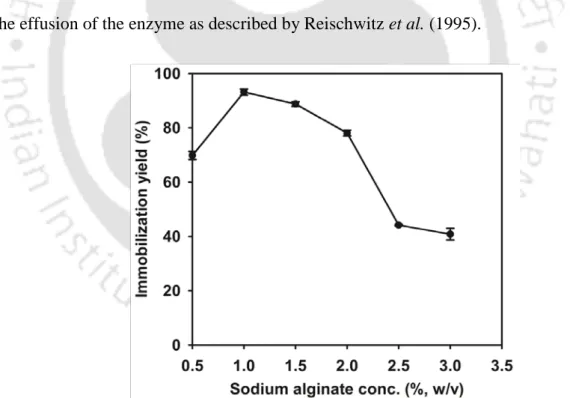
Native PAGE analysis of dextran sucrase showed that it exists in a single molecular form (Figure 2.3.6C, lane 6). The optimal pH of dextransaccharose was 5.6 (Figure 2.3.7A), which is slightly higher than that of dextranacchareses from L. The immobilization of dextranaccharose with alginate may be the result of some special structures: a stable complex of dextranaccharose and dextran, a very high molecular weight, an aggregate of enzyme and dextran or a supramolecular cluster that prevents enzyme efflux, as described by Reischwitz et al.
The acceptor reaction of dextransucrase with sucrose as a glucosyl donor and maltose as a glucosyl acceptor synthesizes isomalto-oligosaccharides (IMO). 2.3.14 (A) Time-dependent acceptor reaction TLC of immobilized and free dextransucrase from L. B) ESI-TOF MS of IMOs produced using immobilized dextransucrase.
Conclusions
Therefore, the production of commercially interesting oligosaccharides by L. mesenteroides NRRL B-1426 dextransucrase can be studied by manipulation of acceptors. 1999) Immobilization of native and dextran dextransucrases from Leuconostoc mesenteroides NRRL B-512F for glucooligosaccharide synthesis. 1998) Production and properties of dextransucrase from Leuconostoc mesenteroides IBT-PQ isolated from "pulque", a traditional Aztec alcoholic beverage. 1985). Effect of temperature on dextransucrase production by Leuconostoc mesenteroides FT045 B isolated from an alcohol and sugar factory.
1980) Characterization of multiple forms and major constituent of dextransucrase from Leuconostoc mesenteroides NRRL B-512F. 1991) Acceptor activity of affinity-immobilized dextransucrases from Streptoccocus sanguis ATCC 10558. acceptor specificity and chain initiation. 2012) Immobilization of glucansucrase for the production of glucooligosaccharides from Leuconostoc mesenteroides. 2004) Immobilization of dextransucrase and its use with soluble dextranase for the synthesis of gluco-oligosaccharides. 1993) Production and purification of alternansucrase, a glucosyltransferase from Leuconostoc mesenteroides NRRL B-1355 for the synthesis of oligoalternans. 2007) A review of purification methods of glycoside hydrolase family 70 dextransucrase. 2008) Purification, identification and functional characterization of dextransucrase from Leuconostoc dextranicum NRRL B-1146.
2011) Structural characterization of insoluble dextran produced by Leuconostoc mesenteroides NRRL B-1149 in the presence of maltose. Effect of some cultural factors on the production of dextransucrase by Leuconostoc mesenteroides. 2009) Characterization of dextransucrase activity from Leuconostoc mesenteroides Lm17 and Ure13.
Synthesis, purification, characterization and prebiotic applications of
Material and Methods
- Chemicals and reagents
- Microorganisms and culture conditions
- Enzymatic synthesis of dextran
- Estimation of total carbohydrate content
- Estimation of reducing sugar content
- Preparation of reagents for reducing sugar estimation
- Physico-chemical characterization of dextran
- Optical rotation of dextran
- Acid hydrolysis of dextran
- Hydrolysis of dextran by dextranase
- Spectroscopic analysis of dextran
- Average molecular mass determination of dextran
- Scanning electron microscopy of dextran
- Solubility and water holding capacity of dextran
- Viscosity and rheology of dextran
- Thermo-gravimetric analysis of dextran
- In vitro application analysis of dextran as prebiotic
- Effect of simulated human gastric juice on digestibility of
- Effect of human α-amylase on digestibility of dextran
- Effect of dextran on the growth of human gut bacteria
- In vitro analysis of effect of dextran on mammalian cells
- Culturing and maintenance of mammalian cells
- Sub-culturing of cells
- Cell viability assay
- Statistical analysis
Results and Discussion
- Physico-chemical characterization of dextran from L. mesenteroides
- Purification of dextran
- Optical rotation of dextran
- Acid hydrolysis of dextran
- Hydrolysis of dextran by dextranase
- FTIR spectroscopy of dextran
- Molecular mass determination of dextran
- Scanning electron microscopy of dextran
- Viscosity and rheology of dextran
- Solubility and water holding capacity of dextran
- Thermo-gravimetric analysis of dextran
- In vitro application analysis of dextran as prebiotic
- Effect of simulated human gastric juice on digestibility of
- Effect of human α-amylase on digestibility of dextran….…
- Effects of dextran on the growth of human gut bacteria
- In vitro analysis of effect of dextran on mammalian cells
The hydrolysis of dextran by dextranase requires a minimum of six or seven unsubstituted contiguous linked α-(1→6) glucose residues (Boune et al., 1962; Vettori et al., 2012). The 1H NMR spectrum provides the convincing facts for the glycosidic linkages of dextran (Vettori et al., 2012). The main utility of dextran in various industries depends on its molecular mass (Aman et al., 2012).
The high viscosity of dextran indicates its flexible and extended high molecular weight nature. This shear thinning of dextran is caused by hydrodynamic forces generated during the shear breakdown of its structural units (Khattar et al., 2010). The water holding capacity (WHC) of dextran was found to be 290%, which may be due to the porous structure of the matrix.
MRS medium without carbon source as control. Probiotic growth was significantly different from the control (p ≤ 0.01). Biocompatibility of dextran was also reported for dextran from Pediococcus pentosaceus (Patel et al., 2010).

Conclusions
In Progress in Industrial Microbiology, Bushell, M.E. 2012) Characterization and potential applications of high molecular weight dextran produced by Leuconostoc mesenteroides AA1. 2013) Characterization of glucansucrase and dextran from Weissella sp. 2011) Isolation and characterization of an extracellular glucan produced by Leuconostoc garlicum PR. 2003) Use of FTIR spectroscopy as a tool for the analysis of polysaccharide food additives. Emulsifying behavior and rheological properties of extracellular polysaccharide produced by Pseudomonas oleovorans grown on glycerol by-product. 2012).
2011) Kinetics and physicochemical characterization of exopolysaccharides produced by the cyanobacterium Oscillatoria formosa. 2005) Rochester: Mayo Clinic Scientific Press. In situ production and analysis of Weissella confusa dextran in wheat sourdough. 2010) Isolation and characterization of exopolysaccharides produced by the cyanobacterium Limnothrix redekei PUPCCC Production, selection and characterization of mutants of Leuconostoc mesenteroides B-742 constitutive for dextransucrases. 2002). 2012) Emulsifying, rheological and physicochemical properties of exopolysaccharide produced by Bifidobacterium longum subsp. infantis CCUG 52486 and Bifidobacterium infantis NCIMB Structural analysis and properties of dextran produced by Leuconostoc mesenteroides NRRL B-640.
2014) Structural analysis and characterization of dextran produced by wild-type and mutant strains of Leuconostoc mesenteroides. Prebiotics: present and future in food science and technology. 2010) Physical characterization of exopolysaccharide produced by Lactobacillus plantarum KF5 isolated from Tibet Kefir.
Acceptor reactions of dextransucrase from Leuconostoc mesenteroides
Material and Methods
- Chemicals and reagents
- Microorganism and culture conditions
- Enzymatic synthesis of oligosaccharides
- Analysis of oligosaccharides
- Thin layer chromatography
- High pH anion exchange chromatography
- Mass spectrometry
Results and Discussion
- Synthesis of oligosaccharides
- Analysis of oligosaccharides
- Efficiency of acceptors for oligosaccharide synthesis
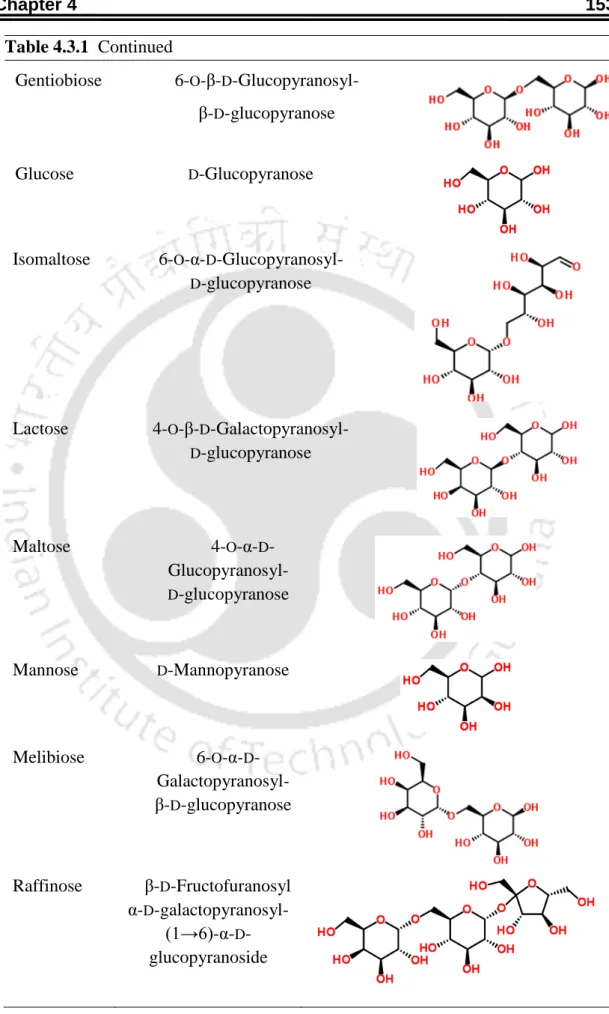
The mass spectrometry analysis confirmed the synthesis of oligosaccharides by the acceptor reaction of dextransucrase with cellobiose. The HPAEC chromatogram of the acceptor reaction mixture with gentiobiose revealed the presence of oligosaccharides, eluting for 7.5 to 18 minutes (Fig. 4.3.3A). The HPAEC chromatogram of the acceptor reaction mixture with glucose revealed the presence of oligosaccharides, eluting for 4.8 to 19 minutes (Fig. 4.3.4A).
The HPAEC chromatogram of the acceptor reaction mixture with isomaltose showed the presence of oligosaccharides that eluted from The chromatogram of the HPAEC acceptor reaction mixture with lactose showed the presence of oligosaccharides eluting between 5 and 11 minutes (Figure 4.3.6A). The chromatogram of the HPAEC acceptor reaction mixture with maltose showed the presence of oligosaccharides that eluted between 7.8 and 19 minutes (Figure 4.3.7A).
The mass spectrometry analysis confirmed that the acceptor reaction products of dextran sucrase with maltose ranged from DP3 to DP6. The HPAEC chromatogram of the acceptor reaction mixture with melibiose revealed the presence of oligosaccharides that eluted at a time from 4.8 to 7 minutes (Fig. 4.3.8A).
Conclusions
Specificity of acceptor binding to Leuconostoc mesenteroides B-512F dextransucrase: binding and acceptor product structure of alpha-methyl-D-glucopyranoside analogs modified at C-2,. Human metabolic phenotype diversity and its relationship to diet and blood pressure. 2012) Glucosylation of the flavonoid, astragalin by Leuconostoc mesenteroides B-512FMCM Dextransucrase acceptor reactions and characterization of products. Receptor reactions of a new transfructosylating enzyme from Bacillus sp. 2010) Purification and characterization of a novel glucansucrase from Leuconostoc lactis EG001.
1999) Mechanism of action of Leuconostoc mesenteroides B-512FMC dextransucrase: Kinetics of the transfer of D-glucose to maltose and the effects of enzyme and substrate concentrations. 2011) Kinetics of dextran-independent α-(1→3)-glucan synthesis by Streptococcus sobrinus glucosyltransferase I. 2013) Structural characterization of enzymatically synthesized dextran and oligosaccharides from Leuconostoc mesenterentroides 2NR6 RL B-transucras 2NR6. In vitro synthesis of oligosaccharides by acceptor reaction of dextransucrase from Leuconostoc mesenteroides. 2009) Galacto-oligosaccharides and other products derived from lactose.
2009) Synthesis and characterization of hydroquinone glucoside using Leuconostoc mesenteroides dextransucrase. 2005) Enzymatic synthesis and anticoagulant effect of salicin analogs using the Leuconostoc mesenteroides glucansucrase acceptor reaction. 2009). 2007) One-pot regioselective protection of carbohydrates. 1969) Synthesis of oligosaccharides by a growing culture of Leuconostoc mesenteroides: Formation of oligosaccharides in the presence of various types of glucobioses as acceptors.
Introduction
Synthesis, purification and prebiotic applications of .. isomalto-oligosaccharides from the dextransucrase acceptor reaction by Leuconostoc mesenteroides NRRL B-1426. sucrose and a calorific value of 2.8-3.2 kcal/g) (Kaneko et al., 1994;. They have also been identified as good humectants with low viscosity and water activity, but with high moisture holding capacity ( Goffin et al., 2011).Enzymatic synthesis of IMOs occurs through hydrolytic and transferase activities (Chockchaisawasdee and Poosaran, 2013).
In general, the commercially available IMO, which is made by the above process, usually includes short-chain saccharides such as isomaltose (DP2), panose (DP3), isomaltotriose (DP3) and isomaltotetraose (DP4) (Ketabi et al., 2011) and thus is synthesis of long chain IMO unfeasible. The enzyme dektransucrase (E.C expressed by several species of the genus Leuconostoc catalyzes the synthesis of IMOs through its acceptor reaction with maltose in a single step (Cho et al., 2014). Furthermore, the synthesis of IMOs is mainly controlled by the type of dektransucrase derived of a specific microorganism (Kothari and Goyal, 2013).
The effect of enzyme activity on the synthesis of IMOs was determined by varying the enzyme activity from 0.1 to 8 U/ml. The effect of temperature on synthesis of IMOs was determined by varying the temperature from 20 to 40°C.
Material and Methods
- Chemicals and reagents
- Microorganisms and culture conditions
- Optimization of reaction conditions for synthesis of IMOs
- Effect of time
- Effect of enzyme activity
- Effect of temperature
- Effect of sucrose concentration
- Effect of maltose concentration
- Quantification of IMOs
- Synthesis of dextrans with different molecular mass in acceptor
- Purification of IMOs
- High performance liquid chromatography
- Mass spectrometry
- In vitro analysis of prebiotic application of IMOs
- Effect of simulated human gastric juice on digestibility of
- Effect of human α-amylase on digestibility of IMOs
- Effect of IMOs on the growth of probiotics
- In vitro analysis of effect of IMOs on mammalian cells
- Culturing and maintenance of mammalian cells
- Cell viability assay
- Statistical analysis
Results and Discussion
- Optimization of reaction conditions for synthesis of IMOs
- Effect of time
- Effect of enzyme activity
- Effect of temperature
- Effect of sucrose concentration
- Effect of maltose concentration
- Purification and characterization of IMOs
- In vitro analysis of prebiotic application of IMOs
- Effect of simulated human gastric juice on digestibility of
- Effect of human α-amylase on digestibility of IMOs
- Effect of IMOs on the growth of probiotics
- In vitro analysis of effect of IMOs on mammalian cells
Conclusions
Introduction
Material and Methods
- Chemicals and reagents
- Microorganisms and culture conditions
- Synthesis and purification of GnOS
- In vitro analysis of GnOS application as prebiotic
- Effect of simulated human gastric juice on digestibility of
- Effect of human α-amylase on digestibility of GnOS
- Effect of GnOS on the growth of probiotics
- In vitro analysis of effect of GnOS on mammalian cells
- Culturing and maintenance of mammalian cells
- Cell viability assay
- Statistical analysis
Results and Discussion
- Synthesis and purification of GnOS
- In vitro analysis of GnOS application as prebiotic
- Effect of simulated human gastric juice on digestibility of
- Effect of human α-amylase on digestibility of GnOS
- Effect of GnOS on the growth of probiotics
- In vitro analysis of effect of GnOS on mammalian cells
Conclusions