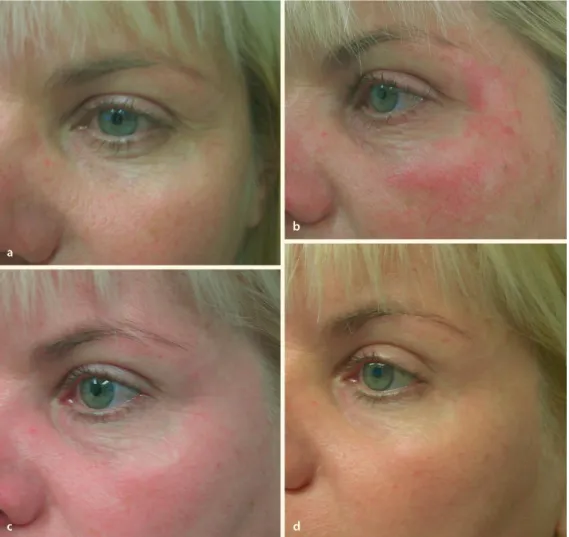
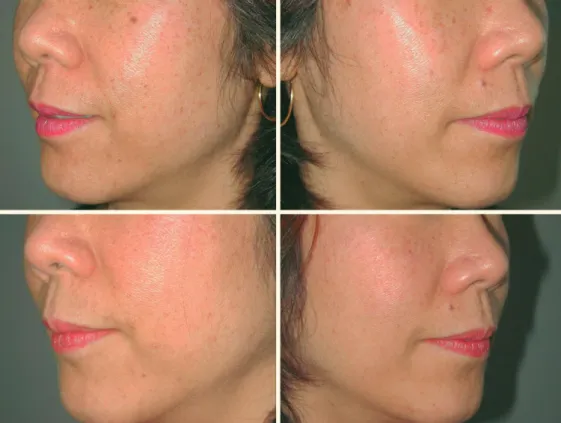
Nonsurgical laser and light-based treatment of the skin now also includes subcategories of treatment, such as photodynamic photorejuvenation and photomodulation with light-emitting diodes (LEDs). Skin Laser and Surgery Specialists of New York and New Jersey, UMDN-New Jersey Medical School, Newark, New Jersey, USA.
List of Contributors
Lasers and Lights
Switched and Long-Pulsed Laser SystemsSystems
After the procedure, you will feel swelling, bleeding and tearing of the skin for a few days. The laser can cause the upper layers of the skin to heat up, causing steam to form.

SMOOTH BEAM Procedural Consent Form
Garden JM, Bakus AD (1993) Clinical efficacy of pulsed dye laser in the treatment of vascular lesions. Hsu TS, Zelickson B, Dover JS, et al (2005) Multicenter study of the safety and efficacy of a 585 nm pulsed dye laser for the nonablative treatment of facial rhytids. Piacquadio DJ, Chen DM, Farber HF, et al (2004) Photodynamic therapy with aminolevulinic acid topical solution and visible blue light in the treatment of multiple actinic keratoses of the face and scalp: investigator-blinded, phase 3, multicenter trial.
15] described the use of what is now known simply as an IPL or intense pulsed light device to treat vascular lesions of the skin. Armenakas-Armenakas and Geronemus [27] reported the use of long pulse laser (PDL) in the treatment of facial AK. In the USA, at the time of this writing, the FDA has approved the treatment of non-hyperkeratotic AKs of the face and scalp [24].
The most serious drawback associated with the use of ALA-PDT or MAL-PDT is the possibility of phototoxicity [24]. Tarstedt M, Rosdahl I, Berne B, et al (2005) A randomized multicenter study to compare two topical methyl aminolevulinate (Metvix)-PDT regimens in actinic keratosis of the face and scalp.
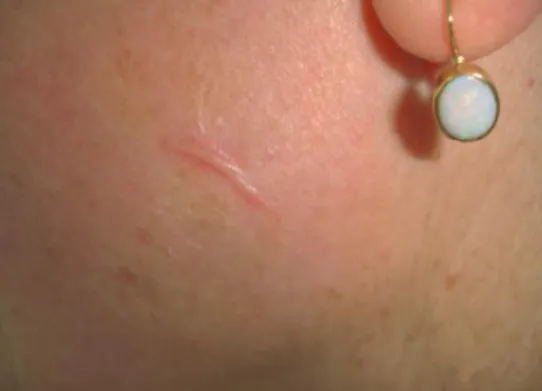
LED Low-Level Light Therapy
When LED photomodulation is given alone with the yellow 590 nm pulsed array, patients with mild to moderately severe photoaging receive eight treatments over a four-week period. We find that the use of LED photomodulation in combination with other modalities results in more effective clinical outcomes and faster resolution of erythrocytes. The faster resolution of erythema is believed to be due to the anti-inflammatory effects of LED photomodulation.
Red light (630 nm) has been used for many years in combination with a sensitizer (levulinic acid) for photodynamic therapy (PDT) [18]. LED photomodulation is provided immediately after thermal treatment due to its anti-inflammatory effects, which can reduce the heat-induced erythema of non-ablative treatments. Pilot studies for atopic eczema show that there is potential for further application of the specific anti-inflammatory properties of LED photomodulation.
McDaniel DH, Newman J, Geronemus R, Weiss RA, Weiss MA (2003) Nonablative nonthermal LED photomodulation - a multicenter clinical photoaging trial. Weiss RA, Weiss MA, Geronemus RG, McDaniel DH (2004) A new non-thermal non-ablative full panel led photomodulation device for the reversal of photoaging: digital microscopic and clinical results in various skin types.

Botulinum Toxins
When injecting into the glabella (and forehead) it is important to avoid possible diffusion of BTX-A (through the orbital septum) to the levator palpebrae superioris muscle of the upper eyelid. Many patients seek treatment for prominent or developing horizontal forehead wrinkles with frontalis muscle injections. In 1993, Blitzer and colleagues described the use of BTX for forehead rhytides [16].
This can result in a degree of relaxation of the inferior and medial parts of the frontalis muscle. For example, the parts of the orbicularis inferior to the lateral eyebrow function as eyebrow depressors. Th is the muscle that originates in the incisive fossa and inserts into the skin of the chin.
Complications that can occur after frontalis injections include hematoma, brow ptosis, and headache. Blitzer A, Brin MF, Keen MS, Aviv JE (1993) Botulinum toxin for the treatment of hyperfunctional facial lines.

Dermal Fillers
Hyaluronic acid Restylane, Perlane (Medicis; Scottsdale, AZ, USA) Captique, Hylaform, Hylaform Plus, Juvederm (Allergan- Irvine, CA, USA). There are several hyaluronic acid fillers now available, and the differences between the products often create considerable confusion. The residence time of cross-linked hyaluronic acid in the dermis is much longer (weeks to months).
All hyaluronic acid fillers currently available consist of gels containing cross-linked hyaluronic acid derived from avian or bacterial sources. Hylaform, Hylaform Plus and Captique each contain 5.5 mg/ml hyaluronic acid and are maximally saturated with water. A unique advantage of hyaluronic acid is that rare granulomatous hyaluronic acid reactions (caused by rare allergy to the material or foreign body granulomatous reactions to protein contamination) or unwanted hyaluronic acid placement can be easily treated and quickly resolved with an injection. of hy- aluronidase [15].
Brody H (2005) Use of hyaluronidase in the treatment of granulomatous hyaluronic acid reactions or unwanted displacement of hyaluronic acid. Rao J, Genevieve C, Goldman M (2005) Clinical comparison between two hyaluronic acid-derived fillers in the treatment of nasolabial folds: Hylaform versus Restylane.

Chemical Peeling
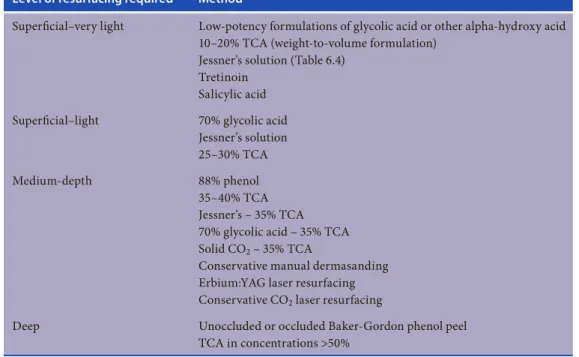
The preoperative consultation is essential for the physician to assess the expectations and mental readiness of the patient. These patients can be identified during the preoperative consultation and placed on appropriate therapy at the time of the chemical peel. Salicylic acid, a beta-hydroxy acid that is one of the ingredients in Jessner's solution, can also be used alone in superficial chemical peels [18].
Photograph of level 1 frostbite with Jessner's solution - 35% trichloroacetic acid (TCA) peel showing erythema and streaky pallor on the surface of the right cheek. The Monheit version of the Jessner's solution-35% TCA peel is a relatively simple and safe combination. A semi-dry applicator should be used to carry the solution within 2–3 mm of the lid margin.
Variables can be adjusted according to the patient's skin type and the areas of the face being treated. 2 Acetone or acetone/alcohol is used to further remove oil and fish from the surface of the leather.
Mesotherapy
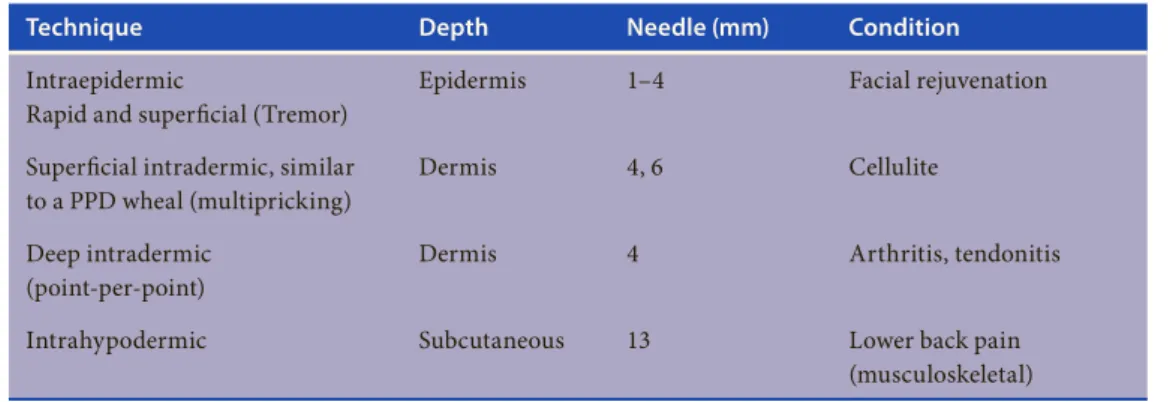
Mesotherapy was introduced prominently in the popular media in the United States after the headline by singer Roberta Flack, who cited mesotherapy (and a calorie-restricted diet) as significantly responsible for her dramatic weight loss. After 12, weekly treatments, the investigator noted a significant improvement in Melasma area and severity at weeks 8 and 12, but only 9.4% and 76% of patients rated their improvement as "good" and "fair," respectively. .Histological examination by a blinded dermatolopathologist using conventional hematoxylin and eosin staining also revealed no significant changes 6 months after initiation of treatment.
Spot bleeding immediately after superficial mesotherapy injections (photo courtesy of David J. Goldberg, MD). Half of the treated patients reported continued results an average of 9 months after the last treatment. Interestingly, seven patients (one third) felt that their improvement was significant (>75%) after only one treatment, although five patients had “no response” after two treatments and then discontinued.
Up to 90% of DC is reabsorbed in the intestinal wall and then recirculated back to the liver via the portal vein, and excreted through the gallbladder to the intestinal tract after food consumption. Even for drugs approved for use by other routes of administration (i.e. intravenous or oral), the pharmacokinetics (absorption, distribution and metabolism) following subcutaneous injection are generally unknown.
Subcutaneous Deoxycholate Injections (Injectable Lipolysis) for the Nonsurgical Treatment of Fat
A verbal understanding of the risks, benefits, and limitations and signed consent should be documented in the patient's record. I have limited my injectable facial lipolysis treatments to submental contouring consisting of 1% DC mixed with lidocaine. It usually confirms changes that the patient would not otherwise notice in the mirror.
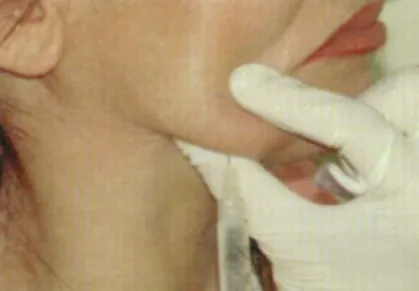
The patient can choose to use a local anesthetic for 15-30 minutes; while the anesthetic reduces the pain of the needle, it does not appear to significantly affect the patient's reaction to the subcutaneous drug. Injections into the jaw, performed separately or as an adjunct to treatment of the submental region (photo courtesy of Hexsel et al. Skin anesthesia may still be present and last until most of the swelling has subsided.
Photographic examples of the results of treatment with injectable lipolytic agents are shown in fig. Lieber CS, Weiss DG, Groszmann R, et al (2003) Veteran Aff airs Cooperative Study of the polyenylphosphatidylcholine in alcoholic liver disease.
Cosmeceuticals
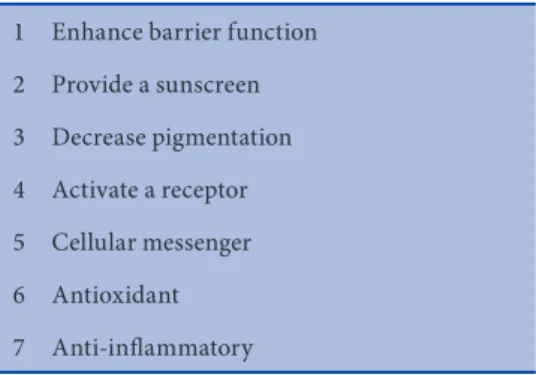
Nutrition is also considered part of the mind/body connection in the form of nutraceuticals. The main cutaneous function of cosmetic agents is to improve the barrier function of the skin. This water is then trapped by an occlusive film placed on top of the stratum corneum [7].
Unfortunately, it is highly photo-unstable with 36% of the avobenzone being destroyed shortly after sun exposure. Menthyl anthranilate is the only sunscreen of the anthranilate filter family approved in the United States, where it is also known as Meradimate. However, it is a large molecule and cutaneous penetration to the level of the melanocyte is challenging, significantly reducing its effectiveness.
Some of the effects of soy on the skin have been linked to its estrogenic effect in postmenopausal women. Allantoin is one of the oldest botanical anti-inflammatory extracts on the cosmetic market.