Taylor & Francis is an imprint of Taylor & Francis Group, an informa company. Improved treatment of beach profile and interaction between waves and structures and a new section on coastal modeling.
Extensive text about fishing passes and a new paragraph (9.1.6) about the effect of the operation of weirs on the quality of the river water. The aim of the book is to provide a textbook for senior and postgraduate students, although we hope that researchers, designers and operators of the many types of hydraulic structures will also find it interesting and a useful reference source.
Dam engineering
Elements of dam engineering
General The construction of dams ranks with the earliest and most fundamental of
Introductory perspectives
- Structural philosophy and generic types of dams
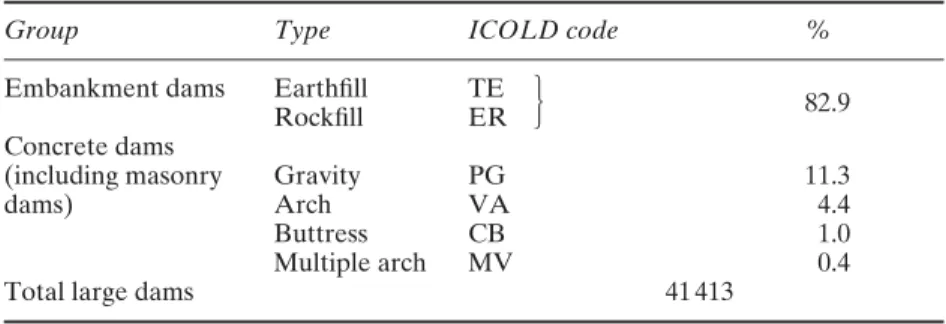
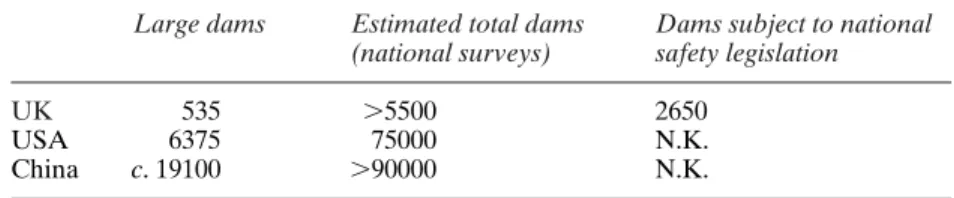
- Statistical perspective Statistics are not available to confirm the total number of dams in service
- Historical perspective The history of dam building dates back to antiquity, and is bound up with
- Environmental and related issues The environmental, economic and other socio-political issues associated
- Dams: focus points
The 1998 edition of the World Register limited the number of entries for certain countries, especially China, in the interest of saving space. Rapid growth in the number of large dams has been accompanied by a progressive increase in the size of the largest dams and reservoirs.
Embankment dam types and characteristics
Dams differ from all other large civil engineering structures in a number of important aspects: each dam, large or small, is quite unique; Geology of the foundation, material characteristics, flood hydrology of the catchment, etc. dams are required to operate at or near their design load for long periods. dams have no structural life; However, they may have an imaginary life for accounting purposes, or a functional life dictated by reservoir sedimentation. The vast majority of dams are earthen, constructed from a variety of natural soils; these are the least durable building materials. dam engineering brings together a number of disciplines, e.g. structural and fluid mechanics, geology and geotechnics, flood hydrology and hydraulics, on a quite unique scale. Dam engineering depends critically on the application of informed engineering judgment. The designation "rock embankment" is appropriate when over 50% of the fill material can be classified as rock fill, i.e.

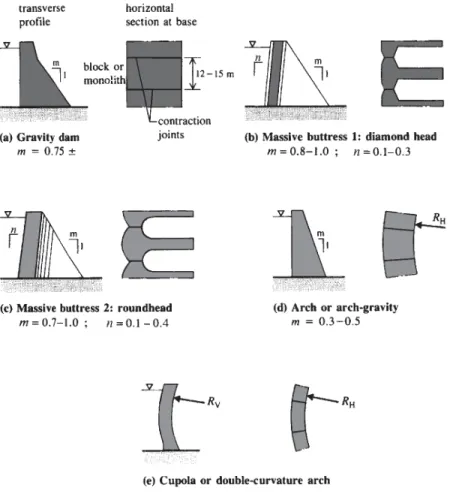
Concrete dam types and characteristics
Other concrete dams. Many less common variations of the main types of concrete dams shown in the figure. A comparison of the general characteristics of concrete dams with those of an embankment dam shows the following inherent weaknesses of the former.
Spillways, outlets and ancillary works
- Spillways
- Outlet works Controlled outlet facilities are required to permit water to be drawn off as
- River diversion This provision is necessary to permit construction to proceed in dry con-
- Cut-offs
- Internal drainage
- Internal galleries and shafts
Provision must be made to accommodate the required pin shafts and piping with their associated control gates or valves. The lower outlet should be of as high a capacity as economically feasible and in accordance with the reservoir management plan.
Site assessment and selection of type of dam .1 General site appraisal
- Dam site evaluation – general The viability of the preferred dam site identified in a reservoir feasibility
- Geological and geotechnical investigations
- Foundation investigations
- Materials for dam construction Initial exploration for sources of materials is conducted by a combination
- Selection of type of dam The optimum type of dam for a specific site is determined by estimates of
A comprehensive overview of the latter is presented in Clayton, Simons and Matthews (1995) and in the CIRIA country investigation manual (Weltman and Head, 1983). The nature of the investigation depends on whether an embankment or a concrete dam is proposed.

Loads on dams .1 General
- Schedule of loads
- Concepts of loading
Dams: setting a new standard for sustainability, in Proceedings of the Institution of Civil Engineers, 'Civil Engineering',159 (May Empingham dam – design, construction and performance. Dams are still not properly planned, in Proceedings of the Institution of Civil Engineering). Engineers, 'Civil Engineering.

Embankment dam engineering
Introduction
Nature and classification of engineering soils .1 The nature of soils
- Description and classification of natural soils Soil particles vary in size from over 100 mm (cobbles) down through
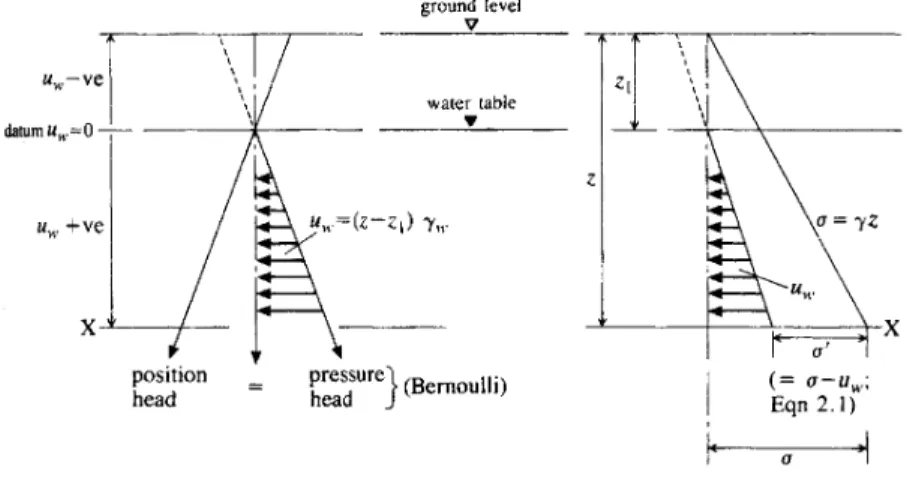
- Phases in soil: soil porewater: effective stress A soil may constitute a two- or three-phase system comprising solid soil
Transport results in progressive changes in the size and shape of mineral particles and some sorting, with the finest particles carried furthest. Natural soils usually contain mixtures of particle sizes, but are named according to the particle type whose behavior characterizes that of the soil as a whole. Provided that this water is present as a continuous liquid phase in the soil pores, Bernoulli's law Fig.
Engineering characteristics of soils .1 Soil load response
- Shear strength The shear strength of a soil is defined as the maximum resistance to shear-
- Compressibility and consolidation
- Soil permeability Soil permeability is important to problems of seepage, stability of slopes
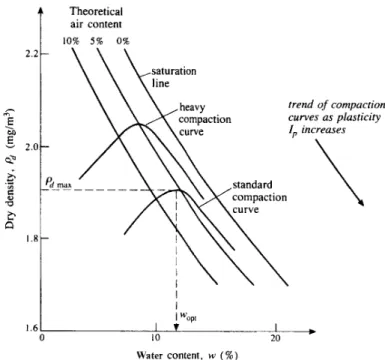
- Compaction
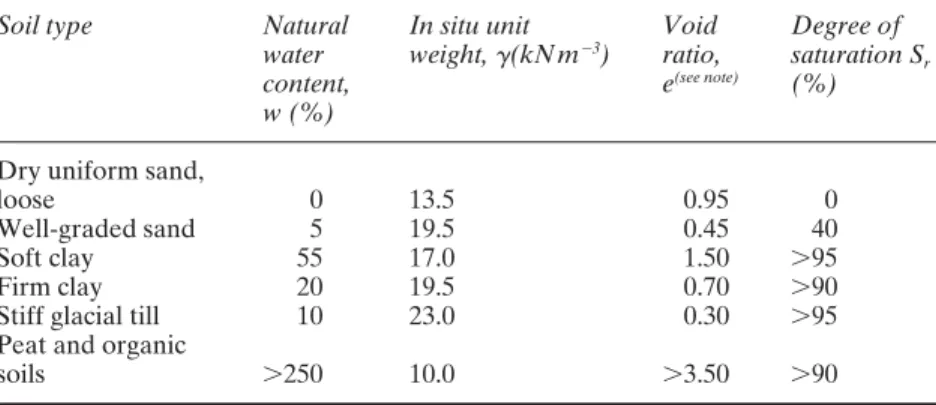
- Representative engineering properties for soils
- Partially-saturated soils and the embankment dam
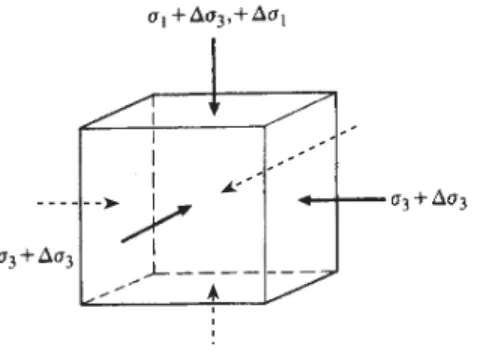
However, the most significant soil deformations usually involve volume changes resulting from changes in the geometric configuration of the soil particle collection, e.g. From the consideration of volume changes in a soil element under applied total stress (Fig. 2.4), the change in pore pressure ∆u3 due to an applied change in minor principal stress of ∆3 can be expressed as. where is an empirical pore pressure coefficient. This ratio can be used to specify the required degree of compaction of the site, placing limits on the water content of the soil.
Principles of embankment dam design .1 Types and key elements
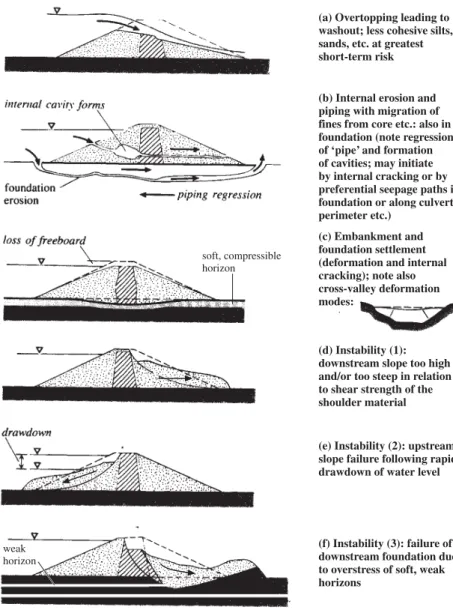
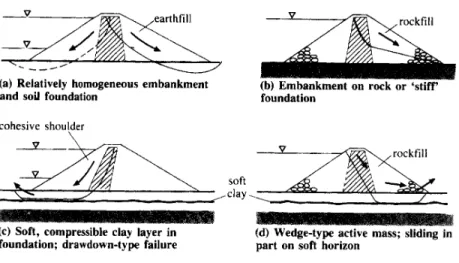
- Defect mechanisms, failure modes and design principles
- Design features and practice
Thin core may be susceptible to internal fracturing and erosion (Section 2.7.2), wide core offers lower internal hydraulic gradients. Stability. The embankment, including its foundation, must be stable in construction and under all operating conditions of the reservoir. The thickness of a layer of rock armor is generally of the order of 0.7–0.9 m for pullouts of up to c.
Materials and construction .1 Earthfill materials
- Construction
Foundation preparation activities, including river diversion, may proceed concurrently with the development of fill resources. The construction of the foundation ends with the laying of drainage blankets which will rest on the lower part of the lower shoulder. Infill construction is an exercise in the efficient use of plant within the terms of specification requirements in terms of material compatibility and compaction technique.
Seepage analysis .1 Seepage
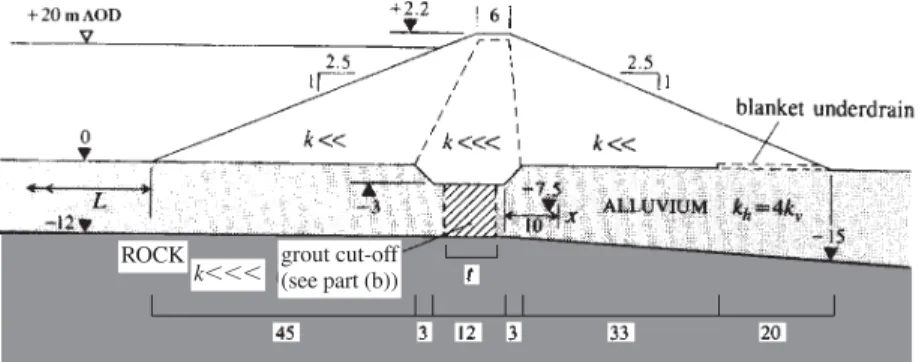
- Core and cut-off efficiency
- Filter design The design of filters and transition layers to prevent seepage-induced
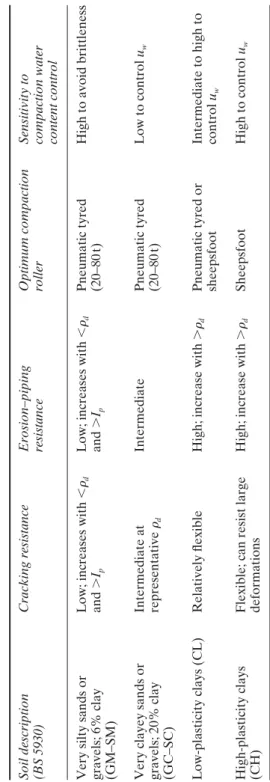
In the case of a central core and/or zoned embankment, construction of the fly net is based on consideration of the relative permeability of each element and application of the continuity equation:. 2.16). They are expected to be sufficiently fine to prevent migration of the protected soil (pipe criterion) while being sufficiently permeable to freely discharge seepage (permeability criterion). A recent development is the suggestion that, in view of the potential problem of hydraulic fracturing and cracking, etc., with the risk of progressive erosion (Section 2.7.2), rational filter and transition design should be based on considerations of relative permeability (Vaughan and Soares, 1982).

Stability and stress .1 Stability analyses
- Stress analysis, hydraulic fracturing and cracking
- Seismicity and seismic load effects
Internal stress analysis is generally limited to assessing the risk of hydraulic fracturing or internal cracking, e.g. For planning purposes, both should be considered operational in the sense least favorable to dam stability. For larger embankments, it can be calculated that the natural frequency will be of the order of fn1.
Settlement and deformation .1 Settlement
- Deformation
- Performance indices for earthfill cores
Further aspects of internal deformation, particularly at critical core–filter–shoulder interfaces, are discussed in Mitchell (1983). The coefficient is the maximum acceptable core permeability in meters per second and the mean hydraulic gradient across the core. Given the difficulties involved in determining qandk, the value of QI lies primarily in its use as a long-term benchmark.
Rockfill embankments and rockfill .1 Rockfill embankments
- Rockfill
An exhaustive study of the engineering properties of compacted rock fill and of the special large-scale testing techniques required is reported in Marsal (1973). Rockfill deposition is associated with particle contact squeezing and is greatly increased by saturation; so it can be accelerated during construction operations. The constant in equation (2.40) normally lies in the range 0.2–0.5, and time1 and t2(year) are determined relative to the completion of construction and/or first shot.
Small embankment dams, farm dams and flood banks .1 Small embankment dams
- Small farm and amenity dams Large numbers of very small privately owned reservoirs are constructed
- Flood control banks and dykes
The overflow capacity and headwaters must be adequate to accommodate the design flood with a return period of at least 100-150 years. The drainage pipeline must be surrounded by concrete and laid in a trench in the natural ground with an upper control valve. Chapter 8 should be referred to for a discussion of the important issue of floodbank alignment and protection.
Tailings dams and storage lagoons Tailings dams and storage lagoons are constructed for the retention of
These distribute the fluidised fines in a controlled manner, with the coarsest fraction settling first and leaving the finest material behind to form a zone or 'core' of lower permeability, but it can be noted that these types of hydraulic fillings are sensitive may be for liquefaction under the influence of water. dynamic load. The large modern lagoon dikes associated with the operation of many process industries generally conform to good standards and practices for dams. Common deficiencies in the design of older dams and lagoon dikes are the poor control of internal seepage regime and marginal freeboard, the latter often combined with limited overflow capacity.
Geosynthetics in embankment dams
Control of surface erosion (precipitation or limited overflow flows). The use of geosynthetics in conjunction with natural vegetation can significantly increase erosion resistance and reduce 'panting' due to localized runoff on the underside. Separation layers. Geosynthetics can be used to act as an interlayer to provide positive segregation of fill materials at an interface. An overview of the use of geosynthetic membranes is given in ICOLD Bulletin 78 (ICOLD, 1991) and geotextiles for transition filter layers in Bulletin 55 (ICOLD, 1986).
Upgrading and rehabilitation of embankment dams The upgrading and rehabilitation of older embankment dams is assuming
1999) Walshaw Dean Lower – walgedrag tydens langdurige reservoironttrekking, in Proceedings of Conference 'The reservoir as an asset', British Dam Society, London: 94–104. Die Geoffrey Binnie-lesing, 1994), in Proceedings of the Conference on 'Reservoir Safety and the Environment', British Dam Society, Thomas Telford, London. 1985) Seismiese ontleding van die Bo- en Laer Glendevon-damme, in Proceedings of the Conference on Earthquake Engineering in Britain, Univ.
Concrete dam engineering
Loading: concepts and criteria .1 Loads
- Load combinations A concrete dam should be designed with regard to the most rigorous
- Forces, moments and structural equilibrium The reactive forces developed in the foundation and/or abutments of the
As with self-weight loading, Pm, inertial forces are considered to act through the center of the dam section. Ceis a dimensionless pressure factor, and is a function of z1/zmaxandu, the angle of inclination of the upstream plane to the vertical. Combination of the applied vertical and horizontal static loads is equal to the oblique resultant force, R(Fig. 3.1).

Gravity dam analysis .1 Criteria and principles
- Overturning stability A simplistic factor of safety with respect to overturning, F O , can be
- Sliding stability
- Stress analysis: gravity method Straight gravity dams are generally analysed by the gravity method of stress
- Permissible stresses and cracking The compressive stresses generated in a gravity dam by primary loads are
- Upstream face flare
- Gravity profile selection The primary load régime for a gravity dam of given height is essentially
- Advanced analytical methods
- Stabilizing and heightening
The FSF is defined as the ratio of the total shear and sliding resistance that can be mobilized on the plane to the total horizontal load. Confidence in the selection of the slip term depends on the quality of the foundation investigation program. A review of the use of the technique in dam analysis is given by Clough and Zienkiewicz (1978).

Buttress dam analysis .1 General
- Buttress analysis and profile design Buttress dam analysis parallels gravity dam practice in being conducted in
An approximate analysis of the downstream portion of the support web using modified gravity analysis is possible if the web is parallel-sided. However, the sides of the support track are generally flared towards the base level to increase the contact area and thus the sliding resistance and to moderate the contact load on the foundation. A sample profile is established on the basis of previous experience, where the choice of a round head or a diamond head is largely up to the designer's discretion.
Arch dam analysis .1 General
- Arch geometry and profile
- Arch stress analysis: elastic ring theory Elastic analysis based on the application of classical ring theory is ade-
- Advanced arch analysis Certain of the deficiencies of elastic ring analysis have been alluded to. Early
As in the case of retaining dams (Section 3.3), the sophisticated dome design leads to a much higher final unit cost. The concept of a profile with a constant angle follows logically from the development of a profile with a constant radius of minimum volume. The more complex geometry of a constant angle profile is much less suitable for analysis using this method.

Design features and construction .1 Introduction
- Cut-offs and foundation grouting The cut-offs under modern concrete dams are invariably formed by grout-
- Uplift relief drains Foundation uplift relief is effected by a line of drainage holes close down-
- Construction planning and execution
Curtain joints. The purpose of curtain joints is to form a partial occlusion to limit seepage and, in theory, to modify the downstream pressure regime. Consolidation grouting. The primary purpose of consolidation grouting is to stiffen and consolidate the rock in the critical contact zone immediately below the dam. Uplift within the dam is alleviated by shaped holes that run the full height of the structure and are located close to the upstream face.

Concrete for dams .1 General
- Constituent materials The primary constituents of concrete are cement, mineral aggregate and
- Concrete mix parameters
- Concrete production and placing High production rates are necessary on large projects and require a care-
Aggregates. The function of the coarse and fine aggregate is to act as a low cost, inert bulk filler in the concrete mix. It can be noted that it is the characteristics of the mature mass concrete at an age of more than 90-180 days that are significant in dam construction. The cost efficiency and effectiveness of the compaction process can be improved for larger dams by using Table 3.10 Characteristics of bulk concrete for dams.
The roller-compacted concrete gravity dam .1 General
- Alternatives in roller-compacted concrete Research has resulted in the emergence of three principal approaches to