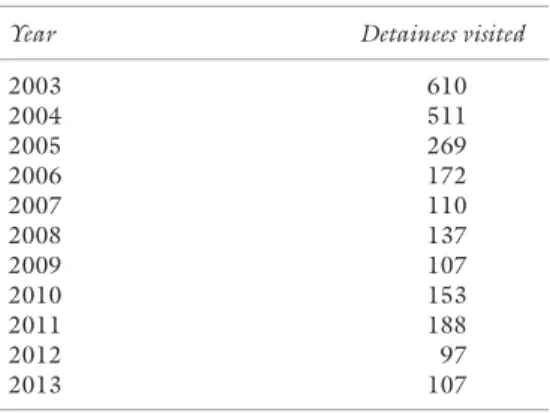
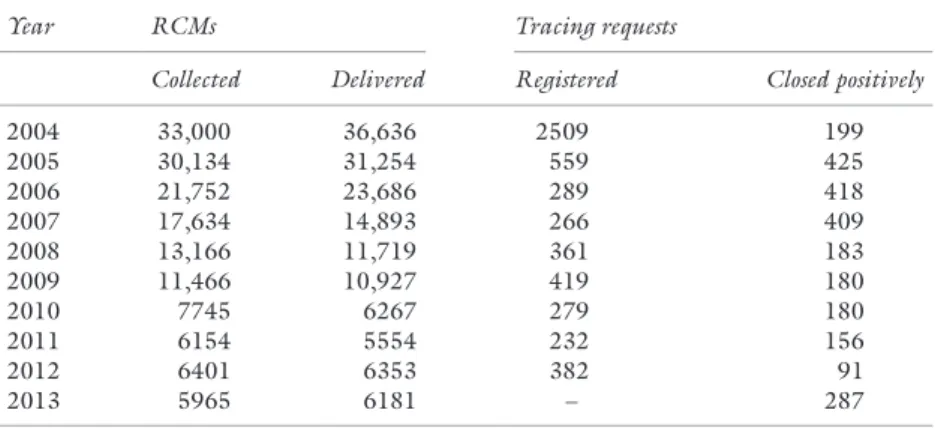
Interestingly, in the post-Cold War period, internal armed conflicts became the central focus of the organization. Based on the experiences of the ICRC in Sri Lanka (conflict between government forces and the LTTE) and Sudan (conflict in Darfur), this book critically examines the possible dilution of the principle of neutrality of international humanitarian organizations in internal armed conflicts.
It is therefore evident that the humanitarian activities of the ICRC are clearly rooted in public international law. It is evident that the ICRC's humanitarian approach prioritizes confidentiality (Sassoli and Bouvier 1999).
Such developments have led to a mutual redefinition of the role of international humanitarian law, humanitarian organizations and concepts related to internal armed conflicts. According to them, both internal and external pressures, such as the end of the cold war and the politicization of humanitarian aid, have contributed to these changes (ibid.: 187).
It also consulted the documents of NGOs in the field; such as Medicine Sans Frontiers (MSF), Amnesty International (AI), International Crisis Group (ICG) and Human Rights Watch (HRw). Because of the risk, time constraints, and problems in obtaining funding for field research, the analysis of the Sudanese cases relied on the few interviews of ICRC staff and on the organization's published materials.
Genocide, Justice and Forensic Sensibilities of the International Committee of the Red Cross." Chinese Journal of International Law. The second section examines the dual role of the ICRC in internal armed conflicts.
Warmongering means the recognition of the warlike status of the insurgents or rebels by the state (Garner Lauterpacht 1947: 276). However, throughout the first half of the nineteenth century, the recognition of belligerence had faced several problems as states became hostile to it.
Similar to the inter-state wars, the role of the ICRC is also dual in intra-state conflicts. During these years the position of the ICRC in the intra-state conflict was ambivalent. The military uprising in Spain in 1936 was another case that led to the intervention of the ICRC.
Nevertheless, at the end of the Conference, Article 2A (later known as General Article 3) was adopted. In Greece, the humanitarian concerns of the ICRC became intertwined with the strategic calculation of military. The initial role of the ICRC was similar to that of a mediator between the conflicting parties.
This resulted in the termination of the organization's activities in Bosnia (de Courten 1992; Rieff 2002). As discussed above, most of the initial proposals for the regulation of non-international armed conflicts came from the ICRC.
The first list applies to the situation of the international armed conflicts and the second applies to internal armed conflicts (Statute of the ICC, 1998). The Tadic formula provides a conceptual framework for the application of IHL to situations of internal armed conflicts. The discussion above shows that the contributions of the ICRC in internal armed conflicts are twofold.
Most of the internal armed conflicts during the Cold War highlighted such crises and challenges. Historical Development of the Application of Humanitarian Law in Non-International Armed Conflicts to 1949.”. Against this background, this chapter examines the role of the ICRC in the conflict in Sri Lanka.
Such developments resulted in the emergence of the Tamil Federal Party in 1949 under the leadership of S. Such attitudes by Sinhalese politicians led to the growth of the LTTE and its policy of indiscriminate violence against ordinary Sinhalese villagers. The radicalization of the LTTE and its embrace of terror strategies against civilians helped the government justify their violent actions.
In September 1991, former Indian Prime Minister Rajiv Gandhi was also assassinated by the LTTE in retaliation for the IPKF's misdeeds in Tamil regions. This led to the strengthening of the emergency legislation by the government and consequently also the suffering of the civilians (Hashim 2013: 99). In response, the government conceded the first two demands, but postponed consideration of the last two.
Indian mediation efforts culminated in the signing of the Indo-Sri Lankan Agreement in 1987 and the deployment of the Indian Peacekeeping Force (IPKF) in Sri Lanka (Kodikara 1989). The India-Lanka agreement called for the withdrawal of the Sri Lankan army and navy from the North Eastern provinces and the complete disarmament of the LTTE. Both the LTTE and the Sri Lankan government began to violate the provisions of the agreement.
UN concerns over Sri Lanka's armed conflict were very low and limited to some expressions and reports. Here it is possible to say that the UN's role in Sri Lanka was limited to UNHCR's humanitarian activities. The following section examines some of the humanitarian tragedies that occurred during Eelam War IV and the post-war period in Sri Lanka.
The government attempted to intimidate and silence the media and other critics of the war through a variety of threats and actions. The government fired extensively in three successive No Fire Zones, where it had encouraged the civilian population to concentrate even after signaling it would cease the use of heavy weapons. The report also pointed to government shelling of hospitals and denial of humanitarian aid. The 2009 US Department of State report indexed reported violations of international humanitarian law in Sri Lanka.
According to the Report of the Lessons Learned and Reconciliation Commission (LLRC), appointed by the Government of Sri Lanka to investigate the aftermath of the war from July 2006 to May 2009, the Security Forces lost an estimated 5,556 personnel in action, while another 28,414 were injured (LLRC Report 2011: 139). The government also used "denial of visas and travel permits, threats of deportation, character assassination and accusations of pro-Tigers sympathies to coerce and control the aid system". Moreover, the unwillingness of humanitarian organizations to confront the 'instrumentalization of humanitarian action and Machiavellian government tactics, including the co-optimization of the aid narrative for military objectives, intensified the humanitarian tragedy' (Niland 2014).
Sometimes the agencies themselves became part of the counterinsurgency strategy and the government used them to legitimize its actions (weissman 2011). Both the government and the LTTE recognized these mandates and the ICRC made several attempts to develop a mechanism to address these problems (ICRC 2003a: 155; 2003b). According to ICRC statistics, the organization transferred approximately 1,516 and 1,099 bodies of Sri Lankan soldiers and LTTE fighters, respectively, between 1995 and 2001 (ICRC 2003b: 2).
In the same year, the Army had introduced educational courses in Human Rights and Humanitarian Law to its members with the assistance of the ICRC (Lessons Learned and Reconciliation Commission of Inquiry 2011: 49; ICRC 2009b). Many other international organizations and national civil society organizations also criticized the ICRC for its principles of confidentiality and secrecy. However, in these years, both the government and the LTTE recognized the mandates of the ICRC and acknowledged the importance of its presence in conflict zones.
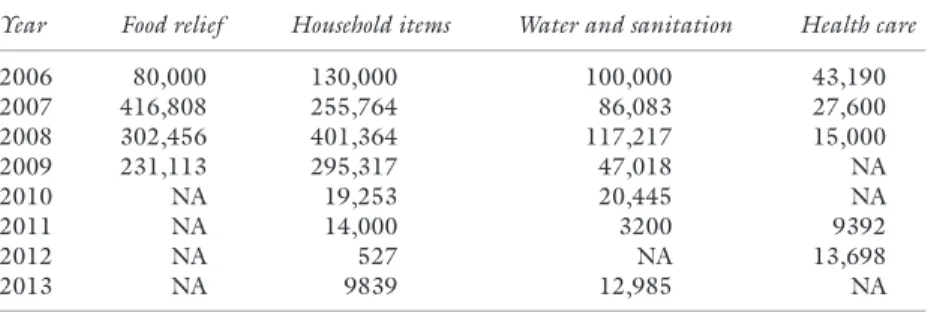
This also highlights the approaches of donors, especially Western countries, to humanitarian aid in Sri Lanka. In addition, the ICRC has faced many challenges regarding the security of its staff over the years in Sri Lanka. In addition to these obstacles at the domestic level, some other international factors have limited the ICRC's neutral and independent humanitarian activities in Sri Lanka.
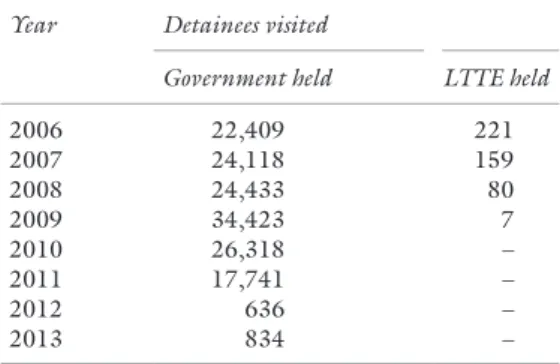
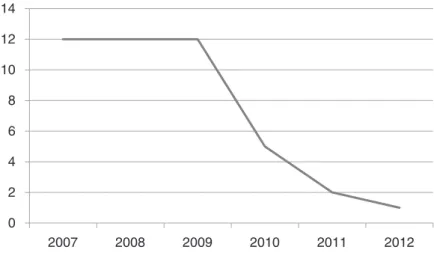
All this shows that in Sri Lanka after the state regained its authority over the conflict zones in the north and east, ICRC activities were minimal. International Peace Promotion and Contextual Peace Policy in Sri Lanka. Annals of the Association of American Geographers. Report of the Secretary-General on Children and Armed Conflict in Sri Lanka. UN Doc.
A rmed c onflict in d Arfur
The third part examines the role of the ICRC, particularly in reducing human suffering arising in the context of conflict. The armed conflict in Darfur began in the late 1980s, although its roots and causes can be traced back centuries. International humanitarian law and human rights law were neglected by all the warring parties (Udombana 2005).
The radical nature of the conflict is clearly evident from their chosen organizational vessel, 'the Arab Congregation'. Although the UN was reluctant to respond later in the early days of the conflict, it adopted a proactive policy. Their inability to confront the Sudanese government was one of the reasons for this delay.
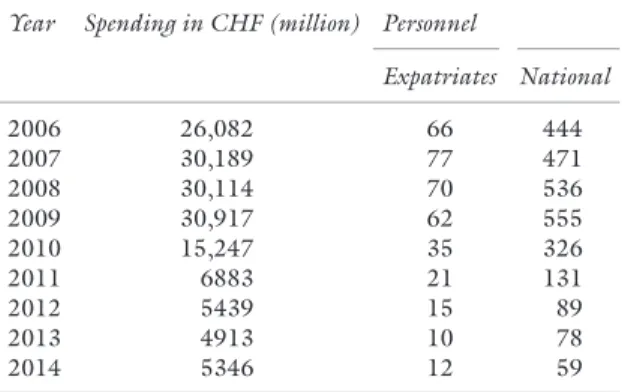
From 2004 to 2009, Sudan was the organization's largest aid operation in the world. It was the organization's largest operation in terms of emergency calls received. However, budget and staff analysis is only a partial indicator of the ICRC's role in Darfur.
One of the primary constraints for the ICRC in carrying out its mandate in Darfur has been the Sudanese state itself. Considering the amount spent and the staff employed, it was the largest in the history of the ICRC. Nevertheless, this was not the only factor that determined the activities of the ICRC in Darfur.
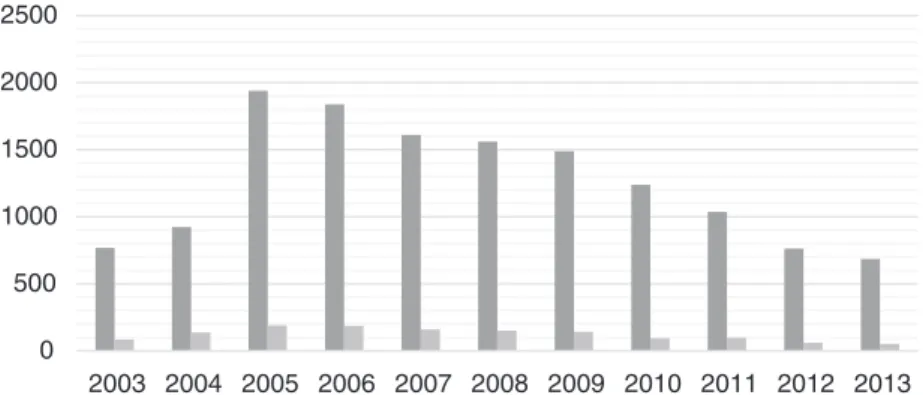
Similarly, in its 2014 ‘Overview of Operations’, the ICRC provides some key characteristics of the armed conflicts in which the organization is currently involved (ICRC 2014). This increasing concern of the international community about internal armed conflict and its victims also resulted in the growing involvement of the ICRC. The other important aspect explored in this book is the neutrality and autonomy of the ICRC in internal armed conflicts.
As explained, the neutral humanitarianism of the ICRC aimed to ensure unimpeded access to victims. Sri Lanka's armed conflicts also exposed how the ICRC's cooperation with the authorities undermined the organization's fundamental principles. Neutrality and Impartiality: The Importance of These Principles for the International Committee of the Red Cross.