Working with adolescent violence and parental abuse : approaches and contexts for intervention / edited by Amanda Holt. Catheleen Jordan, PhD, is Professor and Cheryl Milkes Moore Professor of Mental Health at the University of Texas at Arlington, School of Social Work.
ACKNOWLEDGEMENTS
INTRODUCTION
As with all forms of domestic violence, we know that the abuse of adolescents and violence against parents is highly gendered. Unraveling these complexities in the context of adolescent abuse and parental violence is an ongoing research challenge.
BUILDING RESPECTFUL FAMILY RELATIONSHIPS
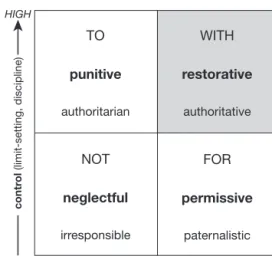
Motivational interviewing techniques that encourage the involvement of young people in the process of change (Miller & Rollnick, 2002). Youth who are violent at home have different risk and protective factors, life experiences and needs.

EMPOWERING PARENTS
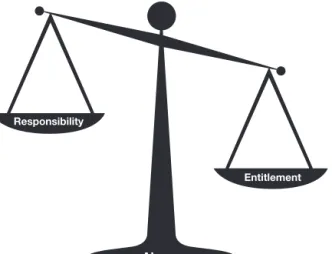
We use a series of exercises to debunk some of the unhelpful myths that parents have picked up about their child's behaviour. An exercise designed to reduce parental guilt is called Impacts on Your Child, which is a core element of Who's Responsible.
HELPING ABUSED PARENTS BY NON-VIOLENT RESISTANCE
To prevent the insidious habituation factor, parents need to be re-sensitized to their child's abuse. We have described a similar situation elsewhere, where the child's anxiety is multiplied by the parent's fear that the child might panic (Lebowitz & Omer, 2013). Parents make the announcement verbally and in writing, usually in the child's room.
So if the child refuses to listen or read, the parents leave the message on the table. Typical supporters include grandparents and other members of the extended family, friends of the parents, and sometimes the parents of the child's friends. Much attention is paid in therapy to preparing parents to deal with the child's reactions.
We believe that a piece of his mother's pie in the child's stomach enabled a positive work of reconciliation.
TRAUMA-BASED APPROACHES TO ADOLESCENT-TO-PARENT
The post at Wish was funded to work with young people and their parents across the city of Bristol, although many of the referrals were limited to specific areas of economic and social deprivation. The young people were often referred to Child and Adolescent Mental Health Services (CAMHS) while I was working with them: some received a service, some did not. Most children and young people I have worked with have struggled in mainstream education because it is too much for their already exhausted, overstressed survival system.
Of the school pupils I have worked with at Wish, they all left school with very few qualifications, yet were clearly intelligent young people. My work with young people (and often their siblings) was underpinned by two key elements: (i) a genuine curiosity about them and their journey to this point. Changes in the young people's behavior and attitudes were often easier to see than changes in their parents.
Young children are driven to bond with their primary caregivers in order to survive, and this desire for closeness is very present in all the young people I have worked with.
RESPONDING TO FILIO- PARENTAL VIOLENCE
This group is the primary reason for the large increase in cases coming to the attention of the legal system. In the case of NFPV, the image of the family – including both the image of the parents and the violent child(ren) – is in a bad state. But in light of the parents' reaction, and the expansion of the scope of the child's power, the violent behavior is repeated.
It is the perception of the 'benefits' that violence brings that sustains and sustains it. The family isolates itself from society, not only because of the child's active sabotage of it, but because of the parents'. Formalize an agreement of non-violence, which must be maintained at least for the duration of the intervention.
The nature of the intern's relationship with the referring institutions should be clearly explained.
RESPONDING TO PARENT ABUSE IN NEW ZEALAND
Indeed, mine was to be one of New Zealand's first inquiries into parental abuse (Murphy-Edwards, 2012). What follows is a brief description of the problem of parental abuse in New Zealand and the mental health setting in which I practice, as a means of contextualizing my clinical experiences of working with parental abuse. Family members are often surprised to learn about the term parental abuse and its definition.
In the following section I discuss assessment issues and considerations when working with youth and their parents for whom parental abuse is a feature of family life. This is problematic in the case of parental abuse because many of those who abuse their parents are pro-social youth with no evidence of aggression outside the home. As a result, policies and organizational practices are often underdeveloped in relation to the problem of parental abuse in this country.
Keeping young people and their parents connected can be a real challenge, especially when parental abuse becomes the target of intervention.
THE YUVA YOUNG PEOPLE’S SERVICE
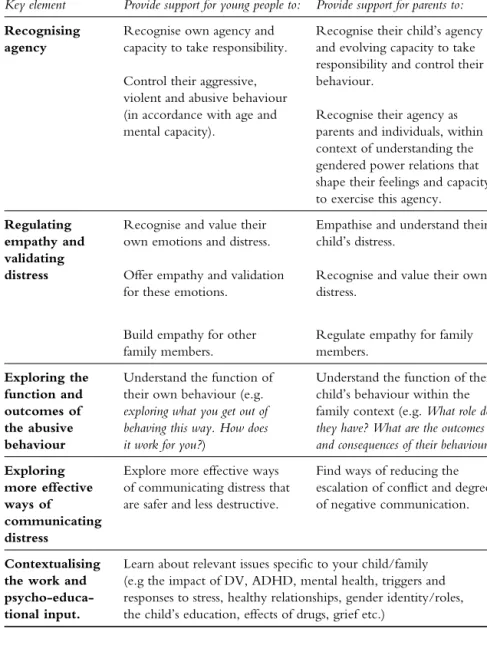
The majority (81 percent) of the families we work with are single-parent families and come from a variety of ethnicities. However, it does have an impact on the complexity of the cases we work with, as illustrated by Sofi and Jay's case study. A core aim of the Yuva service is to work alongside parents and young people to enable a change in this attribution of responsibility.
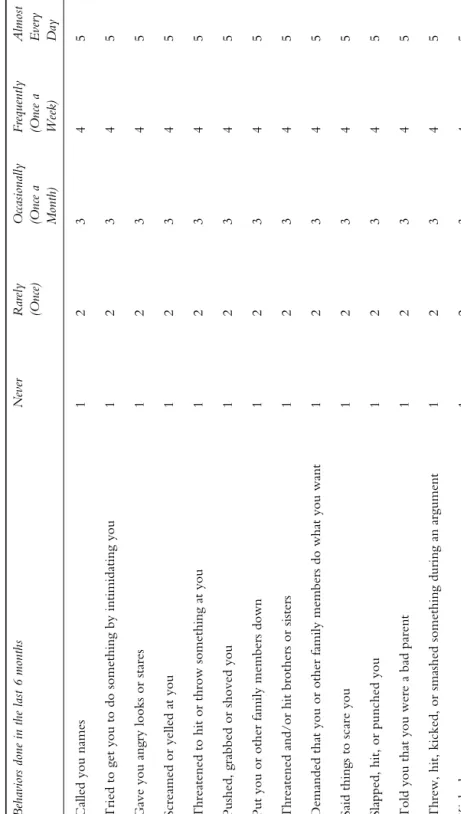
This is especially the case where the CPV follows adult domestic violence and the mother may feel responsible for the trauma of the abuse the young person witnessed and 'understand' their child's perception of themselves as a victim. Therefore, an important part of our work with young people and parents is to enable them to identify the function of their offending behaviour. The inventory is used with young people and parents to identify the frequency and types of abusive behavior used by the young person (i) in the last 4 weeks and (ii) in general.
The vast majority of the young people we work with who use violence are also victims of past or ongoing abuse and often find it difficult to manage complex and diverse support needs.
THE YOUTH OFFENDER DIVERSION ALTERNATIVE
Historically, Texas has a reputation for being "tough on crime," and in regards to domestic violence, the Texas Code of Criminal Procedure states that "The primary duties of a peace officer investigating an allegation of domestic violence or responding to a disturbance call, that may involve family violence are to protect any potential victim of family violence, enforce the law of this state, enforce a protective order from another jurisdiction as provided in Chapter 88, Family Code, and make lawful arrests of violators” (1999). Enrollment in the program was a condition of the offender's bail (the amount of which varies considerably and is set by the judge).Phase two of the program involved individual case management (which included referrals to other agencies) and one-on-one solution-focused brief therapy (SFBT) with the young.
What would be different?" The MQ is designed to elicit a description of a problem-free life (de Shazer, 1988). Youth are also given the opportunity to answer, "What do you most hope for from working with YODA?" The Best Hopes Question (Ratner, George, & Iveson , 2012) is an extension of MQ and also has the potential for a positive outcome.Secondly, the key stakeholders of the YODA program set a mutually agreed upon goal at the beginning of the partnership.
Issues such as home versus office visits and treatment under the auspices of the juvenile department versus the university are under consideration.
GENDER AND ADOLESCENT- TO-PARENT VIOLENCE
Case background
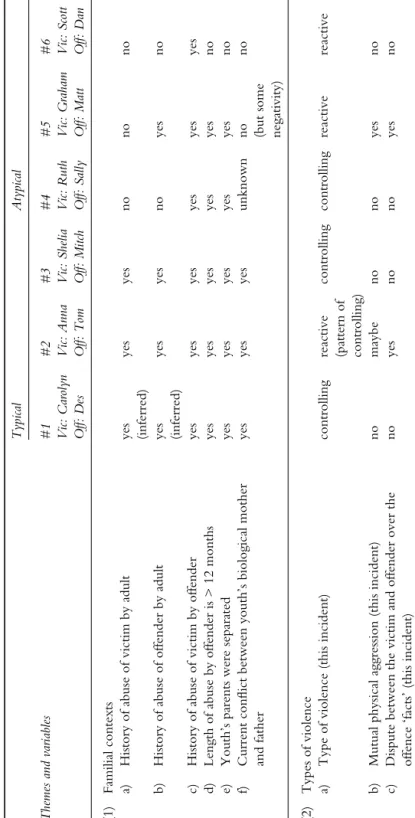
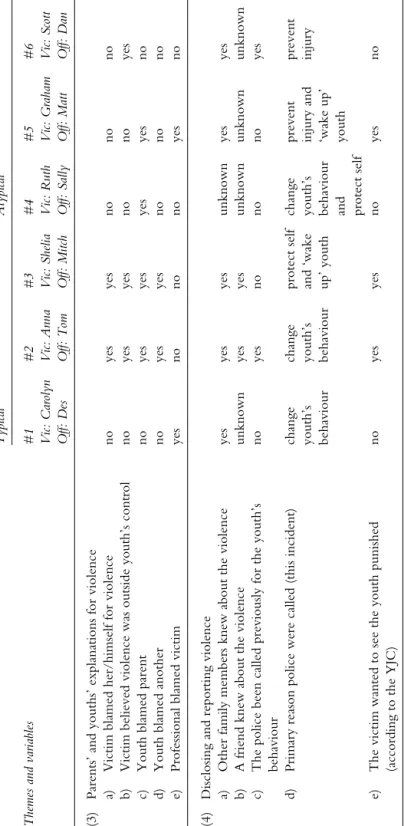
Des was meant to stay at his father's house on the night of the crime because Carolyn did not want him in her home. Mitch told police he tried to scare his mother into staying at home because she was always going to Bevan's and not spending enough time with him. But later, she was thankful that Mitch didn't have to go to court and possibly face a criminal conviction.
During the conference, YJC recalled Sally telling her mother to 'answer the question'. When there were inconsistencies in rules and expectations, Matt did what his mom said and told Graham that he didn't have to listen to him because he wasn't his dad. Dan was close to his grandmother (Scott's mother), but according to YJC, "Leah ostracized her pretty well."
According to the YJC, Leah and Scott 'put Dan's bad behavior down to his medication'.
SPECIAL CONSIDERATIONS WHEN WORKING WITH
Where adult domestic violence is identified at home and the adolescent is now safe, family systems and trauma-informed approaches may be the most appropriate therapeutic frameworks for intervention. Family systems practice recognizes (i) repetitive patterns that repeat themselves across generations and (ii) that changing these patterns requires a change in the parent–child relationship. The use of violence depends on gender, but part of the problem in identifying gender patterns of this form of domestic violence lies in the definition, or lack of definition, of youth violence in the home, where the identity positions are "parent" and "child".
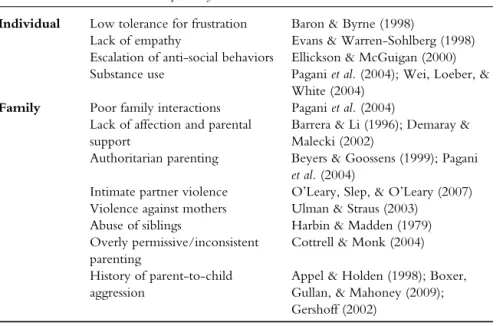
Adolescents who use domestic violence may also come from families where parents have mental health and/or substance abuse problems. Research that has explored the relationship between adolescents' use of violence in the home and the risk of youth offending, or actual offending, has not produced consistent findings. Thus, where young people are already involved in the youth justice system, the assessment should always consider the possibility of domestic violence among adolescents.
1 If violent adults are still living in the family home, it is important to clarify the motivation of the adolescent's violence, as it may be self-defense or an attempt to protect other family members.
WORKING WITH ADOLESCENT VIOLENCE AND ABUSE
TOWARDS PARENTS