The report from India states, "The fact that an election is being held at all is extremely significant." Nargis in 2008 - consisting of Burma/Myanmar, ASEAN and the United Nations - "is a useful example of international cooperation". And it claims that "the United Nations is the most influential international organization in the world and deals with the Myanmar issue in the most comprehensive way."
Current Dimensions, Future Directions
This applies both to sanctions – Australia only applies financial sanctions and only to certain individuals closely associated with Burma's military leadership – and to the provision of aid. Looking ahead, participants were hopeful but realistic about any imminent change in Burma's political or economic circumstances.
Australian Policy toward Burma
While humanitarian aid has value, there is no prospect that the official development aid given to Burma's ruling regime - the State Peace and Development Council (SPDC) - will be used for its intended purpose. 4 William Easterly, "The Ghost of Financing Gap: Testing the Growth Model Used in International Financial Institutions", Journal of Development Economics 60 (Dec.

Assessing the Current Situation in Myanmar
Myanmar's market economy is failing, and insufficient attention has been paid to maintaining economic growth and improving the people's welfare. But recent conflicts between the Tatmadaw government and the armed Kokang ethnic group complicate Myanmar's future.
A Perspective from China
It cannot be denied that the election - the first since the failed general election in 1990 - will adjust Myanmar's political structure and lay a foundation for further political reforms in the country. Agriculture forms the basis of Myanmar's economy, but much of the country's arable land is abandoned.
From Isolation to Engagement
Reviewing India’s Policy toward Myanmar
In the context of potential problems with China, there is also growing concern within the Myanmar regime and increasing public resentment in Myanmar over China's influence in increasingly large parts of the country and the growing penetration - on the brink of domination - of Myanmar's economy and natural resources. sources. Western countries, and especially the United States, do not have vital national interests in Myanmar that are even remotely comparable to those of Myanmar's immediate neighbors. Moreover, serious reforms in some of the core sectors of Myanmar's economy are needed to facilitate growth.
11 eStandards Forum, “Country Brief: Myanmar.”12 ASEAN + 3 includes all ASEAN states plus China, Japan and Korea.
The Quest for the “Middle Way”
Indeed, as the largest country and one of the strongest democracies in the region, many have turned to Indonesia for answers when dealing with complex regional issues, including how best to deal with Myanmar and the regime his ruling party, which continues to tighten its military grip. Meanwhile, the Association of Southeast Asian Nations (ASEAN), ostensibly Myanmar's closest regional ally, is facing mounting international pressure to push for deeper and more meaningful changes in the country. With such impasse in the background, and as part of a larger initiative undertaken by the Asia Society, the Center for Strategic and International Studies (CSIS) in Jakarta set out to explore the Myanmar issue and determine the nature, prospects, and Indonesia's policy challenges regarding developments in Myanmar.
CSIS also aimed to explore whether Indonesia could explore policy options to push for further change in the country.
Indonesian Perspectives on Current Developments in Myanmar
- The lack of strong political will and indecisiveness on the part of the Indonesian government. Discussions revealed that many initiatives and policies, either proposed
- Current domestic conditions within Myanmar still work to the advantage of the ruling junta. Not only does the ruling junta remain the strongest military force within the country,
- The absence of a regional concert of powers to engage and pressure Myanmar, both within ASEAN and among the major powers such as China and India. While championing
- Bilateral approaches, rather than ASEAN-driven approaches, have a better chance of persuading the junta to relax its stranglehold, especially if India and China are brought
- Change from within Myanmar is the only reasonable way forward for any kind of meaningful and sustainable peace to take hold in the future. Therefore, as long as domestic
- A realistic analysis based on facts on the ground as they are—including the junta’s relations with the great powers, its control over key resources, and its military power—
The following sections will first highlight some of the fundamental issues surrounding Indonesia's policies and perspectives on the Myanmar issue. This therefore suggests that Indonesia's political options should be based on the following starting points. It could also worsen Indonesia's regional, if not global, standing and would do so at the cost of the continued suffering of the people of Myanmar.
Under these conditions, relying on the government as a driving force could be counterproductive, especially given Indonesia's lack of strategic interest—and consequent lack of other tools and credible intelligence—in Myanmar.
Japan’s Policy toward Myanmar
The discussion was organized as part of the Asia Society's initiative to examine the policies of the international community towards Burma/Myanmar. The undemocratic military regime in Myanmar and the country's worsening economic situation pose problems for the international community, as these factors threaten to destabilize regional peace and security. For East Asian countries, due to Myanmar's strategic location, the country's integration into the region is crucial to the realization of a successful regional community.
The international community has a strategic interest and a responsibility to resolve Myanmar's problem from a human security point of view, especially in light of the poverty and human rights violations suffered by the people of Myanmar.
A Special Responsibility
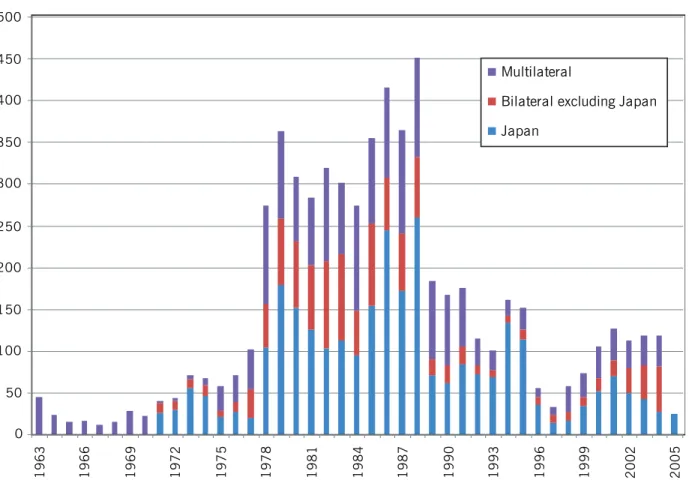
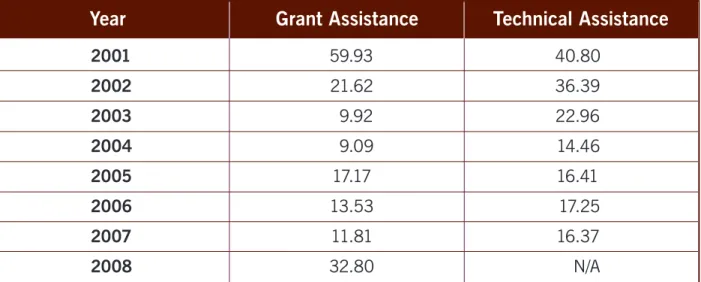
Elections will be held in the second half of the year after the end of the rainy season. It is possible that there will be no elections until the end of the year. The main objective of the Japanese government's policy towards Myanmar is to encourage the government and people of Myanmar to move towards political democratization and economic development.
Based on the above principle, the Japanese government has implemented a number of concrete policies and constructive dialogues with Myanmar's military government to encourage change.
Pragmatic Diplomacy
The discussion was organized to provide input to a review of international policy towards Myanmar as part of the Asia Society's Burma/Myanmar Initiative. The proceedings were opened with introductory remarks on recent events in Myanmar by Tan Sri Razali Ismail, former President of the UN General Assembly and Special Envoy of the Secretary-General in Myanmar. An overview of Malaysia's policy towards Myanmar was provided by Ambassador Nazirah Hussin, Director General of the Department of Policy Planning and Strategy in the Ministry of Foreign Affairs of Malaysia.
The participants agreed that the sanctions imposed on Myanmar's military regime by the West have not achieved the intended results.
Reviewing International and Malaysian Policy toward Myanmar
For example, Myanmar's leaders have claimed that the country would see economic growth as high as 13%. Building trust is the most important change that needs to happen in Myanmar's political environment. A “dual approach” to Myanmar must be taken by the various actors in the region and within the international community.
If the junta is indeed seeking Suu Kyi's help to ease sanctions on Myanmar – as has been reported by the media in recent weeks – then it appears that the sanctions are indeed having some impact.
Developing an International Policy toward Burma/Myanmar
To address this void, the Institute for Strategic and Development Studies of the Philippines convened a roundtable of policy experts and government officials to examine Philippine and international policy toward Burma/Myanmar. The roundtable was organized in support of an Asia Society initiative to examine national policies towards Burma/Myanmar among countries in the Asian region. The Philippine government and the international community should work together through ASEAN to coordinate their policies towards Burma/Myanmar.
In addition to ensuring free and fair elections in Burma/Myanmar in 2010, the Philippine government should also support economic reforms and development in the country.
Philippine Perspectives
Political repression in Burma/Myanmar and the ongoing detention of Daw Aung San Suu Kyi have captured the attention of policy makers in the Philippines. Government officials in the Philippines, on the other hand, tended to toe the ASEAN line on Burma/Myanmar. From the perspective of the Philippines, the 2010 elections are a major step towards political normalization in Burma/Myanmar.
Students in Burma/Myanmar are eager to learn, but there is little political education in their curriculum.
From Proxy to Principle
But it is not a defender of the regime, and it has drawn increasingly critical commentary. In addition, it provided a lot of technical assistance and humanitarian aid, especially in the wake of the destruction caused by Cyclone Nargis in 2008. The complexity of the Singapore-Myanmar relationship was reflected in the broad opinion of participants who attended a roundtable discussion hosted by the Singapore Institute of International Affairs on 30 September 2009.
The discussion reflected inherent differences in Myanmar among the various sectors of society represented in the dialogue, as well as changing public opinion.
A Review of Singapore’s Myanmar Policy
Despite Singapore's trade ranking, the climate for trade and investment in Myanmar is poor. Discussants from all sectors acknowledged that Singapore's engagement with Myanmar does not happen in a vacuum. But one advantage of Singapore's approach is that it gives the country some leverage and influence over the regime.
Singapore's Myanmar policy is not simply a question of what is best for both sides.
Thailand’s Burma/Myanmar Dilemma
Several questions were raised at the outset: Does Thailand have a long-standing and forward-looking Burma/Myanmar policy? The discussion revealed that Thailand's policy towards Burma/Myanmar has been inconsistent and at times chaotic. However, this policy was offset by domestic political instability and trade and investment needs, particularly in light of Thailand's growing dependence on natural gas imports from Burma/Myanmar.
Concerns in Thailand's foreign and security establishment regarding ethnic insurgency, drug and human trafficking, and alleged nuclear ambitions in Burma/Myanmar also play into Thailand's approach to it.
Domestic Determinants and Regional/International Constraints
Measures to be pursued now
The United States must position itself to engage not only with Burma's military leaders, but also with a wide range of groups within Burma. The United States should also develop cooperative efforts with China, Japan, and India to push the Burmese government in a positive direction. In pursuing a pragmatic engagement with Burma, the United States should continue to develop and even increase means to reach the Burmese people directly through assistance programs.
As for the election, the United States should avoid direct participation in election monitoring, as this could be seen as lending legitimacy to a seriously flawed election process.
Additional measures to be implemented if and when the United States begins to see indications of change on the part of the Burmese leadership
By doing so, the United States will be able to assess the nature of the change taking place in Burma and decide where it can make a positive contribution. The United States should prepare to implement measures that will pave the way to better economic relations and the eventual lifting of trade and investment sanctions. Accordingly, the United States should gradually loosen current court orders and work with institutions such as the International Monetary Fund, the World Bank, and the Asian Development Bank to provide Burma with guidance on reforms.
A second measure is for the United States and other relevant countries to assist Burma in building economic institutions.
Actions to be undertaken after real progress has been demonstrated on a sustained basis
The United States should create aid programs designed to improve the capacity of civil servants and the effectiveness of government welfare and education. Assistance from the United States—and the international community more generally—is critical. The United States should begin focusing on legal reforms to address civil rights, economic law, and corruption.
In the area of police training assistance, the United States should turn to other nations that have national police experience, such as Australia, Canada, New Zealand, or the United Kingdom.