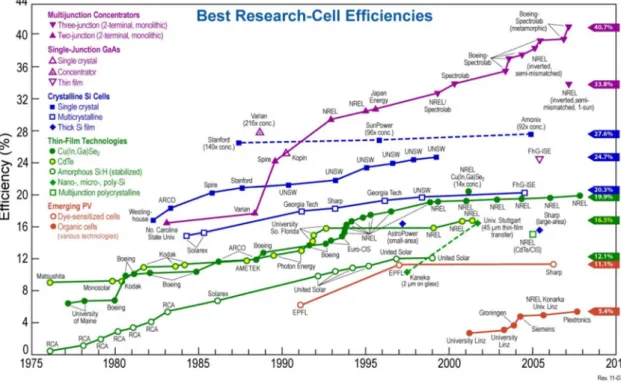
For example, a crystalline silicon solar cell shows very high performance, and an amorphous silicon solar cell has very good flexibility. However, the cost of electricity conversion in photovoltaics is still high, even though the silicon solar cell achieves high efficiency. Because of these factors, other types of photovoltaics are still focused on replacing silicon solar cells.
The working electrode, counter electrode and electrolyte are mainly composed for the dye sensitized solar cell. Due to these reasons, very limited catalytic materials can be selected for the counter electrode. Reducing solar cell production costs for dye-sensitized solar cells means replacing platinum with other catalytic materials such as palladium, nickel or carbon.
It is a completely new material and the first time that color-sensitized solar cells have been modified.
Introductions of solar cells
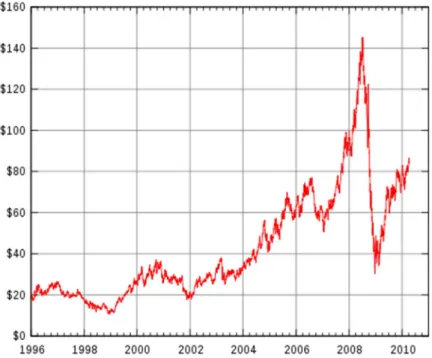
Energy crisis and renewable energy sources
Many scientists have been researching renewable energy sources and some types of energy sources have been discovered. Renewable energy sources are usually unlimited and produce no carbon dioxide when producing electricity. These energy sources come from nature and other useless products, such as garbage or discarded plants.
Due to this factor, the renewable energy sources are highly focused to replace the fossil energy sources. However, most of the renewable energy sources are quite difficult to convert into electricity in various places, except solar power.

Introduction of various types of solar cells
This means that organic solar cell materials can be produced by companies or laboratories without raw metal ores. In particular, this type of solar cell does not use a PN junction system because it is a chemically structured solar cell. However, a dye-sensitized solar cell must use some noble metal for chemical reactions in the electrolyte.
In this thesis, another type of electrode against dye-sensitized solar cells will be presented. Also the final efficiency is similar to the conventional type of dye sensitized solar cells.
Dye sensitized solar cells
Introduction
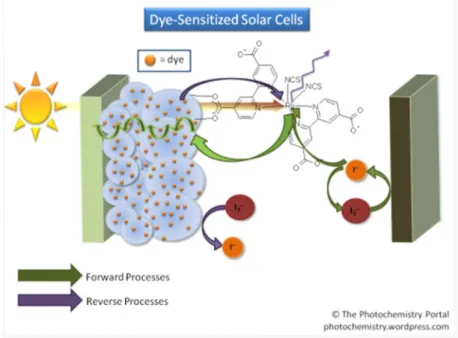
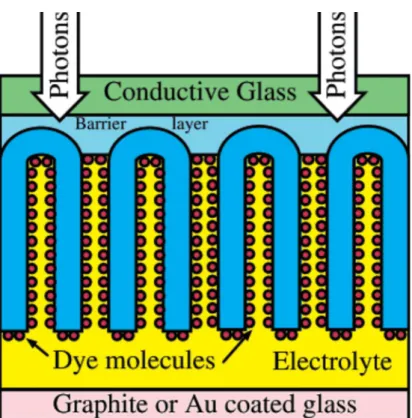
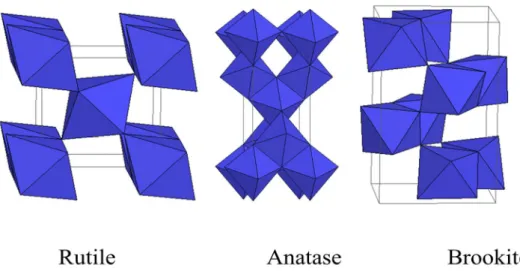
The dye-sensitized solar cells (DSSCs), nanocrystalline solar cells, are considered one of the most promising next-generation solar cells. DSSCs convert visible light energy into electrical energy through charge separation in sensitizing dyes on a surface of TiO2.
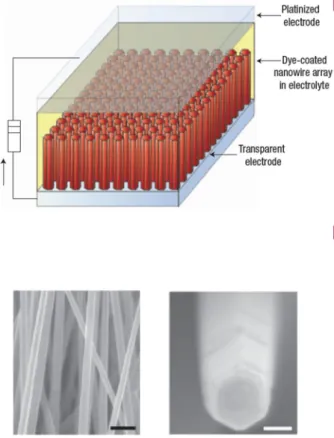
Structures of dye sensitized solar cell
50 nm TiO2 is too large to transmit the light and most of the light is scattered on the surface of the layer. This means that the number of adsorbed sensitizers is limited due to the surface area. 12. the wurtzite structure) with different morphologies, such as nanoparticles, nanowires, nanowires, nanotubes, tetrapods, nanoflowers, nanoplates and branched nanostructures.
The best results are obtained by desorption of the dye (template) followed by adsorption of the actual sensitizer. 14. black dye on the outer part of the porous electrode by a process under CO2 pressure in a short time, followed by sensitization of the inner part using an organic dye by conventional methods. The main role of the electrode in a dye-sensitized solar cell is to transport electrons from the counter electrode to the oxidized sensitizers on the working electrode.
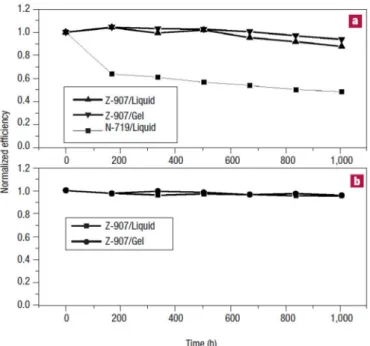
This experiment is one of the clear proofs that the dye-sensitized solar cell would be able to be commercialized in the solar market. However, cell performance must be improved to replace the crystalline solar cell. Typically, these quasi-solid electrolytes show conversion efficiencies slightly lower than that of the host liquid redox electrolyte.
The price of platinum is very expensive and it will not be a drop in price. However, it is possible to use these materials as a substrate for the counter electrode if these surfaces are completely covered with anti-corrosion materials such as carbon or SnO2:F. They demonstrated an improvement in Jsc and FF with increasing thickness (>30 lm) of the carbon material.
Future of the dye sensitized solar cells
The carbon black and TiO2 counter electrode cannot be compared to the platinum coated counter electrode. Also the pore size of the carbon black material is measured by BET (Brunauer, Emmett & Teller) instrument. We need to check the effect of the amount of carbon black on the counter electrode.
According to Figure 27 and Table 6, the current density was changed under the conditions of soot amount. The platinum counter electrode has a very high fill factor, 67.1%, while the soot and TiO2 counter electrode shows a low fill factor. We are going to observe the influence of TiO2 size on the counter electrode and the carbon black material.
The figures below show the changes in conditions of TiO2 size and amount of carbon black. In contrast, the open-circuit voltage shows opposite magnitudes in the condition of the amount of carbon black. The CV of the carbon black and TiO2 counter electrode is not clear to compare with the pt coated counter electrode.
Therefore, the carbon black/TiO2 counter electrode cannot function as a photocathode for this dye-sensitive solar cell system. The internal resistance is proportionally greater to the amount of soot and the size of TiO2. 2006, 'Highly efficient dye-sensitized solar cells based on carbon black counter electrodes', Journal of the Electrochemical Society, vol.

Alternative counter electrode materials by carbon black and crystalline TiO 2
Experiment
First, titanium sol-gel is produced and hydrothermal synthesis is used to make nanoparticles. Titanium (IV) isopropoxide (Sigma Aldrich, 97%), purified distilled water (J. T. Baker Tetramethylammonium hydroxide pentahydrate (TMAH, Sigma Aldrich, 97%) are materials for the TiO2 sol-gel. Different sizes of autoclave are used (Parr ins.) for hydrothermal and sol-gel synthesis is treated in an electric muffle furnace.
Large quantities of carbon chunks are generally created during the high-pressure steam process of petroleum refining. The process is not simple as it requires two high temperature steps to make titanium sol gel. The filter cake was added to a Teflon-lined titanium autoclave containing 30 ml of a 0.6 M tetramethylammonium hydroxide solution to form a white slurry.
The pH of the colloidal solution after addition of base was measured to be between 7 and 8 with pH measurement or litmus paper. After growth, the resulting colloidal suspensions were milky white, indicating some degradation of the tetramethylammonium hydroxide to an amine form. After the ultrasonic treatment, 100ul of triton X-100 was added to the mixture and ultrasonic treatment for 10 minutes was applied again.
FTO glass (TEC-8, Pilkington) was cleaned with water, ethanol, acetone and isopropanol for 10 min, followed by an ultrasonic cleaner. After the TiCl4 treatment, the working electrode is heated again at the same temperature for 30 minutes. For the process, the surlyn made a connection between the working electrode and the counter electrode and applied a heat of 100oC for 10 seconds by heating the pressing machine at 50 kg/f.
Result
It expects that very small size TiO2 cannot keep up with the large carbon black particles. Two conditions of the counter were first tested, which were made with carbon black only and carbon black/TiO2 mixture. Only the carbon black counter electrode could not show high current density and open circuit voltage due to low adhesion to the FTO glass.
The amount of soot was determined based on the weight percentage to the exact amount of TiO2, 500 mg. The carbon black and TiO2 slurry was stuck onto a piece of FTO glass using the squeegee method. The open circuit voltage decreased in conditions with more soot, the current density also decreased as the amount of soot increased.
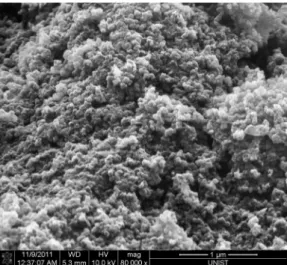
The small size of TiO2 has a larger surface area, TBP in the electrolyte can be more adsorbed on the surface of the counter electrode. In contrast, a larger particle has a wider porous surface, the particle does not cover the soot. The smallest TiO2 particle, 30 nm, shows the worst performance under the most soot conditions.
The open circuit voltage is directly proportional to the amount of carbon black and TiO2 size. Because the surface area of 50 nm TiO2 is the least in the conditions, the open circuit voltage shows the highest value. The reason is that more carbon black layer has larger surface area, the TBP adsorbs on the surface of a high wt.%.
Each condition shows a similar tendency depending on the different TiO2 size and carbon black weight. The shift can be due to material resistance, such as the strengths of the carbon black, TiO2, and the FTO substrate, themselves or between the carbon black substrate/TiO2/FTO interface.
Conclusions
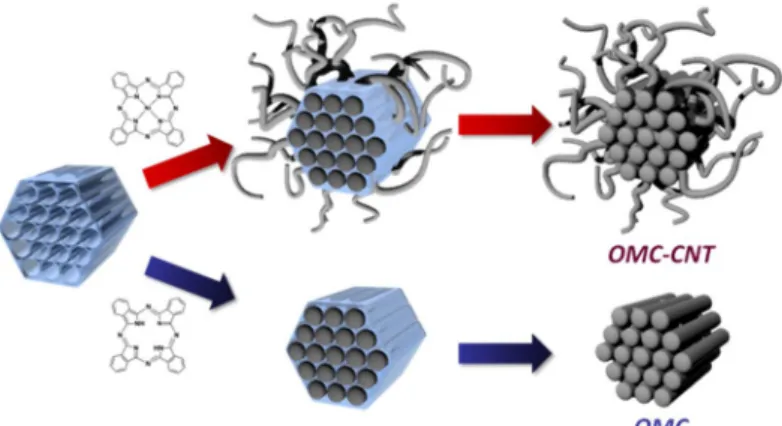
Carbon nanomedusa : Pt-free, highly efficient and durable counter electrode
We show that the DSSC using OMC-CNT-based CE exhibits excellent cell efficiency, which rivals that of the DSSC cell with a conventional Pt-based CE. Moreover, we demonstrate that the DSSC with OMC-CNT-based CE shows remarkable stability in a long-term efficiency test. Figure 39 shows the OMC-CNT counter electrode which was coated on a portion of the FTO substrate.
Nickel is also a good catalytic material, the OMC-CNT counter electrode would be good for a dye-sensitized solar cell system. On the OMC-CNT electrode, the CNT acts as a binder for the connection between the FTO glass and the OMC. As shown in the figure, the OMC-CNT and Pt based counter electrode showed a very similar shape in terms of redox peak positions and current density.
We are able to expect the OMC-CNT counter electrode to be a good counter electrode for the solar cell. While the OMC-CNT-based cell showed comparable J-V curve to the Pt-based cell, the other two carbon-based cells exhibit much higher series resistances and relatively low FFs. Cell efficiencies based on OMC-CNT, OMC and Pt-based CEs were monitored for 30 days.
While the Pt- and the OMC-CNT-based cells were quite stable for 30 days, the performance of the OMC-based cell was drastically decreased even after 5 days. To confirm this, the changes of J-V curves and EIS of the OMC-based cell with time were investigated. Furthermore, the DSSC using the CE with the OMC-CNT showed a remarkable stability as the initial catalytic activity was preserved after a long-term (1 month) test, while the cell based on the OMC CE showed a significant suffered loss of activity (70% of initial value).