
Changes in North Korea's Fiscal and Financial Systems in the Kim Jong-Un Era. This English translation is an abridged and edited version of the KINU Research Paper, Changes in North Korea's Fiscal and Financial System in the Kim Jong-Un Era, Ji Young Choi et al. This research explores the changes in North Korea's fiscal and financial systems after Kin Jong-un came to power.
Among other socialist countries, North Korea has maintained a state system that is close to the classical socialist system for the longest time. 1) Its fiscal and financial system is the embodiment of these socialist characteristics. Even then, North Korea's changes were limited; more bank credit, only to a limited extent, relied on the provision of capital for production units; and it took a long time for the fiscal and financial systems to finally be overhauled by reducing the number of plans. 4 Changes in North Korea's fiscal and financial system under Kim Jong-Un.
What was striking about the changes in the economic management system in the 2000s was the link between fiscal and financial reforms.
Socialist Fiscal and Financial Systems and North Korea
Fiscal and financial reforms in a "real socialist economy" consist of a process through which the state and the market take a separate role in the fiscal and financial field. The financial sector is given only a passive role in the execution of the budget in the classical socialist phase. However, in the reformist and transitional socialist phases, the fiscal role of capital distribution in the national economy decreases with the activation of the mediating function of the financial sector.
Growth stagnation leads to a recognition that the government's provision of capital is inefficient, which in turn leads to an increase in the acquisition of capital from bank loans. It is difficult to uniformly categorize the different levels and process of fiscal and financial reforms implemented by each country under the actual socialist economy. The role of credit in the distribution of capital across the economy expanded, but only limited authority over the takeover of businesses' non-performing loans (NPL) was given to the central bank.
10 The changes in North Korea's budget and financial systems in the Kim Jong-Un era. Moreover, the implementation of financial reforms caused household savings to increase rapidly, pushing capital into budget deficits due to fiscal and financial reforms. The case of China illustrates that the results of fiscal and financial reforms are interrelated and that whether the stability of the macroeconomy is guaranteed during the reform process is an important factor in improving policy effectiveness.
In contrast to other real socialist economies, North Korea began a passive form of fiscal reform in the 1990s. In particular, the rampant inflation in the North Korean market in the 2000s pointed to the failure of the central bank to manage the money supply and stabilize prices. 12 Changes in North Korea's fiscal and financial system under Kim Jong-Un.
Changes in Fiscal and Financial Reforms at the
Beginning of the Kim Jong-un Regime
Changes in fiscal and financial reforms at the beginning of the Kim Jong-un regime 15. The core of fiscal reform in the early days of the Kim Jong-un regime was to divide planning indicators, making a clear distinction in the distribution of newly incurred income between the state and the production units. North Korea, for example, encouraged businesses to raise their 'own capital' for investment in plant and equipment instead of relying on the state budget by revising the public finance law in 2015.
16 The changes in North Korea's budget and financial systems in the Kim Jong-Un era. Management System” that granted companies the “right to manage finances” at the beginning of the Kim Jong-un regime. Thanks to a revision of the Enterprise Act in 2014, companies could fill a shortage of management funds with bank loans or 'inactive residents' funds'. instead of depending on the state budget.
Reflecting an increasing distribution of cash, North Korea has allowed businesses to hold local and foreign currency accounts and savings accounts and has adopted electronic payment cards for households, encouraging people to save and send money. . In particular, North Korea has had official financial organizations adopt this new system of linking residents' idle funds to business loans—an attempt to partially absorb an intermediary function of private financial markets. The connection of fiscal and financial reforms for the local budget has been strengthened by strengthening the local budget system, implementing the profitability system for financial organizations and implementing the local money distribution system.
In other words, North Korea expanded the tax revenue to the local budget, which strengthened the fiscal base of the Local People's Committee. As such, in the initial phase of the Kim Jong-un regime, North Korea's fiscal and financial systems adopted a two-track system where fiscal and financial reforms have been implemented in parallel. As a result, only after Kim Jong-un took the helm did North Korea's tax and financial systems begin to gradually deviate from the classical socialist format of maintaining an ambiguous distinction between the fiscal and the financial.
Prolonged Sanctions and Changes in Fiscal and
Financial Systems
The fact that these funds were mobilized for the state budget was a testament to North Korea's worsening fiscal conditions. This section discusses the changes in the fiscal system affected by the extended sanctions by analyzing the content of the amendments to the (new) public finance law and the Rodong Sinmun article that covered the budget reporting of the SPSH and the 8th Party Congress. The content of the SPA budget report during 2020-2022 is an updated version of the works of the author(s): Jea Hwan Hong et al.,.
Min Hong et al., "An Analysis of the 6th Session of the 14th Supreme People's Assembly of the Democratic People's Republic of Korea," Online Series CO22-05, Korea Institute for National Unification (Date accessed: June 1 2022). 22 Changes in North Korea's fiscal and financial systems in the era of Kim Jong-Un. revenue generated by the taxation of money earned through market trading by production units or individuals, such as a market rental fee, and a fee for storing bicycles and luggage.6). First, the source of the state budget was changed to "net social income" and "income" became subject to taxation (Articles and 38).
Min Hong et al., “An Analysis of the 6th Session of the 14th Supreme People's Assembly of the Democratic People's Republic of Korea,” Online Series CO22-05, Korea Institute for National Unification. Long-term sanctions and changes in the fiscal and financial systems 23 .. income' reflecting the new 'income distribution measure' . which has been operated in pilot form since 20129). Recited: Jeong-wook Choi, “Changes in the Tax-related Legislative System in North Korea” (Seoul: Sunin, 2021), pp.
24 Changes in North Korea's fiscal and financial systems in the era of Kim Jong-Un. Third, the amended 'law on public finance' added the 'Right to fiscal management' or 'compensation for loss of management cost'. a separate article demonstrating the continuity of the 'Socialist System of Corporate Responsibility Management' More emphasis was placed on the responsibility of the production units to repay the self-provided capital. Fifth, the penalty in case of violations of the public finance law was specified in detail and civil liability was newly added.
26 The changes in North Korea's fiscal and financial systems in the Kim Jong-Un era. The restriction of the use of telephone money and the issuance of dongpyo by the central bank are similar policies, as the liquidity of the private sector is frozen or absorbed by official financial organizations.
Changes in North Korea’s Fiscal and Financial Systems
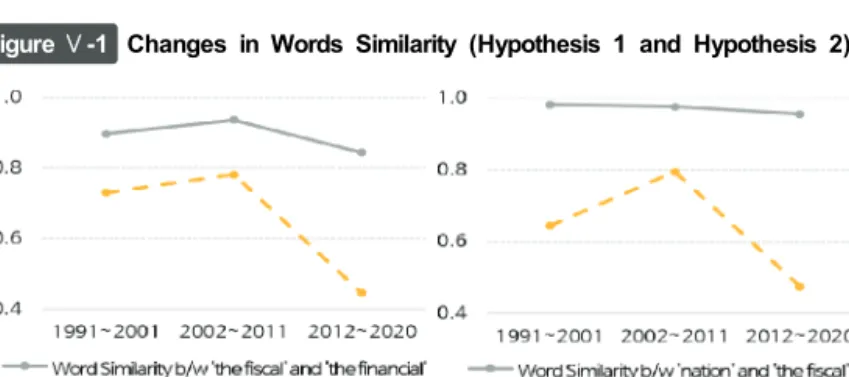
This research analyzed articles on the themes of 'the fiscal' and 'the financial', .. currency' and 'the price' published in Economic Research from Two major hypotheses were tested based on the DOC2VEC method.13) DOC2VEC uses machine learning technology called Artificial Neural Network (ANN) to determine the distance between words found in papers by measuring it from the origin of the coordinates. This research investigated changes in word similarity by setting tax and finance related words extracted from economic research as a 'reference word' and a. First, the similarity between 'the fiscal' and 'the bank' was confirmed to have weakened after Kim Jong-un came to power.
The image on the left shows changes in the similarity of words when a “reference word” is set as “fiscal (jaejeong)” and a “comparison word” as “bank (eunhaeng).” This similarity clearly weakens over the period 2012-2020. On the other hand, when “the financial (geum-yung)” was used as a comparison word, the . 12) The Korean version of this article tested six hypotheses based on term frequency, TF-IDF, text network analysis, Lasso, and DOC2VEC. This article from the Study Series introduces only three hypotheses, using the DOC2VEC method ('Hypothesis 1': 'The link between the fiscal and the financial is becoming weak.' & 'Hypothesis 2': 'State control of the banks (the financial) is being relaxed.'
32 The changes in North Korea's budget and financial systems in the Kim Jong-Un era. The similarity was not obvious as the word "the financial" itself was not often used in North Korean literature.14). The image on the right shows the words similarity when a "reference word" was set as "nation (guk-ga)" and a "comparison word" as "bank (eunhang).." The similarity was at its highest in 2002. -2011 and at its lowest in the period 2012-2020. The word similarity between “nation” and “bank” became noticeably weaker after Kim Jong-un came to power.
This is in contrast to the continued high similarity between the words "nation" and "fiscal". 34 Changes in North Korea's Fiscal and Financial Systems in the Kim Jong-Un Era FigureⅤ-2 Changes in Word Similarity (Hypothesis 5). Changes in North Korea's Fiscal and Financial Systems in the Kim Jong-Un Era Study Series 23-01.
The Changes in North Korea’s Fiscal and Financial Systems in the Kim
