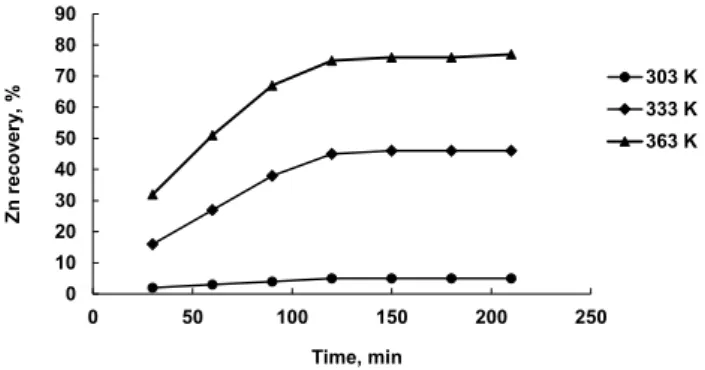
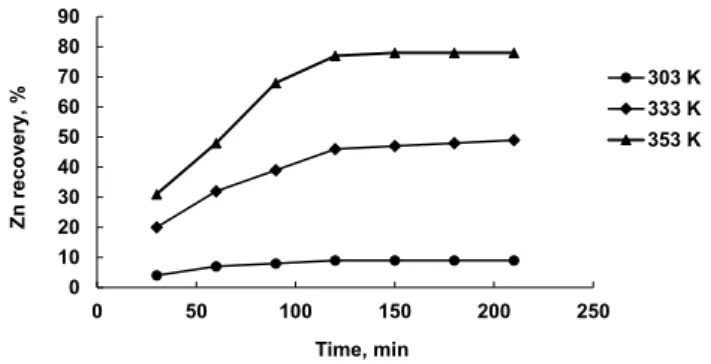
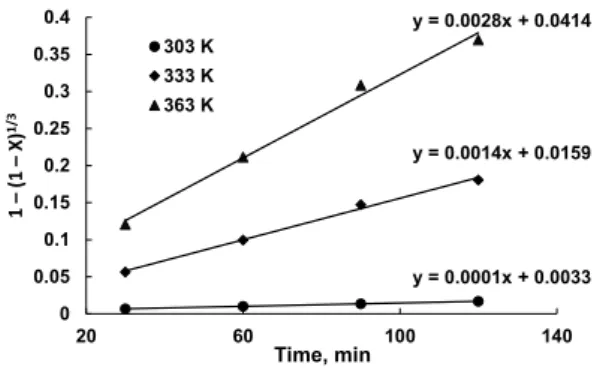
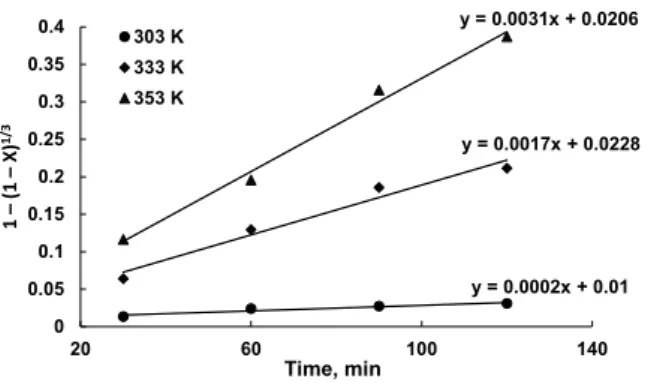
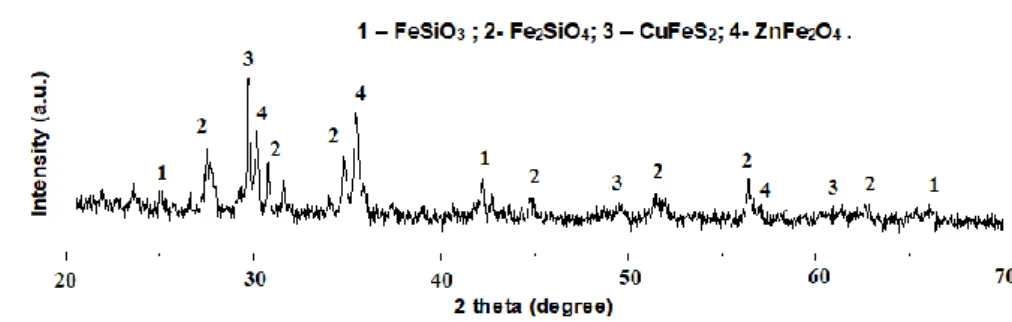
At the same time, the features of the mineralogical composition of the slag make the extraction of zinc from it very problematic. The influence of the duration and temperature of leaching of ground (≤100 μm) copper smelter slag from the Balkhash copper smelter on the extraction of zinc in solution was investigated. However, the peculiarities of the mineralogical composition of the copper smelter slag make its processing very problematic.
In some cases, high temperature reduction of zinc ferrite has been used to release the target metal in the form of an oxide [12-16]. The dependence of zinc recovery from copper smelter slag in an isopropanol solution of sulfuric acid (0.5 M) on the temperature and duration of the leaching are shown in Figure 4. Linear dependences 1 – (1 – X) 1/3 versus time also testify in favor of the kinetic control of the Zn leaching process, as in the case of leaching in an aqueous solution.
The lower value of the activation energy in our case (51±1 kJ/mol) can be explained as follows. The leaching reactions of these compounds with sulfuric acid have a lower activation energy than the leaching of zinc ferrite; this very circumstance reduces the energy activation of the entire zinc extraction process. In this case, the temperature change within the upper limits practically does not affect the level of zinc recovery and the speed of the process.
Recovery of precious metals from copper smelter slag by sulfate roasting // Transactions of the Indian Institute of Metals.
D. Turan et al
Synthesis and characterization of
Синтез и изучение высокомолекулярного
1-пропансульфоновой кислоты и
Акриламид, 2-акриламидо-2-метил-1-
This is an open access article licensed under CC BY-NC-ND 4.0 (https://creativecommons.org/licenses/by-nc-nd/4.0/).
Synthesis and characterization of high molecular weight amphoteric terpolymer based on acrylamide,
2-acrylamido-2-methyl-1-propanesulfonic acid sodium salt and (3-acrylamidopropyl)trimethylammonium chloride for oil
Introduction
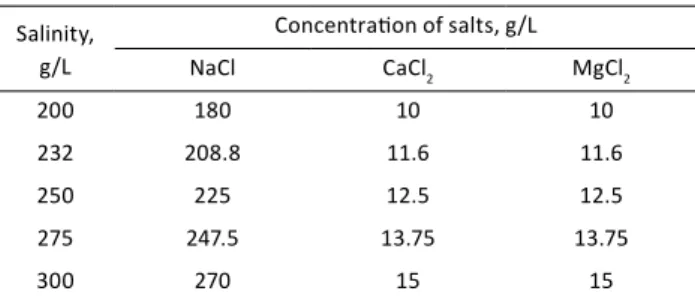
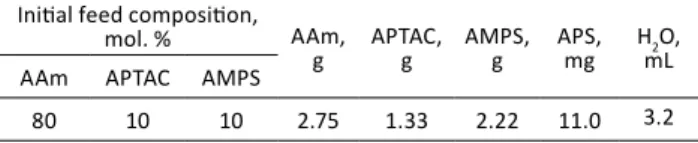
The low oil recovery value from AAm-AMPS-APTAC terpolymers was estimated to be related to the low molecular weight of the synthesized terpolymers. In the current research, the team synthesized a high molecular weight amphoteric terpolymer of AAm-AMPS-APTAC. 80:10:10 mol.%, characterized it using different physicochemical methods and studied the effectiveness of oil recovery in sand packing models with different permeability and under conditions of extremely high salinity and at a fixed temperature .
Experiment 1 Materials
Gussenov et al
- Results and Discussion
- Conclusion
The value of Tg depends on the mobility of the polymer chain and reflects the transition from the glassy to the rubbery state as an important feature of the polymer behavior. It is concluded that the thermal stability of the terpolymer is quite high and suitable for high-temperature applications in oil reservoirs. The micron-sized SEM image of the terpolymer is specific to the most amorphous polymers and not very informative.
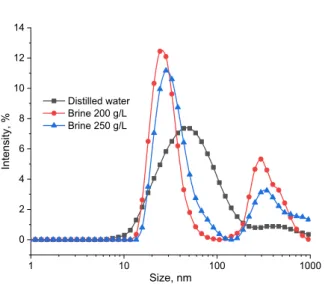
In contrast, the TEM image of the terpolymer exhibits two kinds of spherical nanoparticles, small and large, with average sizes of 25–30 nm and 200–250 nm, respectively. This result agrees well with the average hydrodynamic size of the terpolymer determined by DLS (see Figure 6). As can be seen from the DLS data, the number of small nanoparticles with an average size of 50–60 nm far exceeds the amount of large nanoparticles with an average size of 350–400 nm.
Whereas DLS results show larger sizes of polymer particles due to the swollen state of the macromolecules in aqueous solution and formation of hydrated shells around the polymer chains. The high values of the intrinsic viscosities of the terpolymer in 250 g∙L-1 salt solution confirm the production of high molecular weight quenched polyampholyte by radical polymerization. The gradually decreasing dynamic and reduced viscosity of the terpolymer during dilution confirms the absence of the polyelectrolyte effect leading to unfolding of macromolecular coils upon dilution.
Increase in the intensity of both low-molecular and high-molecular fractions is probably due to unfolding and increase of hydrodynamic volume of macromolecules. These data are in good agreement with the increase in the dynamic viscosities of AAm-APTAC-AMPS terpolymer measured at 200-250 g/L saline (see Figure 9). The zeta potential of the terpolymer solutions, dissolved in pure water and in a concentration range of , was slightly negative at -3.4 to -6.8 mV.
This negative charge is due to a small excess of AMPSNa in the main polymer chain and indicates the different reactivity of the monomers. The increase in dynamic viscosity with increasing brine salinity is explained by the screening of electrostatic attraction between positively and negatively charged. The increase in dynamic viscosity of the high molecular weight terpolymer in brine is favorable for viscosifying hot reservoir water containing up to 200-300 g∙L-1 of salt.
However, the injection pressure is significantly higher in the case of the sand pack with lower permeability (Figure 13). The injection pressure is slightly increased in the case of the sand pack with low permeability (1.8 D).
Распределение растворенных и
Distribution of dissolved and suspended forms of heavy
Сырдария өзенінің суында (Оңтүстік Қазақстан)ауыр
Распределение растворенных и взвешенных форм тяжелых металлов в воде реки Сырдарьи (Южный Казахстан)
- Введение
- Эксперимент
- Результаты и обсуждение
- Распределение растворенной и взвешенной форм марганца в воде реки СырдарьиКонцентрацию тяжелых металлов и металлоидов
- Общая концентрация и содержание взвешенных форм (> 0,45 мкм) тяжелых металлов и металлоидов в воде реки Сырдарьи
- Заключение
- Распределение растворенной и взвешенной форм ванадия в воде реки Сырдарьи
Hydrochemical characteristics and suitability of surface water irrigation in the Sir Darya River, Kazakhstan // Environmental monitoring and assessment. A statistical approach for the assessment of anthropogenic sources of potentially toxic elements in the Shardara reservoir (Kazakhstan) // MOJ Ecology & Environmental Sciences. 5 Rzymski P., Klimaszyk P., Niedzielski P., Marszelewski W., Borowiak D., Nowiński K., Baikenzheyeva A., Kurmanbayev R., Aladin N. Pollution with trace elements and rare earth metals in the lower reaches of the Sir River Darya and the Little Aral Sea, Kazakhstan.
Ежемесячный информационный бюллетень о состоянии окружающей среды. kazгидроmet.kz/ru/ecology/ezhemesyachnyy-informacionnyy-byulleten-o-sostoyanii-окружающей-среды. 8 Сатыбалдиев Б., Туовинен Х., Уралбеков Б., Лехто Ж., Буркитбаев М. Тяжелые металлы и природные радионуклиды в воде. ред.) Уран – проблемы прошлого и будущего. 8 Сатыбалдиев Б, Туовинен Х, Уралбеков Б, Лехто Дж, Буркитбаев М (2015) Тяжелые металлы и природные радионуклиды в воде реки Сырдарья, Казахстан. ред.) Уран – проблемы прошлого и будущего.
10 Общий перечень предельно допустимых концентраций (МБК) и условно безопасных уровней воздействия (УУВ) вредных веществ для воды рыбохозяйственных водоемов. рыбохозяйственных водоемов. 12 Труфанов А.И. (2011) Вестник Оренбургского научного центра Уральского отделения РАН [Бюллетень.
Изучение кинетики высвобождения
Синтетикалық және табиғи жүйелерді қолдана отырып
Study of the kinetics of the release of lipophilic
Изучение кинетики высвобождения липофильных
- Калибровочный график зависимости оптической плотности от концентрации витамина Е
- Схема процесса получения эмульсий/капсул, содержащих активное вещество, стабилизированных 1%
- Кинетика высвобождения активных ингредиентов (1 – витамина Е; 2 – полифитового масла)
- Высвобождение активных ингредиентов из капсул
- Схема получения микрокапсул, стабилизированных синтетической системой
- Высвобождение витамина Е в 50% водный раствор этанола (H 2 O/этанол)
В результате исследований выявлены оптимальные условия для капсулирования витамина Е биосовместимыми системами и изучения их высвобождения: стабилизатор - 1% казеинат натрия, покрытый 1% хитозаном послойным методом, концентрация витамина Е - 5%. , время эмульгирования 7 минут, амплитуда 50 Гц, pH=6. Кинетика высвобождения витамина Е из капсул, стабилизированных казеинатом натрия и затем покрытых хитозаном, показывает медленное устойчивое высвобождение 20% витамина Е в течение 1 часа (рисунок 3), в течение 5 часов высвобождается примерно 45%, в течение 48 часов примерно 80%. Е-капсулы, стабилизированные комплексом полимер-ПАВ и покрытые двумя слоями противоположно заряженных полиэлектролитов методом Layer-by-Layer.
Схема получения микрокапсул на основе прямых эмульсий М/В, стабилизированных полимерным ПАВ и покрытых двумя слоями противоположно заряженных полиэлектролитов методом «Послойный», представлена на рисунке 4. Таблица 1 – Высвобождение активных ингредиентов из капсулы. Кинетика высвобождения витамина Е в контрольной эмульсии показывает 100% высвобождение витамина Е в течение 1 часа из-за нестабильности контрольной эмульсии витамина Е (рис. 5, кривая 1). Е-капсулы, стабилизированные полимерным поверхностно-активным веществом и покрытые двумя слоями противоположно заряженных полиэлектролитов методом Layer-by-Layer, являются самыми медленными и содержат всего 23% витамина.
Таким образом, кинетика отсроченного высвобождения витамина Е из готовых капсул, составляющая 80 часов, доказывает эффективность методики инкапсулирования, основанной на стабилизации композиций полиэлектролит-ПАВ, покрытых двумя слоями противоположно заряженных полиэлектролитов, с использованием послойного метода. Метод. Изучена кинетика высвобождения активных веществ из капсул на основе прямых эмульсий М/В, стабилизированных биосовместимыми и синтетическими системами, с использованием комбинации метода «Послойный» из капсул. Было обнаружено, что кинетика высвобождения витамина Е из биосистемостабилизированных капсул (казеинат натрия, а затем покрытые хитозаном) демонстрирует медленное, устойчивое высвобождение, составляющее 20% витамина Е в первый час, около 45% в течение 5 часов, в течение 48 часы – около 8%.
Установлено, что высвобождение Е из капсул, стабилизированных синтетической системой (полимерным ПАВ и покрытыми двумя слоями противоположно заряженных полиэлектролитов методом Layer-by-Layer), продлевается в течение 1 часа - высвобождается 23% витамина Е, 70% за 12 часов и 100% – за 80 часов. От функциональных наночастиц ядро/оболочка, полученных методом послойного осаждения, к пустым наносферам // Нанописьма. Мембранная фильтрация для микрокапсулирования и получения микрокапсул методом послойной адсорбции полиэлектролита // Исследования в области промышленной и технической химии 38.
Chitin, chitosan and co-products: chemistry, production, applications and health effects in Advances in Food and Nutrition Research. Polyelectrolyte multilayers on soft colloidal nanosurfaces: A new life for the layer-by-layer method // Polymers. Hyaluronate nanoparticles embedded in polymer films for sustained release of vitamin E for skin wound management // European Journal of Pharmaceutical Sciences.