
In the context of the COP event held in Glasgow in November 2021, Kazakhstan's approach to carbon neutrality may be of interest to other countries. The population of the country is more than 17 million with about 53.2% living in the urban centers [47].
Climate Change in Central Asia and Kazakhstan
Literature Review on Climate Change in Central Asia
About 80% of CA land was found to be highly sensitive to rainfall anomalies (Gessner et al). No significant trend was found except for Central Southeast Asia and moderate increases in winter precipitation.
Data and Methods
Climate Projections
Here DJF-average for winter, JJA-average for summer, MAM-average for spring, SON-average for autumn months. Here DJF - means for winter, JJA - means for summer, MAM - means for spring, SON - means for autumn months.
Projection
- Energy Sector [48] [49]
- a Historical Dynamics of Greenhouse Gas Emissions in the Energy Sector
- b Greenhouse Gas Emission Scenarios in the Energy Sector
- c Greenhouse Gas Emission
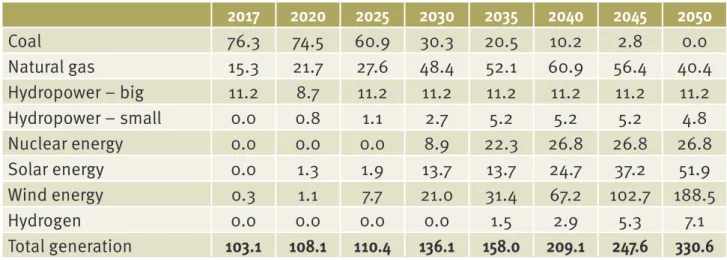
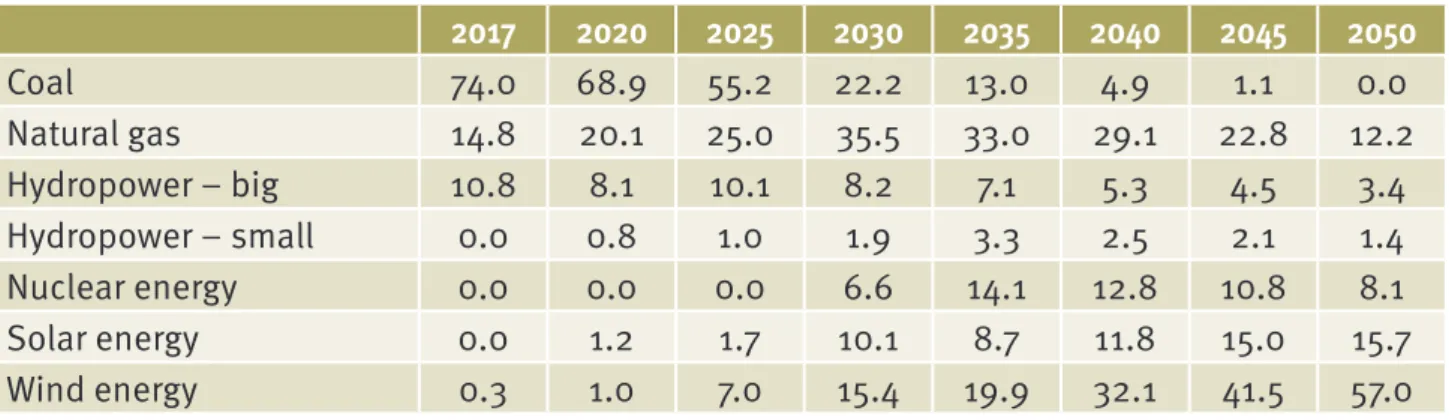
- d Electricity
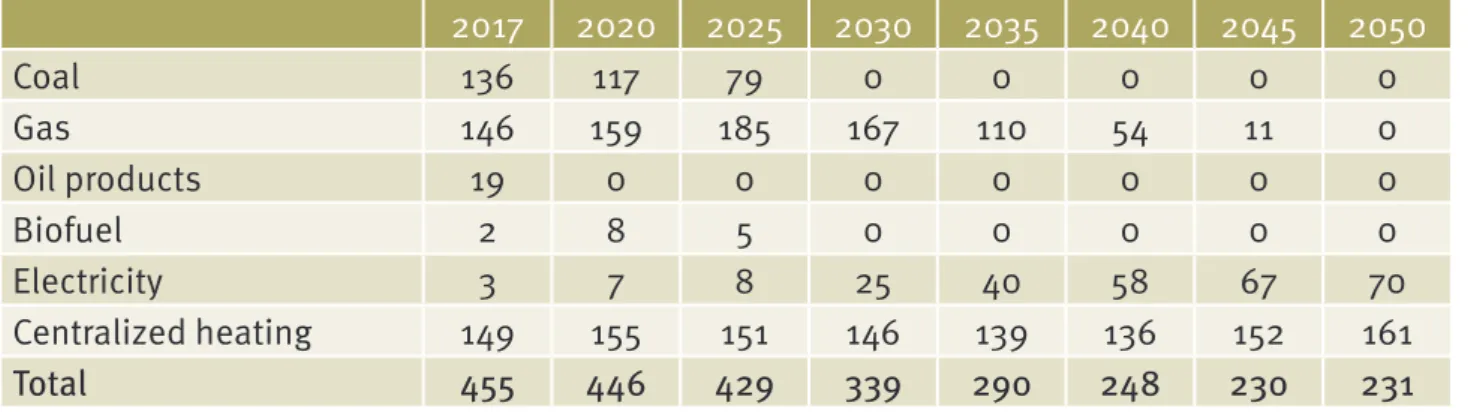
- e Heating
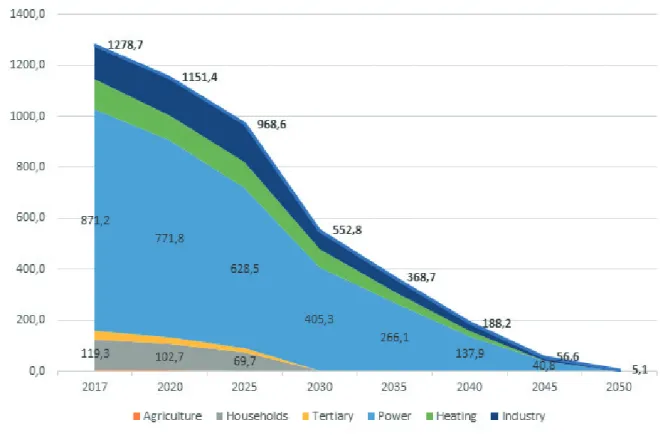
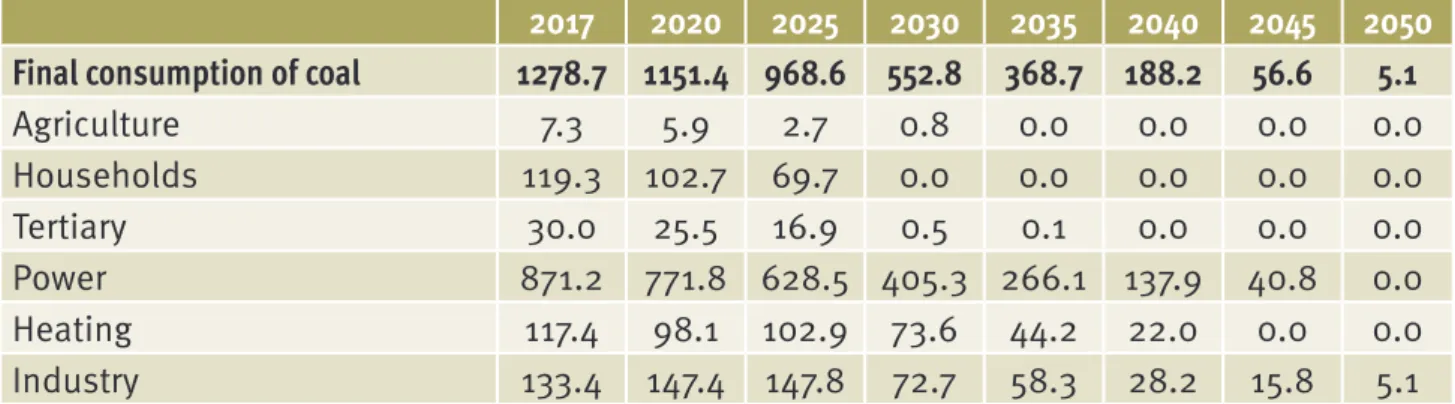
- f Coal
- Transportation [50]
- Agriculture [53]
- a Emission Trends Analysis
- b Cropland Management
- c Forest Sector
Decarbonisation of the energy sector is one of the main policies that is initially considered in reducing GHG emissions in the country. The decarbonisation of the energy sector starts with the decarbonisation of this type of energy.

Technology Transfer
- Household Renewables [56]
- Monitoring and Adjusting Energy Consumption with Intelligent Systems [57]
- Waste Water Treatment [59]
- Fertilizer Production from Sewage Sludge [60]
Electrical equipment must also be more efficient, as lighting and appliances account for 15% of energy consumption in the residential sector. Numerous technologies in conventional wastewater treatment (WWT) settings have been adopted to purify the water to a desirable quality. In this process, a large part of the organic matter (cells) is broken down into carbon dioxide (CO2) and methane (CH4), and this is done in the absence of oxygen.
In wastewater treatment environments, AD has been used in several cases worldwide for bioremediation and biogas production. Other advantages secured in the anaerobic systems include lower energy requirements, a safer and more convenient way to convert. These variables including nature (natural and synthetic) and structure (porous or non-porous and heterogeneous or homogeneous) have been used in the classification of membranes.
Other Elements
- Waste Management
- a Description of the Current State of Waste Management System in Kazakhstan
- b Composition of Municipal Solid Waste Produced in Kazakhstan,
- c Waste Management Scenarios & Recommendations Towards
- d Results and Discussion
- New Approach in Legislation and Regulation Mechanisms
- Short-lived Climate Pollutants (SLCP)
- Finance Sector and International Finance
- Hard-to-abate Industries
- Socio-economic Mitigation of Accelerated Coal Phase-out – Just Transition
Landfills have become one of the important sources of GHG emissions and contribute about 5% of global GHG emissions [19]. Amendments to the Environmental Code of the Republic of Kazakhstan, which allow the energy use of solid waste, were adopted by the Parliament of the Republic of Kazakhstan at the end of 2020. Investment requirement (cost) to realize a certain potential for reducing greenhouse gas emissions, million dollars.
According to the Concept for the Transition of the Republic of Kazakhstan to the Green Economy (2013), the volume of household solid waste (MSW) processing should be 40% by 2030. The amount of the tax should be set at 1% of income for tons of oil or coal. The accelerated reduction of methane emissions in all sectors of the economy has been increasingly recognized by the international community in the run-up to COP-26.
![Table 4.1 – Potential reduction of GHG emissions from sewage sludge landfills, 2016 (taken from inventory of GHG emission, IPCC, 2006) [12]](https://thumb-ap.123doks.com/thumbv2/azdokorg/10979825.0/42.909.94.819.775.1173/table-potential-reduction-emissions-sewage-landfills-inventory-emission.webp)
International Cooperation
A Net-zero Kazakhstan in 2060 [84]
Key Messages from the G20 on Environment, Climate and Energy [89]
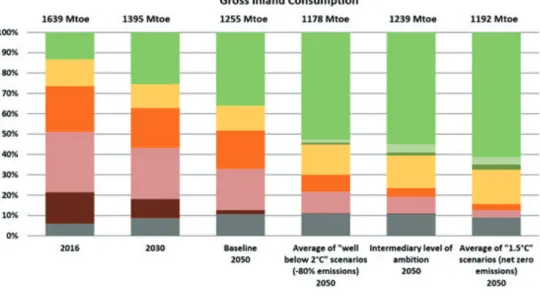
The energy system is key on the path to climate neutrality and zero net emissions by 2050. A systemic view is needed to ensure a sustainable, resilient, accessible and fair development of the energy system: all layers must be considered. A climate-neutral and sustainable energy system is based on the integration of different energy sectors at any scale and taking into account the most cost-effective ways.
Renewable energy (the IEA Sustainable Development Scenario (SDS) reports that by 2070 the share of renewable sources in the mix of global electricity generation must reach 86%) and electrification (transport sector, industry, construction) are key to achieving the goal of neutrality. The integration of high shares of vRES into power systems presents major challenges for the operation of the system. In addition, high-performance interconnections, with a special emphasis on high-voltage direct current (HVDC) systems, exploit the potential of different renewable energy sources, technologies, time zones, load characteristics, which are also located far from each other, thus ensuring a general balance along the entire energy. system.
Methodological Approach
Kazakhstan has a large share of revenue from the export of fossil fuels, and quite high carbon intensity of exported goods. In a low-carbon transition world perspective, demand and prices of both commodities are expected to decrease, thus (potentially) leading to a significant reduction in direct export earnings [94]. The cost (economic and social) of inaction could potentially be even higher than the cost of transitioning to a net zero economy, Kazakhstan should strive to maximize the benefits of cooperation in order not to miss the moment.
It also aims to highlight the players and areas of such a complex game (with Kazakhstan as the “center of gravity” of the game), identify and describe potential opportunities for synergies, and collect and share some basic quantitative information which has been inherited by other studies [97], En.

Kazakhstan and the Central Asia Region
Among the river basins, the Amu Darya and Syr Darya basins provide 90% of the region's river water. As part of a recent stakeholder engagement exercise in the area, the first regional "Community for Cooperation" (called the "CAC Forum") was designed to bring together experts from Central Asia, discuss hot topics in the field of energy and climate, facilitate inter-state dialogue, The forum can be developed into a virtual "platform" to coordinate actions and decisions at the regional level in the broad and integrated field of energy and climate.
Cooperation for a "good/fair" distribution of water resources in the region, as well as for the sustainable use of hydropower plants of TJ and KY is essential to meet the many conflicting needs and desires and to turn the region towards a future of decarbonized. . It covers the period 2017 (base year) – 2050 with the aim of analyzing alternative developments of the regional system under different scenarios in a medium to long time horizon. It describes the entire energy chain (from mining/extraction to end-uses) with high capability to represent technologies, options and mitigation measures, energy efficiency and fuel switches, in order to cover most emissions of GHGs reported in the national. inventories.
![Figure 5.5 – Kazakhstan (KZ), Uzbekistan (UZ), Turkmenistan (TK), Kyrgyzstan + Tajikistan (KY+TJ), Central Asia (CA) [101]](https://thumb-ap.123doks.com/thumbv2/azdokorg/10979825.0/60.909.125.785.280.895/figure-kazakhstan-uzbekistan-turkmenistan-kyrgyzstan-tajikistan-central-asia.webp)
Kazakhstan and the Russian Federation
Russia is estimated to have about 35% - 40% of the total carbon stock in the world's boreal forest ecosystems. Having huge reserves of forests is considered the main natural advantage of Russia for the future competitiveness of the national economy; to date, the implementation of measures to exploit and increase the carbon sequestration of forest ecosystems is the most important policy element in the country. Nuclear power is considered to be the first opportunity to decarbonise the electricity sector; it is a well-developed domestic industry that provides the full cycle of equipment production and construction of nuclear power plants as well as their fuel supply.
Local experts expect a 15%-20% drop in CAPEX due to the technological learning and transition to the fast reactors from 2040 [2]. Russia plans to develop a unified international hydrogen classification system that will include assessment of the carbon footprint using each of the available hydrogen production technologies. Dotted-dotted branch: riskiest compared to net zero vision; solidly weighted: most likely to succeed in the net zero vision.

Kazakhstan and China
Apart from the domestic ambition of neutrality and the changes to achieve the goal, it is a fact that today China is becoming one of the leading countries in the development and manufacture of "clean" technologies and will therefore play a central role in the global challenge to decarbonise the energy sector (with potentially enormous economic competitive advantages). This section briefly presents a possible space for cooperation within the framework of the Chinese "green BRI" initiative [109]. Recently, it has received more attention the term "Green BRI", namely the interpretation of the program under one.
Under the framework described above, using two separate exploratory analyzes (for China and for Central Asia/Kazakhstan) and the corresponding key elements and results, a possible collaborative design has emerged. Quantitative analysis (performed for a different research [114]) of the story described above shows that the mitigation potential of this CO2-free energy supply from China to Kazakhstan (mainly used for transport and industrial processes) is equal to with the reduction needed to meet the country's NDC target in the long run. A (simplified) version of the regional "strategic game", in light of the net-zero vision for Kazakhstan, is presented and illustrated below (in a broad tree format).

Kazakhstan and Other (Western) Players (Focus on the EU)
SECCA” (expected to launch at the end of 2021), the EU aims to promote a more sustainable energy mix in the Central Asian region, in line with EU “best practices”. The European Commission's vision for a climate-neutral EU was drawn up at the end of 2018 (in March 2020, the EC proposed the first European climate law), based on the exploration and analysis of multiple transition pathways. The vision is in line with the Paris Climate Agreement's goal of keeping global temperature rise well below 2°C and pursuing efforts to keep it at 1.5°C.
As part of the international cooperation process, an EU-Central Asia Sustainable Energy Center will be developed and operated (within the SECCA project). G7 partners agree to provide and mobilize financing to close the $40 trillion infrastructure gap, based on multilaterally agreed standards, and to align their external investments with the Paris Agreement. The overall goal of the initiative is actually defined as the development of the global infrastructure for a "green growth" (climate, climate-related values and criteria, equity, transparency).
Kazakhstan and All: Digitalization
Outside the EU, a recent G7 initiative called "Building Back a Better World" ("B3W") declares the goal of the G7 countries to. At the same time, countries with a high proportion of young population and high digital literacy (India) or large manufacturers of IT devices (China).
Key Conclusions
The use of natural gas in the medium term and electricity in the long term leads to the decarbonisation of other sectors. KZ deputy, National Report "On the State of the Environment and the Use of Natural Resources in p. Contribution of Working Group III to the Fourth Assessment Report of the Intergovernmental Panel on Climate Change [B.
Environmental Law of the Republic of Kazakhstan, Code of the Republic of Kazakhstan dated January 2, 2021 No. Order of Acting Minister of Ecology, Geology and Natural Resources of the Republic of Kazakhstan dated June 29, 2021 No. Order of the Minister of Ecology, Geology and Natural Resources of the Republic of Kazakhstan dated July 14, 2021 no.


![Table 2.8 – The main indicators of the transport sector in Kazakhstan [52]](https://thumb-ap.123doks.com/thumbv2/azdokorg/10979825.0/28.909.93.824.861.1156/table-2-main-indicators-transport-sector-kazakhstan-52.webp)
![Table 2.7 – GHG emissions in the transportation sector in Kazakhstan, ktCO2eq [51]](https://thumb-ap.123doks.com/thumbv2/azdokorg/10979825.0/28.909.97.816.374.751/table-ghg-emissions-transportation-sector-kazakhstan-ktco2eq-51.webp)
