i
FACTORS INFLUENCING THE FOREIGN CONSUMER TOWARDS INTENTION TO CONTINUOUSLY USE OF FOOD DELIVERY
SERVICE IN MALAYSIA
BY
CHUN ZI CHIEN
A final year project submitted in partial fulfillment of the requirement for the degree of
BACHELOR OF INTERNATIONAL BUSINESS (HONS)
UNIVERSITI TUNKU ABDUL RAHMAN
FACULTY OF ACCOUNTANCY AND MANAGEMENT DEPARTMENT OF INTERNATIONAL BUSINESS
NOVEMBER 2019
ii Copyright @ 2019
ALL RIGHTS RESERVED. No part of this paper may be reproduced, stored in a retrieval system, or transmitted in any form or by any means, graphic, electronic, mechanical, photocopying, recording, scanning, or otherwise, without the prior consent of the authors.
iii
DECLARATION
I hereby declare that:
(1) This undergraduate FYP is the end result of my own work and that due acknowledgement has been given in the references to ALL sources of the information be they printed, electronic, or personal.
(2) No portion of this FYP has been submitted in support of any application for any other degree or qualification of this or any other university, or other institutes of learning.
(3) The word count of this research report is 13,102.
Name of Students: Student ID: Signature:
1. Chun Zi Chien 1502001
Date:_________________
iv
In this section, I would like to take this opportunity to express my gratitude and thanksgiving to everyone who supported and encouraged me throughout the completing final year project process.
First and foremost, I would like to express our sincere gratitude to Ms. Annie Yong Ing Ing in guiding and advising me patiently throughout the completion of this project. Ms. Annie always provides some valuable ideas and suggestions to enhance my research while reviewing my works. Without her suggestion and dedication, this research project would not be complete in time.
Secondly, I would like to acknowledge the help of Universiti Tunku Abdul Rahman (UTAR) for providing me this opportunity to be involved in the process of this research project and to conclude my degree of studies. It provides benefit to me as I had gained a lot of knowledge that will be useful for the future.
Other than that, I would like to thank all the respondents who involved in this research project for their willingness to spend their time and effort in participating in this research project.
Last but not least, my thanks go to all people who have been giving me support and strength while complete research work directly and indirectly. Without their cooperation and coordination, I may not be able to complete the dissertation.
Once again, I am gratefully and thankfully for all who have participated in my completion of research.
v
Copyright Page ... ii
DECLARATION ... iii
ACKNOWLEDGEMENTS ... iv
TABLE OF CONTENTS... v
List of tables ... ix
List of Figures ... x
List of Abbreviations ... xi
List of Appendices ... xii
PREFACE ... xiii
ABSTRACT ... xiv
CHAPTER 1: RESEARCH OVERVIEW ... 1
1.0 Introduction ... 1
1.1 Research Background ... 1
1.2 Problem Statement ... 4
1.3 Research Objectives ... 5
1.3.1 General Objective ... 5
1.3.2 Specific Objectives ... 5
1.4 Research Questions ... 6
1.5 Hypotheses of the Study ... 7
1.6 Significance of the Study ... 8
1.7 Chapter Layout ... 9
1.8 Conclusion ... 10
CHAPTER 2: LITERATURE REVIEW ... 11
2.0 Introduction ... 11
2.1 Review of the Literature ... 11
2.1.1 Food Delivery Apps ... 11
2.1.2 Service ... 12
2.1.3 Convenience ... 12
2.1.4 Design... 13
2.1.5 Trustworthiness ... 13
2.1.6 Price ... 14
2.1.7 Various Food Choice ... 14
2.1.8 Service Quality ... 15
vi
2.2 Review of Relevant theoretical models ... 17
2.3 Conceptual Framework ... 19
2.4 Hypothesis Development ... 19
2.5 Conclusion ... 23
CHAPTER 3: METHODOLOGY ... 24
3.0 Introduction ... 24
3.1 Research Design ... 24
3.1.1 Quantitative research ... 24
3.1.2 Descriptive research ... 25
3.2 Data collection method... 25
3.2.1 Primary Data ... 26
3.2.2 Secondary Data ... 26
3.3 Sampling Design ... 27
3.3.1 Target Population ... 27
3.3.2 Sampling Frames and Sampling Location ... 28
3.3.3 Sampling Technique ... 28
3.3.4 Sampling Size ... 29
3.4 Research Instruments ... 30
3.4.1 Questionnaire Design ... 30
3.5 Construct Measurement ... 31
3.5.1 Scale measurement ... 31
3.5.2 Origin of Construct ... 31
3.6 Data Processing ... 36
3.6.1 Data editing ... 36
3.6.2 Data Coding ... 36
3.6.3 Data transcribing ... 37
3.6.4 Data cleaning ... 37
3.7 Data Analysis ... 37
3.7.1 Descriptive Analysis ... 38
3.7.2 Scale Measurement (Reliability Test) ... 38
3.7.3 Inferential Analysis ... 40
3.7.3.1 Multiple Regression Analysis ... 40
3.7.3.2 Pearson Correlation Analysis ... 41
3.8 Conclusion ... 42
vii
4.1 Descriptive Analysis ... 43
4.1.1 Demographic Information ... 43
4.1.1.1 Gender ... 43
4.1.1.2 Age ... 44
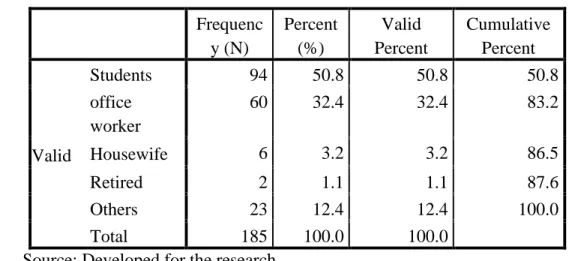
4.1.1.3 Occupation ... 45
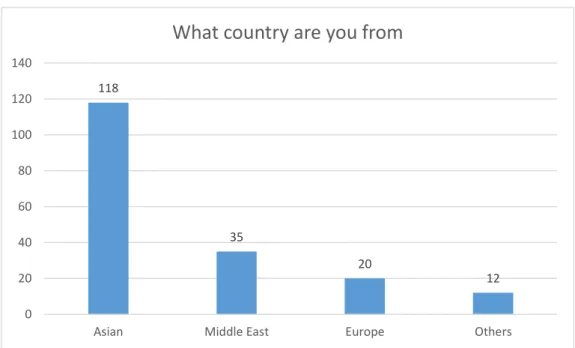
4.1.1.4 What country are you from ... 47
4.1.1.5 What is your monthly income level ... 48
4.1.1.6 How Often Do You Ordered Food from Food Delivery Service in a Month .. 49
4.1.2 Central Tendencies Measurement of Construct ... 50
4.1.2.1 Convenience ... 50
4.1.2.2 Design ... 52
4.1.2.3 Trustworthiness ... 53
4.1.2.4 Price ... 54
4.1.2.5 Various Food Choice ... 56
4.1.2.6 Service Quality ... 57
4.1.2.7 Perceived Value ... 58
4.1.2.8 Intention to Repeat using Food Delivery Apps ... 59
4.2 Scale Measurement ... 61
4.2.1 Reliability Analysis ... 61
4.3 Inferential Analysis ... 62
4.3.1 Pearson Correlation Analysis ... 62
4.3.2 Multiple Regression Analysis ... 63
4.4 Conclusion ... 65
CHAPTER 5: DISCUSSION, CONCLUSION AND IMPLICATION ... 66
5.0 Introduction ... 66
5.1 Summary of Statistical Analyses ... 66
5.1.1 Descriptive Analysis ... 66
5.1.2 Central Tendencies Measurement of Construct ... 67
5.1.2.1 Convenience ... 67
5.1.2.2 Design ... 67
5.1.2.3 Trustworthiness ... 68
5.1.2.4 Price ... 68
5.1.2.5 Various Food Choice ... 69
5.1.2.6 Service Quality ... 69
viii
5.1.3 Scale Measurement ... 70
5.1.3.1 Reliability test ... 70
5.1.4 Inferential Analysis ... 71
5.2 Discussion of Major Findings ... 71
5.2.1 Findings on the Hypotheses ... 73
5.2.1.1 Convenience and Perceived Value ... 73
5.2.1.2 Design and Perceived Value ... 73
5.2.1.3 Trustworthiness and Perceived Value ... 74
5.2.1.4 Price and Perceived Value ... 74
5.2.1.5 Various Food Choice and Perceived Value... 75
5.2.1.6 Service Quality and Perceived Value ... 75
5.2.1.7 Intention to Continuously to use Food Delivery Apps ... 76
5.3 Implication of the study ... 77
5.3.1 Managerial Implication ... 77
5.4 Limitations of the Study ... 80
5.5 Recommendations for Future Research ... 81
5.6 Conclusion ... 82
Reference ... 83
Appendix 3.1: Questionnaire ... 93
Appendix 4.1: SPSS output: Respondent general and demographic information ... 97
Appendix 4.2: SPSS output: Descriptive statistic ... 99
Appendix 4.3: SPSS output: Reliability test ... 99
Appendix 4.4: SPSS output: Pearson Correlation Analysis ... 103
Appendix 4.5: SPSS output: Multiple Regression Analysis ... 104
ix
Page
Table 3. 1: Origin of Constructs ... 31
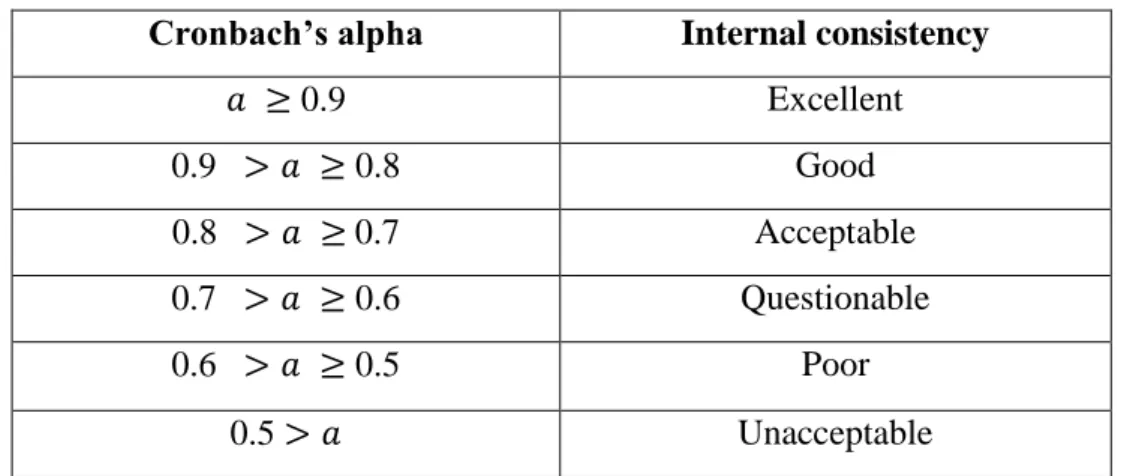
Table 3. 2: Rules of Thumb of Cronbach’s Alpha Coefficient Range... 39
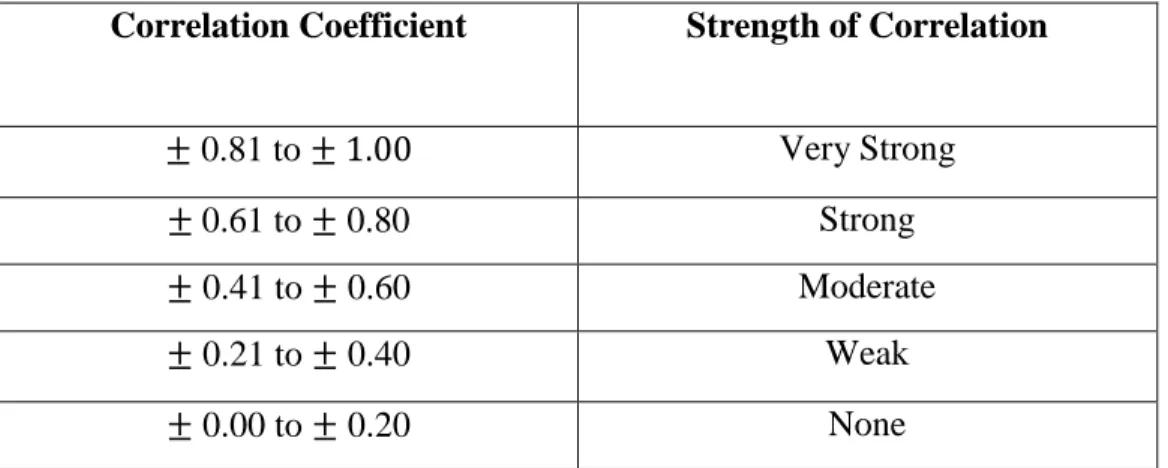
Table 3. 3: Rules of Thumb of Correlation Coefficient Range... 41
Table 4. 1: Gender... 43
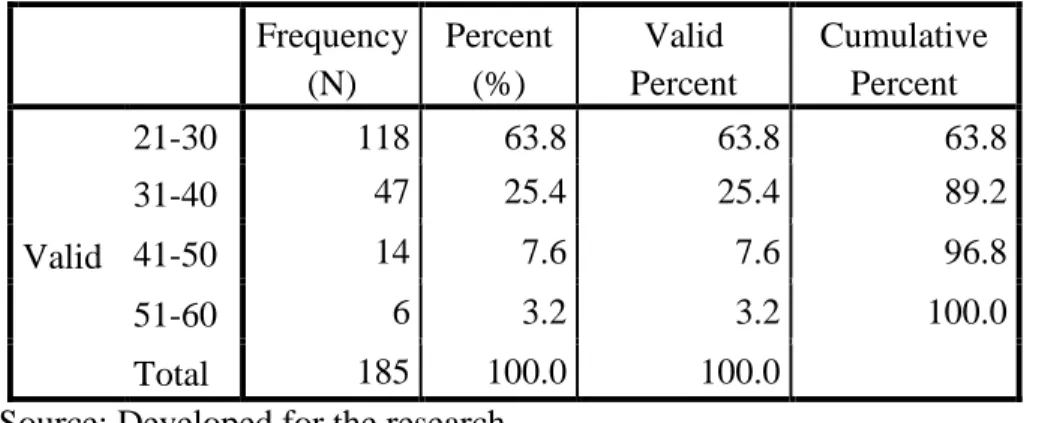
Table 4. 2: Age ... 44
Table 4. 3: Occupation ... 45
Table 4. 4: What country are you from ... 47
Table 4. 5: What is your monthly income level ... 48
Table 4. 6: How Often Do You Ordered Food from Food Delivery Service in a Month ... 49
Table 4. 7: Summary of Central Tendency for Convenience ... 50
Table 4. 8: Summary of Central Tendency for Design ... 52
Table 4. 9: Summary of Central Tendency for Trustworthiness ... 53
Table 4. 10: Summary of Central Tendency for Price ... 54
Table 4. 11: Summary of Central Tendency for Various Food Choice ... 56
Table 4. 12: Summary of Central Tendency for Service Quality ... 57
Table 4. 13: Summary of Central Tendency for Perceived Value ... 58
Table 4. 14: Summary of Central Tendency for Intention to Repeat using Food Delivery apps ... 59
Table 4. 15: Reliability Analysis ... 61
Table 4. 16: Pearson Correlation Analysis ... 62
Table 4. 17: Model Summary ... 63
Table 4. 18: ANOVA a ... 63
Table 4. 19: Coefficientsa ... 64
Table 5. 1: Summary of Central Tendencies of Convenience ... 67
Table 5. 2: Summary of Central Tendencies of Design ... 67
Table 5. 3: Summary of Central Tendencies of Trustworthiness ... 68
Table 5. 4: Summary of Central Tendencies of Price ... 68
Table 5. 5: Summary of Central Tendencies of Various Food Choice ... 69
Table 5. 6: Summary of Central Tendencies of Service Quality ... 69
Table 5. 7: Summary of Central Tendencies of Perceived Value ... 69
Table 5. 8: Summary of Central Tendencies of Intention to Repeat using Food Delivery apps ... 70
Table 5. 9: Summary of the hypotheses testing results ... 72
x
List of Figures
Page
Figure 1. 1: Trend of Online Food Delivery Market in Malaysia ... 2
Figure 2. 1: Differences in perceptions about food delivery apps between single- person and multi-person households ... 17
Figure 2. 2: Factors influence the perceive value of foreign consumer towards intention to continuously use of food delivery service in Malaysia ... 19
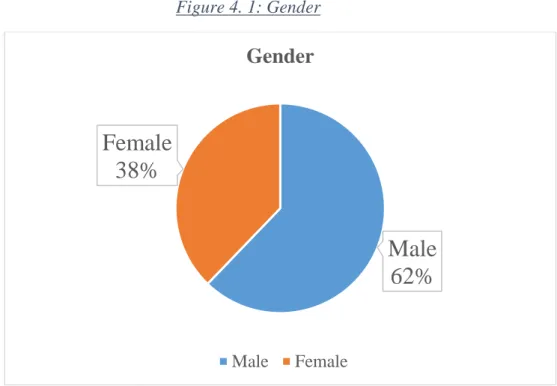
Figure 4. 1: Gender ... 44
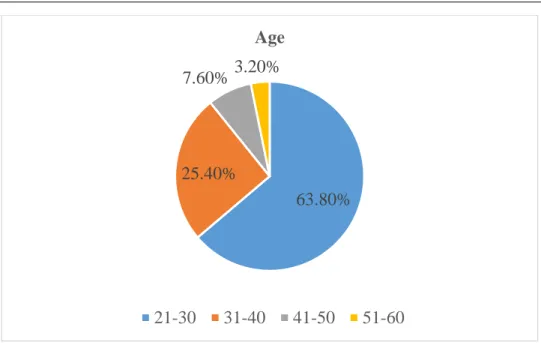
Figure 4. 2: Age ... 44
Figure 4. 3: Occupation... 46
Figure 4. 4: What country are you from ... 47
Figure 4. 5: What is your monthly income level ... 48
Figure 4. 6: How Often Do You Ordered Food from Food Delivery Service in a Month ... 50
xi
List of Abbreviations
A Agree
CONV Convenience
D Disagree
DESG Design
GDP Gross Domestic Product
N Neutral
PRC Price
SA Strongly Agree
SD Strongly Disagree
SPSS Statistical Package for Social Science
SQ Service Quality
TRS Trustworthiness
UTAR Universiti Tunku Abdul Rahman
VFC Various Food Choice
xii
List of Appendices
Page
Appendix 3.1: Questionnaire... 93
Appendix 4.1: SPSS output: Respondent general and demographic information ... 97
Appendix 4.2: SPSS output: Descriptive statistic ... 99
Appendix 4.3: SPSS output: Reliability test ... 99
Appendix 4.4: SPSS output: Pearson Correlation Analysis ... 103
Appendix 4.5: SPSS output: Multiple Regression Analysis ... 104
xiii
This research project is conducted as part of the fulfilment of requirement for the course of Bachelor of International Business which offered by Faculty of Accountancy and Management in Universiti Tunku Abdul Rahman. This research is based upon studies conducted during May 2019 to October 2019. As described in the summary, the main body of the research is split into 5 parts, each with its own introduction and conclusion. However, there is a final conclusion which considers every sections in a broader setting.
This research seeks to investigate factors influencing the foreign consumer in continue using Food delivery apps in Malaysia. The factors include convenience, design, trustworthiness, price, various food choice and service quality.
This research project able to reveal the relationship between convenience, design, trustworthiness, price, various food choice, service quality and perceived value towards intention to continuously use food delivery services. The most influential factor will be determined which it provide a better understanding in the field of strategy implementation in order to increase success rate of strategy implementation.
xiv
This research focuses on the attempt to investigate factors that influence the foreign consumer towards food delivery apps in Malaysia. The purpose of conducting this research is to examine the relationship between convenience, design, trustworthiness, price, various food choice, service quality and perceived value towards intention to continuously use food delivery services in Malaysia. The data for this study was collected using survey questionnaire. For this research, the targeted population is foreign consumer who stay in Klang Valley and used food delivery apps in Malaysia before. A sample size of 185 sets of questionnaires was distributed to foreign consumer in UCSI university and Kuala Lumpur Sentral (KL Sentral). Moreover, the Statistical Package for Social Sciences (SPSS) version 21 is being used to analyse the data collected throughout the survey.
In addition, regression analysis revealed that “Convenience”, “Trustworthiness”
and “Various Food Choice” was the most significant predictor towards Perceived value, and followed by “Service Quality”, “Price” and “Design” . The findings suggested that the design interface of food delivery apps must be user friendly.
Besides, food delivery industry also recommended to hire more riders and using better pouch to maintain the food quality. Practical contributions are discussed, with future research suggested.
Page 1 of 104
CHAPTER 1: RESEARCH OVERVIEW
1.0 Introduction
This chapter will briefly introduce about background of food delivery application service in Malaysia. The research background, problem statement, objective of the research, research questions, hypothesis and significance of study will be discussed in this section.
1.1 Research Background
Smart phones are very crucial nowadays, phones are only use to communicate in the old days, followed by the technology advancement smartphones can do more than just a call, can use to take photos, play games, watch movies and using apps.
According to “State of Digital Lifestyles” states that Malaysian are the most addicted to their digital devices, almost 69% of Malaysian unable to stop using their smart phones even for a day (Bernama, 2018). Apps download by a smart phones mostly are free of charge, probably are in-apps purchase, attracting more consumer try out new apps because it is free. Other than that, Malaysia have all the right ingredients such as huge middle class , high internet penetration which is a potential market that boost up the number of order of the food delivery services. Malaysia’s internet penetration in 2017 had increase to 85.7% from just 70 % in 2015 provided by the Department of Statistic Malaysia (Rosli, 2018). Smart phone usage for internet access also rose to 97.7% in 2017. Malaysia is undergoing a digital transformation nowadays by developing a digital economy in Malaysia is a great way to increase country’s gross domestic product (GDP) (Ho, 2017). Hence marketer nowadays are more focused in develop a mobile apps rather than online.
Page 2 of 104
In 2016, second Finance Minister stated that Malaysians were spending 31.2% of their income on food, whether is dine in or take away (Fitri, 2018). Malaysian citizens with salary between RM 2000 to RM 6000 their spending on food are RM 20 to RM 35 per day, around two to three meals a day (Fitri,2018). Malaysian consumers are food lover and willing to spend on foods. Malaysia is build up on ethnic diversity and this have affected Malaysia to have distinctive and different types of cuisines in the country. One of the key attractive for Malaysia is diversity.
Diversity makes Malaysian food are unique, people foreigners who visited Malaysia will sure crave for Malaysian food even when they are not in other country (Philips, 2016). Although in other country also have food delivery service, but their food menu may differ with Malaysian food menu. This is because local foods include Malay cuisine, Chinese cuisine, Indian cuisine and others making variety of choices for the consumer to choose. For example in United States, this is one of the reason the food delivery service industry in Malaysia are rising rapidly, because consumer are demand for the delicious food and convenience.
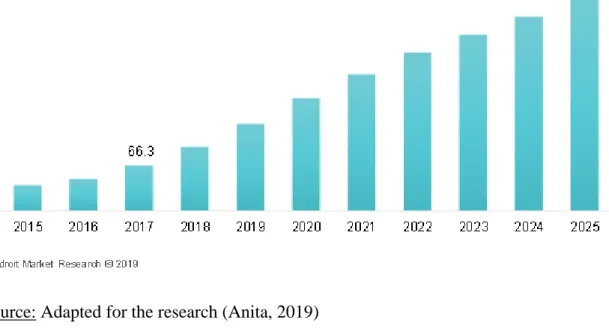
Figure 1. 1: Trend of Online Food Delivery Market in Malaysia
Source: Adapted for the research (Anita, 2019)
Page 3 of 104
In the past few years, Southeast Asia especially in Malaysia food delivery market has grown rapidly and having fierce competition over the past few years (Anita, 2019). The online food delivery service industry had expand their business into Malaysia for example FoodPanda from Germany and Uber Eats from United States, both food delivery service provider dive into Malaysia at the same time trying to adapt to the local. The first mover who started their business aggressively in Malaysia is FoodPanda, initially they are just providing pizza delivery service and further expand their food delivery to variety of food range until today (Kong, 2018).
The fast growing sector also bring other competitor into the industry such as the food delivery services which origin from other countries like DeliverEat, Uber Eats, Honestbee, GrabFood, Shogun2u, FoodTime and local food delivery services like Running Man Delivery, Dahmakan, Mammam were doing great in Malaysia (Milo, 2018). People lives in Kuala Lumpur with a hectic lifestyle often prefer to order from a delivery service, this is because the process of selecting, queueing, ordering and getting a good spot to eat are time consuming after that may be limited time left to enjoy their lunch. It is more opportunity for them to target Klang Valley area because there are more offices, factories, workplace located there, hence more potential consumer to order food via delivery apps service. During the lunch hour, the riders of food delivery service geared themselves up during the peak hour because office staff will start to order their food, the staff able to sit down and relax in their workplace.
The service sector in Malaysia had large contribution to the GDP by 55%, it makes the service sector fastest- growing sector of the economy (Economy, 2018). This also shows that Malaysian consumer are more enjoy on the service provided by the service industry. Potential consumer who are satisfied on the service are more willingly to repurchase or continuously use the service, but when the satisfaction level of the consumer drops, the consumer might not come back anymore. The key of food delivery service is convenience, when the rider delivery the food into door step on time and food are in perfect condition, then the consumer satisfaction will rise and possible continuously using the application to order their foods. The consumer especially in urban city, has changed their lifestyle after using food
Page 4 of 104
delivery service and using it become normal and routine, consumer are willing to pay a higher price for the better service (Kandasivam, 2017).
This research study on the factors influence consumer’s perceived value with Malaysia food delivery services towards attitudes and intention to use food delivery apps again. Besides, this research also study on how positive or negative overall consumer satisfaction with food delivery service can impacts on urban consumer future attitudes towards food delivery service. The outcome of this research will provide a more understanding urban citizens on Malaysia food delivery service, satisfaction level and their behavioral intentions.
1.2 Problem Statement
Over the years, the food delivery service had become a trend in the world, the demand for the service rise as it provide great convenience and quality of service to consumer. Food delivery services is defined as a courier service by an independent food delivery company purchase food from a restaurant or store and delivers the food to a consumer. It is difference with retail food delivery, it is a delivery service provided by the restaurant or store itself. The target market of the food delivery service is often the modern consumer who rely on technology to meet their daily requirements. Order any food with just a single tap in the apps and the food will sent to doorstep immediately. Easy payment of the order provides convenient to the consumer and making more and more people used the apps instead. The growth of the food delivery industry also brings more competitor into the market but there are insufficient restaurant provide online booking service. This will be a challenge for the food delivery provider as their menu must be updated every day, and they have to provide more food variety to the consumer to choose.
People might have difficulty to dine outside because in workplace may have limited time to have a meal outside of office, their workplace location may be far from the
Page 5 of 104
restaurant, so they are rely to food delivery apps to order their food. People come back from work are often exhausted, they refuse to dine outside after the tiring day and order food through digital media instead. Ordering food delivery will save their time drive to the stall, save time finding parking and also no need to queue for the foods. Unfortunately, Malaysian consumer having problem waiting the order for a long time to arrive about one hour or half, but end up cancelled (Jessy, 2017).
Consumer are provided with the rider tracking feature in apps showing it will arrived in short, but the time arriving always is a constrain to the food delivery industry. Food is cold, spilled or not in a good condition also affecting consumer satisfaction and not to use the food delivery apps any more (Jessy, 2017). This problem is a serious and yet never been solved in recent years. Therefore Malaysia food delivery service, consumer overall satisfaction, future behavior intent from perspective of consumer are not yet been investigated by any researcher. Hence, food delivery providers are not familiar with the Malaysian food experience and may not meet their needs.
1.3 Research Objectives
1.3.1 General Objective
The general objective is to study the factors influencing foreign consumer to continuously use of food delivery service in Malaysia.
1.3.2 Specific Objectives
1. To determine the relationship between convenience and perceived value of consumer towards food delivery apps.
Page 6 of 104
2. To identify the relationship between design interface and perceived value of consumer towards food delivery apps
3. To find out the relationship between trustworthiness and perceived value of consumer towards food delivery apps.
4. To identify the relationship between price and perceived value of consumer towards food delivery apps
5. To determine the relationship between various food choice and perceived value of consumer towards food delivery apps.
6. To investigate the relationship between service quality and perceived value of consumer towards food delivery apps.
7. To identify the association between perceived value and intention to continuously use food delivery apps.
1.4 Research Questions
1. Is there any significant relationship between convenience and perceived value of consumer towards food delivery apps?
2. Is there any significant relationship between design interface and perceived value of consumer towards food delivery apps?
3. Is there any significant relationship between trustworthiness and perceived value of consumer towards food delivery apps?
4. Is there significant relationship between price and perceived value of consumer towards food delivery apps?
5. Is there any significant relationship between various food choice and perceived value of consumer towards food delivery apps?
Page 7 of 104
6. Is there any significant relationship between service quality and perceived value of consumer towards food delivery apps?
7. Is there any significant association between perceived value and intention to continuously to use food delivery apps?
1.5 Hypotheses of the Study
H1: There is significant relationship between convenience and perceived value of consumer towards food delivery apps.
H2: There is significant relationship between design and perceived value of consumer towards food delivery apps.
H3: There is significant relationship between trustworthiness and perceived value of consumer towards food delivery apps.
H4: There is significant relationship between price and perceived value of consumer towards food delivery apps.
H5: There is significant relationship between various food choices and perceived value of consumer towards food delivery apps.
H6: There is significant relationship between service quality and perceived value of consumer towards food delivery apps.
H7: There is significant association between perceived value and intention to continuously to use food delivery apps.
Page 8 of 104
1.6 Significance of the Study
The results are benefits to the Food delivery services in Malaysia. It is vital for marketer or related parties in Malaysia by improving the understanding of Malaysian needs and wants for further business transactions. Moreover, Malaysian can be divided into a few distinctive group who can bring a large contribution gross domestic product in Malaysia. Hence, marketers can better promote Malaysian food delivery service by understanding their perception.
Studies shows that hungry consumer will spent 64% or more money to order the food via the service, it will generate bigger and higher orders, a large stream of revenue fuel to the accounts of online food delivery services (GloriaFood, n.d.). The restaurant may not opened at night, but the online ordering system operate 24 hours, the service make money even in midnight (Tariq, 2018). Foods are crucial part in the food delivery apps, food delivery services in Malaysia had to put much effort to study local preference and taste, this research able to help the marketer or related industry to understand the local food preference, picking the right foods in their online menu (Singh, 2019).
This study aimed to find which factors can enhance perceived value of consumer towards the food delivery service in Malaysia and make contribution to increase consumer satisfaction. In addition, this study also can increase knowledge and understanding of Malaysian food and the delivery services in influencing consumer overall attitudes and intention to continuously using the apps, where marketers can successfully implement their strategies which can attract more consumer to use the service. Malaysian are multi races country and perceived value on food delivery service vary due to many factors, it is worth to study Malaysians’ overall satisfaction from different angle to provide valuable result.
Page 9 of 104
This study will significantly bring advantages to the marketers and relevant parties in Malaysia to enhance food delivery service industry and create a positive attitudes and continuous intention to using the food delivery apps.
1.7 Chapter Layout
Chapter 1: Introduction
Chapter 1 provides a synopsis of the factor influence the foreign consumer towards intention to continuously use of food delivery service in Malaysia.
Chapter 2: Literature Review
Chapter 2 will conduct a literature review of this study. Besides, review of the theoretical framework and the conceptual framework for this research will be proposed to show the network and hypotheses development. Moreover, the relationship and correlation of the independent variables with the dependent variable of this research will be examined.
Chapter 3: Methodology
Chapter 3 will describe the methodology used in this research investigation. Firstly, it will start with research design and data collection methods that will be used in this research. Then, the design of this sampling project will be examined. Moreover, the research instrument and the establishment of the questionnaire will be discussed.
Furthermore, the discussion of data processing instrument adopted to enhance and minimize mistake on survey appliances will be conducted.
Chapter 4: Data Analysis
Page 10 of 104
Chapter 4 is where the result will be generated and discussed. Then, the progress carry on with assess of measurement model by validate the structural model for examining of hypothesis. The measurement model comprises of data reliability, internal consistency reliability, multiple regression and pearson correlation.
Chapter 5: Discussion, Conclusion and Implications
Chapter 5 is the section that explain the whole statistical analysis, key findings and the hypotheses examining outcome from preceding chapters. Besides recommendation towards future review is given and reviewed. Last but not least, the conclusion of the research will be made.
1.8 Conclusion
In short, the aim of this research topic are clearly stated and briefly explain in this chapter. It includes research background, problem statement, objectives of the research, questions in the research, hypothesis and significance of study.
Page 11 of 104
CHAPTER 2: LITERATURE REVIEW 2.0 Introduction
The review of food delivery literature from journal articles will be emphasized and journals from other field of study which were suit to the context of this study will also be included in this section.
2.1 Review of the Literature 2.1.1 Food Delivery Apps
Online food delivery and food delivery apps let consumers to order food and the food will be delivered to their doorsteps (Ray, 2019). Unfortunately, there are difference between online food delivery and food delivery apps, online food delivery have to made order over the internet-based website then food delivery apps is making orders through mobile apps (Ray,2017). The online food system also brings flexibility to the consumers, the system enable consumer to pay with electronic payment system such as bank-in, debit card, credit card or by cash (Josephin, 2017). Some consumer prefer cashless will be no issue for them to make transaction with the food delivery service industry. Based on Josephin (2017) states that consumer hate to waiting while taking orders and they prefer ordering by self service such as food delivery services because it is faster and convenience in ordering and making transaction, it is also reduce the miscommunication when ordering.
The consumer often search for a favorite food or restaurant through the website or mobile app (Josephin, 2017). There are restaurant that providing their own food delivery services include Pizza Hut, Mcd, Kfc and many others (Ray,2019). In contrast, the online food delivery in this research is multi-restaurant mobile application which provide various food choice from different restaurant such as Foodpanda, Uber Eats, Dah Makan (Ray, 2019).
Page 12 of 104
Multi-restaurant mobile application work as an intermediaries for different restaurants.
2.1.2 Service
Most service definition is “activities” or processes”, the activity or process is means doing something for the benefit of some entity (Stephen & Robert, 2004). Service is not a product, it is intangible asset that transfer from the seller to the buyer. The characteristics of services are intangibility, inseparability, heterogeneity and perishability (Kayastha, 2011). Food delivery service is transferring the unique characteristics from the seller to the buyer, they provide service which helping consumer to take order and deliver food to their door step. Service is also means a benefit given by the food delivery service to their consumer (Ismail, Haque & Ahmed, 2015).
2.1.3 Convenience
Convenience are concern about consumer expenditure of time and effort (Farquhar & Rowley, 2009). It is degree to which they value time and estimating how much effort will be required to complete a task. Consumer using less time and effort to order a food is one of the convenience that the food delivery service provide. Convenience is consider the biggest factor driving online food ordering, it let their consumer to stay at home without travel to find food, the food will deliver to their place in no time (Rathore &
Chaudhary, 2018). Food delivery apps also offers convenience to consumer to have a sense of control and authority of what to order, what products to buy on a wide variety on the internet. The food delivery industry provide a class of convenience which is accessibility, it provide considerable support about the restaurant location, opening hours and product ranges (Farquhar
& Rowley, 2009). This is also providing consumer convenient to know their
Page 13 of 104
favorite restaurant or food is available at the moment, consumer already know the relevant information from the apps. The portability of the apps is also bringing convenience to the consumer, whenever consumer having a phone and internet in any given location, they can order their foods (Farquhar & Rowley, 2009).
2.1.4 Design
Food delivery apps always focuses on how the design of the apps, the visual appeal which will bring consumer to have positive image towards the apps (Liu, Xiao, Lim & Tan, 2017). Design of the apps are important because apps are the first thing that consumer will approach, an attractive design of the apps may seek consumer attention. The design quality of the apps must be useful and ease of use, this will let more consumer satisfy when using the apps (Lee, Lee, & Jeon, 2017). This is because when the apps is not useful at all and difficult to use, consumer will lost interest on the apps and probably the food delivery apps fails. Design of the apps incorporates shading, photography, shapes or even textual style (Chakraborty, 2019). It is important to have a proper shading, comfortable view of photography, the creativity of the apps design able to capture the value of the consumer. The excellent design of apps also create trust and tasteful excellence to the consumer, it will let the consumer had the intention to purchase the food from the food delivery apps (Chakraborty, 2019). The purpose of designing apps is also to promote its products and encourage purchases by providing functional and visual control to the consumers (Liu et al, 2017).
2.1.5 Trustworthiness
According to Sekhon, Ennew, Kharouf & Devlin (2014) states that trustworthiness is a characteristic of trustee, the consumer judge an
Page 14 of 104
organization by implied values and previous behaviors. Trust is when consumer willing to depend or had trusting behavior toward the organization.
The trustworthiness and trust are similar and interchangeably in terms of organizational trustworthiness and trust. Trustworthiness the degree consumer’s believe of the resource, when the source provide by the food delivery apps is reliable and accurate, the consumer may have a high level of trustworthiness on the food delivery apps (Tenopir, Levine, Allard, 2015).
Trust is also the confidence of the consumer to rely on the company, an exchange of partner’s reliability and integrity (Setiawan & Sayuti, 2017).
When the food delivery apps is reliable, it will gain more trust of the consumer.
2.1.6 Price
The price of the service is the amount of money charge by the food delivery service provider on consumer, price is one of the vital factor because the charge will directly affect the consumer (Yusof, 2016). If the price of service is affordable, the consumer tend to have customer satisfaction and willing to repurchase the service continuously in the future. Price of the service must be at the reasonable prices, because price determine consumer’s perception of value of service (Rubio, Villasenor, Yague, 2013). This is because some of the consumer are price sensitive and the service provider have to meet the value of consumer perception. The price of the items on the menu of the apps also able to attract or repel the consumer from using the apps (Yusof, 2016). Food delivery apps should charge price based on their target consumer segment and their price awareness (Ullakonoja, 2011).
2.1.7 Various Food Choice
Page 15 of 104
Various food choice in food delivery apps is important because each consumer had different food choice, a few food choice model failed to satisfy the broad market (Paasovaara, 2011). Food delivery apps act as an intermediary between restaurant and customer and provide variety food menu that available in these restaurant. Food delivery apps provide various food choice by segment it into region such as western food, Asian food, middle-east food and more. Food delivery had to encourage healthy food choice into the menu are more favorable strategies (Steenhuis, Waterlander
& Mul, 2011). This is because consumer that often order from food delivery service are mostly busy, they had less time to do exercise so healthy food choices will be their main selection on the food menu.
2.1.8 Service Quality
Service quality is a combination of two different words which is service and quality, meaning of service quality is the service provider deliver a good performance or product that satisfy consumer efficiently (Kalidas, 2007).
Service quality has greatly influence customer satisfaction because consumer is using the product or services provided by the service provider (Kedah, 2015). Consumer had difference expectation on services quality, food delivery services have to maintain their service quality in order to sustain in the long term. Quality of service is the service provided able to meet the need or expectation of customer, so the customer will satisfy in terms of their service (Setiawan & Sayuti, 2017). The concept of service quality in e-retailing is apps facilitate efficient and effecting ordering, transaction and the customer service delivered able to have customer satisfaction towards it tend to increase consumer to repurchase from it. The whole experience of the consumer taken from ordering to receiving is important, the service quality provide by the food delivery service must be align with customer wants. The customer satisfaction strongly influence by the perceived quality of service provide by the food delivery apps and it is
Page 16 of 104
a core sustainable strategy to provide excellent service to the customers (Kedah, 2015).
2.1.9 Perceived Value
Perceived value in consumer may be vary, organization should understand and measure how their consumer value the products and services (Chen &
Hu, 2010). This is because consumer are “value- driven”, more value the product or services given to the consumer, the more perceived value the consumer have towards the product or services (Sweeney & Soutar, 2001).
Consumer’s perceived value of a service also from viewpoint of quality and value of money (Wang & Wang, 2010). For example, food delivery service provide affordable food menu and remain the quality of the food, it will lead consumer satisfaction and having perceived value towards the apps.
Consumer also willing to pay higher price in exchange of convenience of the service or sacrifice the convenience of the service for a lower price (Pham,Tran, Misra, Maskeliunas & Damasecicius, 2018). The food delivery service is providing consumer convenience which delivery the food to their doorstep, so the consumer are more acceptable for a little higher price of the food menu in the food delivery apps. Consumer also increase perceived value when the service provider adding superior value to the buyer such as special feature, service quality assurance and loyalty program (Sweeney &
Soutar, 2001). However to understand how consumers value services need a more sophisticated measure.
2.1.10 Intention to Continuously Use
Repeat purchasing and intention to continuously use is a success of any store, either product or services who consumer will repeat using is means they had a good review and satisfy on the product or services (Chiu, Wang, Fang,
Page 17 of 104
Huang, 2014). Consumer perceived value is the important predictor of intention to continuously using food delivery apps. Food delivery apps had to determine the context of effects of gender and age of perceived value by investigating their motive of using the apps (Fang, Wen, George, Prybutok, 2016). Intention to continuously use is basically decision to continue using the service based on the value judgement from past experience of consumer using the service (Fang, Wen, George, Prybutok, 2016).
2.2 Review of Relevant theoretical models
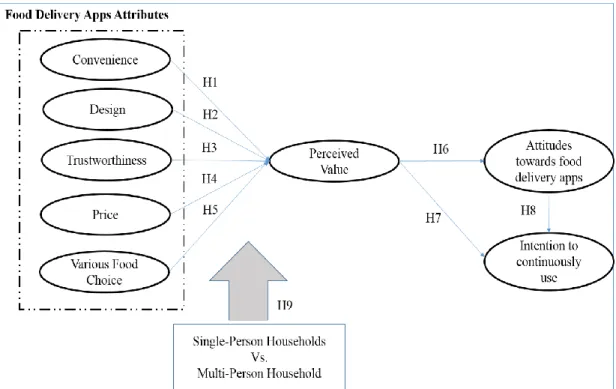
Figure 2. 1: Differences in perceptions about food delivery apps between single- person and multi-person households
Adapted from: Cho, M., Bonn, M., & Li, J. (2019). Differences in perceptions about food delivery apps between single-person and multi-person households. International Journal of Hospitality Management, 77, 108-116. doi:
10.1016/j.ijhm.2018.06.019
Page 18 of 104
Based on Figure 2.1, the theoretical framework shows the food delivery apps attributes that will influence perceived value and consumer attitudes towards food delivery apps and intention to continuously use the food delivery apps. The result indicated of food delivery apps attributes and overall customer perceived value are positively related except for price is not supported. The result is based on the comparison between single-person household and multi-person household by their perception when using food delivery apps (Cho, Bonn, Li, 2019).
The variable attitudes towards food delivery apps been remove from the latest conceptual framework because when consumer had high perceived value towards the food delivery apps, the attitude towards food delivery apps is positive, so the perceived value influence the consumer attitude towards food delivery apps directly.
Service quality is added in the latest conceptual framework which is one of the factors influence perceived value. The reason service quality is added because food delivery apps is focus in providing services to consumer such as delivering, apps service and more, so it is important to test the relationship between service quality and perceived value.
Page 19 of 104
2.3 Conceptual Framework
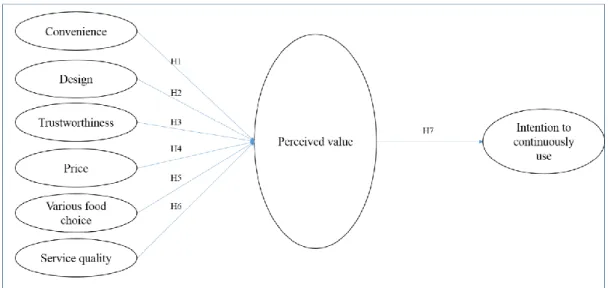
Figure 2. 2: Factors influence the perceive value of foreign consumer towards intention to continuously use of food delivery service in Malaysia
Source: Developed for the research.
Figure 2.2 display the proposed conceptual framework is to show the relationship between factors that influencing perceived value towards intention to reuse the food delivery apps. In this research, the independent variables consist of convenience, design, trustworthiness, price, various food choice and service quality. The independent variables develop based on the previous literature (Cho, Bonn, Li, 2019).
2.4 Hypothesis Development
Hypothesis 1
H0: There is no significant relationship between convenience and perceived value of consumer towards food delivery apps
H1: There is significant relationship between convenience and perceived value of consumer towards food delivery apps
Page 20 of 104
Consumer perceived value and convenience are positively correlated. In other words, the consumer that satisfy of the convenience of the food delivery apps brings will have perceived value towards the food delivery apps (Cho et al., 2019). Result of the investigation of low cost fitness centers shows that perceived value has significant positive relationship with convenience (Fernandez, 2018). A result of electronic commerce (e-commerce) which provide online shopping to consumer also tested on the relationship between convenience and perceived value with a positive outcome (Pham et al., 2018). A study of retail service to the commercial chain also shows positive correlated between convenience and perceived value (Rubio, Villasenor, Yague, 2013). In short, service that brings convenience to consumer will gain perceived value.
Hypothesis 2
H0: There is no significant relationship between design and perceived value of consumer towards food delivery apps
H2: There is significant relationship between design and perceived value of consumer towards food delivery apps
According to Cho et al. (2019), design of the apps and perceived value are positively correlated. This is means the more user-friendly the design innovation also have significant positive relationship with consumer perceived value (Kim, 2019). There is strong relationship of the design quality of the application and perceived value (Lee, Lee, & Jeon, 2017). Website appeal of an e-commerce site is positively influence consumer perceived value (Liu et al., 2017). As a conclusion, there are number of studies supported there is positive relationship between design and perceived value with empirical studies.
Hypothesis 3
Page 21 of 104
H0: There is no significant relationship between trustworthiness and perceived value of consumer towards food delivery apps
H3: There is significant relationship between trustworthiness and perceived value of consumer towards food delivery apps
The price quality of food delivery application has no relationship with consumer perceived value (Cho et al., 2019). Consumer perceived price does not affect the perceived value consumer need the service convenience so they are willing to pay a higher price for the convenience service. Price has a significant negative effect on perceived value for its potential customer (Kim, Xu & Gupta, 2012). However, there are still have positive perceived price level towards perceived value of service (Rubio, Villaseñor & Yagüe, 2013). A research study on online hotel, the reasonable price has significant relationship with consumer perceived value (Kim, Kim & Park, 2017). Some empirical studies find negative relationship between perceived price and perceived value (Cheng, Cripps, & Chen, 2006; Oh, 1999).
Hypothesis 4
H0: There is no significant relationship between price and perceived value of consumer towards food delivery apps
H4: There is significant relationship between price and perceived value of consumer towards food delivery apps
The price quality of food delivery application has no relationship with consumer perceived value (Cho et al., 2019). Consumer perceived price does not affect the perceived value consumer need the service convenience so they are willing to pay a higher price for the service. Price has a significant negative effect on perceived value for its potential customer (Kim, Xu & Gupta, 2012). However, there are still have positive perceived price level towards perceived value of service (Rubio, Villaseñor & Yagüe, 2013). A research study on online hotel, the reasonable price has significant relationship with consumer perceived value (Kim, Kim & Park, 2017). Some empirical studies find negative relationship between perceived price and perceived value (Cheng, Cripps, & Chen, 2006; Oh, 1999)
Page 22 of 104 Hypothesis 5
H0: There is no significant relationship between various food choices and perceived value of consumer towards food delivery apps
H5: There is significant relationship between various food choices and perceived value of consumer towards food delivery apps
According to Cho et al. (2019) the various food choices in food delivery apps is positive correlated to consumer perceived value. Various food choices is means there are more option of food provided in the food delivery apps, so consumer may choose their favorite foods in the apps. The variety of healthy food choice is positively correlation with the perceived value. It shows that consumer are more supportive towards healthy food in food delivery apps, so the more selection of the food the more perceived value towards the food delivery apps.
Hypothesis 6
H0: There is no significant relationship between service quality and perceived value of consumer towards food delivery apps
H6: There is significant relationship between service quality and perceived value of consumer towards food delivery apps
According to Hu, Kandampully & Juwaheer (2019) stated that service quality have positive impacts on perceived value. This is because the good service quality provided by the food delivery service will gain consumer satisfy and will gain perceived value on the food delivery apps. The quality of service of employee are positively correlated to perceived value of service (Rubio, Villaseñor & Yagüe, 2013). The quality of the service provided by the restaurant also has positive influence on consumer perceived value (Ryu, Lee & Gon Kim, 2012). However, there are negative relationship between the variables, the result of mobile hotel reservation is negatively relationship between service quality and perceived value
Page 23 of 104
of consumer (Wang & Wang, 2010). There is no relationship between service quality and perceived value dimension a (Raza, Siddiquei, Awan, Bukhari 2012).
Hypothesis 7
H0: There is no significant association between perceived value and intention to continuously to use food delivery apps
H7: There is significant association between perceived value and intention to continuously to use food delivery apps
Consumer perceived value are significantly led to positive intention to continuously use (Cho et al., 2019). When consumer are satisfy on using the food delivery apps, it will gain a perceive value towards the delivery apps and possible to increase repurchase intention or intention to continuously using the food delivery apps. The result tested on online retailing are positive correlated between consumer’s perceived value and intention to continuously use (Pham et al., 2018). Based on the result on decision making in online shopping, it is positive correlation between consumer’s perceived value and repurchase intention. As a conclusion, when the consumer had perceived value, it is more favorable for the consumer to repeat purchase or continuously using the service.
2.5 Conclusion
Concisely, this section included the review of literature about factors affecting consumer using Malaysia food delivery apps service. It covers the review of convenience, price, service quality, various food choice, trustworthiness and apps design towards consumer perceived value. Also review the consumer perceived value towards intention to continuously use. In short, the framework is created to show the relationship between variables.
.
Page 24 of 104
CHAPTER 3: METHODOLOGY
3.0 Introduction
In this section will explain the methodology aspects of the study such as research design, method used for data collection, construct measurement, the design of sampling, research instrument, processing of data and analysis of data.
3.1 Research Design
Research design, it is means a structure of the research including all of the elements in the research which is means a plan of the proposed research work (Akhtar, 2016).
“A research design is the arrangement of conditions for the collection and analysis of data in a manner that aims to combine relevance to the research purpose with economy and procedure” (Selltiz, Jahoda, Deutsch & cook, 1967). Research design able to help researcher getting more accurate and reliable result by minimize the probability of getting irrelevant information from the actual data collection.
In this research, researchers had employed descriptive and quantitative design. A descriptive research able to describe the characteristic of foreign consumer towards food delivery apps in Malaysia and also provide a better explanation of the problem occurs to researchers. So, in this research the quantitative research is supported through the questionnaires.
3.1.1 Quantitative research
Page 25 of 104
According to Yilmaz (2013), quantitative research is explaining a phenomenon by collect and analyse numerical information using mathematically based techniques. In this research, researchers had applied quantitative research because it can provide an accurate and clear image of recommendation and conclusion in the last chapter by using questionnaire.
The questionnaire has been developed from past literature (Cho, M., Bonn, M., & Li, J., 2019) and modify to fit the context of this study. Therefore, by using quantitative method it is appropriate to testing all of the hypothesis of this research and relationship between independent variables and dependent variables.
3.1.2 Descriptive research
Descriptive research main purpose is to describe the characteristics of objects, people, organization, people or environment (Zikmund, Babin, Carr, Griffin, 2013). Descriptive studies also design to collect data such as characteristic of objects, situations and events (Sekaran & Bougie, 2016).
Hence, this research has employed descriptive study to describe the demographics of foreign consumer towards intention to continuously use food delivery apps in Malaysia.
3.2 Data collection method
In research, there are two different methods used to gather information which is primary data and secondary data. Initially, researchers must gone through a process of gathering and sorting data, then one only can interpret the information.
Page 26 of 104
3.2.1 Primary Data
Data collection plays an important role in statistical analysis. Primary data refers to the first-handed information gathered by the researcher who are investigating the particular purpose of the research (Sekaran, 2003). For example, primary data also known as data generated from surveys, interviews, questionnaires, observation and more. The data collected is factual and original by the researcher (Ajayi, 2017). Researcher used primary data when aim for getting solution to the problem (Ajayi, 2017).
When collecting primary data, researcher able to obtain demographic details from the respondents such as education, monthly income, occupation and more. According to Ajayi (2017) stated that the benefit of primary data is researcher is involved in the data collection process, it is a real time data and the data is always specific to the researcher’s need. However, primary data usually takes longer time to collect and expensive than secondary data.
3.2.2 Secondary Data
Secondary data refers to researcher obtain the data which is already collected or produced by other researcher (Mesly, 2015). According to Ajayi (2017), the secondary data is the researcher collected data done by other researcher for some other purpose and at a different time in the past.
The example sources of secondary data are books, journal articles, government publication websites and internal records. Business researchers mostly work under time constraint and budget constrain, so business researcher would recommend secondary data. The advantage of secondary data is less time consuming and less expensive compare to acquiring primary data (Zikmund et al., 2013). The disadvantage of secondary data is the data may not designed to meet the researchers specific needs (Zikmund et al., 2013).
Page 27 of 104
In this research, primary data is used in data collecting, oneself-administered questionnaires are passed to the respondents. Through questionnaires, researchers can collect more specific and accurate information from the respondents. This is because questionnaires able to ask respondents specific question and respondents are more willingly to answer in questionnaire. The questionnaire was created in a simple manner to avoid respondent do not understand the question and giving inaccurate information. Therefore, 5- point likert scale is used with (1)-strongly disagree to (5) strongly agree is able to increase consistency and accuracy of data. Besides, 200 of questionnaires were collected from the different Universities in Klang valley by oneself- administered questionnaires and online questionnaires.
3.3 Sampling Design
3.3.1 Target Population
In this research, the foreign consumer which stay in Malaysia who used the food delivery apps before are the target population. The foreign consumer can be students or workers in Malaysia. The reason of targeting them is because they could deliver a more relevant information about their food delivery apps experience. Moreover, they are considered as the most suitable target respondents for this research because students and workers may be had time constraint in universities or workplace, so their chances to order from food delivery apps is higher. Other than that, their experience of food delivery apps are still fresh and able to answer the questionnaires.
Page 28 of 104
3.3.2 Sampling Frames and Sampling Location
The sampling frame is a list of consumer used food delivery apps in Malaysia. Besides that, universities and public area in Klang Valley is chosen for conducting this research because it is easier to approach more experienced consumer to do the questionnaire. Thus, food delivery apps service also active and focused in Klang Valley area, so it is students or employee had higher chance to have experience on food delivery service.
The Universities chosen to visit is UCSI and Universiti Tunku Abudul Rahman (UTAR). Another approach will be at Kuala Lumpur Sentral station, this is because it is near to their workplace and able to get foreigner respondents in one place. Kuala Lumpur Sentral station is a multimodal transport hub which links multiple railway together such as “LRT, MRT, KTM, KLIA transit” that foreigner can easily reach this place. In addition, they can provide relevant information to the researcher and the result will be more credible. The survey was administered in the morning, afternoon for four consecutive days from 23 September to 26 September 2019.
3.3.3 Sampling Technique
Purposive sampling techniques has employed in collecting the questionnaire of this research. The Purposive sampling technique is also called judgement sampling, it involves selecting the most suitable respondents for a specific purpose which is a non-random technique (Tongco & Maria, 2007).
Respondents who had the enrich experience will be beneficial to the researcher because they will provide relevant information which may be specific enough for the researcher (Etikan, 2016). With this sampling technique it will be advantage to researcher because they able to choose or screen out the best respondent to provide the information.
Page 29 of 104
Before questionnaire distribute to the respondent, 3 screening question will ask against the target respondent: 1) Are you Malaysian? 2) Have you tried food delivery service in Malaysia before? 3) How long since your last order from food delivery service in Malaysia? If the first and second question is a
“yes” respondent are fit and eligible to answer the survey question and the answer of third question which were “use food delivery apps within a month”
or “just use it recently” is more preferable. The Third question is asked at screening question is to determine the respondent still have a fresh experience of the food delivery service. However, incomplete questionnaires will be discarded.
3.3.4 Sampling Size
The appropriate sample size for a study between 30 to 500 respondents is generally sufficient for researchers to obtain an ideal result (Delice, 2010).
In this research, 200 sets of oneself-administered questionnaires were passed through physical interaction to the target respondents in UCSI, Universiti Tunku Abdul Rahman (UTAR) and Kuala Lumpur Sentral station.
The respondents were requested to fill each of the questions in the questionnaire. However, before actual survey has been carried out, a pilot testing which contains of 20 respondents to examine on the accurateness and significant of this research.
Page 30 of 104
3.4 Research Instruments
3.4.1 Questionnaire Design
Self-administered questionnaires had been used as research instrument in this research. The questionnaire design is in close-ended questionnaire for this research. Close-ended questions is question that provide specific and limited- alternative responses and respondents are to choose the one closest to their own viewpoint. Therefore, questionnaires in this research is adopted from prior research studies and modify to match the researchers specific purpose to ensure the high validity of the questionnaire.
There are three sections in the questionnaire which are Section A,B and C.
In Section A, it concerns with the information about demographic characteristic of respondents. The questions involved gender, age, occupation and salary. For Section B is design to test the independent variables of the research which are convenience, design, trustworthiness, price, various food choice and service quality. The respondents are requested to rate on a 5-point Likert Scale, ranging from 1 (Strongly Disagree) to 5 (Strongly Agree) in this section. Section C is designed to measure the outcome of perceived value, whether consumer had perceived value towards the food delivery apps will have intention to continuously use food delivery apps. In this section, respondents are ask to rate on the one to five Likert Scale.
Furthermore, the language used to form the questionnaire by using English this is because English is an international language. The questionnaire will distribute to the foreign consumer who have experience on food delivery service in Malaysia this is why English language was selected. In order to avoid any misunderstanding of the question by the respondents,
Page 31 of 104
questionnaire were reviewed by Ms Annie Yong Ing Ing from Faculty of Accountant and Management in University Tunku Abdul Rahman before pilot test and distribution of survey to ensure reliability and validity of the questionnaires.
3.5 Construct Measurement
3.5.1 Scale measurement
Nominal scales are only considered to be a label, with nothing related to numerical values (Wu & Leung, 2017). Researcher used nominal scales in Section A, under demographic information question was and gender. Likert Scales can be considered as Interval Scales (Wu & Leung, 2017). Section B and C of the questionnaire is using interval scale where respondent are asked to show their degree of agreement in likert scale. The respondent have a wider selection on how much the variable are mean to them by likert scale, because it have strongly agree to strongly disagree which able to determine the degree of agreeness.
3.5.2 Origin of Construct
Table 3.1 shows the list of constructs and variables used in the questionnaire.
Additionally, the adapted items and sources are included in the table below.
Table 3. 1: Origin of Constructs
Page 32 of 104
Constructs Adapted Items Sources
General Information
Occupation
Monthly Income level
How often do you ordered Food delivery service in a month
- Worker - Students - Housewife - Retired - Traveller - Others
- Below Rm1500 - Rm1501-RM3000 - Rm3001-Rm5000 - Rm5001-Rm8000 - Rm8001 and above - 1-2 times
- 3-4 times - 5-6 times - 7-8 times - 9 times or more
(Cho et al. 2019) (Kim Dang et al., 2018)
Variables Convenience
- Using the food delivery app’s would be convenient for me - The food delivery app’s would
allow me to order food any time - The food delivery app’s would
allow me to order food any where - Simple and convenient online
payment
- The food delivery apps always provide variety of product and brands needed
(Cho et al., 2019) (Rubio et al., 2013)