How to cite this article:
Jing, K. T., Yee, H. C., Shafiei, M. W. M., & Ismail, R. (2023). Impacts of green site management practices on energy and water consumption efficiency in the Malaysian construction industry. International Journal of Management Studies, 31(1), 61-88.
https://doi.org/10.32890/ijms2024.31.1.3
IMPACTS OF GREEN SITE MANAGEMENT PRACTICES ON ENERGY AND WATER CONSUMPTION EFFICIENCY
IN THE MALAYSIAN CONSTRUCTION INDUSTRY
1Khoo Terh Jing, 2Ha Chin Yee, 3Mohd Wira Mohd Shafiei
4Radzi Ismail
Department of Construction Project Management School of Housing, Building and Planning
Universiti Sains Malaysia
1Corresponding author: [email protected]
Received: 4/7/2022 Revised: 24/11/2022 Accepted: 1/1/2023 Published: 31/1/2024
ABSTRACT
This study aims to investigate the impacts of green site management on corporate environmental and economic performances by improving the efficiency of energy and water consumption at construction sites.
The identified green site management has been proven to improve both environmental and economic performances. This study allows practitioners to study and advocate for appropriate green site management strategies. A qualitative method was carried out since this research focused on the construction players’ opinions on green site management practices. Five contractors were selected randomly from the construction sites in Malaysia based on the convenience sampling method. All selected respondents were qualified to give
https://e-journal.uum.edu.my/index.php/ijms
INTERNATIONAL JOURNAL OF MANAGEMENT STUDIES
&
opinions as they held management posts. The results have shown green site management practices can reduce the consumption of resources and improve energy efficiency management and water consumption management, which are considered to have a positive impact on the construction project’s environmental and economic performance.
The findings also revealed that green site management practices implementation must not affect their economic performance, such as increasing the construction cost with high initial and maintenance costs. As the construction industry consumes a vast amount of water and energy daily, these consumption reductions can help construction sites achieve energy efficiency and utilize natural resources, eventually improving corporate environmental and economic performance.
Thus, green practices must be implemented to bring sustainable development to the construction industry.
Keywords: Construction management, environmental performance, economic performance, construction site, green site management practices.
INTRODUCTION
Environmental issues have become a global issue due to the significant impacts of climate change (Akram et al., 2019). Yusliza et al. (2020) have emphasized the importance of sustainable development to sustain a promising future where everyone has an obligation to protect the natural environment, such as air, water and land resources. However, environmental contaminations in air, water and land resources have been increasing in recent years, especially in the construction industry, which is caused by improper waste management practices and the attitude of construction players (Ali et al., 2016; Chang & Kumar, 2021; Saadi & Ismail, 2015). Despite the recycling of construction and demolition wastes in other developed countries such as Australia (90%), Japan (99.5%) and Singapore (99.9%), Malaysia’s recovery rate is lower than 50 percent (Mah et al., 2018). The construction industry is vital to Malaysia’s economy and development, but negative impacts on the environment have been caused simultaneously. Some significant problems are excessive water and energy consumption in the construction sites, especially electrical power, petrol, and fuel (Abu Bakar et al., 2015). These problems need an immediate solution. The
vast amount of water and energy consumption has caused pollution and created tons of construction waste due to the over-consumption of natural resources. Furthermore, the construction industry has been running rapidly in these few years, which has caused the consumption of water and energy resources to double, further worsening the situation (Rivera-Torres et al., 2015).
The construction industry is consuming a massive volume of natural resources and this is leading to environmental deterioration (Ali et al., 2016). Water and energy consumption are essential to construction activities, but their impacts on the environment can be significantly reduced by adopting green site management practices (Chevallier &
Goutte, 2017). According to the practitioners of green site management methods, energy efficiency management and water consumption management have a considerable beneficial impact on the project’s environmental and economic performance. For example, the washing bay at the exit of the construction site consumes a massive volume of water for the lorry’s tires washing purpose to avoid the mud being brought to the main roads. In contrast, the concrete plant consumes considerable water for the concrete batching purpose. These activities cannot use treated water as their source; otherwise, wastage will be severe as the treated water is expensive, significantly raising the financial burden. Therefore, site staff should use water from a nearby river or harvest rainwater as their facilitating source for these activities to mitigate the usage of treated water. Other solutions, like constructing green swales and retention ponds, could be utilized to store water, reducing the usage of treated water (Onubi et al., 2020a).
The consumption of energy, especially electricity and fuel, is significant on construction sites as there are many types of machinery and equipment powered up by these energy sources (Onubi et al., 2020c). The consumption of energy should be reduced by considering the usage of energy-efficient electrical appliances in the site office and installing sensors in the site office to switch off the electric supply on air conditioners and lighting automatically whenever there are no people inside. Since corporates are paying a commercial rate for the electric supply, saving the electric consumption means increasing economic performance. Therefore, immediate action, such as adopting green site management practices, should solve these issues as the consequences have severely polluted the environment (Chang et al.,
2018). However, many reasons are causing the construction players not to be involved in green site management practices as they want to avoid complex procedures (Huisingh et al., 2015). Some studies investigated water and energy consumption in the building operation stage, but not much effort has been focused on the construction stage (Abu Bakar et al., 2015; Yusof et al., 2017). Thus, this study intended to explore the green site management practices that can mitigate water and energy consumption in construction sites to improve the environmental and economic performances significantly.
LITERATURE REVIEW
Overview of the Current Site Management Practices in the Construction Industry
The construction industry has consumed a vast amount of water and energy, which causes problems for the environment. This increases the environmental awareness of the construction players due to the pollution and reduction of non-renewable resources (Chevallier &
Goutte, 2017; Huisingh et al., 2015). The consumption is due to the transformation of natural resources into artificial buildings where the process will create a lot of waste, consume energy, and emit greenhouse gases, which will cause pollution (Huang et al., 2017;
Nandhinipriya et al., 2016). Thus, sustainable development is the current trend where several actions can be taken. Reducing energy usage and water consumption in construction sites can effectively ensure sustainable development (Ajayi et al., 2016). This can be seen from heavy machinery operations such as tower cranes, mobile cranes, and concrete pumps that operate daily to carry out construction work, which consumes a tremendous amount of energy. In addition, the site office uses significant electrical power to bring convenience to the staff (Peng, 2016). The operation of these machinery and equipment costs a lot to the construction players as the rental, maintenance costs, and salary are needed to ensure the machinery works efficiently. This situation is even worse when the machinery and equipment are left idling, where corporate economic performance is weakened. Thus, to reduce these consumptions, adopting green site management practices can encourage a significant reduction in water and energy consumption through the supervision and monitoring of the site
International Journal of Management Studies, 31, No. 1 (January) 2024, pp: 61-88
management team (Huisingh et al., 2015; Rivera-Torres et al., 2015).
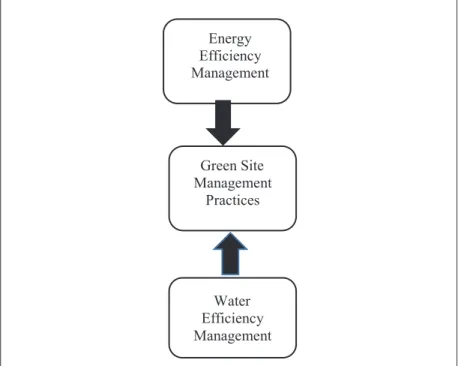
Figure 1 describes the research constructs in this study where water consumption management and energy-efficient management in construction sites will contribute to green site management practices.
Figure 1
Impact of Energy Efficiency Management and Water Efficiency Management on Green Site Management Practices
Roles of Construction Players in Adopting Green Site Management Practices
As the construction industry involves multiple players, an individual player will not create a good result. Therefore, construction players must collaborate tightly to ensure the construction industry can shift to green and sustainable development. First, there must be a communication channel among the construction players to increase productivity and efficiency in executing green site management
3
The construction industry has consumed a vast amount of water and energy, which causes problems for the environment. This increases the environmental awareness of the construction players due to the pollution and reduction of non-renewable resources (Chevallier & Goutte, 2017; Huisingh et al., 2015). The consumption is due to the transformation of natural resources into artificial buildings where the process will create a lot of waste, consume energy, and emit greenhouse gases, which will cause pollution (Huang et al., 2017; Nandhinipriya et al., 2016). Thus, sustainable development is the current trend where several actions can be taken. Reducing energy usage and water consumption in construction sites can effectively ensure sustainable development (Ajayi et al., 2016). This can be seen from heavy machinery operations such as tower cranes, mobile cranes, and concrete pumps that operate daily to carry out construction work, which consumes a tremendous amount of energy. In addition, the site office uses significant electrical power to bring convenience to the staff (Peng, 2016). The operation of these machinery and equipment costs a lot to the construction players as the rental, maintenance costs, and salary are needed to ensure the machinery works efficiently. This situation is even worse when the machinery and equipment are left idling, where corporate economic performance is weakened. Thus, to reduce these consumptions, adopting green site management practices can encourage a significant reduction in water and energy consumption through the supervision and monitoring of the site management team (Huisingh et al., 2015; Rivera-Torres et al., 2015). Figure 1 describes the research constructs in this study where water consumption management and energy-efficient management in construction sites will contribute to green site management practices.
Figure 1
Impact of Energy Efficiency Management and Water Efficiency Management on Green Site Management Practices
Roles of Construction Players in Adopting Green Site Management Practices
As the construction industry involves multiple players, an individual player will not create a good result. Therefore, construction players must collaborate tightly to ensure the construction industry
Energy Efficiency Management
Green Site Management
Practices
Water Efficiency Management
practices. In addition, to benchmark the progress, these parties can be evaluated by using the Green Building Index (GBI), which was jointly founded and developed by the Malaysian Institute of Architects (Pertubuhan Arkitek Malaysia [PAM]) and the Association of Consulting Engineers Malaysia (ACEM). The foundation of GBI shows the collaboration among construction parties as GBI was developed by two different parties to encourage sustainable development and raise environmental awareness among construction players. It is also the only assessment for tropical climates countries apart from Green Mark, which was introduced by Singapore. These efforts from various parties to educate the construction players show that practicing green practices is essential in improving corporate performance, where the negative environmental impacts caused by construction activities can be reduced (Abu Bakar et al., 2015). On the other hand, employers, consultants, and contractors play vital roles in adopting green site management practices (Onubi et al., 2019). Among these three parties, the contractors are responsible for constructing the building according to the consultants’ instructions, drawing details and requests from the employers. Although contractors are the builders who will be involved the most in the construction stage, the importance of contractors’ roles in the environmental issue is not well recognized by the public. This is agreed by Tan et al. (2015), where the roles of contractors are equally important in contributing to sustainable development. Therefore, the roles of contractors must be emphasized in adopting green site management practices.
In addition, construction players must adopt green site management practices to ensure social responsibility to the environment (Chang et al., 2018). However, the awareness level of construction parties is still low, and no practical actions were taken to solve the environmental and economic performance-related problems caused by the construction activities (Chevallier & Goutte, 2017; Yusof et al., 2020). Moreover, the financial concern of potential practitioners is the main factor that obstructs the construction players from adopting green site management practices. This is because profits are the aim of the corporation, not the social benefits that will not bring any significant benefits to them. Many small and medium enterprises (SMEs) refuse to be involved in green site management practices because they are afraid of the potential severe loss that cannot be recovered. This is due to the lack of knowledge on the benefits of green site management
practices that improve environmental and economic performance.
This directly affects the total number of practitioners. Furthermore, the knowledge level of green technology among the top management is low, which causes more obstruction in the implementation.
Top management focuses more on short-term profits rather than the potential improvements in the long term. Nonetheless, some practitioners who have sufficient knowledge and awareness level are willing to adopt green site management practices to improve their corporate environmental and economic performances (Chang et al., 2018). Therefore, solutions must be introduced to encourage green site management practices (Onubi et al., 2019).
Next, the government and relevant institutions have an obligation to educate the construction players, as educating construction players is essential in promoting green site management practices to ensure that environmental concern becomes the norm in the construction industry. To educate construction players, hexagon green and gracious code can be used as guidelines to ensure the site management staff knows their scope of work. Malaysia’s government is concerned about environmental issues, and the Ministry of Green Technology, Energy and Water (KeTTHA) was formed to handle green-related issues. Furthermore, the National Green Technology Policy (NGTP) has been introduced by the government to hasten the adoption of green practices, where they will organize training and workshops related to green and sustainable development in the construction industry. These efforts will stimulate the adoption of green site management practices once the knowledge and awareness level of the construction players has been improved significantly (Abu Bakar et al., 2015). Besides, the top management has a vital role in determining the level of green site management practices implemented as they are going to create the workflow for their site management team to execute the instructions (Gulghane & Khandve, 2015; Qian et al., 2015). Therefore, top management should respond to the training and workshops provided by the government to increase the knowledge level of their staff.
Furthermore, Martín-de Castro et al. (2016) have further emphasized the importance of the government’s role in promoting green site management practices where the government can incorporate Regulatory Impact Analysis (RIA) into the development of new regulatory proposals. This is a holistic method to assess the
consequences of regulations and non-regulatory alternatives. Windapo and Goulding (2015) also mentioned the importance of letting construction players voice out complaints related to the violation of environmental laws, which is considered another crucial piece of advice. This ensures the standards satisfy the objectives to conduct systematic evaluations of compliance and the adequacy of current regulatory policy objectives, including cost and benefit analyses.
Information on the use of management instruments such as RIA, public consultation procedures, and the assessment of existing standards must be included in regular releases on the performance of the regulatory policy (Martín-de Castro et al., 2016). It is the government’s job, according to the law, to make it easier for construction enterprises to contribute to environmental preservation initiatives while maintaining their economic performances. It establishes three types of minimal involvement mechanisms (Martín-de Castro et al., 2016):
• The development of environmental standards, plans, and regulations.
• The Environmental Impact Assessment (EIA) procedure.
• The use of the right to submit complaints regarding potential infractions of environmental law.
Moreover, Rivera-Torres et al. (2015) mentioned that this type of assessment will assess the environmental considerations of the construction projects where green and sustainable development should be incorporated into the development plan to ensure the environmental aspects will not be neglected while ensuring other corporate performances such as economic performance, social performance, and operational performance of construction players will not be affected. It is better if the development strategies can effectively improve the project’s triple constraints and operational performances to attract more practitioners. Therefore, this strategy aims to promote the use of this environmental management tool in creating sectoral policies and plans. Green site management practices are complex and linked with many construction players, such as developers, contractors, consultants and suppliers, which require continuous communication among players. Among these construction players, developers are the players who take a leadership role in transforming the construction industry towards green and sustainability (Diyana
& Abidin, 2013). Developers are players who will determine the
practices in the construction project and they are the key decision makers who will impact the construction performance significantly (Tamjehi et al., 2020). Tamjehi et al. (2020) further substantiated that developers, as the downstream players, should initiate the adoption of green site management practices, especially during the planning and design stage, which will have a significant impact on the outcomes (Tawfik Alqadami et al., 2020). Therefore, the roles of developers cannot be overlooked in the efforts to enforce contractors moving toward sustainability practices.
Barriers to the Implementation of Green Site Management Practices
Green site management practices are beneficial to the environment but there are obstacles to their implementation (Yusof et al., 2017).
Although there is economic performance improvement in the long term, the initial cost can be high, which becomes the threshold that blocks potential practitioners from participating in this green strategy (Karimi et al., 2018). However, this could be solved as the authority’s incentives can assist practitioners in obtaining sufficient starting capital at an early stage. The cost of adopting green site management practices will be gradually recouped during the implementation process through cost savings in the construction operations, as green site management practices can reduce unnecessary costs and construction time, and improve the company’s competitiveness (Tamjehi et al., 2020).
Although the government can provide some incentives to encourage the adoption of green site management practices, these incentives may be insufficient to cover the initial costs, leaving practitioners with issues such as insufficient construction budget allocation, workforce shortages, and a lack of knowledge to operate green site management practices (Zhang et al., 2018).
Furthermore, one of the issues that prevent construction companies from adopting green practices is the technology level. Green site management practices adoption on a large scale usually needs new machinery and skilled workers. Practitioners need to invest more money to train their staff. This might drive the practitioners not to implement green site management practices if the cost is higher than the potential profit, as their main objective is the profit but not reputation and awards (Zhang et al., 2018). However, implementing
green site management practices in the long term will surely improve the economic performance that covers the initial invested capital.
Furthermore, some senior workers cannot adjust to the new green site management practices since conventional habits are firmly embedded in their thinking (Chen et al., 2016). Thus, these senior workers have no intention of learning the new management system, which causes the adoption of green site management practices to stagnate.
Therefore, the top management must play their roles in enforcing the green site management practices to be the new norm to ensure corporate performance can be improved in the long term.
Moreover, issues with construction workers are unavoidable, especially when there is a greater number of senior workers on the construction site than newcomers who have been trained in green knowledge. Senior employees who believe they are seniors and have ego issues while dealing with newcomers will hesitate to apply green site management practices. The conventional trend of work is different from the new green site management practices, and this causes more problems where seniors think they have more experience and refuse to accept the newly introduced green site management practices (Chen et al., 2016). The top management must solve this to ensure green site management practices are well exercised (Chen et al., 2016). On the other hand, the practitioners are concerned about staff turnover after these staff have been given enough training when top management has invested a lot of corporate resources (Onubi et al., 2020b). Although green site management practices have brought improvement in environmental performance, the actual costs and profitability uncertainties are the main barriers to implementation (Zhang et al., 2018).
Impacts of Green Site Management Practices
Green site management practices benefit the environmental aspect and bring other benefits, such as improving the practitioners’ economic, social, and operational performances. Since green site management practices are the government’s focus after noticing the current green and sustainable development trend, the most significant benefits will be the financial benefits (Karimi et al., 2018). The following are examples of the benefits that practitioners can enjoy. Implementing
green site management practices can positively impact the environment while reducing pollution (Onubi et al., 2020b), as this approach will enormously reduce the negative environmental impacts. This can be achieved as green site management practices emphasize the planning, supervising, and monitoring of waste management, machinery and equipment fuel efficiency, and energy efficiency in using electrical appliances. Moreover, green site management practices that focus on wastewater recycling and water harvesting can be practised in tropical nations such as Malaysia due to the massive volume of rainwater every year. These actions save the usage of treated water, making construction sites more environmentally friendly while significantly reducing construction costs as water consumption is one of the primary costs in construction projects.
The economic performances of the practitioners will improve after the adoption of green site management as green site management emphasizes the reduction in the usage of construction materials and consumption of resources such as energy and water. In addition, the purchasing of construction materials can be completed in bulk quantities to avoid the emission of hazardous gases during the transportation process (Onubi et al., 2020b). Although purchasing in bulk quantities can reduce the volume of exhaust fumes emission, a construction project needs not only one trip of delivery but thousands of trips. Thus, more efforts should be given to the transportation of construction materials. The transportation strategies should include the utilization of truck space and the use of energy-efficient trucks to alleviate carbon emissions during the delivery of construction materials (Balasubramanian & Shukla, 2017). The site staff can be arranged to live nearby to save their traveling time and fuel consumption on their way to the construction site (Jing et al., 2019). In addition, there is a tax reduction for those companies that implement green site management practices, which directly reduce construction costs.
Finally, the package of raw materials delivered to the construction site can be returned to the factory for the purpose of remanufacturing the packages. This can save energy in manufacturing the packaging in the following deliveries (Balasubramanian & Shukla, 2017). This is considered the backward flow of delivered and consumed products from end customers (Jing, Ismail, Shafiei, et al., 2019). The used products will be delivered to the factory for remanufacturing purposes
or disposed of properly. This can prevent hazardous chemicals from being thrown directly into the nearby water sources, which will cause severe pollution to the environment (Laosirihongthong et al., 2013).
Thus, the adoption of green site management practices will drive fewer environmental-related accidents, which directly reduces the amount of compound. This indirectly improves the economic performance of the practitioners, where much less money is spent on the fines.
Energy Consumption and Energy Efficiency
Energy consumption is enormous in construction sites, especially in mega construction projects. As a result, effective energy management is required, particularly for large machinery that consumes a lot of energy. Good tracking of energy consumption by monitoring indicators such as electricity and fuel use will provide information on energy consumption, allowing employees to develop appropriate cost-cutting initiatives. On the other hand, the use of energy-efficient electric appliances in the site office can help to reduce the excessive use of power and fuel. Using an energy-efficient air conditioning system can help practitioners save money on electrical consumption in the site office. Besides, T5 and LED lights are energy-efficient lighting that can minimize the electrical consumption that can be installed in the site office. When these energy-efficient lightings are combined with the adoption of a motion sensor that detects movement and activates the electric current flow to light up the lighting, the lighting will consume even less electricity (Collins et al., 2017; Ofori-Boadu et al., 2012). All these approaches can help to improve corporate economic performance.
Next, machinery is one of the inputs in construction projects that require a lot of energy to operate and function. These machineries will consume a lot of fuel, which will increase the construction costs.
Furthermore, fuel is a non-renewable resource that will be depleted in the coming future. As a result, alternative energy should be used as a fuel source. Solar energy supplied by solar panels is an excellent alternative energy source that may be employed (Onubi et al., 2020a).
Aside from solar energy, machinery can be powered up by biodiesel made from animal fat or plant oil. Solar energy generated by the solar panels can power up small electric appliances in the site office without affecting the environment. Solar panels can also power up small
noise meters and water treatment plants. Furthermore, relying solely on renewable energy is insufficient to create a green construction site; appropriate machinery must also be used. Using the alternating current grid power supply instead of a diesel-powered generator is significantly more efficient. Furthermore, the alternating current grid power supply prevents air and noise contamination (Onubi et al., 2020a). Thus, the adoption of alternating current grid power supply should be encouraged to minimize energy consumption.
Water Consumption and Water Efficiency
In addition, water consumption should be tracked and recorded as a reference for the site management team to determine the best strategy for reducing water consumption (Qian et al., 2015). The leading performance indicators should be monitored to establish appropriate measures that can reduce current water consumption while keeping neighboring waterways clean, such as rivers and drainages. Water conservation and recycling tools should be prioritized, such as rain harvesting systems and retention ponds (Chang et al., 2021; Eaton, 2018). Typically, recycled water is used for construction activities, watering plants, and cleaning purposes such as washing clothes and flushing toilets rather than as drinkable water. Construction activities such as grouting, waterproofing, batching concrete, and laying tiling can benefit from the usage of recycled water. Water pollution can be considerably reduced by using environmentally friendly cleaning solutions that have a low impact on the surrounding water sources and filtering the water before discharging it into the river (Yusof et al., 2017). To avoid direct discharge of wastewater into nearby water resources, site toilets should be equipped with a septic tank (Kontogianni & Moussiopoulos, 2017). It is also necessary to provide enough bathrooms for the workers. These facilities should be kept clean, and construction workers should have access to clean water.
Regular water quality monitoring should be carried out to preserve the water quality of adjacent water sources, including the water discharged from the construction site (Huisingh et al., 2015). This is an essential part of water management since the discharged water can degrade the project’s landscape and bring undesired sediments into the receiving water sources (Huisingh et al., 2015). Total Suspended Solids (TSS) and turbidity are the minimum requirements for water
quality monitoring. The TSS and turbidity permissible levels must conform with the National Water Quality Standard. In addition, the Department of Environmental and Local Authority’s standards will be applied to other parameters and these parameters should be monitored.
Water-saving measures include measuring water consumption and TSS levels, implementing on-site water recycling, and collecting rainwater through integrated rainwater system components in site office architecture where the rainwater can be harvested by using the catchment roof, gutters, rainwater downpipes which will channel the rainwater to the storage tank for future usage (Eaton, 2018; Onubi et al., 2020c). The harvested rainwater can be used to flush the site toilet, wash the trucks tires that leave the construction site, and batch concrete, which will significantly decrease the construction costs.
METHODOLOGY
This study was intended to explore methods that mitigate the consumption of water and energy on the construction sites. This study adopted a phenomenon qualitative method, which consisted of observations and interviews. A research phenomenon can arise from any problem, issue or topic that is chosen from the practical world of affairs as the subject of an investigation (Van de Ven, 2016). Since this research intended to explore the impacts of green site management practices on the efficiency of energy and water consumption in the construction site, an exploratory research method was used in this study. Contractors, consultants, and employers are among the various parties involved in the construction industry. On the other hand, contractors are the most important contributors. Contractors hire various employees to assist them in managing the construction project and resolving issues on the construction site. These are skilled workers with sufficient management abilities. Therefore, this study interviewed site supervisors, construction managers, and project managers to obtain detailed information on their green site management practices.
These people were chosen as research respondents because of their positions and direct impacts on the implementation of green practices.
These interviewees discussed the implemented green site management practices in their construction site, the forces that drove them, and the challenges they faced during the implementation. As the population for this study was too large to be gauged, convenience sampling was used. Convenience sampling is a non-probability sampling approach
that only collects available data from the population that is available, reachable, and willing to be involved in the data collection process.
This is a viable sampling design approach to collect exploratory information. Therefore, this study engaged five respondents who were willing to participate in this study and with vast experience in managing construction projects from different locations in Malaysia.
A list of contractors was obtained from the Construction Industry Development Board (CIDB) where several contractors were randomly picked from the list to obtain diverse data from various construction sites by using Microsoft Excel 365 to do the randomization. As the accuracy of the data is critical in assessing the actual conditions of the construction site, all respondents for the research were chosen at random to verify that there was no bias on any construction site. To ensure no bias, these respondents were randomly chosen from their regions, sizes, scales, and experiences to obtain the most accurate statistics. First, the respondents were randomly selected from the list of contractors obtained from CIDB, and permission was obtained from their headquarters to interview the targeted respondents.
After permission was obtained from the respondent’s headquarters, an interview session was conducted online due to the COVID-19 pandemic’s restriction, with selected respondents to be questioned pertinent to the green site management practices implemented in their construction site that can achieve efficient energy and water consumption. As this study employed a convenience sampling method, the data collection process stopped collecting opinions from the respondents when there was no new issue found from the feedback.
RESULTS Respondents’ Background
Table 1 shows the summary of the respondent’s background. The respondents are from various positions and locations and have a different range of working experience in the construction industry, where most of the respondents hold influential positions in their companies. This ensures the feedback from the respondents is valid and reliable. Furthermore, the findings show that every respondent applied green site management practices.
Table 1
Respondents’ Background
Respondents Location Position Total years of
experience
A Pulau Pinang Project Manager 10-15 years
B Pulau Pinang Construction Manager 10-15 years
C Kuala Lumpur Senior Site Supervisor 5-9 years
D Kuala Lumpur Senior Site Supervisor 5-9 years
E Johor Bharu Site Supervisor 1-4 years
Roles of Construction Players in Green Site Management Practices Adoption
All respondents shared their opinions about the roles of construction players in adopting green site management practices. All respondents agreed that property developers are the party who initiated the green site management practices where the selected contractors need to obey the rules set for the construction project. This is because property developers will set a theme for the overall development, and the theme will be used as an attraction point to attract potential building buyers. Respondents A, B, and D said that, “Since sustainable and green development has become the current trend, most of the development emphasizes the environmental issues, which further drives the contractors to adopt green site management practices”. This statement is aligned with Yusof et al. (2020)’s results. Furthermore, the pressures from external such as the government and house buyers play similar roles in promoting the adoption of green site management practices. All respondents agreed that the government is the party responsible for enforcing the regulations to ensure the negative environmental impacts of construction activities can be significantly reduced. Government-related entities such as CIDB need to establish environmental standards for construction materials and technologies while implementing strict fines for offenders (Onubi et al., 2020c).
Moreover, due to the increased awareness level among the public, they are demanding environmentally friendly buildings, which further drives the implementation of green site management practices.
In addition, the parties who work on the construction site have more influencing power to encourage more parties to move to the adoption of green site management practices. In that case, the relevant parties cannot escape from the influence and ultimately need to adopt green site management practices (Yusof et al., 2020). However, respondents C and E did mention the hierarchy at the construction site. They said that, “The influencing power of stakeholders highly relies on the hierarchy in nature where the pressures are flowing from the property developer to contractors to suppliers in the supply chain of the construction project. This can be seen where the property developers require contractors to implement green site management practices.
As a result, all relevant parties such as consultants, contractors, sub-contractors and suppliers are forced to implement green site management practices, but suppliers cannot ask the contractors or the property developers to adopt green site management practices in the construction site”. Thus, the practitioners must utilize the influencing power of higher hierarchical parties to ensure green site management practices can be implemented successfully. When more parties implement green site management practices, green professionals will be more likely to be employed, and suppliers can provide green materials to form the supply chain. Everyone will understand the importance of sharing green knowledge to improve their competitive advantage and reputation in the construction industry.
As the decision maker in the organization, top management has the highest influencing power to lead the adoption of green site management practices. However, not all managers in the organization are educated about environmental issues. These people treat profit far more critically than other aspects (Onubi et al., 2020b). All respondents emphasized this statement, but respondents also said some of the managers in their organizations have a high awareness level of the environmental aspects and have the intention to implement green site management practices. However, these educated managers are obstructed by the financial factor. This leads to the adoption of non-time-consuming green site management practices that do not need high initial costs and maintenance fees. Respondents A and B said that, “The top management of our organization prefers green site management practices that do not need extra investment, such as selling the metal scraps, which shows the corporate is concerned about the environmental issues while able to reduce the construction
costs from the profit of selling these metal scraps”. This drives the practitioners to explore more possibilities of green site management practices where there are no or lower initial costs needed to initiate the green practices.
Water Consumption Management
Construction activities can have negative impacts on the environmental aspects (Rivera-Torres et al., 2015). Uncontrolled water consumption and discharging result in the deterioration of environmental quality and cause nuisance to the nearby residents (Ajayi et al., 2016). Proper environmental management will aid in the better management of the construction project, allowing for the elimination of unwanted effects.
These environmental management methods should not be viewed as an afterthought in the administration of on-site operations but rather as an intrinsic element of day-to-day operations. The contractors were provided with various solutions to control the water quality and consumption in the construction sites. Respondents A and B said that
“Precaution actions such as constructing a retention and filtering pond in a construction site can highly reduce the environmental problems as the silt will be retained in the construction site”. This is aligned with Chang et al. (2021)’s statement.
Moreover, construction sites consume a considerable volume of water due to inevitable activities such as washing lorry tires at the washing bay; this needs to be controlled by reusing the water from retention ponds or water sources nearby (Chang et al., 2021). Respondents C, D and E did mention that “The practices such as constructing washing bay at the exit to wash the tires of vehicles that leaving the construction site to avoid mud from dispersed on the road consume a lot of water, but it is inevitable. Thus, we built a retention pond to store water for washing purposes. At the same time, it manages stormwater runoff to prevent flooding and downstream erosion, which can improve water quality”. Besides, the direct disposal of the greywater to the adjacent river is illegal since there are regulations to stop the contractors from doing this. This demonstrates that the government has significantly encouraged contractors to use green site management practices that focus on water management.
In addition, the retention pond is constructed to control water consumption and quality to solve the siltation problem, as it is one
of the major problems that cause water pollution. The retention pond serves as a platform for retaining mud that arises from the excavation activities. The mud is the outcome of the excavated areas without proper protection and is exposed directly to the weather, such as rain, which has caused siltation in the neighboring river. Aside from the retention pond, respondents recommended practitioners do turfing with cow grass to ensure the soil has a buffer rather than being directly exposed to the weather (Eaton, 2018; Eger et al., 2017). Respondents A and B said that “Cow grass is commonly seen in the construction site where it is free and useful in preventing the soil surface from direct exposure issues”. These methods are deemed green practices since the contractors use existing materials on the construction site without incurring additional costs or polluting the environment (Bhardwaj, 2016).
Energy Efficiency Management
Energy sources such as electricity and fuel are the main primary sources used for construction activities. The site office needs electricity to power up the electric appliances such as computers, printers, lights, and air-conditioners. In addition, electricity is used to power up machinery like tower cranes, hacking machines, and welding machines to carry out construction activities, which are consumed in massive amounts. Fuel is used on portable machines such as mobile cranes, excavators, backhoes, and concrete pumps to run construction activities. The construction works will stop once these machineries are not operating. All respondents did mention the importance of energy sources, where respondents A and B further emphasized that, “We cannot afford to have any second lost while waiting for these machinery to be powered up as we have a super tight schedule to follow to avoid the penalty due to the late completion of the project later”. This shows the importance of the energy sources in the construction site, but the energy consumption must be monitored carefully to avoid wastage.
Energy efficiency management needs to be monitored by using indicators to reach the goals within the proposed timeframes (Zarei et al., 2018). The identified main areas are the incorporation of sustainability in construction projects and the encouragement of innovation, entrepreneurship, education, and dissemination of the best
green site management practices. All respondents agreed that various strategies had been used to ensure green site management practices were implemented, which is emphasized by Onubi et al. (2019).
However, respondents were concerned about the financial aspect, which is the priority in their considerations. Respondents C and E said that, “Every contractor wants to earn the most money possible. We would consider participating in green site management practices if the action performed can improve the corporate performances and respond to the government’s green incentives and legislation”. Thus, green site management practices such as setting the electricity supply to the installed electric appliances can switch off automatically whenever no people are using it and constantly checking the water quality by using the apparatus to ensure the nuisance caused to adjacent residents is kept to a minimum are all recommended (Chang et al., 2018).
Respondents B and D mentioned the energy consumed by machinery and equipment when they said, “Consumption of energy by heavy machinery and electric appliances in the site office is inevitable as we must ensure everything runs smoothly to complete the project within the stipulated timeframe, but we can choose to use energy- efficient machinery and electric appliances to reduce the electric consumption”. Green site management practices can focus on the supervision of energy consumption by using charts as encouraged by Peng (2016), adopting energy-efficient machinery and equipment, and utilizing renewable energy, which is aligned with Onubi et al. (2020a) opinions. Finally, the site office should be oriented north-south as this orientation will ensure the longer side of the site office is facing north- south. This will reduce the amount of heat received by the site office and reduce air conditioning’s electricity consumption. Once green site management practices are implemented, corporate performances can be improved drastically, especially environmental and economic performances.
DISCUSSIONS
Green site management practices derived from sustainable construction have been introduced to the Malaysian construction industry for more than 20 years (Tamjehi et al., 2020). Although green site management practices have been introduced for more than
two decades, the implementation of these practices in Malaysia is still in the infancy stage. Through the interview outcomes, respondents agreed that the government and property developers who act as leaders in the construction industry should take the lead in promoting green site management practices. They are the policies and decision makers who make significant impacts on the green site management practices adoption rate. Therefore, their roles should be emphasized to improve the corporate economic and environmental performances. This study has focused on the consumption of energy and water in construction sites where the current practices such as reselling construction wastes, employing energy-efficient electric appliances and machinery, planning the site office orientation, constructing retention ponds and planting cow grass along hill slopes were explored. The impacts of these practices were significant and agreed upon by respondents in achieving efficient consumption of energy and water. Therefore, future government policies can focus on the development of green site management practices to educate the construction players and encourage a higher green practices implementation rate.
On the other hand, respondents are willing to implement green site management practices if the practices do not cost any extra financial burden to their cash flow. From the research outcomes, respondents indicated that profit is their organization’s main concern to sustain in this harsh market. This shows the respondents’ priority concern is the economic aspect instead of the environmental aspect. Green site management practices have been proven to improve construction projects by reducing financial expenses, minimizing unnecessary costs and construction time, and improving the company’s competitiveness, which attracts respondents to implement these green practices. This further substantiated the effectiveness of green site management practices in improving corporate economic performance. To further encourage the implementation of green site management practices, the government can consider giving rewards in terms of monetary such as tax deductions in the future green incentives and legislation to attract more practitioners. Next, respondents listed several green practices related to the efficient consumption of energy and water.
These green practices can help to reduce construction projects’
environmental problems, such as flash floods, emission of greenhouse gases, and consumption of resources, which will improve corporate environmental performance significantly.
IMPLICATIONS, CONCLUSION, LIMITATIONS, AND SUGGESTIONS FOR
FUTURE RESEARCH
This study intended to ascertain the possibility of green site management practices in reducing energy and water consumption in construction sites to improve environmental and economic performance. The results show that this is possible as reducing the consumption of resources is the intention of green site management practices. The results reveal that energy efficiency management and water consumption management have a considerable positive impact on the construction project’s economic performance. Previously, many parties doubted the effectiveness of green site management practices in improving economic performance, which caused the adoption of green site management to be stagnant. Still, the results show that it is economically wise for contractors to adopt green site management practices without fearing that these efforts will not achieve the required economic performance. Although green site management practices can lead to the improvement of economic performance, more can be done by the construction players to make amendments to the green practices where these practices can match the economic demands of every construction site to have optimal corporate performance improvement. Therefore, the implementation of green site management practices, which can reduce the consumption of resources, is believed to improve environmental and economic performance. However, this study is limited to only five respondents who were willing to participate. Future study is suggested to expand the size of respondents.
In summary, green site management practices are divided into numerous categories, including water and energy efficiency management. Green site management practices are proven to encourage lower costs, more stakeholder value, and the preservation of Earth’s limited resources.
Construction organizations worldwide have included green concepts in their construction plans to reduce environmental impacts. The amount of water and energy used in a construction site is enormous.
If no right action is taken, the costs of these two aspects may impact the final construction costs. According to the study, numerous green site management strategies may reduce energy and water use. Energy efficiency and water usage reduction can be achieved by employing
energy-efficient electric equipment and reusing collected rainwater.
This study is limited in terms of time and funds to include more respondents from all over Malaysia. Therefore, future study is suggested to collect more feedback from different states in Malaysia.
Since water and energy consumption is always massive, future studies can be conducted to explore the actual usage of water and energy and approaches to counter this phenomenon, as the actual energy of machinery consumption in construction sites is still unknown. The reduction of machinery consumption through multiple approaches, such as adopting the latest construction technologies, can further promote green site management practices.
ACKNOWLEDGMENT
This research received no specific grant from any funding agency in the public, commercial, or not-for-profit sectors.
REFERENCES
Abu Bakar, N. N., Hassan, M. Y., Abdullah, H., Rahman, H. A., Abdullah, M. P., Hussin, F., & Bandi, M. (2015). Energy efficiency index as an indicator for measuring building energy performance: A review. Renewable and Sustainable Energy Reviews, 44, 1-11. https://doi.org/https://doi.org/10.1016/j.
rser.2014.12.018
Ajayi, S. O., Oyedele, L. O., Akinade, O. O., Bilal, M., Owolabi, H. A., Alaka, H. A., & Kadiri, K. O. (2016). Reducing waste to landfill: A need for cultural change in the UK construction industry. Journal of Building Engineering, 5, 185-193. https://
doi.org/https://doi.org/10.1016/j.jobe.2015.12.007
Akram, F., Abrar-ul-Haq, M., & Raza, S. (2019). A role a corporate governance and firm’s environmental performance: A moderating role of institutional regulations. International Journal of Management Studies, 25(2), 19-37. https://doi.
org/10.32890/ijms.25.2.2018.10498
Ali, A. N. A., Jainudin, N. A., Tawie, R., & Jugah, I. (2016). Green initiatives in Kota Kinabalu construction industry. Procedia - Social and Behavioral Sciences, 224, 626-631. https://doi.org/
https://doi.org/10.1016/j.sbspro.2016.05.453
Balasubramanian, S., & Shukla, V. (2017). Green supply chain management: An empirical investigation on the construction sector. Supply Chain Management: An International Journal, 22(1), 58-81. https://doi.org/10.1108/SCM-07-2016-0227 Bhardwaj, B. R. (2016). Role of green policy on sustainable supply
chain management. Benchmarking: An International Journal, 23(2), 456-468. https://doi.org/10.1108/BIJ-08-2013-0077 Chang, H.-S., Man, C.-Y., & Su, Q. (2021). Research on the site
selection of watershed public facilities as multi-use detention basin: An environmental efficiency perspective. Environmental Science and Pollution Research, 28(29), 38649-38663. https://
doi.org/10.1007/s11356-021-13515-3
Chang, R.-D., Zuo, J., Zhao, Z.-Y., Soebarto, V., Lu, Y., Zillante, G.,
& Gan, X.-L. (2018). Sustainability attitude and performance of construction enterprises: A China study. Journal of Cleaner Production,172,1440-1451.https://doi.org/https://doi.
org/10.1016/j.jclepro.2017.10.277
Chang, T. W., & Kumar, D. (2021). Overview of environmental management practice for construction in Malaysia. Civil and Sustainable Urban Engineering, 1(1), 15-25. https://doi.
org/10.53623/csue.v1i1.33
Chen, P.-H., Ong, C.-F., & Hsu, S.-C. (2016). Understanding the relationships between environmental management practices and financial performances of multinational construction firms.
Journal of Cleaner Production, 139, 750-760. https://doi.org/
https://doi.org/10.1016/j.jclepro.2016.08.109
Chevallier, J., & Goutte, S. (2017). Estimation of Lévy-driven Ornstein–Uhlenbeck processes: Application to modeling of CO2 and fuel-switching. Annals of Operations Research, 255(1), 169-197. https://doi.org/10.1007/s10479-015-1967-5 Collins, W., Parrish, K., & Gibson, G. E. (2017). Development of a
project scope definition and assessment tool for small industrial construction projects. Journal of Management in Engineering, 33(4), 04017015. https://doi.org/doi:10.1061/(ASCE)ME.1943- 5479.0000514
Diyana, N., & Abidin, Z. (2013). Motivation and expectation of developers on green construction: A conceptual view.
International Journal of Humanities and Social Sciences, 7, 914-918.
Eaton, T. T. (2018). Approach and case-study of green infrastructure screening analysis for urban stormwater control. Journal of
Environmental Management, 209, 495-504. https://doi.org/
https://doi.org/10.1016/j.jenvman.2017.12.068
Eger, C. G., Chandler, D. G., & Driscoll, C. T. (2017). Hydrologic processes that govern stormwater infrastructure behaviour.
Hydrological Processes, 31(25), 4492-4506. https://doi.org/
https://doi.org/10.1002/hyp.11353
Gulghane, A., & Khandve, P. (2015). Management for construction materials and control of construction waste in construction industry: A review. International Journal of Engineering Research and Applications, 5(4), 59-64.
Huang, S., Zhao, X., Sun, Y., Ma, J., Gao, X., Xie, T., Xu, D., Yu, Y., & Zhao, Y. (2017). Pollution of hazardous substances in industrial construction and demolition wastes and their multi- path risk within an abandoned pesticide manufacturing plant.
Frontiers of Environmental Science & Engineering, 11(1), 12.
https://doi.org/10.1007/s11783-017-0901-2
Huisingh, D., Zhang, Z., Moore, J. C., Qiao, Q., & Li, Q. (2015).
Recent advances in carbon emissions reduction: Policies, technologies, monitoring, assessment and modeling. Journal of Cleaner Production, 103, 1-12. https://doi.org/https://doi.
org/10.1016/j.jclepro.2015.04.098
Jing, K. T., Ismail, R., Ha, C. Y., Mohd Wira, M. S., & Tee, K. W.
(2019). The practices of green supply chain management towards corporate performances in construction industry.
Jing, K. T., Ismail, R., Shafiei, M. W. M., Yusof, M. N., & Riazi, S. R.
M. (2019). Environmental factors that affect the implementation of green supply chain management in construction industry: A review paper. Ekoloji, 28(107), 93-104.
Karimi, H., Taylor, T. R. B., Dadi, G. B., Goodrum, P. M., &
Srinivasan, C. (2018). Impact of skilled labor availability on construction project cost performance. Journal of Construction Engineering and Management, 144(7), 04018057. https://doi.
org/doi:10.1061/(ASCE)CO.1943-7862.0001512
Kontogianni, S., & Moussiopoulos, N. (2017). Investigation of the occupational health and safety conditions in Hellenic solid waste management facilities and assessment of the in-situ hazard level. Safety Science, 96, 192-197. https://doi.org/
https://doi.org/10.1016/j.ssci.2017.03.025
Laosirihongthong, T., Adebanjo, D., & Tan, K. C. (2013). Green supply chain management practices and performance. Industrial Management & Data Systems, 113, 1088-1109.
Mah, C. M., Fujiwara, T., & Ho, C. S. (2018). Environmental impacts of construction and demolition waste management alternatives.
Chemical Engineering Transactions, 63, 343-348.
Martín-de Castro, G., Amores-Salvadó, J., & Navas-López, J.
E. (2016). Environmental management systems and firm performance: Improving firm environmental policy through stakeholder engagement. Corporate Social Responsibility and Environmental Management, 23(4), 243-256. https://doi.org/
https://doi.org/10.1002/csr.1377
Nandhinipriya, B., Janagan, S., & Soundhirarajan, K. (2016).
Construction waste management. International Research Journal of Advanced Engineering and Science, 1(4), 132-135.
Ofori-Boadu, A., Owusu-Manu, D. G., Edwards, D., & Holt, G. (2012). Exploration of management practices for LEED projects: Lessons from successful green building contractors. Structural Survey, 30(2), 145-162. https://doi.
org/10.1108/02630801211228743
Onubi, H. O., Yusof, N. A., & Hassan, A. S. (2019). Green-site Practices and Environmental Performance: How Project Complexity Moderates the Relationship (Vol. 19). UTS ePress.
https://doi.org/10.3316/informit.696487537476844
Onubi, H. O., Yusof, N. A., & Hassan, A. S. (2020a). Adopting green construction practices: Health and safety implications. Journal of Engineering, Design and Technology, 18(3), 635-652.
https://doi.org/10.1108/JEDT-08-2019-0203
Onubi, H. O., Yusof, N. A., & Hassan, A. S. (2020b). Effects of green construction on project’s economic performance. Journal of Financial Management of Property and Construction, 25(3), 331-346. https://doi.org/10.1108/JFMPC-09-2019-0076 Onubi, H. O., Yusof, N. A., & Hassan, A. S. (2020c). Understanding
the mechanism through which adoption of green construction site practices impacts economic performance. Journal of Cleaner Production, 254, 120170. https://doi.org/https://doi.
org/10.1016/j.jclepro.2020.120170
Peng, C. (2016). Calculation of a building’s life cycle carbon emissions based on Ecotect and building information modeling. Journal of Cleaner Production, 112, 453-465. https://doi.org/https://
doi.org/10.1016/j.jclepro.2015.08.078
Qian, Q. K., Chan, E. H. W., & Khalid, A. G. (2015). Challenges in delivering green building projects: Unearthing the transaction costs (TCs). Sustainability, 7(4), 3615-3636. https://www.
mdpi.com/2071-1050/7/4/3615
Rivera-Torres, P., Garcés-Ayerbe, C., Scarpellini, S., & Valero-Gil, J. (2015). Pro-environmental change and short- to mid-term economic performance:The mediating effect of organisational design change. Organization & Environment, 28(3), 307-327.
https://doi.org/10.1177/1086026615603867
Saadi, N., & Ismail, Z. (2015). Government initiatives pertaining to construction waste minimization in Malaysia. International Journal of Energy and Environment, 9, 165-170.
Tamjehi, S. D., Zaini, A. A., Zaini, N., Razali, A. W., & Darmansah, N. (2020). The consciousness in term of level of knowledge and implementation among developer on the current sustainable construction practice in Malaysia. Malaysian Construction Research Journal (MCRJ), 37.
Tan, Y., Ochoa, J. J., Langston, C., & Shen, L. (2015). An empirical study on the relationship between sustainability performance and business competitiveness of international construction contractors. Journal of Cleaner Production, 93, 273-278.
https://doi.org/https://doi.org/10.1016/j.jclepro.2015.01.034 Tawfik Alqadami, A., Abdullah Zawawi, N. A. W., Rahmawati,
Y., Alaloul, W., & Faisal Alshalif, A. (2020). Key success factors of implementing green procurement in public construction projects in Malaysia. IOP Conference Series:
Earth and Environmental Science, 498(1), 012098. https://doi.
org/10.1088/1755-1315/498/1/012098
Van de Ven, A. H. (2016). Grounding the research phenomenon.
Journal of Change Management, 16(4), 265-270. https://doi.or g/10.1080/14697017.2016.1230336
Windapo, A. O., & Goulding, J. S. (2015). Understanding the gap between green building practice and legislation requirements in South Africa. Smart and Sustainable Built Environment, 4(1), 67-96. https://doi.org/doi:10.1108/SASBE-01-2014-0002 Yusliza, M. Y., Amirudin, A., Rahadi, R. A., Nik Sarah Athirah, N.
A., Ramayah, T., Muhammad, Z., Dal Mas, F., Massaro, M., Saputra, J., & Mokhlis, S. (2020). An investigation of pro- environmental behaviour and sustainable development in Malaysia. Sustainability, 12(17), 7083. https://www.mdpi.
com/2071-1050/12/17/7083
Yusof, N. A., Awang, H., & Iranmanesh, M. (2017). Determinants and outcomes of environmental practices in Malaysian construction projects. Journal of Cleaner Production, 156, 345-354. https://
doi.org/https://doi.org/10.1016/j.jclepro.2017.04.064
Yusof, N. A., Tabassi, A. A., & Esa, M. (2020). Going beyond environmental regulations—The influence of firm size on the effect of green practices on corporate financial performance.
Corporate Social Responsibility and Environmental Management, 27(1), 32-42.
Zarei, B., Sharifi, H., & Chaghouee, Y. (2018). Delay causes analysis in complex construction projects: A Semantic Network Analysis approach. Production Planning & Control, 29(1), 29- 40. https://doi.org/10.1080/09537287.2017.1376257
Zhang, L., Wu, J., & Liu, H. (2018). Turning green into gold: A review on the economics of green buildings. Journal of Cleaner Production, 172, 2234-2245. https://doi.org/https://
doi.org/10.1016/j.jclepro.2017.11.188