Apart from that, I would like to thank all the respondents who contributed their time to participate in this research survey. Finally, I would like to thank my family members and friends who supported me and provided useful suggestions that led me to complete this research project. The purpose of this research project is to evaluate the factors that influence the level of acceptance of end users on the use of E-payment system in Malaysia.
Therefore, retailers and marketers want to find out the factors that influence the level of acceptance of e-payment usage among end users. The researcher for this project would like to assess the e-payment intention of the end user in Malaysia. Therefore, this research project could provide retailers and marketers with a better understanding of the factors that influence the level of end-user adoption of e-payment system in Malaysia.
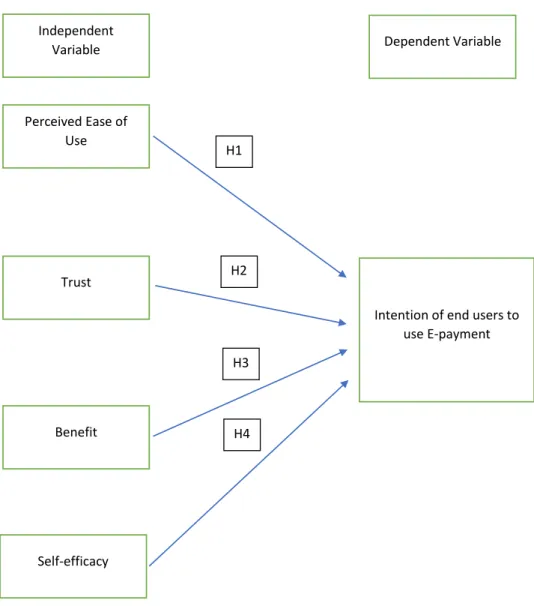
The purpose of this research paper is to examine the factors that influence the level of end-user acceptance towards the use of e-payment system in Malaysia. The independent variables are perceived ease of use, trust, benefit and self-efficacy, and the dependent variable is the end-user's intention to use e-payment.
INTRODUCTION
- Research Background
- Problem Statement
- Research Objective
- General Objective
- Specific Objective
- Research Questions
- Significance of study
- Chapter Layout
- Conclusion
Unfortunately, there are still insufficient results to support the research on the factor influencing the level of end-user acceptance in using e-payment system in Malaysia. The majority of research predicts an increase in the use of e-payment in the future. The research objective of this research is to identify the factors that influence the level of acceptance of e-payments by end users in Malaysia.
The research will examine four factors, perceived ease of use, trust, profitability and self-efficacy. The research investigates the factors influencing the level of end-user acceptance in the use of e-payment system in Malaysia. Research is critically conducted to understand what factors influence end users' intention to use the electronic payment system.
In addition, the research results also contributed to financial institutions, the government of Malaysia and the developer of e-payment systems to understand the factors and problems faced by the end user in Malaysia when using e-payment. The research arrangement is as follows: The first chapter introduces the research background of e-payment and the factors influencing the level of acceptance.
LITERATURE REVIEW
- Introduction
- Underlying Theory
- Information System Acceptance Model
- Theory of Reasoned Action (TRA)
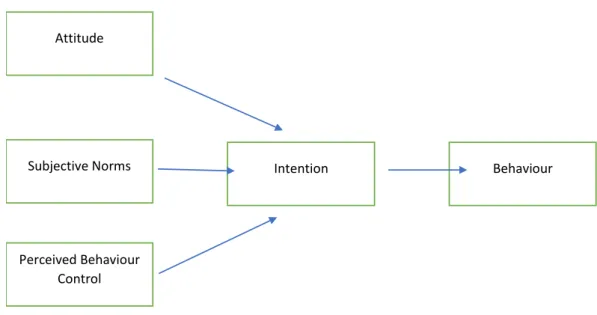
- Theory of Planned Behaviour (TPB)
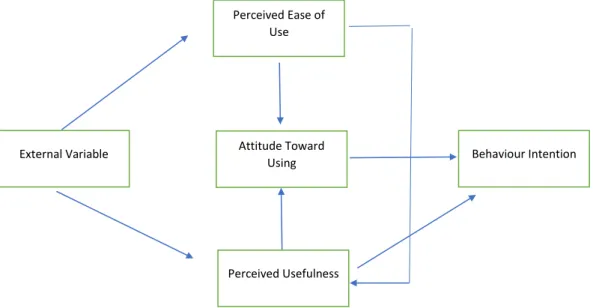
- Technology Acceptance Model
- Empirical Reviews of Factors that impact the level of acceptance of end-
- Perceived Ease of Use
- Trust
- Benefit
- Self-Efficacy
- Intention
- Hypothesis Development
- Conclusion
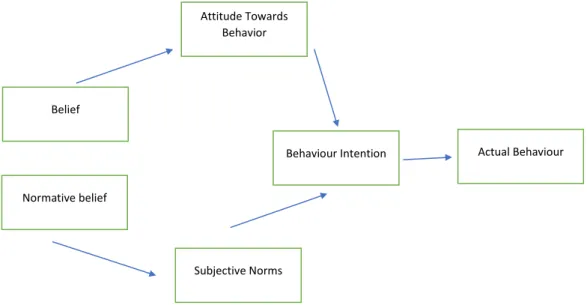
Some researchers have shown behavioral attitudes, such as usage and subjective norms, influenced by individuals' intentions to share knowledge (Gee-Woo Bock, Robert W. Zmud, Young-Gul Kim, Jae-Nam Lee, 2005). The advantage of the TRA model is that it helps explain why the various background factors are or are not correlated with certain behaviors. Kim et.al (2009) believe that the cost of using e-payments can be high in terms of the time it takes to learn to use the internet and new technologies.
Chong and Chua (2013), statistics on the use of e-payments in Malaysia show that Malaysians are aware of the shift from cash payments to e-payments for various reasons. According to some of the studies, Self-efficacy is an individual's ability to succeed at an appropriate level. Self-efficacy represents the person's understanding and belief in their own skills and abilities to perform a given task (Valérie Dory, Marie-Dominique Beaulieu, Dominique Pestiaux, 2009).
H1: There is a positive relationship between perceived ease of use and the end user's intention to use e-payment. H4: There is a positive relationship between self-efficacy and the end user's intention to use e-payment.
RESEARCH METHODOLOGY
- Introduction
- Research Design
- Quantitative research
- Descriptive research
- Sampling Design
- Target Population
- Sampling frame and sampling position
- Sampling Elements
- Sampling techniques
- Sampling Size
- Data Collection Method
- Primary data
- Research Instruments
- Questionnaire Design
- Pilot test
- Constructive Measurement
- Origin of Construct
- Data Processing
- Descriptive Checking
- Data Editing
- Data Coding
- Data Transcription
- Data Cleaning
- Data Analysis
- Descriptive Analysis
- Reliability Testing
- Inferential Analysis
- Conclusion
Descriptive research is appropriate for this study because researchers can examine the sample to increase understanding of the factors that influence end-user adoption rates when using the e-payment system in Malaysia. The purpose of this research is to study the factors influencing the end-user adoption rate of using the electronic payment system in Malaysia. Therefore, the questionnaire was distributed to respondents from Malaysia. Therefore, both in the distribution of the questionnaires and in the collection of the questionnaires, the population is more concentrated than the clever researchers.
According to Roscoe (1975) saying that research with sample size more than 30 and less than (Roscoe are suitable for most researchers. 300 questionnaires were evenly distributed and there were four variables to be tested in this research The data collected in this research is divided into two categories of primary and secondary data.
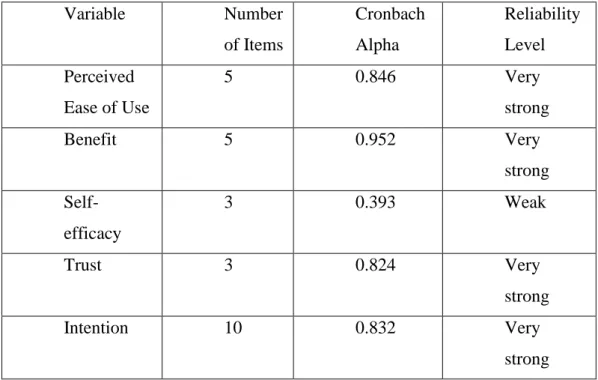
Questionnaires were distributed to a sample of the population based on demographic characteristics to draw conclusions. Simplification of the data interpretation process, since the response is constant, it comes from a large number of respondents. Based on the table above, four of the variables are very strong reliability level except that the variable self-efficacy is considered weak but still reliable.
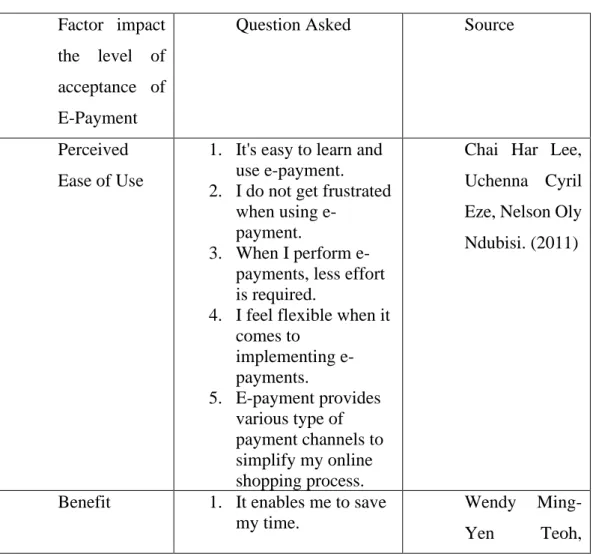
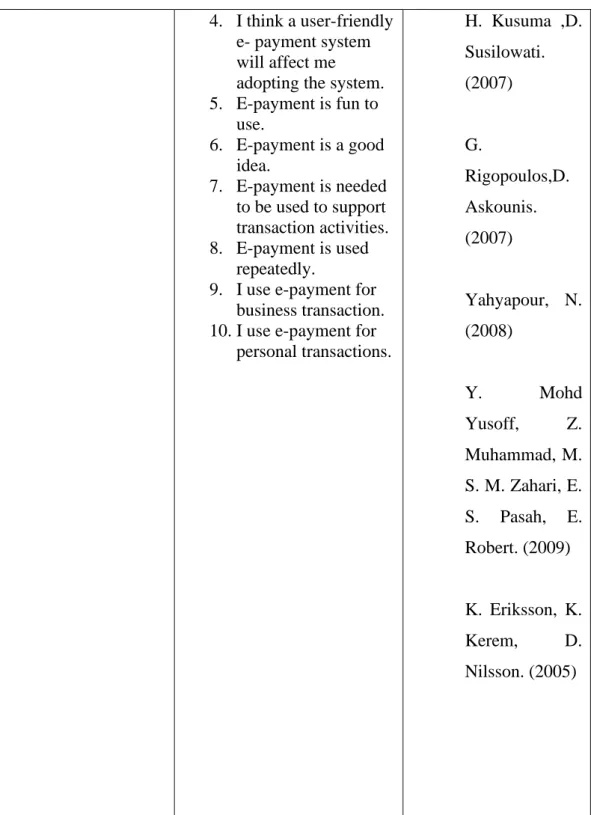
The questionnaires used in this research were from Chai Har Lee, Uchenna Cyril Eze, Nelson Oly Ndubisi (2011), Teoh, Chong, Lin and Chua (2013), H. After all data were successfully entered into the software for analysis , the results of the evaluation data can be obtained. Frequency distributions are applied to nominal or ordinal scales that summarize specific values of the number of occurrences of a variable (Zikmund, W. G., 2003).
Pearson correlation is mainly used to measure the linear association of the strength of two variables with the relationship. It is to investigate the relationship between which factors influence the level of acceptance of end user on the use of e-payment system. In addition, Square Root of R of multiple of the independent variables explains the percentage variation in the dependent variable.
DATA ANALYSIS
- Introduction
- Descriptive Analysis
- Reliability Analysis
- Inferential Analysis
- Pearson Correlation Coefficient
- Multiple Linear Regression
- Conclusion
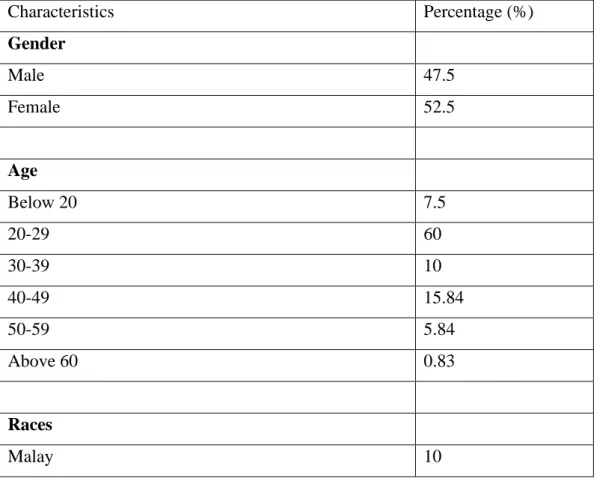
The table shows that the features of the respondents from the e-payment user in Malaysia. In addition, the educational qualification of the majority of respondents is degree, which is 54.2% and SPM is 28.3%. By seeing the frequency of the online purchase system, most of the respondents use weekly, which consists of 44.2%, followed by monthly is 41.7%, yearly is 6.7%, others included daily and sometimes it is in a total of 7.8%.
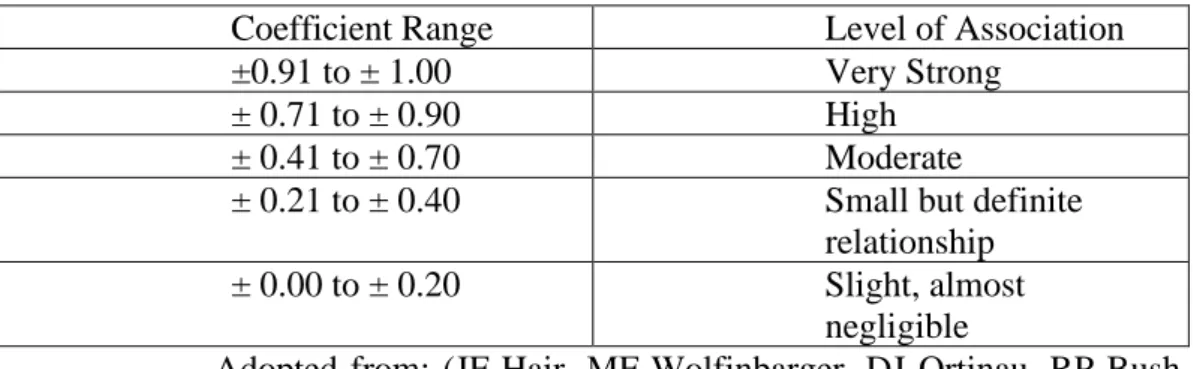
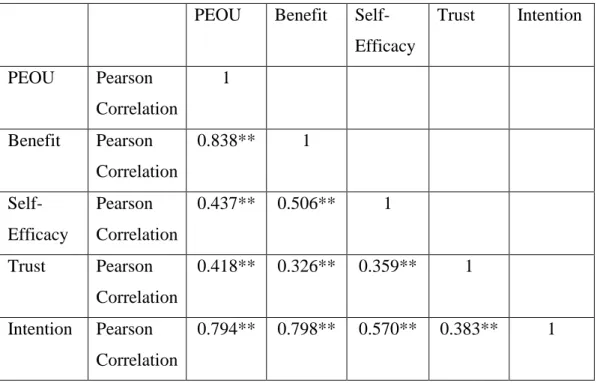
Through this testing, we want to check whether all the variables in this research have the strength of the relationship. Two of the independent variables have a high within-range relationship, while one variable has a moderate relationship, that is, self-efficacy. Therefore, research shows that influencing factors will significantly explain the intentions of end users regarding the use of e-payments.
R2 consisting of 0.715 shows that it is small but is evidence that defines the relationship between these four variables and the dependent variable. According to AP Field and J Miles (2009), values of the test statistic between the range of 1.5 and 2.5 are considered normal (AP Field,. H1: There is a significant relationship between perceived ease of use and the end user's intention to use e-payment.
There is thus a significant relationship between the perceived ease of use and the end user's intention to use e-payment. This result is consistent with previous studies by Kim (2009) and Pavlou (2001) showing that trust is independent of the intention to perform online transactions. Thus, there is a significant relationship between the benefit and the end user's intention to use e-payment.
H4: There is a significant relationship between self-efficacy and end user's intention to use electronic payment. Therefore, there is a significant relationship between self-efficacy and the end user's intention to use electronic payment. This result is evident from the research done by Bandura (1986) and Eastin (2002), where most of the respondents had used electronic payments and their positive experiences agreed that they would continue to use electronic payments.
DISCUSSION AND CONCLUSION
Introduction
Summary of Statistical Analysis
Discussion of Major Findings
The result supporting hypothesis 1 matches the conclusion drawn by Hoda Mashayekhi, Yoosof Mashayekhi (2017) and hypothesis 3 is supported by Scott Nadler, Alexander N. Kim (2009) and Pavlou (2001) who say that trust is independent of intention carrying out transactions online.
Implication of The Research
Limitation of Research
Recommendation for Future Research
Conclusion
Assessment of how assessments are formed and the role of response in the socially disadvantaged. Theory of planned behavior and drinking: Assessing the moderating role of past behavior within the theory of planned behavior.