i
Preparation and Characterization of Magnetic Biosorbent Based On Ceiba Pentandra
By
MOHD HAZIQ BIN MOHD GHAZALI
Dissertation submitted in partial fulfilment of
The requirement for the Bachelor of Engineering (Hons)
(Chemical Engineering)
MAY 2014
Universiti Teknologi PETRONAS Bandar Seri iskandar
31750 Tronoh Perak Darul Ridzuan
ii
CERTIFICATION OF APPROVAL
Preparation and Characterization of Magnetic Biosorbent Based On Ceiba Pentandra
By
Mohd Haziq Bin Mohd Ghazali
A project dissertation submitted to the Chemical Engineering Programme Universiti Teknologi PETRONAS In partial fulfilment of the requirement for the
BACHELOR OF ENGINEERING (Hons) (Chemical Engineering)
Approved by,
(AP Dr Mohd Azmuddin Bin Abdullah)
iii
UNIVERSITI TEKNOLOGI PETRONAS TRONOH, PERAK MAY 2014
CERTIFICATION OF ORIGINALITY
This is to certify that I am responsible for the work submitted in this project, that the original work is my own except as specified in the references and acknowledgements, and that the original works contained herein have not been undertaken or done by unspecified sources or persons.
(MOHD HAZIQ BIN MOHD GHAZALI)
iv
ACKNOWLEDGEMENT
First and foremost, praised be to the almighty God for giving an utmost opportunity for the author to accomplish this final year project as part of the requirements for Bachelors of Engineering (Hons.) in Chemical Engineering at University Teknologi PETRONAS.
Secondly the author is grateful for all the supports show by parents. They have continuously provided moral and financial support until the end of this project. Also a ‘Thank You” to the assigned supervisor for this project, AP Dr Mohd Azmuddin bin Abdullah who has sacrificed his time in giving guidance and necessary improvements from time to time
Last but not least, the author would like to express his gratitude to fellow colleagues who have always provided moral supports and a never-ending assistance in ensuring this final year project is finished within the given time frame.
MOHD HAZIQ BIN MOHD GHAZALI
(CHEMICAL ENGINEERING)
v
ABSTRACT
Cationic dye methylene blue (MB) and anionic dye Congo Red (CR) are among pollutant dyes that must be removed from the waste water stream especially from textile industries. The use of biosorbent for the removal of pollutants from waste water is inceasingly becoming attractive due to low cost and ease of preparation and application. In this study, magnetic biosorbent was developed based on Ceiba pentandra or kapok fiber to remove MB and CR dyes from aqueous solution. The raw kapok fiber (RKF) was first treated with sodium hydroxide (NaOH). Then, Fe3O4 magnetic nanoparticles (MNPs) were introduced onto the surface of the RKF and treated-kapok fiber (NaOH-treated (SKF)). The magnetic nanocomposites (MNCs) based on kapok fiber could be separated out easily from the aqueous solution by an external magnet for its magnetic property. It can also provide more surface area and increase the adsorption capacity. The RKF-MNCs and SKF- MNCs were characterized morphologically and chemically by Fourier Transform Infrared Spectroscopy (FTIR), Transmission Electron Microscope (TEM), and Field Emission Scanning Electron Microscope (FESEM). Comparison of performance between RKF, RKF-MNCs and SKF-MNCs was studied for dye removal in batch mode for three different parameters; initial concentration, contact time and pH value.
From the results obtained using Ultraviolet-Visible (UV-VIS) test, the optimum conditions for the adsorption process will be determined. Then corresponding SKF- MNCs adsorbent was used in adsorption experiment that conducted in these optimum conditions and it is expected that it will give the highest adsorbability compared to other adsorbent.
vi
TABLE OF CONTENTS
ABSTRACT ... v
LIST OF FIGURES ... viii
LIST OF TABLES ... ix
CHAPTER 1 INTRODUCTION ... 1
1.1 Background Of Study ... 1
1.2 Problem Statement ... 3
1.3 Objective ... 3
1.4 Scope Of Study ... 4
CHAPTER 2 LITERATURE REVIEW ... 5
2.1 Kapok Fiber (Ceiba Pentandra) ... 5
2.2 Dyes ... 7
2.2.1 Methylene Blue (MB) ... 8
2.2.2 Congo Red (CR) ... 10
2.3 Magnetite ... 11
2.4 Effects of process parameters ... 12
2.4.1 Initial Dye Concentration... 12
2.4.2 Contact Time ... 13
2.4.3 pH ... 14
CHAPTER 3 METHODOLOGY ... 17
3.1 Project Activities ... 17
3.2 Gantt Chart And Key Milestones ... 18
3.3 Experiment Methodology ... 20
vii
3.3.1 Materials And Chemicals ... 20
3.3.2 Preparation of RKF And SKF ... 20
3.3.3 Functionalization of RKF and SKF With MNPs ... 22
3.3.4 Preparation of Dye Solution ... 23
3.3.5 Characterization ... 23
3.3.5.1 RKF, RKF-MNCs, SKF and SKF-MNCs ... 23
3.3.5.2 Dye Concentration ... 24
3.3.6 Adsorption Experiments ... 24
3.3.6.1 Batch Mode ... 24
CHAPTER 4 RESULTS AND DISCUSSION ... 26
CHAPTER 5 CONCLUSION AND RECOMMENDATION ... 31
REFERENCE ... 33
viii
LIST OF FIGURES Figure
Number Description Page
2.1
Picture of (a) Ceiba pentandra plant, (b) Opened fruit with floss.5 2.2
SEM of (a) RKF, (b) SKF single fibre (Abdullah et al., 2014).6 2.3
FTIR spectra of (a) RKF, and (b) SKF (Abdullah et al., 2014)7
2.4
Congo Red (left); Methylene Blue (right)8
2.5
Structure of Methylene Blue (MB)8
2.6
Alignment of cotton fibers in (a) wet state, (b) the presence ofMB solution
9
2.7
Schematic model of MB and cotton fiber interaction.9
2.8
Congo Red (CR)10
2.9
Interaction of CR with Cellulose10
2.10
Equilibrium isotherms of organic dyes by Fe3O4@GPTMS@Lys.Performed in bath mode adsorbent
12
2.11
Effects of time on adsorption of MB, AR, OR, AZ, and MEB byFe3O4@GPTMS@Lys adsorbent
13
2.12
Effects of pH on adsorption of anionic (a) and cationic dyes, (b) byFe3O4@GPTMS@Lys adsorbent
14
2.13
(a) Varies of CR dyes in solution pH value from pH2 to pH6 from left to right; (b) CR dyes in solution with pH2 started to degrade after short period of time.
15 2.14
Varies of MB dyes in solution pH value from pH8 to pH13 fromleft to right.
16
3.1
(a) Planetary Mono Mill Pulverisette 6, (b) milled RKF18 3.2
RKF mixed with NaOH solution on the hot-plate magnetic stirrerat 40ᵒC and 350rpm for 6 hours.
19
3.3
Sonification processes of MNCs at 50 pulse for 15 minutes.20 3.4
(a) CR; (b) MB; Comparison of initial concentration of dyes23
4.1
SEM images of kapok fibers (a) RKF, (b) SKF.24
4.2
TEM images of (a) Fe304 MNPs, (b) RKF, (c) RKF MNCs.25
4.3
FTIR spectra of (a) RKF, (b) SKF, (c) RKF MNCs, (d) SKF MNCs26
ix
LIST OF TABLES Figure
Number Description Page
4.1
FTIR spectral peaks (cm-1) of RKF, SKF, RKF MNCs and SKF MNCs.27
1
CHAPTER 1 INTRODUCTION
1.1 BACKGROUND OF STUDY
Colour is the most noticeable pollutant that can be easily recognized in wastewater.
The occurrences of various colouring agents like dyes, inorganic pigments, tannins and lignin usually impart colour and becoming among the main contributor to environmental pollutants, with dyes being the most predominant. Dyes are widely used in many industries such as textile dyeing, food, cosmetics, paper printing and leather. Textiles industry is the major consumer (Rafatullah, Sulaiman, Hashim, &
Ahmad, 2010). The textile dyeing industry consumes large quantities of water at different steps of dyeing, finishing, and other processes. Due to the large volume of water consumption, the production of huge volume of wastewater is inevitable.
The presence of colour in wastewater either in industrial or domestics needs is considered as undesirable. These must be treated properly before being discharged into water bodies or on land. Dyes could cause severe threat to the environment, not only for the toxicity of suspended solids to aquatic life, but also they are resistant to fading on exposure to light or most chemicals (Liu, Wang, Zheng, & Wang, 2012;
Zhang et al., 2014). Most of these dyes are synthetic and exhibit complex aromatic structure, making them stable and difficult to be decomposed once released into the environment (Y. Liu et al., 2012). Many of the dyes possessed high level of toxicity or strongly carcinogenic (Hameed, Din, & Ahmad, 2007). They may cause allergic dermatitis or skin irritation, may be mutagenic to humans and aquatic organism (T.
Liu et al., 2012).
The treatment of wastewater is one of the biggest problems faced by textile manufacturers, because of the capital cost incurred. The removal of organic dyes from waste water is of great significance and the wastewaters have to be treated to meet the discharge limit before being released (Rahimi, Kerdari, Rabbani, & Shafiee, 2011). Various techniques have been employed such as microbial degradation, chemical oxidation, membrane separation, bioaccumulation, electrochemical treatment, adsorption and reverse osmosis (Kadirvelu, Thamaraiselvi, &
2
Namasivayam, 2001). Among these techniques, adsorption is generally preferred due to its easy handling, high efficiency, low energy input and availability of different adsorbents. The most commonly used adsorbent for dye removal is activated carbon, but the difficulty in regeneration and high cost limit its wide application. The removal of dyes using low-cost, abundantly available adsorbents such as sand (Bukallah, Rauf, & AlAli, 2007), sepiolite (Doğan, Özdemir, & Alkan, 2007), orange peel and banana peel (Annadurai, Juang, & Lee, 2002), and pistachio hull waste (Moussavi & Khosravi, 2011). However, limited adsorption capacity or little mention of regeneration also hinders their further application.
In this study, a magnetic-biosorbent based on kapok for dye removal in wastewater will be developed. The raw kapok fiber (RKF) will be first treated with sodium hydroxide (NaOH). Then, Fe3O4 magnetic nanoparticles (MNPs) will be introduced onto the surface of the RKF and treated-kapok fiber (NaOH-treated (SKF)) via sonication method . The RKF-MNCs and SKF-MNCs were characterized morphologically and chemically by Fourier Transform Infrared Spectroscopy (FTIR), Transmission Electron Microscope (TEM), and Field Emission Scanning Electron Microscope (FESEM). Different process parameters will be investigated including initial dye concentration, pH and contact time. As a result of the magnetic characteristic of Fe3O4 MNPs, the kapok fiber-Fe3O4 nanocomposites could respond to permanent magnet. After adsorption, the RKF-MNCs and SKF-MNCs could be separated from solution easily by an external magnet.
3 1.2 PROBLEM STATEMENT
Waste water from textile industrial impart visible pollutant due to high content of dyes and these dyes are chemically stable and difficult to decompose once released into the environment. New adsorbent based on Ceiba pentandra (L.) Gaertn or kapok fiber will show superior properties such as economical, ease of regeneration and abundant availability are developed for dyes removal. Kapok fiber is a natural sorbent that exhibits excellent hydrophobic-oleophilic characteristics but can be chemically treated to adjust hydrophobic-hydrophilic characteristics to suit its intended application. The removal of lignin and waxy layer from kapok fiber are favourable for the hydrophilic property and ionic dye removal. When the interaction of cellulose is broken after the alkaline treatment, more active sites are made available for dye adsorption, leading to high adsorption efficiency. The magnetic nanocomposites (MNCs) based on kapok fiber could be separated out easily from the aqueous solution by an external magnet for its magnetic property. It can also provide more surface area and increase the adsorption capacity. For effective sorbent application for dye removal, different process parameters will have to be studied such as initial dye concentration, pH and contact time.
1.3 OBJECTIVES
The objectives of this research are:
1) To develop and characterize RKF, RKF-MNCs, SKF and SKF-MNCs for dyes sorption.
2) To study sorption parameters such as initial dye concentration, pH and contact time in batch mode of operation
4 1.4 SCOPE OF STUDY
The scope of the study involves preparation of raw and NaOH-treated kapok fiber.
Raw kapok fiber is first separated from the seeds. It is dried in an oven at 70oC until moisture content less than 1%. Then it was milled to nanoparticle size. For preparing NaOH-treated kapok fiber, milled RKF will be mixed with NaOH on hot-plate magnetic stirrer for 6 hours at designed temperature and speed. It were neutralized and separated from solution. SKF were acquired after filtration with filter paper.
Then, Fe3O4 MNPs will be introduced onto the surface of RKF and SKF via sonication method. The comparative study on the dye sorption RKF, RKF-MNCs, SKF and SKF-MNCs will be studied in batch mode of study. The effective parameters will be studied such as initial dye concentration, pH and contact time. The kinetic and adsorption isotherms modelling for dye sorption on RKF, RKF-MNCs,
SKF and SKF-MNCs also will be studied.
5
CHAPTER 2
LITERATURE REVIEW
2.1 Kapok Fiber (Ceiba pentandra)
Ceiba pentandra or kapok fiber is a single-cell natural cellulose fiber with 64%
cellulose, 13% lignin, 8.6% water, 1.4 – 3.5% ash, 4.7 – 9.7% water- soluble substances, 2.3 – 2.5% xylan and 0.8% waxes (Y. Liu et al., 2012; Sunmonu &
Abdullahi, 1992).
Figure 2.1 Picture of (a) Ceiba pentandra plant, (b) Opened fruit with floss.
The cellulose with the waxy cutin on its surface makes it hydrophobic with high water repellent properties. Kapok fibers also exhibit low density, high bulkiness and good oil adsorbability. With large contact angle (>90 between water and kapok fiber wall and the large surface tension against air in the lumen, water may be obstructed from penetrating into the lumen (Lim & Huang, 2007).
The cellulose and lignin contents in kapok can remove dyes from aqueous solution (Al-Ghouti et al., 2010). However, the lignin, non-celluloses and cellulose interactions cause part of hydroxyl groups in the cellulose unavailable to dye molecules, thus leading to decreased dyeing efficiency of kapok fiber. To promote hydrophilic property and ionic dye removal, the waxy surface and lignin in kapok fiber must be removed. The treatment method to remove lignin and wax by using
(a) (b)
6
sodium hydroxide (NaOH) has been reported (Abdullah et al., 2014). When the interaction of cellulose is broken, more active sites are made available for dye adsorption, leading to high adsorption efficiency. The reusability of treated kapok fiber for dye removal is another important for economical usage.
RKF consists of cylindrical networks, arranged in parallel fashion or across each other, giving fluffy and soft texture (Abdullah, Rahmah, & Man, 2010). Fig. 2.2 show single RKF and SKF fibre (Abdullah et al., 2014). The RKF has a hollow cylindrical core while SKF has the tubular structure collapsed by NaOH treatment.
SKF shows total disappearance of air entrapment, turning into a hardened, dark color fibers (Abdullah et al., 2010). The alkaline treatment has caused the collapse of the hollow tube with the removal of the plant wax resulting in more hydrophilic surface exposed in SKF (Abdullah et al., 2010).
Figure 2.2 SEM of (a) RKF, (b) SKF single fibre (Abdullah et al., 2014).
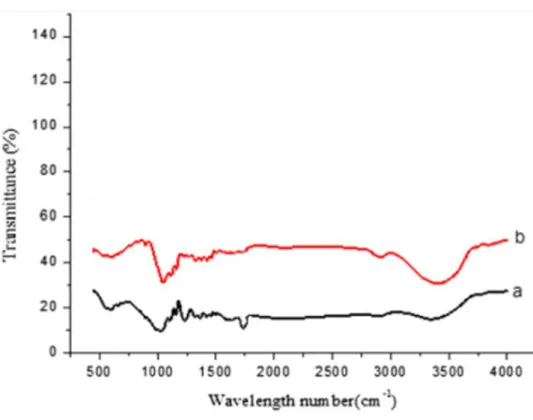
Based on FTIR (Fig. 2.3), the kapok fiber wax functional group at 1726 cm-1 is not detected in after treatment alkaline treatment. This peak represents the carbonyl (C=O) stretching vibrations of the acetyl and uronic ester groups or the wax acetyl and ester group which gives oleophilic nature of kapok fibers. NaOH treatment removes the oleophilic functional group and making the fiber more hydrophilic. The vibration peak at 1,366 cm-1 in RKF IR spectrum which attributed to the bending vibration of C–H and C–O bond in the polysaccharide aromatic rings of lignin (Abdullah et al., 2014), is also dissapeared in SKF.
7
Figure 2.3 FTIR spectra of (a) RKF, and (b) SKF (Abdullah et al., 2014)
2.2 Dyes
Homemade textile industry is a well-established industry in the East Coast of Peninsular Malaysia. Known locally as Batik Industries, they are traditionally inherited from generation to generation. The Batik Industry makes a big contribution to the economic growth due to its high demands locally and from abroad. However, this industry produces wastewater which contributes to water pollution since it utilizes a lot of chemicals. Preliminary studies show that the wastewater from these homemade textile industries contains grease, wax, heavy metal, surfactant, suspended solid, and dyes (organic and inorganic). Among known dyes used by Batik industries are methylene blue, congo red, methyl blue, orange I , acid red 18 and azure I.
8 2.2.1 Methylene Blue (MB)
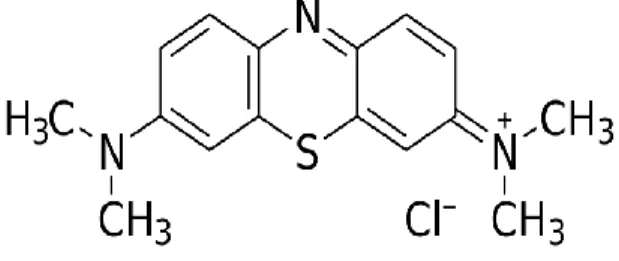
Methylene blue (MB) is a representative of cationic dyes, usually used in textile dyeing due to its high affinity for solid surface. Fig. 2.5 shows the structure of MB.
Figure 2.5 Structure of Methylene Blue (MB)
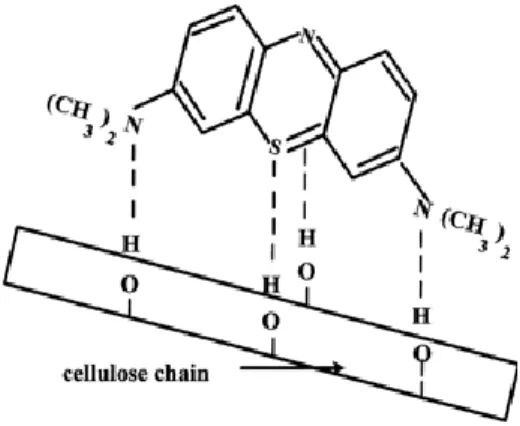
MB molecules have the ability to associate with cellulose. This mechanism can be explained by the fact that there are cellulose–HOH–cellulose linkages in the wet state (Fig. 2.6a) which can easily be broken and replaced by MB molecules (Fig.
2.6b). In the case of cotton, the fibers are swollen in water and therefore all pores of cotton fibers are opened. Consequently, surface area is available for MB capture (Chongrak Kaewprasit, 1998). In aqueous solution of MB, water is the vehicle for MB and carries the dye to the fibers in the wet state. A schematic diagram or representation of the interaction between the MB molecule and cotton fiber surface is shown in Fig. 2.7.
9
Figure 2.6 Alignment of cotton fibers in (a) wet state, (b) the presence of MB solution
Figure 2.7 Schematic model of MB and cotton fiber interaction.
10
In another study, kapok fiber treated with NaOH have been used to remove MB from the aqueous solution (Abdullah et al., 2014).. Utilizing Response Surface Methodology (RSM) based on Box-Behnken design, the optimum variables such as NaOH content, acetic acid (HAc) content and reaction temperature have been established (0.93g, 1.42mL and 90ᵒC, respectively). The experiment MB capacity of 110 mg/g exceeds the predicted value of the model at 105.48 mg/g. The adsorption reported to be rapid and obeys pseudo-second-order kinetics. Kapok-treated adsorbent also shows great reusability using 0.1 mol/L of HCl solution as the desorbing agent (Y. Liu et al., 2012).
2.2.2 Congo Red (CR)
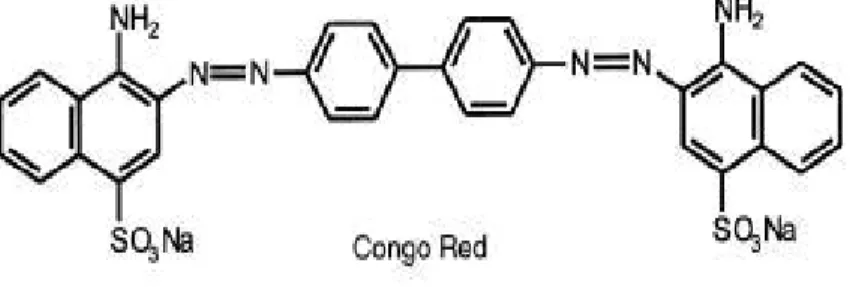
Congo Red (CR) is an anionic dye or acid dye (Fig. 2.8). The adsorption mechanism of CR onto cellulose is shown in Fig. 2.9. CR is quickly attracted by cellulose surface thanks to its polar sulfonate groups. The electrostatic interactions between negatively charged oxygen atoms of one of the sulfonate group and the positively charged hydrogen atoms of cellulose hydroxyl groups are obviously the driving force of the adsorption process. When the first sulfonate group attached to the cellulose surface, the process of adsorbing the second sulfonate group begins. Simultaneously, both naphthalene residues of CR come closer to the surface. Then, the entire molecule of the dye will be in contact with the cellulose surface. Once CR is adsorbed on cellulose, a stable system is formed and stable adsorbed conformation is observed (Chongrak Kaewprasit, 1998).
Figure 2.8 Congo Red (CR)
11
Figure 2.9 Interaction of CR with Cellulose
Figure 2.4 Congo Red (left); Methylene Blue (right)
2.3 Magnetite
Recently, magnetic nanoparticles (MNPs) as new adsorbents have attracted considerable interest owing to their large specific area, short diffusion route, high separation efficiency and low cost (Kharisov et al., 2012). The core of magnetic nanomaterial has been proven to be biocompatible with low toxicity. Many
Cellulose
12
adsorbents based on MNPs are synthesized through surface modification with various organic compound such as chitosan (Yan, Li, Yang, Li, & Cheng, 2013) were developed showed a significant adsorbability capacity. The adsorption capacity of these adsorbents can be greatly enhanced, because large numbers of active sites are introduced (Ge, Ye, Li, & Zhao, 2012). The MNPs are superior to other adsorbents in terms of easy separation, causing minor environmental pollution and reusability (Zhang et al., 2014).
Magnetic separation technique is gaining wide application in water treatment due to its great significance in accelerating separation speed and improving water efficiency (Yan et al., 2013). After being impregnated the adsorbent with magnetism, the adsorbents could be easily separated from solutions under external magnetic fields. The separation ability of adsorbent is greatly enhanced. The impregnation of magnetism is usually achieved by combination of magnetic components into the adsorbents, which are mainly Fe3O4-based substances.
2.4 Effect of Process Parameters 2.4.1 Initial dye concentration
The experimental data from the equilibrium isotherms of organic dyes (Methyl Blue (MB), Orange I (OR), Acid Red 18 (AR), Methylene Blue (MEB) and Azure I (AZ) ) by Fe3O4 magnetic nanoparticles (MNPs) modified with low toxic 3- glycidoxypropyltrimethoxysilane, (Fe3O4@GPTMS@Lys) at 298K reveals that the equilibrium adsorption capacity of the dye increases as the initial dye concentration increases (Zhang et al., 2014).
13
Figure 2.10 Equilibrium isotherms of organic dyes on Fe3O4@GPTMS@Lys.
Performed in bath mode adsorbent, 1.00 gL-1; organic dyes, 20–400 mgL-1;
temperature, 298 K; pH, 2.5 (MB, AR, OR) , 12 (AZ, MEB); time: 60 min. (Zhang et al., 2014)
The ranges of dye concentrations between 100ppm to 1000ppm with 100ppm increment were prepared. This is done by first preparing a stock solution of 1000ppm for each CR and MB dyes only. Then, the stock solution is further diluted from 100ppm up to 900ppm with 100ppm increment using dilution formula;
M1V1=M2V2 (1)
2.4.2 Contact time
The adsorption of organic dyes reaches equilibrium in a short time, after which the removal of the dyes was insignificant with time (Zhang et al., 2014). The efficiency can be due to the larger surface area and the electrostatic interaction between the adsorbent and the organic dyes.
14
Figure 2.11 Effects of time on adsorption of MB, AR, OR, AZ, and MEB on Fe3O4@GPTMS@Lys adsorbent, 1.00 gL-1; organic dye, 200 mgL-1; pH, 2.5 (MB, AR, OR) , 12 (AZ, MEB); time, 0–120 min; temperature, 298 K. (Zhang et al., 2014)
The adsorption of dyes were conducted during a contact time which was divided into two different intervals. First part was ranging from 5 to 60 min with 5 minutes interval, whilst the second part was between 75 to 120 min using 15 minutes interval.
2.4.3 pH
Mechanism of adsorption is highly affected by the pH value of the solution (Arami, Limaee, & Mahmoodi, 2008; Y. Liu et al., 2012; Yan et al., 2013; Zhang et al., 2014). For the anionic dyes such as Congo Red, adsorption is expected to increase when the solution is at lower pH value (Zhang et al., 2014), but not lower than pH 2.5 to avoid decomposition of the adsorbent (Ge, Li, Ye, & Zhao, 2012). For cationic dyes (Methylene Blue), adsorption is expected to increase when at high pH value (Zhang et al., 2014) as shown in Figure 2.12 below;
15
Figure 2.12 Effects of pH on adsorption of (a) anionic and (b) cationic dyes, omto Fe3O4@GPTMS@Lys adsorbent, 1.00 g L-1; organic dye, 200 mgL-1; time, 120 min;
temperature, 298 K.
At low pH (acidic), the amino group of the adsorbent is protonated to form – , which may result in the adsorbent carrying positive charge and interact with the sulfonate anion of anionic dye by electrostatic adsorption. In contrast, carboxylate anion formed under the alkaline condition and interact with the nitrogen cation of cationic dye (Zhang et al., 2014)
Anionic dyes (Congo Red) were prepared in lower pH value (pH2, pH2.5, pH3, pH4, pH5, pH6) and cationic dyes (methylene blue) were prepared in higher pH (pH8, pH9, pH10, pH11, pH12, pH13). These conditions were applied as they were reported that adsorption of anionic dye enhanced in acidic conditions whilst adsorption of cationic dye increased in alkaline condition. (Zhang et al., 2014)
It was observed in Figure 2.13 (a) that Congo Red dyes become darken in colour when the pH value is lowered. At pH values that lower than pH 2.5, these anionic dyes started to degrade (Figure 2.13 (b)). The dyes were clumped together.
16
Figure 2.13 (a) Various CR dyes in solution of different pH value from pH2 to pH6 from left to right; (b) CR dyes in solution with pH2.
However, for methylene blue dyes, there are no significant changes were observed when the pH value is increased.
Figure 2.14 Various of MB dyes in solution having different pH values from pH8 to pH13 from left to right.
(a) (b)
17
CHAPTER 3 METHODOLOGY
3.1 Project activities
Literature R
Literature and proposal
• Gathering as much information as possible from various sources such as journals and websites and prepare the proposal.
Experiment Design
• Identifying the subjects that need to be investigated and the experimental procedures, as well as the chemicals needed.
Experimental work
• Conducting all the designed experiment and collect all the data required for the analysis.
Data Analysis and Interpretation
• The findings obtained are analyzed and interpreted critically. Comparison with other literature readings will also be done.
Documentation and Reporting
• The whole research project will be documented and reported in detail.
• Recommendations or aspects that can be further improved in the future will also be discussed.
18 3.2 Gantt chart and key milestones
Detail Work
MAY JUNE JULY AUGUST
1 2 3 4 5 6 7 8 9 10 11 12 13 14 15
Preparation and Study on RKF & SKF
Functionalize Fe3O4 onto RKF & SKF
Characterization of Samples Result, Analysis & Report Submission of Progress Report Project Work Continues
Pre-SEDEX
Submission of Draft Final Report
Submission of Dissertation (soft bound)
Submission of Technical Paper
Oral Presentation (Viva) Submission of Dissertation
19 Process Suggested Key Milestones (hard bound)
20 Experiment Methodology
3.3.1 Materials and Chemicals
List of chemicals needed for this experiment are:
1) Raw kapok fiber
2) Magnetite (Fe3O4) – 99% purity
3) Sodium hydroxide (NaOH) – 99.23% purity
3.3.2 Preparation of RKF And SKF
Raw Kapok Fiber (RKF)
Raw kapok fiber (RKF) was collected from Telok Belanja Village in Dungun, Terengganu.
The seeds were separated from the samples and it is used directly without any further purification. RKF was prepared by following suggested method (Abdullah et al., 2014).
The visible dust particles are were removed manually by seizing with mesh sieve. The fibers was dried in an oven at 70°C until moisture content was less than 1%. Then it was milled to nanoparticle size using Planetary Mono Mill Pulverisette 6 (Figure 3.1 (a)).
Every 3g of ground fiber was milled by using ball mill unit (the balls made up of zirconium oxide) for 30 minutes with speed of 450 rpm.
Figure 3.1 (a) Planetary Mono Mill Pulverisette 6, (b) milled RKF
(a) (b)
21
Chemically NaOH-Treated Kapok Fibers (SKF)
The SKF were prepared by using a reported modified method (Abdullah et al., 2014).
1) 2 gram of milled RKF was mixed into 100 mL of 0.25 M NaOH in a 250 ml Erlenmeyer flask, and placed on hot-plate magnetic stirrer for 6 hour at 40 ± 2°C and stirred at 350 rpm.
2) The solution was to be settled down by gravity until the SKF precipitate at the bottom of the flask.
3) The excess NaOH solution was removed from the flask and the moist SKF are rinsed with deionised water then stirred. This step is to neutralize the excess NaOH and repeated until the pH of the solution was attain pH 7 – 8.
4) The neutralized SKF will then filtered using filter paper and air dried naturally in fume chamber for 48 hour and stored in a container for further use.
Figure 3.2 RKF mixed with NaOH solution on the hot-plate magnetic stirrer at 40ᵒC and 350rpm for 6 hours.
22
3.3.3 Functionalization of RKF and SKF With MNPs.
The sonication method employed here to prepare 50 wt % Fe-containing kapok fibers as follow;
1) Typically to prepare 50 wt % Fe-containing kapok fibers, 1 g of milled kapok RKF/SKF and 1 g of Fe3O4 were dissolved in 100 mL of deionised water 2) The reaction mixture was sonicated to modify the RKF/SKF surface by using
Model 150V/T Ultrasonic Homogenizer at 50 Pulse for 15 minutes.
3) Then the solution was placed on orbital shaker at 350 rpm for 5 min.
4) Step 2 to 3 were repeated three times or several times.
5) The resultant MNCs were recovered from the reaction mixture after settled within 15 minutes. The mixture was filtered using Whatman filter paper and dried naturally in fume chamber for 48 hour.
6) The resulting MNCs were obtained and stored in a container for further use.
Figure 3.3 Sonification processes of MNCs at 50 pulse for 15 minutes.
23 3.3.4 Preparation of dye solution.
1) 1000ppm stock solution of CR and MB dyes were prepared by diluting 1 gram of powdered dye in 1 litre deionized water.
2) From the 1000 ppm stock solution, the solution is further diluted between 100ppm to 900ppm with 100ppm increment using dilution formula.
3) The resulting dyes were kept in labelled containers for further use.
3.3.5 Characterization
3.3.5.1 RKF, RKF-MNCs, SKF and SKF-MNCs FTIR
The infrared spectra were recorded by using FTIR spectrophotometer (Perkin–Elmer, USA). Separately, RKF/SKF of 2 mg was mixed with 200 mg of KBr and compressed to form pellet disk by using a Punch press. Low scans were carried out at 500 until 3000cm-1 wavelength.
TEM
The TEM images of RKF, RKF-MNCs, SKF and SKF-MNCs were obtained. It is expected that the surface of RKF-MNCs and SKF-MNCs were covered with a layer of uniform-sized magnetic nanoparticles. This was indicated that the RKF-MNCs and SKF-MNCs were successfully functionalizes on the RKF/SKF by the sonication method.
FESEM
The morphology of the kapok fiber was studied by using scanning electron microscopy (SEM, LEO 1430P VPSEM). Before SEM observation, all samples were fixed on aluminium stub sand coated with gold. The SEM images were recorded at 15 kV of incident source beam.
24 3.3.5.2 Dye Concentration
UV-VIS
The basic principle used Beer-Lambert Law of absorptivity where the amount of energy absorb by sample can be calculated as negative log of intensity of light pass through sample (I) over intensity of light supply (I0) or often expressed in term of percentage of light, transmitted through sample (%T).
(2)
= Absorptivity
= Intensity of light pass through sample = Intensity of light supply
From this formula, the adsorptivity of each adsorbent can be determined and the optimum condition for each parameter (initial concentration, contact time and pH) can be
determined.
3.3.6 Adsorption Experiments
3.3.6.1 Batch Mode
1) 0.02 gram of powder-form RKF, SKF, Fe3O4-RKF or Fe3O4-SKF powder was packed inside a sample glass bottle with 20 mL of known concentration of dyes varies from 100ppm to 1000ppm at designed pH value.
2) The sample glass bottle contained mixture of adsorbent and dyes was then dissipated using thermostated shaker for 45 min at 20 ± 10°C at 200 rpm.
3) Then, the resulting mixture was centrifuged using Heraeus Primo Centrifuge, at 4000 rpm for 15 minutes. The resulted dye solution was then transferred to test tube. The sorption capacity was calculated using equation (2).
25
Figure 3.4 (a) CR; (b) MB; Comparison of initial concentration of dyes, 4 mg/L (left); after adsorption process for RKF (middle), RKF-MNCs (right); temperature 20ᵒC; 200rpm; 0.4 gram of RKF/RKF-MNCs; pH7.
Referring the above Figure 3.4 (a), there are significant difference that can be observed indicates adsorption capacities of RKF-MNCs is greater than RKF in CR solution. However, in (b), there are almost no difference in final dye concentration that can be observed between RKF and RKF-MNCs. RKF-MNCs were easily separated from both of solutions using an external magnet.
(a) (b)
26
CHAPTER 4
RESULTS AND DISCUSSION
Raw kapok (RKF) and sodium hydroxide treated kapok fiber (SKF) physical properties were characterized based on morphology. The fibers morphologies were analyzed using Field- Emission Scanning Electron Microscope (FESEM). The SEM microphotographs of raw kapok fiber (RKF) and sodium hydroxide treated kapok fiber (SKF) are shown in Figure 4.1 below.
Figure 4.1 SEM images of kapok fibers (a) RKF, (b) SKF.
From the Figure 4.1 (a), it is obvious that RKF has a hollow tubular structure or lumen and without any ripple. The smooth surface exhibit by the RKF is concluded due to the plant wax coverage on the surface (Abdullah et al., 2014; Lim & Huang, 2007; Y. Liu et al., 2012; Wang, Zheng, & Wang, 2012). However according to Figure 4.1 (b), the structure of the SKF has shown a significant difference as compared to RKF. The hollow structure is no longer exhibit by the fibers and it seems that the fiber has been compressed with no tubular configuration as well. This confirmed that the alkaline treatment of the kapok fibers damaged the structure and caused the collapse of the hollow tube (Abdullah et al., 2014). A significant difference in these kapok fibers suggest the removal of the plant wax and the hydrophilic surface has been exposed after the treatment (Abdullah et al., 2014; Wang et al., 2012)
(a) (b)
27
Figure 4.2 TEM images of (a) Fe304 MNPs, (b) RKF, (c) RKF MNCs.
The TEM image of the Fe3O4 MNPs, RKF and RKF MNCs, as shown in Figure 4.2 (a), reveals that the diameter of the MNPs is around 10nm-16nm in hexagonal structure, with a generally homogenous size while the same structure were spotted at the surface of kapok fiber which can be seen in (c) with the size of the Fe3O4 of 12.6nm. It can be concluded that the functionalize of MNPs onto the kapok fiber’s surface were successfully achieved via sonication method.
(a) (b)
(c)
28
To determine the functional groups presented in the prepared kapok fibers, the samples are subjected to analysis using FTIR spectroscopy. Figure 4.2 display the FTIR spectra of RKF and SKF.
Figure 4.3 FTIR spectra of (a) RKF, (b) SKF, (c) RKF MNCs, (d) SKF MNCs
Figure 4.2 shows the FTIR spectra of all tested kapok materials, and Table 1 summarizes the important peaks of RKF, SKF, RKF MNCs and SKF MNCs.
29 Table 4.1
FTIR spectral peaks (cm-1) of RKF, SKF, RKF MNCs and SKF MNCs.
RKF SKF RKF
MNCs
SKF MNCs
Bond type/Assignment (Abdullah et al., 2014) 3413.53 3435.74 3412.43 3400.81 OH stretching
2921.22 2916.22 2918.15 - CH stretching of CH2 and CH3 groups 1740.64 – 1736.44 - Carbonyl C=O stretching of ester
1642.99 1648.01 1624.23 1628.30 H–O–H of absorbed water 1505.71 - 1508.04 - C–H bending of aromatic group 1464.20 - 1419.27 - OH and CH2 bending
1376.49 - 1372.99 - C–H bond in –O(C=O)–CH3 group 1248.07 – 1241.56 - C–O stretching of acetyl group 1050.63 1033.26 1052.64 1057.10 Anhydroglucose unit
Comparing RKF, SKF, RKF MNCs with SKF MNCs, there is no detection of peak intensity at 1740.64cm-1 and 1736.44cm-1 for the carbonyl (C=O) stretching vibrations of the acetyl and uronic ester groups, suggesting the removal of pectin, hemicelluloses, or the ester linkage of the carboxylic group of ferulic and p-coumaric acids of lignin or hemicelluloses in the raw fibers (RKF and RKF MNCs).
The hydrogen bonding inside kapok fiber is possibly reduced via the hydroxyl group reduction after the NaOH-treatment. This can be observed from an increase in the intensity of –OH bands at 3413.53cm-1. The hydroxyl groups facilitate the hydrogen bonding with the carboxyl groups, such as fatty acids on the surface of the natural fiber.
30
Moreover, the vibration peaks found at 1376.49cm-1 and 1372.99cm-1 in RKF and RKF MNCs were due to the bending vibration of C–H and C–O bond in the polysaccharide aromatic rings of lignin. The absence of these two peaks—1740.64cm-1 and 1376.49cm-1, in SKF and SKF MNCs suggests more exposed OH groups and CH2, with the removal of lignin, hemicelluloses, and waxes.
The asymmetric and symmetric stretching vibrations of CH2 and CH3 were observed at 2921.22cm-1 and 2916.22cm-1, respectively, in RKF and SKF. The peaks at 1033.26–1057.10cm-1 were the characteristic peaks of anhydroglucose chains. (Abdullah et al., 2014)
Raw Kapok fiber and NaOH treated fibers have peaks at 1505.71cm-1 and 1508.04cm-1 representing carbonyl stretched while the peak found at 1464.20cm-1 describes O-H bending. The peak shoulder at 1248.07cm-1 is ascribed to aryl-alkyl C-O-C linkage.
The pronounced difference is that the peak at 1740.64cm-1 observed in raw Kapok was completely removed upon NaOH treatment. This peak represents wax acetyl and ester group which gives oleophilic nature of kapok fibers. Functional group studies suggest that NaOH treatment removed the the oleophilic functional group and fiber shows less oleophilicity as has also been reported earlier. (Abdullah et al., 2014)
31
CHAPTER 5
CONCLUSION AND RECOMMENDATION
As a conclusion, this project is important as it deals with alternative ways of treating wastewater from industries. Treatment of wastewater using NaOH-treated kapok fiber with magnetic technology (SKF-MNCs) is a rising field. It is important to develop new techniques for the treatment of wastewater but also to improve the existing ones. In most of all industry there are non-environmentally friendly chemicals in the effluents. There is a need to remove these substances but also to recycle and reuse them, which is beneficial from an economical point of view.
The first objective is to develop and characterize raw and Na-OH treated kapok fibers-based magnetic nanocomposites (MNC) for dyes sorption. Ceiba pentandra (L.) Gaertn (kapok) is a natural sorbent that exhibits excellent hydrophobic-oleophilic characteristics (Abdullah et al., 2014; Lim & Huang, 2007; Y. Liu et al., 2012) but can be chemically treated to adjust hydrophobic-hydrophilic characteristics to suit its intended application. The removal of lignin and waxy layer from kapok fiber may be favourable for the hydrophilic property and ionic dye removal (Abdullah et al., 2014; Y. Liu et al., 2012).
The raw kapok fibre (RKF) will be treated with sodium hydroxide (NaOH) (Abdullah et al., 2014). Then, Fe3O4 magnetic nanoparticles (MNPs) will be introduced onto the surface of RKF and treated kapok fiber (NaOH-treated (SKF)) via sonication method. As a result of the magnetic characteristic of Fe3O4 MNPs, the kapok fiber-MNCs could respond to permanent magnet. After adsorption, the RKF-MNCs and SKF-MNCs could be separated from solution easily by an external magnet. It can also provide more surface area and increase the adsorption capacity. The RKF-MNCs and SKF-MNCs will be characterized morphologically and chemically by FTIR and TEM.
32
Second objective is to optimize sorption parameters such as, initial dye concentration, pH and contact time in batch mode of operation. This experiment will be conducted using synthetically-produced waste water sample in a batch system and filtration under gravity, with commonly reactive dyes that is Congo Red (CR) and Methylene Blue (MB) dyes. For effective sorbent application for dye removal, different process parameters will be investigated and to be optimized including initial dye concentration, pH and contact time. The comparative study on the dye sorption RKF, RKF-MNCs, SKF and SKF-MNCs will be studied in batch mode operation.
This study has proved the magnetic biosorbent based on kapok fibers as sorbent material were successfully synthesized, proven by the result from characterization test (FTIR, TEM and FESEM) conducted. Thus, the SKF-MNCs which is the which has expected to have the best performance among the prepared kapok fibers should be further investigated for further commercial and large scale application.
Other than that, another parameter includes packing configuration which the
combination of different types of kapok fibers and treatment time should be further study in order to evaluate the performance. The parameters to achieve an optimum performance should also be evaluated like the temperature and the dimension for the kapok packing assembly. Besides, the kapok fiber should also be evaluated for the sorption of other type of effluent or waste such as heavy metal in order to widen the application of this natural sorbent.
33
REFERENCES
Abdullah, M. A., Afzaal, M., Ismail, Z., Ahmad, A., Nazir, M. S., & Bhat, A. H. (2014).
Comparative study on structural modification of Ceiba pentandra for oil sorption and palm oil mill effluent treatment. Desalination and Water Treatment, 1-10.
Abdullah, M. A., Rahmah, A. U., & Man, Z. (2010). Physicochemical and sorption characteristics of Malaysian Ceiba pentandra (L.) Gaertn. as a natural oil sorbent. Journal of Hazardous Materials, 177(1–3), 683-691.
Al-Ghouti, M. A., Li, J., Salamh, Y., Al-Laqtah, N., Walker, G., & Ahmad, M. N. M. (2010).
Adsorption mechanisms of removing heavy metals and dyes from aqueous solution using date pits solid adsorbent. Journal of Hazardous Materials, 176(1–3), 510-520.
Annadurai, G., Juang, R.-S., & Lee, D.-J. (2002). Use of cellulose-based wastes for adsorption of dyes from aqueous solutions. Journal of Hazardous Materials, 92(3), 263-274.
Arami, M., Limaee, N. Y., & Mahmoodi, N. M. (2008). Evaluation of the adsorption kinetics and equilibrium for the potential removal of acid dyes using a biosorbent. Chemical Engineering Journal, 139(1), 2-10.
Bukallah, S. B., Rauf, M. A., & AlAli, S. S. (2007). Removal of Methylene Blue from aqueous solution by adsorption on sand. Dyes and Pigments, 74(1), 85-87.
Chongrak Kaewprasit, E. H., Noureddine Abidi, Jean Paul Gourlot. (1998). Application of Methylene Blue Adsorption to Cotton Fiber Specific Surface Area Measurement: Part I.
Methodology. The Journal of Cotton Science 2, 2, 164-173.
Doğan, M., Özdemir, Y., & Alkan, M. (2007). Adsorption kinetics and mechanism of cationic methyl violet and methylene blue dyes onto sepiolite. Dyes and Pigments, 75(3), 701-713.
Ge, F., Li, M.-M., Ye, H., & Zhao, B.-X. (2012). Effective removal of heavy metal ions Cd2+, Zn2+, Pb2+, Cu2+ from aqueous solution by polymer-modified magnetic nanoparticles. Journal of Hazardous Materials, 211–212(0), 366-372.
Ge, F., Ye, H., Li, M.-M., & Zhao, B.-X. (2012). Efficient removal of cationic dyes from aqueous solution by polymer-modified magnetic nanoparticles. Chemical Engineering Journal, 198–
199(0), 11-17.
Hameed, B. H., Din, A. T. M., & Ahmad, A. L. (2007). Adsorption of methylene blue onto bamboo-based activated carbon: Kinetics and equilibrium studies. Journal of Hazardous Materials, 141(3), 819-825.
Kadirvelu, K., Thamaraiselvi, K., & Namasivayam, C. (2001). Removal of heavy metals from industrial wastewaters by adsorption onto activated carbon prepared from an agricultural solid waste. Bioresource Technology, 76(1), 63-65.
Kharisov, B. I., Rasika Dias, H. V., Kharissova, O. V., Manuel Jimenez-Perez, V., Olvera Perez, B.,
& Munoz Flores, B. (2012). Iron-containing nanomaterials: synthesis, properties, and environmental applications. RSC Advances, 2(25), 9325-9358.
34
Lim, T.-T., & Huang, X. (2007). Evaluation of kapok (Ceiba pentandra (L.) Gaertn.) as a natural hollow hydrophobic–oleophilic fibrous sorbent for oil spill cleanup. Chemosphere, 66(5), 955- 963.
Liu, T., Li, Y., Du, Q., Sun, J., Jiao, Y., Yang, G., . . . Wu, D. (2012). Adsorption of methylene blue from aqueous solution by graphene. Colloids and Surfaces B: Biointerfaces, 90(0), 197-203.
Liu, Y., Wang, J., Zheng, Y., & Wang, A. (2012). Adsorption of methylene blue by kapok fiber treated by sodium chlorite optimized with response surface methodology. Chemical Engineering Journal, 184(0), 248-255.
Moussavi, G., & Khosravi, R. (2011). The removal of cationic dyes from aqueous solutions by adsorption onto pistachio hull waste. Chemical Engineering Research and Design, 89(10), 2182-2189.
Rafatullah, M., Sulaiman, O., Hashim, R., & Ahmad, A. (2010). Adsorption of methylene blue on low-cost adsorbents: A review. Journal of Hazardous Materials, 177(1–3), 70-80.
Rahimi, R., Kerdari, H., Rabbani, M., & Shafiee, M. (2011). Synthesis, characterization and adsorbing properties of hollow Zn-Fe2O4 nanospheres on removal of Congo red from aqueous solution. Desalination, 280(1–3), 412-418.
Sunmonu, O. K., & Abdullahi, D. (1992). Characterization of Fibres from the Plant Ceiba Pentandra. The Journal of The Textile Institute, 83(2), 273-274.
Wang, J., Zheng, Y., & Wang, A. (2012). Superhydrophobic kapok fiber oil-absorbent:
Preparation and high oil absorbency. Chemical Engineering Journal, 213(0), 1-7.
Yan, H., Li, H., Yang, H., Li, A., & Cheng, R. (2013). Removal of various cationic dyes from aqueous solutions using a kind of fully biodegradable magnetic composite microsphere.
Chemical Engineering Journal, 223(0), 402-411.
Zamilah, I. (2013). Comparative Study on Raw and Modified Kapok Fibers as Sorbent Materials for Oil Sorption. Chemical Engineering. Universiti Teknologi PETRONAS.
Zhang, Y.-R., Shen, S.-L., Wang, S.-Q., Huang, J., Su, P., Wang, Q.-R., & Zhao, B.-X. (2014). A dual function magnetic nanomaterial modified with lysine for removal of organic dyes from water solution. Chemical Engineering Journal, 239(0), 250-256.