INTRODUCTION
Introduction
Research Background
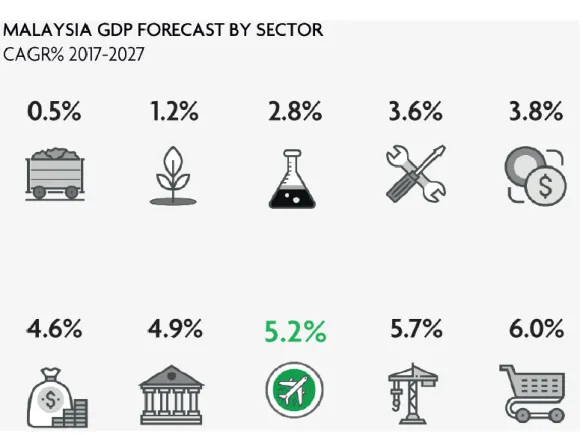
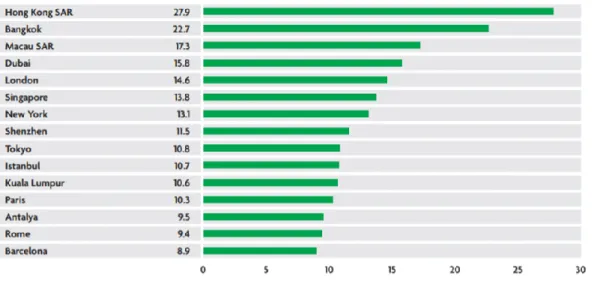
This study was conducted to investigate the factors influencing experience satisfaction and behavioral intentions in urban tourism in Kuala Lumpur. Kuala Lumpur ranks 7th in the world in terms of arrivals of international visitors in the year 2017 (World Travel & Tourism Council, 2018). It is predicted that tourism in Kuala Lumpur will generate huge revenues in the year 2027.
Kuala Lumpur City Hall (CHKL) aims to turn Kuala Lumpur into an international tourism destination (Kuala Lumpur City Hall, n.d.).
Research Problem
In addition, studies on urban tourism in Kuala Lumpur examine only a few independent variables such as walkability (Ujung & Muslim, 2014) and perception of safety and security and threat perception by at-risk groups (Amir et al., 2015). There is a need for studies that are more comprehensive and examine multiple independent variables in one study. Finally, Malaysia has failed to meet its tourist arrivals target for 8 consecutive years and from 2016 to 2018, the number of tourist arrivals to Malaysia has decreased (Malaysia Tourism Promotion Board, 2018a).
Thus, there is a need to have a study that helps to find ways to solve this problem.
Research Objectives
- General Objectives
- Specific Objectives
Research Questions
- General Research Questions
- Specific Research Questions
Hypotheses of the Study
Significance of the Study
More tourists and more visits by tourists to Kuala Lumpur will occur and this will increase the income of these businesses. Next, this study can help Kuala Lumpur to gain a higher position in the world in terms of visitor arrivals. Kuala Lumpur ranked 7th in the world in terms of visitor arrivals in the year 2017 (World Travel & Tourism Council, 2018).
This study can help achieve this by identifying the factors that would increase tourists' return visits and attract more tourists to Kuala Lumpur.
Chapter Layout
Conclusion
LITERATURE REVIEW
Introduction
Overview of Tourism Industry
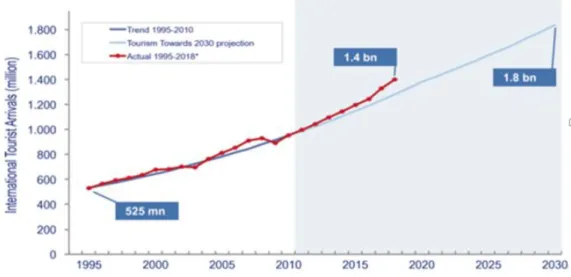
International tourist arrivals reached 1.4 billion in the year 2018 with a growth of 6% as referred to figure 2.2 (World Tourism Organisation, 2019). It is predicted that international tourist arrivals will increase in the future and reach 1.8 billion in the year 2030 as referred to figure 2.4 (World Tourism Organisation, 2019). It is predicted that the international tourist arrivals will hit 1.4 billion in the year 2020, but the target of 1.4 billion international tourist arrivals was reached in the year 2018 as referred to figure 2.4 (Davitt, 2019).
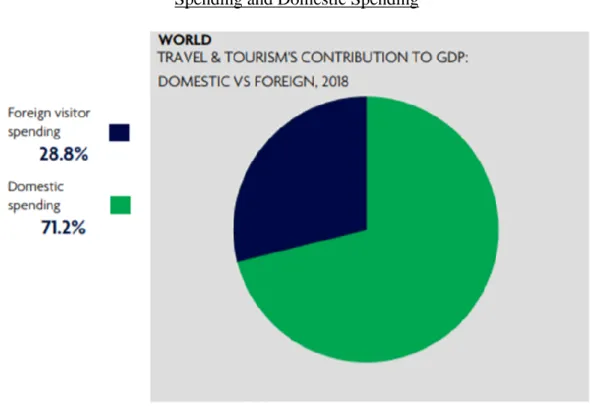
In 2018, spending by domestic travelers accounted for 71.2% of tourism's contribution to world GDP compared to 28.8% of spending by foreign travelers as referenced in Figure 2.5 (World Tourism & Travel Council, 2019b).

Overview of Tourism Industry in Malaysia
However, the increase in revenue in 2018 compared to 2017 is small and even a small decrease (0.4%) in terms of tourist arrivals to Malaysia as indicated in Figure 1.6 (Malaysia Tourism Promotion Board, 2018a). Shopping is the largest element of the tourism product, which recorded 26.8 billion ringgit in 2017 (Bernama, 2018). Tourism is listed as one of the priority sectors in the 11th Malaysia Plan (Economic Planning Unit, Prime Minister's Department, Malaysia, 2015).
The campaign aims to bring 30 million international tourists and 100 billion ringgit in tourism receipts to Malaysia by the year 2020 (NST Business, 2019).

Overview of Urban Tourism
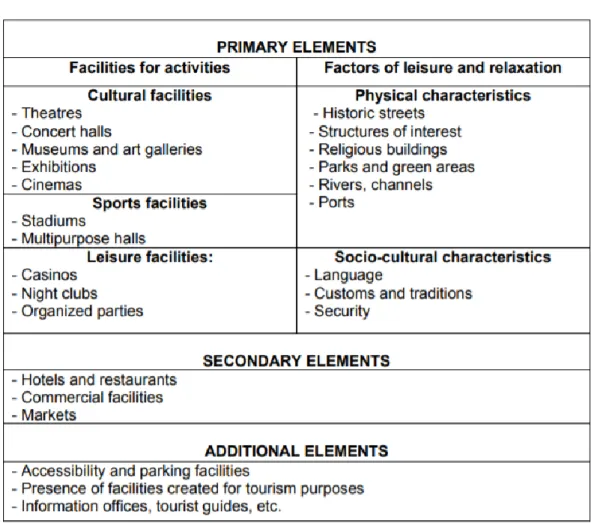
Urban tourism attractions are places such as museums, city services, events, transportation, and architecture (Ariani, 2018, March). Urban tourism tourists are interested in learning about the history, art, culture and lifestyle of the inhabitants of the city they visit (Ariani, 2018, March). Thus, urban tourism is not well defined and vaguely differentiated with little development of a systematic structural understanding.
Many studies on urban tourism are old and probably outdated (Jansen-Verbeke & Van Rekom (1996).
Overview of Tourist Destination–Kuala Lumpur…
Tourism is important to the economy of Kuala Lumpur as it creates job opportunities, business opportunities and increases income (Ujang & Muslim, 2014). The focus of tourism development in Kuala Lumpur will be on infrastructure services, planning of activities and programs and delivery of infrastructure services (Kuala Lumpur Structure Plan 2020 as cited in Ujang & Muslim, 2014). In the action plans, there will be a joint venture with airlines such as Philippines Airlines to Kuala Lumpur via Manila and Turkish Airlines to Kuala Lumpur via Istanbul.
There were many programs and events held by the government in Kuala Lumpur to promote tourism in the year 2018. Ecotourism/City/Heritage/Food/Adventure/Culture, targeting bloggers, magazines, TV, radio, social influencers from America, Europe, Oceania, ASEAN and Asia & 1 local media (Malaysia Tourism Promotion Board, 2018b). City Hall Kuala Lumpur (CHKL) aims to transform Kuala Lumpur into an attractive international tourist destination (City Hall Kuala Lumpur, n.d.).
Example of policy adopted by CHKL is to coordinate with the Kuala Lumpur Tourism Action Council with the private sector to promote Kuala Lumpur as an international shopping, dining and entertainment destination (Kuala Lumpur City Hall, n.d.).
Past Research on Tourism
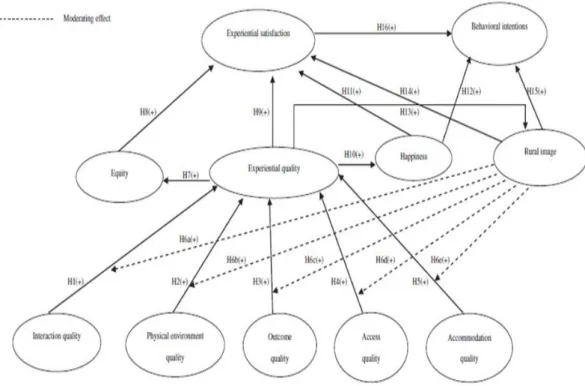
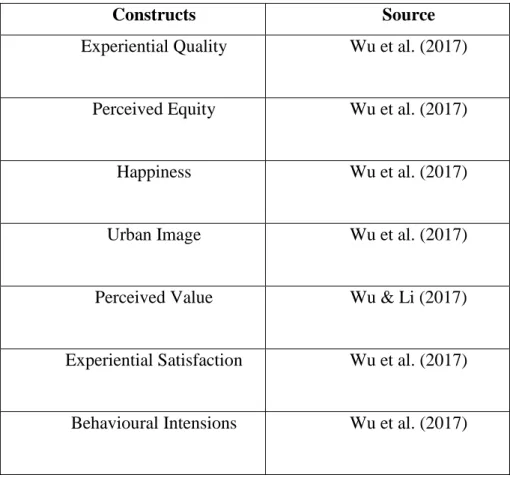
A Study of Experiential Quality, Equity, Happiness, Rural Image, Experiential Satisfaction and Behavioral Intentions for China's Rural Tourism Industry. Wu and Li (2017) developed a conceptual framework to study experiential quality, perceived value, heritage image, experiential satisfaction and behavioral intentions of heritage tourists. The framework proposes that perceptions of interaction quality, physical environment quality, outcome quality, and access quality influence experiential quality.
In addition, perception of experience quality affects experience satisfaction and perceived value, which in turn affects experience satisfaction. A study of experience quality, perceived value, heritage image, experience satisfaction and behavioral intentions for heritage tourists.
Literature Review
- Experiential Satisfaction
- Experiential Quality
- Perceived Equity
- Happiness
- Urban Image
- Perceived Value
Experiential satisfaction is the result of customers' judgments about the content provided by service providers (Kao et al., 2008). Wu and Li (2017) suggested that experiential quality affects experiential satisfaction. 2018) found that experiential satisfaction influences behavioral intentions. Lemke, Clark and Wilson (2011) defined experiential quality as tourists' perceived valuation of their experiences.
Crompton and Love (1995) argued that experience quality consists of the features provided by a supplier and those made available by the tourist. Service quality focuses on the point of view of the service the company provides to its travelers, while on the other hand, experience quality is the assessment of tourists about the perceived service quality (Lai & Cheng, 2013). Service quality is service effectiveness in terms of characteristics, while experience quality is the psychological outcome after involvement in tourism activities (Chen & Chen, 2010; MacKay & Crompton 1988).
Assessment of experience quality varies across different individuals and based on each tourist's own internal feeling during the experience (Chen & . Chen, 2010). Söderlund (1998) suggested that providing high quality experiences creates sustainable competitive advantages that will satisfy customers. 2008) found that fun, immersion, surprise, participation are the important elements of experience quality for theme parks. Wu and Li (2017) found that experience quality for heritage tourists is influenced by access quality, outcome quality, physical environment quality and interaction quality. 2017) found that experience quality for rural tourists is influenced by outcome quality, access quality and accommodation quality.
Ritchie (1996) developed a scale to measure experience quality that relates to hedonism, recognition, involvement and peace of mind. Pareigis, Edvardsson and Enquist (2011) showed that experience quality consists of the physical environment, contact personnel, provider processes, tourism processes, other tourists and the wider environment.
Proposed Conceptual Framework
Hypotheses Development
Positive emotional experiences due to external stimuli would produce positive feelings that cause experiential satisfaction (Kao et al found that higher emotional experiences will cause higher experiential satisfaction. Emotions during service consumption are important predictors of satisfaction (Bagozzi, Gopinath, & Nyer 1999; Oliver, Rust, & Varki b) found that emotional predictors of satisfaction show a significant study. that perceived value positively affects experiential satisfaction (Kao et al., 200 8; Cronin et al., 2000; Petrick & Backman, 2002).
Wu and Li (2017) found that perceived value has a positive effect on the experiential satisfaction of heritage tourists. 2009) found that value had a significant effect on the satisfaction of golfing travelers. Wu, Li, and Li (2016) found that perceived value is a significant predictor of patient satisfaction for medical tourists. The Relationship between Experiential Satisfaction and Behavioral Intentions Wu and Li (2017) found that experiential satisfaction has a positive effect on the behavioral intentions of heritage tourists in Macau, which are intentions to recommend others, say positive things about the place, and revisit the place in the future. 2017) finds that experiential satisfaction has a positive effect on behavioral intentions in rural tourism.
2018) found that experiential satisfaction has a positive effect on the intention to revisit an amusement park. 2008) found that experiential satisfaction influences behavioral intentions in a theme park. Juaneda (1996) found that travelers' positive views of their vacation can increase the likelihood of behavioral intention.
Conclusion
METHODOLOGY
Introduction
Research Design
- Quantitative Research
Referring to Table 4.9, hypothesis 5 is supported as the observed value has a positive beta value of 0.334, implying a positive relationship between urban image and experience satisfaction. When the tourist's experience in Kuala Lumpur is pleasant, educational, educational and superior to other cities, the tourists will experience experience satisfaction. This finding is also consistent with Wu et al. 2017) who found that experience quality has a significant positive effect on the experience satisfaction of rural tourists.
The finding of this study disagrees with Wu et al. 2017) who found that perceived equity has a significant positive effect on the experiential satisfaction of rural tourists. The happier tourists are in Kuala Lumpur, the higher the experiential satisfaction of tourists in Kuala Lumpur. This finding of this study is supported by Wu et al. 2017) who found that happiness has a significant positive effect on the experiential satisfaction of rural tourists.
The higher the urban image perceived by the tourists in Kuala Lumpur, the higher the experiential satisfaction of the tourists in Kuala Lumpur. This finding of this study is supported by Wu et al. 2017) who found that rural image has a positive significant effect on rural tourists' experience satisfaction. The higher the tourists' perceived value in Kuala Lumpur, the higher the experiential satisfaction of the tourists in Kuala Lumpur.
The higher the experience satisfaction of the tourists in Kuala Lumpur, the more likely tourists have behavioral intentions. I am conducting my graduate research on "Factors Influencing Experience Satisfaction and Behavioral Intentions in Urban Tourism in Kuala Lumpur".
Questionnaire
Descriptive Analysis
Reliability Analysis
Multiple Regression Analysis
Simple Linear Regression Analysis