Chinese Aid in Southeast Asia before the Belt and Road Initiative:
Solidarity or Business as Usual?
Lermie Shayne GARCIA
Instructor, Ateneo de Manila University
A b s t r a c t A b s t r a c tA b s t r a c t A b s t r a c t A b s t r a c t
This article analyzes the nature of China-aided and -funded projects before the One Belt, One Road in three Southeast Asian countries whose relations with Beijing vary: a “sibling” (Cambodia), a “friend”
(Myanmar), and a “partner” (Philippines). It argues that although China claims its aid is different from that of traditional donors, framing it as a case of South-South Cooperation, the study shows the detrimental motives and effects of these projects on the three Southeast Asian countries. Using six case studies and echoing other critiques, the author explores how China’s aid is motivated not by solidarity under South- South Cooperation, but by a constant search for sources (funds from debt) and resources (natural resources) for business interests as a market- economy. Although the case studies preceded the launch of China’s One Belt One Road Initiative (OBOR) in 2013 which was eventually renamed into Belt and Road Initiative (BRI) in 2016, the study provides historical, albeit recent, precedents/antecedents to China’s current development cooperation strategies when it became the world’s second largest economy. Overall, the study demonstrates that although China’s aid has differed in some aspects from that of traditional donors, it has developed relationships between Cambodia, Myanmar, and the Philippines which cannot be considered genuine South-South Cooperation.
Keywords: South-South Cooperation, Southeast Asia-China relations, development cooperation, BRI, One Belt One Road
Introduction IntroductionIntroduction IntroductionIntroduction
China’s role in South-South Cooperation (SSC) over the last decades has become a vital discussion point in “development cooperation” between the “developed” and the “developing” South.1 A number of observers have interpreted such cooperation in many ways. Some see China’s SSC as an “opportunity” for developing countries in the South (Foster et al.
2009; Malhotra 2010; Cheng et al. 2012) while others argue that Beijing’s SSC merely replicates existing unequal relations between the North and the South (Lum et al. 2009). Big countries team up with the weakest states and highlight their shared qualities, a strategy that manifests the former’s ambitions to lead the Global South (Chidaushe 2010). On the surface, it seems like an act of solidarity. But upon further analysis, it is the behavior of an emerging imperialist power.
Hughes (2009, 13) asserts that the “nature of the state in the South has changed radically since the heyday of anticolonial nationalism.” China is said to behave more and more like the colonialists of the past (Strangio 2012),
“pressured” perhaps by globalization to adopt neoliberal capitalism (Dirlik 2007, 17). These statements, along with Samir Amin’s notion of “capitalism without capitalists”2 provide the context of the paper’s analysis. Interestingly, while the emerging donors are reluctant to be termed as such, they simply reproduce traditional donor-recipient hierarchies—concealed under the umbrella of development cooperation within the Global South.
In this paper, I inquire whether China’s development assistance into Southeast Asia before 2013 is a form of SSC or a self-serving move to expand its economy. This I do by examining the nature and effects of China’s projects in three developing countries, namely Cambodia, Myanmar, and the Philippines, and demonstrate how such projects fuel China’s capitalist development and expansion into further markets. The case studies preceded the launch of China’s One Belt One Road (OBOR) Initiative in 2013. However, updates since were also included. In choosing pre-2013 projects, the paper offers us an opportunity to assess China’s development assistance prior to the launch of OBOR in 2013, provide
historical precedents/antecedents thereto, and help further research identify and account for trends, differences, and continuities.
I chose Cambodia, Myanmar, and the Philippines because, as I argue, they represent China’s three different types of relationships in the region.
Cambodia has been extremely dependent on foreign aid and has had close historical relations with China, ties that I liken to that between “siblings.”
Myanmar is in transition from a military state to a modern democracy. China became Myanmar’s major aid provider after Japan suspended its Official Development Assistance (ODA) following the military coup in 1988 (Kudo 2006). I classify their relationship as a “friendship.” Philippines-China relations, meanwhile, has been an on-and-off strategic partnership. All three countries have a history of extreme rent-seeking. This paper demonstrates that despite the differences between being a “friend,” a “sibling,” or a “partner,” China is consistently business-oriented, and the projects it funds pose negative social outcomes for the countries that receive its aid.
Understanding China’s Place in the South Understanding China’s Place in the SouthUnderstanding China’s Place in the South Understanding China’s Place in the South Understanding China’s Place in the South
While it may be obvious to some that Chinese aid (or development assistance) in Southeast Asia is primarily a way to obtain hegemony in the region, the question of whether it is SSC is relevant because China portrays itself and is portrayed as a donor. Indeed, debates on China’s role in the region have given rise to the terms “emerging donor” (IDRC) and “provider of South-South aid” (DAC OECD). China has insisted that it be referred to as a “development partner” on the premise that they, too, are developing: a
“poor country helping the poor,” as stated in Zhou Enlai’s Eight Principles for Economic Aid and Technical Assistance to Other Countries (1964) and the more recent white papers on China’s Foreign Aid in 2011 and 2014.
Sta. Romana (2013) posits that since the 1980s, Deng’s guideline of “keeping a low profile and making due contributions” had set the tone for China’s foreign policy. China projects itself as a “developing country” (low profile)
“yet still providing aid to its fellow developing countries” (make due contributions) [Sta. Romana 2013]. Chinese leaders “enunciate a doctrine
of ‘win-win’ relations” (Kurlantzick 2006, 271) premised on mutual benefit between China and Southeast Asia. For China, this agenda legitimizes Beijing’s inclusion in the Global South.
In contrast, several analysts point out that China’s aid policy has been guided by its own development needs as a huge market (Aquino and Jensen-Joson 2009; Lum et al. 2009). Since China’s high growth rates will eventually stop, as it did in other countries like Japan, it will have to deal with surpluses from overproduction, which the country is expected to export to other countries (Ching 2017; Engst 2017).
One reason why China maintains its identity as a developing country and refuses comparison with traditional donors is that it wants to avoid the possible objection from its own citizens to the huge overseas spending “when money is badly needed at home” (Landingin 2010, 93; see also Lancaster 2007, 2; Grimm et al. 2011, 23). Despite over three decades of rapid economic growth, China’s Gini Coefficient indicates excessive inequality, with “the richest one percent owning more than one-third of the country’s wealth” (Wildau and Mitchell 2016) while the “poorest 25 percent owned less than two percent” (Xie and Jin 2015). Another likely reason is that China does not want to adhere to all the prerequisites of aid-giving, such as environmental issues and human rights considerations.
China’s aid to developing countries started as a type of cooperation primarily framed in solidarity after World War II (Bandung era). The objective then was to advance international Communism and the Maoist model of peasant-based social construction. In the 1970s, the motive of aid shifted to “ensuring regime survival and aligning international assistance with national interest” (Chin and Frolic 2007, 4). However, when China opened its markets, its foreign aid policies also changed accordingly—
from managing politics to servicing the economy (Zuo 2012). Ching (2017, 68) posits that the interests of the capitalists in developing countries are closely tied to the global capitalist system. Today, China’s economic growth dropped to around six to seven percent, and many infrastructure projects have reached saturation point, so the country needs to be creative in finding
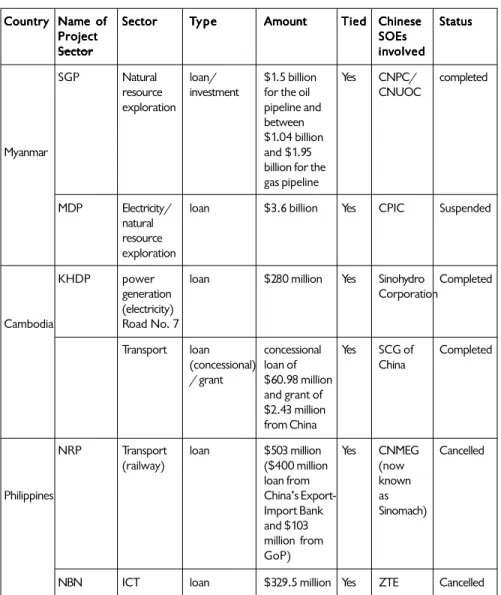
TABLE 1. Summary of Case Studies Country
Country Country Country
Country Name ofName ofName ofName ofName of SectorSectorSectorSectorSector TTTTTypeypeypeypeype AmountAmountAmountAmountAmount TiedTiedTiedTiedTied ChineseChineseChineseChineseChinese StatusStatusStatusStatusStatus Project
Project Project Project
Project SOEsSOEsSOEsSOEsSOEs
Sector Sector Sector Sector
Sector inininininvvvvvolvolvolvolvolvededededed
SGP Natural loan/ $1.5 billion Yes CNPC/ completed
resource investment for the oil CNUOC exploration pipeline and
between
$1.04 billion
Myanmar and $1.95
billion for the gas pipeline
MDP Electricity/ loan $3.6 billion Yes CPIC Suspended natural
resource exploration
KHDP power loan $280 million Yes Sinohydro Completed
generation Corporation
(electricity)
Cambodia Road No. 7
Transport loan concessional Yes SCG of Completed (concessional) loan of China
/ grant $60.98 million and grant of
$2.43 million from China
NRP Transport loan $503 million Yes CNMEG Cancelled
(railway) ($400 million (now
loan from known
Philippines China’s Export- as
Import Bank Sinomach) and $103
million from GoP)
NBN ICT loan $329.5 million Yes ZTE Cancelled
Sources: Banktrack 2016; Grimsditch 2012; International Rivers 2011, Landingin 2010, Ouch et al. 2011, Philippine Center for Investigative Journalism 2007, Urban et al. 2015
ways to fuel its needs by exporting surplus goods and services. To do this, China’s strategy shifted their attention to “developing nations” with
“faltering” relationships with the US or Japan (Kurlantzick 2006, 272).
Noticeably, it is also investing in countries that traditional donors “shy away from” (Urban et al. 2015, 577).
In order to determine whether China’s aid serves SSC or merely its own interests, I analyzed case studies of Chinese-funded projects in three countries. These include the (i) Kamchay Hydroelectric Dam Project (KHDP) and (ii) restoration of Road No. 7 in Cambodia (part of the ASEAN Highway); (iii) Shwe Gas Project (SGP) and (iv) Myitsone Dam Project (MDP) in Myanmar; and (v) NorthRail Project (NRP) and (vi) Philippine National Broadband Network (NBN) in the Philippines.
I chose these case studies based on their scope and prominence, except for Road No. 7, which was selected because among the long list of road projects in Cambodia, it was the only one with a comprehensive study at the time of the research. Moreover, succeeding studies on other road projects confirm its typicality vis-a-vis other China-funded road projects in the country (see Meng 2016). And all these case studies are some of the most expensive, and can both be typical yet exceptional because they are controversial within the recipient countries.
South-South Cooper South-South CooperSouth-South Cooper South-South Cooper
South-South Cooperation: Defation: Defation: Defation: Defation: Def initions and Principlesinitions and Principlesinitions and Principlesinitions and Principlesinitions and Principles South-South Cooperation involves “a multitude of partnerships and cooperation agreements,” making it different from South-South relations on investment, technology transfers, trade, and development cooperation (IBON 2014, 10). Development cooperation, according to the UN High Level Committee on the Review of Technical Cooperation among Developing Countries, was “initiated, organized, and led by developing countries themselves, with governments most often playing the lead role”
(quoted in IBON 2014, 11). Other development actors such as “CSOs, individuals, and private and public institutions” were also involved.
Moreover, there are basic normative principles of SSC evolving in the past decades and are now enshrined in UN Nairobi Outcome Document (2009), namely: “respect for national sovereignty, national ownership and independence, equality, non-conditionality, noninterference in domestic affairs, and mutual benefit;” (Number 11) “mutual accountability and transparency,”
(Number 18) “development effectiveness,” (Number 18) coordination of evidence- and results-based initiatives (Number 18), and “multi-stakeholder approach” (Number 19). The Outcome Document was the final text of the High-Level United Nations Conference on South-South Cooperation in 2009, which recognized the increasing power of SSC. The Nairobi Outcome Document expanded previous documents on SSC since the inception of the Buenos Aires Plan of Action in 1978, which provided the “first internationally recognized framework and guideline for technical cooperation among developing countries” (IBON 2014, 11). The Buenos Aires Plan of Action highlighted the important roles of national governments, regional entities, and UN agencies in supporting and implementing SSC. The Nairobi Outcome Document serves as the standard by which I will evaluate the case studies and determine whether they indicate SSC between China on the one hand, and Myanmar, Cambodia, and the Philippines on the other.
Cambodia: China’s ‘Sibling’
Cambodia: China’s ‘Sibling’
Cambodia: China’s ‘Sibling’
Cambodia: China’s ‘Sibling’
Cambodia: China’s ‘Sibling’
The Cambodian government depicts China as a big old friend, even sibling. In one of Hun Sen’s speeches, he said that
“The People’s Republic of China is our special development partner…
very close friend and can be considered as sibling of Cambodia because… China help us timely responding to our requests and need without complicated conditions.” (Ear 2013, 28)
Cambodia was the first communist nation—under the Khmer Rouge—to receive “extensive technical and material support” from China (Ciorciari 2014, 235). Since then, the historically good relations between the two countries has become a permanent feature of Cambodia’s
economic landscape. In return, Cambodia continues to support China in various ways, siding with Beijing during ASEAN meetings on various issues.
The UN-sponsored elections in 1993, which cost about $1.5 billion, along with $5 billion in assistance, made Cambodia one of the most aid- dependent countries in the world at that time. It is “a forced experiment in aid dependence” because as a postconflict state, it had no choice but to accept aid and has become a “laboratory for donor trial–and–error experiments” (Ear 2013, 10). Foreign aid has been pouring into the country since the ceasefire between Cambodia and Vietnam in 1991. After the armed conflict in 1997, when traditional donors sanctioned Cambodia with an aid embargo, China granted the country $2.8 million in military assistance and has since then supplied various types of military logistical support and training. China is Cambodia’s “biggest source of military aid” today (Heng 2012, 67).
Over the recent years, the Cambodian government has warmly embraced Chinese aid and investment since it has been “increasingly frustrated with
‘traditional’ donors and their perceived conditionalities” (Grimsditch 2012, 4).
For the Cambodian Rehabilitation and Development Board/Council for Development of Cambodia (CRDB/CDC), their government’s engagement with nontraditional and emerging donors offers additional funds for development projects, often in underfunded sectors. In 2010, China was the second largest aid provider to Cambodia, disbursing $138 million, second only to Japan, which provided $146 million (CRDB/CDC 2011, iv). China, which “traditionally invested heavily in small-scale manufacturing and the garment sector....became a leading investor in natural resources and the energy sectors” (Heng 2012, 60).
This drove away other lenders and donors who imposed complicated restrictions (Burgos and Ear 2010). However, China’s aid came with strings, a fact that became obvious in the 2012 ASEAN meeting where Cambodia served as Chair.
The regional organization failed to come up with an outcome document after receiving a Chinese grant of $39.6 million and a low-interest loan of $31.7 million on the condition that it would not mediate in the dispute over the South China Sea (Yahoo Singapore 2012). The outcome document, or joint communiqué as the ASEAN calls it, would have inevitably tackled issues and resolutions on territorial disputes involving China.
Kamchay Hydroelectric Dam Project
Cambodia has over 11 Chinese-funded dam projects (International Rivers 2012a), including Kamchay Hydroelectric Dam Project (KHDP), its first and largest. It is a 44-year, $280-million Build, Operate, and Transfer (BOT) initiative. Many see it as a “symbol of the increasingly strong ties between Cambodia and China” and was considered as Cambodia’s “single most expensive infrastructure project and the largest foreign investment in the country’s history at the time of its approval” (Grimsditch 2012, 4).
Sinohydro, a Chinese builder, receives revenue for the construction of the dam for the next 40 years.
Ideally, these dams are supposed to provide cheap electricity to more Cambodians since only a “fifth to a quarter of the population of nearly 14.5 million has access” thereto (Markar 2011). These “electrification levels are among the lowest in Southeast Asia,” especially in rural areas, [where]
less than 13 percent of households are connected” (Grimsditch 2012, 4).
In areas with electricity, prices are much higher than in neighboring countries, and the supply can be unreliable. The Cambodian government imports over 40 percent of its electricity from Thailand, Vietnam, and Laos (Grimsditch 2012, 10–11; NGO Forum on Cambodia 2013, 1).
Given the insufficiency of Cambodia’s energy sector, Chinese aid seems generous.
For some analysts, the problem with China’s aid is its conditionality and involves little participation from the people. Malmquist and Sigfridsson (2002, 28) posit that Sinohydro may not be “interested at all in training locals if they can hire competent workers from China.” Moreover, critical groups were not invited, and consultations were poorly done, and were conducted in English (Malmquist and Sigfridsson 2002). In the case of KHPD, Sinohydro financed, planned, and constructed the dam under the Build, Operate and Transfer model, but to this day, the company remains the KHPD’s main operator (International Rivers 2012b). Cambodia was given little option in many aspects of the project.
Although big dams are always “associated with land enclosures for infrastructure development, resettlement, and environmental impacts”
(Siciliano et al. 2016, 4), Cambodia still pushed through with the KHPD project. More than five years since its completion, many of the promised benefits have not materialized; and the conditions prior to the building of the dam only deteriorated (Heng 2012). The cost of generation is rather expensive at 920 Riel per kWh, higher than Sinohydro’s promise of 500–
600 Riel per kWh (Siciliano et al. 2016, 8). Moreover, some houses near the dam do not have electricity because most of the power is transported to Phnom Penh. The dam primarily benefitted populations and industries far from the site (NGO Forum on Cambodia 2013).
Furthermore, the project has altered—for the worse—the lives of the people who used to live on available community resources via farming, handicrafts, and the service sector (Kosal and Chanty 2007, 6). This traditional way of life is no longer feasible because access to the dam site’s surrounding town has been restricted. A road, which the company promised to build in order to facilitate the community’s access to bamboo forests and timber and nontimber products, has not been constructed (NGO Forum on Cambodia 2010, 2; Urban et al. 2015, 582; Siciliano et al. 2016). As a result, people in nearby villages have resorted to travelling on rented trucks or boats about ten kilometers beyond the dam site to collect bamboo for basket making. No resettlements have been offered to date (Urban et al. 2015, 581). Both policy and decision makers have little understanding of the risks and costs of dam construction (Siciliano et al. 2016, 2).
Road No. 7 (part of the ASEAN Highway)
Since 1993, almost all main national roads in Cambodia have been
“built or rehabilitated by foreign donors” (Sato et al. 2010, 6). China funded more than 2,000 kilometers of roads and bridges (Odom and Retka 2017). These include the improvement or rehabilitation of National Road No. 7, a 509-kilometer national highway that runs through Kratie and Stung Treng provinces and connects Skuon in Kompong Cham
province with Veun Sai on the Laos border, then joins Laos’ Route 13 and runs northwards along the Mekong River to Luang Prabang. It is part of the road linkage for ASEAN countries and also completes ASEAN Highway No. 11. The road was “funded by a concessional loan of $60.98 million and grant of $2.43 million” from China (Ouch et al. 2011, 52; see also CRDB/CDC 2012). The agreement stipulated terms of labor, techniques and materials, which represented China’s effort to export more resources in order to sustain its economic growth (Heng 2012, 70). The massive quantity of China’s road projects in Cambodia can also be linked to the former’s aim of reaching the ASEAN market under the One Belt One Road (OBOR) initiative launched in 2013.
As a postconflict state, Cambodia needs to rehabilitate the physical foundations of its economic development. Ear (2013, 64) identified the
“high cost of transport” as a major constraint in Cambodian development, and poor roads surely exacerbate the situation. Road No.7 did help villagers by reducing the duration and cost of traveling to provincial towns and markets, and expanded the accessibility of basic services such as education and healthcare (Ouch et al. 2011). But the negative effects are also substantial, including road accidents, some of which have been attributed to the poor quality of the roads and their unsuitability to Cambodia’s rainy weather (Ouch et al. 2011; Lipes 2012). China’s other road projects received the same criticism. The construction of roads with a thin layer of crushed stone topped with rubberized asphalt has become a common method used by Chinese development companies in Cambodia (Meng 2016). Moreover, the new road has attracted several Chinese companies to invest in the area, usually in plantation and mining businesses, which were granted concessional land from the government, thus affecting cultivated fields and leading to conflict between villagers and the companies (Ouch et al. 2011). Ultimately, China benefits from the project through easier transport of goods and the connection of its business to Southeast Asia. “China’s volume of imports from Cambodia and its volume of exports to Cambodia were $482 million and $3.28 billion, respectively”
(ASEAN China Centre 2015, 2).
My My My My
Myanmar: China’s Lanmar: China’s Lanmar: China’s Lanmar: China’s Longtime Friendanmar: China’s Longtime Friendongtime Friendongtime Friendongtime Friend
Myanmar has had a low-key foreign policy throughout its history; it is the most “assiduous practitioner of nonalignment in international relations” (SarDesai 1994, 222). The country receives foreign assistance with caution, not wanting to compromise its independence and neutrality.
For a time, Myanmar refused any foreign aid, which they deemed
“detrimental to their political, economic and strategic freedom” (Tin Maung Than 2007, 81). Only after independence did the country grow primarily concerned and seek to maintain cordial relations with its neighbors, particularly China and India.
Despite the many efforts of US and Japan, no other country can surpass the reach and influence of Chinese investment in Myanmar; it will take years before Japan or any other foreign nation can “catch up” (Song 2013).
Ikegami (2009, 26) notes that Myanmar’s important role in China’s affairs is rooted in two things. First, Myanmar strategically offers an inland route to the Indian Ocean and an instant access to the Malacca Straits. Secondly, Myanmar possesses relatively abundant natural resources such as oil, gas, and uranium. China also realized the military necessity of making Myanmar a “gateway or back door” (Fan 2011, 44) to other countries, since Myanmar bridges the Indian Ocean with the Pacific Ocean and brings together the three markets of China, Southeast Asia, and South Asia. In effect, Myanmar provides China access not only to Southeast Asia’s market of more than 625 million but also to India’s 1.3 billion (United Nations Population Division 2017), along with other countries in South Asia.
Because of its importance, China and India, along with other neighbors, are extra careful in dealing with Myanmar whenever Western countries call for economic sanctions against it. An isolated Myanmar would be counterproductive (Taylor 2009, 468). Since 1988, China in particular has made it clear that it would not directly interfere in Myanmar’s domestic affairs (Taylor 2009, 469). This was the time when traditional donors imposed an ODA embargo on the country, which had serious impact on its entire economy.
Consequently, China replaced Japan as major donor when the latter suspended
its ODA to Myanmar after the military coup in 1988. This laid the ground towards friendlier relations between China and Myanmar.
Rogers (2012) refers to Myanmar as a “nation at the crossroads,”
acknowledging its transition to democracy and the challenge it faces: choose which country to ally with. Both the US and Japan have promised important financial contributions to the country. However, since foreign aid from the Organisation of Economic Co-operation and Development (OECD) traditionally comes with conditions, China appears as a better option because Beijing does not attach moral strings to its aid. China in this case needs to counter the financial gains of Japan and US but also their soft power.
Shwe Gas Project (SGP)
Myanmar’s vast oil resources, which is “only slightly less than Indonesia[‘s]” have contributed to the country’s economy since it started exporting oil in 1853 (Sinha 2009; Holland 2014). China, on the other hand, has been importing oil since an energy shortage in the early 1990s.
And in the early 2000s, it overtook Japan as the second largest oil consumer after the US; its “energy consumption rose by 60 percent,”
almost half of the growth of the rest of the world (Reilly 2013, 146).
China’s emergence as a market economy coincides with a rise in oil demand. It is projected to import as much as 130 billion cm of natural gas in 2020, accounting for almost 70 percent of its total natural gas consumption (Zhao 2008, 8; Sinha 2009, 2). It is thus imperative for China to find ways to secure its oil supply.
The Shwe Gas Project (SGP) helps satisfy this objective; it is Myanmar’s
“largest gas development initiative in terms of gas reserves, potential revenue, and the number of people that could adversely be affected” (Earth Rights 2006). This project entails exploration of underwater natural gas deposits off the coast of Myanmar’s Arakan State, and the construction of dual pipelines that will transport oil and gas, along with energy imports from Africa and West Asia, to China. The oil pipeline costs $1.5 billion, while the gas pipeline amounts to $1.04 billion. The Memorandum of Understanding
in June 2008 between the China National Petroleum Corporation (CNPC) and Shwe Gas consortium states that the Chinese government will loan an additional $83 million to Myanmar to facilitate the development of its oil resources (Arakan Oil Watch 2009). The natural gas pipeline became operational in 2013; the oil pipeline in 2014.
This project offers an alternative supply of oil from West Asia and Africa in the event of a blockade in the Malacca Straits, through which 80 percent of China’s oil imports currently pass (Kuppuswamy 2011). As a strategic project for China’s future needs as a huge economy, the pipeline will facilitate access to Myanmar’s ports and overland transportation routes, which are vital and strategic security assets for China (Sinha 2009, 1). For Myanmar, the project provides a revenue of as much as $13.81 million as right-of-way payment and $1 per ton of crude oil per year as transit fees (SEAGP & SEAOP 2016, 2).
However, the SGP has been tainted with many issues from conception to completion and operation. For the exploration activities alone, authorities seized, from local residents, around 300 hand-dug oil wells and over 200 acres of farmland (Arakan Oil Watch 2008). In effect, villagers were forced to sell their lands out of fear that they would not get anything at all. The compensation for the loss of land and livelihood was set at K40,000 (approximately $31), but several reports indicate that township officials took a quarter thereof before the money reached local residents (Arakan Oil Watch 2009, 3–4). In most instances, even though compensation was received, it was still not enough to buy new land. Even worse, “key parts” in the land agreements given to villagers were “printed only in Chinese” (Shwe Gas Movement 2013, 17). Workers were not being paid by the Indian company hired by a Chinese organization (Narinjara 2012). Farmers who lost their livelihood beacause of land confiscation were promised jobs, but did not receive any (Tin Maungmaung Than 2015). They found it difficult to find new work without support from either China or their own government.
Civil society groups opposed the project. Some NGOs such as the Arakan Rivers Network and Shwe Gas Movement worry that the income from the SGP will be used not to improve the lives of the people but simply to expand and modernize Myanmar’s already powerful military that oppresses the people of Arakan state in particular and Myanmar in general. Despite these concerns, China continued with the project.
Myitsone Dam Project
China has a long history of developing large-scale hydropower projects both at home and abroad. Of the 308 dam projects in 70 countries, 55 can be found in Myanmar (International Rivers 2012b), one of which the Myitsone Dam Project (MDP), which was expected to cost $3.6 billion.
It is part of a planned seven-dam project along the Irrawaddy River, a
$20-billion Chinese investment. Under the terms of the contractual agreement, China would operate the dams for 50 years, and generate revenue from the sale of electricity (International Rivers 2012b, 32).
The MDP aims to provide Myanmar with electricity, which only a quarter of the population has access to. Just like SGP, the MDP also seeks to profit from energy exports. This revenue will come from the build-operate- transfer (BOT) program of the project which will transmit 90 percent of the electricity produced at the MDP to the China Southern Power Grid via the latter’s “subsidiary,” the Yunnan Power Grid Company (Zuo 2012, 2). When the electricity is eventually transmitted to China, Myanmar will receive about 20 percent of the revenue, or $500 million annually, while China will receive
“70 percent of the annual profits and the remaining 10 percent will be distributed as brokerage fees” (International Rivers 2011).
The MDP has had an enormous impact on Myanmar in various areas such as human rights, livelihood, environment, and culture. Since the MDP is also located in Kachin state, which was long under the control of separatists, the project exacerbates the long-standing conflict between the military government and the ethnic Kachin people, 90 percent of whom oppose the dam (International Rivers 2012b, 33). Environmentalists,
on the other hand, oppose the project because it is located 37 kilometers away from Myitkyina, the capital of Kachin State—an area widely recognized for its ecological value and considered one of the world’s eight biodiversity hotspots (International Rivers 2011). Since the MDP lies 100 kilometers from the Sagaing Fault line, an earthquake can trigger flooding downstream (Zuo 2012, 3). Indeed, all over the world, “many of the most disputed hydropower dam projects” have been built, or are proposed to be built, in “ecologically sensitive environments” (Nordensvard, Urban, and Mang 2015, 248) and thus required prior assessments. Moreover, the $25 million that China allotted for the relocation site of affected villagers failed to provide livelihood commensurate to the losses because of the construction (Motlagh 2012).
Furthermore, the MDP also indirectly contributed to a rise in crime, particularly against women.According to the Kachin Development Networking Group (n.d.), women are particularly susceptible to rape because of militarization. The Kachin Women’s Association of Thailand documented 32 cases of rape by Burmese Army troops since the fighting began between them and the Kachin Independence Organization.
(International Rivers 2011). In addition, many allege that the project was tainted by corruption, accusing Myanmar’s Vice President Tin Aung Myint Oo of pocketing a sizeable chunk of the commission from the controversial
$3.6-billion project in exchange for his resignation (Kachin News 2012).
Also,“sources close to the government” say Tin Aung Myint Oo claimed around “$300 million in official and unofficial commission payments,”
which included “three percent of the commission” from the MDP (Kachin News 2012). Despite these problems, China continued to develop the project. The construction of the base of the dam was also likely rushed so that it could be completed before the transition to a new government and before “environmental groups” could protest (Clapp 2015). However, the project has been suspended since 2011 due to local and international opposition. Eager to continue, the company released a statement promoting the dam and its supposed wondrous contributions to local livelihood and development (Yun Sun 2014).
Philippines: An On-and-Of Philippines: An On-and-OfPhilippines: An On-and-Of Philippines: An On-and-Of
Philippines: An On-and-Of f Pf Pf Pf Pf Pararararar tnertnertnertnertner
China-Philippines relations on the whole has been on an on-and- off basis, depending on the Philippine president and on Philippine domestic interests (Baviera 2014). When the Chinese Communist Party took control in 1949, commercial relations with the Philippines was suspended (Lim 1999). As a staunch US ally, the Philippine government made a series of anti-China measures as it developed closer relations with Taiwan and strengthened relations with the US (Lim 1999). It was not until the Marcos administration that relations with China improved, due mainly to concerns such as “expanding trade partners in order to reduce dependence on traditional markets” and security issues (Baviera 2000, 57).
The closer relationship between the Philippines and China under President Arroyo (2004–2010) arose because of several factors, including
“recurring political crises and the emergence of a highly opportunistic political regime,” as well as the diminishing US influence and “falling ODA contributions” (Reid 2011, 43). The Chinese pledge of $2 billion in loans each year to the Philippines from 2007 to 2009 shocked western donors, with the $200-million pledge of both the US and the ADB and the $1 billion pledge by Japan paling in comparison (Aquino and Jensen- Joson 2009, 23). China was the country’s second largest trading partner (after Japan) in 2014, with total trade worth $18.337 billion or 14.3 percent of the total (Philippine Statistics Authority 2015). The relationship between the Philippines and China during the time of then President Benigno Aquino (2010–2016) changed dramatically, not least because of rising tensions in the West Philippine Sea, and Manila’s filing for arbitration in the Hague in January 2013. Furthermore, China received much criticism after the onslaught of Supertyphoon Yolanda (Haiyan) in 2013 because it gave “only” $1.8 million to the Philippines, much less than furniture giant Ikea’s $2.75 million and Indonesia’s $2 million (ABS-CBN Investigative Research Group 2016).
The Duterte administration, however, has offered an even more promising state of relations; the era has been branded as a “springtime”
for Philippines-China relations, attributable to Duterte’s “willingness to downplay” the territorial disputes in the South China Sea (Coym 2016).
Duterte returned from his first trip to China with “bilateral agreements”
amounting to $13.5 billion and “low-interest loans worth $9 billion” (Coym 2016). However, a think tank advised the Philippines to be “wary of Beijing-funded projects in order to avoid falling into the same debt trap”
that has “bedevilled” other countries (Velasco 2017). Historically, foreign aid to the Philippines has been characterized generally by high-profile cases of corruption, lack of transparency, and rent-seeking behavior (Rotarou and Ueta 2010, 17). The estimated cost of wasted loans amounted to 30 percent of the loan (Yokohama 1990 quoted in Rotarou and Ueta 2010, 9).
Overall, the perceived threat of the US towards China, alongside the latter’s position both a regional and a global player in international politics and economy makes the Philippines a vital element in realizing China’s interest in the region (see Heydarian 2017).
NorthRail Project (NRP)
Unlike other countries whose main international airports are located far from the capital, the Philippines’ Ninoy Aquino International Airport is found in one of the busiest areas of Metro Manila and lacks space for expansion. The main objective of the NorthRail Project (NRP) was to shift air traffic out of Manila into a larger area and into an airport that could expand further. However, the NRP was cancelled due to corruption issues.
At any rate, the NRP would have involved building a world-class railway that can travel at 100 to 130 kph and connect Central and Northern Luzon to Metro Manila. It was to be completed via a joint venture among the China National Machinery and Equipment Group or CNMEC (now known as Sinomach) for the design-build contract, Systra-ESCA-SPI Joint Venture for consultancy, and the National Labor Relations Commission (NLRC) as a sponsoring agency. The projected cost was $503 million, $400
million of which was financed through loans from China’s Export-Import Bank, and $103 million in counterpart funds from the Philippine government. The terms—at three percent interest, 20 years to pay, inclusive of a five-year grace period—are more desirable than domestic commercial loans or the Spanish loan previously offered for the NRP (UP Law Center 2005, 19).
The many issues that surrounded the NRP contributed to its eventual termination. Instead of adhering to mandatory procurement requirements, CNMEC was awarded the contract without “competitive public bidding”
(UP Law Center 2005, 4–5). The NRP “lacked experienced rail engineers and did not even have a proper office” (Landingin 2010, 89). Moreover, there were plans to apply Chinese engineering standards, which would have superseded the Philippines’ (UP Law Center 2005, 2). CNMEC also asked the “government for an additional $290 million for the first phase of the NRP, the 32-kilometer stretch from Caloocan (in northwestern Metro Manila) to Malolos (Bulacan province, north of Manila), despite the fact that construction had not yet started four years after the project”
began (Senate of the Philippines 2008).
The promise of easier, cheaper, and faster transportation of people and goods went unfulfilled. The project displaced the poor settlers along the railways; their homes were demolished, mostly without free and decent resettlement. The government justified the hurried demolitions as a way to remove the people from “danger zones,” and those ‘lucky’ enough to get relocated found themselves languishing in what they came to call “death zones” (see Freedom from Debt Coalition 2008). Landingin (2010, 88) refers to their predicament as a “tragic tale of what happens when cheap Chinese aid money hooks up with weak governance in a borrowing country.”
National Broadband Network (NBN)
The Philippine National Broadband Network (NBN) was a $329.5- million project intended to build a broadband network “linking 2,295
national offices and 24,549 barangay and municipal offices of the Philippine government into a single broadband network” (Baviera 2012, 19). The contract price of almost $329.5 million included $194 million for the equipment, $118.61 million for “engineering services,” $14.87 million for
“managed services,” and $1.95 million for “training” (Philippine Center for Investigative Journalism 2007). There were plans to expand the project so that it could link up with public education infrastructure and grant students and schools better Internet access. This, too, was plagued with many controversies on both sides.
The Committee on Accountability of Public Officers and Investigations (2009, 4) reported that this period coincided with the 2007 elections in the Philippines. The NBN was tainted by allegations that certain people were bribed to facilitate the project’s approval. Bahague (2007) states that feasibility studies for such a huge information and technology project “usually take more than a year,” but those for the NBN only took a month. Consequently, many officials involved in the project were sued because of alleged corruption, except then President Gloria Macapagal Arroyo due to her immunity. ZTE was forced to issue a press statement that there was “complete transparency in the proposal, evaluation, and approval of ZTE’s application for the Philippines NBN contract” (Committee on Accountability of Public Officers and Investigations 2009, 32). Their reputation was at stake and the allegations might harm its membership application in 2007 to the UN Global Compact, which obligates the company to stay “committed” to a vision of a balanced and sustainable development in the social, environmental and economic spheres.
Notably, during the time of NBN-ZTE deal, aid “began flowing” to Manila, which “offered China a deal to jointly explore oil in the South China Sea, including in some waters designated as Philippine territory under the United Nations’ Convention on the Law of the Sea” (Hookway 2012).
Discussion: China’s Aid and Business Interests Discussion: China’s Aid and Business InterestsDiscussion: China’s Aid and Business Interests Discussion: China’s Aid and Business Interests Discussion: China’s Aid and Business Interests
As the case studies clearly show, Chinese aid (or development assistance)—given or pledged to Cambodia, Myanmar and the Philippines—does not fulfill most of the criteria given under the Nairobi Outcome Document: respect for national sovereignty, national ownership and independence, equality, nonconditionality, noninterference in domestic affairs, and mutual benefit; and operational principles of mutual accountability and transparency; development effectiveness; coordination of evidence- and results-based initiatives; and multi-stakeholder approach.
Nonconditionality and Mutual Benefit
First, nonconditionality and mutual benefit are missing in China’s aid framework. It is important to note that the six case studies are loans, not grants, which the recipient countries need to pay back.3 Therefore, China has provided development assistance not because it wants to share best practices with developing countries but because it wants to sell its products and services abroad. Chinese aid lacks the spirit of mutual benefit because it was not based on technical cooperation but on purely business interests. This results in debt financing for the recipients (Cambodia, Myanmar, and the Philippines) and provides steady income for the provider (China) in the future.
Apart from being loans, Chinese aid violates nonconditionality through Beijing’s requirement that all project-related materials and services be procured from Chinese corporations—a major criticism leveled against even traditional donors. In fact, the conditionality of China’s development assistance is higher than other countries’. In most 40 percent of its projects, aid is “completely tied,” meaning that China is responsible for almost all stages of the process, and for providing service and equipment (Information Office of the State Council The People’s Republic of China 2011). In fact, China “almost never transfer[s] any actual money through their loans, and only rarely give aid as cash grants” (Brautigam 2010, 38). Most of the time, aid comes in the form of service and equipment.
Mutual Accountability and Transparency, Coordination of Evidence- and Results-Based Initiatives, and Multi-Stakeholder Approach
China-funded projects do not adhere to a multi-stakeholder approach because they are operated by state-owned enterprises (SOEs).
On the one hand, SOEs could provide countries cheaper means to acquire infrastructure, which can be treated almost like an equivalent to aid and is concessional in character. On the other hand, since China’s aid is delivered not through development agencies but through Export–
Import Bank, the focal point will always be business rather than development (Foster et al. 2009, 7–8). With the establishment of the Asia Infrastructure Investment Bank (AIIB) in 2014, China can legitimize the capacity of Chinese SOEs to deliver infrastructure projects at par with the terms of the World Bank (Chow 2016, 1294).
Furthermore, the fact that SOEs manage the projects means that they primarily involve negotiations between governments, thus alienating people from the grassroots from the whole process. The lack of knowledge and consultation with affected residents also shows a deficiency in transparency. The devastating impacts on ordinary people reveal a lack of development effectiveness; and the absence of alternatives and remedies for the displaced communities demonstrate little accountability of China to the governments—and the citizens—of the three countries.
Development Effectiveness
Chinese-funded projects do not benefit but actually harm the people of the recipient countries. The lack of development effectiveness aggravated an already impoverished situation before the projects even began, or during or after they were completed. They involved corruption, massive displacement, and outright exploitation. China, regardless of the type of relation it has with the three countries, only looks after its own needs for both natural resources and markets, just like any other capitalist, profit-oriented nation.
Equality, National Ownership, and Independence
There is little equality, national ownership, and independence here along the lines of South-South Cooperation (SSC). Chinese development assistance is primarily about Beijing’s interests. Instead of strengthening cooperation with the Global South in the spirit of solidarity, China, given the devastating impact of its aid, is only feeding its imperialistic agenda.
Perlez and Huang (2017) argue that Chinese-funded projects around the world serve as the country’s attempt to “refashion the global economic order, drawing countries and companies more tightly into China’s orbit.”
Quintos (2017, 35) adds that China’s expansion, like other imperialist countries in the past, is meant to open up more "markets and investment opportunities" for its own "capitalist accumulation and growth." For Ching (2017, 69), the Chinese government wants to "emulate" the US to "reap bigger profits," by investing in, among other things, developing countries in Asia, Africa, and Latin America.
Big projects such as railways and dams provide a consistent destination for exports. According to Bosshard (2009, quoted in Urban et al. 2015, 574), “power generation equipment is China’s second largest export earner after electrical appliances.” China’s “Going Out” policy explains the platform of directing “local industries into new markets” and destinations abroad (Yelery 2014, 2). The Mekong region’s proximity to China offers great potential for expansion (Ouch et al. 2011, 3) not only into markets but also of businesses, as exemplified by the Cambodian case study. As transit points, Cambodian roads are part of a larger project called the ASEAN Highway, a means for China to increase its exports to other countries.
Apart from new markets, China is expanding to other countries to develop new sources of raw materials (Engst 2017). “China’s quest for energy resources to fuel its...economic development has prompted it to expand and deepen its relationships with oil- and energy-producing nations around the globe” (Brant 2013, 159). China’s growing energy needs are underscored by its growing role as a global manufacturer and exporter
(Hadebe 2016). This explains its aid to Myanmar. Oil and gas imports through Myanmar reassure China that should any problems arise in the Malacca Strait, its energy paths have a secure, alternative route.5 China exhausted its own resources as a result of its overproduction, driven by the insatiable need for capital expansion. In 2013, 60 percent of China’s ground water has been polluted and the most harmful type of smog routinely had “40 times the maximum level allowed by the World Health Organization” (Ching 2017, 71). Essentially, China’s expansion in, and search for, new markets and resources, along with the construction of military bases, and push for territorial claims, are likely moves to strengthen its position amidst big-power rivalries.
Conclusion ConclusionConclusion Conclusion Conclusion
Whether China’s aid goes to a country it considers a “friend”
(Myanmar), or a “sibling” (Cambodia), or a formal business “partner”
(Philippines)—Chinese aid ultimately serves Chinese business interests. It fuels its own economic and imperialistic growth, not the development needs of its recipient countries. Citizens in these states faced many problems—massive displacement, loss of livelihood, human rights violations, and corruption—arising from the various projects. Therefore, although China’s aid differed in some aspects, the case studies affirm criticisms against China’s aid (Lum et al. 2009;
Brautigam 2010; Chidasushe 2010), for which Beijing offers a relationship which cannot be considered genuine development cooperation based on solidarity.
These projects and today’s BRI will help open and secure greater market access to developing economies, provide alternative funding sources other than traditional public finance,6 and increase the ever-rising global hegemony of Beijing. Unfortunately, China’s transition to a market economy has had inevitable consequences for the region, many of which run counter to the aspirations of developing countries in Southeast Asia.
For countries with weaker governance systems such Myanmar, Cambodia,
and the Philippines, China will have more power to influence, if not dictate their actions (see Hayes 2017).
As China developed economically through its market-oriented reforms in the past decades, one can argue that it can no longer be part of the South, despite there being pockets of poverty in the country. Even so, China may still claim, and exploit, their “pseudo” or quasi inclusion into the Global South to enhance its current and future BRI strategies. More financing projects disguised under ODA may thus flood developing countries in the next few years. In the initial stage of the BRI, it remains unclear whether and to what extent it can benefit developing countries.
However, as the case studies in this paper have shown, such positive impact might be a far-fetched reality.
A AA
AAcknocknocknocknocknowledgmentswledgmentswledgmentswledgmentswledgments
Parts of the research for this article was conducted for the author’s master’s thesis, which analyzed the role of China’s aid in the development of selected Southeast Asian countries using the development effectiveness approach.
N o t e s N o t e s N o t e s N o t e s N o t e s
1 The author does not say as early at this point that China is part of the Global South.
Scholars have defined the term in a multitude of ways. Dirlik (2007) says that it is a
“Bandung for the age of global capitalism when the issue is no longer overcoming colonialism or finding a third way of development but the inclusion of voices of the formerly colonized and marginalized…” Connell (2013) broadly defines it as a term that conjures with the ghosts of an historical epoch now visible primarily in its turbulent wake, its material and social after-effects. He further said that it is a translation from the Third World to the Global South.
2 This refers to “state capitalism.” China is ruled by a Communist Party but capitalist in practice. The fact that China claims itself to be a “developing country helping its fellow developing country” removes “capitalism” from the whole equation.
3 Except for the rehabilitation of NR No. 7 with a small grant component
4 It was only in November 2017 (started in 2012) when the arbitration case between the North Luzon Railways Corporation and the SINOMACH was settled. Under the agreement, the NLRC does not have to pay the $106 million liability for the “costs it incurred under the contracts and for the damages” (Business World, November 7,
2017). The two will also share the remaining arbitration fees in equal proportions (Desiderio 2017).
5 Furthermore, even the issue of SCS/WPS dispute has business implications as it serves as China’s “vulnerability” in the case of blockage of the Malacca Straits.
Because of the crisis of overproduction, China needs to export its products. Thus, sea routes are important for the country, which has long been reliant on the South China Sea to export its surpluses. This is not only for oil but also for other goods.
6 Along the many manifestations of this is the more frequent and bigger meetings held in the past few months. Each meeting resulted to "more agreements" between China and other “partner countries.”
R RR R
Refefefefefe re re re rencese rencesencesencesences
ABS-CBN Investigative Research Group. 2016 . "How much 'Yolanda' aid did PH get from US, EU?" ABS-CBN News, 8 October. http://news.abs-cbn.com/focus/10/08/16/how -much-yolanda-aid-did-ph-get-from-us-eu.
Aquino, Carlos, and Josephine Jensen-Joson. 2009. China's ODA to the Philippines: A Briefing Paper. http://www.mode.org/pdf/ODA%20China.pdf: MODE.
Arakan Oil Watch. 2008. "Blocking Freedom: A Case Study of China's Oil and Gas Investment in Burma." http://www.burmalibrary.org/docs5/Blocking_Freedom-en.pdf.
———. 2009. "China’s Oil & Gas Giants in Myanmar: Risks and impacts from the activities of CNOOC Ltd. and the China National Petroleum Corporation in Myanmar." http:
//www.banktrack.org/manage/ems_files/download/investors_warning_for_cnpc_cnooc_
concerning_gas_and_oil_projects_in_myanmar/july_2009_investors_warning_
china_s_oil_and_gas_giants_in_burma.pdf.
ASEAN China Centre. 2015. Guide of China’s Import from Cambodia. Accessed 1 June 2017. http://www.asean-china-center.org/download GuideofChinasImport fromCambodia2015.pdf.
Bahague, Rick. 2007. "National Broadband Network: Boon or Bane?" Bulatlat, 30 September.
http://bulatlat.com/main/2007/09/29/national-broadbandnetwork-boon-or-bane.
BankTrack. 2016. “Shwe Gas and Pipelines Projects.” Banktrack. Accessed 12 October 2016. https://www.banktrack.org/project/shwe_gas_and_pipelines_projects.
Baviera, Aileen. 2000. "Philippines-China Relations in the 20th Century: History Versus Strategy." Asian Studies 36 (2): 51–68.
———. 2012. "The Influence of Domestic Politics on Philippine Foreign Policy: The case of Philippines-China relations since 2004." RSIS Working Paper No. 241. www.rsis.edu.sg /wp-content/uploads/2014/07/WP24110.pdf.
———. 2014. "Domestic Interests and Foreign Policy in China and the Philippines: Implications for the South China Sea Disputes." Philippine Studies: Historical and Ethnographic Viewpoints 62 (1): 133–43. http://www.philippinestudies.net/ojs/index.php/ps/article/
view/4103.
Brant, Philippa. 2013. "Chinese Aid in the South Pacific: Linked to Natural Resources?" Lowy Institute for International Policy. doi: 10.1080/10357823.2013.767311.
Bräutigam, Deborah. 2010. “China, Africa and the International Aid Architecture.” Working Paper Series 107, African Development Bank. https://www.afdb.org/fileadmin/uploads /afdb/Documents/Publications/WORKING%20107%20%20PDF%20E33.pdf.
Burgos, Sigfrido, and Sophal Ear. 2010. "China's Strategic Interests in Cambodia: Influence and Resources." Asian Survey 50 (3): 615–39. http://www.jstor.org/stable /10.1525/as.2010.50.3.615.
Business World. 2017. "NorthRail dispute settled." Business World, November 7. http:
//bworldonline.com/northrail-dispute-settled/.
CRDB (Cambodian Rehabilitation and Development Board-Council for the Development of Cambodia) 2011. "The Cambodia Development Effectiveness Report." Accessed 31 December 2014. http://cdc.khmer.biz/projectlist/project_list_updated.asp?
OtherDonor=29&status=0&UpdateFrom=1/1/2014&updateto=12/30/2014.
———. 2012. "The Cambodia ODA Database." Accessed May 10, 2013. http://
cdc.khmer.biz/projectlist project_list_updated.asp?OtherDonor=29&status=0&
UpdateFrom=1%2F1%2F2002&UpdateTo=5%2F10%2F2013.
Cheng, Shuaihua, Ting Fang, and Hui Tung-Lien. 2012. "China’s International Aid Policy and Its Implications for Global Governance." Research Center for Chinese Politics &
Business. http://dx.doi.org/10.2139/ssrn.2169863.
Chidaushe, Moreblessings. 2010. "South–South Cooperation or Southern Hegemony?:The Role of South Africa as a ‘Superpower’ and Donor in Africa." In South-South Development Cooperation: A Challenge to the Aid System, 23–32. Quezon City: IBON Books.
Chin, Gregory, and Michael Frolic. 2007. Emerging Donors in International Development Assistance: The China Case. Canada: International Development and Research Centre.
http://www.idrc.ca/EN/Documents/Case-of-China.pdf.
Ching, Pao-yu. 2017. "The Current Phase of Imperialism and China." In Lenin’s Imperialism in the 21st Century, 59–72. Quezon City: Ibon Center.
Chow, Daniel. 2016. "Why China Established the Asia Infrastructure Investment Bank."
Vanderbilt Journal of Transnational Law 49: 1255–98.
Ciorciari, John. 2014. "China and the Pol Pot regime." Cold War History 14 (2) 215–35. doi:
10.1080/14682745.2013.808624.
Clapp, Priscilla. 2015. “China’s Relations with Burma.” United States Institute of Peace.
https://www.usip.org/publications/2015/05/chinas-relations-burma.
Committee on Accountability of Public Officers and Investigations. 2009. "NBN-ZTE Executive Summary." Accessed 12 March 2013. https://www.senate.gov.ph/lisdata /1293411633!.pdf.
Connel, Raewyn. 2013. "The South on the South : Interview with Raewyn Connell." Social Transformations Journal of the Global South 1 (2): 1–11.
Coym, Julia. 2016. "Will Duterte’s ‘Springtime’ In China-Philippines Relations Prove Short- Lived?" Forbes, 3 November. www.forbes.com/sites/riskmap/2016/11/03/will-durtertes -springtime-in-china-philippines-relations-prove-short-lived/2/#6977b40a7a0b.
Desiderio, Louella. 2017. "NorthRail, Chinese firm ink out-of-court settlement." The Philippine Star, 7 November. http://www.philstar.com/headlines/2017/11/07/1756463/northrail -chinese-firm-ink-out-court-settlement.
Dirlik, Arif. 2007. "Global South: Predicament and Promise." The Global South 1 (1): 12–23.
http://www.jstor.org/stable/40339225.
Ear, Sophal. 2013. Aid Dependence in Cambodia: How Foreign Aid Undermines Democracy in Cambodia. New York: Columbia University Press.
EarthRights. 2006. "Shwe Gas Project in Burma: Recent Developments." EarthRights. Accessed 9 March 2013. http://www.oilwatch.org/doc/alertas/shwe/No%20Way,%20No%
20Shwe.pdf.
Engst, Fred. 2017. "Imperialism, Ultra-imperialism and the rise of China." In Lenin’s Imperialism in the 21st Century, 73–103. Quezon City: IBON Center.
Fan, Hongwei. 2011. "China’s Look South: China-Myanmar Transport Corridor." Ritsumeikan International Affairs 10 (43–66). http://r-cube.ritsumei.ac.jp/bitstream/10367/3399/1 /asia10_fan.pdf.
Freedom from Debt Coalition. 2008. "Workers, urban poor groups and debt activists storm PNR." Freedom from Debt Coalition, 16 June. http://fdc.ph/programs/debt-and-public -finance/news-on-debt-and-public-finance/348-workers-urban-poor-groups-and-debt -activists-storm-pnr.
Foster, Vivien, William Butterfield, Chuan Chen, and NataliyaPushak. 2009. Building Bridges:
China’s Growing Role as Infrastructure Financier for SubSaharan Africa. Washington, DC: World Bank.
Grimm, Sven, Rachel Rank, Matthew McDonald, and Elizabeth Schickerling. 2011.
"Transparency of Chinese Aid: An Analysis of the Published Information on Chinese External Financial Flows." Center for Chinese Studies, Stellenbosch University. http:
//www.ccs.org.za/wp-content/uploads/2011/09/Transparency-of-Chinese-Aid_final.pdf.
Grimsditch, Mark. 2012. "China's Investments in Hydropower in the Mekong Region: The Kamchay Hydropower Dam, Kampot, Cambodia." International Rivers. http:
//www.internationalrivers.org/files/attached-files/case_study_china_investments_
in_cambodia.pdf.
Hadebe, Rutendo. 2016. "BRICS and Africa: A desk study on South-South cooperation." In Case Studies on South-South Cooperation, 78–87. Quezon City: Ibon Center.
Hayes, Nathan. 2017. "The Impact of China’s One Belt One Road Initiative on Developing Countries." London School of Economics Blog, 30 January 30. http://blogs.lse.ac.uk /internationaldevelopment/2017/01/30/the-impact-of-chinas-one-belt-one-road -initiative-on-developing-countries/.
Heng, Pheakdey. 2012. "Cambodia–China Relations: A Positive-Sum Game?." Journal of Current Southeast Asian Affairs, 31 (2): 57–85.
Heydarian, Richard. 2017. "The US-Philippines Alliance: Duterte’s Strategy of Diversification.”
In Southeast Asian Perspectives on US-China Competition, edited by Aaron Connely, 14–
19. https://www.cfr.org/sites/default/files/report_pdf/Report_Southeast_
Asian_Perspectives_Lowy_CFR_OR_0.pdf.
Holland, Hereward. 2014. "Hunting for Myanmar’s hidden treasure." Aljazeera, 12 October.
http://www.aljazeera.com/indepth/features/2014/10/hunting-myanmar-hidden -treasure-2014101611542965472.html .
Hookway, James. 2012. "Sea Tensions Deepen With China's Rise." The Wall Street Journal, 7 June. http://online.wsj.com/article/SB10001424052702304065704577423 962285903208.html.
Hughes, Caroline. 2009. Dependent Communities: Aid and Politics in Cambodia and East Timor. Ithaca, NY: Cornell Southeast Asia Publications.
IBON International . 2014. IBON Primer on South-South Cooperation. Quezon City: IBON International.
Ikegami, Masako. 2009. "China’s Grand Strategy of Peaceful Rise: A Prelude to a New Cold War?" In Rise of China: Beijing’s Strategies and Implications for the Asia Pacific, by Hsin-Huang Michael Hsiao and Yi-Lin Cheng , 21-54. London: Routledge.
Information Office of the State Council The People’s Republic of China. 2011. "China’s Foreign Aid (2011)." April. Accessed January 28, 2013. http://english.gov.cn/archive /white_paper/2014/09/09/content_281474986284620.htm.
———. 2014. "China’s Foreign Aid (2014)." July. Accessed March 14, 2017. http:
//english.gov.cn/archive/white_paper/2014/08/23/content_281474982986592.htm . International Rivers. 2011. “The Myitsone Dam on the Irrawaddy River: A Briefing.” Accessed
November 23, 2012. http://www.internationalrivers.org/resources/the-myitsone -dam-on-the-irrawaddy-river-a-briefing-3931
———. 2012a. "Comments to CF Carbon Fund II Limited Regarding the Kamchay Hydropower Project (Cambodia)." https://cdm.unfccc.int/filestorage/Z/4/G/
Z4G7ESK6YW272JBW0SMZX9W94FPZWAComment%20submitted%20by%20 Ame%20Trandem%2C%20International%20Rivers.pdf ?t=ejh8bWlubTNpfDASJ2JGi WCvLuZzXhr5r_pE.
———. 2012b. "The New Great Walls: A Guide to China’s Overseas Dam Industry." https:
//hub.globalccsinstitute.com/sites/default/files/publications/162708/new-great-walls -chinas-overseas-dam-industry.pdf.
Kachin Development Networking Group. n.d. "Damming the Irrawaddy." Accessed 27 March 2012. http://www.salweenwatch.org/images/stories/downloads/brn/dammingtheirra waddy%20english_2.pdf.
Kachin News. 2012. "CPI pushes for Mytisone restart amid bribery allegations." Kachin News, 26 May. http://www.kachinnews.com/news/2305-cpi-pushes-for-myitsone-restart -amid-bribery-allegations.html.
Kosal, Vong, and Sam Chanty. 2007. “Kamchay Baseline Study. Makprang Commune, Kampot District, Kampot Province, Phnom Penh.” NGO Forum on Cambodia.
Kudo, Toshihiro. 2006. “Myanmar’s Economic Relations with China: Can China Support the Myanmar Economy?” Japan: Institute of Developing Economies. http://www.ide.go.jp /English/Publish/Download/Dp/pdf/066.pdf.
Kuppuswamy, C.S. 2011. " “Sino-Myanmar Relations and its impact on the region.” http:
//indianstrategicknowledgeonline.com/web/_papers44_paper4357.pdf
Kurlantzick, Josh. 2006. "China's Charm Offensive in Southeast Asia." Accessed March 19, 2013.http://courses.fresno.edu/ken.martens.friesen/ModernAsia/Chinas%20Charm%20 Offensive%20in%20Southeast%20Asia.pdf.
Lancaster, Carol. 2007. “The Chinese Aid System.” Center for Global Development. https:
//www.cgdev.org/files/13953_file_Chinese_aid.pdf.
Landingin, Roel. 2010. "Chinese foreign aid goes offtrack in the Philippines." In South-South Development Cooperation: A Challenge to the Aid System, 87–94. Quezon City: IBON Books.
Lim, Benito. 1999. “The Political Economy of Philippines-China Relations.” PASCN Discussion Paper No. 99–116.
Lipes, Joshua. 2012. "PM wants better roads." Radio Free Asia, 11 October. http://www.rfa.org /english/news/cambodia/roads-10112012161306.html.
Lum, Thomas, Hannah Fischer, Julissa Gomez-Granger, and Anne Leland. 2009. “China’s Foreign Aid Activities in Africa, Latin America, and Southeast Asia.” Congressional Research Service. http://www.fas.org/sgp/crs/row/R40361.pdf.
Malhotra, Kamal. 2010. "South-South Cooperation: Potential Benefits for the Least Developed Countries." Poverty in Focus No. 20 http://www.ipc-undp.org/pub/IPCPoverty InFocus20.pdf.