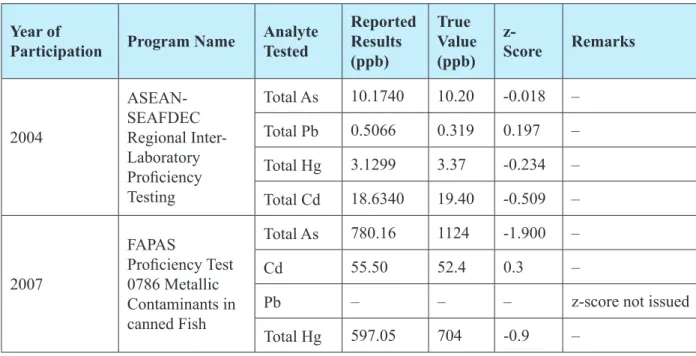
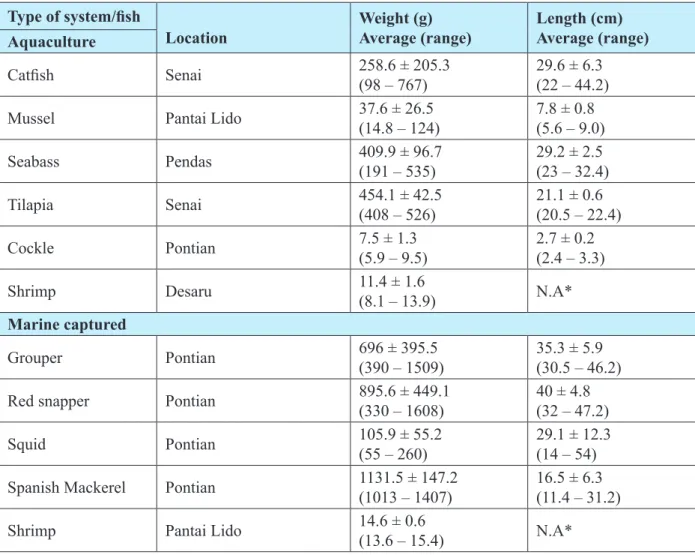
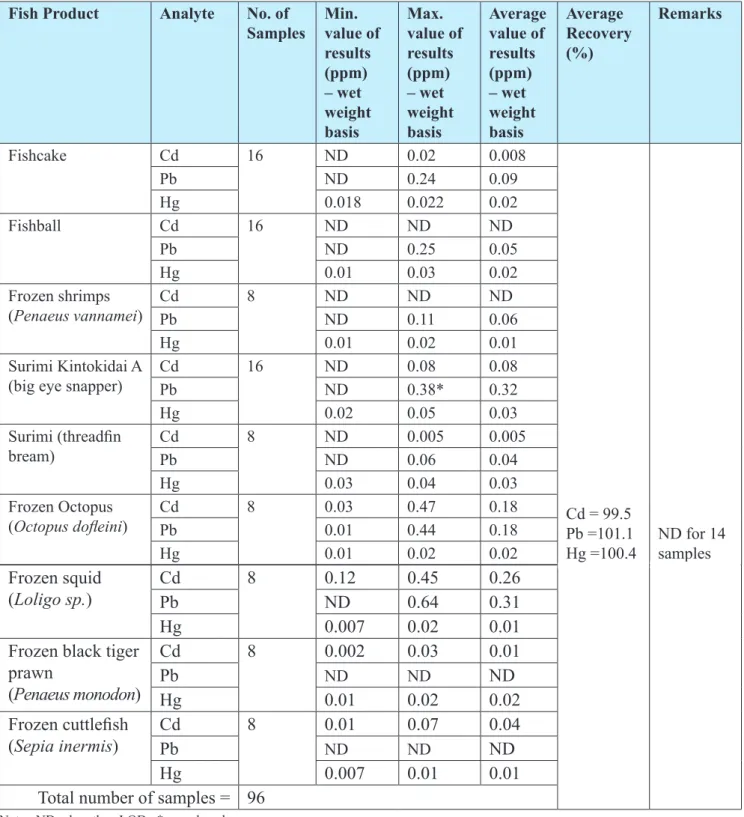
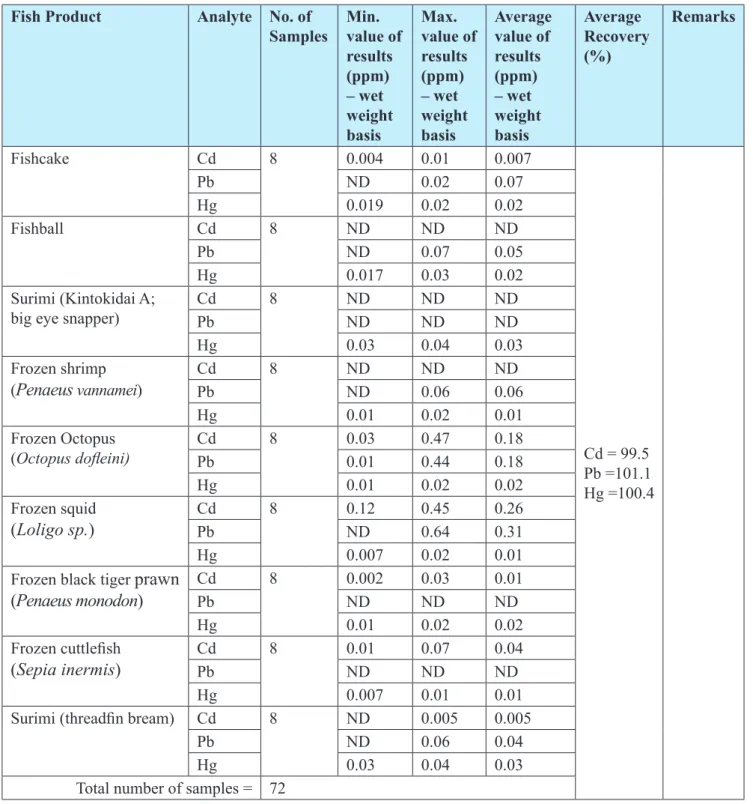
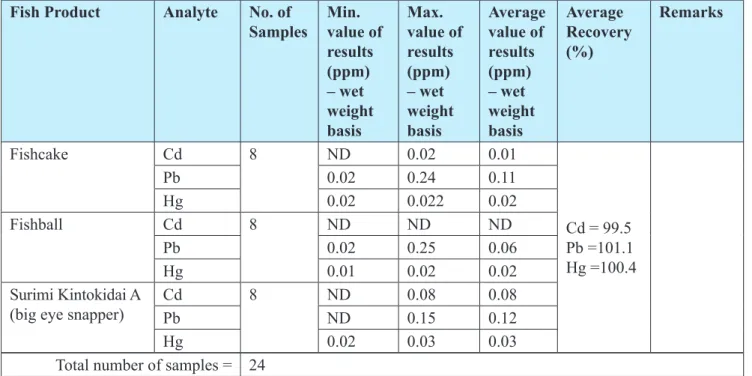
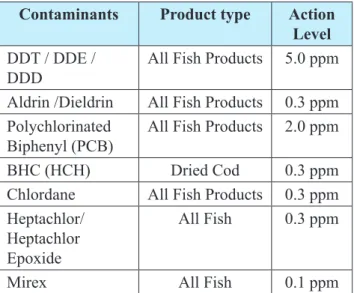
In Activity 1.1, regional surveys on heavy metals (arsenic, cadmium, lead and total mercury) in fish and fish products were carried out in SEAFDEC Member States. In Activity 2.2, regional surveys on pesticide residues (organochlorine compounds) in fish and fish products were carried out in SEAFDEC Member States.
Introduction
Objectives And Goals
Survey Methodologies
Cambodia
Dr. Chea Tharith Deputy Director
- Results And Discussion
- Problems and Challenges Encountered
- Recommendations and Suggestions for Future Follow up Action
- Objectives and Goals
Limit values for heavy metals are determined on the basis of Commission Regulation (EC) no. 1881/2006 of 19 December. The main problem they encountered was that Cambodia's national laboratory could not analyze heavy metals (mercury, lead and cadmium), so they had to send fish samples to Vietnam for analysis.
Indonesia
Results and Discussion
Heavy metal data monitoring conducted in Jakarta, Bali, South Sulawesi, North Sulawesi and Maluku in 2007. Heavy metal data monitoring conducted in Jakarta, Bali, South Sulawesi and North Sulawesi in 2008.

Objective and Goals
The emphasis was on Component I, Activity CI-1: Regional investigation of heavy metals in fish and fish products. Currently, Malaysian fish and fish products exported to Europe account for about 30% of fish production.
MALAYSIA
Problems and challenges encountered
Other elements such as copper (Cu) and arsenic (As) should be included in the study. The maximum level applies to crustaceans, with the exception of the brown meat of crabs and with the exception of head and thorax meat of lobster and similar large crustaceans (Nephropidae and Palinuridae).
Myanmar
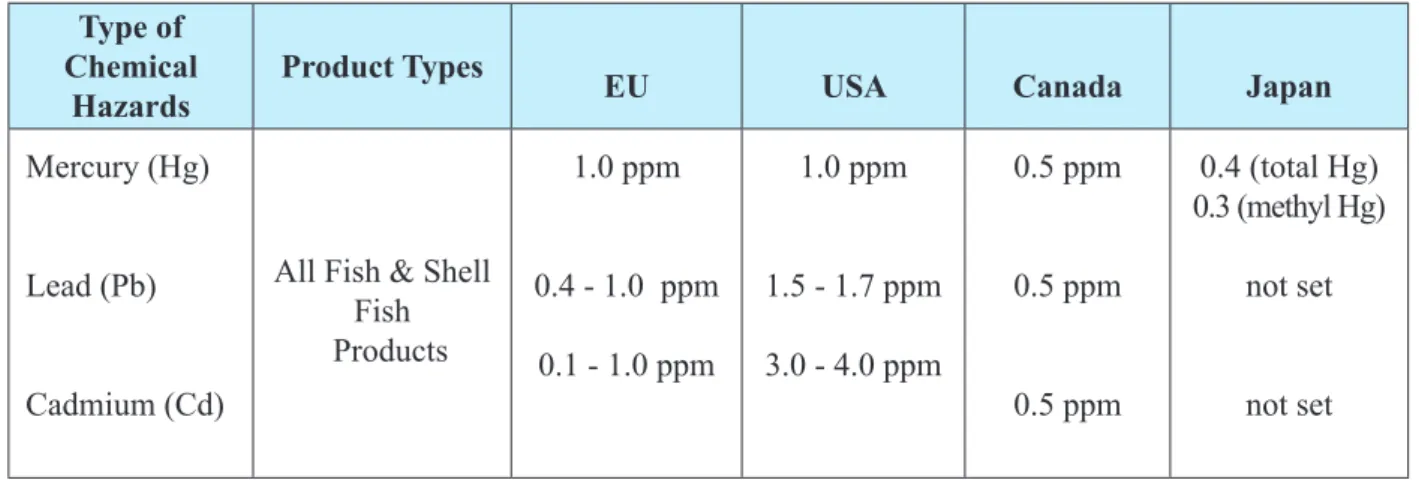
Maximum permissible level in fish and fish products, enforced by EU, USA, Canada and Japan.
Singapore
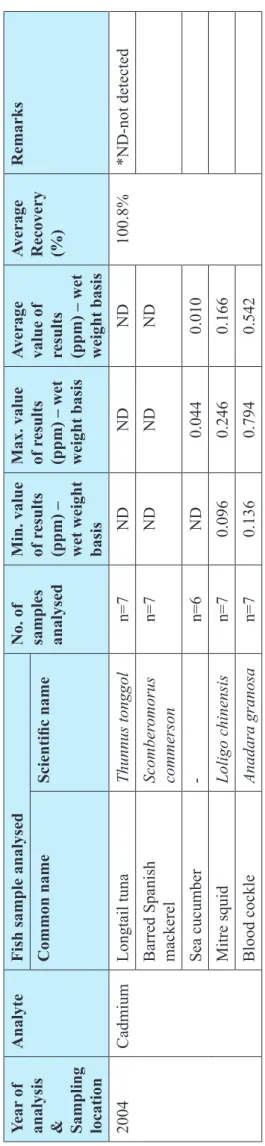
Only approximately 10-20% of the arsenic in seafood is present in an inorganic form, which is toxic. ppm) – wet weight basis Max. ppm) – wet weight basis Average value of results (ppm) – wet weight. Remarks Common name Scientific name 2004Cadmium Longtail tunaThunnus tonggoln=7NDNDND100.8%*ND-not detected. ppm) – wet weight basis Max. ppm) – wet weight basis Average value of results (ppm) – wet weight basis Average recovery.
Thailand
A heavy metal survey was conducted to obtain information on the residue levels of contaminants in fish and fish products and on their environment in Southeast Asia. The results of the research have been recorded in the database of the Fish and Fish Products Safety Information Network.
Vietnam
Specific requirements for chemical residues in fish and fish products have been drawn up to meet the strict standards of food safety and hygiene of importing countries. For this reason, survey and study activities organized by SEAFDEC and funded by JTF IV were significant in providing an overview of the residue levels of chemicals and contaminants in fish and fish products in the Southeast Asian region. Member States will determine appropriate policies to control the quality and safety of fish and fish products to meet importing countries' requirements and to protect domestic consumers' health.
The authority had also actively participated in the "Research and analysis of chemical residues and contamination in fish and fish products and in their environment such as fishing ground and aquaculture field" as well as in other activities organized by SEAFDEC. Heavy metals are some of the parameters that can reflect the level of pollution of fish due to the environment.
Introduction1
Objectives And Goals2
Survey Methodologies3
Results And Discussion4
The results showed that Oxyeleotris marmorata and Micronema micronema cultivated in Tonle Sap Great Lake are safe for consumption in Cambodia and for export.
Problems and Challenges Encountered5
Recommendations and Suggestions for 6. Future Follow up Action
Problem and Challenges Encountered
To determine and gain an understanding of the level of pesticide residues in fish and fish products in Myanmar. Collect data and deposit the results in the Fish and Fish Product Safety Information Network database. To set up monitoring program for pesticide residues in fish and fish products in Myanmar.
One of the positive responses to the management of the above-mentioned stringent fish trade requirements is the participation of the Philippines in the Japan Trust Fund (JTF) II “Research on the Safety of Fishery Products in Southeast Asia: Residues of Chemicals and Drugs in Fish and Fish Products in Southeast Asia”. The project, namely Regional review of pesticide residues in fish and fishery products and Regional review of chloramphenicol, nitrofuran, malachite green and leuco-malachite green in fish and fish products.
Philippines
It coordinates with FHMQAS, FPTL and BFAR regional offices on the effective implementation of the quality assurance program. FHMQAS develops and updates standardized routine procedures and guidelines for the operation of the regional fish health laboratories. Regional fish health officers regularly coordinate with the officers of the central FHMQAS in the implementation of the official program, including residue monitoring.
During the transport of the samples to the laboratory, measures were taken to prevent contamination of the samples. Financial assistance for the purchase of equipment and technical support for the implementation of the food safety program.

Preamble
50 mL of n-hexane was used to rinse the RBF and transferred to the separation flask. Another 50 mL of n-hexane was used to rinse the round-bottom flask and transferred to a 200 mL separation flask (F2). The RBF was rinsed twice with 20 mL of acetonitrile saturated with n-hexane (20 mL twice) and its contents were transferred to the separation flask.
The sample was then concentrated to approximately 1 to 2 ml and dried with nitrogen gas before being dissolved in 5 ml of n-hexane and transferred into the chromatographic tube. The extract was then transferred into the tube, and the RBF was rinsed twice with 2 ml of n-hexane.

VIETNAM
NAFIQAD also actively participated in the “Research and Analysis of Chemical Residues and Contamination in Fish and Fish Products” and other activities organized by SEAFDEC. The data obtained are included in the database of the Fish and Fish Products Safety Information Network. Cambodia only began participating in the regional survey of histamine in fish and fish products under Japan's Trust Fund II from 2006 to 2008.
Standard specification for histamine, maximum allowable level in fish and fish products implemented by Cambodia, EU, USA, Canada and Japan. Indonesia was included in the Japan Trust Fund II project to participate in a regional survey on chemical pollutants such as histamine in fish and fish products, especially in scombroidae fish species.
Objectives and Goals2
In recent years, international trade for fish and fish products has been hampered by various tariff and non-tariff barriers, especially on the standards of quality, hygiene and safety of products. 28/2004 in relation to Food Quality, Safety and Nutrition; it is clearly stipulated that all food products including fish and fish products placed on the market intended for human consumption must comply with the prevailing laws and regulations, to ensure that the products are safe and pose no threat to human health. With the above laws and regulations, it is essential to formulate the Ministry of Marine Affairs and Fisheries decree, and clearly define the important requirements to guarantee quality and safety of fish products from fishing, collection vessels, landing sites, auction centers, processing unit. and distribution facilities.
To ensure that Indonesian fish and fish products have a low chemical pollution or low level of histamine content, it is mandatory to examine and monitor the fish and fish product. Supply fish and fish products that comply with international market standards and food safety requirements.
Results and Discussion4
Recommendations and Suggestions for Future Follow up in Action
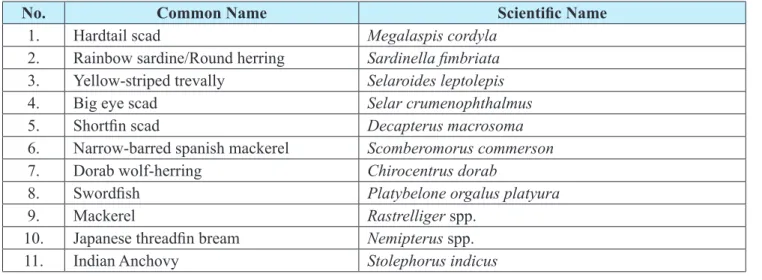
The formation of histamine in fish muscles is caused by the activity of the histidine dicarboxylase enzyme produced by Proteus morganiii, a bacterium in the fish's gills and stomach. Due to the importance of histamine monitoring, the first sample of anchovy was taken from Pahang in 2007. The fish species for histamine analysis sampling is based on the dominant pelagic fish species landed at the main landing jetties/complexes in the state.
Based on the results of histamine analysis in 2007, all samples with histamine detected were within the standard used by the Department of Fisheries in Malaysia, the competent authority for fish monitoring in Malaysia. The average histamine content for the 9 samples from each landing dock ranged from undetectable to 347 ppm.
Recommendations and Suggestions for Future Follow Up Action
To determine the level of histamine in fish and fish products made from scombroid species in Myanmar. To collect data for the database of the Fish and Fish Products Safety Information Network. Results of analysis for histamine in fish and fish products carried out in 1st quarter (Nov 2006-Jan 2007).
Results of analysis for histamine in fish and fish products conducted in the second quarter (December 2007-April 2008). Histamine studies are conducted to provide information on histamine levels in fish and fish products.

Problems and Challenges Encountered 5
Collecting and depositing data in the database of the Fish and Fish Products Safety Information Network. FHMQAS has issued formal instructions to Fish Health Officers on how to conduct sampling and ensure sample traceability. Research is underway into the reasons for the presence of residues and the extent of the problem.
Delayed release of funds, which caused problems in the implementation of the project as planned. These results had also provided certainty and confidence in the safety of fish and fish products in the participating countries.
Summary
A total of 8 countries, namely Cambodia, Indonesia, Malaysia, Myanmar, Philippines, Singapore, Thailand and Vietnam, participated in this JTF II project on research and analysis of chemical residues and contamination in fish and fish products. It can therefore be concluded that fish and fish products from these countries are safe for both domestic consumption and export. Food and Drug Administration, Center for Food Safety and Applied Nutrition, Fish and Fishery Products: A Guide to Hazards and Controls, 3rd Edition, 2001.
Not more than 0.5 µg/g mercury in fish and fish products (except swordfish, shark, fresh and frozen tuna). List of participating countries, participating regional studies and species of fish and fish products studied. Country Types of fish and fish.