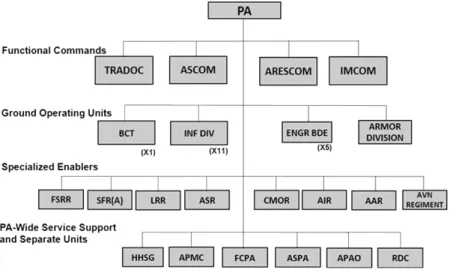
Pvt John Jethro L Manangan (RES) PA Office of the Assistant Chief of Staff for Plans,. Cordova, Understanding China's Gray Zone Strategy in the South China Sea: Defining Strategic Approaches for the Philippines (M.A. thesis, National Defense College of the Philippines. 81 The functional commands consist of the Training and Doctrine Command (TRADOC), Army Support Command (ASCOM ) ), Army Reserve Command (ARESCOM) and Installation Management Command (IMCOM).
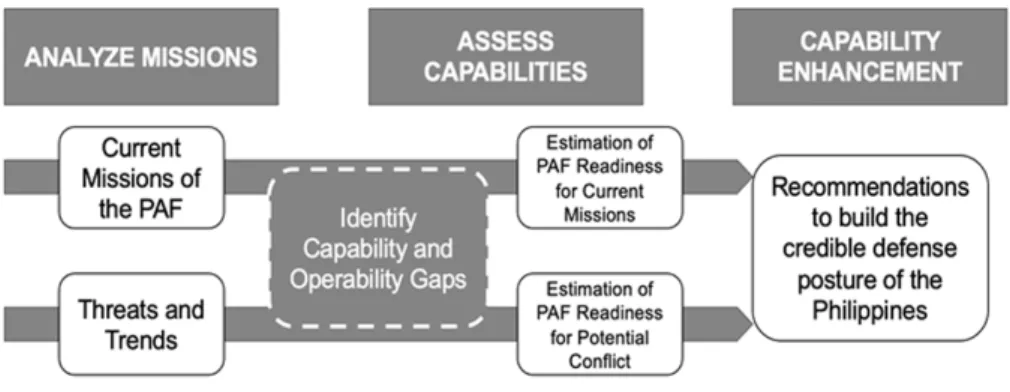
COVID-19 and the Modernization of the Armed Forces of the Philippines: Issues and Challenges.” Accessed October 14, 2020. This study will focus on the future of Philippine warfare in the context of the Philippine Air Force. The AFP's decisive goal of ending communist insurgencies resulted in the neglect of the country's external defense capabilities.
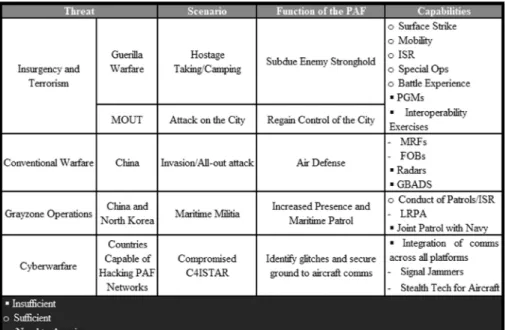
With things uncertain on the Korean Peninsula, it is best for the PAF and the entire AFP to look for possible alternatives for any connections. Liberation, insertion and transport is also a strong asset of the PAF with new attack helicopters in the fleet. This is only the material side of the capacity improvement that the PAF has to endure.
This is why asymmetric warfare capabilities are now being discussed at the command level of the organization.
The Philippine Navy Today: Gearing up for the Future Understanding the PN Operating Environment
The PN's Active Archipelago Defense Strategy (AADS) outlines the PN's approach to the nation's maritime defense and security while the Naval Operational Concept (NOC) outlines its peacetime and conflict deployment concept. This strategic approach is based on the PN's need to support other key services, other government security agencies, other stakeholders in the government and private sector, and knowing the importance of strategic partnerships and alliances with other countries. The PN's naval strategy, operational concept and capability development plans indicate its military functions which should be at the core of the maritime trinity.
Notwithstanding, the PN also remains committed to supporting maritime security functions, with the ongoing homeland security concerns. However, these concerns have limited the PN's previous modernization program in the past, and their persistence may ultimately have an impact on the PN's current plans again. Despite these gains, however, there is still much to be desired if the PN is to fulfill the aspirations laid out in the AADS and its supporting concepts.
Imagining the Unthinkable: War in 2030
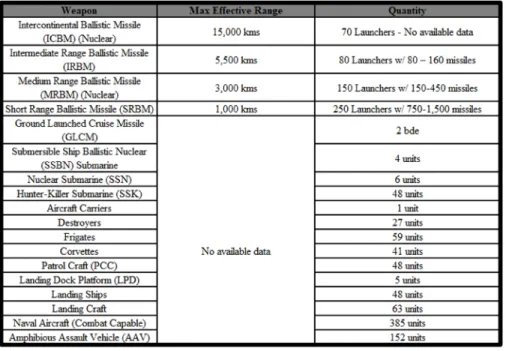
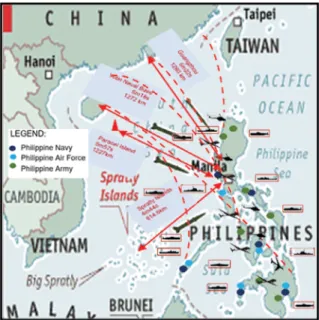
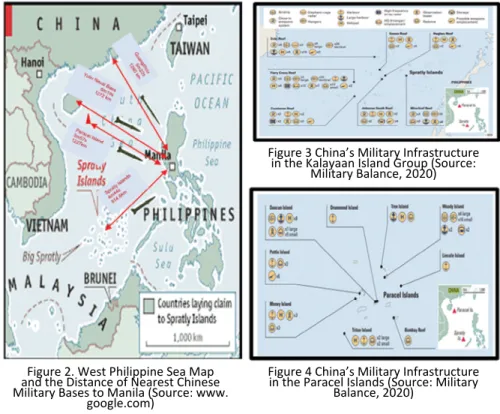
It is also worth considering the proximity of Chinese military bases in the country's SCS mainland by calculating the estimated travel time of the attacking forces and the effective range and speed of their missiles. There seems to be no compelling reason to argue that the Chinese campaign will be prolonged because the AFP and especially the PN are ill-equipped to deter the might of the Chinese forces. With massive civilian casualties, the remaining Philippine defense and security forces will resort to guerrilla warfare reminiscent of the Huk resistance during the 1942-1945 Japanese invasion.
Would they join the resistance with the national forces or would they extend the war up into the mountains in support of the communist groups. The creation of militarized islands in the SCS gives them the advantage of unsubmersible aircraft carriers and the location of blockades, essentially creating a powerful integrated multi-domain defense system in the first island chain. Control of the country's seaports and airfields would easily deny the deployment of the Philippines' surviving air and naval forces.
Conclusion
To ensure the destruction of critical infrastructure of the three major archipelagos, potential priority targets are the megacities of Manila, Cebu and Davao, as they serve as the center of economic, political, social and cultural activities in Luzon, Visayas and Mindanao. No ASEAN country, no ally, no strategic partner will have enough motivation to help us because China has gained the advantage of surprise and political shock and control of the multi-domain of warfare. The twenty-first century armed forces of the philippines: orphan of counterinsurgency or military oriented to the long war of the century.
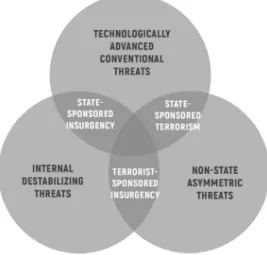
Conflict in the 21st century: the rise of hybrid warfare (Potomac Institute for Policy Studies, Arlington, 2007). How an Argentine submarine kept the Royal Navy at bay during the Falklands War in the national interest. For the Philippines, a nation facing diverse security threats—both external and internal, traditional and non-traditional—it is only fitting for the country's defense establishment to define and contextualize the future of warfare in accordance with the particularities of the Philippine strategic environment. operational space and combat experience.
Introduction
What kinds of wars are coming?
The value of America's alliances has long depended on Americans' ability to credibly deter aggression and willingness to fight to protect allies in the event of war. However, if in the future revisionist powers can achieve their goals so quickly and quickly, the United States may be forced to accept the new status quo in order to "not escalate tensions further" at its expense. These possibilities place demands not only on the United States as the self-proclaimed leader of the free world, but on its allies and partners who are on the front lines and will be most affected by the aggression of revisionist powers.
They must establish their own deterrence capabilities, independent of or complementary to those of the United States, to further complicate the threat picture facing China and other revisionist aggressors. Emerging Threats: Philippines/Asia." Presented during the Think-Tank Engagement Roundtable on the Philippines' Role in Regional Cyber Security Cooperation on April 24, 2018. Terrorist Financing: A Perspective from the Field." Presented at the 11th Heneral Luna Colloquium on Counter-Terrorism : Hindering Coin Power on June 25, 2019.
Rethinking Assumptions of Philippine Defense
The impact of new technology for terrorist activities is most evident in the proliferation of drones. In the Philippine situation, the vision of "hyperwar" will have to coexist with now-familiar threats and concerns, such as communist insurgency, transnational crime, separatism, climate change, and other threats. Autonomous Systems in the Combat Environment: The Key or the Bane for the US. The Strategy Bridge.
Meanwhile, the notion that the Philippines should not engage in new domains of war is both a dangerous assumption and dismissive of the growing possibility of multi-domain conflict in the short to medium term. This nonchalant attitude suggests the government's refusal to adapt and be flexible in its approaches to dealing with security threats. As the future of warfare in the Philippines will be shaped by various factors – political, economic, socio-cultural, technological, environmental, military – it is also crucial to examine how these factors are shaped by multiple embedded notions, perceptions and priorities with which the defense sector has been constrained with for the longest time.
Thinking creatively for future Philippine defense
The growing trend to focus on non-traditional security threats (NTS) as a priority for governments is another manifestation of what De Castro labeled a “negotiated reality”.210 The influence and control of the elite over some of the legislative institutions and defense affairs have resulted in reforming, ignoring or even circumventing some of the country's strategic interests.211 This can be seen in the interests of Philippine politicians to waste the country's already limited resources by building up even more departments. such as the proposed Ministry of Disaster Resilience212, as opposed to consolidating resources for greater efficiency. While a creative interpretation of the Constitution, similar to what Japan is doing with Article 9 of its own pacifist Constitution, could be used to allow the deployment of second-strike weapons, such as air-launched cruise missiles218 by the Philippines, current academic, leadership, and political communities that don't seem to even consider, much less support, such a move. Organizationally, and with regard to training, there needs to be more discussion and discussion about the role of the Major Services and they need to be encouraged to move out of the reactionary mindset that currently underpins Philippine defensive thinking.
This includes not only the establishment of new organizations, such as land-based missile batteries and army aviation in the case of the Philippine military, but also a major overhaul of the overall armed forces structure. The AFP's latest Future Force Structure document was drafted in 2016 and clearly needs updating; at the time of writing, the armed forces are currently reviewing it. For example, there was a nearly six-year time gap between the release of the 2014 NMS of the Philippines and the 2019 NMS.
Conclusion
Non-kinetic second attack such as cyber weapons is another option, although it is also currently limited by domestic laws such as RA10173 and international norms that discourage offensive cyber attack by nation states.219. Doctrine for "internal" security is better off, due to the AFP's extensive experience on that front, but it also needs to become more adaptable to changing circumstances. The current initiative in this regard, the AFP Transformation Roadmap (AFPTR) aims to make the AFP a "world class armed forces" by 2028; with less than eight years to go from the current date, its reforms must not only be deepened and further substantiated, but must be sustainable beyond 2028 and must be ready to respond to changing organizational needs in a consistent manner to fit
Materiel and facilities will also require adequate upgrading, both to successfully implement whatever combat doctrine the AFP chooses (whether the existing reactive defense posture or a more forward-looking second attack posture) and to ensure that the AFP can survive and potentially deny adversaries such as China the ability to quickly take down the AFP in a time frame of minutes to hours. This is true not only in kinetic terms, but also in non-kinetic measures such as cyber resilience. There is a need to revise and improve the Defense System of Management (DSOM) and the Defense Strategic Planning System (DSPS) to make the overall bureaucracy more responsive to changing threats and realities, to expedite the timely production and updating of AFP and DND documents such as NDS and NMS.