141
TRAPPED IN AN INVESTMENT SCAM: LIVED EXPERIENCES OF GEN ZERS
Marc Lovel C. Bedona, Ma. Rosalene J. Madero and Lenny Rose P. Mucho Charmane Grace T. Sarmiento, Quenie B. Tiples, Shaina Rhose S. Torres and Ma. Bernadette Z. Zabala
A BSTRACT
he purpose of this constructivist research was to examine Gen Zers’ experiences, actions, and circumstances that contribute to their vulnerability to be scammed. Using thematic analysis, the study found new reasons that motivated Gen Z individuals to respond to and remain engaged with scam offers. These are personal constraints, internal influences, and trust. Having been scammed resulted to emotional and psychological aftermath. In addition, Gen Zers’ experiences revealed that scam victimization was connected to impulsivity.
Keywords: Generation Z, Investment, Investment Scam
I
NTRODUCTIONBackground of the Study
It can be safely assumed that everyone is susceptible to fraud, though the degree of exposure or susceptibility may vary by fraud type or source. Some people may, through personality or experience, find themselves frequently targeted by fraudsters or scammers and occasionally victimized, while others may be less exposed and thus go unvictimized, regardless of their susceptibility to the tactics of con artists.
In recent investment scams that sprung up during the pandemic where some of the victims are Ilonggos, a significant number of them belong to the Gen Z Group, those born around and between 1997-2012 as defined by Beresford Research.
Although research has yet to identify unique markers of personal vulnerability, the case of Gen Zers have not been relatively well studied, especially among young Filipinos. An interesting phenomenon of online scam victims among Ilonggo Gen Zers during COVID-19 pandemic aroused the curiosity of the researchers. Ilonggos are Filipinos who live in Iloilo Province in Western Visayas, one of the three main island groups of the Philippine archipelago.
An emerging conclusion in profiling research was that there were no generalized profile of a “typical” victim.
Profiling studies that analyze victims by type of scam, however, have yielded a clearer picture of scam-specific profiles.
According to Olejniczak and Stadryniak (2021), their data collected by
T
142 the Assay Index showed that it is the young
people (aged 18-24) who most willingly decide to invest their funds. As many as 34% of them have a positive attitude towards securing their capital. Among the factors that piqued the interest of Gen Zers, the internet played the greatest role (45.20%), while family and friends ranked in second (25.80%), and school or education ranked third (16.10%). The remaining respondents chose “Nothing” as they have not started investing yet. When asked what were they investing for, most of them wanted to extend their wealth (48.40%) while some wanted to be independent (32.30%). Others wanted to extend their knowledge (16.10%) and the rest wanted financial collateral (9.70%).
The concept of investment scams has existed since time immemorial. Otherwise known as investment, financial or securities fraud, an investment scam is the illegal activity of providing false information to someone so that the latter will invest in something (dictionary.cambridge.org). As a whole, investment scams are not limited to a deceitful promise of financial gain to the gullible, but also acts that defrauds financial institutions such as banks and lending companies.
In 1919, Charles Ponzi developed an investment scheme where he promised investors a return of 50% in 45 days and 100% in 90 days. Due to his success in a previous legal investment scheme which involved postage stamps, many investors were immediately attracted. Instead of investing the money, however, Ponzi merely used the money given by new investors to fund the “returns” of old investors. He was later caught and arrested by authorities in 1920 when The
Boston Post began investigating his company running this investment scheme (Chen, October 2021, Ponzi Scheme, Investopedia). This investment scheme was later known as the “Ponzi Scheme”.
This study focused on the “double- your-money” type of investment scams that simulate the Ponzi Scheme. These investments exist in today’s society notwithstanding the efforts of governments around the world to prevent victims from being deceived. In the Philippines, a person caught perpetrating an investment scam can be held liable for the crime of estafa or swindling which is an act that defrauds another (Art. 315, Revised Penal Code of the Philippines). Should five or more persons come together to commit estafa or should five or more persons fall victim to estafa committed by a person or group of persons, the perpetrator(s) can be held liable for the crime of syndicated estafa under Presidential Decree No.
1689, Series of 1980 instead which imposes a harsher penalty. Despite these laws and many more in place to combat criminal fraud, investment scams still thrive today.
During the COVID-19 pandemic,
“double-your-money” investments proliferated due to the fast transition of business activities from face-to-face to online mode. Long lockdowns brought about businesses minimizing employment and cutting down costs to adhere to health protocols. Some businesses opted to cease operations until further notice.
These led to people losing their jobs and depending on the government for assistance. Despite the negative connotations associated with the pandemic, it was at this time when people
143 realize that online adaptability was not only
convenient, but also a necessity.
As many businesses moved to online platforms and wireless cash transfers to sustain themselves, many unscrupulous individuals with malicious intent to gain financially also set their eyes to the World Wide Web to prey on unknowing targets.
In the midst of the pandemic, the Securities and Exchange Commission (SEC) has issued sixty-eight advisories against invites from investment scams among Filipinos. These scams became popular due to the fact that most people were at home, always in tune online and work in the confines of their house, and this was an opportunity for scammers to take advantage of their victims, said SEC’s Enforcement and Investor Protection Department, Oliver Leonardo (CNN Philippines, 2020). This was the time when people were in their most vulnerable as the harshness of the pandemic coupled with the restrictions of quarantine and lockdown have siphoned the wallets of many households, leading to a desperation of earning money in whatever way possible.
Swift and effective action against scams were essential to minimize consumer detriment (Consumer International, 2019). Now that scam or fraud is present online, it is increasingly important that consumer protection is at the heart of platform design and delivery.
The problem arises in detecting and monitoring potential investment scams as some are small in scale and avoid detection. This is why awareness on the part of the investor is necessary. But despite the fact that a wealth of knowledge on how to detect investment scams and protect oneself and one’s money is readily
available online, people still fall victim to the same.
Based on the necessity of preventing people from becoming victims of investment scams, the researchers conducted this study on investment scams among Ilonggo Gen Z victims to shed light and fully investigate the problems they encountered when they were engaged in investing. This study described the types of investment scams commonly encountered by the victims in general and the accounts, experiences, and lessons learned by Ilonggo Gen Zers who fell victim to some of these investment scams.
This qualitative study explored the experiences of Gen Z investment scam victims in Iloilo City. It utilized the phenomenological approach. Qualitative research involved collecting and analyzing non-numerical data (e.g. text, video, or audio) to understand concepts, opinions, or experiences, and phenomenology is an approach to qualitative research that focuses on the commonality of a lived experience within a particular group (Bahandari, 2020).
Based on the necessity of this problem, the researchers conducted the study on investment scam among Ilonggo Gen Zers to shed more light to the problem and fully investigate the experiences of these young people when they were engaged in investment. This study described types of investment scams commonly encountered by the victims, and Ilonggo investment scam victims accounts or experiences and lessons learned. It was a means to address current and future issue of increasing number of victims of investment scam in platforms such as Facebook was relevant with the continuing
144 emergence and upgrade of technology
(Wood, 2020).
Epistemological and Theoretical Perspective of the Study
Philosophers who study theories of knowledge have espoused constructivist theory of learning or teaching which provides the framework for this study.
Constructivist epistemology is based on the viewpoint that reality is relied upon people, things and relationships that made up a network of things and relationships that are commonly lived and believed in (Von Glasersfeld, 1995). The learner’s cognition extends beyond cognitive thoughts. It encompasses his beliefs and how he perceives knowledge. There is no fixed reality because realities are far different among individuals and across cultures.
Fosnot (1996) reiterates that "Rather than behaviours or skills as the goal of instruction, concept development and deep understanding are the foci” (p.7).
Purpose of the Study
The purpose of the study was to examine experiences of Gen Zer victims of
“double-your-money” scam.
Statement of the Problem
The following research question was raised in the conduct of this study: How would the Gen Zers describe their investment scam experiences and the impact of these to their lives?
Micro Theory
The Elaboration Likelihood Model by Richard E. Petty and John Cacioppo in 1980 explained how attitudes were changed via two routes of persuasion: the
central route and the peripheral route. The central route process required a great deal of thought and messages were important and therefore motivated to employ adequate cognitive resources. Peripheral route processes, on the contrary, focused on the attractiveness of the source and processed information using personal reasons or because of the weakness of information channels. Drawing from this model, it contended that scammers rely on the peripheral route, stirring up strong emotions, such as excitement and fear.
Victims were therefore not likely to attend to cognitive cues. This model is connected into the life experiences of an individual to create judgement and decision that led them to the route of persuasion to take (Brookes, et al., 2019).
Researcher Subjectivity
The foci of this investigation are the
incidences of
“double-your-money” scams that took place during COVID-19 pandemic particularly during the latter half of 2020.
Incidentally, the age group of the participants was categorized as Gen Z.
Documenting an account that happened within this age group can bring to the fore a significant level of awareness about the financial risks that young people are exposed to being primarily digital users.
Many of these cases have been left unreported and there seems to be an
“underground” activity that must surface for government and those in authority to take action.
This perspective has increased the researchers’ understanding of the financial behavior shared in common by those who belong to this age group, as some of the researchers also belong to this
145 demographic stratum. They were able to
initiate a deeper probe into the Gen Zer’s sphere of decision making. Had age not been a relevant factor in this investigation, there would have been a different perspective of involvement among the researchers.
The mere fact that almost everyone turned to online activities during the pandemic, and majority of the Filipinos were struggling financially, a study such as this is relevant and helpful to confirm some news reports and a series of hearsay about scam victims in Iloilo. The researchers’ had their own personal account of online shopping frauds from which they had not even recovered their investment or money.
Significance of the Study
This study can provide significant benefits to the following:
Investors. The result of this study would be beneficial to investors to make them realize how they can avoid investment scams that are becoming prevalent. They can identify the type, source, and frequency of scam. The results of these study can share information about the styles of scammers and fraud through advertising, provide prevention strategy, and raise the level of awareness of people about investment scams. Through this research, the investors can have a wide knowledge not just about the scammers but also the characteristics and traits of investors like risk taking behavior and openness that make them prone to scam. It will increase their understanding as investors and later apply this to their business behavior.
Investing Companies. The result of the study will provide the investing companies knowledge about investment
scam, how it can affect their business including the decreasing trust of their investors, and how they could overcome.
Through this research, they will be able to find ways to heighten their credibility as registered investing companies. It will also help them generate better advertising practices, and they can help to spread awareness of fake offers and possible copying/mocking of their brand among their potential investors.
General Public. In today’s generation, young and old, everyone is susceptible to scam. People want to earn money with little to no effort. This study gives information about scam susceptibility to make people aware of the stages that they may encounter in a scam offer. Through this, they will be able to prevent themselves from joining these investment scams by receiving advanced precautions.
They can also be an instrument to expand knowledge and share the findings of the research that would help gradually decrease scam victimization.
Students. The students, most especially taking up business courses, are the direct beneficiaries of the results of the study. They can expand their knowledge as future researcher. There is also a high probability that the students themselves will become future investors and through this research they are made aware of scamming at an early stage. They can also share their views and knowledge about it to their friends to increase prevention.
Teachers. The result of this study will enable the teachers to transmit knowledge to their students and other individuals.
Effective persuasion and explanation are the key. They help increase the knowledge and understanding of students and can explain further the findings of the research.
146 This study can assist teachers in guiding
their students to employ effective strategy to protect their businesses in the future.
Future Researchers. The findings of this study can also help future researchers to gain necessary insights to identifying related problems for their own investigation. This study can provide future researchers potential research problems and topics. This can also serve as a future reference. It will provide answers to possible questions and aid in understanding the scope of their study that is related to the subject.
Definition of Terms
Aftermath. This term is operationally defined as the end result of the victims action after experiencing scam.
Business scam. It is defined as a fraud; a criminal activity designed to trick someone out of money or personal details (Consumers International, 2019).
In this study, business scam is defined as a fraud that includes online shopping scam, investment fraud, buy and sell scam, text scam and phishing and banking, credit card and online account scam.
Cashdrop Online Investing. It is operationally defined as an investment scheme that allowed investors to double their money or 200% return (payout) after 15 days. This is usually done through an app created for this purpose.
Commitment. In this study, commitment is defined as the dedication to the offer by signing up with the investment scheme. It is the willingness to pay money with the entity holding the promise to double their money.
Double Your Money Investment Scheme. It is operationally defined as
lending money to an entity with the promise to double it after a given period of time.
Experiential factors. In this study, it is defined as general, technological, and professional experiences of Ilonggo victims.
Frequency of scam. It is operationally defined as the rate that identifies the level status of scam victim within Iloilo and it uses data statistics if there was a change after a time interval.
General Experiences. In this study, it is defined as experiences by Ilonggo scam victims in general, whether positive or negative.
Investment Fraud. It is operationally defined as scams from investing activities like lending money for a promise of financial opportunity and growth.
In this study, it includes the “double- your-money” frauds such as cashdrop online investing, pyramiding scheme, and paysup investment scam.
Online Platform. In this study, online platform refers to Facebook.
Paysup Investment Scam. In this study, it is defined as an online investing scam where an individual earns money through video viewing, invites, referrals and matching sales.
Precursor. It refers to the victims’
actions and circumstances before engaging in the offer. It includes their discovery and influences that led them to be scammed.
Pyramiding schemes. In this study, this phrase refers to an investing activity where an individual invites and recruits the public to join in the investing institution to earn money.
147 Scam Susceptibility. It is
operationally defined as the likelihood to be scammed.
Source of Scam. In this study, sources of scam refers to online platforms such as Facebook.
Type of scam. Operationally refers to online shopping scam, investment fraud, buy and sell scam, text scam and phishing and banking, credit card and online account scams.
Scope and Limitations of the Study This is a phenomenological study that investigated the experiences of the Gen Zers who fell into “double-your-money”
type of online investment scams in Iloilo City in 2018-2020. The study, however, was conducted during the second half of 2020. The “double-your-money”
investment scams were the Ponzi scheme, the Cashdrop, and PaysUp.
Furthermore, the inclusion criteria also involved the age between 20-30 years old and the in-depth interview and focus group were conducted through private messenger or Zoom video calls to the victims. As this is a qualitative research, the data gathering method employed was in-depth recorded and transcribed interviews.
The participants of this study were 10 victims of investment scam in Iloilo City who were defraud either once or more than once with the “double-your money” type of investment. All information and conclusions drawn from this study were obtained only from this particular group of people.
Excluded from the study were victims of other investment scams that belong to the “double-your –money” category.
Related Literature and Studies
Business Interest and Financial Success among Millenials
Are the millenials between the ages 21-30 years old actively engage in investment activities? What are their motives? These are some of the questions that this study purports to answer.
Generation Z are those born from year 2000. They are the generation of tech- savvy and online-hungry ones. Fukuyama (2011) believes that this generation is the end of man and the last generation to walk on planet Earth. They are the most updated in terms of digital advancement and revolutionary changes in the world.
Theirs is an environment where the best discoveries, most polished learnings and global progress take place.
With their great reliance on digital communication, Ruzgar and Yaciki (2020) discussed the dangers for the Gen Z and one of which is their vulnerability as social beings. Either they will end up abusing their virtual world, or they will be abused and exploited by this kind of world. Their socialization will be affected which brings up personality and psychological development issues.
The digital background of Gen Zers could explain their perception towards financial risks. Anbar and Eker (2009) have studied Gen Zers’ propensity for engaging in online investments to earn money fast and quite easy. Age and environment were significant factors in their decision making.
A 2021 study by Social Catfish, an online verification platform, reported a 156% increase in cyber-fraud among Gen Z since 2017. One of the reasons for their vulnerability is their over confidence and lack of cautiousness in talking to strangers
148 virtually. They would usually communicate
through social media platforms and topping the list is Facebook. Social catfish reported 153 scammed Gen Zers via Facebook. Second in the list is Google Hangout, followed by Instagram and WhatsApp. This is why these are scammers’ favorite websites.
Socal Catfish also reported that in the United States, 9,053 victims from the under 20 age group were recorded in 2017. The number increased to 23,186 victims in 2020.
Investment Scams
Double-Your-Money Investment Scams Financial crime affects thousands of people every year, but only little was known. Such experience penetrates deeply into their lives and has a very negative impact on the victim, not only in the physical sense (physical damage) but also in terms of emotional, mental, and overall health consequences.
Double-your-money is one of the types of investment scam in the Philippines, and has become rampant especially nowadays when people want to earn money due to the tough times during the pandemic.
In the year 2012, Inquirer reported that one of those investment scams was the Aman Futures. This scheme solicited investment from the public, promising a rate of return ranging from 15% to 30% and may increase up to 40% within a definite period of time. The SEC said it was the reason why people invest their hard earned money in hope of receiving the promised return.
Aside from that was the Chiyuto Creative Wealth Document Facilitation
Services (CCWDSFS) alluring individuals to invest their money in the said company.
Their facade was to let every investor spin the roulette wheel that has set of dates indicating when their investment money would be doubled. The investment money varied from Php 1.00 to maximum of Php 1 Million. Members would earn one hundred percent (100%) after 1 day, 30 days or 45 days, depending on the result in the spinning wheel (SEC, August 18, 2020).
Those who recruit others to join in such venture or offer investment contracts may be subjected to criminal liability.
Coins.ph (2021) provided some advisory to the public to be suspicious of investment that seems too good to be true. There is no such thing as low risk, high probability of return. Added to this, there are also other documents to vouch for the legitimacy of business such as Government Licenses namely BIR registration, SEC, DTI permit and other secondary licenses.
Cashdrop Online Investing
Cash drop is a type of investment scheme offered by local scammers. This investment scheme allowed investors to double their money or 200% returned (payout) after 15 days. Members shall only need to invest their money, wait, and earn without doing anything. Their salesmen or agents claim to have received payout from cash drop to convince people to join in the investment scheme. Cash drop entices public to invest online by availing their packages through the internet. According to the Security and Exchange Commission (2020), cash drop online store was not registered either as a corporation or partnership, however, there was a Certificate of Business Name Registration
149 given by the Department of Trade and
Industry.
The Securities and Exchange Commission had warned the public to not engage in this kind of activity. In support, Coin study in 2021 had not recommended this type of investment scheme or activities because it involves a zero-tolerance policy on fraudulent activities and potentially scamming practices. According to business world online, Cash-drop was not authorized because there were no legal documents and contract that show they are registered. This scheme was not allowed to operate without any secondary licenses and people behind cash-drop investment will be penalized with a P5 million fine, 21 years of imprisonment, or both.
Falling into this scam could result to financial burden and damage one’s mental health. It all depends on how one deals with the experience and how they can retrieve what they had lost. People should be attentive to the SEC advisory in order to avoid these fraudulent activities and stop investing in any type of investment scheme offered by the said entity.
Pyramiding Schemes
Pyramiding schemes are scams. It is a business model that recruits people with a promise of providing them payment for inviting others into the scheme rather than granting investment or products. It is very risky and can cost a lot of money. Pyramid Scheme gets their name from the fact that they imitate a pyramid form, starting at the top with a single point and gradually widening as you go down. Pyramiding schemes are associated with illegal activities because they funnel profit from lower levels of a company to the top. Multi- Level Marketing (MLM) operations are
similar to pyramiding scheme in concept, but they vary in that they sell tangible products. A pyramiding scheme disguises the goal by raising funds from investors at the bottom of the pyramid in order to compensate other investors higher up the pyramid, while a legal multi-level marketing business places a strong emphasis on reliable products or services and products are sold to the end- consumers.
According to New York State Attorney General, people invested in pyramiding scheme due to these three categories:
those who join out of greed; those who are deceived into thoughts that they are joining an "investment club" or a "gift program";
and those who trust that the products or services are legitimate. It is a method of persuading people to join, pay and invest their money on the basis of high commissions and profit, typically without selling products. The swindlers commonly appear for a short period of time. They seem to be regularly paying their investors during the early stages. Subsequently, they will disappear, leaving the investors, specifically the downlines, empty-handed.
The losing investors are unable to pursue the program administrators who are either anonymous or had fake names and address.
The pyramiding scheme is closely similar to the legitimate operations of multi- level marketing in the Philippines. This is one of the reasons why Filipinos fall prey to the illegal pyramid scheme, thinking that the business legally exists as a multi-level marketing. Toralde (2019) pointed out the flaws in the Philippine legislation concerning this distinction. There are provisions in the law that do not clearly
150 define nor differentiate between multilevel
marketing and pyramid scheme.
PaysUp Investment Scam
This type of scam invites the public via online to join their compensation plans (starter account and premiums) with the promise of reward (money). It started in June 2019. It has an existing website and also has a Facebook page used for announcements and recruitment of potential investors. To be part of this, an individual must join the enterprise by
signing in to their website. It is expected to earn money with less effort and an investment contract is involved as a form of security. The means of earning money is to sign up, view videos, direct referrals, and invites, and matching up investment sales. Money required to invest is 1,500 pesos. Most people who entered this scheme have not received payout because the Securities and Exchange Commission of the Philippines has stopped it in the same year it started (Securities and Exchange Commission, 2019).
Table 1
Types of Investment Scam
Type of Investment Scam Description
Double your money (In person invites) Every investor spins the online roulette wheel that has set of dates indicating when their investment money would be doubled. Promising a rate of return ranging from 15% to 30%.
Cashdrop Online Investing It entices the public to invest online by availing their packages with the use of internet. It doubles their money or 200% returned (payout) after 15 days.
Pyramiding schemes A business model that recruits people with a promise of providing them payment for inviting others into the scheme rather than granting investment or products.
Paysup Investment Scam It invites the public via online sites to join their
compensation plans (starter account and premiums) with the promise of reward.
Frequency of Scam
In the context of Philippine online scamming the numbers of victims were increasing. According to ACG acting director Pssupt. Marcos, due to the increased number of internet users, there was also an increasing opportunity for cybercrimes to occur and cybercriminals to do their illegal online activities. From 2013 to 2015, a total of 1,211 cases were recorded by the PNP anti-cybercrime group which corresponds to the number of cybercrime complaints collected and
examined by the group. According to Transunion, even when the country was on lockdown, the Philippines suspected digital logistic fraud more than doubled. They recently released an analysis of digital fraud trends in the Philippines. Based on the report, its evaluation shows that it more than doubled the percentage of suspected online fraud originating in the Philippines as compared to the periods January 1 – March 10 and March 11 – April 28.
An increase of 119% in fraud incidents happened in March to April. The
151 Philippines became the country with the
76th highest percentage of digital suspected online fraud raised from March 11 to April 28. In contrast, the rate of suspected fraudulent online transactions have globally increased by 5% during the pandemic. The industry spot a 76% rise in fraudulent transactions worldwide.
National Bureau of Investigation (NBI) cybercrime unit reported a 200% increase in text scam alone during the start of lockdown last March 2020.
DTI Sec. Lopez urges owners of online businesses to register and show their legitimacy to potential customers.
DTI in partnership with NBI and different law enforcement agencies warned the consumers to be alert of overpricing, wrong labeling, and substandard or poor quality products available online. The trade chief of DTI reminded the consumers to remain vigilant and report fraud if it happens (Interaksyon, 2017).
Sources of Scam
People these days spend more time on social media during their leisure time which has become a major source of scam. Social media is a platform or website that people use to stay connected around the globe, or for business and networking purposes. According to Brennan and Croft (2013) Twitter, Facebook, YouTube, Instagram, and LinkedIn had proven to be game-changers in business-to-customer marketing, and were the new ways to make a hit on your product and services.
In the study of Fuchs (2018) ”Google and Facebook were examples of internet advertising and these were the largest advertising companies in the world” (pp.
79-90). According to the Securities and
Exchange Commission, they have detected over 30 fraudulent investment schemes in the Philippines. In reality, internet advertising was very essential and becoming more habitual and necessary practice. This was the reason that leads the scammer to use these platforms, social media site or fake website in order to fraud and manipulate potential users.
Experiential Factors
Vishwanath, et al. (2011) examined and supported the approach in conjunction with experiential influences. The victims of crime, such as scams or fraud, experienced confusion, fear, frustration, and anger. Victims often did not know where to go and whom to approach after the crime. It suggested that they felt insecure and embarrassed of their experiences and just decided to not rely on support and help. It created a great impact on their physical, emotional, psychological, and financial state. According to Ipsos (2020), “the great majority of those exposed to a scam or fraud felt a negative impact” (p. 15). For this reason, previous scam victims tended to be more cautious with product offers. They established boundaries when it came to trust and authenticity and became more vigilant. In some cases, they avoided similar situations that they got involved in before and would rather not take an opportunity.
Ipsos found that people who had experienced scam are described as being relatively cautious in their online/offline behavior in comparison to those who had not. The internet use itself was not a protective factor; for some, it was said that people who experienced high traffic emails were more likely to responded to scam.
Research made by Cacciottolo and Rees
152 in 2017 indicated that some fraud victims
were highly educated, fully functioning adults and seemed to be unlikely victims.
Regardless of having a career or academic experience, each and every individual were susceptible to scam. As time went by, technology improved and so did the tactics of scammers. People who lack interest in the general issue may be more vulnerable to scam, as they may not be aware of current scams or related developments.
Synthesis
Investment scam such as Double- Your-Money, Cashdrop Online Investment, Pyramiding Scam and PaysUp is prevalent in Iloilo City. From 2013 to 2015, a total of 1,211 cases were recorded by the PNP anti-cybercrime group, and as of March 11 to April 28, 2020, an increase of 119% was reported.
Twitter, Facebook, YouTube, Instagram, and LinkedIn were means to market and advertise products in the Philippines.
National Bureau of Investigation (NBI) cybercrime unit reported a 200% increase in text scams alone during the start of lockdown last March 2020. DTI Sec.
Lopez urges owners of online businesses to be registered and show their legitimacy to potential customers. DTI in partnership with NBI and different law enforcement agencies warned the consumers to be alert of overpricing, wrong labeling, and substandard or poor quality products available online. The trade chief of DTI reminded the consumers to remain vigilant and report fraud if it happens.
Experiential factors such as general, technological, and professional experiences shape people’s perception and belief that influenced them to their decision whether to take or reject an offer.
M
ETHODOLOGYResearch Design
This study used a qualitative design specifically phenomenology. Qualitative research involved gathering and analyzing non-numerical data to understand experiences and opinions of an individual (Bhandari, 2020). “Phenomenology is an approach to qualitative research that focuses on the commonality of a lived experience within a particular group. The fundamental goal of the approach is to arrive at a description of the nature of the particular phenomenon” (Creswell, 2013).
Participants
The researchers selected investment scam victims by convenience, recommendation, and also from those who volunteered to participate in the study.
These Ilonggo Gen Z scam victims had experienced losing a substantial amount of money from their investment transaction.
Participants were given the option to be interviewed via Messenger video call or Zoom in consideration of the speed of their internet connectivity. Due to Covid-19 pandemic, face-to-face interview was not possible. As a result, all interviews were conducted online. All participants had been victims of at least one time “double- your money” scam. The extent of the financial loss and scam delivery method
153 varied (i.e. online, phone, face-to-face).
Ten participants, two (2) of which were male and eight (8) were female, whose
ages range between 20 to 25, responded and accepted to be interviewed.
Table 2
Participants’ Profile
Pseudonym Age Sex
Alice 21 Female
Brie 21 Female
Cara 21 Female
Dalton 21 Male
Evie 25 Female
Fey 21 Female
Gianne 21 Female
Heather 21 Female
Iris 21 Female
Jess 21 Female
Kirt 21 Male
Lindy 21 Female
(Participants names have been altered to protect anonymity)
Sampling
Purposive sampling was employed in this study. Purposive sampling is a non- probability sampling method that was selected based on characteristics of a population and the objectives of the study (Crossman, 2020). All potential participants were recruited by the researchers through social media sites like Facebook and direct contact through cellphone call and text within Iloilo City. No participant was approached directly due to Covid-19 pandemic. All participants were victims of one of the types of investment scam between 2018 to 2020.
Data Gathering Procedure
In the study, the researchers employed two modes of data gathering: (i) focus group discussion and (ii) individual in-depth interview, for questions that answered personal and private matters. A cover letter and consent form were
prepared and distributed first to the participants before commencing the interview. Participants that agreed to do the interview were scheduled during their convenient time and preferred means of communication either Facebook messenger video or Zoom video call. As of the finalization for the participants, the researchers have gathered 12 individuals who were willing to share their experiences. Out of all the participants, 10 were female and 2 were male.
The interview was recorded using the researchers’ own laptops but since face – to-face interview was impossible due to Covid-19, the interviews were recorded by activated screen record for laptops and Zoom recording.
During the in-depth interview, the researchers shortly presented themselves, the purpose of the research, and how they got in touch with the participants. We explained the issues of confidentiality,
154 anonymity, safety, and that we could be
contacted afterwards in case of concerns.
We also asked for permission to use video recording. The researchers have encouraged to open up the cameras of our participants for facial expression analysis that was relevant in determining their emotion during the interview.
The interview avoided yes/no questions and questions that could be interpreted as leading to ensure that the informants offered their opinions in their own words. This kept the conversation flow in a good manner. There were a lot of follow ups after the interview to draw out information that would be beneficial in the research and clarified answers that were not taken notice during the interview. In- depth interviews were according to the definition from the economic glossary Gabler (2013), a form of non-standard or semi-structured oral interview with a relatively large freedom of the interviewer in terms of content and design, which increased the willingness to provide information and the spontaneity of the participants should be higher.
Saturation point was reached after the tenth participant as similar themes have been repeatedly coming out.
The audio and video files were transferred into transcripts. The documentation was important and absolutely necessary for the content analysis. In the content analysis, the researchers only highlighted important information within the answers of the participants. The information were extracted from transcripts and formulated into reading documents. In this matter, the researchers used passwords and strictly the only ones who have access to the
phone to avoid potential exposure of information.
In focus group discussions, researchers gathered 5 investment scam victims through Zoom video call. Focus group discussion was also a powerful tool that allowed observation and participation in interaction of the participants ensuring the process in which gave a bond and openness to the researcher and participants. It provided the researcher plenty and useful data but it was difficult to analyze compare to the individual in-depth interview which gave a one on one participation of researcher and the participant because the data given was based on social atmosphere inside the Zoom call.
In summary, the researchers have used in-depth interviews to examine individual experiences, thoughts and opinions of being scammed. Focus group discussion were used to identify commonality when it comes to the type of scam they encountered and were used for further announcement and result of the study.
Ethical Considerations
Consent information was distributed through E-mail and Facebook chat for participants to consider before commencing the interview. Participants were asked to confirm their agreement to take part through a response item shown after the consent information.
The interview was confidential and the participants recorded interview were deleted as soon as the data was converted into a data set. Participants were not asked for their names. The interview contains questions that pertained to scams, which may have been distressing to those who
155 were defrauded in the past. A reminder
was included in the consent information informing participants that they may potentially feel embarrassed or distressed if they experienced scam victimization in the past, and if this may be the case, they were free to change their mind 2 days before the scheduled interview and withdraw from the interview. The participation were announced through social media and words of mouth so that anyone who wished to participate were entertained. The researchers also utilized private messaging to reach out potential participants that were recommended to them.
As the nature of the topic was sensitive, the researchers anticipated that some participants would feel distress at the recollection of events. Participants were asked about their feelings and emotions during the recollection of the events and if anything could have been done differently by the researcher to minimize the distress.
Participants were also given the freedom to choose the platform considering the internet connectivity (Facebook Messenger or Zoom) and language (Hiligaynon or English).
Data Processing Procedure
The interviews were done through video &audio recording, then transcribed verbatim without the use of software, retaining conversational features such as repetitions, hesitations, pauses and laughter. Furthermore, the mentioning of participants’ name was omitted to retain confidentiality. The first step in analysis to summarize and provide an outline and interpretation of the key points and details mentioned.
Thematic analysis was then applied to the narratives relative to each stage which included identifying patterns and formulating themes (Cross, 2015). Having it chronologically identified based from their experience can help identify individual traits that could uncover individual vulnerability to be scammed.
The quotes presented in this chapter were treated by removing word repetitions and speech overlaps.
Interview Coding
The researchers first familiarized the data given through reading the transcripts multiple times. Units of meaning were then recognized and designated preliminary codes. Secondary level coding was done to analyze the relationships between the themes resulting from the primary level coding. This also included searching and identifying common patterns from the data given. These were adjusted as the analysis proceeded.
Triangulation was applied based on the primary and secondary coding, which is compared to the raw data to establish fit and appropriateness
Data were analyzed using in-depth recorded and transcribed interviews, identifying common patterns within the responses and analyzing them to achieve research aims and objectives. Colaizzi’s descriptive phenomenological strategy was employed in data gathering. The researchers familiarized the data by reading it several times and to start looking for a common pattern within the responses. This also included data being transcribed that allowed the researchers to become more immersed in creating a narrative. Interview transcripts were used in a variety of ways: as a way of generating
156 themes and sub-themes to identify the key
elements needed to explain the research phenomena, to construct typologies or to mine for recurrence of certain words (Cross, 2015; Fischer, et al., 2013; Whitty, 2013).
The researchers started identifying themes, looking for the most common responses to the interview questions, identified patterns and found areas that could be explored further.
A framework was developed in the form of identifying broad ideas, concepts, and phrases. Concepts with the same phenomena were grouped into a category,
and assigned codes to them, through coding the researcher seized the meaning of the data that helped in labeling the collected data. Hiligaynon answers were translated in English for better understanding.
Further examination of the interview transcripts was conducted in order to know whether the themes were the best fit for the data, and if they represented, to a satisfactory level, the different points of view narrated by the participants. The themes and sub-themes were finalized in this stage.
F
INDINGSThematic Stages
Before engaging in the offer, the Gen Zers found the investment attractive.
Victims showed interest and curiosity. It encouraged them to find out more about it.
The online sites where the participants found these investments were primarily Facebook and Google.
Lure of Material Wealth
The Gen Zers researched about the investment through online sites with the purpose of increasing their wealth. They had money from excess allowance and side jobs which they wanted to turn to savings.
“I have personal savings and I came across this investment that will double your money…Who would not be attracted to easy money?, and so I invested the money I have…”
“…I have investment that like I put in my money and then it grows[…]the website says..’you can put your money in here we will guide you to financial independence, they can turn lives into something better’… I should not rush my decision and listen to flowery words.”
Their vision was to become financially independent. They voluntarily searched for an online investment because they have money at hand.
It is their will to pursue an activity for personal gain with little to no influences of another party. It was based on the person’s choice to get involved with the expectations to (a) gain high returns, (b) financial incentives, and be (c)financially free within a short period of time.
157 Personal Discretion
All participants were influenced by their personal intention. They were not forced to enter but it was their will to earn money.
“I don’t know it’s just that I want to join because I want to earn money and so it goes.” “I didn’t think that it was a scam because it was an opportunity that you will have an income and you will also ask less money from your parents.”
With the promises of earning high returns of investment, it fueled them to join the investment scam. It was their internal wants and influence of attaining additional income.
They related that they wanted to surprise their parents, relatives and friends that they are earning a lot of money, even more that what their members of the family would earn. They imagined how this would make their parents feel happy about their circumstance.
Sense of Trust
Their excitement gradually built up their trust in the online site. It involved (a) product endorsements online (b) conformity (c) pooling of members
Trust was establishing faith to certain circumstances. They trusted the social media site with their fake registration documents.
“Yes! Because there were documents showing that they were registered. They have this make up Facebook page that seems legit but in fact, they are, that, what do you say, a fraud.”
“It’s true because they showed a proof or maybe it was just a
gimmick. I know the celebrity endorser.”
“I tried to invest it because it was a start-up, because in investments if the operation is new it was still effective.”
“They said it was a pyramiding scheme don’t join, but then I want to prove them wrong, like I can earn money through this business.”
As mentioned, the fake documents made the scam offer appear credible of which it added to the trust of the victims.
Further, the application of intuition like predicting and making assumptions, as well as being carefree played a role in decision making as well.
With a luring offer, they were all willing to pay no matter as long as it will give them more than they have.
“…since it was my own money used to invest, before everything happened, I was told if I was sure? like it was one way of warning me to avoid and be aware but I felt the joy to join”
“...that I could get my first payout.
That it’s credible for the moment.
That I could really earn from it. I was thinking that getting back my capital is enough for me and if the operation keeps on continuing then it’s a bonus for me already.”
The reward and promise to pay was attractive enough to risk the money that they have. They were all willing to gamble.
They did not care to scrutinize nor do further research about the legitimacy of the offer.
158 “The online website appears so
good at persuading people that needed money especially in this day of pandemic, then everything they say was believable and we saw an evidence through Facebook, it was also where we do the update.”
It was their excitement that led the victims to believe that the documents, websites and pages being presented to them were all legit until they joined in and realized they messed up. They have heard about some rumors that the investment was a scam, but they wanted to prove that the speculation was not true.
Most of the investments through Facebook were local investments and they were hopeful and confident that these companies offered to help their fellow Filipinos.
The next step that the participants took was their decision to take up the offer through signing up with the investment scheme. It was where the victim clicked links and chatted with the online recruiter.
It was the time when the victims decided to get engaged in the offer presented to them. They were all willing to pay money with the entity holding the promise to double their money.
The time that the victims have registered, enrolled and sent their money to the online company, they began to continuous monitor their money. They checked if it was indeed growing, but soon they realized that things went faulty. The online company was having a system upgrade but later on realized that it shut down or the so called CEO ran with their money and the terms and conditions were altered during the investment.
“They told me to wait because they were upgrading the server so that’s it. After how many days that turns into months, there were still no payout and then the members concluded that this was investment scam.”
“There was a website where you could see it (money) grow and the last minute, when I decided to withdraw, there were conditions that were not told in the terms and conditions before I invested like withdrawal fee, omission fee.”
Emotional Stress
When the Gen Zers could no longer contact anybody from customer service, they panicked and felt mixed emotions. All of them did not receive payout due to the explanation that they could no longer contact the online recruiter/recruitment representative/ payout officer. Sometimes they get a response that the company servers needed to upgrade and there would be temporary access to information.
All the victims of scam experienced symptoms such as persistent feelings of anxiety, ongoing resentment and anger,
shame and embarrassment,
hopelessness, loss of ability to trust, and perception of lack of justice.
“Okay, what I felt was, I felt, of course sad. What is the best word? I am disappointed in my self of not looking beyond. I also feel angry to that person on why they exist, why do they need to do that to their fellow individual to scam. And that’s it. Angry, disappointed and sad.”
159
“Maybe all of the people got stressed and there are who have sleepless nights.”
All of the participants never reported these incidents to the authorities. Some of them divulged the incidence to their friends, but never to their parents and family members because they were afraid to be reprimanded.
“I didn’t tell to anyone because I know that feeling of being the topic of other people being like this, that. And I leave it to God for her to not do it on other people and we have this what we call karma.”
“…besides in this interview with this research I didn’t tell because for me it seems a weakness…”
They only shared their experiences to their closest peers. They did not want other people to know that they were once a victim of scam because if they do, they believed that people will gossip about them which will worsen their emotional state.
“Actually, I realized that one of my close friends also joined that investment scheme […] and we were conversing about what happened, sharing our opinion and thoughts about what had happened to us. She blamed me for not asking her first before I joined. ”
All of the participants were dismayed with what happened to them but they have different approaches in coping up their traumatic experiences. Some victims preferred to be secretive to get away from criticisms and there were victims who
prefer to share it with their closest friend, for them to be made aware and also to receive advice from them.
Relationship Issue
Their secrecy drove the Gen Zers to temporarily limit communication lines with their parents and other family members.
They would evade opportunities for conversation like at dinner time. They made excuses not to join family gatherings. This led to some kind of family estrangement that lasted for a month or so Learning from Mistakes
Scams were very deceiving that the participants realized that being able to identify legitimate companies or sellers can prevent such incident. In order to have assurance and someone liable to sue, checking the company’s background was an essential factor before engaging in investments.
“As for the other people who want to try consider my experience as a lesson, you shouldn’t make impulsive decisions in entering something that can make income easily because in the end you will only regret it.”
“Maybe what I have learned was that, do not trust easily or if you’ll invest in a company, it should be written because what happened to me was simple and you’ll have proof when it comes to lawsuit.”
Being ignorant of this matter will worsen the problem and many will be susceptible of being a victim. Providing awareness was the aim of the participants.
160 After the scam experiences, the victims
became more investigative to offers.
Table 3
Summary of Themes and Sub-themes
Primary Themes Sub-themes Description Lure of Material
Wealth
Fast Cash Sense of Urgency
Desire for financial independence Immediate gratification to earn Having money to spend.
Personal Discretion
Decision making Making quick decisions without thoroughly analyzing the information given.
Accountability Feeling responsible for one’s actions
Sense of Trust Belief Manipulation using previous customer experience and fake documents. Deceptive words and promotions.
Lack of Cautiousness No perception of risk. No scrutiny of situations Making use of instincts to make decision and trust the situation.
Emotional Stress Mixed Emotions Anxiety Resentment Anger
Shame/embarrassment loss of ability to trust Perception of lack of justice.
Relationship Issue Secretive A state of mind where individual conceal feelings and disclose information.
A state of temporary detachment due to unwillingness to be vocal to share their experience.
Learning From Mistakes
Family estrangement Being able to share ideas with others Developing
Awareness
The ability to get other people’s support before making a decision Seeking Advice
Facial Expressions Analysis
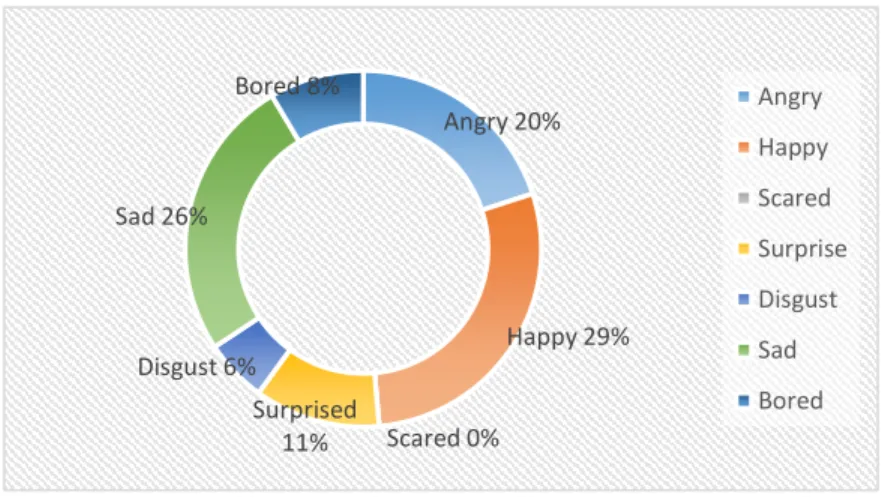
There were seven basic emotions that were manually measured and analyzed from the video recorded. The seven basic emotions used were happiness, anger, sadness, scared, surprise, disgust, sad and bored. This had also helped strengthen claims of psychological circumstances of victims recalling the scam experience. The duration of the
emotion was measured through a table indicating minutes of interview per second with 7 basic emotions listed. Through this we have identified dominant emotions of the participants. The researchers assessed the top 2 dominant emotions for each participants. The number of positive expression was only 1 (Happy). As we have reviewed the footage, they were most happy in answering the question, what
161 they do in their spare time as well as the
reflection part of the interview guide of which they shared their learning's as a victim. In contrast, there were 2 negative expressions present during the interview
which were sad and anger. These expressions where present while being asked to tell their scam experience as much detail as possible and their thoughts and emotions during those days.
Figure 1. Dominant Emotions
Focus Group Discussions Summary Most of the participants were more engaged in using their social media and have identified that most scams were present and advertised through Facebook.
One of the participants stated that he saw one on a comments sections and sponsored ads prevalent on Facebook.
They were also engaged in researching and visiting different websites but all of them answered Facebook. As they have seen such offer, they have this feeling of excitement and energy to find out more but given the fact that they have experienced being scammed, they felt emotional turmoil, fear and anxiety.
Another interesting fact that the researchers have discovered from this discussion was they were not just scammed once but with the minimum
number of two by 3 participants and maximum number of six, 2 participants said. This means that regardless of experiencing scam once doesn’t signifies safety of being scammed again. They were vulnerable because they reasoned out that they were impulsive, not cautious, and victims of investment fraud and double your money seeks financial independence from their parents.
Overall, as online users, the participants have shared to always be cautious in buying online. Be observant, check the necessary details of the offer that you are about to enter, check reviews and feedback to establish your expectations. Also, prioritize your needs than wants and never use emotion to decide engaging in online investing. Don’t and never trust wholly online and if Angry 20%
Happy 29%
Scared 0%
Surprised 11%
Disgust 6%
Sad 26%
Bored 8% Angry
Happy Scared Surprise Disgust Sad Bored