Rice genetic improvement for rainfed lowland rice and drought prone environment through the integrated application of the conventional and non-conventional breeding methods. Impact of nutrient management in improving rice grain yield and quality in multiple nutrient deficient soils.

Development of Integrated Crop and Nutrient Management for Upland Ecosystem in Regions IV and V
The introduction of modern high-yielding varieties led to marked changes in the insect pest complex of rice. However, insecticides cause more damage to the environment, thus affecting the beneficial species that live in the rice ecosystem and the surrounding environment.
Socioeconomic and policy research on rice in Southern Luzon JLM Ocampo
Majority of the farmer respondents were married, followed by single, widowed and some divorced respondents. Some of the farmer respondents' specialty rice varieties grown at the study sites are shown in Table 4.
Research, development and promotion of Location-Specific Technologies (LST) for Southern Luzon, Regions IV and V
The 300 m2 rice garden was planted in July 2012 with high yielding (NSIC Rc288), hybrid (Mestiso 20) and traditional (Inipot-Ibon) rice varieties to present to the people of the urban area. FGD, data collection and monitoring along with the FFS in the area were also done.

Development of integrated crop and nutrient management for upland ecosystem in Region IV-A
Maangay ti agsasaruno a presentasion tapno maitandudo dagiti nasarakan ken rekomendasion dagiti navalidate nga LST. Dagiti manamnama a resulta ti panagadal ket ti panangpataud iti (1) location-specific fertilizer recommendation para iti upland rice (target yield a 2 t/ha wenno nasursurok pay para kadagiti tradisional ken moderno a barayti) ken (2) refined upland MOET para iti panangdayagnos kadagiti limitasion ti sustansia kadagiti upland soils . 30 a mannalon ti nainterbiu ken naala ti 24 a sample ti daga manipud kadagiti probinsia ti Quezon, Macalelon, Catanauan, Laguna, Batangas, Malvar, Tanauan, Calaca, Lemery, Tuy, Agoncillo ken Cavite. Maragondon, Magallano, Alfonso, Heneral Aguinaldo, Dasmariñas Silang).
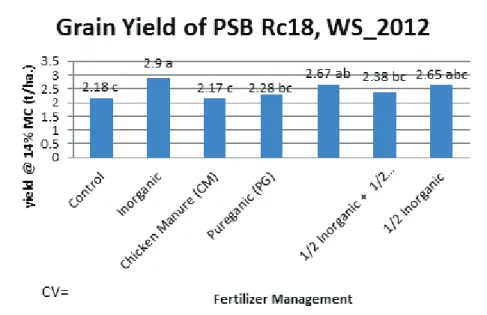
This may be due to the uneven soil fertility caused by the bulk application of chicken manure applied to the crop prior to the upland rice experiment (Dasmariñas, Cavite). No significant results were obtained from the grain yields of NSIC Rc9, NSIC Rc13 and Binuhangin applied with different organic and inorganic fertilizer treatments. In terms of variety differences, NSIC Rc11 was observed to have significantly smaller plants compared to NSIC Rc192 and Kinardo.
This is perhaps because the catchment MOET setup was maintained at field capacity moisture content so that most of the nutrients were present in their available form.
Development of integrated crop and nutrient management for upland ecosystem in Region IV-B
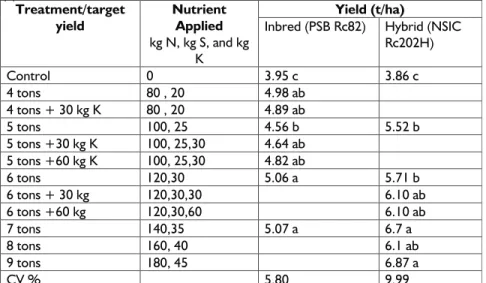
Grain and straw yields were not affected by the different varieties used (NSIC Rc11, NSIC Rc9 and Kamuros). Low yields ranging from 0.32 to 0.73 t/ha were due to unfavorable weather conditions, pests (i.e. root aphids) and diseases (i.e. blast and brown spot) (Abra de Ilog , Occidental Mindoro). The yields obtained from the modern varieties ranged from 4.1 to 4.7 t/ha while the traditional varieties ranged from 2.5 to 3.6 t/ha.
Grain yields were not affected by the varieties used, NSIC Rc11 and NSIC Rc9, as well as the fertilizer management, organic and inorganic, which varied from 1.4 to 2.0t/ha. One upland soil sample from Occidental Mindoro was subjected to upland MOET and laboratory analysis. The results of upland MOET showed only a N deficiency, but the laboratory analysis showed Ca, Fe and Mg deficiencies apart from N.
Developing integrated crop and nutrient management options for irrigated lowland, rainfed and upland rice environments in the south.
Development of integrated crop and nutrient management options for irrigated lowland, rainfed, and upland rice environments in Southern
The development of the highland rice ecosystem is an opportunity to increase the country's rice supply, as this is located on the outskirts of the rural areas. Development of Integrated Crop Nutrient Management for Irrigated and Upland Rice Ecosystems in Southern Luzon. The study consisted of two sub-studies entitled: "Integrated Crop and Nutrient Management for Upland Rice" and "Fate of Nitrogen from Organic and Inorganic Fertilizers under Irrigated Lowland and Upland Rice Conditions".
The objectives of the study were (1) to characterize the climatic, physical and chemical soil characteristics and socio-economic status of the upland rice areas of Region V; (2) to validate and use mountain MOET as a diagnostic tool in determining nutrient deficiencies of mountain soils; (3) to develop an integrated management of crop and soil nutrients for mountain areas using organic and inorganic fertilizer sources; (4) to determine the amount of nitrogen (15N) absorbed by crops, retained in the soil and potential losses during the planting season; and (5) to determine the effect of different fertilizer management strategies on transformations of labeled N (15N). The expected results of the study were to develop (1) site-specific fertilizer recommendation for upland rice (target yield of 2 t/ha or more for traditional and modern varieties), (2) soil fertility mapping and analysis of upland rice suitability in southern Luzon, (3) Refined upland MOET for diagnosing nutrient limitations of upland soils, (4) Clarifies concerns about nutrient efficiency using different fertilizer sources and their combination in rice irrigated lowland, and (5) provides farmers with the appropriate fertilizer recommendation in a sustainable and productive manner in irrigated lowland and mountain conditions. Substudy 2: Fate of nitrogen from organic and inorganic fertilizers under irrigated conditions of lowland and upland rice.
The tracer study using 15N labeled fertilizer will be conducted to determine the fate of nitrogen from different fertilizer sources and their combination under both lowland and upland rice irrigated conditions.
Energy in rice farming: The potential of nipa palm for alcohol production
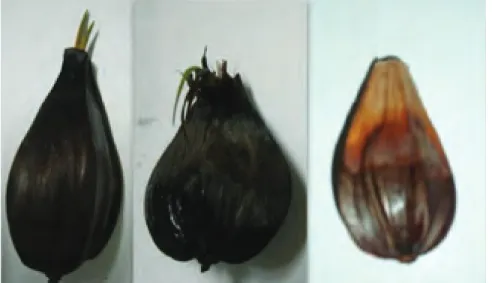
The seeds collected from Calauag, Quezon were planted in the greenhouse and now at the early seedling stage (Fig. 9) while those collected from the Bicol Region already died at the seedling stage. Planting material: Mature and immature embryos, panicles, male inflorescences and leaf segments cut from fruits and flowers of mature plants of Nypha fruticans were used as explants in the various decontamination experiments. This treatment is now routinely used in the decontamination of mature embryos for nephews.
The plum was separated from the ripe fruit (Fig. 14) and sterilized using different sterilizers at different times (Table 11). The young leaf was detached from the germinated seed (Fig. 15) and sterilized using ten sterilizers (Table 12). Survival percentage of young leaf explants sterilized using different sterilants after almost 10 weeks of incubation in the dark.
For the embryo explants, 5.25% NaClO + five drops of tween (20 minutes) was selected as the best sterilizing agent, which is now routinely used in the laboratory for decontamination. Molecular markers prove to be powerful tools in the assessment of genetic diversity. However, data on the genetic diversity of nipa in the Philippines is still lacking simply because the necessary research has not been done, according to this study.
Village-level bioethanol production as energy source for rice farming RB Demafelis
The profile of rice farmers and their fuel requirements for rice farming are shown below. The average age of the farmer is 45 years old, with the youngest farmer being 28 years old while the oldest is 62 years old. The average age of farmers is 54 years old, with the youngest farmer being 30 years old and the oldest being 76 years old.
Average age of the farmers is 49 years old with the youngest farmer at 24 while the oldest at 69. Average age of the farmer is 45 years old with the youngest farmer at 22 while the oldest at 68. Details of the production aspect of the study especially in the establishment of a village-level bioethanol production model is still being refined.
The pour point is checked for the top and bottom of the distillation column by comparing the values for (h0+h0) with the calculated values of (h0 +h0).

Technology development and promotion in Bicol Region MM Movillon
Most of the farmers had problems with pest control and therefore stopped planting rice. Many of the rice fields have well-developed irrigation with water coming from nearby springs and rivers, while some receive rain. There are no rice fields in the mountain region of the barangay, but some of the farmers have expressed interest in mountain rice farming.
Since then, PhilRice has set up the PalayCheck system as one of the platforms to achieve rice self-sufficiency across the country. It is important to assess the likely effect of the PalayCheck system on the rice yield and income of participating farmers in selected municipalities in Albay and Camarines Sur. In Nabua, LSTD beneficiaries could not accept most of the KeyChecks, especially in Brgy.
Most of the planted rice was submerged by the flood on 2011 DS and WS, which damaged the plant at the start stage.

GreenFarm - Development and promotion of green technologies in Agricultural Systems
The passage of the Organic Agriculture Act of 2010 offered promise for the future of agriculture in the country. In accordance with the Organic Law, the research started using organic fertilizers from biodegradable waste to reduce the problems of agricultural waste, industrial waste. The rain-fed, rice-based cropping patterns to be established are: rice-rice or rice-upland crops, while the upland-rice-based cropping pattern is: upland rice-upland crops.
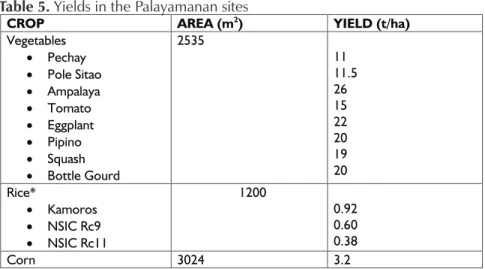
Establishment of demonstration farms for rain-fed and upland RBFS. Establishment of three demonstration farms for rice-based farming systems. For policy makers, understanding the area requirement to sustain a family in a rain-based farming system in the highlands is essential in formulating equitable decisions/programs. Upland and Rainfed Rice-based Farming Systems models on display integrate various crops, livestock and fish with the aim of using all the farm's produce and by-products without wasting anything, while enjoying a comfortable and healthy environment.
Palayamanan will challenge and encourage farmers to combine art, science and good agricultural practice in a rice-based farming system.
Development and promotion of upland and rainfed rice-based farming systems through Palayamanan
Los Banos for the GreenFarm project using different levels of vermicomposts and the application of BioN and Biogroe. DAE – days after emergence DAS – days after planting DAT – days after transplanting DBMS – database management system DDTK – disease diagnosis toolkit DENR – Department of Environment and Natural Resources. FFP – farmer fertilizer practice FFS – farmer field school FGD – focus group discussion FI – innovative farmer.
MRT – Mobile Rice TeknoKlinik MSE – male-sterile environment MT – minimum tillage mtha-¹ - metric ton per hectare MYT – multi-location yield trials N – nitrogen. NCT – National Cooperative Testing NFA – National Food Authority NRO – non-governmental organization NE – natural enemies. RQCS – Rice Quality Classification Software RS4D – Rice Science for Development RSO – rice sufficiency officer RFL – Rain fed lowland RTV – rice tungro virus.
Explants cultured on media without and with activated charcoal (left) and modified Euwen media with swollen anthers (right).