Increasing the contribution of small-scale aquaculture to food security, poverty reduction and socio-economic development. FAO expert workshop on increasing the contribution of small-scale aquaculture to food security, poverty reduction and socio-economic.
Acronyms and abbreviations
FAO Food and Agriculture Organization of the United Nations FARMC Fisheries and Aquatic Resources Management Council fishermen associations. UNOPS United Nations Office for Project Services UPV University of the Philippines, Visayas USA, United States of America.
PROcEEdINGS OF tHE FAO EXPERt WORKSHOP ON ENHANcING tHE
POVERtY AllEVIAtION ANd SOcIO-EcONOMIc dEVElOPMENt
Hanoi, Viet Nam, 21–24 April 2010
FAO expert workshop on
Cont.)
Increasing the contribution of small-scale aquaculture to food security, poverty reduction and socio-economic development 28. Increasing the contribution of small-scale aquaculture to food security, poverty reduction and socio-economic development 32.
AquAcultuRE tO FOOd SEcuRItY, POVERtY AllEVIAtION ANd
Review of small-scale aquaculture
Improving the contribution of small-scale aquaculture to food security, poverty alleviation and socio-economic development 38. Improving the contribution of small-scale aquaculture to food security, poverty alleviation and socio-economic development 48. Improving the contribution of small-scale aquaculture to food security, poverty alleviation and socio- economic development 52.
Improving the contribution of small-scale aquaculture to food security, poverty alleviation and socio-economic development 54. Improving the contribution of small-scale aquaculture to food security, poverty alleviation and socio-economic development 56. Improving the contribution of small-scale aquaculture to food security, poverty alleviation and socio- economic development 58.
Small-scale aquaculture and its contextual relationships with the
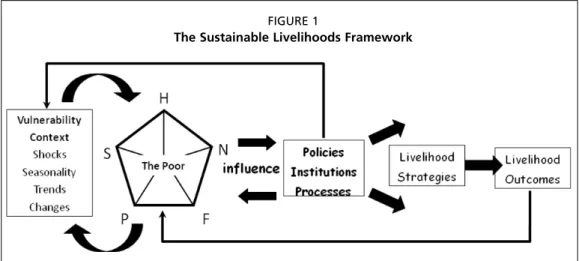
The past two decades have seen a significant transformation in the definition of the concept of poverty. Access by the poor to land and water resources needed for aquaculture is typically limited. What is also different about the SLA is that it embraces the complexity of rural livelihoods from the perspective of the poor.
It places the poor at the center of the development process because they are the ones who need support the most. Holistic Being holistic in development interventions means being aware of the complexity of people's lives and the complexity of poverty. In the case of the poor, this is often closely linked to the process of empowerment – the poor are often unaware of the fact that they have rights.
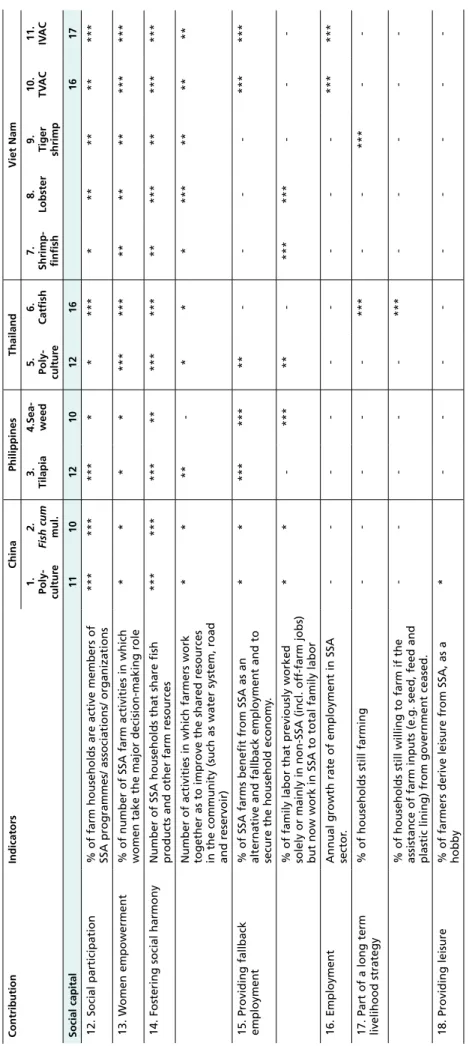
To address this, the Food and Agriculture Organization of the United Nations (FAO) organized an expert workshop at Nha Trang University (NTU) in Nha Trang, Vietnam, in November 2008, with a view to developing an indicator system for better assessment of SSA's contribution to SRD. Following the Tagaytay Workshop, the practical application of the indicators was carried out in four case studies in China and Vietnam in 2010. This article presents the analytical results of the case studies that focus on the contribution of SSA and the implications of measuring it.
The Nha Trang indicator system was modified to be applicable for measuring the contribution of SSA to each of the case studies. The eleven case studies confirm the usefulness of the SLA framework to measure and analyze the contributions of SSA to sustainable rural development (SRD). The results support the recommendations of the Tagaytay workshop to modify the Nha Trang indicator system.

Small-scale aquaculture, development and poverty: a reassessment
The labor effort required to manage farms at the smaller end of the spectrum is quite low, on the order of a few hours per day. Most of the fish produced is destined for urban and suburban markets in the Greater Bangkok Metropolitan Area. As a result, many of the poorest households do not own enough land to build even very small ponds.
Conventional pond-based aquaculture practiced on even this very small scale cannot therefore generally be considered the preserve of the "poorest of the poor". Contributions to household income from this type of aquaculture are generally quite limited, amounting to less than 15 percent of the total (Table 3). Supply and use of the seed of Pangasius hypophthalmus in the Mekong Delta, Vietnam.
Global fishery trade and its
Quantitative imports increased marginally (+0.25 percent) in the US market, but were lower in Japan and the EU compared to 2010. This works in favor of small aquaculture producers as imports from developed markets are slowing. The strengthening of many Asian currencies against the US dollar also supported higher prices in the Asian domestic markets and imports to supplement the supply gap, a sharp contrast to the trend in the US and European markets.
In 2011, Indian fisheries imports increased by almost 95 percent to USD 114 million compared to the previous year. The urban food market in India is estimated at USD 70 billion and following reports of higher demand for fish in the local market recently, prices have increased. Sustainable supplies of certified chemical-free and organic fish products can support domestic and regional fisheries trade, where small aquaculture producers can gain a larger market share.
Small-scale aquaculture in thailand: farmer groups and
The Department of Fisheries (DOF) and other government agencies are providing various types of support to farmers in the country. Driven by the increasing average production area per farm, different definitions for small-scale farms are now used in the country (e.g. 5 ha or 8 ha). Small-scale shrimp farms in Thailand play an important role in providing livelihoods to the people, especially in rural areas.
In addition to the public certification schemes, a number of private certification schemes have been introduced (or are being developed) in the aquaculture industry in Thailand. There are dozens of IOMs established in Thailand for shrimp7, but whether SSA participates in the aforementioned IOM is subject to further investigation. Aquaculture production of shrimp and tilapia has increased dramatically in recent decades, and the value of these two commodities represents 80 percent of the national aquaculture production value in 2008.

Sustainable Aquaculture for Poverty Alleviation (SAPA)”
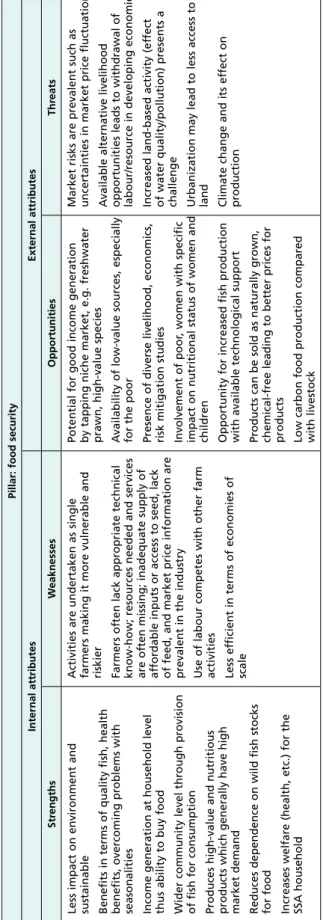
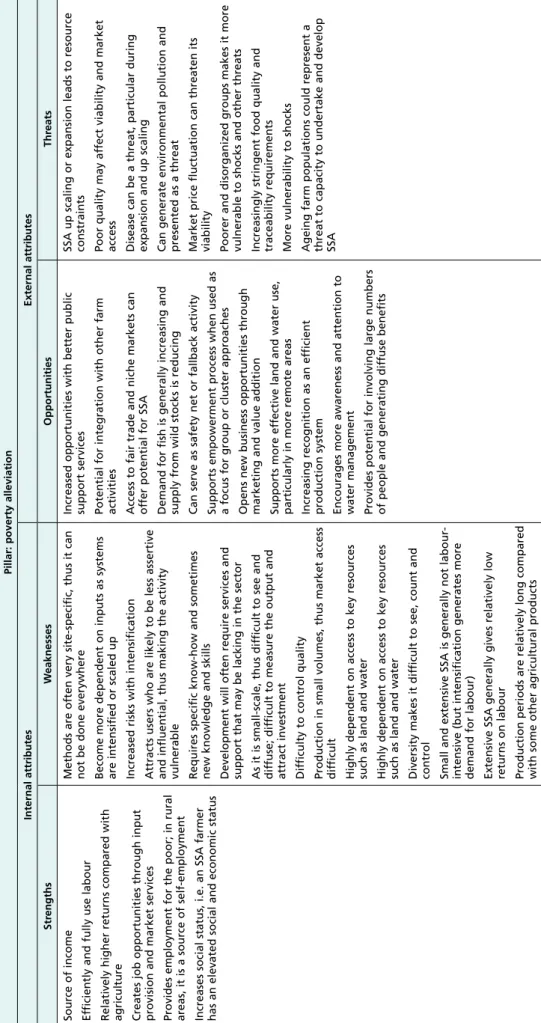
Aquaculture, especially on a small scale, is considered an effective means of poverty alleviation in coastal, lowland and mountain communities. In line with HEPR's goal of poverty alleviation, SAPA's goal was to enhance the livelihoods of the poor and vulnerable people through aquaculture. THE SOCIO-ECONOMIC IMPACT OF THE IMPLEMENTATION OF SAPA AND OTHER POLICIES IN AQUACULTURE FOR POVERTY REDUCTION.
Some of the donor agencies that focused on poverty alleviation for the poor farmers through small-scale aquaculture (SSA) were the United Nations Development Program (UNDP), the United Nations Food and Agriculture Organization (FAO), the Swedish International Development Assistance ( FAO). SIDA) and the Danish International Development Assistance (DANIDA) through the Asian Institute of Technology (AIT), the Norwegian Development Cooperation Agency (NORAD), the Spanish Ayuda Intercambio y Desarrollo (AIDA) and the Agency for International Cooperation and Development (AECID), the Australian International Development Agency (AusAID), the Australian Center for International Agricultural Research (ACIAR), the Finnish Department for International Development Cooperation (FINIDA), the UK Department for International Development (DFID), among others. The implementation capacity of the institutions and stakeholders involved is sufficient to ensure that policies are implemented to support the poor. The capacity of the poor to access public services is improved so that the poor themselves can benefit from them.
Small-scale aquaculture in Papua New Guinea: examination of entry
Thus, small-scale fish farming is a key component of the food security program for PNG (NADP, 2007; Challacombe and Challacombe, 2007). Small-scale aquaculture in Papua New Guinea: examining entry points for international aid donors 133. Small-scale aquaculture in Papua New Guinea: examining entry points for international aid donors 135.
Small-scale aquaculture in Papua New Guinea: exploring entry points for international aid donors 137. Small-scale aquaculture in Papua New Guinea: exploring entry points for international aid donors 139. Small-scale aquaculture in Papua New Guinea: exploring entry points for international aid donors 141.
Improving the contribution of small-scale aquaculture to food security, poverty alleviation and socio-economic development 144. Improving the contribution of small-scale aquaculture to food security, poverty alleviation and socio-economic development 146. The increasingly volatile and unpredictable climate also appears to be a major challenge for small-scale aquaculture (SSA) in East Africa.
Improving the contribution of small-scale aquaculture to food security, poverty alleviation and socio-economic development 148. A particular problem that has been identified is the lack of reliable data on the contribution of small-scale producers. Improving the contribution of small-scale aquaculture to food security, poverty alleviation and socio-economic development 150.
Governance institutions and the adaptive capacity of small-scale
Governance institutions and the adaptability of small-scale aquaculture to climate change in the Philippines 155. Governance institutions and the adaptability of small-scale aquaculture to climate change in the Philippines 157. Governance institutions and the adaptability of small-scale aquaculture to climate change in the Philippines 159.
Aquaculture development in the Philippines can improve adaptation to climate change and increase food security. Governance Institutions and Adaptive Capacity of Small-Scale Aquaculture to Climate Change in the Philippines 161. Governance Institutions and Adaptive Capacity of Small-Scale Aquaculture to Climate Change in the Philippines 163.
Social issues in small scale aquaculture (SSA): the social
Improving the contribution of small-scale aquaculture to food security, poverty alleviation and socio-economic development 166. Improving the contribution of small-scale aquaculture to food security, poverty alleviation and socio-economic development 168. Improving the contribution of small-scale aquaculture to food security, poverty alleviation and socio-economic development economic development 170.
An indicator system for assessing the contribution of small-scale aquaculture to sustainable rural development: selected case studies. An indicator system for assessing the contribution of small-scale aquaculture to sustainable rural development: selected case studies. Indicators for measuring the contribution of small-scale aquaculture to sustainable rural development: case studies of Thailand.
Resiliency of small-holder
Emerging issues related to climate change and market prices influenced by global trade adversely affected the fragile aquaculture livelihoods of small-scale fish farmers. Smallholder Farmers' Resilience to Climate Change and Market Prices in Selected Communities in the Philippines 173. Smallholder Farmers' Resilience to Climate Change and Market Prices in Selected Communities in the Philippines 175.
Resilience of smallholder fish farmers to climate change and market prices in selected communities in the Philippines 177. Resilience of smallholder fish farmers to climate change and market prices in selected communities in the Philippines 179. Adaptation of fishing communities in the Philippines to climate change. also available at http://iopscience. iop.org).
Poverty alleviation and women’s