But the military lacks the usual patience and cannot tolerate political and social chaos. The increasing role of the military in politics and the development of new states should stimulate more research into the functioning of military coups. The decisive factor for the military coup of 2 March 1962 was, of course, a personal tragedy for the U N u.
The people's lives have never been unnecessarily interfered with by the military regime. His achievements were recognized by the overwhelming vote of the people in the presidential elections of January 1965. In terms of new direction, none of the military regimes moved the nation away from the task of nation-building originally set out by the politicians.
THE NORTH VIETNAMESE REGIME
EXPANSION VS. CONSOUDATION
The people must provide the will and manpower to carry out the military line of the party developed in the top party hierarchy. Attention will now be focused on the second element of the North Vietnamese Party's military line. The consciousness of the proletarian class is the basis of the party's ideological education and political training.
By raising the revolutionary fervor of the people, many undesirable tendencies will be eliminated. In summary, the concept of a people's war, a people's army, is based on respect for the masses. An important task of the cadre is to set an example for the soldiers in maintaining a high revolutionary spirit.
THE HISTORJCAL ROOTS OF
Such aspirations and hopes were categorically expressed at the meetings of the Badan Penjelidek l:saha Persiapan Kemerdekaan Indonesia (Investigation Committee for the Preparation of Indonesian Independence) established by Gunscikan (head of the Japanese J\Iilitary Administration) on I\ masen 1. 1!145. HISTORICAL ROOTS OF I~DONESIA.N IRREDE~TIS:\1 43 influence the behavior and lives of members of society. And in the final analysis it depended on the personality of the ruling god - the king.
Regarding the boundary of this empire, llerg has proved,13 that the list of Lajapahit dependencies in cantos 13-16 is Naga-. Translation of the latter work into Indonesian by Zaman Hindu, Pustaka Sanljana, Tertljemahan Arif Efendija. The role of Indonesian foreign policy in this ideology, according to former foreign minister Subandri, is to "implement the goals of the revolution in the international sphere and.
THE MANOLAY CULT: THE GENESIS AND DISSOLUTION OF MILLENARIAN SENTIMENTS AMONG THE ISNEG
OF NORTHERN LUZON
It may, as in the case of the .\lanolay cult, cYoh·c due to disturbances of the rclati, ·ely autonomous social system, during the course of its domination and management by "outsiders". At the same time, the social "frustration" and political agitation before the emergence of the .Uannlay cult cannot be ignored. In the case of the .\lanolaya cult, the reliance of the participants Isne 011 tltcir old m~ ths and praC'Iin·s. rcJe,ant·components of ''hich atT C'\amincd in the second section, highlights the contextual relationships that are most decisive, to tlw cultic de,elopnwnt.
The rejection of this foreign domination was accompanied, especially in the case of the Aglipayan Church, by an organization and creed closely modeled on the model of the Roman Catholic Church. Like the Christianization of the larger e<>nlf'rs of Jks:10 and SJgacla pru[!rc,scd. For example, in Tarlac province, the Co/arums (Cucrrero 1007:G6) arranged for the resurrection of the Philippine national hero.
A PAVAO
The cultural influence of the Ilocano people on the Isneg will be discussed later in the article. He believed that the ancestors of today's Mount Isneg were most likely remontados (runaways) who escaped Spanish rule in the lowlands. A high priority on the US government's list of goals was preparing the Philippines for self-government.
During the .\lannlmt celebrations, all participa~ \\·ere gi,cn and ~C'd the names of the L'nto pcople. At the same time, many lsncg only hesitantly and incompletely understood the satisfactions available in the new system. These pictures and the file of Cofradla correspondence in Tagalog that was captured with them may still exist in the archives.
BUDDHISM AND STATE IN CEYLON BEFORE THE ADVENT OF THE PORTUGUESE
Perltaps, this was one of the motivating factors for the mJs-;cs and the elite to give their hensl to the monks and monasteries. This gave some form of uniformity to the organization, structure and financing of the various services. An acceptance of such a state of affairs was bound to facilitate the maintenance of the status quo in the Ceylonese social structure.
In addition, it was believed that handing over one's son to the Sangha was one of the most meritorious deeds. Whatever the social background of the monks, there is no doubt that their dress alone conferred upon them a certain status and value in the Ceylon social system. The social role of monks as educators, doctors and advisers to rulers and ruled became more and more important.
As the temporal head of Buddhism, some of the rulers tried to unify and revive the sangha. Kingship as such was divinely sanctioned: "...popular traditions, as these provided powerful support to the king's authority. Whoever, for example, had Huudha's tooth reliquary and alms bowl, had the allegiance of the people.
Originally!) ~·cular matter, with the rising prestige of the Sangha.. ceremony "as recognized only if it. In other words, in the ruler's position as defender of the faith lay the king's most powerful source of power over Implicit in his position as protector of the faith was the royal judicial authority over the ecclesiastical affairs of the Sangha.
During this period the three brotherhoods seemed to disappear and the Sangha returned to the old categories of the village brotherhood and jungle brotherhood.
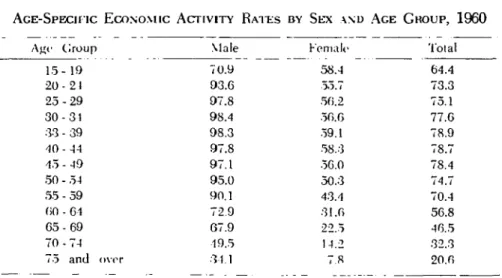
Due mainly to the large number of working women, the ratio of the economically active population to the total population is relatively high. Of the economically inactive persons, about 70 percent were domestic workers and the remaining 30 percent were almost equally divided between children, retired persons and others. The simplest index used in the analysis of the labor force is the crude economic activity rate, which is defined as the percentage of the labor force to the total population of all ages.
The gross rate of economic activity of men is always higher than that of women. The proportion of the workforce engaged in tertiary industries is 12.:3 percent, more than double that engaged in secondary industries. This pattern of distribution in which primary industries absorb a very large majority while secondary industries are quite insignificant is even more pronounced in the case of the female workforce.
This classification by occupation is another way of presenting the economic characteristics of the population. The remaining fifth of the working population is spread among the other professions. 71 percent of agricultural workers, about 170,000 people, are engaged in growing rice or mainly rice.
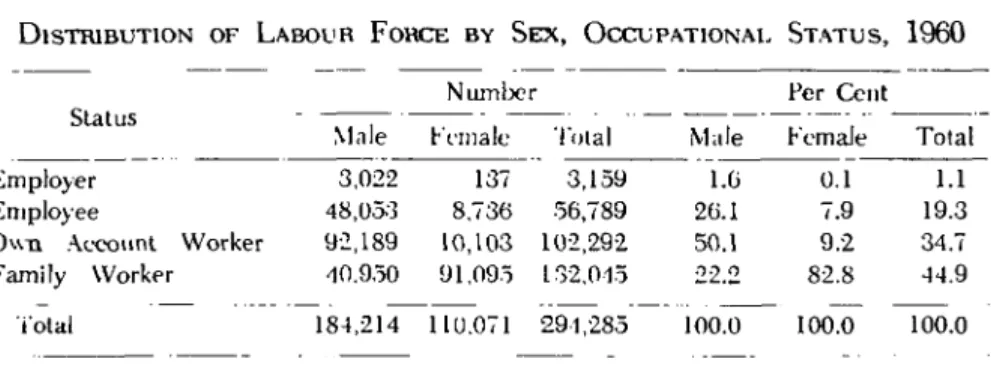
This highlights the importance of family care, which in most cases consists of the farm. Only a fifth of the working population is employed, and employers only 1.1 percent of the entire working population. Most women were family workers (83 percent), while most men were self-employed (50 percent); and 26 percent of employed men were employed, while 22 percent were family workers.
Employers of the female gender are indeed rare, accounting for only 0.1 percent compared to 1.6 percent for the men.
THE CHINESE IN THE PHILIPPINE REVOLUTION
THE CHINESE IN THE PHILIPPINE REVOLUTION~ 147 an influx of Chinese foreigners who would compete with the country's industrial population. The estimate of the numhcr of cold drinks was given on commission by the general Chinese exporter and importer of sugar, A.R.:\f. 41 Charles Burke Elliott, The Philippines- To the End of Military Regime, (Indianapolis: The Bobbs-\Icrrill Company, 191G), p. ilfi;.
The revolution in the Philippines came at a crucial time in the history of the Filipino Chinese. Despite the restrictions on immigration imposed by the Americans, the Chinese community grew and prospered. Both the reformers and the revolutionaries and the Manchus launched a great competition for the allegiance and support of the Chinese abroad.
The challenge of the reformists sometimes ignited the fire of revolution in the revolutionary ranks. 22 In May the Imperial Government sent a special commissioner to inquire into the immigration and living conditions of the Chinese in the Philippines and Samoa. Likewise, the Chinese in the Philippines were kept informed of the commercial and educational enterprise of the Manchu government by the same ministry.
He led one of the vanguards in "leading the advance of Western Civilization" among the Chinese in the Philippines, Dr. The paper alluded to the local Chinese financial contribution to the movement against the dynasty. It is also argued that this unrest is responsible for the Chinese government's desire to establish consulates in the Dutch East Indies.
The Chinese revolutionary followers in the Philippines also listened to the theme of the struggle, broadly speaking, of the Chinese people against the Manchu, alien in race. Every Chinese resident in the Philippines was asked to contribute his quota to the cause of the revolution.” 68 Since the predominance of the Chinese in the Philippines was Fukien and Cantonese, i.e. from the southern tribe, the response had been generous.
CONTRIBUTORS
ASIAN CENTER STAFF
UNIVERSITY OF THE PHILIPPINES
ASIAN CENTER