EVALUATION OF BIOGAS PRODUCTION FROM PARA GRASS (BRACHIARIA MUTICA) WITH CO-DIGESTION OF BUFFALO DUNG
AJCHARAPA CHUANCHAI
MASTER OF ENGINEERING IN RENEWABLE ENERGY ENGINEERING MAEJO UNIVERSITY
2018
EVALUATION OF BIOGAS PRODUCTION FROM PARA GRASS (BRACHIARIA MUTICA) WITH CO-DIGESTION OF BUFFALO DUNG
AJCHARAPA CHUANCHAI
A THESIS SUBMITTED IN PARTIAL FULFILLMENT
OF THE REQUIREMENTS FOR THE DEGREE OF MASTER OF ENGINEERING IN RENEWABLE ENERGY ENGINEERING
GRADUATE SCHOOL MAEJO UNIVERSITY 2018
Copyright of Maejo University
EVALUATION OF BIOGAS PRODUCTION FROM PARA GRASS (BRACHIARIA MUTICA) WITH CO-DIGESTION OF BUFFALO DUNG
AJCHARAPA CHUANCHAI
THIS THESIS HAS BEEN APPROVED IN PARTIAL FULFLLMENT OF THE REQUIREMENTS FOR THE DEGREE OF MASTER OF ENGINEERING
IN RENEWABLE ENERGY ENGINEERING
APPROVED BY Advisory Committee
Chair
(Dr. Rameshprabu Ramaraj)
/ /
Committee
(Assistant Professor Dr. Natthawud Dussadee)
/ /
Committee
(Associate Professor Dr. Niwooti Whangchai)
/ /
Committee
(Dr. Yuwalee Unpaprom)
/ /
Program Chair, Master of Engineering
in Renewable Energy Engineering (Assistant Professor Dr. Sarawut Polvongsri)
/ /
CERTIFIED BY GRADUATE SCHOOL
(Associate Professor Dr. Kriangsak Mengamphan) Dean of Graduate School
/ /
ชื่อเรื่อง การประเมินผลการผลิตก๊าซชีวภาพจากหญ้าขนโดยกระบวนการหมัก ร่วมกับมูลกระบือ
ชื่อผู้เขียน นางสาวอัจฉราภา ชวนชัย
ชื่อปริญญา วิศวกรรมศาสตรมหาบัณฑิต สาขาวิชาวิศวกรรมพลังงานทดแทน อาจารย์ที่ปรึกษาหลัก Dr. Rameshprabu Ramaraj
บทคัดย่อ
การผลิตก๊าซชีวภาพเป็นเทคโนโลยีที่ส าคัญอย่างหนึ่งที่ช่วยในการขับเคลื่อนแผนพัฒนา พลังงานอย่างยั่งยืน ซึ่งมีวัตถุประสงค์เพื่อรองรับความต้องการในการใช้พลังงาน และเพื่อช่วยลด สภาวะการปลดปล่อยก๊าซเรือนกระจก การผลิตก๊าซชีวภาพสามารถท าได้โดยกระบวนการย่อยสลาย ทางชีวภาพแบบไม่ใช้ออกซิเจน (AD) กระบวนการย่อยสลายทางชีวภาพนี้ต้องอาศัยชีวมวลเป็นแหล่ง พลังงาน ในการศึกษาครั้งนี้ได้ท าการศึกษาการประเมินการผลิตก๊าซชีวภาพจากการหมักร่วมระหว่าง หญ้าขนและมูลกระบือ ซึ่งหญ้าขนถือว่าเป็นพืชน้ าที่เจริญได้ทั่วไปในพื้นที่ชุ่มน้ าและไม่มีภาวะแข่งขัน กับพืชอาหาร ดังนั้นการศึกษานี้ได้มุ่งเน้นวิธีการปรับสภาพวัตถุดิบหญ้าขน และการหมักร่วมกับมูล กระบือโดยแบ่งการทดลองออกเป็น 3 ส่วน ในส่วนแรก ท าการศึกษาลักษณะของวัตถุดิบและปรับ สภาพด้วยความร้อนโดยการต้มที่ 100 องศาเซลเซียสเป็นเวลา 2 ชั่วโมง และปรับสภาพด้วยสารเคมี
โดยใช้โซเดียมไฮดรอกไซด์ เป็นเวลา 72 ชั่วโมง ทดสอบประสิทธิภาพของการปรับสภาพหญ้าขนโดย ตรวจสอบด้วยภาพใต้กล้องจุลทรรศน์อิเล็กตรอนแบบส่องกราด (SEM) การศึกษาส่วนที่ 2 ศึกษา ประสิทธิภาพและอัตราส่วนระหว่างหญ้าขนและมูลกระบือต่อผลผลิตก๊าซชีวภาพระดับห้องทดลองที่
อุณหภูมิห้อง ผลผลิตก๊าซชีวภาพสูงที่สูดได้จากชุดการทดลองที่ปรับสภาพด้วยโซเดียมไฮดรอกไซด์
2% เป็นเวลา 72 ชั่วโมง โดยผลผลิตก๊าซชีวภาพ มีค่าเท่ากับ 12.11 ลิตร และความเข้มข้นของก๊าซ มีเทน มีค่าเท่ากับ 69.30% สภาวะที่เหมาะสมที่สุดส าหรับการผลิตก๊าซชีวภาพ พบได้จากอัตราส่วน ของการหมักร่วมระหว่างหญ้าขนและมูลกระบือในอัตราส่วน 2:1 ในส่วนที่ 3 การศึกษาการผลิตก๊าซ ชีวภาพในขนาดที่ใหญ่ขึ้นโดยใช้อัตราส่วนที่เหมาะสมที่ได้จากการทดลองที่ผ่านมา ชุดถังปฏิกรณ์การ หมักมีขนาด 200 ลิตร ปริมาตรในการหมัก 150 ลิตร ผลการทดลองพบว่า ก๊าซชีวภาพที่ผลิตได้มี
ปริมาตร 1,620.65 ลิตร และความเข้มข้นของก๊าซมีเทน มีค่าเท่ากับ 69.70% ซึ่งวัตถุประสงค์อีก ประการหนึ่งที่ต้องการคือ การศึกษาสภาวะที่เหมาะสมของกระบวนการและพัฒนารูปแบบทาง วิศวกรรมหรือทางคณิตศาสตร์ ดังนั้นจึงมีการน าวิธีพื้นผิวตอบสนอง (RSM) วิเคราะห์ปัจจัยที่มีผลใน การผลิตก๊าซชีวภาพเพื่อให้ได้ผลผลิตก๊าซชีวภาพสูงที่สุด ในกรณีนี้ปัจจัยที่มีผลต่อการผลิตก๊าซชีวภาพ
ที่น ามาใช้ในวิเคราะห์คือเวลาและอัตราส่วนของหญ้าขนและมูลกระบือ จากนั้นได้ท าการวัดค่าความ ร้อนของก๊าซชีวภาพที่ผลิตได้ ซึ่งค่าความร้อนที่ได้ มีค่าเท่ากับ 39.4 เมกะจูล/ลูกบาศก์เมตร ค่าความ ร้อนสูงสุด มีค่าเท่ากับ 27.80 เมกะจูล/ลูกบาศก์เมตร และค่าความร้อนต่ าสุด มีค่าเท่ากับ 25.04 เม กะจูล/ลูกบาศก์เมตร ในการเพิ่มขนาดของงานทดลองมีวัตถุประสงค์เพื่อยืนยันผลในการประยุกต์ใช้
จริงและเพื่อวิเคราะห์กระบวนการทางเทคโนโลยีเชิงเศรษฐศาสตร์ นอกจากนี้ยังท าการศึกษาสมดุล มวลจากการทดลองเพื่อใช้ในการวิเคราะห์ระบบทางกายภาพ จากผลการทดลองโดยรวม สรุปได้ว่า หญ้าขนที่หมักร่วมกับมูลกระบือสามารถเป็นวัตถุดิบที่มีศักยภาพสูงในการผลิตก๊าซชีวภาพได้อย่างดี
ข้อดีอีกประการหนึ่งจากระบบการผลิตก๊าซชีวภาพคือ ของเหลือจากกระบวนการย่อยสลายนั้น ประกอบไปด้วยมหธาตุและจุลธาตุมากมาย ซึ่งเหมาะส าหรับการใช้ประโยชน์ในการท าปุ๋ยต่อไป
Title EVALUATION OF BIOGAS PRODUCTION FROM PARA GRASS(BRACHIARIA MUTICA) WITH CO- DIGESTION OF BUFFALO DUNG
Author MissAjcharapa Chuanchai
Degree Master of Engineering in Renewable Energy Engineering
Advisor Committee Chairperson Dr. Rameshprabu Ramaraj
ABSTRACT
Biogas production is an important technology in the improvement of sustainable energy source schemes that aims to reduce consumption of conventional fuel, therefore reducing greenhouse gas emissions. Biogas production can be accomplished through anaerobic digestion (AD), a biological process which uses biomass as an energy source. In this study, wetland aquatic plant (para grass) and buffalo dung substrates were used for biogas production. These substrates are widely available and hence do not compete with food production. This study focused on the pretreatment methods on para grass and co-digestion with buffalo dung which was divided into 3 parts. The first part was to evaluate raw material pretreatments: thermal pretreatment (hot water 100°C with 2 h) and chemical pretreatment (2%NaOH with 72 hour). The effect of pretreatments on para grass was demonstrated by using scanning electron microscopy (SEM) images. In the second part, efficiency of pretreatment on para grass for biogas production and different ratios between para grass and buffalo dung was performed at a lab scale. The experiment was conducted at room temperature and the highest biogas yield was 12.11 L and the concentration of methane was at 69.30% by using 2% NaOH as pretreatment at 72 residence time. This optimal condition of biogas production was obtained from co-digestion with a 2:1 ratio between para grass and buffalo dung. In the third part, the best ratio was used in the final scale up experiment. Each reactor was made from a 200 L tank with working volume of 150 L. The biogas yield was
1,620.65 L with 69.70% methane. The other objective is to optimize the condition process and develop an engineering/mathematical model. Response Surface Methodology (RSM) can be employed to maximize biogas production. An experiment was used to optimize operational factors. In this case, variables like time, ratio of para grass and buffalo dung were used as the factors on the response of biogas yield.
Moreover, heating value of biogas was measured. The heating value of biogas was 39.40 MJ/m3. High heating value (HHV) was 27.80 MJ/m3 and low heating value (LHV) was 25.04 MJ/m3. The volume size was increased to ensure future large-scale applications; and techno-economic process was verified. The result of mass balance analysis suggested that this study apply conservation of mass to the analysis of physical systems. All in all, this study indicated that co-digestion of para grass and buffalo dung was a promising approach in improving biogas production. Also, digestate from the biogas systems containing many macro and micro nutritious can be used as an effective fertilizer.
ACKNOWLEDGEMENTS
Firstly, my proud privilege to express sincere and whole hearted sense of gratitude to my esteemed major advisor Dr. Rameshprabu Ramaraj, Lecturer, School of Renewable Energy at Maejo University for his inspiration, way of approach, support, as well as guidance balanced by the freedom to express myself throughout my research.
I feel elated in expressing thanks to the esteemed members of my advisory committee Dr. Yuwalee Unpaprom, Lecturer, Program in Biotechnology, Faculty of Science, Maejo University, for her important comments, supports, pay attention and share her experiences throughout study period with her patience and great knowledge.
Furthermore, I would also like to express sincerity and thankfulness for my co-advisors Dr. Natthawud Dussadee, Assistant Professor and Director, School of Renewable Energy at Maejo University and Dr. Niwooti Whangchai, Associate Professor of faculty of Fisheries Technology and Aquatic Resources, Maejo University, for their guidance for knowledge, kindness and willing to help. Also special thanks for Professor Nakorn Tippayawong for his valuable comments during thesis final examination. It is very helpful to improve my writing skills on final version of thesis write-up.
I gratefully acknowledged all the faculty members, and office staffs of School of Renewable Energy, Program in Biotechnology laboratory staffs (Faculty of Science), Institute of Product Quality and Standardization (IQS) and Agricultural Learning Center, Maejo University, Chiang Mai Thailand for their kindness and help during my research work.
Great appreciation to my parents and friends whose there to help and stay beside me, blessing and immense patience, understanding and never-ending support were the continuous source of inspiration during the tenure of my degree. Words are not enough to express thanks to everyone who helped finish throughout my research time.
Ajcharapa Chuanchai June 2018
CONTENTS
Page ABSTRACT (THAI) ... C ABSTRACT (ENGLISH) ... E ACKNOWLEDGEMENTS ... G CONTENTS ... H LIST OF TABLES ... M LIST OF FIGURES ... O ABBREVIATIONS ... Q
CHAPTER 1 INTRODUCTION ... 1
Background ... 1
Objectives ... 3
Scope of study ... 3
Benefits ... 3
CHAPTER 2 LITERATURES REVIEW ... 4
Biogas ... 4
Methane ... 6
Flexibility to use different feedstock ... 9
Benefits and costs of a biogas plant ... 10
Biogas potential ... 11
Anaerobic digestion (AD)... 11
Fermentation can be divided into 2 types of processes ... 12
Substrates for anaerobic digestion ... 12
Page
The biochemical process of AD ... 14
Influence of factors on performance of anaerobic digestion ... 17
Temperature ... 17
pH parameter ... 18
Volatile fatty acids (VFA) ... 18
Ammonia ... 19
Mixing ... 20
C/N ratio ... 20
Biomass ... 21
Feedstock ... 23
Para grass ... 24
Description ... 24
Impacts ... 25
Invasiveness ... 26
Uses/Applications ... 27
Structure of the composition in para grass ... 27
Nutritional attributes of Para grass ... 27
Pre-treatment ... 28
Mechanical ... 29
Thermal pre-treatment method ... 29
Chemical pre-treatment method ... 30
Co-digestions ... 30
Theoretical biochemical methane potential (BMP) ... 31
Page
Statistical experiment design ... 32
Design of experiment ... 32
Optimization design of experiment ... 33
Full factorial design (FFD) ... 34
Central composite design (CCD) ... 34
Box-Behnken design (BBD) ... 34
Economic analysis ... 35
Total cost ... 35
Average variable cost ... 36
Average cost ... 36
The economic and employment dimension of dung ... 37
Economic effects ... 37
CHAPTER 3 MATERIALS AND METHODS ... 38
Experiment 1: Primary evaluation of raw material and pre-treatment. (Mono digestion substrate) ... 39
Material collection and preparation ... 39
Biogas estimation by Biochemical methane potential (BMP) ... 40
Experiment 2: Efficiency of pre-treatment on Para grass for biogas production and different ratios between Para grass and buffalo dung. (Co-digestion with pretreatment + ratio) ... 41
Pre-treatment ... 41
Thermal pre-treatment ... 42
Chemical pre-treatment ... 42
Characterization of sample by scanning electron microscopy (SEM) ... 43
Page
Experiment design ... 43
Statistical analysis ... 45
Response surface methodology (RSM) ... 45
Experiment 3: Evaluation of biogas production from Para grass co-digestion with buffalo dung. (Scale up) ... 46
Scale up study ... 46
Analytical methods ... 47
Economic analysis ... 48
Energy content analysis ... 49
Digestate fertilizer analysis ... 49
CHAPTER 4 RESULTS AND DISCUSSIONS ... 50
Feedstock characterization ... 50
Theoretical analysis of para grass biogas and biochemical methane production .... 52
Effect of pre-treatments on Para grass by imaging with scanning electron microscopy (SEM) ... 53
Experiment 1: mono-digestion ... 56
Experiment 2: Co-digestion with pretreatment + ratio ... 59
Biogas composition ... 62
Compare mono substrate with co-digestion ... 64
Optimization study of mono and co-digestion by CCD ... 65
Mono-digestion of alkali pretreatment ... 65
Co-digestion of alkaline pretreatment ... 67
Mono-digestion of boiled pretreatment ... 70
Co-digestion of boiled pretreatment ... 72
Page
Experiment 3: scale up ... 74
Compere performance of small scale with up scale ... 78
Digestate fertilizer ... 79
Biogas enhancement through biological process and calorific values ... 80
Economic analysis ... 82
Mass Balance for biomass and biogas production... 84
CHAPTER 5 SUMMERY ... 85
REFERENCES ... 86
APPENDIX ... 91
APPENDIX A PUBLICATION ... 92
CURRICULUM VITAE ... 113
LIST OF TABLES
Table Page
1 Typical composition of biogas 4
2 Typical composition of biogas and natural gas, adapted from (Yang et al., 2014)
5 3 Biogas yield and methane content (Patterson et al., 2011) 5
4 Methane property 6
5 Methane yields of different feedstock material 8
6 Biochemical composition of different feedstock types 9 7 Biogas is able to substitute almost the complete consumption of
firewood in rural households
11 8 The characteristics of some digestible feedstock types (Holm-Nielsen
et al., 2009)
13
9 Thermal stage and typical retention times 17
10 Biogas yield from various types of crop residue 24 11 Para grass (Brachiaria mutica), aerial part and fresh 28
12 Physicochemical parameters 45
13 The low and high level of the factors by CCD 46
14 Characteristics of para grass biomass and buffalo dung 52 15 Biogas composition, total biogas production and theoretical biogas
yield of biomass
53
16 Parameter of mono-digestion substrate 58
17 Degradation efficiency of mono-digestion substrate 59 18 The changes of important parameters before and after boiling and
chemical pretreatment
60 19 Degradation efficiency of TS and VS, biogas production, and
percentage of methane from different pretreatment and experiments.
62
20 Summaries of comparisons with other studies 65
21 ANOVA analysis of model for optimization for mono-digestion of 67
alkaline pretreatment
22 The experiment designed runs with actual and predicted values 68 23 ANOVA analysis of model for optimization for co-digestion of alkaline
pretreatment
69 24 The experiment designed runs with actual and predicted values 70 25 ANOVA analysis of model for optimization for co-digestion of alkaline
pretreatment
71 26 The experiment designed runs with actual and predicted values 72 27 ANOVA analysis of model for optimization for co-digestion of boiled
pretreatment
73 28 The experiment designed runs with actual and predicted values 74
29 Physiochemical conditions of fermenter 76
30 Chemical compositions of digestate from the different anaerobic digesters
80 31 Biogas purification and methane enhancement through biological
process
82
32 Economic analysis of biogas scale-up 84
LIST OF FIGURES
Figure Page
1 Biogas processes 4
2 Chemical formula CH4 (one atom of carbon and four atoms of hydrogen)
6
3 The sustainable cycle of biogas 9
4 Thailand power generation by energy sources, 2014 11
5 Bath fermentation 12
6 Continuous fermentation 12
7 Animal manure and Agricultural residues 13
8 Benchmarks for specific methane yields (Peer et al., 1993) 14
9 Process achieved 15
10 Relative biogas yields, depending on temperature and retention time
18 11 Types of biomass and converting biomass to other forms of energy 22
12 Para grass (Brachiaria mutica) 24
13 Characteristics of para grass 25
14 Para grass floating in deep water (stems are rooted to the bank) 26 15 Pure stand of para grass on a highly disturbed urban floodplain 26
16 Structure of the composition in para grass 28
17 Pre-treatments for lignocellulosic materials 29
18 Basic design of experimental (Lian et al., 2017) 33
19 The process of biogas production 39
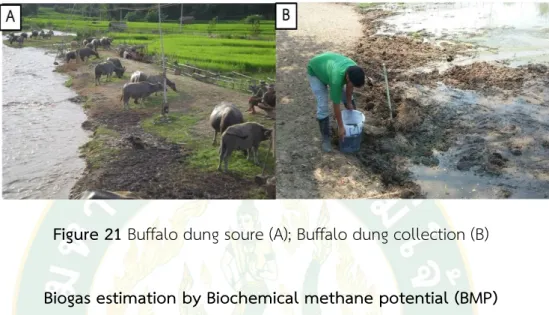
20 Para grass collection (A and B); Para grass preparation (C and D) 40 21 Buffalo dung soure (A); Buffalo dung collection (B) 41 22 Schematic of different pretreatment methods applying on para
grass for biogas production
42
23 Thermal pre-treatment of para grass 43
24 Chemical pretreatment using NaOH of para grass 43 25 The procedure of scanning electron microscopy analysis (SEM) 44
26 Schematic view of the experiment set up for anaerobic digestion of para grass. (1) Batch fermenter, (2&4) Valve, (3) Gas sampling port, (5) Gas measuring cylinder
45
27 Simulation diagram 47
28 Scale-up fermenter 48
29 Scanning electron micrographs of morphological characteristics of non-pretreated and pretreated of Para grass samples
56 30 The compositions of produced biogas from boiling and chemical
pretreatment of para grass during fermentation time (36 days)
64 31 Eperimentel data plotted against RSM model predicted data of A
mono-digestion and B Co-digestion of alkaline pretreatment
70 32 The effect of ratio and time on biogas yield of mono-digestion for
alkaline pretreatment
71 33 The effect of ratio and time on biogas yield of co-digestion for
alkaline pretreatment
71 34 Eperimentel data plotted against RSM model predicted data of A
mono-digestion and B Co-digestion of boiled pretreatment
74 35 The effect of ratio and time on biogas yield of mono-digestion for
boiled pretreatment
75 36 The effect of ratio and time on biogas yield of co-digestion for
boiled pretreatment
75 37 Physiochemical conditions on during fermentation 76 38 Biogas yield and cumulative biogas (a), and biogas composition of
scale up study (b)
77 39 The comparison of cumulative biogas from A lab scale and B scale
up.
79
40 Block diagram for fermentation system 85
ABBREVIATIONS AD Anaerobic digestion
Alk Alkalinity
BMP Biochemical methane potential C/N Carbon/Nitrogen
CCD Central composite design COD Chemical Oxygen Demand
DM Dry matter
e.g. Exempli gratia
etc The end of the sentence
h Hour
HCV Higher calorific values
IQS Institute of product quality and standardization LCV Lower calorific values
MC Methane content
NA Not available
RSM Response surface methodology SD Standard deviation
SEM Scanning electron microscopy TS Total solids
VFA Volatile fatty acids VS Volatile solids
CHAPTER 1 INTRODUCTION
Background
The environmental and global warming consciousness has become an important policy in all countries around the world. Thai government has increasingly given an importance on how to solve this problem issues among the first priority in local development. Energy is primary importance in response to the basic need of the people and a fundamental factor of production in the business sector and industry. Therefore, the power supply it has to get enough energy supply, reasonable price and good quality according with customer required. Coal, oil and natural gas are the three kinds of fossil fuels that we have mostly depended on for our energy needs, from home heating and electricity to fuel for our automobiles and mass transportation. That energy is nonrenewable energy and will run out. Presently many agencies have focused on renewable energy such as solar energy, wind energy, hydro energy and geothermal energy. Renewable sources of energy and consumer products are required for sustainable development of modern society. Thailand is an agricultural area suitable for growing of many plants, especially annual crops that can be used as an energy crop or raw material of agricultural biogas plant (Perlack and Wright, 1995). Energy demand required to meet the economic growth of Thailand is high and growing every year. Accordingly, Thailand, as the country has the potential biogas as a country with a lot of agriculture; including raw materials from crops and livestock, it can be used to develop renewable energy in the form of biogas is methane gas caused by the decomposition of organic matter in the system (Dussadee et al., 2017).
Interest has recently been growing in using the anaerobic digestion of organic waste of farm origin, such as manure, crop residues and organic residues from food and agro-industries, to generate renewable energy (Gebrezgabher et al., 2010).
Agricultural residues from the agricultural, agriculture industry and grassland biomass are usually used as feed materials in anaerobic digestion systems in Thailand are suitable in numerous ways for producing energy. This can be used as the raw
materials for biogas production as environmentally friendly renewable energy (Dechrugsa et al., 2013). Using grassland biomass for producing energy especially biogas production currently is the most common. Plant biomass is the main source of renewable materials on earth and represents a potential source of renewable energy and bio based products. There are so many types of grasses that are popularly grown in Thailand (Ramaraj et al., 2015). Animal manures have been used as a resource of excellent material for anaerobic digestion with clear environmental benefit. Since Thailand economy depend mainly on agriculture activities. Therefore, utilization of natural resources for energy production is an extremely important issue.
Biogas is a green renewable type of energy is generated from a digestion process under anaerobic conditions whose application is rapidly emerging as a viable means for providing continuous gaseous fuel and power generation. Biogas application includes ensuring energy security, decreasing carbon emission, improving economic activity and can be compressed, the same way as natural gas is compressed to CNG, and used to power motor vehicles. It can be produce by a single raw material such as pig manure, cow manure and buffalo manure. In present, the production of biogas has been evolving to enhance the efficiency like co-digestion of animal manure with grass. Co-digestion Para grass with buffalo dung in farm’s around community existing digester become a valid approach to enhance biogas production. Para grass (Brachiaria mutica) is the tropical weed that no value and pervasive around the farm.
It need to cut down and removed frequently for fire hazard and disease and vector controls (Sahoo et al., 2017). Addition of grass can help raise C:N of the feedstock to be suitable for metabolic activities in anaerobic digestion system (Xie et al., 2011).
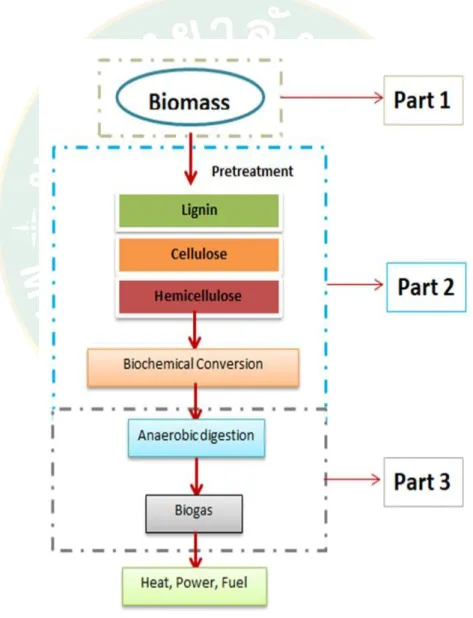
The physical structure and chemical composition of lignocelllulosic materials can be altered through various methods of pretreatment, breaking down the linkage between polysaccharides and lignin, thus making cellulose and hemicelluloses more accessible to hydrolytic enzymes (Hendriks and Zeeman, 2009). Therefore, pretreatments could accelerate the hydrolysis process and improve the final can get more methane production. Consequently, the main purpose of this research was to produce biogas yield from Para grass through anaerobic co-digestion with buffalo dung using different ratios. And study was to examine the effects of pre-treatment
and after results the suitable method is selected for scale up study and future applications. Various technologies have been developed and available for produce biogas and biological processes are environmentally friendly and feasible.
Objectives
1. To study the suitable ratio of para grass and buffalo dung for biogas production.
2. To study optimization of biogas using co-digestion.
Scope of study
1. Experimental production of biogas from para grass co-digestion with buffalo dung with different ratio to produce in laboratory scale.
2. Identify the proper ratio for enriched bio-methane in the biogas production process.
Benefits
1. Abundantly available raw materials including Para grass to biogas produce and applicable for energy security.
2. Reduce the cost of using other gases if produce more enriched methane in the biogas production process enough to use.
3. Can be applies this study to the household.
4. Encourage the community to produce the energy from simple materials by themself that involve in save efficiency sustainable theory.
5. Alternative energy.
CHAPTER 2 LITERATURES REVIEW
Biogas
Biogas is a green renewable type of energy. It can be produced from raw materials such as agricultural waste, manure, municipal waste, plant material, sewage, green waste or food waste (Figure 1). Application of biogas includes ensuring energy security, decreasing carbon emission and improving economic activity. Biogas is often used for cooking, heating, lighting or electricity generation.
Larger plants can feed biogas into gas supply networks. Biogas contains 50–70%
methane and 30–50% carbon dioxide, depending on the substrate (Ward et al., 2008). As well as small amounts of other gases including hydrogen sulphide (Table 1).
Table 1 Typical composition of biogas
Compound Formula %
Methane CH4 50-75
Carbon dioxide CO2 25-50
Nitrogen N2 0-10
Hydrogen H2 0-1
Hydrogen
Sulfide H2S 0.1-0.5
Oxygen O2 0-0.5
Source: www.kolumbus.ft,2007
Figure 1 Biogas processes
The composition of biogas varies from site to site, depending on the type of feedstock and also the applied digestion technology. In general, biogas has two major components, CH4 and CO2, and also contains impurities such as H2S, N2, and NH3 (Table 2).
Table 2 Typical composition of biogas and natural gas, adapted from (Yang et al., 2014)
Character Unit AD biogas Landfill biogas Natural gas
CH4 vol% 53-70 30-65 81-89
CO2 vol% 30-50 25-47 0.67-1
N2 vol% 2-6 <1-17 0.28-14
O2 vol% 0-5 <1-3 0
H2 vol% NA 0-3 NA
Higher hydrocarbons vol% NA NA 3.5-9.4
H2S ppm 0-2000 30-500 0-2.9
NH3 ppm <100 0-5 NA
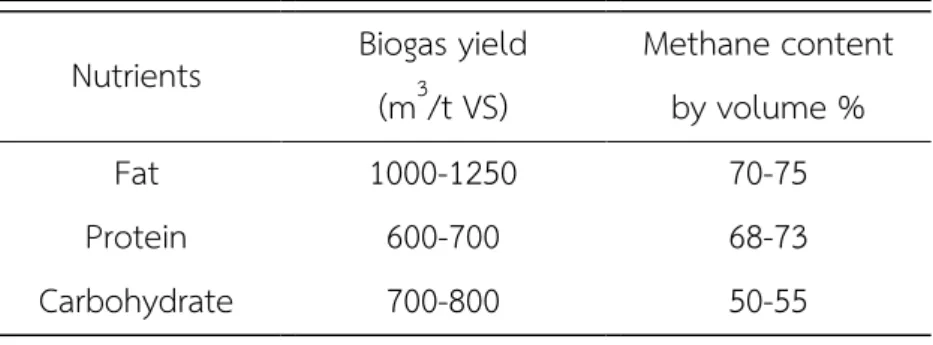
The biogas yield and methane content depends upon the feedstock and its composition. Table 3 presents the composition for biogas substrates and the final methane yield and content. This table is based on theoretical assumptions but in practical the yields are much lower than theoretical yield.
Table 3 Biogas yield and methane content (Patterson et al., 2011) Nutrients Biogas yield
(m3/t VS)
Methane content by volume %
Fat 1000-1250 70-75
Protein 600-700 68-73
Carbohydrate 700-800 50-55
Methane
Figure 2 Chemical formula CH4 (one atom of carbon and four atoms of hydrogen) IUPAC name Methane other names Marsh gas, Natural gas, Carbon tetra hydride, Hydrogen carbide. Methane is a chemical compound with the chemical formula CH4 (Figure 2). It is a group-14 hydride and the simplest alkane, and is the main constituent of natural gas. The relative abundance of methane on earth makes it an attractive fuel, though capturing and storing it poses challenges due to its gaseous state under normal conditions for temperature and pressure. The methane properties show on Table 4.
Table 4 Methane property Properties
Chemical formula CH4
Molar mass 16.04 g.mol-1
Appearance Colorless gass
Odor Odorless
Density 0.657 g.L-1 (gas, 25°C, 1 atm)
0.717 g.L-1 (gas, 0°C, 1 atm) 422.62 g.L-1 (liquid, -162°C)
Melting point -182.5°C; -296.4 °F; 90.7 K
Boiling point -164.00°C; -263.20°F; 109.15 K
Solubility in water 22.7 mg.L-1
Solubility Soluble in ethanol, diethyl ether,
benzene, toluene, methanol, acetone
log P 1.09
Henry’s law constant (kH) 14 nmol.pa-1.kg-1 Magnetic susceptibility (X) -12.2x10⁻⁶ cm3.mol-1 Thermochemistry
Specific heat capacity (C) 35.69 J·(K·mol)−1 Std molar entropy (So298) 186.25 J·(K·mol)−1 Std enthalpy of formation (ΔfHo298) −74.87 kJ·mol−1
Std enthalpy of combustion (ΔcHo298) −891.1 to −890.3 kJ·mol−1 Liquid; Heat capacity, Cp 52.93 J/(mol K)
Hazards
GHS pictograms
GHS signal word DANGER
GHS precautionary statements P210 NFPA 704
Flash point −188 °C (−306.4 °F; 85.1 K)
Autoignition temperature 537 °C (999 °F; 810 K)
Explosive limits 4.4–17%
Thermodynamic properties
Triple point 90.67 K (−182.48 °C), 0.117 bar
Critical point 190.6 K (−82.6 °C), 46 bar
Std enthalpy of fusion, ΔfusHo 1.1 kJ/mol Std entropy change of vaporization, ΔvapHo 8.17 kJ/mol
source: National Institute of Standards and technology. Retrieved 21 October 2013.
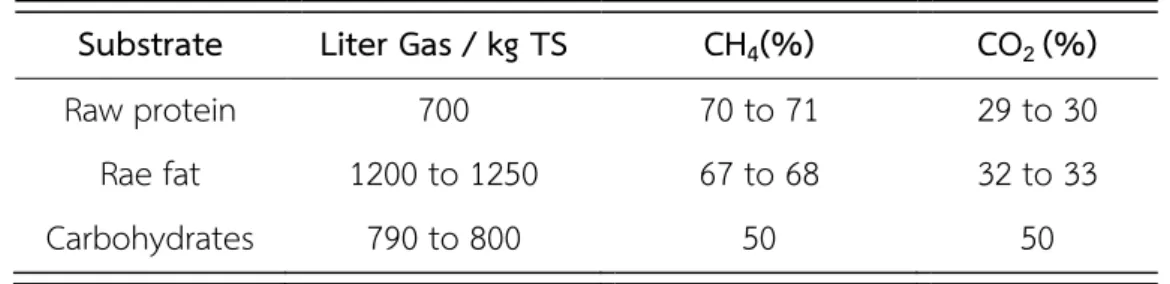
Methane is the component chiefly responsible for a typical calorific value of 21–24 MJ/m3 or around 6 kWh/m3. In anaerobic digestion, organic materials are degraded by bacteria, in the absence of oxygen, converting it into a methane and carbon dioxide mixture. The digestate or slurry from the digester is rich in ammonium and other nutrients used as an organic fertilizer (Ramaraj et al., 2016). The performance of the anaerobic digestion (AD) process is highly dependent on the characteristics of feedstock as well as on the activity of the microorganisms involved in different degradation steps (Carrère et al., 2009). The biochemical composition of different feedstock types varies is determinant for their theoretical methane yield, as seen in Table 5. (House, 1981) and the methane yield of the AD substrates depends on the content of proteins, fats, and carbohydrates, as shown in Table 6 (House, 1981).
Table 5 Methane yields of different feedstock material
Feedstock Methane yield (%) Biogas yield (m3/tFF*)
Liquid cattle manure 60 25
Liquid pig manure 65 28
Distillers grains with
soluble 61 40
Cattle manure 60 45
Pig manure 60 60
Poultry manure 60 80
Beet 53 88
Organic waste 61 100
Sweet sorghum 54 108
Forage beet 51 111
Grass silage 54 172
Corn silage 52 202
*FF=Fresh feedstock
Table 6 Biochemical composition of different feedstock types
Substrate Liter Gas / kg TS CH4(%) CO2 (%)
Raw protein 700 70 to 71 29 to 30
Rae fat 1200 to 1250 67 to 68 32 to 33
Carbohydrates 790 to 800 50 50
Flexibility to use different feedstock
Various types of feedstock can be used for the production of biogas: animal manure and slurries, crop residues, organic wastes from dairy production, food industries and agroindustry, wastewater sludge, organic fraction of municipal solid wastes, organic wastes from households and from catering business as well as energy crops (Figure 3). Biogas can also be collected, with special installations, from landfill sites. One main advantage of biogas production is the ability to use “wet biomass”
types as feedstock, all characterized by moisture content higher than 60–70% (e.g.
sewage sludge, animal slurries, flotation sludge from food processing etc.). In recent years, a number of energy crops (grains, maize, rapeseed), have been largely used as feedstock for biogas production in countries like Austria or Germany. Besides energy crops, all kinds of agricultural residues, damaged crops, unsuitable for food or resulting from unfavorable growing and weather conditions, can be used to produce biogas and fertilizer. A number of animal by-products, not suitable for human consumption, can also be processed in biogas plants.
Figure 3 The sustainable cycle of biogas
Benefits and costs of a biogas plant
Biogas is a clean energy coming from anaerobic digestion of biomass, agriculture residue, animal manure, organic waste etc. A biogas plant supplies energy and fertilizer. Are improves life in the country and working conditions for the housewife. It reduces the dependency of people on inefficient and expensive fuel sources. The use of these traditional energy sources cause emission of harmful substances in case of incomplete combustion. Biogas can be used at household and industrial purposes and the energy contained in the biogas can be transformed into various forms of energy such as: heat, electricity, light, mechanical etc. And can helps to reduce the greenhouse gases emission thus contribution towards environmental protection also biogas helps to reduce the indoor pollution due to kitchen smoke and reduce the incidence of illness caused by smoke. We can build new facilities such as toilet facilities and link them to biogas digesters, which improves sanitation whilst allowing even human waste to become useful. The local communities have a double advantage through purchase of livestock such as cows, buffaloes. It supports continuous feed to the digester and helps increase in income through sell of milk, meat and other by-products. The digested slurry produced in the process of biogas formation can be used as excellent organic manure in the field, thus increasing the crop yield. 1 m3 Biogas (Approximately 6 kWh/m3) is equivalent to Table 7.
Table 7 Biogas is able to substitute almost the complete consumption of firewood in rural households
Diesel, Kerosene 12 kWh/kg 0.5 kg
Wood 4.5 kWh/kg 1.3 kg
Cow dung 5 kWh/kg dry
matter 1.2 kg
Plant residues 4.5 kWh/kg d.m. 1.3 kg
Hard coal 8.5 kWh/kg 0.7 kg
City gas 5.3 kWh/m3 1.1 m3
Propane 25 kWh/m3 0.24 m3
Large units or communal units produce biogas in large quantities and can be used to power engines and generators for mechanical work or power generation.
Biogas potential
The existing biomass resources on our plant can give us an idea of the global potential of biogas production. This potential was estimated by different experts and scientists, on the base of various scenarios and assumptions (Figure 4). Accordingly, results from these estimations and overall assumption showed that each part of process is very important to utilize and possible to increase the biogas production considerably.
Thailand’s Power Generation by Energy Sources, 2014
Source: Energy Policy and Planning Office, Ministry of energy
Figure 4 Thailand power generation by energy sources, 2014 Anaerobic digestion (AD)
AD is a biochemical process during which complex organic matter is decomposed in absence of oxygen, by various types of anaerobic microorganisms.
The process of AD is common to many natural environments such as the marine water sediments, the stomach of ruminants or the peat bogs. In a biogas installation, the result of the AD process is the biogas and the digestate. If the substrate for AD is a homogenous mixture of two or more feedstock types (e.g. animal slurries and organic wastes from food industries), the process is called “co–digestion”.
Fermentation can be divided into 2 types of processes
Type 1 Batch fermentation: In a closed system with limited initial nutrient content, all necessary medium components and the inoculum are added at the beginning and not during period of fermentation. The products, be they internal or external, are harvested only at the end of the run (Figure 5).
Type 2 Continuous fermentation: Newly refilled foods and old meals are left out of the system at the same rate all the time. In a continuous operation, one or more feed streams containing the necessary nutrients are fed continuously (Figure 6).
Substrates for anaerobic digestion
A wide range of biomass types can be used as substrates (feedstock) for the production of biogas from AD such as animal manure and slurry, agricultural residues and by-products, digestible organic wastes from food and agro industries (vegetable and animal origin), organic fraction of municipal waste and from catering (vegetable and animal origin), sewage sludge, dedicated energy crops (e.g. corn cob, rice straw, sorghum) Figures 7. The most common biomass categories used in Thailand biogas production are listed below and in Table 8.
Figure 5 Bath fermentation
Figure 6 Continuous fermentation
Figure 7 Animal manure and Agricultural residues
Table 8 The characteristics of some digestible feedstock types (Holm-Nielsen et al., 2009)
Type of feedsto
ck
Organic content C:N ratio
DM% VS%
of DM
Biogas yield m3*kg-1VS
Unwanted physical impurities
Other unwanted
matters
Pig slurry
Carbohydrates,
proteins, lipids 3-10 3-8 70-80 0.25-0.50
Wood shavings, bristles, water,
sand, cords, straw
Antibiotics, disinfectan
ts
Cattle slurry
Carbohydrates,
proteins, lipids 6-20 5-12 80 0.20-0.30
Bristles, soil, water, straw,
wood
Antibiotics, disinfectan
ts, NH4+ Straw Carbohydrates,
lipids 80-100 70-90 80-90 0.15-0.35 Sand, grit - Garden
wastes
Carbohydrates,
proteins, lipids 100-150 60-70 90 0.20-0.50 Soil, cellulosic,
components Pesticides Grass Carbohydrates,
proteins, lipids 12-25 20-25 90 0.55 Grit Pesticides
Grass silage
Carbohydrates,
proteins, lipids 35 15-20 75 0.25-0.50 - -
Substrates containing high amounts of lignin, cellulose and hemicelluloses can also be co-digested, but a pre-treatment is usually applied in this case, in order to enhance their digestibility. The potential methane yield is one of the important criteria of evaluation of different AD substrates (Figure 8). It is noticeable, that animal manure has a rather low methane yield. This is why, in praxis, animal manure is not digested alone, but mixed with other co-substrates, with high methane yield, in order to boost the biogas production. Common co-substrates, added for co-digestion with manure and slurries, are oily residues from food, fishing and feed industries, alcohol wastes, from brewery and sugar industries, or even specially cultivated energy crops.
Figure 8 Benchmarks for specific methane yields (Peer et al., 1993)
The biochemical process of AD
Anaerobic digestion (AD) is a process in which microorganisms break down biodegradable material in the absence of oxygen. Anaerobic digestion can be used to treat various organic wastes and recover bio-energy in the form of biogas, which contains mainly CH4 and CO2 The reactions of this process require the cooperative action of several organisms. It occurs in each stage as the result of the activity of a variety of microorganisms. The degradation process can be divided into four phases:
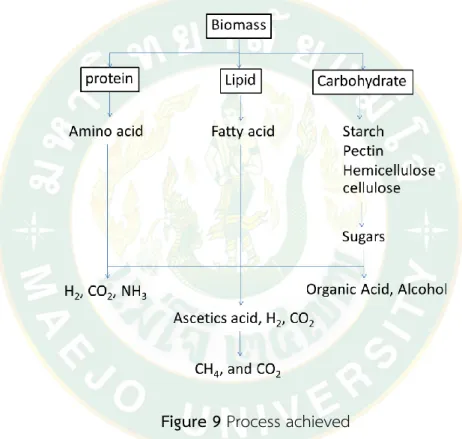
Hydrolysis, Acidogenesis, Acetogenesis, and Methanogenesis. The anaerobic digestion cycle represents an integrated system of a physiological process of microbial and
energy metabolism, as well as the processing of raw materials under specific conditions (Figure 9). However, the microbial community is process can be possibly integrated with other conversion processes. It could be applicable to improve their sustainability and energy balance. On the other hand, biogas system is different from other biofuels like bio-hydrogen, bioethanol and biodiesel which uses only carbohydrates and lipids. Biogas is produced from all the convertible biomass macromolecules under anaerobic conditions.
Figure 9 Process achieved Hydrolysis:
Is first step of AD, during which the complex organic matter (polymers) is decomposed into smaller units (mono and oligomers). During hydrolysis, polymers like carbohydrates, lipids, nucleic acids and proteins are converted into glucose, glycerol, purines and pyridines. Hydrolytic microorganism excretes hydrolytic enzymes, converting biopolymers into simple and soluble compounds (House, 1981).
The hydrolytic activity is of significant importance high biomass and may become rate limiting. Some operations methods overcome this limitation by the use of chemical reagents to enhance hydrolysis. The application of chemicals to enhance
the first step has been found to result in a shorter digestion time and provide a higher methane yield (Ward et al., 2008).
Acidogenesis:
During acidogenesis, the products of Hydrolysis are converted by Acidogenic (fermentative) bacteria into methanogenic substrates. Simple sugars, amino acids and fatty acids are degraded into acetate, carbon dioxide and hydrogen (70%) as well as into volatile fatty acids (VFA) and alcohols (30%) (House, 1981), provide a higher methane yield.
Acetogenesis:
Products from acidogenesis, which cannot be directly converted to methane by methanogenic bacteria, are converted into methanogenic substrates during acetogenesis. VFA, with carbon chains longer than two units and alcohols, with carbon chains longer than one unit, are oxidized into acetate and hydrogen. The production of hydrogen increases the hydrogen partial pressure. This can be regarded as a waste product of acetogenesis and inhibits the metabolism of the acetogenic bacteria. During methanogenesis, hydrogen is converted into methane. Acetogenesis and methanogenesis usually run parallel, as symbiosis of two groups of organisms (House, 1981).
Methanogenesis:
The production of methane and carbon dioxide from intermediate products is carried out by methanogenic bacteria. 70% of the formed methane originates from acetate, while the remaining 30% is produced from conversion of hydrogen (H) and carbon dioxide (CO2). Methanogenesis is a critical step in the entire anaerobic digestion process, as it is the slowest biochemical reaction of the process.
Methanogenesis is severely influenced by operation conditions. Composition of feedstock, feeding rate, temperature, and pH are examples of factors influencing the methanogenesis process. Digester overloading, temperature changes or large entry of oxygen can result in termination of methane production (House, 1981).
Influence of factors on performance of anaerobic digestion
Many factors are very important on the performance of anaerobic digestion system. Manure quality, temperature, and storage time. The operating parameters of the digester must be controlled to enhance the microbial activity and increase the anaerobic degradation efficiency of the system. Some of these parameters are discussed in the following.
Temperature
Effect of the temperature on biogas production like to the other renewable energy sources (e.g. wind, solar) biogas generation is also affected by the weather. In cold climates, digesters require heat energy to maintain a constant biogas supply. In an anaerobic system, there are three optimal temperature ranges for methanogenesis: psychrophilic, mesophilic and thermophilic (Table 9). Anaerobic conversion has its highest efficiency is psycrophiles at 5-15oC, mesophiles 35-40oC and thermophiles 55oC (Sharma et al., 2013).
Table 9 Thermal stage and typical retention times
Thermal stage Process temperatures Minimum retention time
psychrophilic <20 oC 70 to 80 days
mesophilic 30 to 42 oC 30 to 40 days
thermophilic 43 to 55 oC 15 to 20 days
The temperature stability is decisive for anaerobic digestion. In practice, the operation temperature is chosen with consideration to the feedstock used and the necessary process temperature is usually provided by floor or wall heating systems, inside the digester (Figure 10).
Figure 10 Relative biogas yields, depending on temperature and retention time (Weiland, 2010)
pH parameter
The pH-value is the measure of acidity/alkalinity of a solution and is expressed in part per million (ppm). The pH value of the AD substrate influences the growth of methanogenic microorganisms and affects the dissociation of some compounds of importance for the AD process (ammonia, sulphide, organic acids). In the anaerobic digestion process, pH is a very important parameter.
Experience from the biogas handbook shows that methane formation takes place within a relatively narrow pH interval, from about 5.5 to 8.5, with an optimum interval between 7.0 - 8.0 most methanogens. Acidogenic microorganisms usually have lower value of optimum pH Weiland (2010) stated that methane formation takes place within a relatively narrow pH interval, from about 6.5 to 8.5 with an optimum interval between 7.0 and 8.0. The process is severely inhibited if the pH decreases below 6.0 or rises above 8.5. The pH value increases by ammonia accumulation during degradation of proteins, while the accumulation of VFA decreases the pH value.
Volatile fatty acids (VFA)
VFA are important intermediate products and most of the CH4 produced is derived from VFA. The VFA are intermediate compounds (acetate, propionate,
butyrate, lactate), produced during acidogenesis, with a carbon chain of up to six atoms. In most cases, AD process instability will lead to accumulation of VFA inside the digester, which can lead furthermore to a drop of pH-value. Animal manure e.g.
has a surplus of alkalinity, which means that the VFA accumulation should exceed a certain level, before this can be detected due to significant decrease of pH value. At such point, the VFA concentration in the digester would be so high, that the AD process will be already severely inhibited. When the process is inhibited by ammonia, an increase in the concentration of volatile fatty acids (VFA) will lead to a decrease in pH which will partly counteract the effect of ammonia. Peter Weiland., 2010, the process is severely inhibited if the pH decreases below 6.0 or rises above 8.5. The pH value increases by ammonia accumulation during degradation of proteins, while the accumulation of VFA decreases the pH value. The accumulation of VFA will often not always result in a pH drop, due to the buffer capacity of the substrate. The changes in VFA production can also be explained by the type of substrate (Demirel and Yenigün, 2006). The toxicity of VFAs is also pH dependent, since only the non-ionized forms are toxic to microorganisms. That mean excessive VFAs accumulation can inhibit methanogenesis. The concentration of acetic, propionic, and butyric acids are considered to be the best indicators of the metabolic state of the most sensitive microbial groups in the anaerobic system and are important in process monitoring (Gunaseelan, 1994).
Ammonia
Ammonia (NH3) is an important compound, with a significant function for the AD process. NH3 is an important nutrient, serving as a precursor to foodstuffs and fertilizers and is normally encountered as a gas, with the characteristic pungent smell. Proteins are the main source of ammonia for the AD process (House, 1981).
Too high ammonia concentration inside the digester, especially free ammonia (the unionized form of ammonia), is considered to be responsible for process inhibition.
This is common to AD of animal slurries, due to their high ammonia concentration, originating from urine.
Mixing
Mixing provides good contact between microbes and substrates, increasing the mass transfer, reduce the buildup of intermediates and stabilize environmental conditions. When mixing is inefficient, overall rate of process will be reduced by mass of material at different stage has a difference pH and temperature. Mixing can be accomplished through mechanical mixing, biogas recirculation or through slurry recirculation (Karim et al., 2005). It was found that mixing improved the performance of digesters treating waste with higher concentration while slurry recirculation showed better results compared to impeller and biogas recirculation mixing mode.
Mixing also improved gas production as compared to unmixed digesters. Rapid mixing is not encouraged as methanogens can be less efficient in this mode of operation.
Examples of systems with optimal flow include the continuously stirred tank reactor (CSTR) where incoming material is dispersed evenly throughout the vessel by perfect mixing and the plug flow reactor (PFR) where material moves through the vessel (Ward et al., 2008).
Wet digestion; the wet anaerobic digestion process works with a total solid concentration less than 15% (Bagge et al., 2005). The wet process for manure and energy crops can be operated in a single-stage or two-stage mode under mesophilic or thermophilic conditions depending on the waste input and the site conditions.
Some reactors reinject biogas to the bottom of the reactor tank to create a loop in the digester and to obtain better homogenisation; other reactors use simple mechanical mixing (Lehtomäki et al., 2007).
C/N ratio
The carbon-nitrogen ratio of organic waste that can be used for biogas is from 8-30, but the optimal ratio for biogas production is about 23 (Wu et al., 2010). If the carbon-nitrogen ratio is high, nitrogen is used by methanogen to supplement the protein. And it will run out quickly. If the C / N Ratio are very low, it will cause a lot of nitrogen and stick together as ammonia. Ammonia is added to the pH. If the pH reaches 8.5, it begins to be toxic to bacteria, reducing the amount of methane. In addition, if the C / N ratios are outside of the range of 8-30, the proportion of other
gaseous gases Like carbon dioxide higher. Animal dung, especially cow and buffalo, has the best carbon-nitrogen ratio. Secondly, they are the crockery, sprouts and food waste. While straw has a relatively high carbon-nitrogen ratio. However, high carbon- nitrogen ratios can be mixed with low carbon-nitrogen ratios. To obtains raw materials with a desired carbon-nitrogen ratio.
Biomass
Biomass has been defined as organic matter formed by photosynthetic capture of solar energy and stored as chemical energy (Gunaseelan, 1994), which includes agricultural crops and wastes, animal wastes, forest and mill residues, wood and wood wastes, livestock operation residues, aquatic plants, fast-growing trees and plants, and municipal and industrial wastes (Figure 11). The solar energy stored in biomass could be released as biogas, a mixture of methane (CH4), carbon dioxide (CO2), and some trace gases, through anaerobic digestion.
Burning is only one way to release the energy in biomass. Biomass can be converted to other useable forms of energy such as methane gas or transportation fuels such as ethanol and biodiesel.
Methane gas is a component of landfill gas or biogas that forms when garbage, agricultural waste, and human waste decompose in landfills or in special containers called digesters.
Crops such as corn and sugar cane are fermented to produce fuel ethanol for use in vehicles. Biodiesel, another transportation fuel, is produced from vegetable oils and animal fats.
Figure 11 Types of biomass and converting biomass to other forms of energy Advantages
Biomass used as a fuel reduces need for fossil fuels for the production of heat, steam, and electricity for residential, industrial and agricultural use.
Biomass is always available and can be produced as a renewable resource.
Biomass fuel from agriculture wastes maybe a secondary product that adds value to agricultural crop.
Growing biomass crops produce oxygen and use up carbon dioxide.
The use of waste materials reduce landfill disposal and makes more space for everything else.
Carbon dioxide which is released when biomass fuel is burned is taken in by plants.
Less money spent on foreign oil.
Disadvantages
Agricultural wastes will not be available if the basic crop is no longer grown.
Additional work is needed in areas such as harvesting methods.
Land used for energy crops maybe in demand for other purposes, such as faming, conservation, housing, resort or agricultural use.
Some Biomass conversion projects are from animal wastes and are relatively small and therefore are limited.
Research is needed to reduce the costs of production of Biomass based fuels.
Feedstock
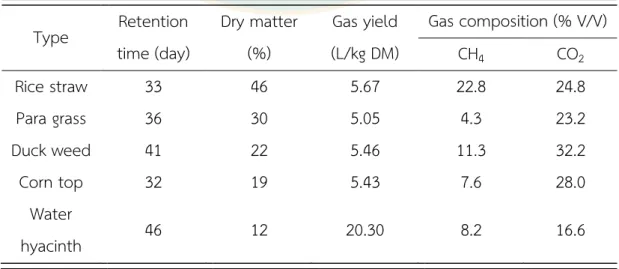
Biogas can be generated from a wide range of feedback that is suitable for anaerobic digestion. It can be made from most biomass and waste material and over a large of moisture contents, with limited feedstock preparation. Therefore, feedback for biogas production may be solid, slurries, and both concentrated and dilute liquids. But the feedstock needs to be a liquid mixture with suitable moisture content. For example, mesophilic complete mix tank digesters typically operate best with a mixture of 4 to 8% solids in water (Callaghan et al., 2002). Beside this, feedstocks are energy crops including: sugarcane, sorghum, Napier grass, as well as, woody crops, corn, oilseed, switch grass. The best crops should have low fertility requirements, and low energy costs for planting and harvesting. Biogas production from different feedstock is difficult as performance data for specific types. It is under a wide variety of experimental condition are shown in Table 10 which in adopted from (Ward et al., 2008).
Table 10 Biogas yield from various types of crop residue Type Retention
time (day)
Dry matter (%)
Gas yield (L/kg DM)
Gas composition (% V/V)
CH4 CO2
Rice straw 33 46 5.67 22.8 24.8
Para grass 36 30 5.05 4.3 23.2
Duck weed 41 22 5.46 11.3 32.2
Corn top 32 19 5.43 7.6 28.0
Water
hyacinth 46 12 20.30 8.2 16.6
DM is dry matter; Source: (Nijaguna, 2002)
Para grass
Figure 12 Para grass (Brachiaria mutica)
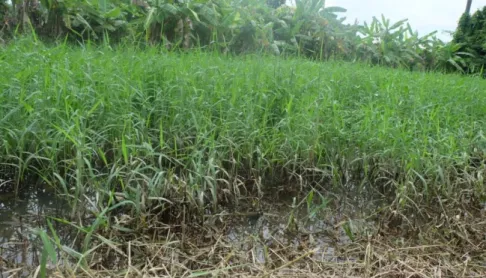
Para grass is a common name of Brachiaria mutica, also known as Urochloa mutica (Figure 12) which is perennial crop that can grow on wet and flooded soils in the higher rainfall areas. They are a tropical and invasive growing plant in rural area has only value to be feedstock for animal feeding. These exotic grass weeds are overgrown in abundantly available resources in the Northern region of Thailand. It needs to cut down and removed frequently for fire hazard and disease and vector controls. In which is found as aquatic weeds is the weed of no value and pervasive around area wetlands, along drainage channels, around lakes and dams, in roadside ditches and in other damp habitats, particularly in tropical climate. In areas where para grass in not grazed on by cattle, it has become a serious weed. It is a burden to the since it needs to be cut down and removed frequently for fire hazard, and disease and vector controls. Para grass and is estimated to contain about 42% of cellulose and about 20% hemicellulose, the hydrolysis of which can yield fermentable sugars and hence will serve as an excellent feedstock (Sahoo et al., 2017).
Description
Para grass is in the family Poaceae, along with other familiar grass such as Heterachne, Melica and many grass species. A perennial crop that can grow on wet soils area. It has steams and stolon which grow up to 5 m long and 1 m height.
Leaves and leaf sheaths are generally hairy; leaves are 6-20 cm long and 1-2 cm wide
(Figure 13). Dry matter yield of 4-7 t/ha has been achieved in pastures with no N fertilizer, if use about 10-15 t/ha/year (Ramachandra et al., 2000). Absolutely it is found in space wetlands area. Para grass was cut down to keep it clean and good environmental. So, Para grass is the waste as well organic waste from unwanted locations.
Figure 13 Characteristics of para grass Impacts
Para grass can form floating mats in drainage ditches or irrigation canals, resulting in cause’s obstacles to the flow of water. The nature of para grass can create large monocultures through rapid growth and high productivity (Figure 14).
Livestock on para grass seem to keep this invasive in check and is used extensively by many producers as forage (Bond and Templeton, 2011). However, education on the problems associated with para grass should be used to prevent unwanted infestations. If ungrazed in wetlands of northern Australia, Para grass may become a fuel for fires that occur during the dry season. It was reported to represent a much bigger fuel load than native grasses and is thus more likely to burn every dry season (Hannan-Jones et al., 2012).
Figure 14 Para grass floating in deep water (stems are rooted to the bank) Invasiveness
As a long-lived, vegetative propagating pioneering species of disturbed areas, para grass has potential for invasiveness. It is reported to benefit from cultivation, browsing pressure, mutilation and fire (Rojas-Sandoval et al., 2014). It may have deleterious effects on native plant species such as wild rice (Oryza australiensis) whose seeds provide food for indigenous birds. In 1977, para grass was listed as a serious weed in Australia, Fiji and Thailand, as a weed in Sri Lanka, Colombia, Hawaii, Jamaica, Malaysia, Peru, the Philippines, Puerto Rico and Trinidad, and as a common weed in Borneo and Mauritius (Holm-Nielsen et al., 2009) the picture has shown that in Figure 15.
Figure 15 Pure stand of para grass on a highly disturbed urban floodplain
Uses/Applications
Planted for grazing in flat poorly drained or high rainfall environments. Also used as a cut-and-carry forage. Can be cut for hay but is generally slow to dry in the humid environments where it grows productively. Rested wetland areas can be used a dry season reserves of green feed. A similar system uses shallow water ponding on the edges of which Para grass continues to grow as the water recedes. Para will grow in water to 1.2 m deep in the tropics.
Structure of the composition in para grass
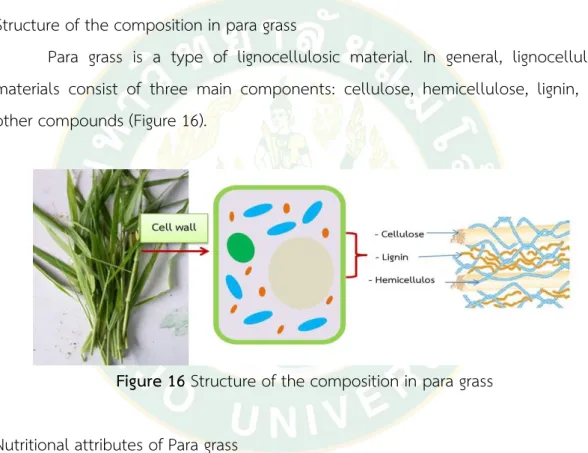
Para grass is a type of lignocellulosic material. In general, lignocellulosic materials consist of three main components: cellulose, hemicellulose, lignin, and other compounds (Figure 16).
Figure 16 Structure of the composition in para grass Nutritional attributes of Para grass
Para grass has a variable nutritional value, with protein content in the 7-10%
DM range. Dry and old forage can contain as little as 3-4% protein but protein content higher than 20% DM have been recorded (Table 11).