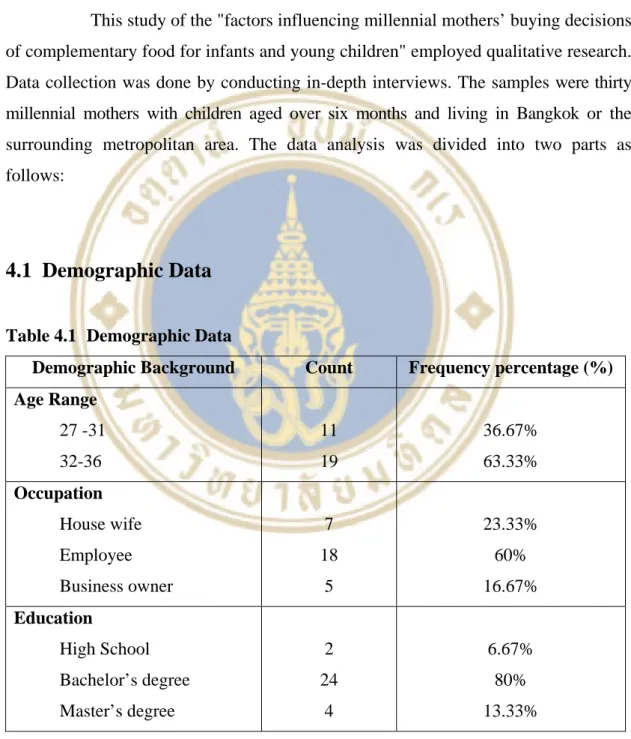
A qualitative method was used to collect data by in-depth interviews with thirty respondents who had experience of purchasing supplementary food for infants and toddlers using various channels and live in the Bangkok Metropolitan Region. To keep young children healthy during this period, complementary foods should be nutritious, clean and safe, and fed in appropriate amounts (WHO, 2000). In the past, there were two types of complementary food that were specially prepared and normal family food.
Processed complementary foods for infants and young children account for 8% of the healthy food market in Thailand and tend to grow continuously (Kasikorn Thai Research Centre, 2015). In particular, the preparation of complementary foods for promoting the development of children usually requires a long time to obtain foods with complete nutrients. Therefore, processed complementary foods for babies and young children are an alternative way to provide them with full nutrition, promote healthy interaction and stimulation, which are crucial for the development of the baby's brain.

Objective
Potential Output
Millennial Mothers
TAKE IT EASY Theory: They allow their children to grow according to their age and environment, not controlling too much or being too strict. TRANS PARENT Culture: Millennial moms like to discuss things with other experienced moms, especially about how they're raising their kids and any struggles they may be having.
Complementary Food for Infants and Young Children
Children six months and older have good control of head and body balance. They can also pick things up with their hands and put them in their mouths, meaning they can accept food when they're hungry or refuse food when they're full, preventing overfeeding that can lead to obesity. In addition, the consumption of complementary foods also helps children to adapt to the consumption of semi-solid foods and familiarize them with different types of food, which helps them to be able to consume dense foods.
Consuming complementary food helps prevent diseases caused by eating habits, both in the short term and in the long term. Protein-energy malnutrition, iron deficiency, obesity, diabetes, high blood cholesterol, high blood pressure, heart disease and tooth decay are some of the possible diseases. Therefore, feeding complementary foods to children in accordance with their age is important for the prevention of these diseases.
It is important to introduce children to age-appropriate complementary foods, as feeding children under 6 months of age can cause food allergies, especially to eggs, peanuts, tree nuts, fish and seafood.
Influential Factors for Millennial Mothers’ Intention to Buy Complementary Food for Infants and Young Children
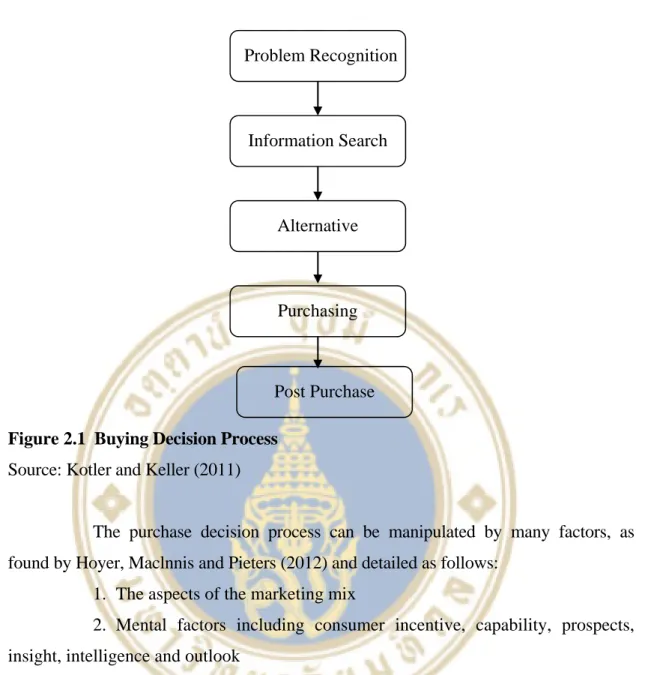
Buying Decision Process
Evaluating alternatives means consumers evaluate different products or brands according to the product's characteristics and benefits. Kotler and Keller (2011) stated that assessment involves "the consumer making decisions based primarily on conscious and rational thinking". Purchase decision involves a consumer deciding to buy a product that received the highest score in the evaluation stage.
It can be divided into 3 aspects: who to buy from, when to buy and also not to buy. Kotler and Keller (2011) state that if the product or service does not meet consumer expectations, the consumer is disappointed. This leads to certain actions, including abandoning, returning the product or even taking public action, such as complaining to/about the company via social media.
If a product meets expectations, the consumer will buy the product again and talk about it with others. Social aspects such as family, suggestion groups and culture also influence the decision-making process.
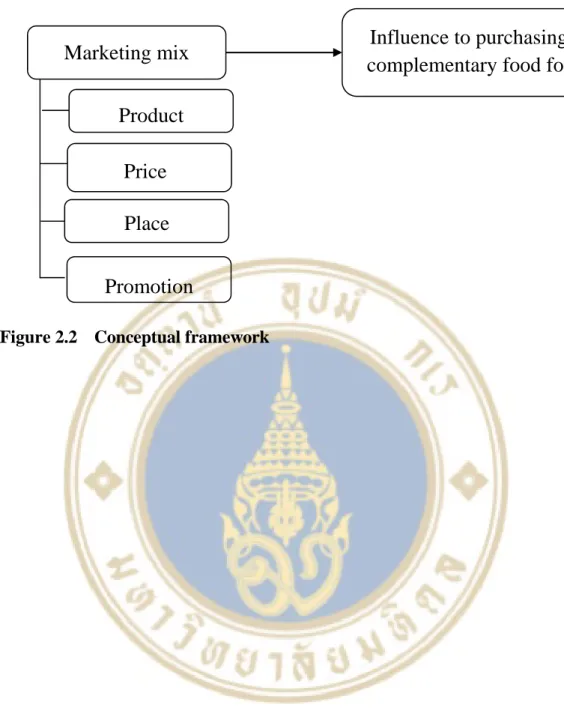
Marketing Mix
Product quality: The concept of food quality can be outlined as follows: food products must be safe for the health of the consumer and must meet the consumer's requirements for nutritional value. Choosing a brand is easy to justify if that brand is known to be of high quality and reliable. Customers may return to a brand simply because they like it, as determined by repeat purchases and true loyalty, which can sometimes be a more attentive process.
With a certain brand, customers get the features and characteristics they want, which further sustains their opinions of high product quality (Iacobucci, Shannon, Grigoriou, 2015). The type and size of the packaging should be decided according to the product, with strong conditions and estimated durability. Common sense dictates that a product with a higher price must be of better quality (Marshall and Johnston, 2010).
As defined for this research, a celebrity endorser is a famous person hired to publicly endorse a product. This means that the endorser is someone who the general public admires or respects for several different reasons. Public recognition by a large population and a high degree of public awareness are hallmarks of a celebrity.
Celebrity advertising has been a useful marketing and promotion tool used by a large number of businesses. An important aspect of celebrity publicity is the perceived connection established by the endorser with the product being endorsed (Rengarajan and Sathya 2014).
Conceptual Framework
Sales promotion is able to promote a business effectively via profit that increases from higher sales and increased sales margin.
RESEARCH METHODOLOGY
- Research Design
- Population and Sampling
- Data Collection
- Data Analysis
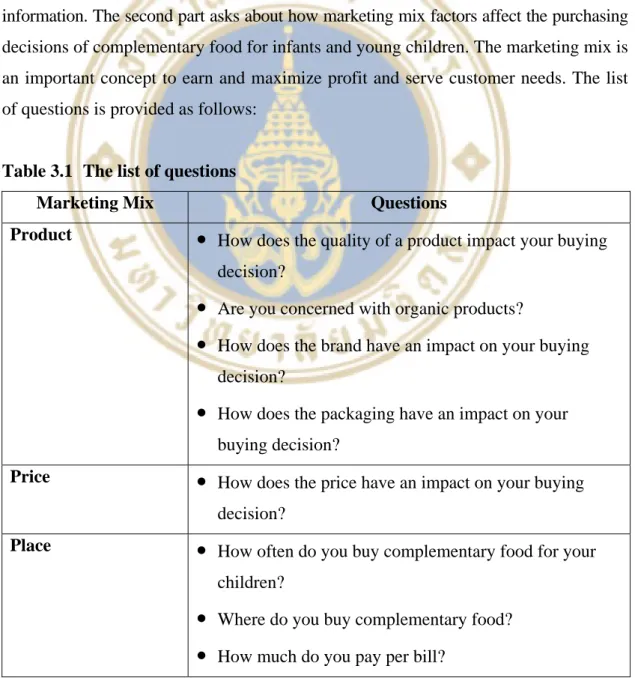
The interviewer also used open-ended questions, which gave respondents the opportunity to freely express their experiences, opinions and needs (Babbie, 2008). Thus, it would help the researcher to obtain insightful information for analysis of the outcome. To study the factors that influence millennial mothers' purchasing decisions for complementary foods for infants and young children, the researcher divided the questions into two parts.
The second part examines how factors of the marketing mix influence decisions to purchase complementary foods for infants and young children. Marketing mix is an important concept for generating and maximizing profits and satisfying customer needs. Finally, summative analysis involves counting and comparisons that would be used to explain the underlying context.
FINDINGS AND DISCUSSION
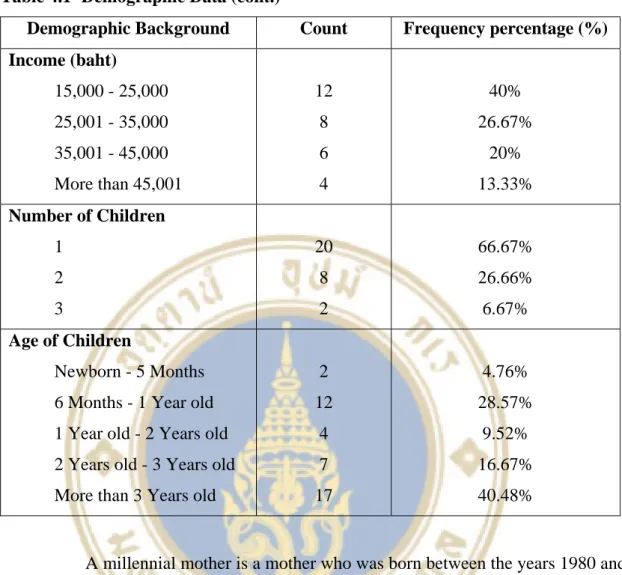
Demographic Data
A millennial mother is a mother born between the years 1980 and 2000, which means they would be around 16-36 years old currently. From the table above it can be seen that there was no interviewee between the ages of 16-26 years because mothers were asked if they had bought supplementary food before the interviews were conducted. There was no mother under the age of 25 who bought supplementary food because they did not have much money and most did not take care of their own children; the children were cared for by their grandparents and most of the grandparents had no knowledge of proper nutrition for children.
Marketing Mix
- Product
- Price
- Place
- Promotion
Also, it seemed to be fresher and tastier than regular baby complementary food products." Mostly, mothers bought complementary food products that were in bags and had to be mixed with water for children younger than 1.5 years. On the other hand, children may grab complementary food products that are crunchy or pasty.
Interviewees were suggested to adjust the size of the bag according to the age of the child consuming the product. Most of the interviewees felt that prices do not really affect their purchasing decisions, as the prices of baby complementary foods do not vary much. Another point is that complementary foods are very cheap even compared to the competition's prices.
This still would not be able to motivate people to buy because most people think that the product is of low quality. 22 out of 30 interviewees did their shopping once a month because they did not want their children to eat complementary food products for children every day. Most of the interviewees gave importance to promotion after product quality, because quality complementary food is expensive.
It was also asked whether or not advertisements and presenters played any role in the decision to purchase the product. Both usually cook complementary food for their children and have written books on complementary children's nutrition, often including sharing their knowledge of children's symptoms on social media.
Discussion
She happened to be famous at the time, so she was chosen to be the presenter. This is a great opportunity for new producers to enter the market by offering products that are fresher than the current products that are generally sold. Manufacturers should set competitive prices in the market that match the quality of the products.
If the price is too low, it will make consumers think that the product is inferior. However, they would still be willing to buy the more expensive product for their children if the quality is high. Manufacturers should therefore choose a product different from CERELAC to penetrate the market share in this distribution channel.
This research suggests that many shoppers make purchases during 'Buy One Get One' promotional periods because it saves a lot of money. If it is offered during the same period every year, consumers will not buy the product at the regular price, but will wait for the promotion and buy a large quantity. This can cause problems for the manufacturers and distributors in managing inventory, leading to reduced sales during no-promotion periods.
Manufacturers should focus their PR/marketing more on social media channels than others, because most consumers find information about products from this channel more than others. In addition, product providers must have actual experience of using the product to show sincerity, which will also win consumers' trust in the product even more.
RECOMMENDATIONS AND LIMITATIONS OF THE STUDY
Conclusion
In conclusion, we can see that millennial mothers do not need anything special in complementary food, but complementary food should meet the nutritional standards. The company needs to be honest when communicating products to customers because millennial moms are digital natives, using the internet to communicate with others and share the information they seek.
Limitations of the Study and Recommendations for Future Research
Complementary Nutrition: Family Foods for Breastfed Children (2000), Geneva. 2005) Guidelines for feeding non-breastfed children aged 6-24 months.