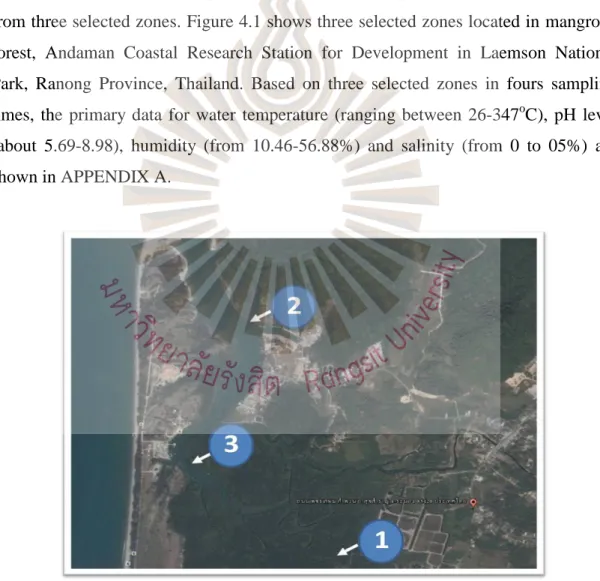
JUREERAT UEAPATTANAKIT: ISOLATION, IDENTIFICATION AND SCREENING OF LIGNOCELLULOSE-DEGRADING FUNGI FROM SEDIMENTS AND SEAWATER IN MANGROVE FOREST IN LAEMSON NATIONAL PARK, THAILAND. The objectives of this study were to isolate, screen and identify cellulose-, hemicellulose- and lignin-degrading fungi obtained from sediment and seawater samples collected from three subzones in the Andaman Coastal Research Station for Development, Laemson National Park, Thailand. All fungal strains were preliminarily screened based on their different abilities to form the clear zones around the fungal colonies on carboxymethylcellulose (CMC) agar for cellulase, and on xylan media for xylanase activities.
In addition, these fungal strains were also tested on three selected media, which were Azino-. In this study, the results suggest that fungal strains derived from Andaman Coastal Research Station for Development and their fungal screenings may be an interesting source of lignocellulosic enzymatic potential.
CONTENTS
CONTENTS (cont.)
DISSCUSSIONS AND CONCLUSIONS 32
INTRODUCTION
- Background
- Objectives of research
- Research hypothesis
- Scope of the research
They have the ability to decompose many types of organic matter due to the production of large amounts of extracellular enzymes that are essential for the degradation of many substrates such as lignin and cellulose (Gomes, et al., 2007). As part of an ongoing Thai Fungal Biodiversity Project at Laemson National Park, Ranong Province, Thailand, the present study was undertaken to investigate the diversity of fungi derived from sediment and seawater in this area. The main objective of this study emphasized isolation, screening and identification of fungi capable of degrading cellulose, hemicellulose and lignin.
Screening for fungi capable of degrading cellulose, hemicellulose and lignin was conducted by isolating fungi from sediment and seawater from Mangrove forests in Laemson National Park, Ranong Province, Thailand. This study focused on the isolation, screening and identification of fungi capable of degrading cellulose, hemicellulose and lignin derived from sediment and seawater in mangrove forests at the Andaman Coastal Development Research Station, Laemson National Park, Ranong Province, Thailand. .
LITERATURE REVIEWS
- Mangroves and mangroves forest
- Fungi
- Biotechnological application of fungi isolated from the mangrove forest
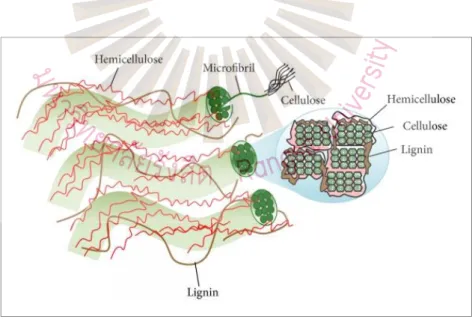
- Lignocellulose, Microorganisms and their lignocellulytic enzymes
Furthermore, Xin, et al., (2003) also found that white rot basidiomycetes can degrade bagasse at high temperature. Furthermore, Christopherson, et al., (1999) found that fungi from mangrove forest show good ability to make antibiotics. Recently, Xiao, et al., (2005) reported that there are 188 species of marine fungi that can be applied as herbicides.
Raghukumar, et al., (2004) reported that Aspergillus niger from mangrove forests produced thermostable xylanase enzyme used in pulp production. Raghukumar, et al., (1994) reported that two ascomycetic fungi Sordaria fimicola (NIOCC#298 from mangrove sediment) and Halosarpheia ratnagiriensis (NIOCC#321 from mangrove wood) can decolorize the effluent of bleaching plants from the paper and pulp mill industry.
MATERIALS AND METHODS
- Collecting sites and collection of fungal samples
- Isolation of Fungi
- Identification of Fungi
- Screening of fungal enzyme activity
Appropriate serial dilutions were prepared and 0.1 ml of each dilution was transferred to sterile petri dishes containing potato dextrose agar (PDA) supplemented with 50 mg/l Rose Bengal and 1.5% of three antibiotics (penicillin G, streptomycin and chloramphenicol) were added. to the cultures to suppress bacterial growth and incubated at 25 ± 2ºC for 3-5 days. Fungal isolates were identified using the standard reference works described by Domsch, et al., (1980) and Samson, et al., (2004). The samples were ground in a 2 ml microcentrifuge tube and the volume adjusted by adding 700 µl extraction buffer and mixed by inverting the tubes and incubated for 1 hour at 65ºC.
Fungi were qualitatively screened for enzyme production; cellulase, xylanase, laccase, peroxidase and polyphenoloxidase. Cellulase production was observed by the formation of a yellow opaque around the colonies compared to the red color standard for undegraded cellulose. Fungal plates were spotted with pure culture spore suspension and incubated at 25°C in the dark.
Screening of lignin-degrading fungi was performed on ABTS agar, Azure-B agar and tannic acid agar to determine the activities of laccase, peroxidase and polyphenol oxidase, respectively. The production of laccase was observed as the formation of green color in the growth medium. To screen for lignin peroxidase, this assay was performed on Azure-B agar containing LBM medium supplemented with 0.01% w/v Azure B, 1.6% w/v agar and 1% (v/v) 20% w/v volume of aqueous glucose solution.
The production of lignin peroxidase and Mn-dependent peroxidase was observed as the clearing of the medium in blue color. To control polyphenoloxidase, this protocol was performed on tannic acid agar containing LBM medium supplemented with 1.6% w/v agar, 1% (v/v) of 20% w/v aqueous glucose solution and 1% (v /v) of 1%. w/v aqueous solution of tannic acid. The production of polyphenoloxidase was observed as the appearance of a brown oxidation zone around the fungal colonies.
RESULTS
- Collecting sites and collection of fungal samples
- Isolation of Fungi
- Identification of Fungi
- Screening of fungal enzyme activity
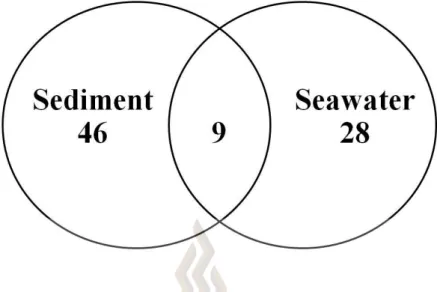
In this study, fungi were isolated using a serial dilution method on potato dextrose agar (PDA) medium. Of 193 strains recorded in this study, 129 strains were isolated from sediment fungi and 64 strains were isolated from seawater fungi with 67% and 33%, respectively (Figure 4.2). In addition, names of the fungal strains and their original codes are listed in APPENDIX B.
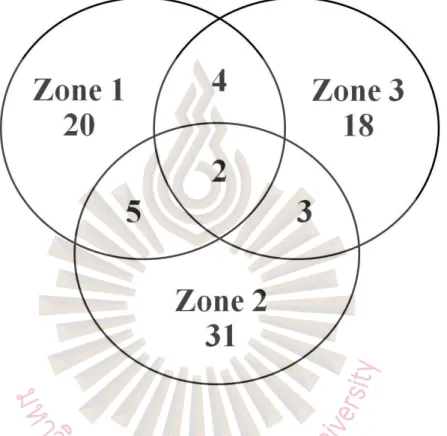
Five patches were only found exclusively in zone 1 and zone 2, while 4 strains were common from zone 1 and zone 3. As shown in Figure 4.6, the most common genera isolated from sediment and seawater were Penicillium, Trichoderma, Aspergillus, Fusarium and Scedosporium with regard to their frequency of mushroom registrations. A total of 193 fungal strains belonging to 56 genera in 3 phyla, 4 classes, 9 orders, 13 families and about 83 species were identified.
Furthermore, the most dominant fungal species Penicillium citrinum, Trichoderma asperellum and Aspergillus tubingensis were the highest number of fungal collections (Figures 4.7, 4.8 and 4.9). A total of 59 fungal strains showed positive reactions with clear zones around the individual fungal colony ranging from 3.8 to 18 mm after 7 days. There are 98 fungal strains that showed positive results with xylanase activity and Talaromyces purpureus ASP00503 showing the highest hemicellulase activity (Figure 4.11).
A total of 111 fungal strains were reported as laccase producers, of which one strain Trichaptum biforme ASP00198 produced the largest green zone (100.0 mm) on ABTS agar and 14 strains produced peroxidase showing a clear zone on Azure-B agar as well strain Gymnascella hyalinospora ASP00519 produced the largest clear zone (16.4 mm) of polyphenol oxidase shown in Figures 4.12 and 4.13. The comparison of isolated fungal strains showed that 11 strains were reported as cellulase-producing fungi, where 21 strains were xylanase-producing fungi recorded on xylan media, in contrast to 49 fungi detected as the largest number of strains for the presence of lignin -degrading enzymes (Figure 4.15). In these data, 19 strains were represented as cellulase- and xylanase-producing fungi, whereas 12 strains and 41 strains were found as cellulase- and lignin-degrading enzymes and xylanase and lignin-degrading enzymes, respectively (Figure 4.15).

DISCUSSIONS AND CONCLUSIONS
In this study, the amount of fungi found in the sediments (129 strains) is higher than in the seawater (64 strains). The fungi in the sediment are different in type and number compared to fungi found in seawater, which may be due to the accumulation at the food source. Furthermore, fungi that live in this area cause organic matter to decompose and return nutrients to the environmental balance of the ecosystem.
In the case of zone 2, the Kamphuan estuary near the Andaman Sea has accumulated organic matter for the sedimentary sponges in this area of different numbers and morphological types. For zone 3, mangrove forest in the protected area between zone 1 and zone 2, fungi found in this zone were smaller than in zone 1 and zone 2. In addition, all fungal strains were screened for cellulase, hemicellulase and lignin-degrading enzymes and found that many fungi from this study showed high efficiency of enzyme activity to degrade lignocellulose, especially the genera of Penicillium, Trichoderma and Aspergillus.
Our finding is in good agreement with reports on the enzymatic production of other filamentous fungi; For example, ascomycetes and some fungi are commonly found on sediment and seawater in the mangrove forest and their enzymatic activities in fungi (Bergbauer and Newell, 1992; Cuomo, et al., 1987; Kohlmeyer and Kohlmeyer, 1979; Sutherland, et al.). , 1982). Our results demonstrate the presence of a number of known lignocellulose-modifying enzymes in several genera of the fungi included in this study. This study yielded several interesting fungal strains that produced varying combinations of cellulase, xylanase, laccase, peroxidase, and polyhenoloxidase activities.
From an ecological perspective, these data indicate the potential importance of fungi in lignocellulose degradation in the mangrove environment. In this study, fungi isolated from sediment and seawater in mangrove forests in Laemson National Park, Ranong Province, appeared to be a good source of fungi that can produce enzymes that can degrade cellulose, hemicellulose and lignin. As a total of 193 fungal strains were screened for fungal enzyme activity, it was found that 170 strains supported 88.08% of the fungal data and showed different levels of cellulase, xylanase, laccase, peroxidase and polyhenoloxidase.
Enhanced production of laccase by a marine fungus during treatment of colored wastewater and synthetic dyes.ˮ Enzym Microb Technol. Isolation of cellulolytic fungi from Barrio Highlands, Sarawak.ˮ ASEAN Review of Biodiversity and Environmental Conservation.
Identification, ligninolytic enzyme activity and decolorization potential of two fungi isolated from an area contaminated with distillery effluent. Pollution of water, air and land. Helicascolides A and B: New lactones from the marine fungus Helicascus kanaloanus.ˮ J. Auranticines A and B: Two depsidones from a mangrove isolate of the fungus Preussia aurantiaca.ˮ J. Qualitative methods for determining the production of lignocellulolytic fungi by tropical fungal enzymes . ˮ Mushroom diversity. Improved production of cellulases from different fungal cultures in solid state fermentation of cassava waste.ˮ African Journal of Biotechnology.
Xylanases from marine fungi of potential use in biologizing paper pulp.ˮ J. Laccase and other lignocellulose-modifying enzymes from marine fungi isolated from the coast of India.ˮ Botanica Marina. Cellulase activity of fungi isolated from soil of the ecological station Juréia-Itatins, São Paulo, Brazil.ˮ Revista Brasil Bot. Advances and comparative profiles in the production technologies using solid state and submerged fermentation for microbial cellulases.ˮ Enzyme and Microbial Technology.
Production of cellulases by fungal cultures isolated from forest litter.ˮ Ann. Production of cellulase by Trichoderma.ˮ Biotechnol. Taechapoempol, K., Sreethawong, T., Rangsunvigit, P., Namprohm, W., Thamprajamchit, B., and Rengpipat, S. Cellulase-producing bacteria from Thai higher termites: enzymatic activities and ionic liquid tolerance. Function of the iron-binding chelator produced by Coriolus versicolor in the biodegradation of lignin.ˮ Sci China C Life Sci.
Nematicide and mortality of brine shrimp by secondary metabolites from marine fungi.ˮ Journal of Xiamen University (Nature Science). Studies on hypersaline-tolerant white trochnoea fungi IV: effect of Mn and NH4 on manganese peroxidase production and decolorization of poly R-478 by a marine isolate Phlebia sp. Effects of cooperative learning on student mathematics achievement and attitudes toward mathematics.ˮ Journal of Social Science.
APPENDICES
APPENDIX A
PHYSICAL PROPERTIES
APPENDIX B
LIST OF FUNGAL STRAINS
APPENDIX C
QUALITATIVE ENZYME ASSAY
APPENDIX D
RESEARCH PRESENTATION
Research Presentation
BIOGRAPHY