POPULATION DYNAMICS OF WOOLLY APHID, ERIOSOMA LANIGERUM, HAUSMANN (HEMIPTERA: APHIDIDAE)
AND ITS NATURAL ENEMIES IN APPLE ORCHARD IN THIMPHU VALLEY, BHUTAN
SONAM DORJI N
MASTER OF SCIENCE (AGRICULTURE) IN PLANT PROTECTION MAEJO UNIVERSITY
2019
POPULATION DYNAMICS OF WOOLLY APHID, ERIOSOMA LANIGERUM, HAUSMANN (HEMIPTERA: APHIDIDAE)
AND ITS NATURAL ENEMIES IN APPLE ORCHARD IN THIMPHU VALLEY, BHUTAN
SONAM DORJI N
A THESIS SUBMITTED IN PARTIAL FULFILLMENT
OF THE REQUIREMENTS FOR THE DEGREE OF MASTER OF SCIENCE (AGRICULTURE)
IN PLANT PROTECTION
ACADEMIC ADMINISTRATION AND DEVELOPMENT MAEJO UNIVERSITY 2019
Copyright of Maejo University
POPULATION DYNAMICS OF WOOLLY APHID, ERIOSOMA LANIGERUM, HAUSMANN (HEMIPTERA: APHIDIDAE)
AND ITS NATURAL ENEMIES IN APPLE ORCHARD IN THIMPHU VALLEY, BHUTAN
SONAM DORJI N
THIS THESIS HAS BEEN APPROVED IN PARTIAL FULFLLMENT
OF THE REQUIREMENTS FOR THE DEGREE OF MASTER OF SCIENCE (AGRICULTURE) IN PLANT PROTECTION
APPROVED BY Advisory Committee
Chair
(Assistant Professor Dr. Samaporn Saengyot) .../.../ ...
Committee
(Assistant Professor Dr. Nopporn Boonplod) .../.../ ...
Committee
(Dr. Phanit Nakayan) .../.../ ...
Program Chair, Master of Science (Agriculture)
in Plant Protection (Dr. Chatchavijk Thanomthin) .../.../ ...
CERTIFIED BY ACADEMIC
ADMINISTRATION AND DEVELOPMENT
(Associate Professor Dr. Yanin Opatpatanakit) Acting Vice President for the Acting President of
Maejo University .../.../ ...
C
ABSTRACT (THAI)
ชื่อเรื่อง พลวัตรประชากรของเพลี้ยอ่อน Woolly aphid, Eriosoma lanigerum Haumann (Hemiptera: Aphididae)
และศัตรูธรรมชาติในสวนแอปเปิ้ล ในหุบเขาทิมพู ประเทศภูฏาน ชื่อผู้เขียน Mr.Sonam Dorji N
ชื่อปริญญา วิทยาศาสตรมหาบัณฑิต (เกษตรศาสตร์) สาขาวิชาอารักขาพืช อาจารย์ที่ปรึกษาหลัก ผู้ช่วยศาสตราจารย์ ดร.ศมาพร แสงยศ
บทคัดย่อ
การศึกษาครั้งนี้มีวัตถุประสงค์เพื่อประเมินการเปลี่ยนแปลงประชาของของเพลี้ยอ่อน แอปเปิล (woolly aphid (WA), Eriosoma lanigerum; Hemiptera: Aphididae) และแมลงศัตรู
ธรรมชาติในสวนแอปเปิล ณ ธิมพู วาล์เลย์ ราชอานาจักรภูฐาน ในช่วงระหว่างเดือน เมษายน ถึง ตุลาคม 2561 โดยส ารวจประชากรในสวนสองจุด ได้แก่สวน Hongtsho-2 และ Kausumche-3 (พิกัด 27 28′20″องศาเหนือ – 89 38′10″องศาตะวันออก, ระดับความสูงจากน้ าทะเล 2,248 - 2,648 เมตร, ช่วงอุณ ภูมิ 5-30 องศาเซลเซียส) ซึ่งมีการเก็บข้อมูลโดยการสุ่มตัวอย่าง จากต้นแอปเปิ้ล 5 ต้นต่อสวนตรงบริเวณยอดที่ระดับความยาว 10 เซนติเมตร ในทั้งสี่ทิศของต้น ทุกสองสัปดาห์ โดยบันทึกจ านวนและตรวจสอบความถูกต้องของชนิดของเพลี้ยอ่อนและ แมลงศัตรูธรรมชาติที่พบ ทั้งในภาคสนามและห้องปฏิบัติการ พบว่าระดับท าลายของ เพลี้ยอ่อนมีระดับสูงในช่วงฤดูปลูก (เดือนมิถุนายน ถึง กันยายน) โดยเฉพาะอย่างยิ่งบริเวณ ย อ ด อ่ อ น แ ล ะ จ าก ก า รวิ เค รา ะ ห์ ข้ อ มู ล โด ย วิ ธี Independent sample t-test พ บ ว่ า การท าลายใน Hongtsho-2 สูงกว่าในสวน Kausumche-3 อย่างมีนัยส าคัญ ด้วยค่าเฉลี่ย ประชากร 1.40 + 0.30 และ 1.27 + 0.38 ตัวต่อต้น ตามล าดับ (t= .94, P= 4.3410, P=0.0001) ทั้งนี้การปรากฏของแมลงศัตรูธรรมชาติรวม 7 ชนิดที่มีความเกี่ยวข้องกับเพลี้ยอ่อนแอปเปิล ซึ่งได้แก่ ตัวเบียน 1 ชนิด คือแตนเบียน Aphelinus mali (Hymenoptera: Aphelinidae) และตัวห้ า 6 ชนิด ด้วงเต่าตัวห้ า Coccinella transversoguttata, Harmonia sedecimnotata และ H. dimidiata; Coleoptera: Coccinellidae); แมลงวันดอกไม้สองชนิด (Syrphus opinator และ Heringia calcarata; Diptera: Syrphidae); และแม ลงช้ างปี กใส (Chrysoperla sp. ; Neuroptera: Chrysopidae) มีการเติบโตของประชากรในรูปแบบเป็นตามความหนาแน่น ของประชากรเพลี้ยอ่อน แอป เปิ้ล นอกจากนี้ ยังพบ ว่าแตนเบี ยน A. mali เป็น แมลง ศัตรูธรรมชาติที่มีศักยภาพสูงในการควบคุมประชากรของเพลี้ยอ่อนในทั้งสองสวน โดยมีเปอร์เซนต์
D การเบียน ระหว่าง 12-34 เปอร์เซนต์ ดังนั้นแตนเบียนชนิดนี้ควรมีการศึกษาเพิ่มเติมในอนาคต ส าหรับการน ามาควบคุมเพลี้ยอ่อน E. lanigerum โดยชีววิธี แบบการแผ่ขยายเพิ่มพูน (augmentative biological control) และ แบบการอนุรักษ์ (conservative biological control) ต่อไป
ค าส าคัญ : การควบคุมโดยชีววิธี, แมลงศัตรูธรรมชาติ, เพลี้ยอ่อนแอปเปิ้ล
E
ABSTRACT (ENGLISH)
Title POPULATION DYNAMICS OF
WOOLLY APHID, ERIOSOMALANIGERUM, HAUSM ANN (HEMIPTERA: APHIDIDAE)AND ITS NATURAL ENEMIES IN APPLE ORCHARDIN THIMPHU VALLEY, BHUTAN
Author Mr. Sonam Dorji N
Degree Master of Science (Agriculture) in Plant Protection
Advisory Committee Chairperson Assistant Professor Dr. Samaporn Saengyot
ABSTRACT
This study aimed to evaluate the population change of woolly aphid (WA), Eriosoma lanigerum (Hemiptera: Aphididae) and associated insect natural enemies in apple orchards located at Thimphu valley, Kingdom of Bhutan from April to October 2018. The study was conducted in two apple orchards, Hongtsho-2 and Kausumche-3 (coordinates: 27°28′20″N - 89°38′10″E, altitude from 2,248 to 2,648 meters, Temp. 5-30
°C. Data was collected randomly from five trees comprising sample unit of four terminal shoots (approx. 10 cm) each tree. Species confirmation and population growth of woolly aphid and its natural enemies were examined at both field and laboratory levels twice a month. The aphid densities were observed higher during the growing season (June-September) when tender shoots and plants resource are abundant. During the apple growing season significantly an Independent sample t- test revealed that abundance of WA infestation was higher in Hongtsho-2 than Kausumche-3 averaging 1.40 + 0.30 and 1.27 + 0.38 aphis per tree respectively (t=
.94, P= 4.3410, P=0.0001). Appearance was noted of seven species insect natural enemies associated with WA, including one parasitoid, Aphelinus mali (Hymenoptera:
Aphelinidae); and six predators, including coccinellids, Coccinella transversoguttata, Harmonia sedecimnotata and H. dimidiata (Coleoptera: Coccinellidae); syrphids, Syrphus opinator and Heringia calcarata (Diptera: Syrphidae); and a green lacewings,
F Chrysoperla sp. (Neuroptera: Chrysopidae). These were revealed according to WA population growth in density dependent manner. Additionally, in both the orchards A. mali was the most effective natural enemy with 12 - 34 percent parasitism. This parasitic insect should be subjected to further investigation for augmentative and conservative biological control of E. lanigerum in apple orchards.
Keywords : biological control, Insect natural enemies, woolly aphid
G
ACKNOWLEDGE MENTS
ACKNOWLEDGEMENTS
On the outset, I humbly submit my profound reverence to advisor, Assistant Professor Dr. Samaporn Saengyot for her continued advice and guidance on this Thesis Research and fruitful outcome. Also, extend my heartiest appreciation to all the committee members, Assistant Professor Dr. Nopporn Boonplod and Dr. Phanit Nakayan for their invaluable support. I am privileged and thankful to Maejo University and faculty members of agricultural production particularly plant protection program for extending perpetual support during the entire study period.
Deep gratitude to the Ministry of Agriculture and forest, RGoB, Thimphu Bhutan, and in particular to EuTCP project, MoAF for generously granting full scholarship and financial assistance to pursue my higher studies. Sincerely thank the DAO, Thimphu Dzongkhag and Agriculture extension officer of Genekha Gewog for assisting me in identification of study site and data collection process.
Further, I am immensely grateful to management and staff of National Plant Protection Centre (NPPC) Semtokha for rendering assistance and resources to facilitating insect specimens processing and preservation. Extend my sincere appreciation to BAFRA and NBC for facilitating smooth movement of the insect specimens for further studies.
Finally, heartiest appreciation to my family members and relatives for supporting me to completing the endeavor successfully.
Sonam Dorji N
TABLE OF CONTENTS
Page ABSTRACT (THAI) ... C ABSTRACT (ENGLISH) ... E ACKNOWLEDGEMENTS ... G TABLE OF CONTENTS ... H List of tables ... J List of figures... K List of Abbreviations ... L
Chapter 1 Introduction ... 1
1.1 Background and rationale ... 1
1.2 Research objectives ... 4
Chapter 2 Literature Review ... 5
2.1 Woolly aphid ... 5
2.2 Distribution... 6
2.3 Biology and life history... 6
2.4 Host plants ... 9
2.5 Damage on agricultural crops ... 9
2.6 Woolly aphid management strategies ... 11
2.6.1 Biological Control ... 11
2.6.2 Host-plant resistance ... 15
2.6.3 Integrated pest management (IPM) ... 16
2.6.5 Chemical Control ... 18
I
Chapter 3 Materials and Methods ... 19
3.1 Study method ... 19
3.1.1 Location ... 19
3.1.2 Characteristics of orchard ... 19
3.2 Population densities of woolly aphid ... 23
3.3 Diversity of natural enemies associated with woolly aphid ... 24
3.4 Woolly aphid (WA) parasitism by Aphelinus mali ... 25
3.5 Data analysis ... 25
Chapter 4 Results and discussion ... 26
4.1 Population densities of woolly aphid ... 26
4.2 Diversity of natural enemies associated with woolly aphid ... 34
4.2.1 Diversity of natural enemies ... 34
4.2.2 Abundance of natural enemies ... 36
Chapter 5 Conclusion ... 44
REFERENCES ... 45
APPENDIX ... 49
CURRICULUM VITAE ... 51
List of tables
Page Table 1 Average monthly (Mean ± SEM) of aphid population abundance in two
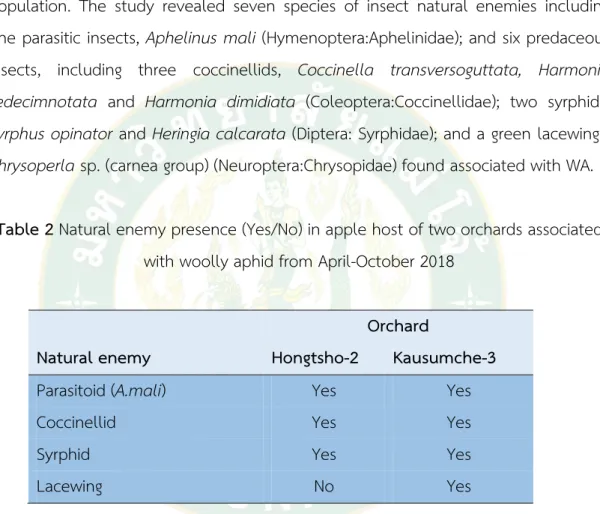
orchards ... 30 Table 2 Natural enemy presence (Yes/No) in apple host of two orchards associated with woolly aphid from April-October 2018 ... 34
List of figures
Page Figure 1 Survey site of woolly aphid (WA) and natural enemies from April-October, 2018 in Thimphu Valley, Bhutan. ... 21 Figure 2 Four orchards identified initially for survey of Woolly aphid (WA) from April- October, 2018 ... 22 Figure 3 Schematic diagram of woolly aphid sampling on terminal shoots about 10cm from four directions during growing season from April-October 2018 ... 23 Figure 4 Mean comparison of woolly aphid abundance over the season (April-Oct.
2018) in two orchards ... 28 Figure 5 Overwinter woolly aphid lesions on trees in orchard Hongtsho-2 during monitoring survey on 31 March 2018 ... 29 Figure 6 Woolly aphid colonies in the orchard Hongtsho-2 on 1 May 2018 survey .... 29 Figure 7 Density of cumulative mean aphid abundance compared at (Error Bars:
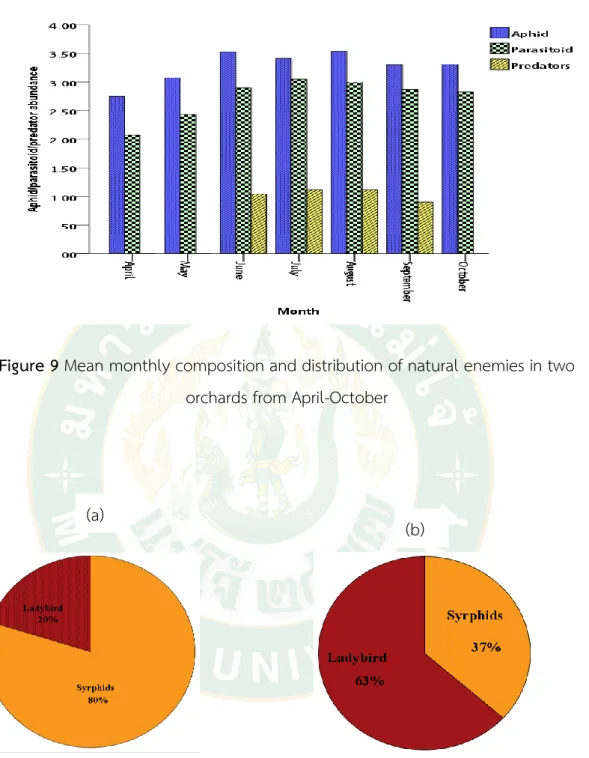
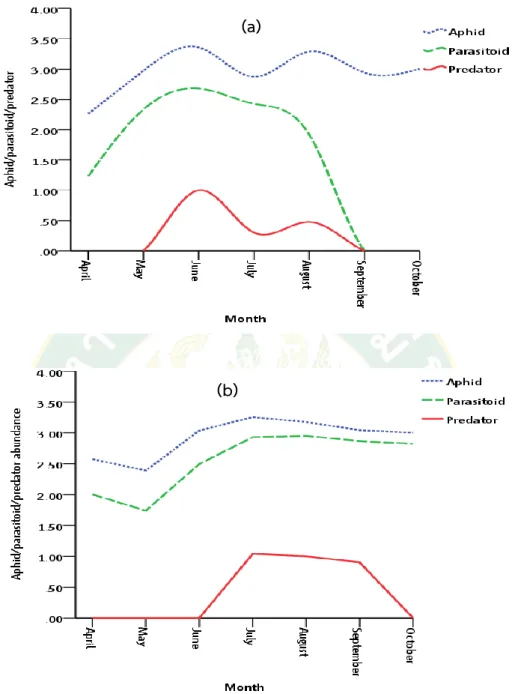
95%CI) in two orchards (April-October) over the apple season ... 31 Figure 8 Boxplot distribution of aphid population at different stages in orchard a) Hongtsho2, and b) Kausumche3 from April-October 2018 ... 32 Figure 9 Mean monthly composition and distribution of natural enemies in two orchards from April-October ... 37 Figure 10 Proportion of natural enemies in two orchards (a) Hongtsho-2 and (b) Kausumche-3, compared over growing season (April-October, 2018) ... 37 Figure 11 Mean monthly abundance of aphid, parasitoid and predators compared a) Hongtsho-2, and b) Kausumche-3, over apple season in two orchards ... 41 Figure 12 Parasitism percentage in two orchards (a) Hongtsho-2 and (b) Kausumche-3, compared over growing season ... 43
BC Biological control
CABI Centre for Agriculture and Bioscience International EPF Entomopathogenic fungi
EPN Entomopathogenic nematode IPM Integrated Pest Management MoAF Ministry of Agriculture and Forests MM Malling merton
NPPC National Plant Protection Center
NCHM National Center for Hydrology and Meteorology RD Royal delicious
WA Woolly aphid
Chapter 1 Introduction
1.1 Background and rationale
Apple (Malus domestica Borkhausen) (Rosales: Rosaceae) is an economically important fruit crop grown for commercial exports massively contributing to the economy of the country. In 2005, China exported about 24,000 MT of apples standing at No.1 rank in the world contributing to 30% of the world’s total production. The average apple production was 15.6 MT per ha in China. Aspects such as traditional agriculture practices and insect pest and diseases affected the apple yields. Aphid, spider mites, scales, leaf miners, leaf rollers, eucleid, caterpillars are some of the principal pest of apples. Natural enemies including spiders, pathogenic organisms, and insectivorous birds are considered crucial in suppression of apple pest in the orchards (Zhou et al., 2014).
Among the pest of concerns, aphid are the major pest of agriculture colonizing over 3,000 species of herbaceous plants and shrubs (Boivin et al., 2012). Despite immense pressure from other pest and diseases problem particularly, woolly aphid (WA), Eriosoma lanigerum (Hausmann) (Hemiptera: Aphididae), native to eastern North America and now distributed worldwide as major pest of apple (Asante, 1994) is an emerging pest in the orchards of Thimphu valley, Bhutan. E. lanigerum has turn out to be the predominant pest of apple in India, the middle East, the Far East, South America, Australia and New Zealand (CABI, 2018).
E. lanigerum is polymorphic and described as apterous, alate sexuparae and sexuales and confined to apple trees in Australia (Asante, 1994). They are anholocyclic on apple (Blackman and Eastop, 1984) and reproduced round the year without alteration of host (CABI, 2018). WA overwinter as adult females in the subterranean and canopy of apple tree in Australia (Nicholas et al., 2005). The
breeding of overwintered aphid commenced from March-April in USA producing over 100 nymphs by female. Usually, 3-4 generations may take place in USA and other parts of northern America and Europe (CABI, 2018). WA occurred round the year however, severe cold weather inhibits (Ateyyat and Al-Antary, 2010).
Their occurrence and damages are studied both on the aerial and subterranean parts of apple trees (Bergh and Stallings, 2016). It is reported that the optimal apple yields are limited by pest and disease and its impacts are escalating over the years (Zhou et al., 2014) affecting apple yield (Abu-romman and Ateyyat, 2014). Studies has confirmed yield loss of 2.4 kg (13 apples) per tree and gross loss of
$465.18/ha due to root infestation by WA (CABI, 2018).
In addendum, due to protective white, waxy, cottony substance characteristics of WA, suppression of infestation by pesticides application are thought to be ineffective. It required massive volume of insecticides to penetrate and adequately control the aphids escalating the production cost. Thus, biological control has been widely adopted for its efficiency and economic advantages than chemical control (Van lenteren et al., 2003). Nonetheless, with the increasing concerns on the negative effects of pesticides on natural enemies, the environment and human health, a research interest has been shifted to the use of biological control agents such as predator and parasitoids (Quarrell et al., 2017).
In Bhutan, farmers grow apple for both commercial exports and domestic consumption bolstering their livelihood. According to Agriculture Statistics (2016) Bhutan produced about 6,587 MT in 2016 and Thimphu valley alone produced approximately 3,025 MT accounting to 50% of the total production.
Thimphu is one of the major apple growing district in the country. Common apple varieties grown are Royal Delicious, Red Delicious and Golden Delicious grown in the temperate regions (2,000 - 2,600 masl.) mainly traded with Bangladesh and India.
3 However, apple production has been confronted with insect pest damages over the years resulting in poor yield and quality deterioration.
The major insects prevalent in the apple orchards of Bhutan are Popillia sp., Protaetia neglecta, apple twig borer (Linda rubescens), apple fruit borer (Argyresthia sp.), Green apple weevil (Myllocerus sp. nr chloris), Woolly aphid (Eriosoma lanigerum), and list of diseases are apple scab (Venturia inaequalis), Lichens on apple, Premature leaf fall (Alternaria mali). E. lanigerum is reiterated to be an emerging serious pest of apple orchards in Bhutan (NPPC, 2017).
Likewise, as mentioned earlier woolly aphid is a pest of concern in the apple plantation with increasingly heavy infestation occurring in canopies unfortunately yield impact assessment was lacking. Currently, limited work and information are available on biological control of WA aphid in Bhutan although, extensive studies were conducted elsewhere around the world. Furthermore, the vision of the country in gearing towards going organic agriculture has further necessitated for an alternative management strategy of pests as chemical use are restricted in organic farming.
Woolly aphid and its natural enemies on apple production and impact of associated predators to suppress WA are not documented adequately in orchards of Thimphu valley. Specifically, natural enemy A. mali has never been reported in Bhutan which is a popular specialist natural parasitoid of woolly aphid used across the globe as biological control agent.
The aims of this study are investigating the seasonal occurrence of woolly aphid population density and exploring diversity of key associated predators and natural enemies of WA in apple orchards. The survey was designed and conducted in selected apple orchards in major apple growing areas with woolly aphid problem in Thimphu valley (Fig.1). This has furnished quantitative information to determine implementation of conservational biological control program in the context of an
integrated pest management (IPM) system to suppress WA with the involvement of natural enemies.
1.2 Research objectives
The main objectives of the research are as follows;
i. This study focused on investigating and understanding the woolly aphid population abundance and fluctuation over apple growing season in orchards of Thimphu valley as limited information are available
ii. To explore list of potential natural enemies and predators associated with woolly aphid for future conservative biological control program in Integrated Pest Management (IPM)
Chapter 2 Literature Review
2.1 Woolly aphid
Woolly aphid (WA), Eriosoma lanigerum (Hausmann) (Hemiptera:Aphididae), is a key pest of apple trees which colonized both the roots and vegetative parts (Abu- romman and Ateyyat, 2014). It is native to eastern north America and a major pest of apple (Asante, 1994). They are small-medium size, reddish brown and the powdery waxy filaments provide woolly like characteristic form (CABI, 2018) which is a potential damaging pest of apple in southern hemisphere (Alspach and Bus, 1999).
The aphid unveiled red-blood stain when crushed. They have piercing and sucking mouthparts and two cornical at back of abdomen (Lepaja et al., 2014).
Comprehensive study on WA has been conducted in USA, New Zealand, Australia and south Africa (Lordan et al., 2014).
Aphid (apterae) are small to medium size (1.2mm to 2.6mm) with purple, red or brown colored range covered with a thick flocculent wax appearing on roots, trunks and branches of host plants (Blackman and Eastop, 1984). Antennae are dusky brown, tibiae yellowish to slightly dusky brown and possess a relatively small cornicle pore (0.06-0.07 mm). Virginoparae are dark dusky green which hibernate in winter and occurred on the roots. They appear black particularly head and thorax and dingy yellowish-brown and lack white waxy covering in some other species (CABI, 2018).
Aphid (alatae) are 1.8 to 2.3mm (Blackman and Eastop, 1984) and Alatae virginoparae have reddish-brown abdomen with a covering of woolly white wax.
Consist two or three sensoria on antennal segment with relatively small cornical pore about 0.05 mm. Oviparae are apterous, and rusty yellow to rusty brown. Males are apterous, and yellowish to dusky brown to dark green (CABI, 2018).
2.2 Distribution
Woolly aphid (WA), E. lanigerum is native to north America and also occurred in Australia (Asante, 1994). It is a cosmopolitan pest of apple and distributed in USA that colonized on apple roots and branches (Bergh and Stallings, 2016). WA are present in south Africa and associated with apple growing areas across the world (Stokwe and Malan, 2016). In addition, their presence are reported throughout Europe and Kosovo where adequate management of apple orchards are lacking and orchards with limited plant protection measures (Lepaja et al., 2014). WA is a predominant pest of apples in India, the Middle east, the Far east, south America, Australia and New Zealand (CABI, 2018). WA infestations are also recorded in Bhutan as potential pest of apples (NPPC, 2017).
2.3 Biology and life history
Eriosoma lanigerum is polymorphic and described as apterous virginoparae, alate sexuparae and sexuales which are confined to apple trees in Australia (Asante, 1994). They are anholocyclic on apple (Blackman and Eastop, 1984) and reproduced round the year without the change of host (CABI, 2018). Aphid colonies overwintered in roots and bark crevices in plant host. The aphid being anholocyclic, an abortive sexual phase prevailed as unviable sexuales and eggs are produced on apples which do not hatch (CABI, 2018). WA overwinter as adult females in the subterranean and canopy of apple tree in Australia (Nicholas et al., 2005). The reproductive life stages under field environment are dependent on season (Asante, 1994).
According to Lordan et al. (2014) re-infestation of WA occurred from canopy and root colonies. Bergh and Stallings (2016) reported major outbreak of WA are difficult to forecast. WA densities attained peak soon after buds outbreak and in late season (Gontijo et al., 2013). According to Lordan et al. (2014) peak counts of aphid reported from May to June with two annual peaks. Similarly, they also reported two
7 annual peaks of WA abundance, one in early growing season (June) and another in late season (September) Gontijo, et al. (2015). WA are present round the year although severe cold weather inhibit and as no colonies were recorded during Jan- March (Ateyyat and Al-Antary, 2010). Lordan et al. (2014) also observed that aerial infestation was not destroyed by low winter temperature. Woolly aphid colonies commenced its emergence from March-April according to NPPC (2017). Although, emergence of WA colonies varied in different orchards and season (Pringle and Heunis, 2008). Climatic factor may significantly influence WA ecology according to Lordan et al. (2014).
During the warm growing season, WA exhibited rapid reproduction of 10-12 generations with apterous virginoparae producing average of 100 nymphs in lifetime (Quarrell et al., 2017). Nymphs overwinter in roots 10-15 cm below the soil surface (Lepaja et al., 2014). Young nymphs move up the canopy when the soil temperature attains about 10°C in late spring to early summer (Nicholas et al., 2005). (Ateyyat and Al-Antary, 2010) observed similar trend that above 10°C, commenced aphid movement to the canopies in April. Climatic aspects, precipitation and temperatures may have contributed WA occurrence in apples (Bergh and Stallings, 2016).
In north America, the heteroecious woolly aphid spend their reproductive life parthenogenetically on apple and sexually on elm host whereas in Australia, life cycle was confined to apple trees in apterous form (Asante, 1994). The breeding of overwintered aphids begin from March-April in USA over 100 nymphs produced by individual female. Usually 3-4 generations may take place in Michigan, USA and other parts of northern America and Europe (CABI, 2018).
In Australia, alates emerged in early November producing only virginoparae, however that emerged in late November to late January produced a mixture of virginoparae and sexuales. Alates that appeared in February-April produce only sexuales. The continuity of the species are through parthenogenesis and overwinter
as cold-resistant apterous virginoparae (CABI, 2018). In general, aphid tend to hover more on the terminal shoots and multiply on tender plants (Verghese and Jayanthi, 2002). Conversely, aphids are fond of dwelling in the lower parts of the canopy and trunk of the host plants (CABI, 2018).
In India, apterous virginoparae undergoes four moulting resulting in five instars. The reproduction process are longer in winter however, greater fecundity in summer. The highly mobile 1st instar nymphs scatter from the aphid crowd to establish fresh colonies and move from roots to shoot round the year (CABI, 2018).
The 1st instar nymphs dispersed between the trees are transported in various means through orchard management practices, migration or wind (Lordan et al., 2014). In India, the peak aphid movement from shoots and roots were observed during mid- June and October to November based on the fluctuation of ambient and soil temperature.
Aphids sheltering on aerial parts of plants including wounds and axils was probably to avoid natural enemies (CABI, 2018). WA overwinters on roots colonies and produces 1st instar nymphs (crawlers) in early spring. In spring, crawlers migrate up the canopies and initiate new colonies in protected parts of the tree (Abu- romman and Ateyyat, 2014). They also reported that WA overwinter as adult females on both aerial and edaphic parts of the tree (Nicholas et al., 2005).
WA colonies persist throughout winter on roots of the host plants (Blackman and Eastop, 1984). In central Washington, crawler movement of WA was noted from early May to early July and peaked from early June to late July (Beers et al., 2010).The aphid colonies developed on thin bark around pruning cuts or split caused by heavy cropping in the previous season. As the season progressed, colonies develop on the new season’s growth. In autumn, nymphs migrate to the roots (Nicholas et al., 2005).
9 2.4 Host plants
Apples, Malus domestica (Rosales: Rosaceae) are the main host of WA but it can also occur on other rosaceous plants such as hawthorn (Crataegus spp.) and coloneaster (Coloneaster spp.) rarely on quince (Cydonia spp.), pear (Pyrus spp.) and mountain-ash (Sorbus spp.) but not so injurious in these host plants (Blackman and Eastop, 1984). The life cycle of WA is confined to apple trees due to unavailability of American elm (Stokwe and Malan, 2016). Asante (1994) reported WA occurrence in species of Malus, Coloneaster, Crataegus, Sorbus and Pyracantha. WA are also observed on elm, pear, quince, hawthorn, mountain ash and cotoneaster (Van lenteren et al., 2003).
2.5 Damage on agricultural crops
About 5000 species of aphid recorded and considered as serious group of insect pest of crops in the temperate zone (Wieczorek, 2015). Aphids are primary pest of agricultural crops across the globe (Boivin et al., 2012) which caused deformation in leaves and fruits (Abu-romman and Ateyyat, 2014). Particularly, woolly aphid damaged to apple trees by feeding on bark and colonizing both roots and vegetative parts (Asante, 1994; Bergh and Stallings, 2016). Woolly aphid is a key pest but not as vector of apple virus diseases (CABI, 2018). Depending on the severity and feeding site, WA can cause serious impact on the apple production (Stokwe and Malan, 2016). WA infestation varies with cultivars and orchard management practices (Wearing et al., 2010).
During the high yielding period, numbers and weight of the fruits are reduced as consequence of galls formation. The galls infection can enormously retard the water conduction capacity of the roots and affect the shoot elongation (Ateyyat and Al-Antary, 2009). It destroyed developing buds in leaf axils (Stokwe and Malan, 2016).
Furthermore, WA can cause phytosanitary concerns for trade of fruits (Abu-romman and Ateyyat, 2014 ; Stokwe and Malan, 2016).
WA colonies established on pruning cuts and splits in early season that are caused by heavy fruiting in the previous season, however infestations occur on the current plant parts with commencement of new season (Nicholas et al., 2005). WA infestation occurred on canopy and roots although prominent damages were observed on roots. The root damages are hard to detect and control (CABI, 2018) moreover, root infestations cause major damages (Ateyyat and Al-Antary, 2010). Due to hidden underground colonies, it causes major injury prior to revealing signs of aerial infestation (Stokwe and Malan, 2016). Root infestation resulted in the formation of galls impeding water conduction (CABI, 2018). Stokwe and Malan (2016) described root colonies damage and information are hard to furnish as sampling process was challenging.
The 1st instar nymphs (crawler) colonized leaf axils, pruning wounds and injured bark (Pringle and Heunis, 2008). WA destroyed buds in leaf axil and can infest fruit by entering the core through calyx (Stokwe and Malan, 2016). The nymphs and adults of WA resulted in hypertrophic galls and ruptured the roots and limbs facilitating pathogenic infections by impeding plant sap flow (Quarrell et al., 2017).
According to Asante (1994) WA damages the roots and shoots resulting in poor quality and yield. Ateyyat and Al-Antary (2009) also reported root damage are more severe and difficult to control than stem. Studies confirmed an average yield loss of 2.4 kgs (13 apples) per tree and gross loss of $465.18/ha due to root infestation (CABI, 2018).
In the situation of heavy infestation in the orchards, people deny to work in such undesirable condition (Nicholas et al., 2005). WA infestation are nuisance to apple pickers causing respiratory issues due to inhalation of waxy filaments (Quarrell
11 et al., 2017). Gontijo et al. (2012) reported that change in pesticide program and interruption of the biological controls attributed to frequent outbreak of WA. Aphid obstructs the normal development of trees impacting the yield loss (Sood and Gupta, 2005).
2.6 Woolly aphid management strategies 2.6.1 Biological Control
Various techniques of woolly aphid management are discussed like use of resistant rootstocks, chemical and biological control or combination of all these measures (Stokwe and Malan, 2016). Biological control (BC) approach has been adopted for its efficiency and economic advantages against chemical to manage numerous insect pests across the globe (Van lenteren et al., 2003). Massive focus on biological control of pest was due to demand for chemical free and safe agricultural commodities (Zhou et al., 2014). This techniques are being practiced for about 100 years now using exotic natural enemies to control severe pest, disease and weed problems (Van Lenteren et al., 2003). However, high cost of mass rearing of aphid parasitoids remained a constraint (Boivin et al., 2012). There are limited reports available on negative impacts on environment and health compare to chemical solution. Conservative biological control are most eco-friendly and stable pest control technique which can avoid pesticide use (Boivin et al., 2012).
The wasp parasitoid, Aphelinus mali (Hymenoptera: Aphelinidae) is native of USA which was introduced to western USA, Europe and other apple producing countries. It is a host specific endoparasitoid (Zhou et al., 2014) mainly used for controlling woolly aphid in apples (CABI, 2018). Gontijo et al. (2015) mentioned that maintaining diversity of predators and parasitoids enhanced effectiveness in regulating WA. However, as reported by Beltrán et al. (2017) there lacked parasitism by parasitoid, A. mali under broad-spectrum insecticide applications and declined in
the number of predators. Ateyyat and Al-Antary (2010) found parasitism by A. mali could be influenced by heavy applications of pesticides impeding the parasitoid densities. Parasitism was evident from late June-mid September with peak parasitism in late July (Bergh and Stallings, 2016).
A. mali is a specialist of WA (Gontijo et al., 2013) and most predominant natural enemies for effective control of the above ground trees (Zhou et al., 2014).
Specialist H. calcarata (Diptera: Syrphidae) native of US (Gresham et al., 2013) reported to attack WA colonies in roots (Gontijol et al., 2012). Laboratory study confirmed that A. mali parasitized all stages of WA however, preferred the 3rd instar nymphs (CABI, 2018). Nevertheless, Lordan et al. (2014) mentioned that control of WA in the aerial part of host plants by A. mali is arguable. It is reported to have ineffective suppression of WA by A. mali as it occurred in late season and not able to control initial infestation (Stokwe and Malan, 2016).
The effectiveness of parasitoid A. mali diminished in cold climatic condition (Stokwe and Malan, 2016; Wearing et al., 2010). Bergh and Short (2008) also reported that species of hoverflies like Heringia clacarata, Eupeodes americanus, and Syrphus rectus abetted in regulating WA population. Gresham et al. (2013) found H. calcarata species greatly aided in the biological control of WA infestation. Zhou et al. (2014) studied technique of conserving overwinter aphid mummies with management of hay mulch to maintain adequate parasitoid densities in early season for managing WA.
According to (Bergh and Stallings, 2016), H. calcarata and A. mali are the main natural enemies of WA, and former known to have more impact on aphid colonies. The parasitism level reduced with increased in colony size as parasitoid may have difficulties in reaching core of the colonies (Stokwe and Malan, 2016). It is advantageous when generalist and specialist predators are both present for effective WA management due to their diverse feeding habit and occurrence at different time
13 Gontijol et al. (2012). Furthermore, maintaining several group of natural enemies, both predators and parasitoids is an effective means for WA control and other aphid species (Gontijo et al., 2015). The acceptable level of WA suppression is problematic when adverse climatic aspects prevailed for development of natural enemies (Nicholas et al., 2005). Gresham et al. (2013) recommended more studies on reproductive biology and ecology of H. calcarata. The crucial role of predators was acknowledged lately for WA population control (Bergh and Stallings, 2016).
In India, success of 98% WA management by A. mali was recorded. It was supplemented by release of predators like the lacewing Brinckochrysa scelestes (Neuroptera: Chrysopidae) and the hover fly Eupeodes confrater (Diptera: Syrphidae) in Australia and New Zealand. The popular wasp parasitoid, A. mali can be adopted for biological agent to control WA however, it is not reported in Bhutan (NPPC, 2017).
In New Zealand, reported success of 80% suppression with A. mali by averting aphidicide. In the Netherlands, beside A. mali, the most common predatory coccinellid, Exochomus quadripustulatus (Coleoptera: Coccinellidae) support WA suppression in apple orchards (CABI, 2018). Study found that there was reduction or complete demolition of aphid population when accessed to both parasitoid and predators (Gontijo et al., 2015). Conversely, the population of WA increased when natural enemies are not present (Bergh and Stallings, 2016). Pesticides are highly toxic to parasitoids, thus use of more bio-pesticides are alternatives to control aphid pest (Zhou et al., 2014).
In Europe, supplementary bio-control of WA is earwig, Forficula auricularia (Dermaptera: Forficulidae). The generalist predator, earwigs are nocturnal (Gontijo et al., 2013) and overwinter as adult in underground in late autumn. They undergo 5-6 generations during apple growing period and their abundance varies in different orchards and years. Earwigs dwelled in fruit bunches and on canopies during daytime.
Several known literature mentioned different level of WA control by European
earwigs (Quarrell et al., 2017). Earwigs are efficient predators of woolly aphid (Gontijo et al., 2013). WA infestations are severe when earwig populations are low (Quarrell et al., 2017). Nicholas et al. (2005) mentioned earwigs as main agent in WA control which has the capacity to ingest 106 aphids per day. Earwigs are potential for WA management as they dwell in orchards regardless of presence or absence of WA in the orchards (Nicholas et al., 2005).
Lordan et al. (2014b); Gontijol et al. (2012) mentioned regarded list of useful predators for controlling WA, like ladybird beetles, lacewings, hoverflies, earwigs and spiders (Araneae) and amongst, earwigs are most vital predator. Wearing et al. (2010) also reported some predators such as Micromus tasmaniae (Walker), Sejanus albisignata (Knight), forficula auricularia thought to support A. mali to control E.
lanigerum although their impact remained unclear. Hoverflies are active during sunny and warm weather. Small and isolated WA colonies are observed when eggs or larvae of syrphid predators are present (Bergh and Short, 2008). Bergh and Stallings (2016) mentioned lacewings associations with woolly aphid colonies. They studied approaches to maintain diversity of natural enemies by managing crops and grasses in the orchards (Zhou et al., 2014).
Their study uncovered impact of WA control was higher when both A. mali and predators are available and the natural enemy guild may differ in all apple growing areas (Bergh and Stallings, 2016). Regarded list of predators like ladybird, Neuroptera and Syrphidae and their abundance varies in orchards, between years and management practice (Quarrell et al., 2017).
Conservation biological control has advantage in creating stable ecosystem suitable for the local orchard management (Zhou et al., 2014). Limited documentation of natural coccinellid despite their massive role in pest management program (Obrycki and Kring, 1998). There are numerous predators and natural enemies that bolster WA suppression but admitted minimal merits on their
15 usefulness (Bergh and Stallings, 2016). Aphid population monitoring are indispensable to determine necessary intervention for management (Pringle and Heunis, 2008).
They suggested more study on disruptive and complementary effects of predators and parasitoid (Gontijo et al., 2015).
2.6.2 Host-plant resistance
Utilization of resistant varieties and rootstock are significant techniques for control of WA infestation (Abu-romman and Ateyyat, 2014). Northern Spry and Golden Delicious cultivars showed some extent of resistance to WA. Malling Merton (MM) series of rootstocks derived from northern Spry are ideally selected. These rootstocks are popularly used in pest control as they significantly lower the infestation levels although there are no complete suppression. Abu-romman and Ateyyat (2014) also described list of resistant varieties such as Golden delicious, Delbarestivale, Golden smoothie, Red miracle and Harmony. They studied, WA infestation extremely varied among apple varieties (Nicholas et al., 2005).
(CABI, 2018) reported WA management technique with the use of resistant cultivars. Thirty cultivars and eight Malus sp. breeding lines tested to WA resistance in which Malus baccata (Jin 67) was identified promising. It demonstrated less root damage, winter hardy and induced dwarfism in apple crosses (CABI, 2018).
In New Zealand, M.793 and MM.106 are resistant apple rootstocks used to suppress WA (Wearing et al., 2010). Their priority remained for development of apple varieties and rootstocks of genetic resistance for WA (Alspach and Bus, 1999). In Jordan, Ateyyat and Al-Antary (2009) recommended Harmony cultivar rootstock owing their highly resistance feature against WA. They also reported aphid infestations are not similar in all varieties of apple. Ateyyat and Al-Antary (2010) found WA infestation varied between cultivars as Fuji sustained more injury than Golden Delicious.
2.6.3 Integrated pest management (IPM)
Countries like Australia, New Zealand, Romania and south Africa has recognized advantage of adopting integrated pest management (IPM) programmes. It is known that less use of broad-spectrum pesticides improved the diversity of predators and parasitoids, and high population of natural enemies especially A. mali are used in IPM. Wearing et al. (2010) reported significant increase of natural enemies in their studies shifting from conventional to integrated fruit production (IFP).
According to Stokwe and Malan (2016), principal agent of IPM for WA management in apple is parasitoid, A. mali. In New Zealand, application of mineral oil, or oil plus buprofenzino in IPM programme (CABI, 2018). The need for IPM to control pests ensued as result of shifting to organic agriculture where chemical use are restricted (Abu-romman and Ateyyat, 2014). More studies are advisable in the field of integrated fruit production (IFP) programme to curbed pesticide residue concern in food and also for sustainable production techniques (Shaw and Wallis, 2008).
Careful selection of pesticides and natural enemies are crucial to maintain minimal impact on natural enemies in integrated fruit production (Rogers et al., 2011). Use of pesticides has impact on coccinellid population affecting fecundity and longevity, however they reappear quickly in the field after insecticide application if accessible to adequate prey (Obrycki and Kring, 1998). Reported low pest and high diversity of arthropods in integrated pest management orchards (Quarrell et al., 2017). Nicholas et al. (2005) mentioned low level of WA infestations under IPM orchards due to elevated numbers of natural enemies. Aphids are constantly under threat during day and night when all natural enemy group prevailed (Gontijo et al., 2015).
To obtain successful management of aphid, it is imperative to understand the population density of parasitoid to avoid pesticides use ensuing negative impacts
17 (Rocca and Greco, 2012). Plantation of alyssum flowers in the vicinity of trees might increase natural enemies of WA and improve biological control measures (Gontijo et al., 2013). It is vital to gather accurate data and recordings in ecological studies for pest management purpose (Verghese and Jayanthi, 2002). Rogers et al. (2011) in their study suggested to use alternative crop thinners like carbaryl which are less disruptive to A. mali for sustainable control of WA. (Ateyyat and Al-Antary, 2010) suggested mass rearing and releasing of parasitoid to control WA as low abundance of A. mali has low parasitism level.
2.6.4 Entomopathogen nematode and fungi
Use of entomopathogenic nematodes (EPN) against WA control were reported ineffective but investigated to assess potential management in root infestations (CABI, 2018). Stokwe and Malan (2016) discussed and provided potential techniques of managing underground woolly aphid colonies with application of entomopathogenic nematode (EPN) and entomopathogenic fungi (EPF) as they also mentioned that enormous studies has been done for control of aerial WA infestation but not on roots. EPN and EPF are also regarded as natural enemies of soilborne insects for biological control measures. About 100 species of EPNs described across globe and 11 are commercialized. EPN have varying level of efficiency and thus biocontrol rely on species, host insects and environmental aspects (Stokwe and Malan, 2016).
Nematode, Steinernema carpocapsae are reported to attack woolly aphid infestations.
Likewise about 200 species of EPF are pathogens of insect and mites and genera, Hypocreales ( Beauveria and Metarhizium) used in biological control. These can be used in classical biological control, augmentation or conservation. Some of the commercially available EPF; Beauveria, Metarhizium, Lecanicillium and Isaria.
Suggested, feasibility study for management of WA with available commercial EPF (Stokwe and Malan, 2016).
2.6.5 Chemical Control
Chemical spray of chlorpyrifos and dimethoate are recommended when WA infestation reach unacceptable level (NPPC, 2017). Chemical control of woolly aphid are inadequate due to their white waxy filament characteristics, as such systemic insecticide, Vamidothion has been suggested although toxic to natural enemies (Monteiro et al., 2004) as short residue chemicals does not provide efficient control (Stokwe and Malan, 2016). Moreover, Stokwe and Malan (2016) reported pesticides spray are sensitive to natural enemies and disrupted biological control. Furthermore, Wearing et al. (2010) described natural enemies of WA are prone to be killed by organophosphate insecticides.
WA are controlled with yellow mineral oil to kill hibernating aphids followed by Chlorpyrifos or demeton-methy spray in the growing season after flowering so as predators are undestroyed. Woolly aphid are difficult to control with contact pesticides (Bergh and Short, 2008). Diazinon and Chloropyrifos provided effective control but has toxic effects to parasitoid, A. mali. Pirimicarb are effective against WA without negative bearing on A. mali however, control of infestations on cankers or pruning wounds are ineffective. Nicholas et al. (2005a) reported growth of larvae in mummies/adults are not affected by fenoxycarb spray. Fenitrothion root-dip in nurseries is effective control measure. Treatment of subterranean population are with granules of dimethoate. Apple tree trunk banded with dimethoate checked the movement of 1st instar nymphs between aerial and subterranean habitats (CABI, 2018b). Soil application done with imidacloprid to manage WA in South Africa (Stokwe and Malan, 2016).
Chapter 3
Materials and Methods
3.1 Study method 3.1.1 Location
The field investigation of woolly aphid (WA) infestation and associated natural enemies was conducted from April-October 2018 (about 28 weeks). Two well- established apple orchards under Thimphu valley, Bhutan were randomly identified and evaluated over the growing season. The orchards were located in two different geographical locations approximately 47 kilometers apart (Fig.1). Orchard were assigned as Hongtsho-2 (N 27° 29ꞌ 0.4416") (E 89° 43ꞌ 46.6788") and Kausumche-3 (N 27° 19ꞌ 0.0876") (E 89° 33ꞌ 24.0876") respectively.
In both the orchards, mean temperature was recorded between Min-11.34ºC to Max-23.20ºC and received cumulative rainfall of 377.9 mm (March-October 2018) during the apple growing season. Data of daily climatic variables of maximum and minimum temperature (Degree Celsius) and rainfall (millimeter) was accessed from National Center for Hydrology and Meteorology, Thimphu, Bhutan. Orchard Hongtsho-2, is located at an altitude of 8880 ft. slightly higher elevation than orchard Kausumche-3 at 7096 ft.
3.1.2 Characteristics of orchard
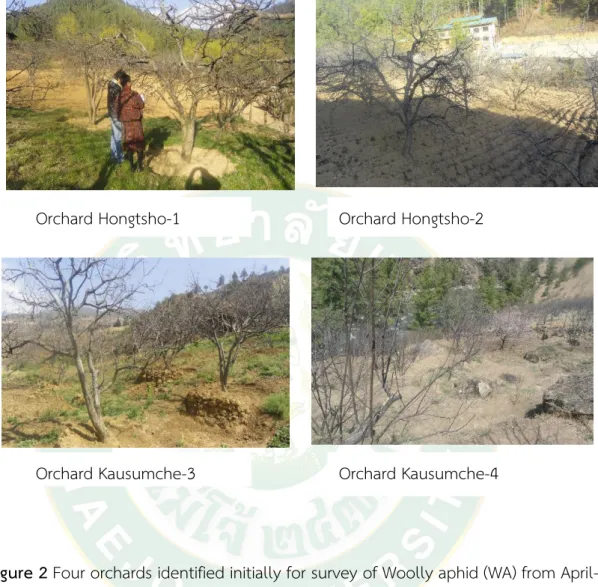
Four apple orchards initially selected for assessment based on the history of aphid infestation in the previous cropping season with the support of agriculture extension personnel of the Gewog (Fig.2). However, two orchards were avoided for survey as season progressed, the aphid colonies are not distinctive for enumeration.
The orchards comprised common apple variety, Royal Delicious (RD). In both the orchards, trees ranged between 5-40 years old plantations and followed line system
with at least three meters between trees. Aphid colonies were found scattered in canopy of sampled trees. Orchard consist of 150 trees in Hongtsho-2 and 140 trees in orchard Kausumche-3.
Over the growing season, potato and chilli were cultivated as under crop in Hongtsho-2 and chilli in Kausumche-3 respectively. Farmers has been practicing such conventional agriculture production system for years. The orchards were under rain- fed irrigation management practices without any proper irrigation amenities. Both the orchards have record of pesticides application in the previous season with Carbendazim, TSO and Borax however, during the study period chemical spray schedule was absent. Both the orchards have timely weed management during the apple season. The orchards were evaluated for WA infestation and population fluctuations, parasitism and predation levels and diversity of potential natural enemies.
21
Figure 1 Survey site of woolly aphid (WA) and natural enemies from April-October, 2018 in Thimphu Valley, Bhutan.
Figure 2 Four orchards identified initially for survey of Woolly aphid (WA) from April- October, 2018
Orchard Hongtsho-1 Orchard Hongtsho-2
Orchard Kausumche-3 Orchard Kausumche-4
23
South West
East
3.2 Population densities of woolly aphid
The aerial population of WA were assessed from April-October 2018 over the apple growing season. Selected five infested apple trees from each orchard using simple random sampling. Four infested terminal shoots (approximately 10cm) were sampled from four directions (shown in Fig.3) each tree reachable from the ground for aphid assessment. To facilitate insects count, the white filaments were rinsed with clean tap water. Colonies were visually examined bi-weekly and enumerated in situ.
Live aphid of all developmental stage were counted with the help of hand lens (10x) and insect counter by non-destructive means. The plant samples along with aphid colonies were collected for further observations. The methods were followed similar to Krebs (1989); Pringle and Heunis (2008); Gontijol, L. M. et al.
(2012); and Lordan et al. (2014b).
Figure 3 Schematic diagram of woolly aphid sampling on terminal shoots about 10cm from four directions during growing season from April-October 2018
North
3.3 Diversity of natural enemies associated with woolly aphid
Diversity of natural enemies associated with WA was investigated simultaneously while surveying aphid population. Bi-weekly inspection and enumeration of natural enemies were conducted on infested terminal shoots. Larva, predators and natural enemies feeding on WA colonies and vicinity were recorded.
The canopy of the sampled trees were monitored and searched for adult predaceous insects associated with WA during the day between 9.00am to 4.00pm.
The survey of flying beneficial insects in the designated orchard was monitored with sweep net and no record of trap every time the survey done. The composition and relative abundance of natural enemy diversity were measured with Shannon diversity index equation;
H'=−∑ p
i1n p
iDuring the sampling, adult predators including coccinellids, syrphids and lacewings were collected in vial containing 70% ethyl alcohol and brought to the laboratory. Adult insects were processed and pinned and preserved in insect box.
Similarly, infested plant samples with aphid, black mummies and larva were collected in perforated plastic bags for rearing of parasitoids and adults. The emerged parasitoids and insects were preserved in 70% ethyl alcohol and later pinned for further observations. The insect specimens were transferred to the laboratory at Maejo University, Chiangmai and identified to species as appropriate.
Collection, processing technique and method was similar to those followed by Aslan and Karaca (2005); Beltrán et al. (2017); Gontijol, L. M. et al. (2012).
25 3.4 Woolly aphid (WA) parasitism by Aphelinus mali
Potential parasitization of WA by parasitoid, Aphelinus mali, was assessed at the same time while monitoring the aphid population. Inspected and recorded black mummies and parasitized aphids (both intact and exited) bi-weekly. Parasitized aphid, black mummies and larvae samples were collected and reared. The emerged parasitoids were placed into the Eppendorf tubes containing 70% ethyl alcohol and preserved for identification as described similar to Beltrán et al. (2017). Insect specimens were transferred to Maejo University, Chiangmai, Thailand for identification and species confirmation. The insect specimens are deposited at NPPC, Semtokha, Thimphu for future references.
3.5 Data analysis
Data were computed for monthly comparison of the averages of woolly aphid abundance in the orchards and its parasitism by natural enemy parasitoid, Aphelinus mali over the season. All the data were log-transformed (Log10) before statistical analysis to achieve assumptions for normality test. The level of woolly aphid infestation and parasitism in two orchards were statistically analyzed with an independent sample t-test and determined an extremely significant difference in aphid population densities over the survey period. The diversity of natural enemies comparison in two orchards was determined by Shannon diversity index equation as mentioned above. All statistical comparisons were considered significant at P<0.05.
Data were evaluated by Statistical Package of Social Sciences (SPSS) Version 22.
4.1 Population densities of woolly aphid
The apple orchards under study were visually monitored commencing 19 March 2018 for any signs of woolly aphid infestations. Trees were at dormant stage during the preliminary visit (Fig.2) and an overwinter aphid lesions are distinctively prevalent on tree canopies and root zones. White waxy and cottony powdery WA lesion was evident on twigs and branches, pruning cuts, and on remnants of plant parts that are pruned off in the fall. Evidence of galls formation and desiccation of plant parts were apparent on wherever heavy infestation existed. These observations are in congruent with Asante (1994) where both the roots and vegetative part of trees are damaged as a consequent of WA colonies formation.
Infested plant parts and debris that were clipped off during the pruning schedule were found scattered and unattended in and adjacent to the orchards.
Such an inappropriate weed management practice and poor orchard sanitation might have served as habitat of overwintering aphids and re-emerged in spring (March) although evaluation was lacking. Thus, aphid re-infestation are thought to be from the overwintered infested plant debris, root zones and canopies which was in consistent with the reports of Lordan et al. (2014).
During the preliminary field inspection on 31 March 2018, in orchard Hongtsho-2, trees still remained at dormant stage without expression of any sign of bud break and fresh leaves. The initiation of aphid infestation was apparent on twigs and terminal buds however, the population were under progression and not prominent enough for enumeration. Meanwhile, the soils were found well-prepared and set for cultivating vegetable crops in-between trees in the coming summer. The
27 orchards remained under rain-fed condition without any proper irrigation management facilities. Annual pruning schedule was followed.
On the same sampling day, flush of new leaves appeared on the trees and proper weed management and sanitation was visible in the orchard Kausumche-3.
The variations of seasonal developmental stage of apple trees observed in two orchards could be due to different geographical locations. Orchard Hongtsho-2 and Kausumche-3 are situated at elevation of 8880 ft. and 7096 ft. respectively.
Woolly aphid density was evaluated over the growing season from April- October until fruit harvest and attempted to determine its population abundance and fluctuations. Aphid colonies were monitored from mid-March although there was no formation of distinct colonies hindering the count of insects. According to NPPC (2017) WA colonies commenced its emergence from March-April indicating appropriate commencement of this survey from April. WA colonies are rampant in the orchards round the season however, as mentioned by Ateyyat and Al-Antary (2010) that aphid population could be affected by severe low temperature. From the study, initial formation of WA colonies was first encountered on 14 April 2018 in orchard Kausumche-3 during the first sampling day. However, the aphid are speculated to emerged much earlier in the season (early March) before their colonization in April (Fig.4).
The previous studies reported that reproduction of overwintered aphids begin from March-April (CABI, 2018) which is in congruent with the finding as aphids were evaluated from mid-April. Nonetheless, WA colonies was recorded only two weeks later on 1 May 2018 in orchard Hongtsho-2. There was variations in temporal occurrence of WA colonies in two orchards supporting Asante (1994) that the reproductive life stages of WA is dependent on season. According to Gontijo et al.
(2013) the densities of WA attained peak soon after buds outbreak.
Figure 4 Mean comparison of woolly aphid abundance over the season (April-Oct.
2018) in two orchards
This pattern of WA abundance could be due to influence of the different environmental aspects in the two orchards as Beltrán et al. (2017) highlighting precipitation, climate and temperature might have influenced WA colonies. Pringle and Heunis (2008) also supported the study that WA emergence varied with orchards and season. Further, abetted by Lordan et al. (2014) that ecology of WA can be drastically influenced by climatic factor. Cultural management and chemical spray might have also influenced the WA populations in two orchards. (Stokwe and Malan, 2016) reported pesticides spray are sensitive to natural enemies and disrupt biological control.
Fresh flush of leaves and flowers are already blooming during the monitoring day on 1 May 2018 and assumed to provide food reserves for aphid development (Fig.5). Over the growing season, aphid infestations are found on the branches, twigs,
29 shoots, leaf axils and spurs. Usually WA feed and multiply on tender parts of tree according to Verghese and Jayanthi (2002).
Figure 5 Overwinter woolly aphid lesions on trees in orchard Hongtsho-2 during monitoring survey on 31 March 2018
Figure 6 Woolly aphid colonies in the orchard Hongtsho-2 on 1 May 2018 survey
Similar to the temporal variations of aphid emergence, tree growth and developmental stages also differed in two orchards. Fruits attained marble size on 14 May 2018 in orchard Kausumche-3 and whereas same size was observed only on 30 May 2018 in Hongtsho-2. In general, leaves turned yellow and defoliated in the vicinity where heavy WA infestation occurred and presumed to cause injury fortunately, WA are not known to be important vector of apple virus diseases (CABI, 2018). In both the orchards, fruits were already harvested by end of September when WA colonies are predominant in the orchards. According to orchard owners, current
yields are very low compared to previous season and WA infestations was regarded as the main cause of poor production (Kelzang Dolkar, 16.10.2018, personal communication).
Over the growing season, data pooled for analysis of an average monthly aphid abundance. Monthly mean aphid densities (Mean±SEM) per sample unit ranged between 9.15±0.97-57.00±4.24, and 6.15±0.58-45.35±3.09, in orchard Hongtsho-2 and Kausumche-3 respectively (Table.1). The comparison of mean aphid abundance in two orchards at different geographical locations varied. According to Pringle and Heunis (2008) aphid emergence vary in different orchards and season and also its infestation level varied with varieties (Ateyyat and Al-Antary, 2010) although, Royal Delicious (RD) was considered in the study. Cumulative average aphid density compared at (Mean±SE) Error bar: 95% Confidence Interval showed significant difference in WA infestation in two orchards evaluated over the apple season (Fig.7).
The attributed reason for variations of aphid infestations in two orchards are thought to be influenced by biotic and abiotic factors which required further research.
Table 1 Average monthly (Mean ± SEM) of aphid population abundance in two orchards
Month (week) Hongtsho-2
(Mean±SEM)
Kausumche-3 (Mean±SEM)
April (2-4) 9.15±0.97 9.45±0.99
May (6-8) 23.48±2.47 6.15±0.58
June (10-12) 57.00±4.24 27.40±2.44
July (14-16) 23.38±1.85 45.35±3.09
August (18-20) 48.55±3.20 37.68±2.78
September (22-24) 21.85±1.54 27.85±1.78
October (26-28) 25.30±1.29 25.25±2.00
31 Following the initial occurrence of WA colonies in orchard Hongtsho-2, woolly aphid density rapidly progressed. The aphid density remained relatively higher between June-August during the monitoring period as illustrated in figure 4. The peak of aphid population count (1481 numbers) was recorded in June. Aphid population suddenly dwindled from July however, population resurged and experienced another peak (1204 numbers) in August (Fig.4). The aphid infestation trend displayed two peak of aphid counts in the season which was identical to the bimodal peak of WA population reported by Beers et al. (2010; Lordan et al. (2014).
Figure 7 Density of cumulative mean aphid abundance compared at (Error Bars:
95%CI) in two orchards (April-October) over the apple season
In orchard Kasumche-3, first occurrence of aphid colonies was recorded on 14 April 2018, despite exhibiting single peak of aphid density over the entire season. The highest aphid counts (1028 numbers) was recorded in July, thereafter population plummeted erratically and remained more or less constant till end of sampling period in October (Fig.4). The observation of maximum level of aphid abundance in the growing season was presumed to attributions like abundance of tender plant
resources and favorable environmental conditions which required further corroboration. Meanwhile, root infestation and rampant galls formation were noticeable on the exposed roots throughout the survey.
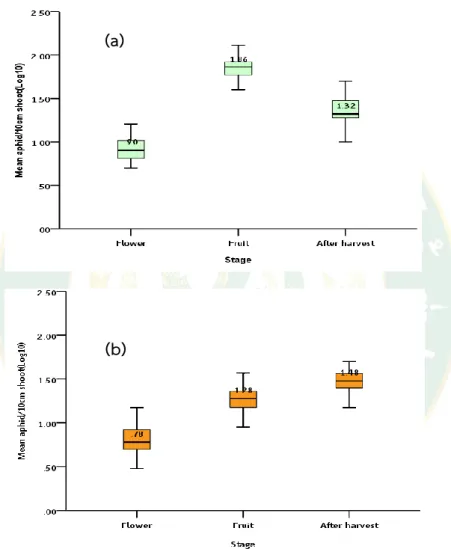
Figure 8 Boxplot distribution of aphid population at different stages in orchard a) Hongtsho2, and b) Kausumche3 from April-October 2018
Aphid densities examined at various phase of plant developmental stage, at flower stage, fruit stage and after harvest over the season. At the end of season, boxplot aphid distribution showed significant difference in aphid abundance at
(a)
(b)