JIRAPINYA KHAMRATH: PREDICTION OF SMOKING CESSATION FACTORS IN ACUTE CORONARY SYNDROME PATIENTS AFTER HOSPITAL DISCHARGE. This study was a correlational study that aimed to examine the direct and indirect relationships of predictors of smoking cessation in patients with acute coronary syndrome (ACS) after hospital discharge. Depressive symptom had a significant negative indirect effect on smoking cessation through smoking cessation self-efficacy (β= -.27).
The results showed that smoking cessation self-efficacy, previous coronary disease, and depressive symptoms were significant factors influencing smoking cessation in patients with ACS.
INTRODUCTION INTRODUCTION
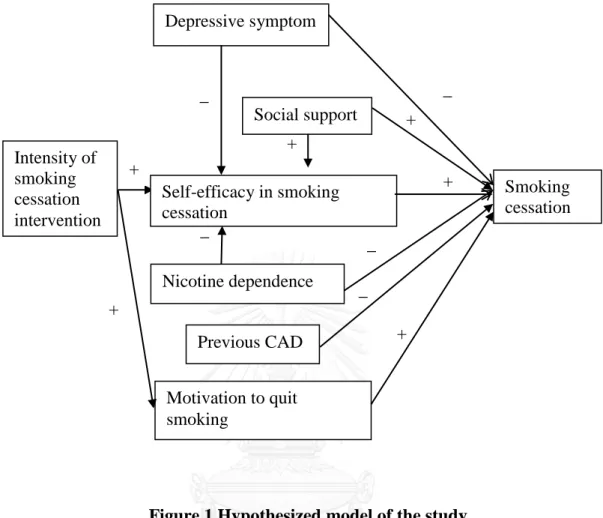
- Self-efficacy in smoking cessation has a positive direct relationship with smoking cessation in ACS patients after hospital discharge
- Social support has a positive direct relationship with smoking cessation; and it has a positive indirect relationship with smoking cessation in
- Nicotine dependence has a negative direct relationship with smoking cessation and it has a negative indirect relationship with smoking cessation in
- Depressive symptoms have a negative direct relationship with smoking cessation; and have a negative indirect relationship with smoking
- Intensity of smoking cessation intervention has a positive indirect relationship with smoking cessation in ACS patients after hospital discharge
- Previous CAD has a negative direct relationship with smoking cessation in ACS patients after hospital discharge
- Motivation to quit smoking has a positive relationship with smoking cessation in ACS patients after hospital discharge
Therefore, this study aimed to investigate predictors of smoking cessation in ACS patients after their hospital discharge. Self-efficacy in smoking cessation has a positive direct correlation with smoking cessation in ACS patients after hospital discharge. Prior CAD has a negative direct association with smoking cessation in ACS patients after hospital discharge.
Motivation to quit smoking is positively associated with smoking cessation in ACS patients after hospital discharge.
LITERATURE REVIEW LITERATURE REVIEW
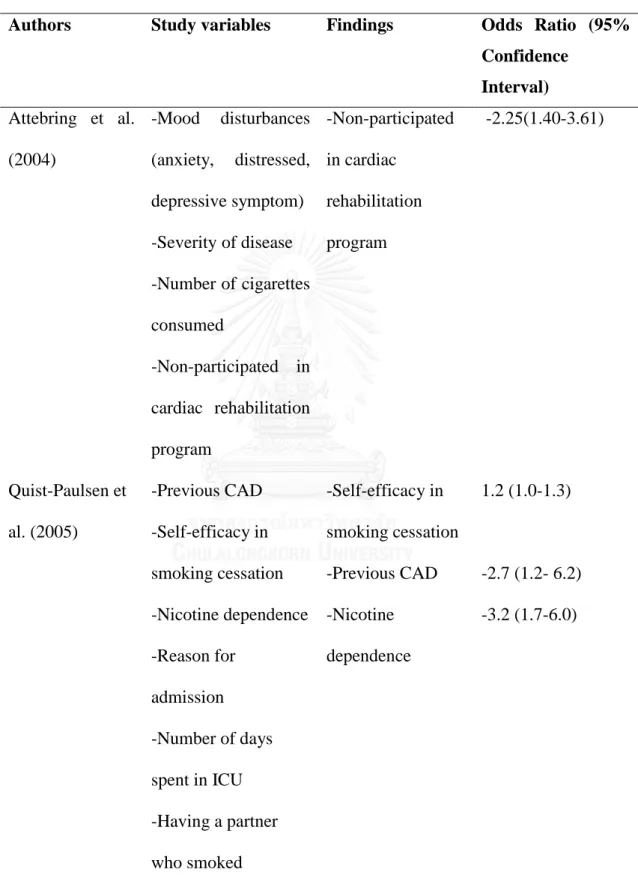
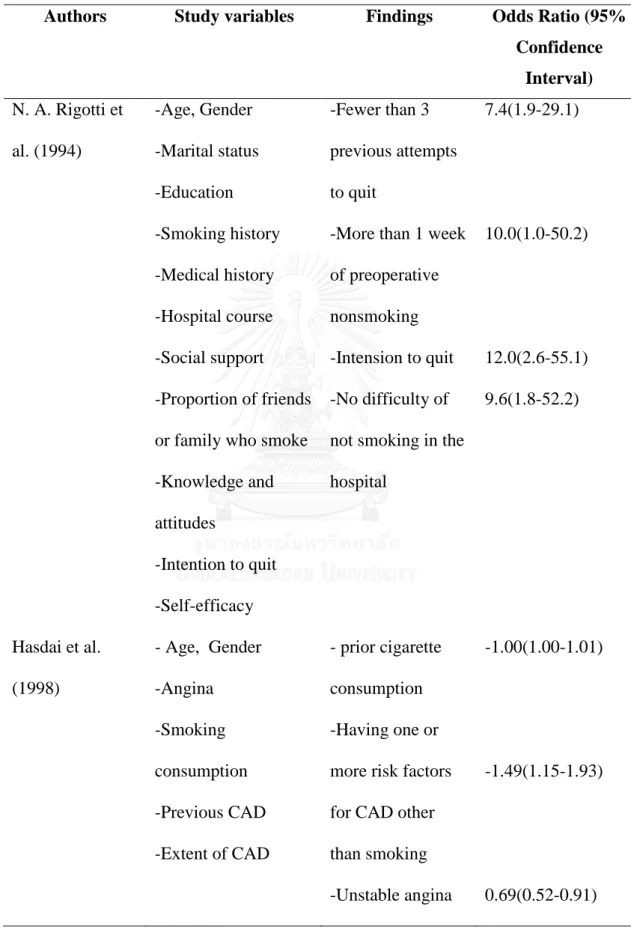
Smoking cessation typically refers to the point at which a person achieves abstinence (Ossip-Klein et al., 1986). In smokers hospitalized for heart disease, low self-efficacy in smoking cessation also contributed to smoking cessation failure (Bolman et al., 2002; Nicotine dependence is highly predictive of smoking cessation among ACS patients (Abu-Baker et al. , 2010).
Previous CAD is one of the significant predictors of smoking cessation in ACS patients after hospital discharge. Also a study by van Berkel et al. 2000) showed that prior CAD was a significantly negative predictor of smoking cessation in ACS patients. The motivational aspects of smoking cessation questionnaire (MASC) The MASC was developed by Rundmo, Smedslund and Gotestam (1997).
METHODOLOGY METHODOLOGY
Demographic Data Questionnaire (Appendix D)
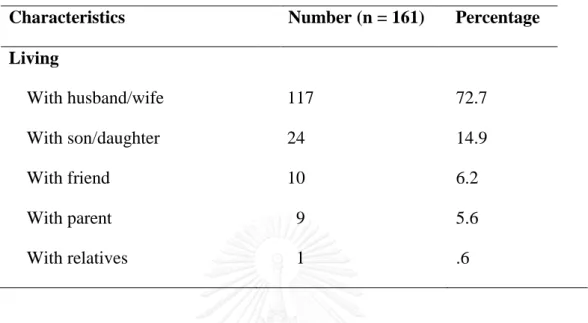
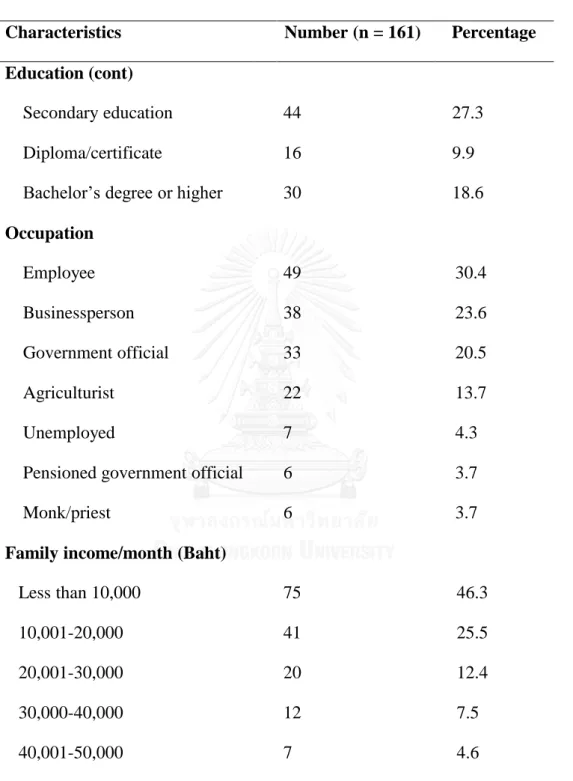
It consists of 12 items relating to the demographic characteristics of patients with ACS, their medical history, and their smoking history. This questionnaire was used to collect information on age, gender, level of education, marital status, household income and household living conditions. Participants were also asked to answer about their illness, duration of illness, treatment and co-morbidities. In addition, this questionnaire also asked about smoking history in relation to the number of cigarettes smoked, the number of previous quit attempts, and the length of time patients had experienced smoking cessation in previous quit attempts.
The score was dichotomized into “1 = with a history of CAD versus “0 = without a history of CAD.
The Smoking Self-efficacy Questionnaire (SEQ) (Appendix D)
A larger value indicated that the respondent experienced greater confidence in resisting smoking in the described context. After obtaining permission from the developer, the SEQ was translated using Brislin's back-translation model (Brislin, 1970. First, the instrument was translated from English into the Thai language by language experts in the Translation and Interpreting Service Unit of the Institute of Languages, Chulalongkorn University.
The Thai version was then translated back into English by the various linguistic experts used in the first step. Content validity refers to the extent to which an instrument has an appropriate sample of items for the construct being measured and adequately covers the construct domain (Nunnally & Bernstein, 1994). Three experts were nurses with at least ten years of experience in smoking research.
These five experts assessed the content validity of the content validity instruments by rating each item on one of four-point scales reflecting relevance to the operational definition and content area (1= not relevant, 2= somewhat important, 3= quite important, 4= very relevant) (Polit, Beck, & Owen, 2007). Also, the experts were asked to explain their reasons if they disagreed with any of the points. The content validity index of the SEQ-Thai version was 0.83 on the scale content validity index (S-CVI) and 0.80–1.00 on the item content validity index (I-CVI).
In this study, a pilot study was conducted among 30 ACS smokers with similar characteristics as the participants at Bhumipol Adulayadej Hosptial. The acceptable score for Cronbach's alpha coefficient was equal to or greater than .70 (George & Mallery, 2003).
The Partner Interaction Questionnaire (PIQ) (Appendix D)
The examples of negative behavior were 'I asked you to stop smoking', 'Reply that smoking is a dirty habit' and 'Talk you out of smoking a cigarette'. 1 point means almost never, 2 points means sometimes, 3 points means quite often, 4 points means very often. The PIQ was tested for content validity using the same processes for the SEQ-Thai version.
The content validity index of the PIQ-Thai version was 0.80 for the scale content validity index (S-CVI) and 0.80-1.00 for the item content validity index (I-CVI). The reliability of the PIQ-Thai version was determined by considering internal consistency analysis using Cronbach's alpha coefficient. Results showed that the PIQ had a Cronbach's alpha of 0.75 in pilot testing and 0.95 in 161 smoking ACS patients.
The Fagerstrom Test for Nicotine Dependence (FTND) (Appendix D) The Fagerstrom Test for Nicotine Dependence (FTND) was developed by
The reliability of the FTND was determined by considering internal consistency analysis using Cronbach's alpha coefficient. Results showed that the FTND had a Cronbach's alpha of .77 in pilot testing and .82 in 161 ACS patients who smoke.
The Center of Epidemiology Scale of Depression (CES-D) (Appendix D)
The CES-D was tested for content validity using the same processes as for the SEQ-Thai version. The content validity index of the CES-D-Thai version was 1.00 in both the S-CVI and I-CVI. The reliability of the CES-D-Thai version was determined by considering internal consistency analysis using Cronbach's alpha coefficient.
Results showed that the CES-D had a Cronbach's alpha of 0.89 in pilot testing and 0.93 in 161 ACS patients who were smokers.
Intensity of smoking cessation intervention questionnaire (ISCIQ) (Appendix D)
CD/DVD/Video on smoking cessation from all healthcare professionals (doctors, nurses, psychiatrists and dentists). In addition, one question was asked about participants receiving follow-up from healthcare providers, along with the question about smoking cessation three months after discharge. The ISCIQ was tested for content validity using the same processes as the SEQ-Thai version.
The content validity index of the ISCIQ was .80 for the scale content validity index (S-CVI) and .80-1.00 for the item content validity index (I-CVI). The reliability of the ISCIQ was determined by considering internal consistency analysis using Cronbach's alpha coefficient. According to (George & Mallery, 2003), the value of a Cronbach's alpha partly depends on the number of items in the scale; this instrument had 8 items.
Therefore, a Cronbach's alpha coefficient of 0.69 in pilot testing and 0.76 in 161 ACS patients who were smokers was acceptable.
The Reasons for Quitting Questionnaire (RFQ) ( Appendix D)
The RFQ was tested for content validity using the same processes as for the SEQ-Thai version. The content validity index of the RFQ-Thai version was .95 for the scale content validity index (S-CVI) and .80-1.00 for the item content validity index (I-CVI). Reliability of the RFQ-Thai version was determined by considering internal consistency analysis using a Cronbach's alpha coefficient.
The results showed that the RFP had a Cronbach's alpha coefficient of 0.83 in pilot testing and of 0.92 in 161 ACS patients who were smokers.
Smoking Cessation Questionnaire ( Appendix D)
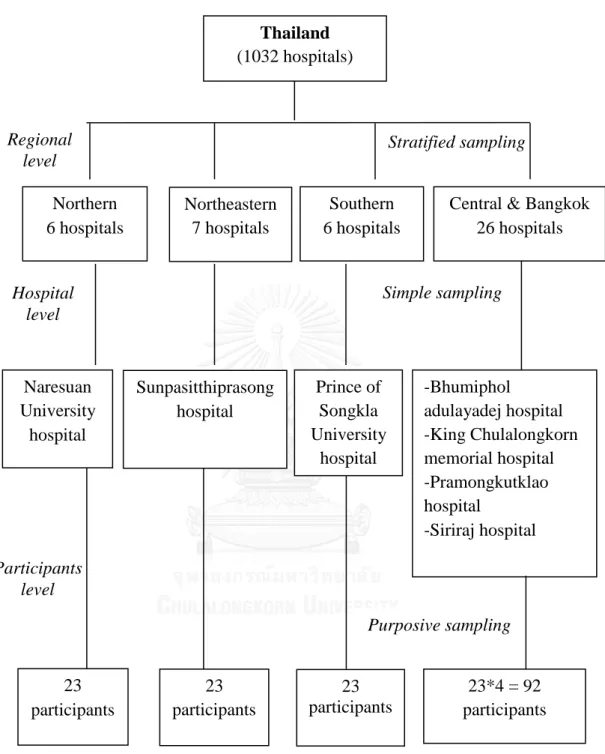
Finally, the researcher explained that there was no harm to the participants in this study and it took approximately 30 to 45 minutes to complete all the questionnaires. The researcher and/or research assistant arranged a private room (recreation or living room) for the participants to complete the questionnaires. In the other two participating hospitals (Pramongkutklao hospital and Bhumiphol adulayadej hospital), data were collected by the researcher.
After the interview, the researcher and the research assistants discussed any problems during the interview. The researcher/research assistants reviewed the names of patients with acute acute syndrome who were ordered to be discharged from the hospital. The researcher/assistants clearly explained the objectives of the study, the data collection process and the right to participate and refuse to participate in this research.
On the day of discharge, the researcher/research assistants arranged a private room to explain the details of the study, including the purpose, benefit, risk, and estimated time required to complete the questionnaires and data collection period for each ACS patient smokers. The researcher/research assistants gave the patients an information sheet and asked them to sign a consent form to become participants agreeing to participate in this study. If participants could not read the questionnaires themselves, the researcher/research assistants read questions for them.
Three months after discharge from the hospital, the researcher called all the participants to interview them about questions about smoking cessation. Upon completion of interviews on smoking cessation questions, the researcher thanked each participant and ended the study.

RESULTS
The total smoking cessation intervention intensity score ranged from 0 to 6 points with a mean of 2.23 (SD=1.45). The kurtosis value of the total score for the intensity of smoking cessation intervention was a positive value (0.58) (Table 6). Statistical analysis to test the predictors of smoking cessation in ACS patients after hospital discharge.
The results showed that self-efficacy in smoking cessation had a high positive correlation with smoking cessation (r = .63; P<.01). In contrast, intensity of smoking cessation intervention had a non-significant relationship with smoking cessation (r=.00). The results showed that some independent variables were significantly predictive of smoking cessation in ACS patients after hospital discharge.
Additionally, depressive symptoms were found to have an impact on smoking cessation through self-efficacy in quitting smoking (β = −.27). Self-efficacy in smoking cessation had a significant positive direct effect (β=.59) on smoking cessation at the .05 level of statistical significance. The intensity of the smoking cessation intervention had a non-significant positive indirect effect on smoking cessation through self-efficacy to quit smoking (β=.11, p>.05) and motivation to quit smoking (β=.08, p>.05).
The hypothesized path model of smoking cessation in ACS patients after hospital discharge was tested. The final path model explained 53% of the variance in smoking cessation among Thai smokers with ACS.
DISCUSSION
To identify the predictors of smoking cessation among Thai ACS patients after hospital discharge
After entering the influencing factors of smoking cessation in the path analysis, the results show that factors significantly predicting smoking cessation at a statistically significant level of 0.05 include self-efficacy in quitting smoking, previous CAD, and symptoms depressive. However, the results also showed that social support, nicotine dependence, intensity of smoking cessation intervention, and motivation to quit smoking are non-significant factors that can predict smoking cessation. To examine the direct and indirect association of factors influencing smoking cessation among Thai ACS patients after hospital discharge.
To examine the direct and indirect relationship of influencing factors on smoking cessation among Thai ACS patients after hospital discharge
- Self-efficacy in smoking cessation has a positive direct relationship with smoking cessation in ACS patients after hospital discharge
- Social support has a positive direct relationship with smoking cessation and it has a positive indirect relationship with smoking cessation in
- Nicotine dependence has a negative direct relationship with smoking cessation and it has a negative indirect relationship with smoking cessation in
- Depressive symptoms have a negative direct relationship with smoking cessation and have a negative indirect relationship with smoking cessation in
- Intensity of smoking cessation intervention has a positive indirect relationship with smoking cessation in ACS patients after hospital discharge
- Previous CAD has a negative direct relationship with smoking cessation in ACS patients after hospital discharge
- Motivation to quit smoking has a positive relationship with smoking cessation ACS patients after hospital discharge
APPENDICES