I would like to thank you Dr.Brian Hunt for the support on this paper especially on the idea generation for helping me to put things in order. She also supported me mentally when I became very frustrated with the short time I needed to complete this paper. As well as my father, he does not know much about the material, but he helped to support me mentally when I was very upset on the paper.
I was also very grateful for the support of my CMMU friends for all their help in guiding me through the difficulty and complexity of thematic thematic formatting. Because technology and Internet providers have the potential to enter Thailand covered, so this era is the big step for e-commerce in Thailand. This study showed that theory of planned behavior (TPB) and theory of reasoned response (TRA) are related to online consumer behavior in Thailand.
This paper will help identify the actual factors that influence consumer behavior in Thailand. This study attempts to capture this phenomenon by applying the theory of reasoned action and the theory of planned behavior to online e-tailer transactions and consumer behavior in Thailand. Because now people in Thailand, especially in Bangkok or urban cities, mostly have a smart phone or a computer, also the internet network in Thailand.
Therefore, in this thematic article, we analyze the actual influence behavior of Thai women, especially in Bangkok and urban cities, between the ages of 25 and 29, regarding their online shopping behavior for whitening creams.
LITERATURE REVIEW
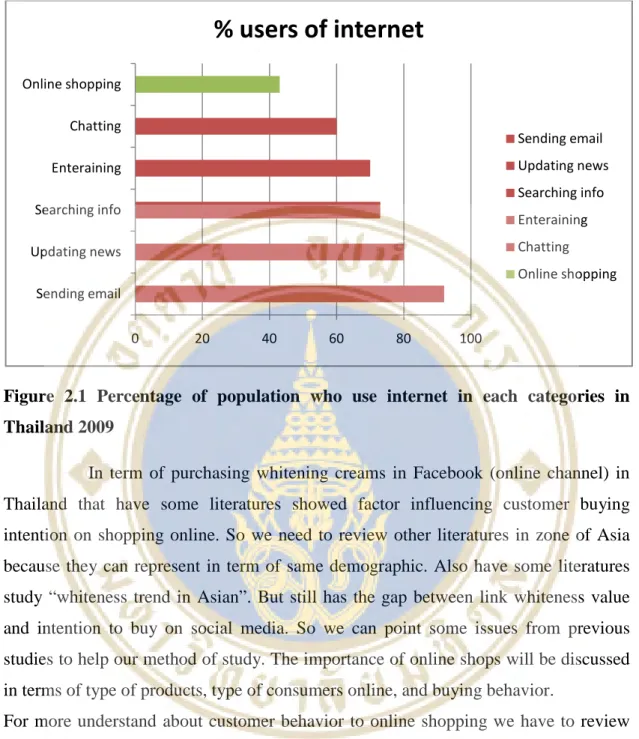
Regarding the purchase of whitening creams on Facebook (online channel) in Thailand, some literature has shown factor that affects customers' purchase intention to shop online. So we need to review other literature in Asia zone because they may represent the same demographic. So we can point to some questions from previous studies to help our study method.
The importance of online stores is discussed in terms of type of products, type of consumers online and purchasing behavior. To understand customer behavior in online shopping, we need to consult previous literature.
- A Critical analysis of the sources used
- Theory of planned behavior (TPB)
- Behavioral attitude
- Subjective norm
- Perceived behavioral control
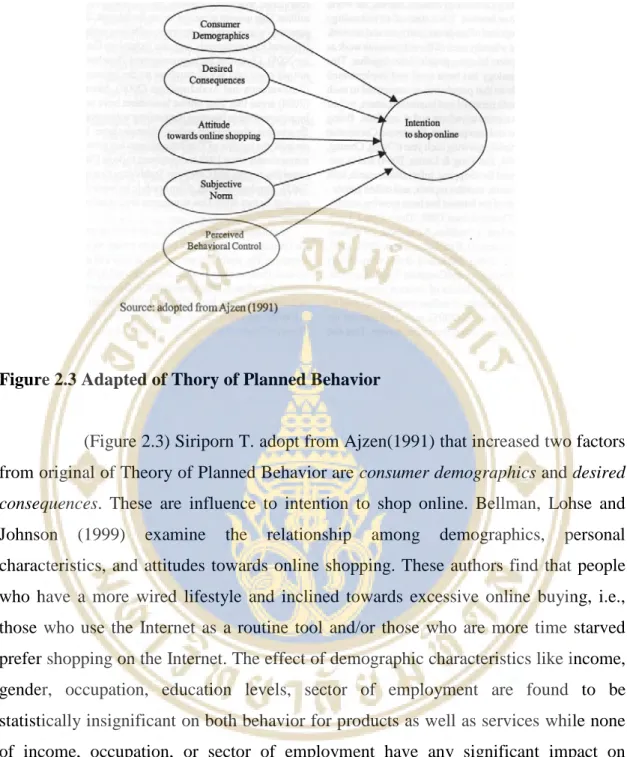
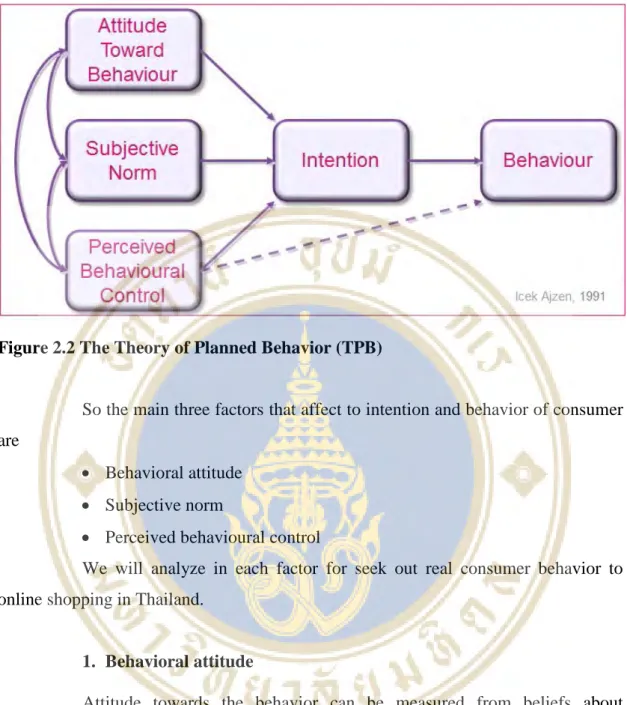
A literature review suggests that the theory of planned behavior (TPB) can be used to analyze the relationship between influencing factors and internet shopping behavior in different parts of the world. Currently, there are only a few studies that apply Theory of Planned Behavior to identify the factors that influence online shopping intention. Athiyaman (2002) applied Theory of Planned Behavior to the question of Internet users' intention to purchase air travel online.
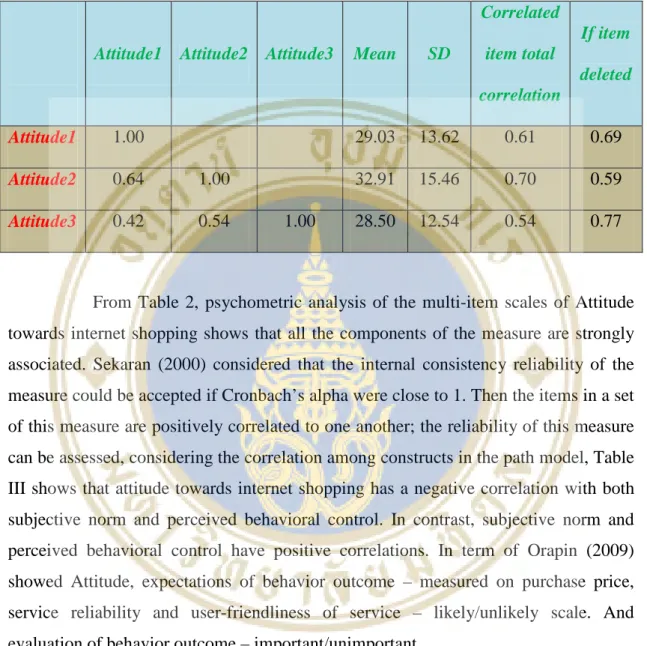
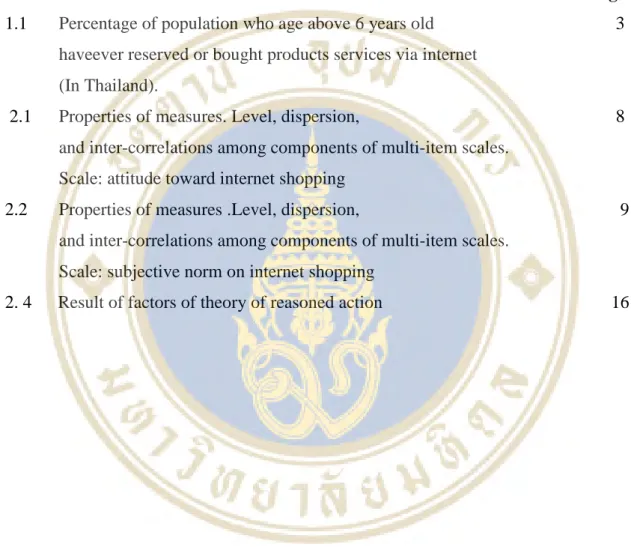
Theoretical models are described, based on the theory of planned behavior (TPB), which links consumers' intention to their behavior. A person's intention to perform a certain behavior may develop from the person's attitude toward that behavior, subjective norms (beliefs about the attitudes of the person's associates, and perceived behavioral controls (Ajzen, 1991). From Table 2, psychometric analysis and many -item scales of Attitude towards online shopping show that all components of the measure are closely related.
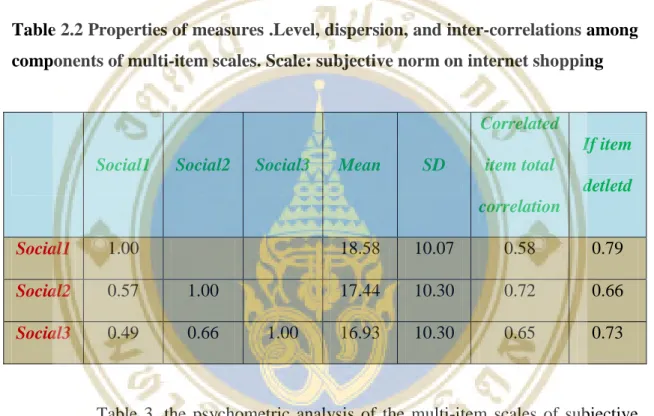
Table 3, a psychometric analysis of the multi-item scales of subjective norm in online shopping, shows that all components are highly correlated. Mathieson (1991) and Taylor and Todd (1995b) support the role of the theory of planned behavior on intention and behavior. It can be measured based on beliefs about available factors that may support or inhibit the performance of a behavior.
So the theory of planned behavior (TPB) is the critical theory of behavior that drives consumer behavior to shop online in Thailand. When applying the theory of reasoned action to consumer behavior, it is believed that consumers have a certain level of intention for each alternative selection. Fishbein & Ajzen's (1975) theory of reasoned action is the most widely used theory to explain consumers.
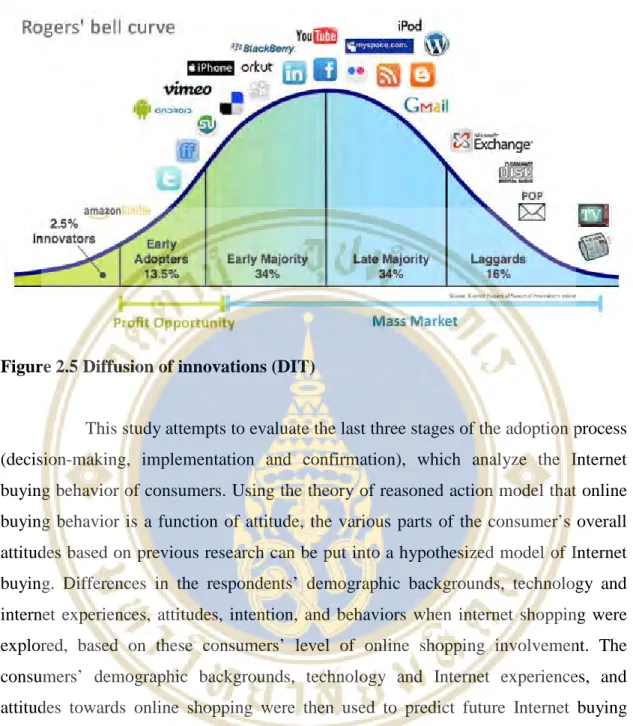
In this study, the theory of reasoned action was used to examine the individual's attitude as a predictor of intention and subsequently intention as a predictor of behavior. While the theory of reasoned action provides a behavioral explanation for attitudes toward the decision-making process, Rogers' diffusion of innovation theory (DIT) (Figure 4) offers a sociological approach to innovation and adoption. This study attempts to evaluate the last three stages of the adoption process (decision making, implementation and confirmation), analyzing consumers' Internet purchasing behavior.
Using the Theory of Reasoned Action model that online purchasing behavior is a function of attitude, the different parts of the overall consumer attitude, based on previous research, can be placed into a hypothetical model of Internet purchasing. This result is consistent with the research on the application of the theory of reasoned action to online shopping, which found that trust is the strongest effect, followed by trust in using a credit card, past behavior and subjective norms (as shown in Table 4 ).
FINDINGS
Limitation
In the context of the current research, previous studies have shown factors influencing online shopping in terms of conventional products rather than cosmetic products. Therefore, our research can focus on the actual behavior of consumers in Thailand in the online channel and delve into the 25 and above group. Incorporating an urban and non-urban area can result in different consumer behavior, so you should learn more about demographics.
CONCLUSION
DISCUSSION