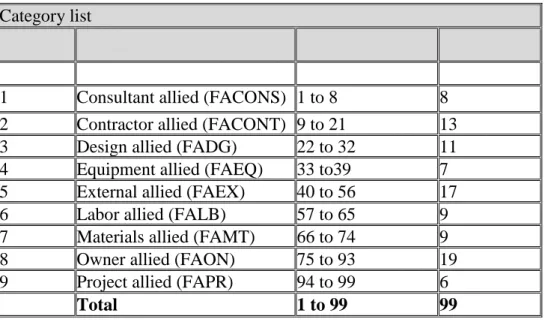
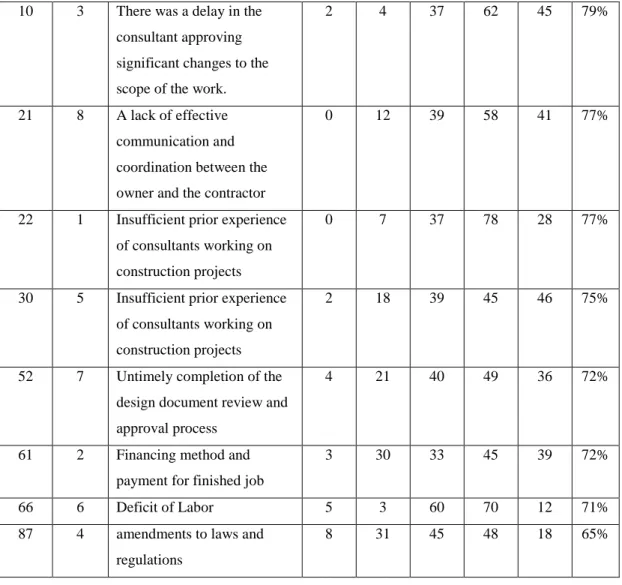
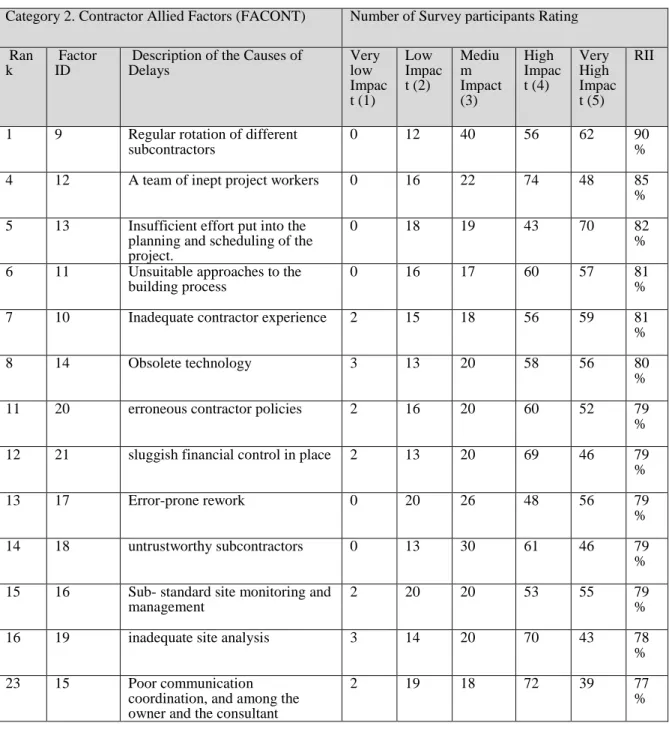
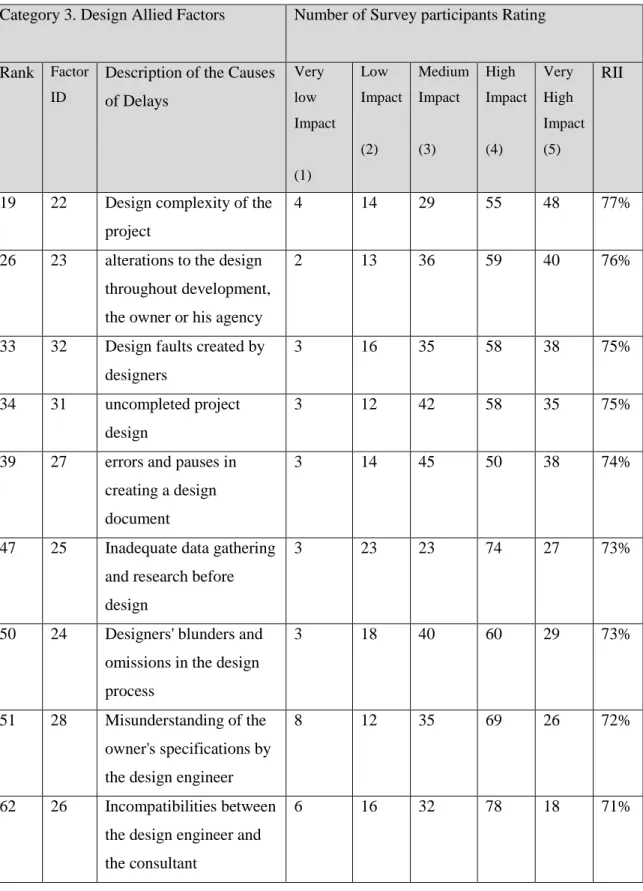
I understand that The British University in Dubai may make a digital copy available in the institutional repository. The author whose copyright is indicated on the title page of the work has granted the British University in Dubai the right to loan his/her research work to users of the library and to make partial or separate copies for use in teaching and research. In addition, after identifying and categorizing the causes of disputes, variations and delays, the causes were categorized into nine main groups: Consultant Allied Factors (FACONS), Contractor Allied Factors (FACONT), Design Allied Factors (FADG), Equipment Allied Factors ( FAEQ), External Allied Factors (FAEX), Labor Allied Factors (FALB), Materials Allied Factors (FAMT) and Client/Owner Allied Factors (FAPT).
ERII Equivalent Weighted Average Percentage of Relative Importance Index ORII (%) is the total weighted average percentage of Relative Importance FACONS: Consultant Allied Factors. FAEQ: Equipment Allied Factors FAEX: External Allied Factors FALB: Labor Allied Factors FAMT: Materials Allied Factors FAON: Owner Allied Factors FAPR: Project Allied Factors.
Introduction
Introduction
Background
Thus, the development sector topped the opposing sectors, especially when it involved attracting new investment and creating new jobs in the UAE industry. Reasonably predicting project duration with accuracy can be a perennial problem that remains of interest and concern to academics and business people. However, the fundamental roles of the main actors (clients, consultants and contractors) in solving this persistent issue within the industry remain unclear (Doloi, 2013).
While most of the project performance literature has focused on how to better manage projects, there may be other variables that lead to significant project failure. There are numerous initiatives in numerous countries to identify the causes and impact of the delays.
Problem Statement
Gap identification and verification
Research aim
Research objectives
Review current practices in the construction industry, particularly in the United Arab Emirates. Identify causes of delays in the United Arab Emirates.
Research Question(s)
Parties are expected to follow a four-step dispute resolution process where the use of alternative dispute resolution is contractually mandated: (1) negotiation; (2) mediation; (3) mini-trial; and (4) arbitration. If the parties cannot reach an agreement using one of these four dispute resolution options, they may resort to litigation. Researching the different types and reasons for claims is crucial to resolve them before they become disputes or to try to avoid them, as the process of resolving them is expensive and time-consuming (Zaneldin, 2018).
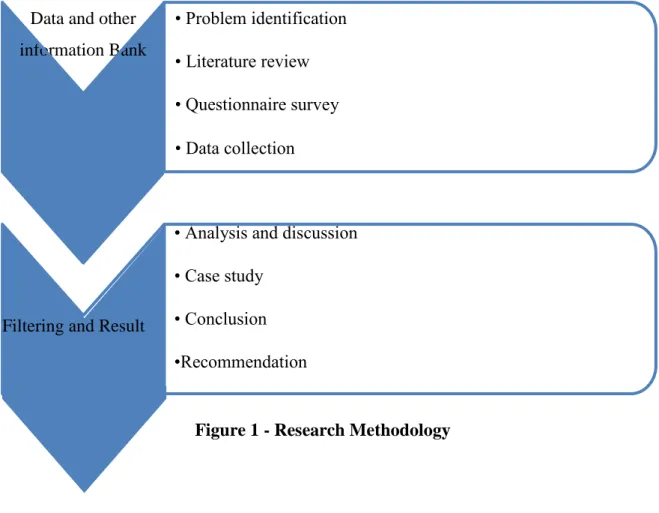
Research Methods
Significance of the Study
The high cost and long waiting times of litigation have spurred the development of a more cost-effective and efficient alternative: the ADR procedure. Industry stakeholders are seeking methods and techniques to cut down or prevent claims as stakeholders have become more aware of the increasing costs and risks that include claims and their legal battles. The disputes and variations that cause delays as well as their back-to-back impacts were investigated in an investigative manner to enable the full insight of the practitioners working in the industry to be realized and to make it possible to attach knowledge obtained from books with the real-time facts occurring within the current sector.
Because the development business in Abu Dhabi, United Arab Emirates is so complicated, it is assumed that the study is of utmost importance for the way it can be used.
Dissertation Structure
Introduction
Changes variation and delayed payment
Therefore, business growth in this industry has been negatively affected (Assaf et al., 2019). Tran and Carmichael, 2013) reported that not all subcontractors have the same perception of the most contractor-subcontractor relationship. This study offers a comprehensive analysis of the factors that cause litigation and disputes, and it does so in the context of a rapidly growing industry where high productivity is essential for survival. Dash and Raithatha, (2018) add to the prevailing literature on the relationship between litigation risk and firm performance.
The findings of a survey of general contractors in Qatar on the risks they foresee in their procured work indicate that risks associated with the "client" group are considered the most important, followed by the "consultant ", "contractor" and "exogenous" ” group- Allied (FACONS), respectively. The outcomes similarly show that the "switch" option is that the contractors' known response to "client" and "consultant"-allied risk factors, at the same time as the "retention" selection is the most important pattern linked, while the " retention" ” choice is the essential pattern linked, even if the “retention" choice is the most important pattern associated with.
The causes of disputes in industry
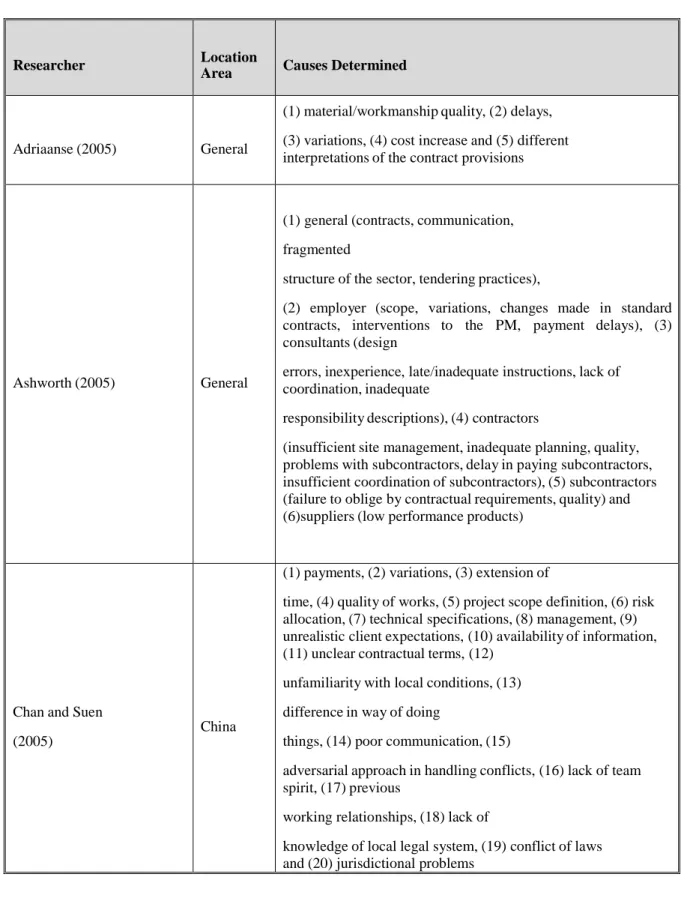
The results suggest that educating designers about the various benefits of using the constructability concept can greatly help mitigate the risks associated with the development process. In addition, policy makers can help reduce the likelihood of hiring unqualified technical staff and operators by limiting the influx of inexperienced and unskilled construction workers into the state for the main construction risk factors considered by general contractors in Qatar. The results reported during this study can provide clients, industry practitioners and policy makers with guidance to manage the numerous risks identified, which can further help to achieve an affordable level of competitiveness and cost-impactful operation. (Treacy, Spillane and Tansey, 2016) study results indicate seven core critical factors ending in construction disputes in SMSCs in Ireland during a recession: pay and extras;. Conflict exists wherever the incompatibility of conflicting interests can be managed, possibly to the extent that a dispute is prevented as a result of the conflict.
On the other hand, disputes are one of the main factors that prevent the successful completion of the construction project. Disputes relate to distinct justifiable issues and need resolution such as mediation, negotiated arbitration, etc.
Time cost Quality issues
On the other hand, many contractors believe that the duration of the contract is practical and therefore submit the bid. It is therefore essential for the contractors to consider the feasibility of the project's duration and then submit competitive bids. Jarkas stated that “Despite the recorded success of applying the time cost model to predict project duration in specific geographic settings, several studies have reported poor predictive ability of the model in others.
Jarkars (2015) argued that "where T = the duration of the project period from commencement of construction to practical completion, in working days; C = final construction cost in uncounted dollars, adjusted for constant labor and material prices; K = a continuation describing the final level of your on-time performance for a $1 million project; and B = a relentless delineation of how on-time performance is full of project size measured by cost" (Jarkas, 2015). But this model has a significant flaw in that out above the cost also are other factors, such as the method used to procure the contract, the type and industry of the project, the construction method, the area of the project, the number of floors above and below ground, the level of buildability, the productivity and the quantity and quality of the space.
Causes of variation orders
The consultant made a change to the plan: In modern professional practice, it may be common for consultants to suggest revisions to existing designs to improve them (Arain et al., 2004). On several projects, changes to the design were common since work began before the final appearance was decided (Fisk, 1997). Depending on when the change occurs, it can have a positive or negative impact on the project.
Poor workmanship
The quality of work on projects is negatively affected by variations in conditions (James Burati Jr et al., 1992) and (Fisk, 1997). Variations can cause demands for latest or additional quantities of material and equipment, which end up in logistical delays (Mohammad et al., 2017) mentioned that logistical delays are among the many impacts of variations in construction projects.
Large scale complex project issues
This question has motivated academic practitioners to investigate the causes of poor performance in difficult projects (Mazur et al., 2014). According to Shenhar et al. 2016), failure to accurately estimate project requirements, purchase of unnecessary materials and improper software installation are the main causes of schedule delays. However, there is no current synthesis of this phenomenon related to complicated projects in the literature.
Nor could we find any research on a general taxonomy of factors leading to success in large, complicated projects. Therefore, it is important to conduct a thorough review of the literature on the reasons why large, complicated projects fail, to help practitioners and scientists better understand the strategies for successfully completing complex projects (Shenhar et al., 2016). the skills you need to work well in dynamic, uncertain and ever-changing situations, you need to know what can go wrong in large, complex projects.
The conflicts that naturally exist between creativity and control
Mega and complicated projects can adversely affect the organizational capacity, output and performance of these initiatives (Rezvani & Khosravi, 2019). The main factors that cause cost overruns are the lack of competent and influential leadership, a lack of management commitment, the instability of the team, and redesigned or changing project requirements. The main concern in managing JVs is the extent of partners' participation in day-to-day decision making for the JV.
Factors influencing how JV partners are chosen According to rankings of the variables influencing the choice of JV partners, the variables influencing financial stability and experience scored high, while similar business philosophy and spoken language scored poorly. The partners' experience is also important to lower transaction costs and make JV operations more efficient, especially in large, complicated projects where the partners want to avoid conflicts and strained relationships.
Ranking of delay causes
Many scholars have looked at and identified what causes delays in construction projects. Gurdamar examined 23 factors that contributed to delays in government-funded construction projects in Turkey between 1970 and 1980. The survey consisted of sixty-four (64) delay reasons, which were divided into ten (10) groups. The main reasons for the delays were 1) financial problems, 2) contractual relationships with contractors and 3) project management problems (Mezher and Tawil, 1998).
In 2006, (Assaf and Al-Hejji) investigated the reasons for delays in important construction projects in Saudi Arabia. They found in their investigation that there are 73 reasons for delays in Saudi construction projects.
Conclusion
The reasons for delays in the Kuwaiti construction sector were mentioned by Soliman et al. 2010), and thirty (30) specialists were interviewed to determine the causes of delays and the severity of their effects.
Chapter-3 Research Methodology
- Introduction
- Research techniques
- Mechanisms (used to obtain qualitative data)
- Quantitative Research
- Techniques (used to obtain quantitative data)
- Research techniques
- Questionnaire survey
- Data Collection
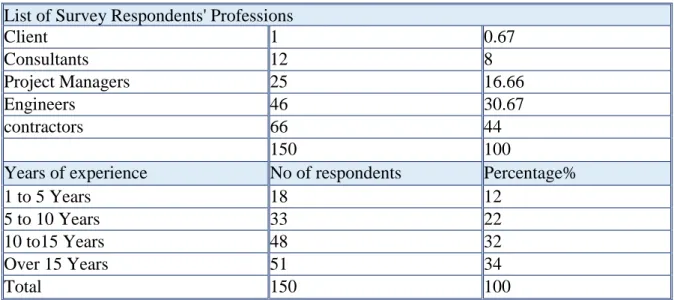
- Sample determination and selection
- Technics used for data analysis
- Introduction
- Findings Analysis and discussion
- Evaluation of Consultant Allied Factors Affecting Project Delay
- Evaluation of Contractor Allied Factors cause for the delay of the project 41
- Equivalent weighted average percentage of Relative Importance Index per category-
- Project Overview and Objectives
- Strategic Issues
- Cases selected for Study
- Case study conclusion
- Recommendations
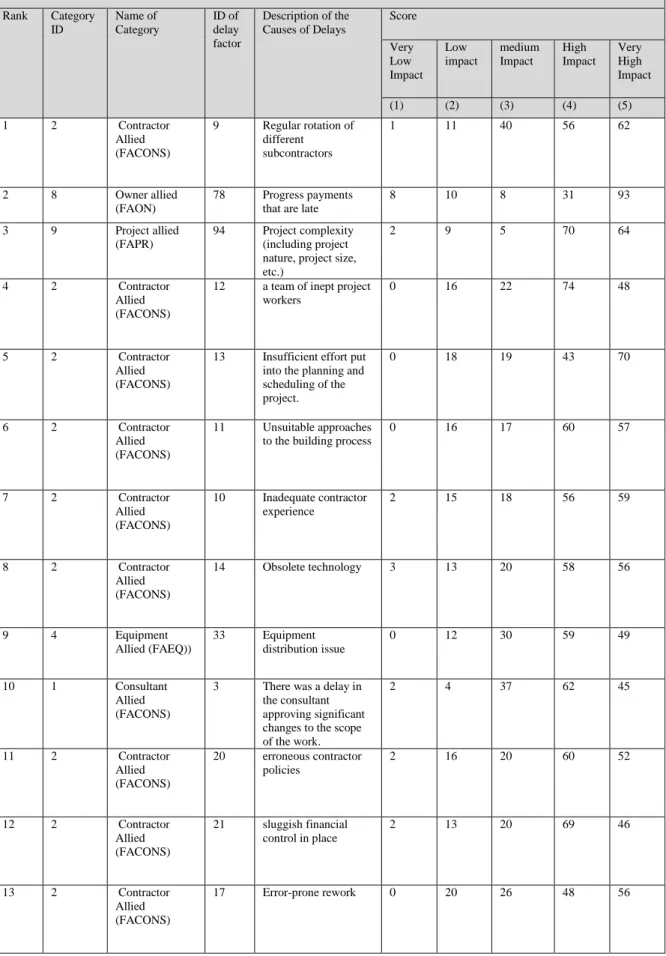
3 There was a delay in the approval of major changes to the scope of work by the consultant. 10 3 There was a delay in the approval of major changes to the scope of work by the consultant. There was a delay in the approval of major changes to the scope of work by the consultant.