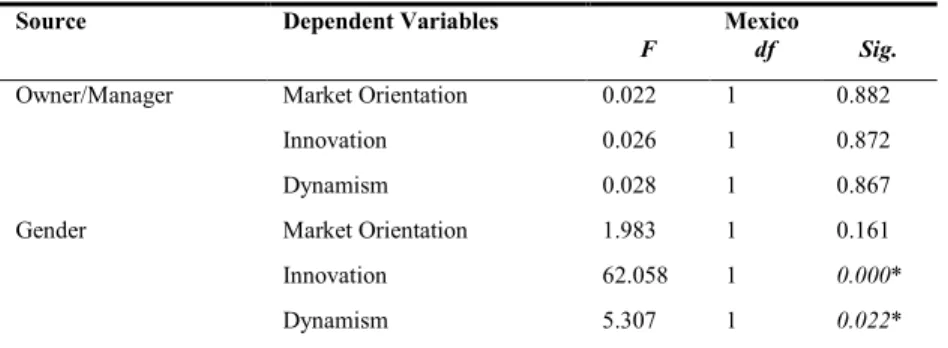
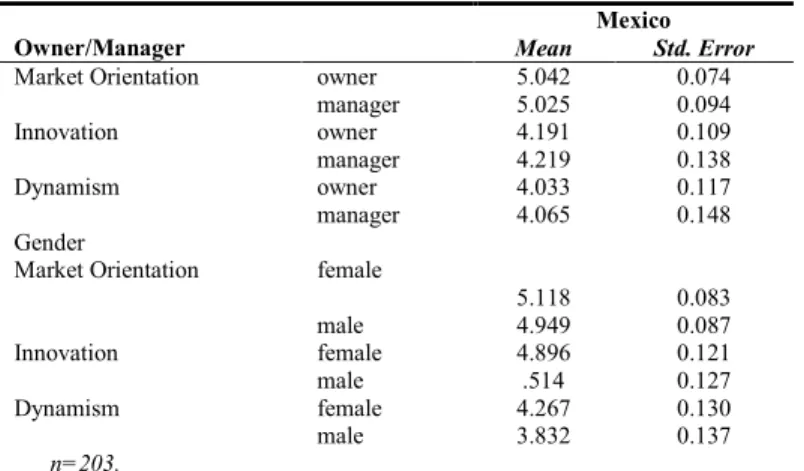
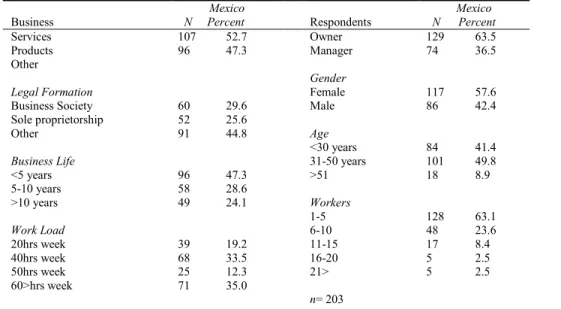
Market orientation has been identified as a source of competitive advantage for small businesses (Byrom, Medway & Warnaby, 2001; Logan, 1994; Megicks, 2001). H01: There are no differences in the market orientation of small businesses between owners and professional managers. H02: There are no differences between men and women in the use of market orientation in their small businesses.
Market orientation and other potential influences on performance in small and medium-sized manufacturing firms.
THE EFFECT OF QUANTITATIVE ELECTRONIC WORD OF MOUTH ON CONSUMER PERCEIVED
PRODUCT QUALITY
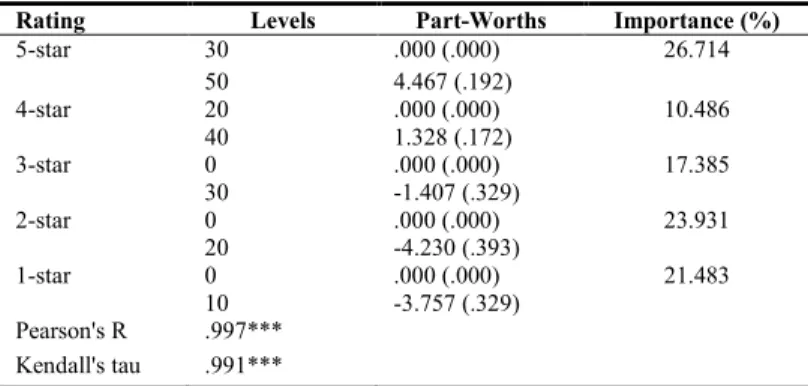
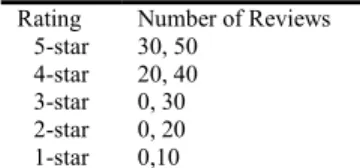
When a new rating is added, Amazon automatically updates the total number of ratings and the average rating. For each brand profile, the participant could see the total number of ratings, the number of ratings for each of the 5 categories (stars), and the average of the ratings. This table shows the “market shares” of the 11 brands among subjects, assuming that subjects will only purchase the first choice.
Pooled data analysis reveals that different categories of 5-star ratings have a significantly different impact on people's perceived product quality.
SPATIAL PRICE ANALYSIS OF TOMATOES IN NIGERIA
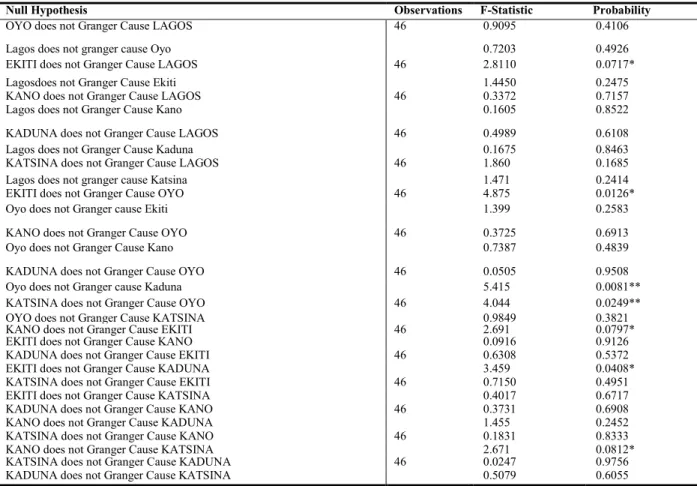
He concluded that a major determinant of market integration in the study area was information flows between producing and consuming areas, and the collectors of the products, primary wholesalers and transporters are currently the most important sources of the information. Rejection of the null hypothesis indicates that prices in market j Granger-cause prices in market i. The peak price was always in the second and third quarters of the year, while the lowest price was observed in the first quarter of the year.
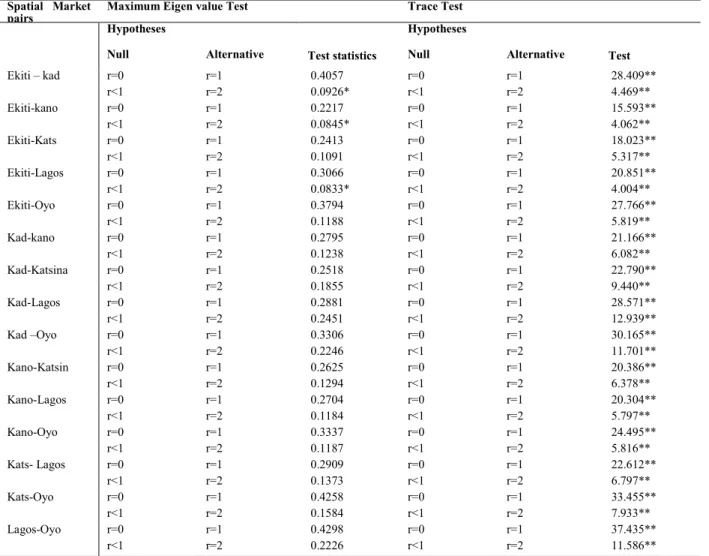
Thus, these quarters of the year are considered off-season, resulting in high tomato prices. In Table 2, the maximum eigenvalue test shows that of the 30 tomato market pairs studied, only 3 are cointegrated at the 10% significance level. Therefore, using tracking statistics, it can be concluded that the entire studied tomato markets are clustered in the order (1, 1).
From the results of the analysis, none of the market linkages exhibited bi-directional granger causality or simultaneous feedback relationships. Moreover, from the analysis result, few of the markets are spatially connected by trade. The table shows that of the 30 investigated tomato market pairs only 3 are cointegrated at the 10% significance level.
The peak price occurred in the second and third quarters of the year, while the lowest price was observed in the first and fourth quarters of the year. Also from the table, none of the market links showed bidirectional granger causality or simultaneous feedback relationship.

THE IMPACT OF BRAND PLACEMENT AND BRAND RECALL IN MOVIES: EMPIRICAL EVIDENCE FROM
MALAYSIA
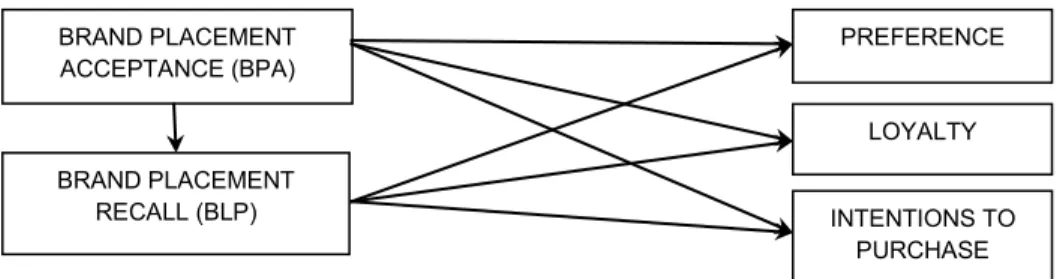
This article examines the role of brand placement acceptance and recall influencing consumers' brand preference, loyalty, and intentions to purchase. The early study of brand placement provides an understanding of the effect of brand placement for marketing purposes. This research contributes to a better understanding of the brand placement perception towards consumer behavior from the perspective of consumers.
H2: Acceptance of brand placement by moviegoers has a significant positive effect on their behavior and attitude towards the brand (preferences, loyalty and purchase intentions). The analysis shows that 44% of the variance in brand placement recall acceptance in movies is explained by the significant influence of brand recall. Sig.=.000, F value indicates that acceptance of brand placement in movies contributed positively to viewer's brand recall.
This study examined the effectiveness of brand placement in films in terms of acceptance and recall of consumer behavior and responses through consumer brand preference, loyalty and purchase intentions. The study also reveals that the impact of brand placement in films may be measured by acceptance and recall among Malaysian film viewers. The result indicated that Malaysians accept product placement more easily and experience brand placement in films in a very positive way.
Viewers and brand placement in film: New insights about viewers contribute to a better understanding of the technique's effectiveness. I remember at least one fire location in the movie I saw the following day.
COMPONENTS OF MEDICAL SERVICE USERS’
DISSATISFACTION: A PERCEIVED CONTROL PERSPECTIVE
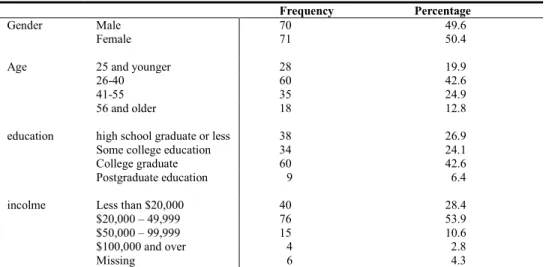
Specifically, he suggests that one of the main causes of dissatisfaction among healthcare customers is a lack of perceived control, and empirically examines the effects of perceptions of control on customer dissatisfaction. This study argues that high levels of customer dissatisfaction with healthcare services are likely to be related to a lack of perceived control among healthcare users. Describing the healthcare encounter as an involved and potentially stressful event, the study attempts to examine the role of perceived control in cultivating customer dissatisfaction.
Thus, one's inability to develop understanding and predictability (i.e., cognitive control) about the medical services may be one of the main causes of dissatisfaction among medical service customers. In the context of encounters with medical care, decisional control is likely to be perceived among clients when the use of the medical service is expected to result in personally desirable benefits. The participants in the study were selected from medical service users who had experienced dissatisfaction with a medical service practice during the last year.
A survey of those who were dissatisfied with their health care providers revealed a significant influence of perceived control on their dissatisfaction. The results of the regression analysis show that a low level of perceived control fosters dissatisfaction among users of health services. Regression analysis shows that an individual's perception of behavioral control increases the extent of an individual's dissatisfaction with health service practices.
Dissatisfaction experienced by medical service customers was found to be largely influenced by the lack of cognitive and decisional control. Research activities to identify factors that increase perceived control among users of medical services are highly anticipated.
PREFERENCES FOR PERFORMANCE BASED EMPLOYEE REWARDS: EVIDENCE FROM SMALL
BUSINESS ENVIRONMENTS
However, the results of the authors' study did not support the compensatory differentials theory. Somewhat inconsistent study results may be based on several factors, including the type of study participants (high school students, professionals, blue- or white-collar workers), and the type of industry studied (industrial sales force, universities, health care, public grade schools, law enforcement, factories, financial services, banks). Cultural changes during these time periods may have significantly influenced the results of the studies.
The results of the employee ranking of job pay preferences based on importance are shown in Table 2. This table shows the results of the study conducted by the researchers in 2011 regarding the employee ranking of ten motivational items based on importance. The results of the supervisors' ranking of what they believed was most important to employees are shown in Table 3.
This table shows the results of surveying supervisor rankings based on what they believed would be important to employees. The primary differences between male and female responses were in the mean ranking of the other rewards. However, the results of the supervisors' survey were most likely skewed due to the small sample size.
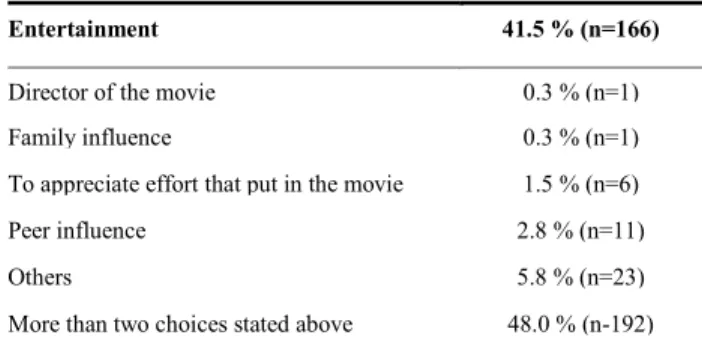
A comparison of the employee ranking of ten motivational items from Kovach's (1995) study and this (2011) study can be found in Table 8. Both men and women ranked "Employee of the Month" last in pay with "the boss should do". nothing” last in the consequences situation.

RISK FACTORS INFLUENCING THE SURVIVAL OF STRATEGIC ALLIANCES: EVIDENCE FROM KENYA
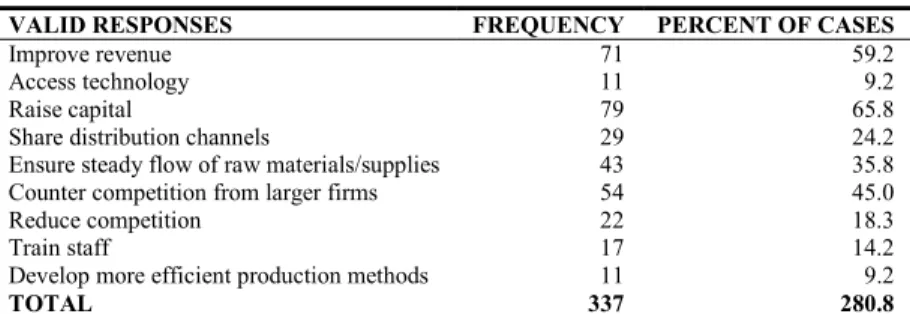
In model one, partners' willingness to share information accounted for up to 6 percent of the variance in alliance survival. Partners' willingness to share expenses accounted for 4.8 percent of the variance in alliance survival, as indicated by model one. This table shows the proportion of variance in the survival of strategic SME alliances explained by each covariate.
The level of trust between strategic partners explained up to 6.6 percent of the variance in alliance survival. Firm size relative to the number of paid workers accounted for 4.4 percent of the variance in alliance survival. In addition, the proportion of skilled personnel explained up to 8.7 percent of the variance in alliance survival; from 5.8 percent in the model one.
In the second model, ownership structure explained up to 2 percent of the variance in alliance survival; down from 2.3 percent in model one. In addition, the level of demand for alliance products/services accounted for 1.9 percent of the variance in alliance survival. In addition, the tax rate accounted for 4.8 percent of the variance—a slight increase from 4.6 percent in the first model.
Model two shows that energy cost accounts for up to 1.9 percent of the variance in alliance survival, up from 2.5 percent. In this regard, model one explained up to 54 percent of the variance in SME alliance survival, while model two, which included mediating factors, predicted up to 68.4 percent of the variance.
VALUE EVALUATION OF CUSTOMER EXPERIENCE USING CONSUMER GENERATED CONTENT
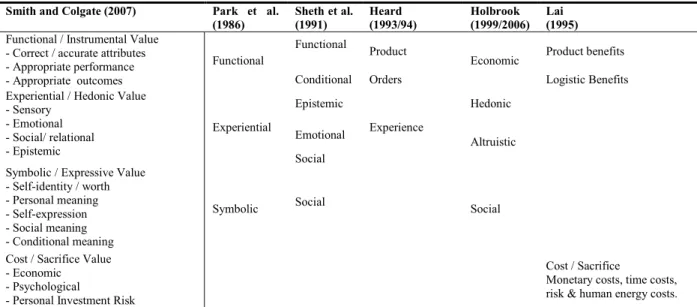
Experience domains are based on the intersection of two dimensions: (1) the customer's participation in the experience (weak/passive or active/strong); and (2) the individual's connection to the environment of experience or environmental relationship (from absorption/weak to immersion/strong). After recognizing that the value is now in the experience, the experience must be understood from the consumer's perspective. Empirical evidence in support of the domain of experience and the corresponding value dimension is provided in the following sections.
In this case, the guide's commentary or interpretation added to Dan and Kelsey's overall experience. These quotes clearly show that value perceptions are based on sensory sub-components (such as aesthetics, ambience, feel/tone) and emotional sub-components (such as enjoyment/pleasure; play/fun, excitement, adventure and humor) experiential dimension/ hedonic value. John (2007) writes that he found "the best accommodation so far in Sagada - bright airy room with a great view of the surrounding countryside".
Although John's quote refers to functional/instrumental dimensions, perceptions of value are enhanced by the sensory subcomponent of the experiential/hedonic dimension of value. 2009), “An Overview of Four Domains of Tourism Experience Theory”, CHRIE International Conference with Speakers, University of Massachusetts Amherst. Ann Galligan Kelley, Providence College Ifraz Khan, University of the South Pacific Halil Kiymaz, Rollins College.
Authors of accepted papers must format their paper precisely in accordance with the journal's instructions. Authors of accepted articles must pay a publication fee based on the length of the manuscript.
Business and Finance
IJBFR is listed in Cabell's, Ulrich's Periodicals Directory, and the American Economic Association's Econlit, e-JEL, and JEL on CD. The magazine is distributed in print, through SSRN and EBSCOHost publishing, with a presence in over 70 countries.
ESEARCH INTERNATIONAL JOURNAL OF MANAGEMENT AND MARKETING RESEARCH IJMMR
Business
R esearch Revista Internacional
ADMINISTRACION
FINANZAS
RIAF