The overall goal is to help investors make more informed investment decisions outside of the United States. Its development and credibility led to the establishment of the European Monetary Union (EMU) and the European Central Bank (ECB).
BONDS
Due to the large sums involved, activity in the bond market is dominated by institutions such as insurance companies, pension funds and mutual funds. There are aspects of the economy that have always been useful barometers for investors in the bond market.
STOCKS
Transactions in Singapore, Switzerland, Hong Kong, Germany, France and Australia account for the bulk of the remaining transactions in the market. It collapsed in the late 1960s and early 1970s as a result of the pain inflicted on several countries.
A FASCINATION WITH CENTRAL BANKS
Unfortunately, the impact of interest rates on the exchange rate is rarely so predictable. For example, an overnight repo is used by the Bank of England to adjust interest rates.
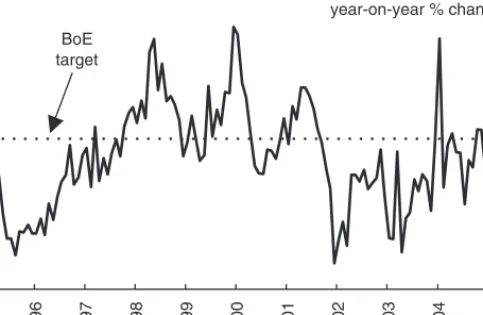
INFLATION TARGETING
However, two major central banks have so far avoided the inflation target - the Bank of Japan and the United States. Their legislative mandate as stated in the Reserve Bank Act is "to [promote] the stability of Australia's currency; [maintain] full employment in Australia; and [promote] the economic prosperity and welfare of the people of Australia.'' The explicit inflation target is 2 percent to 3 percent and is set by the central bank.
INTER-CENTRAL BANK COOPERATION
Article 105 of the Maastricht Treaty states that "the main objective of the [European System of Central Banks (ESCB)] shall be the maintenance of price stability." The stated objectives include "sustainable and non-inflationary growth". . The world's oldest central bank, it is sometimes known as "The Old Lady of Threadneedle Street". The bank was nationalized after the Second World War on 1 March 1946 and only gained operational independence in 1997 after the Labor Party won. power.
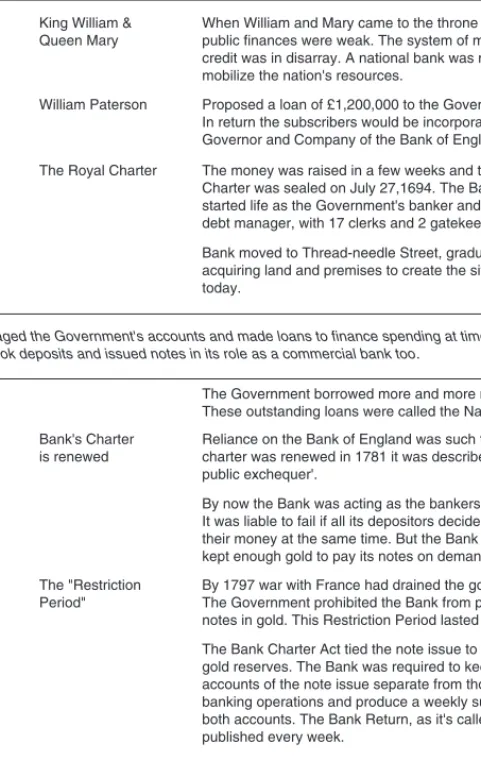
THE VERY EARLY YEARS
In return, the subscribers would be incorporated as governor and corporation of the Bank of England. But it was in fact the government's desperate need for funds that led to the bank's establishment.
POST WORLD WAR II
The country's gold and foreign exchange reserves were transferred to the Treasury (or Treasury) although their day-to-day management remained with the Bank. These principles of monetary policy affected central banks everywhere, not just the Bank of England.
INDEPENDENCE!
HOW THE BANK DETERMINES MONETARY POLICY
The operating procedure for the Bank of England is similar to that of other central banks. It is clear that the bank works closely with the Treasury and the Financial Services Authority (the regulator of banks and other financial institutions in the United Kingdom).

UNITED KINGDOM AND THE EURO
Purdah describes what in the United States we call the blackout period — the time before and after FOMC meetings when committee members cannot comment on monetary policy. The chancellor said it was essential that the decision - one of the "most significant" ever made - was made "in the British national economic interest". The British did not reject the euro, they just said not yet— nor have they set a timetable for when that might happen.
The Past Is Prologue
EUROPEAN UNION
One of the fundamental principles of the EU is that there should be freedom of movement within its borders. In the EU, the main concern is the impact of newcomers on the original 15 EU members.
THE CONSTITUTION
The Foreign Minister would combine the roles of the Commissioner for Foreign Affairs and the EU High Representative for Foreign Policy. After France and the Netherlands rejected the constitution, the leaders of the EU's 25 member states called for a one-year period of "reflection".
STABILITY AND GROWTH PACT
The Pact was created while European economies were basking in 2-plus percent annual GDP growth and falling unemployment amid the global economic boom of the late 1990s. For eight years, finance ministers have steadfastly insisted that the pact is essential to the euro's health.
EUROPEAN CENTRAL BANK
The key to the independence of the ECB is specifically stated in the institutional framework for the single monetary policy (both in the Treaty and in the Statute). In order to fulfill the requirements of the ECB Statute, it also publishes a monthly bulletin (in addition to the quarterly).
AN OVERVIEW
In the process of the reforms leading up to the Big Bang, the Bank also gained more independence from the Ministry of Finance. The early 1990s saw a decline in Japanese financial markets and the financial sector relative to the strength of the manufacturing industry.
MONETARY POLICY
A change in the official discount rate reflects changes in the bank's fundamental stance on monetary policy. The Bank of Japan will encourage the unsecured overnight call rate to remain at zero percent in real terms.

THE BANK REFLECTS ITS GEOGRAPHY
The collective responsibility for the management of the Bank is in the hands of its Board of Directors. Inflation targeting has been a cornerstone of monetary policy since 1991, when the government and the Bank of Canada agreed to target inflation for.
PREPARING FOR A POLICY ANNOUNCEMENT
OTTAWA-The Bank of Canada announced today that it is raising its target for the overnight rate by a quarter of one percentage point to 4 percent. The operating band for the overnight rate is increased accordingly, and the Bank Rate is now 4 1/4 per cent.
THE EXCHANGE RATE
The Bank will closely monitor emerging developments in the Canadian economy in light of the cumulative increase in the policy interest rate since last September. The last time the Bank intervened in the foreign exchange markets to influence the movements of the Canadian dollar was in September 1998.

WHAT INTEREST RATE?
By selling Canadian dollars, the Bank increases the supply of the currency in foreign exchange markets, providing some resistance to the upward movement in the currency. To sterilize the effect of the Bank's sales (and prevent downward pressure on Canadian interest rates), the same amount of Canadian dollar balances is withdrawn from the financial system.
RESERVE BANK OF AUSTRALIA’S ROLE
New legislation – the Payment Systems (Regulation) Act 1998 and the Payment Systems and Netting Act 1998 – gave the bank relevant powers in this area. The Board has nine members: three ex officio members – the Governor (who is also the Chairman of the Board), the Deputy Governor (who is the Deputy Chairman) and the Secretary of the Treasury and six external members who are appointed by the Treasurer.

INTEREST RATE DECISION SUPPORT
In 1920 control was transferred to a four-member board of directors appointed by the Commonwealth Government, with the Governor of the Commonwealth Bank an ex-officio member and chairman. With the establishment of a Commonwealth Bank Board in 1924, control of note issuance passed from the Bank Board to the Board of Directors of the Commonwealth Bank.
BACKGROUND
The Central Bank's activities and other details are governed by the Law of the People's Republic of China on the People's Bank of China. The PBOC also submits a report to the Standing Committee of the National People's Congress on the conduct of monetary policy and the performance of the financial industry.

WHAT IS AN ECONOMIC INDICATOR AND WHY IS IT IMPORTANT?
The new measure is consistently below its predecessor: the consumer price index minus mortgage payments. Data for a given month or quarter is usually available later than in the United States.

INTERNATIONAL DATA PROVIDERS
The classification was originally established in the European Communities between 1961 and 1963 and was known by its acronym NICE. In 1965, the classification of trade and commerce of the European Communities was drawn up to cover all commercial activities (known as NCE), followed by similar classifications for services and agriculture.
STANDARD NATIONAL ACCOUNTS
By the end of the 1930s, elements of a national accounting system had been established in several countries. And by the end of the decade, integrated statistical reporting systems and formal national accounting structures were in place in Australia, the United States, the United Kingdom, Canada, the Scandinavian countries, the Netherlands, and France.
MORE ON THE SYSTEM OF NATIONAL ACCOUNTS (SNA93)
SNA93 also introduced the concept of satellite accounts to expand the analytical capacity of national accounts in areas such as tourism, health care and the environment.
GROSS DOMESTIC PRODUCT — A SNAPSHOT OF ECONOMIC ACTIVITY
Until recently, a common practice was to hold prices constant by selecting a base year and then aggregating volume changes in subsequent periods using the price structures and weights of the fixed base year. The basic idea of chainlinking is to update the base year more frequently and link short-term movements.
MORE ON CHAIN MEASURES
In EMU, the first release is the quick estimate, which is a number: the percentage change from year to year. In the UK, there are three publications, each containing more detail and, of course, revisions to previous GDP publications.
PRICE MEASURES
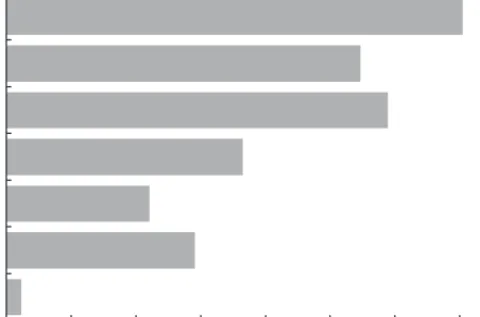
A price index reflects the changes in the prices of a particular set of goods and services. For example, the GDP price deflator reflects the differences between current and constant price GDP, thereby measuring price changes as well as changes in the composition of GDP.
A PERSONAL ASSESSMENT OF WHETHER THERE IS INFLATION
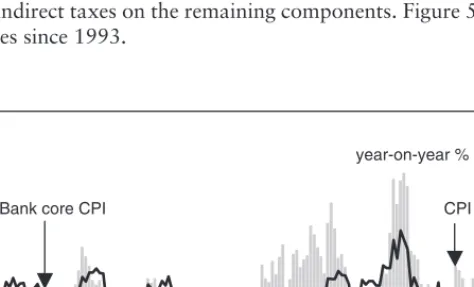
Investors pay close attention to the core CPI measure, which strips out volatile items such as food and energy to give a snapshot of core inflation. PPI is a measure of the average price level paid by producers for a fixed basket of capital and consumer goods.
LABOR MARKET INDICATORS
Employment data counts the number of paid employees working part-time or full-time in a country's business and government sectors. In Germany, the focus is on the number of unemployed, with employment figures lagging by two months until recently.

THE INTERNATIONAL LABOUR ORGANISATION
MERCHANDISE TRADE AND BALANCE OF PAYMENTS
However, countries such as Japan and Germany usually have visible trade surpluses and invisible deficits. This is an important indicator for many countries, such as Japan and Germany, which depend on exports for their growth.
OUTPUT
BOP data is generally used to analyze the value of trade and fit the trade components into GDP. These trends can be confirmed by comparisons with the industrial output data, which are generally available about a month later than the employment data.
RETAIL SALES
In fact, America's almost insatiable appetite has kept the world economy afloat by buying imports from developing as well as developed countries. Employment data can provide an early indication of industries that are growing and those experiencing a reversal in fortunes.
PURCHASING MANAGERS’ INDEXES
For example, there are differences between the EMU consumer price measure and that of the national statistical offices. And the staggered introduction of the new FISIM and chain methodologies in the different Member States only postpones the day of real data comparison.

PRICES
Eurostat has built a framework based on the SNA reporting system discussed in the previous chapter. The HICP calculation is a geometric rather than an arithmetic formula, but both methods are still used in the EU.

LABOUR FORCE
Data are published for the eurozone, the EU and for each country separately, if data is available. This data is an essential source for the balance of payments and national account statistics.

M3 MONEY SUPPLY
The data is available in both value and volume measures, although the press release is only about volume. Data are published for EMU, the EU and for each country separately, if data is available.

EU BUSINESS AND CONSUMER SENTIMENT SURVEY
To remove the price effect, the data is deflated with a price index similar to the PPI and adjusted for the specifics of the retail trade, but reflecting changes in the prices of goods sold rather than services provided. Given the lag before government data is available, it is widely watched in financial markets as an early harbinger of things to come.

GERMANY
Unemployment data are available at the end of the reference month of March 2006. Unemployment data were available on 30 March. The results of the foreign trade statistics are used by the Federal Statistical Office in the compilation of the national accounts.