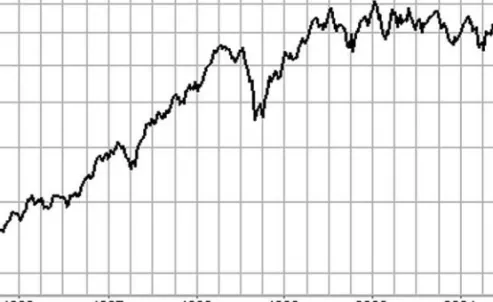
And outside of the core portfolio, the lesser investor can swing for the seats by emulating the strategy of the man widely recognized as the greatest investor of our time. Buying Berkshire low is certainly appropriate for someone who intends to be a follower of Warren Buffett's value-oriented investing strategy.
Buying Individual Stocks
It's also a good idea to check that two leading newsletters, The Value Line Investment Survey and Standard & Poor's "The Outlook," give the stock a decent rating at the time of purchase, and maybe wait a while or buy energetically, depending of their opinion. He derives this list based on his criteria for choosing Buffett-type stocks, with Hagstrom being an authority on Buffett's strategy.
Buying Buffett-like Mutual Funds
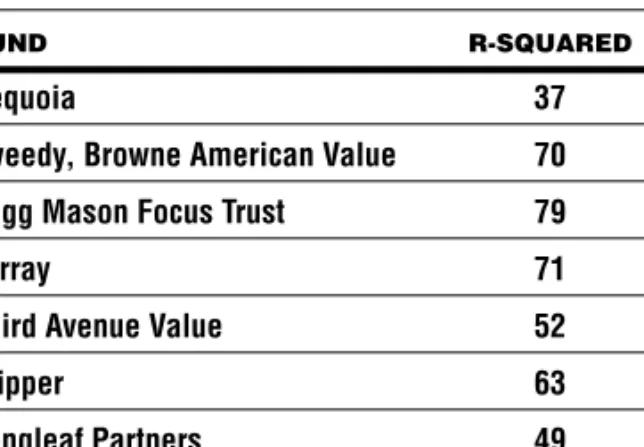
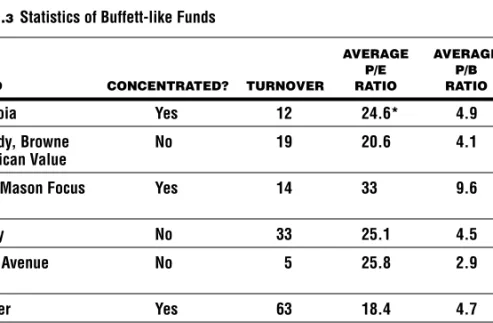
Apparently R-squared is simply not a useful guide for identifying Buffett-like mutual funds, perhaps because the concentrated nature of some Buffett-like funds loosens their ties to the S&P 500. In any case , stocks or Buffett-like mutual funds can make up just one part of your portfolio.
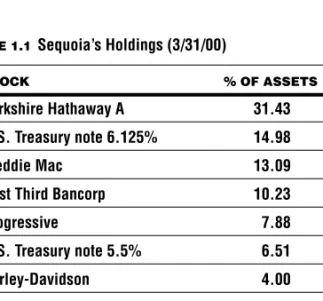
A Sensible Solution
Buffett's writings are – for the most part – easy to understand, peppered with lively wit and funny stories, and give the impression that he's having a wonderful time. Ruhlin believes Buffett has been such an astonishingly successful investor because he “only buys what he knows.
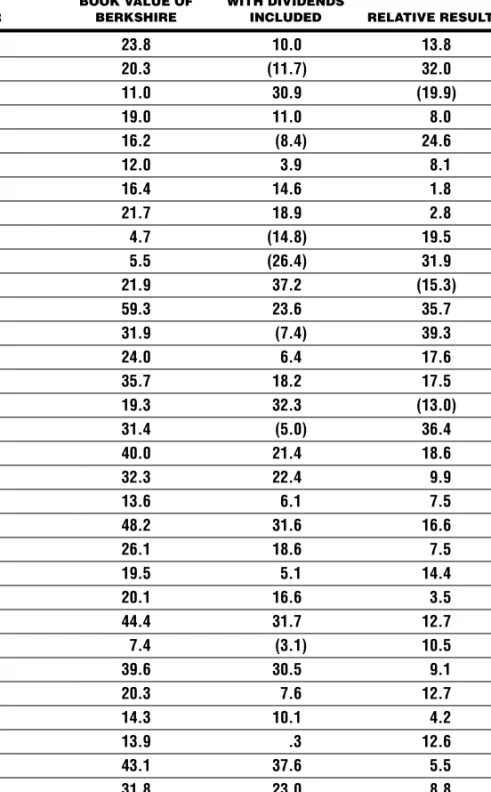
Buffettology or Mythology?
He dabbled in charts and technical analysis on his own, but then, while studying at the University of Nebraska, he read Benjamin Graham's The Intelligent Investor, which advocated that investors buy good, cheap companies and hang on—and the veil fell right off his mind with eyes. In order to protect himself, he was always looking for a "safety margin". (Warren Buffett is said to have called these words "the three most important words in investing.") Graham may also have been the first to assert that the first rule of investing is: Don't lose money.
History
After all, Herbert Hoover announced in late 1929 that "The worst is behind us." And Calvin Coolidge, the outgoing president, insisted that "Stocks are cheap at current prices." (Coolidge, famous for his silence, clearly talked too much.) These cagey investors gave them their heads. Security analysis bears on its front a quote from Horace: "The last shall be first and the first shall be last."
An Aversion to Risk
Mr. Market
A share price that is two-thirds of the current net asset value or quick liquidation net value. Earnings that have fallen by no more than 5 percent in two of the past ten years.
Graham as a Writer
And: "A significant rise in the market is both a legitimate reason for satisfaction and a reason for prudential concern." One of Graham's most interesting investments came in 1948, when Graham and Newman used $720,000, which was 25 percent of their firm's total assets, to buy a half interest in the Government Employees Insurance Company, which provided auto insurance directly to government employees per sold post. .
The Later Years
Buffett on Graham
Buffett appears to be ambivalent, a disciple of both philosophies, an investor both qualitatively and quantitatively. Fisher is not to be confused with Yale professor Irving Fisher, who is best remembered for saying in 1929, just before the crash, that stocks had seemingly reached a permanent high plateau.
A Growth Investor
After suffering through two terrible years in the stock market, investors were disgusted with their current brokers and willing to listen, "even to someone who is new and who advocates a radically different approach to handling their investments like I do." he wrote in Developing an Investment. Philosophy. Even in those earlier times, he writes, "finding really great companies and sticking with them through the ups and downs of a topsy-turvy market proved far more profitable for far more people than the livelier practice of trying to bought them cheap and sell them dear.”
Fisher’s 15 Questions
Does the company have excellent working and personnel relations? High turnover is an unnecessary expense. Workers are easily hired or fired in large numbers depending on minor changes in the company's sales outlook or profit picture.
What and When to Buy
When to Sell
None of us likes to admit to ourselves that we've been wrong." He continues: "More money has probably been lost by investors holding a stock they really didn't want until they 'at least got out' than by any other single reason." (Fisher was thus anticipating one of the theorems of behavioral economists, that of loss aversion.) A good test: Will the stock rise during the next business boom as much as in the past.
Things That Investors Should Not Do
Don't assume that a stock with a high P/E ratio will never trade higher. Don't overdo diversification. It's true that every investor will make mistakes, and if you have a reasonably diversified portfolio, a single mistake won't prove crippling.
Fisher’s Advice for the Small Investor
But it will help if you understand that the financial community is usually slow to admit that something has changed drastically. And if you are a larger investor, make sure your original investment is no more than 5 percent of your total portfolio.
How to Find Growth Stocks
If the question had been how many companies he looks at, one in 40 or 50 could be right. If the question had been how many companies he considered before buying one, the answer might have been about one in 250.
Quite Different
Growth Versus Value Funds
- Don’t gamble
- Be a contrarian—when it’s called for
- Buy wonderful companies, “inevitables.”
- Invest in companies run by people you admire
- Buy to hold and buy and hold. Don’t be a gunslinger
- Learn from your mistakes
- Avoid the common mistakes that others make
Admittedly, the stocks in the fund have high numbers (price to earnings ratio, price to book, price to cash flow, earnings growth); and there is a lot of technology spread across the fund. The prospectus reports that the fund "selects securities that it believes have strong earnings potential and reasonable market valuations relative to the market in general and to other companies in the same industry".
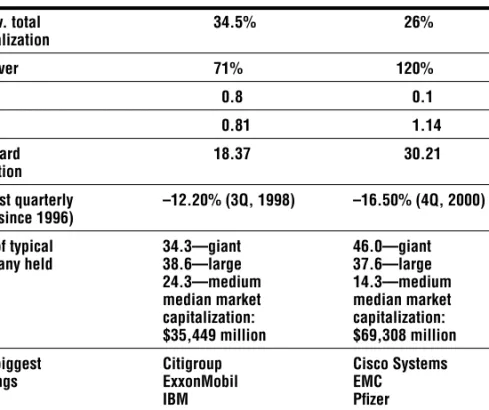
Make Money with Less Risk
Buffett compared buying stocks to a batter swinging at pitches in baseball: If you don't swing at a pitch that's in the strike zone, you can get called out. Unlike Ted, we can't get called out if we resist three pitches that are barely in the strike zone.
Risk Aversion
In his book The Science of Hitting, Ted [Williams] explains that he carved the hitting zone into 77 cells, each the size of a baseball. If they are in the strike zone at all, the business 'sats' we see now are catching the lower outer corner.
Rules of Thumb
Yes, there are screaming bargains out there, and that's what Buffett is looking for—the occasional, sometimes very occasional, screaming bargain. But if Coke's future earnings grow at an annual rate of 15 percent, then a 65 p-e ratio "may be a bargain." In short, "The math tells you that long-term earnings growth is worth a lot." Hence the wisdom of buying and holding winners.
Staying out of Technology
This is often very foolish, especially on the part of the small investor, because it is much easier for him to get the essential facts about a local bond or stock. One Saturday, Buffett took a train to Washington and went to GEICO's offices in the now deserted business district.
A Gumshoe
Read the annual report and 10-K; read the Value Line Investment Survey, Standard & Poor's "The Outlook," brokerage reports;. James Gipson of the Clipper Fund writes, "The cocktail party test is an unscientific but useful test of conventional wisdom." This famous contrarian continues: “The best investment policy is to avoid what everyone else is buying; the best social policy is to be careful about it.” You don't want to offend people; you also don't want your ideas stolen.
The Contrarian Personality
The first time I heard about Buffett was when he was buying GEICO in 1976, when the company seemed close to bankruptcy. But Gipson is dead wrong when he argues that "When it comes to making money and keeping it, the majority is always wrong."
Be Confident
More people invest in index funds these days than in any other type of stock fund—and they're doing the right thing. But Gipson is completely blunt when he claims that wildly successful investing, as Ben Graham said, often involves only selling to optimists and buying to pessimists.
Ignoring the Herd
Now, Tweedy reasoned, a $100 dinner bill could cost a restaurant $10 for the price of the food. A "bad person" in this context is anyone who does not work wholeheartedly for his or her shareholders, the true owners of the company.
People Buffett Has Admired
When Ringwalt went out to lunch, he left his coat in the office even in winter -. But for the smaller investor, it is not impossibly difficult and challenging to buy good companies and just hang in there - and the tax benefits are nothing to sneeze at either.
The Benefits of Sitting Still
There are, of course, other sensible and profitable ways to invest besides buying good companies and holding on to them. Buying and persistently holding good companies doesn't require the accounting knowledge of a CPA, the investment knowledge of a CFA, or the up-to-date information of an analyst.
Why Investors Become Gunslingers
Warren Buffett pointed out that if we were to buy a loaf of bread or a bottle of milk, we would buy more when the price goes down. If we buy stocks to hold for 10 years, as Buffett recommends, we can buy more of them as their prices have fallen, and less as their prices have risen.
More Explanations
The race is not always for the swift, the battle for the strong, noted Damon Runyon, the journalist, but that's the way to bet. Buying and selling gives these people, Browne claims, "the illusion of control." They think they are doing something valuable, that they are “in charge”.
Professional Advice
The patron places his money in the intended purchase or sale of stocks, grain or other commodities, at prices posted on the blackboard, which are the figures, or pretend to be, the figures at which securities or commodities are sold on the floor of the stock or product exchanges. Among investors of the distant past, he is one of the few whose writings are still worth reading.
More from Buffett on Buying to Hold
As Buffett pointed out, a company that is "both understandably and enduringly wonderful" is "simply too hard to replace." More of the same advice: "If you're not willing to own a stock for ten years, don't even think about owning it for ten minutes." Of course, a Wall Street expression that Buffett detests is, "You can't go broke taking a profit." He is of course justified.
The Gunslinger’s World
Roger Lowenstein, Buffett's biographer, comments that "On its face, this seemed reasonable." The employees had done what was expected of them. Buffett tried to save Long Term Capital Management, the hedge fund, when it was in the middle of its death throes.
An Exception
When Buffett was asked about his responsibility to Blue Chip shareholders, he replied that "I own a fair amount of the stock." The lawyer asked if it would have looked bad if he had bought Wesco stock cheaply right after the merger fell through. You should be aware," he said, "that at certain times in the past I made a mistake by not doing buybacks.
Learning from Mistakes
In the stock market, people will anchor on the stock's annual high or the price at which they bought it. But often, especially in the stock market, the voice of the people is completely wrong.
In Sum
If Warren Buffett called XYZ Corporation and asked to speak to the CEO, he wouldn't be referred to "shareholder relations" as you and I would. As mentioned, Buffett also uses qualitative criteria when choosing stocks: both the non-mathematician and the mathematician, both the reasons of the heart and the mind.
Questions and Answers
Didn't you once say that return on equity is the key clue that a company is doing well. They're great for people, although a year ago when the S&P was 30 percent in tech and tech was overpriced, that index fund wasn't the best place to be.
Advice from Albert Hettinger of Lazard Freres
Focus Trust owned stock in William Wrigley Jr., which Berkshire did not; the fund didn't own Coca-Cola or Gillette because "they've gone up so far." Some people make a killing, and other people think they can do that too: it's the factor of trust.
The American Value Fund
I don't know who the young guy was," he said sweetly, referring to the Wall Street Journal writer, "but he's a complete idiot." Another way Whitman and Buffett differ: "He doesn't want to do high technology, and I makes very high technology.