Physical Activity Prevalence among Migrants in the United Arab Emirates”, hereby solemnly declare that this thesis is my own original research work which has been carried out and prepared by me under the guidance of Professor Syed M. There was little data available on the physical activity levels of migrants in the United Arab Emirates (UAE). This study aimed to determine leisure time physical activity levels and its associated sociodemographic determinants and NCDs risk factors among migrants in Al Ain, UAE.
Javaid Nauman who introduced me to the exciting field of Physical Activity and whose endless encouragement led to this.
Introduction
Overview
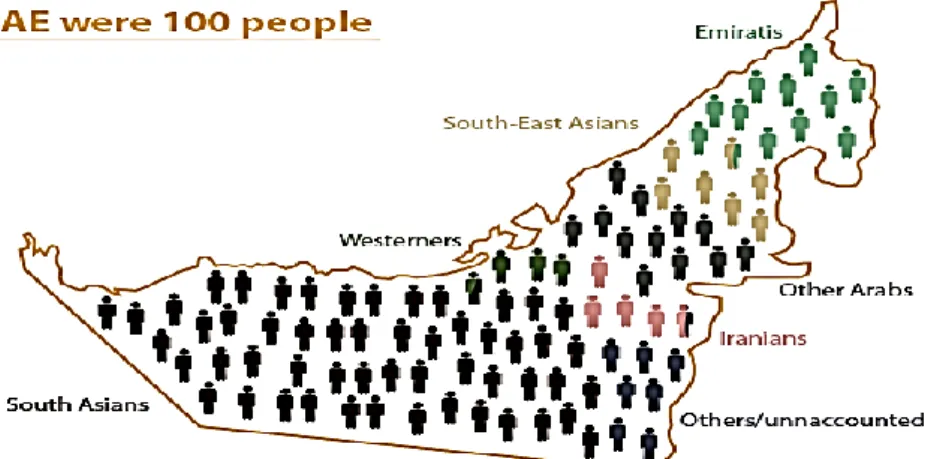
Therefore, the population growth over the last four decades is mainly due to the high inward migration. Countries that experience large waves of immigration in their history seek to understand the health status and needs of immigrants due to their growing numbers and their contribution to the health of the nation. This task is challenging mainly because of the heterogeneity of immigrant populations, and uncertainty about.
Some studies have shown that immigrants have better health compared to the health of the host society.
Statement of the problem
As immigrants adopt the health behaviors of the host society over time, their health status begins to converge with that of the developed country (16, 17).
Relevant literature
The study finding reported a strong inverse relationship between moderate and vigorous physical activity and mortality. Overall, the study reported an inverse relationship between physical activity and all-cause mortality at all levels of BMI and waist circumference. There is an inverse dose-response relationship between physical activity and cardiovascular disease and mortality risk.
CARDIA which is a longitudinal 15 year follow-up study was conducted to investigate relationship between physical activity and hypertension. A quasi-experimental study was conducted to investigate the role of regular physical activity in diabetes mellitus patient health. A meta-analysis of cohort studies was conducted to specifically look at the relationship between physical activity and cancer mortality.
Physical activity was measured using the Copenhagen City Heart Study Leisure Time Physical Activity Questionnaire. The study concluded that women with low physical activity have a higher risk of developing depression. A survey was conducted to assess the relationship between physical activity and mood in 1042 participants in Brazil.
Research Method
- Study Design
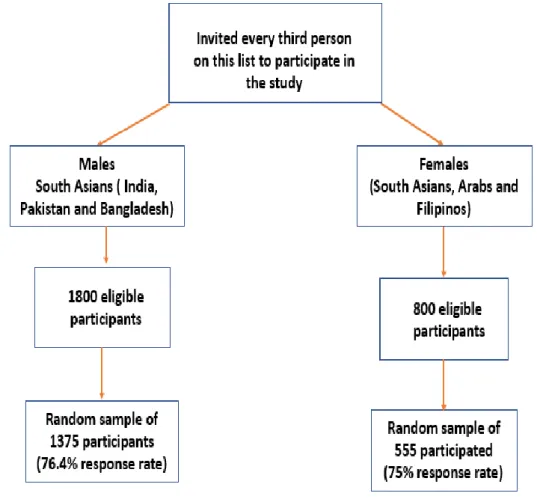
- Sample and setting
- Male Sampling
- Female Sampling
- Data collection
- Physical Activity Measurement
- Data Management and Analysis
Every third migrant worker (from India, Pakistan and Bangladesh) who visited the Preventive Medicine Department in Al Ain for a health survey was asked to contribute to the survey. It used a modified version of the questionnaire used in the “STEP wise approach to Surveillance” (STEPS) developed by the World Health Organization (WHO) to measure and monitor risk factors for non-communicable diseases (NCD) in populations. All consent forms and questionnaires used in the study were initially written in English and then translated into the native language of the employees, then pre-tested in the pilot study and finalized after revision and necessary adjustments.
Due to the low levels of education among the South Asian expatriate population in the UAE; all questionnaires were obtained and completed during an interview with a pure Urdu or Bengali researcher. The questionnaire interview collected information including demographic characteristics, personal, family and medical history, current and past consumption of cigarettes, alcohol, other forms of tobacco (history of exposure to second-hand tobacco), type of residence, country of origin ( rural, urban), occupation, monthly salary in United Arab Emirates dirham (AED), how long you have been in the country (years of residence in the UAE), different type of accommodation and details of physical activity performance. Information on physical activity was obtained using the International Physical Activity Questionnaire (IPAQ-short version; 19) which measures the frequency (days per week) and duration (minutes per day) of moderate and vigorous intensity physical activity, in periods of at least 10 minutes during the past seven-day period in all contexts of daily life.
Measurement of PA identified the proportion of participants reporting physical activity that they would classify as meeting current public health recommendations (i.e. Descriptive analysis for both socio-demographic and anthropometric characteristics was performed by physical activity (inactive, active) and Step categories. In multivariate analysis, the study first examined the relationship between physical activity and socio-demographic risk factors for non-communicable diseases, entered one by one.
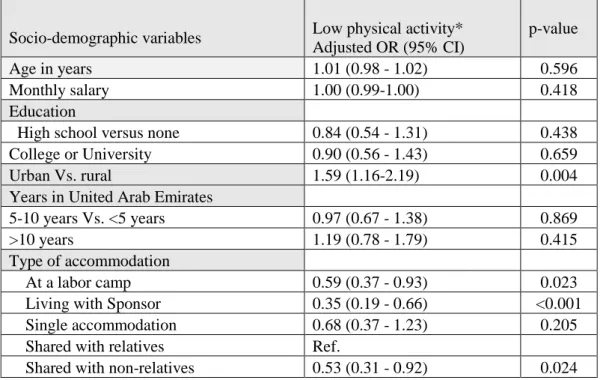
Independent variables that were statistically significant in univariable analyzes were selected for examination in multivariable logistic regression analysis to identify independent correlates of low physical activity. Finally, multiple logistic regressions were used to produce odds ratios and 95% CIs adjusted for those variables found to be significant in the binary logistic regression analysis.
Results
Males
- Discussion - Male
- Conclusion
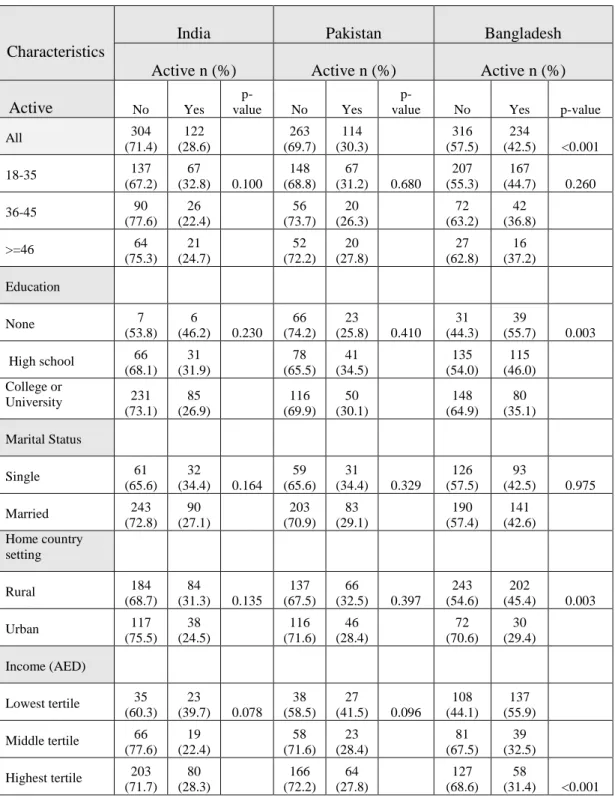
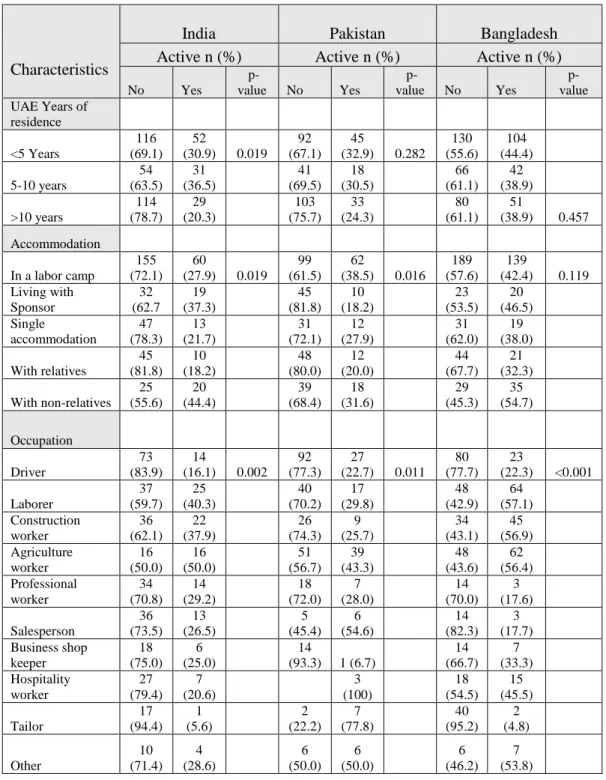
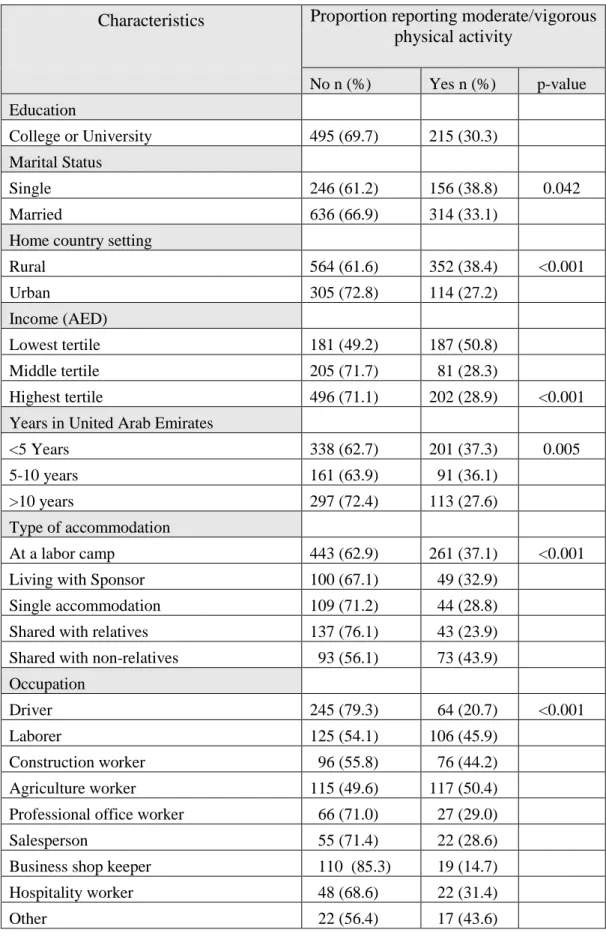
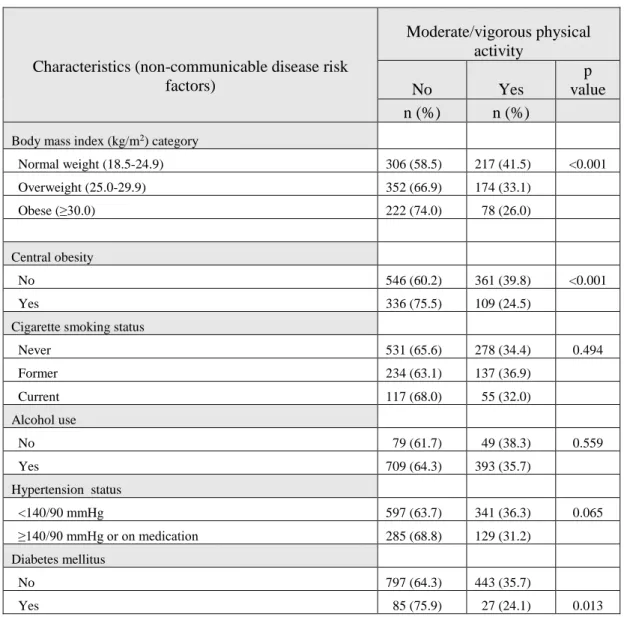
Bangladeshis (42.5%) reported significantly more physical activity compared to Indians and Pakistanis. There are significant differences in PA by level of education in Bangladeshi ethnic groups (p 0.003). The highest level of physical activity was reported among participants living in shared accommodation with non-relatives or in a labor camp. The prevalence of physical activity was higher in participants with a normal BMI (41.5%) compared to obese participants (26.0%).
Overall managers, shopkeeper and hospitality workers showed low levels of physical activity while; agricultural workers were more likely to be active. The study analysis found no significant interaction between length of stay and physical activity. In multivariate analysis, factors including central obesity, cholesterol were independently and significantly associated with physical activity.
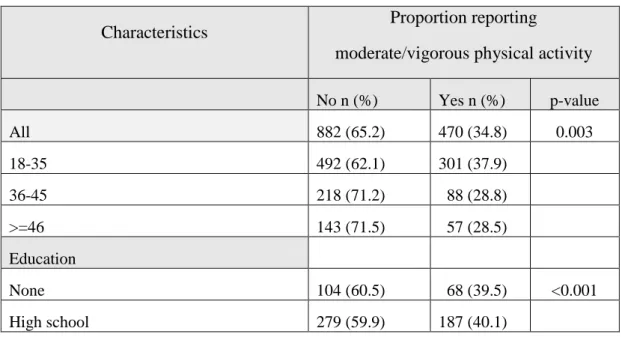
The results showed significant differences in physical activity among migrants according to ethnicity, homeland, residence, occupations, central obesity and cholesterol. Based on a literature review, this is the first study on the association between physical activity and selected health outcomes among male South Asian migrants in the UAE or other Gulf countries. In conclusion, physical activity was low among male South Asian migrants from India, Pakistan and Bangladesh to the UAE.
Those with reported low physical activity were more likely to have high cholesterol and abdominal (central) obesity after adjusting for nationality and age. These findings helped identify vulnerable populations to target interventions to improve physical activity.

Female
- Discussion - Female
- Conclusion
Based on the US physical activity guidelines recommended by the Centers for Disease Control and Prevention (CDC) and the American College of Sports Medicine (ACSM). Overall, 76.8% of inactive participants were married and 37.1% of single participants were physically active. More than half of the participants (54.1%) who belonged to the lower-income tertiles were active, and physical activity decreased as income increased.
A total of 23.4% of active participants had abdominal obesity, while approximately 76.6% of inactive participants had abdominal obesity. Forty-seven percent (47.6%) of participants who reported alcohol use were active, while 52.4% were inactive. Table 10 presents the results of multivariable logistic regression analysis, which examines the relationship between physical activity and selected risk factors for cardiovascular diseases.
In a sample of female expatriates from South Asia, the Arab world and the Philippines, the prevalence of physical activity was 29.1%. Based on literature review, this is the first study of the relationship between physical activity and selected health outcomes among migrant women in the UAE. This study supported the literature on the low prevalence of physical activity among South Asian immigrant women.
Accordingly, this study reported that South Asian women are the least active group (prevalence of physical activity. Therefore, urgent measures to promote physical activity should be initiated to limit the epidemic of NCDs in the UAE.

Potential Contributions and Limitations of the Study
It was clear that physical inactivity is increasingly prevalent among expatriate women in the UAE. This may be due in large part to recent dramatic changes in the region. The high prevalence in the UAE, especially among women, represents a major public health problem and cause of the prevalence of obesity.
Difficulty in validating a relationship between reported physical activity and biological measures may be a limitation of such a method. Measuring complex behaviors such as physical activity by questionnaire can be practical in epidemiological studies, but is limited because it generates a large measurement error. However, the IPAQ questionnaire was a viable choice for assessment of intensity, duration, frequency and type of activity.
In addition, the self-reported questions about physical activity have not been specifically validated in a South Asian population. This may be due in part to less access to practice facilities and limited opportunities to participate in PA. There remains a need to further understand the personal, social and environmental barriers to PA in this population, mainly in relation to different domains of PA (leisure, occupational activity, transportation and household PA).
Finally, the occupational factors that may influence physical activity have not been studied in depth. These occupational factors include: average working hours, psychological demands at work, shift work, type of transportation and dietary details as they affect physical activity related parameters such as: BMI and central obesity.
Conclusion
Conclusion
Implications
Leitzmann et al., “European codex against cancer, 4th edition: physical activity and,” Cancer Epidemiol., vol. Leitzmann et al., “Physical activity recommendations and reduced risk of mortality,” Arch Intern Med, vol. Fishman et al., “Association between objectively measured physical activity and mortality in NHANES,” Med Sci Sport.
Willey et al., "Annals of Epidemiology Leisure-time physical activity and mortality in a multi-ethnic prospective cohort study: the Northern Manhattan Study," Ann. Wen et al., “Minimum amount of physical activity for reduced mortality and increased life expectancy: A prospective cohort study,” Lancet , vol. Chastin et al., “How light-intensity physical activity associates with adult cardiometabolic health and mortality.
Pandey et al., “Epidemiology and prevention dose-response relationship between physical activity and risk of heart failure”,. Lee, "Physical Activity and Coronary Heart Disease in Men, The Harvard Alumni Health Study," Circulation, vol. Bouillet et al., “The Role of Physical Activity and Sports in the Oncology Scientific Committee of the National Federation of Sports and Cancer CAMI”, Crit.
Arem et al., "Leisure Physical Activity and Mortality A Detailed Pooled Analysis of the Dose-Response Relationship," JAMA Intern. Hayes et al., "Patterns of physical activity and relationships with risk markers for cardiovascular disease and diabetes in Indian, Pakistani,. Win et al., "Patterns of physical activity and sedentary behavior in a representative sample of a multi-ethnic Southeast Asian population: a cross-sectional study,” p.
Sullivan et al., “Sociodemographic pattern of physical activity across migrant groups in India: Findings from the Indian Migration Survey,” PLoS One , vol.