This book reminds us to consider customer relationships in the context of a marathon, not a sprint. Of the top twenty-five industrial corporations in the United States in 1900, only two remain in that select company today.
Declining Gross Margin
In this book—because we're dealing with the topic of how to make your prices stick—we're only going to deal in depth with two of those three things: declining gross margin and increasing sales volume.
Wages, as a Percentage of Sales, Begin to Increase
Note: Your gross margin in dollars remains $35, but your gross margin as a percentage of sales drops from 35% to 33%. You must increase your sales price by the same percentage as your percentage cost increase if you want to maintain your gross margin percentage despite rising costs.
Sales Volume Increases
United Airlines) Frontier Holdings (twice) US Airways, Inc. twice) Western Pacif ic Airlines Kitty Hawk, Inc. Magazine, way back in May of 1988, reported that, “We shouldn't expect our big corporations to somehow own a corporate fountain of youth.
Are You Wearing the Cheapest Shirt or Blouse You Could Buy?
Almost every one of the inexperienced buying groups chose the same supplier that was mathematically the lowest price. We asked those who chose the supplier most selected by experienced buyers why they chose that supplier, and they said, "delivery history." We asked the experienced buyers who chose the other supplier and they said, "the supplier's quality standards".
WE’D CAN ANY SALESPERSON
There are two reasons for this statement, and both depend on the same principle: Price is almost always more important in the mind of the seller than in the mind of the buyer. An experiment we conducted on customer purchase motives involved 100 experiences. purchasing managers and 100 inexperienced. The price they were asking was "justified". What we discovered.
WHO WORKED FOR US WHO WAS A PRICE-BUYER! CAN HIM OR FIX HIM
And the number one thing they don't do that invites the customer to beat them up on price is they don't talk about price. One of the other ways you invite your prospect to beat you to the prize is to use adverbs and adjectives when presenting or discussing it.
Price Makes a Statement about Credibility
Because fundamentally, deep down, you really feel like you "get what you pay for," and the thought of going to the lowest bidder for your brain surgery messes with your mind. In fact, most of us feel that price makes a statement about not only the quality of the product or service, but even to some extent about the advisability of doing business with the low-price seller.
Selling Quality
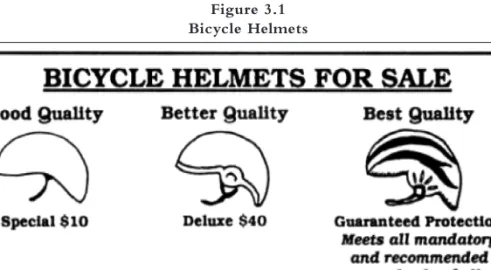
Most salespeople will tell you that quality means “the best.” Quality does not mean the best. Quality means conformance to standards and expectations. Why does the mail order catalog say 'good quality' baseball glove, 'better quality' baseball glove and 'best quality'?
Quality Can Be the Wrong Stuff
24 Defining Your Competitive Advantage Not everyone knows what quality means—and as a result, they have a hard time selling it. If quality means the best, then why do we always have to define quality.
Sell a Commodity—And You Have to Sell Any Commodity Solely on Price
The fact is, other things are never equal - and even if the product is identical to another, prospects don't necessarily buy on price. The point is that even if you sell a product - a real product - people still don't buy at the price.
Yes, But You Are Buying It from Us
They Can’t Get It They Misrepresent Your Competitor’s Pricing
They will argue that the other guy's price is lower because of "other things" that the other guy will do. Then claim that your competitor will pay the freight, give better terms, offer a longer warranty and so on.
They can’t get it
We hope this dose of reality doesn't burst your bubble, but the fact is that prospects stretch the truth, especially when it's to their advantage.
They can, but
42 Why You Shouldn't Mess With Price Shoppers Other guy's price ($98) is lower than your price ($100) when they know the real cost is not lower. Your competitor, whose price is $98, is cheaper - says your customer - completely but conveniently overlooking that your competitor's price of $98 is COD, and that your competitor will not sell in less than box parties, will not pay freight not, and not shipping to workplaces.
The Same Stuff Isn’t Available at This Time
The second reason your customer will spend a lot of time telling you he can get the same things for cheaper is that he can, but so what. It's easy to say, "I can get the same things down the road for less money."
They’d Better Not Buy It There
Because you (and/or your employer) are better and easier to do business with; you are more reliable and easier to work with; you have better service, better hours, better trained people;.
They Can’t Get It There, Even Though It’s Available
Most smart prospects learn early in the game that you should buy from whoever is going to deliver quality product, on time. 60 Things Buyers Want Besides a Low Price .. your product or service), you're in big trouble if you expect someone to pay you a premium price.
Gross Margins—Who Gets What?
No Pain, No Gain
This profit potential is most easily calculated by subtracting our variable GS&A expenses from our So really, when we sell something for $1 and we have 65¢ cost of goods sold (which leaves us with a 35 percent gross margin), we still need to subtract our variable expense percentage (15 percent) from that gross margin percentage to determine what our true prof it potential is on a given sales dollar.
The Break-Even Formula
But 20¢ is still just profit potential since we still haven't deducted our fixed costs. With $1 million in sales, our fixed costs are covered; for any sales over $1 million, that 20¢ piece of profit potential remains as profit for the company.
What Happens When You Cut Price 10 Percent?
That means you will work twice as hard to earn 80 percent more. They are trying to find out if you think you will get your prize.

The Rule of Credibility
The answer is, "Seiko keeps better time." There is no way you could make a two-hand mechanical watch that is a more accurate timekeeper than your basic electronic watch like a Casio, Seiko, or Timex. If the customer ever finds out that you knew the item wasn't going to be ready when you took the order, not only will you lose your credibility, but you'll be dead meat to that option, swinging in the wind for the rest of your life. .
Don’t Feel Your Own Price Is High
People who sell things at premium prices don't think their prices are unreasonable at all. They know their prices are higher than the competition, but that doesn't mean their prices are too high.
Respect Your Customer
But when they say, "You'll be sorry if you don't quit," they're trying to scare you into quitting. 126 How to "hang in there" under pressure. and you don't crack, you waste their time.
Your Gross Margin Is Getting Smaller on the Same or Rising Sales Volume
If you ever want to sell at a high price, you always want to err on the side of your price. And, frankly, if you're a business owner, your business probably won't die any sooner if you screw up the markup.
Your Net Prof it Is Going Down
Prices Are Below Your Competitors’
There Is a Lot of Talk by Your Customers about How Good or How Much Better Run Your Organization Is
The only reason you brag to someone's face is if you're trying to elicit positive reinforcement (that's what they call it in the psychology literature). But if you ever get a lot of customers telling you what a great operation you have, your prices are probably a little too low.
General Absence of Any Complaints about Price
Have you ever bragged to anyone about what a great job he did—to his face. The only reason your customers are going to tell you what a "fine business" you have is if they're trying to keep you doing what you've been doing.
Your Price Has Not Been Changed Over a Long Period of Time, Particularly during Known
If you are too restless to raise your price in inflationary times, you are essentially accepting price cuts. Just remember, if you want to stay viable and make some money, you better be prepared to price a bit aggressively.
Prospects Buy without Haggling Price, or Even
And we haven't had a period without some form of inflation in the United States since the late 1920s. Very few, if any, of the people who will read these words were even alive during the last known period of deflation in the United States.
Asking about What Is or Is Not Included in the Price, or Don’t Even Ask the Price at All
You’re Getting Many New Customers for No Apparent Reason or Effort on Your Part
The world is not going to beat a path to your door because you have a better product or offer a better service. The world is going to beat a path to your door because the price of your product or service is too low.
You Have a Sudden Upsurge in Business Volume, Particularly from New Customers
They will walk away and leave you alone when you get prices high enough to be "fair" to you.
Your Customers Insist That if There Is Faulty or Defective Product, You Have to Make the Product
But when they want you to repair, replace or exchange it, your prices are probably too low. If you keep such a continuous record and analyze it, you will find that your customers' behavior will tell you when your prices are too high or too low on various products and services.
Labor and Materials Costs Have Increased without an Increase in Your Price
You can identify products and/or services for which your prices are too low just by keeping such a log and periodically evaluating the frequency that certain items appear on it. You will find that the customers who begin to gather in the "complainer group" will tend to buy only certain specific items, but never buy other items.
A Known Price-Buyer Starts Buying from You
Please understand this: if you get an order from a known price buyer, you have discovered that your prices are too low. Only do this to see if they will buy at those prices, because if they buy, it will tell you that your prices are too low for what they are buying.
You Have a Big Backlog of Demand, Particularly if That Demand Exceeds the Average for Those in Your
He said, “If she ever came here and took something off the rack and took it to the register to pay for it, we would have irrefutable evidence that our price for that item is the lowest there has ever been. where in the world.
Customers Buy More than They Need, and You Know It
Your Organization’s Bad Debt Collection Procedures Are Increasing in Activity
It's not to monitor accounts receivable." We understand that, but that's why it's necessary to learn to work with the development of your career - not just your job. I'm not worried about accounts receivable unless it's in sales , I've made (and then I'm only worried if I don't get a commission before they pay)." Smart salespeople are not so short-sighted.
You’re Getting Someone Else’s Credit Cut-Off Business
Your career requires you to function as an integrated whole with everything else in your organization. As a salesperson, you should learn to worry about accounts receivable because they can definitely identify areas where your prices are too low.
You Know Your Customer’s Gross Margin Is Getting Bigger and Your Product Represents a Signif icant
You're going to tell us when we can raise prices, right?" And they answered: "You bet, but not now, not now." There is a time to raise prices, and your customer will tell you when that time comes if you look at their gross margin and sales volume.
Gut Feeling—You Just Simply Don’t Feel Your Prices Are Too High
And the right time is always when your customer's gross margin and sales volume increase - when he gets fat, when he makes money. Therefore, those who made money looked at the automaker's gross margins and knew they could raise their prices.
Your Request for Quotation Activity Increases Dramatically
But many sellers do not, because it has never occurred to some that their prices can be too low, being (un)satisfied with the knowledge that their prices are always too high.
Your Success Rate on Winning Opportunities You Bid on Signif icantly Increases
However, if you want to sell at a premium price, you will have to learn that you have to lose some sales, because you will never know that your prices are high enough until you lose them. The good thing about bidding is that you can check your price every time you bid.
You’re Tempted to Sell at a Higher Price than You Are Asking or Quoting
If you have a 25% market share, that means you're better off losing, on average, three of the four jobs you bid on (assuming all four jobs were the same size). If you are too low, too often, only one result will happen - sooner or later.
Your Prospect Tells You He Would Like to Work for Your Organization as a Salesperson
Your Competitor’s Salespeople Start Complaining to Your Customers about You and How You Do Business
A Potential Distributor for Your Products Is Already Bootlegging Your Products and/or Your Regular
He sold the product strung together in pairs to his distributors at a suggested retail price of $150 per unit. couple. And if you sell to wholesalers and distributors, and/or you are a wholesaler or distributor, you are in that channel.
Competition Bows Out and Can’t Compete with You Because They Went Broke
These machines or equipment can likely compete against you again, which means you will face even more price competition. The only time that strategy works is if you are confident that you can buy that machinery or equipment from him. But if you were to bankrupt him, wouldn't it be pretty unlikely that he would put it in your hands.
Your Customers Quit Buying from You, But Then They Come Back
So remember, if you're driving a competitor out of business, you've probably left something on the table in the process; but worse yet, you could very well have them sell any dedicated machines or equipment they had. It is not unlike an attacking army that has its own artillery turned on them by the enemy.
The Principle of Shane
You—The Salesperson—Grab the Lunch Check, Pay Cash, Do Not Need Any Receipts, and Don’t Want
A Competitor of Yours Wants to Buy from You and Says He Can’t Make a Shipping Schedule and Wants You to
The Prospect Comes to Your Off ice with a .357 Magnum, Points It Squarely between Your Eyes, and
But you can be sure that if you get fat at the expense of your employer's business profession, the slack will come out of the chain. A competitor of yours wants to buy from you and says he can't make a delivery schedule and wants you to.
The Prospect or Customer Asks, “Is This Price List Still in Effect?” or, “Is This Quote Still Good?”
So what happens when someone makes a mistake and posts too high a price in a direct mail catalog. We need to make one more critical point about worrying about your prices being too high.
Really Think My Prices Are Too High
And they noticed that when they drop their price by 5 percent or 10 percent or whatever percentage, their competition drops their price by the same amount and still manages to be 2 percent below them. However, what these same people don't seem to realize is that if they were to raise their price, that competitor who is 2 percent below them almost always raises their price by the same amount.
Your Competitors’ Prices Are Lower Than Yours
But just because your competitors' prices are lower than yours doesn't necessarily mean your prices are too high. But if all your competitors' prices are lower than yours, your prices may be too high.
Your Gross Prof it Percentage Is Growing—
And even if everyone else's prices are lower than yours, it's still not necessarily an indication that your prices are too high. However, if you have other competitors whose prices are as high or higher than yours, it is questionable whether your prices are too high.
But Your Sales Are Not
You Receive a Signif icant Number of Customer Complaints (or Inquiries) about What Is or Is Not
Your Dollar Sales Volume Is Declining
This is especially true if you study the other marketplace indicators that affect sales volume, as you might expect to do, and nothing has changed. In the absence of other reasons why your sales volume is declining, and given that you only raised prices in the fairly recent past, there may be reason to believe that your prices are too high.
Your Competition’s Share of the Market Is Increasing If your competitors’ market share is increasing, it is highly possible that
You're just a bigger bust if you're the biggest in the business when you go bust. Conversely, when the business expands, more players enter the market and as a consequence, most competitors in the market lose a percentage of market share.
You Are Receiving Many Price Complaints
Don't worry so much about losing market share to your competitors, especially if your competitor is a fool blindly trying to increase their market share. Remember, it's better to be profitable in whatever scope of business you do than to go broke while being the biggest guy in the business.
Whenever There Is a Request for an Adjustment because of a Faulty or Defective Product or Poor Service, the
As we have pointed out, many sellers encourage and invite price complaints by the way they handle the issue of price itself. But make sure you don't invite or actually cause these price complaints yourself.
Your Wholesaler Asks Quite Seriously, “Is This the Retail Price?”
As a Salesperson, You Begin to Ask, “If I Take Less Commission, Can I Sell at a Lower Price?”
Customers call the office to ask about your prices or to "double check" your prices.
Customers Are Calling the Off ice and Inquiring about Your Prices or to “Double Check” Your Prices
You Have a Tough Time Explaining Your Prices
Therefore, there is a high degree of probability that if you are in a sustainable business, your prices should be higher than the prices of some of your competitors. The businesses that fail are almost always the ones that charge the lowest prices - not the ones that charge the highest price.
They Stiff-Arm You
They Imply (or Flatly State) That Your Competitor’s Quality, Service, and/or Delivery Is as Good or
Think: If my client tells me, "I can get just as good (or better) a deal down the road," why doesn't he do it? But he's still apt to say, "I can do it cheaper down the road," in the hope that you'll oblige and lower your price.
They say, "Let's write it at a lower price this time—we'll see if we can't charge more later. They'll say, "We don't care about this, we don't care about that, all we care about it's the price". But they say that in the hope that they can get you to lower your price and still get better quality, service and delivery from you.
They Change the Quality, Service, or Delivery Requirement Once You Have Struck Your Deal
Well, maybe we could, but we'll have to have an extra $200 million to do it. You'll almost always know when you're being worked on because you'll always hear "hee, hee, hee." If they really made a mistake and got themselves over the barrel, they don't say, “hi, hi, hi.
You Are in Your Customer’s Off ice, the Big Boss Stops By, Interrupts Your Conversation, and Says
The CEO of the trade association introduced himself and then said, “Hee, hee, hee. And now, when they're working you, hitting you, and beating you, all they're really telling you is that they want to buy from you - but they want to see if they can get you to lower the price.
They Buy on Their Own Turf
The whole purpose behind it is to scare the salesperson who has never been through it before. I thought we decided to stop buying from these guys," they hope they can scare you into thinking, "I better go to the lowest price I can think of right now or I'm going to get thrown out of here become." Don't fall for it.
They Assert You Have to Meet Certain Requirements, Such as, “We Can Pay Only X Dollars per Unit”
We need to hit a certain price per unit,” never give any cost breakdown or tell them how you work out your price. If you start breaking down your price on the units that go into the product, you'll inevitably find where your customer falls short.
They Criticize Your Quality, Service, or Delivery
We'll buy C from you for $4.50, but we'll get these other things from someone else. How prospects make you lower your price 177 . number) of years and since then we have not failed you.
They Fudge on How Much They Are Going to Buy
But if you order a total of 150,000 units by the end of the year, we will credit you for whatever you overpaid when you paid in these smaller quantity prices.”. This way you keep and get the use of their money, and have steady sales going into the future when they spend their rebate.
They Say You Can Use Their Name as a Reference with Other Potential Customers
The advantage of this strategy is: (1) they have to order 150,000 or no rebate is required, (2) even if they order 150,000 and get the rebate, you have the use of their money during that time period, and (3) instead of give them a cash discount, you can give them a discount in the form of a letter of credit against future purchases. But you don't have to drop the price just because you can use their name.
They Keep Stalling, Looking for Concessions
If we tell you that we sell our services to XYZ Corporation, and if that's not a lie, why can't we tell another potential customer - unless we have an agreement with XYZ Corporation not to disclose it.
They Insist That the Users—The People Out in the Field, in the Off ice, or in the Plant That Use Your
They Do Their Homework, and They Know about Problems Your Organization Is Having
They Appear Busy and Can’t Give You Time to Sell, Thereby Forcing You to Just State Your Price
When prospects say, "I don't have time to listen," they're really trying to force you to lower the price by preventing you from selling quality, service, or delivery. The way to counter this pressure is to make an appointment when they have time.
They Use the Old “Rock-Bottom Price” Ploy
If you want in the game, you have to give them your "best price". So test your price by first asking, "If I give you my best price, right now (as they're asking), can you commit now?" Then you can give the prospect your best price—but it's only good for two minutes. And if he or she says, "you lose," looks around, but then comes back with a counteroffer, you've at least learned that your price is competitive in the eyes of a price buyer.
They Act Unreasonably and Do Crazy Things
There's simply no reason for you to commit to a price in the future if they can't (will) commit to buying it at that price in the future. So when they take paper and throw it in the air (or throw the phone in the trash), how do you react.
They Hit You with Terms to Their Advantage and Use False Breaking-Off Points
Doing something crazy is a strategic move for the prospect if the salesperson isn't aware of the tactic. Remember, if they're doing something really off-the-wall, the more likely they are to - or have to - buy from you.
Sometimes They’ll Use a Shill to Negotiate with You This is just a buyer’s variation of the turnover game used by the police