The final section discusses some of the different perceptions held by tourists and the tourism industry about global environmental change. Tourism and global environmental change: ecological, social, economic and political interrelationships / Stefan Gössling and C. Contemporary geographies of leisure, tourism and mobility).
Contributors
Michael Hall, Department of Tourism, School of Business, University of Otago, PO Box 56, Dunedin, New Zealand
Hamilton, Center for Marine and Climate Research, Sustainability and Global Change, University of Hamburg, Bundestrasse 55, 20146 Hamburg, Germany. Lau, Center for Marine and Climate Research, Sustainability and Global Change, University of Hamburg, Bundestrasse 55, 20146 Hamburg, Germany.
Preface
Acknowledgements
1 An introduction to tourism and global environmental change
Extreme weather events may be one of the most central aspects of tourism in the future. 2000) Humans in the Balance: Population and Natural Resources at the Turn of the Millennium.
Environments
2 Impacts of global environmental change on tourism in the polar
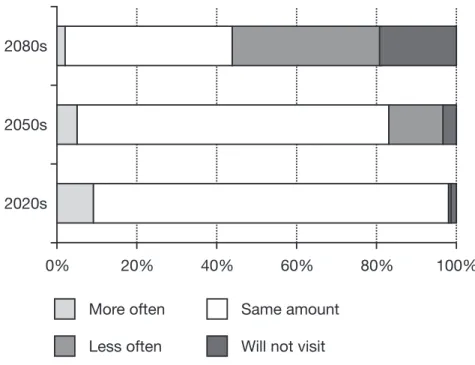
Climate change is considered to have a direct impact on the number of tourists in the Arctic. One of the most significant apparent changes in the Arctic is the reduction in sea ice extent.
3 Global environmental change and mountain tourism
The second part of this chapter will compare the results of very recent studies on the consequences of climate change and related environmental changes on nature tourism in some internationally recognized national parks in the Rocky Mountains in Canada and the United States. This section will provide an overview of the range of studies that have examined the implications of climate change for the ski industry. These early studies of climate change and skiing in eastern North America had two fundamental limitations.
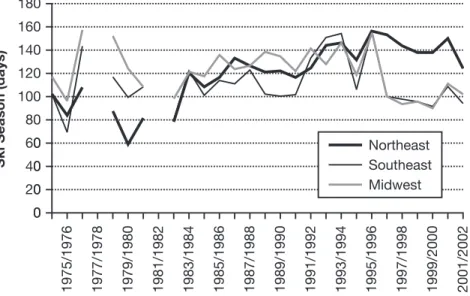
As with studies of the impacts of climate change on the supply of skiing, different methodologies have been used to examine the potential 62 Daniel Scott. The scenarios were developed in part based on climate change studies of potential ecological impacts in the park. A reassessment of the impact of climate change on the ski industry in eastern North America by Scott et al., with snowfall included in the methodology, showed a much lower vulnerability than previous studies.
Global Environmental Change and Mountain Tourism 73. 1998) Tourism in a Warming World: Implications of Climate Change Due to Increased Greenhouse Effect for the Ski Industry in the Australian Alps. 2003) 'Climate Change and Tourism and the mountain regions of North America', in Climate Change and Tourism.
4 Lakes and streams
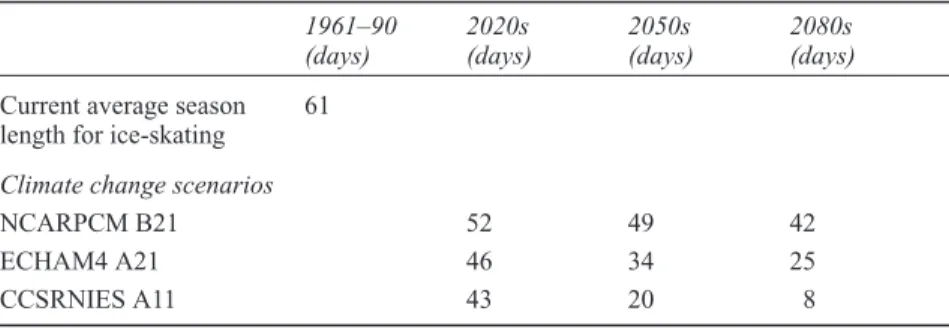
Lower average water levels in the Great Lakes area will also have significant consequences for the nature of coastal environments and the tourism potential associated with them. Changes in ice sheet duration due to climate change will limit skating opportunities at the longest outdoor ice rink in the world (7.8 kilometers) - Rideau Canal Skateway (Ottawa, Ontario). Two of the most important invasive fish species in the Great Lakes are the walleye and the roundhead.
Sea lampreys and round whips threaten native species that support the Great Lakes' large sport fishing industry. The inadvertent introduction and subsequent spread of non-native species threatens the valuable sport fishing industry in the Great Lakes. Zebra mussels, native to the Caspian Sea, were first discovered in the Great Lakes in the late 1980s.
Stakeholders in the marine tourism industry have mixed feelings about the impact of zebra mussels. 2005b). The Vulnerability of Tourism in the National Capital Region to Climate Change, Technical Report for the Government of Canada's Climate Change Action Fund.
5 Tourism and forest ecosystems
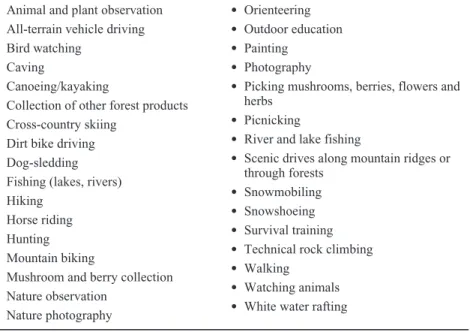
Forests support ecological functions essential to humanity, such as maintaining the global carbon cycle (Costanzaet al. 1997; Daily 1997). The observed warming of the Northern Hemisphere between 1982 and 1999 has already resulted in increased forest growth (Luchtet al. 2002). Maladapted trees may suffer from reduced vigor and increased susceptibility to, for example, storms and pest outbreaks (eg Bradshawet et al. 2000).
Holland et al. 1999) – in many areas, particularly in Europe, to levels where trees suffer from negative side effects such as acidification, cation leaching and nutrient imbalances (Schulze 1989;). It is also unknown how mature forests, where competition for light can severely limit growth, for example, will respond to elevated CO2 (Norbyet al. 1999). ).
However, note that this relationship has two sides, because tourism itself is an important contributor to climate change (Gössling et al. 2005). Obviously, the loss of forests will have serious consequences for people in the tropics, with approximately 200–300 million people directly dependent on these ecosystems for their livelihoods (Myerset al. 2000).
6 The coastal and marine environment
The influence of the degree of cloud cover will depend on the current state of cloud cover in the area under consideration. For example, Australia has one of the highest incidences of skin melanoma in the world, and increased cloud cover in northern Australia could be a good thing. The beach is a natural defense of the land against the force of the sea.
Many of the impacts are related to other activities (eg fishing, dredging, runoff discharge, coastal development) and management options are tabulated in other sections. Poor water quality is one of the factors that has resulted in the degradation of saline lagoons, estuaries and streams where water movement and exchange is limited. On land, the location, facilities and operation of the port can have direct and indirect impacts on coastal and marine habitats.
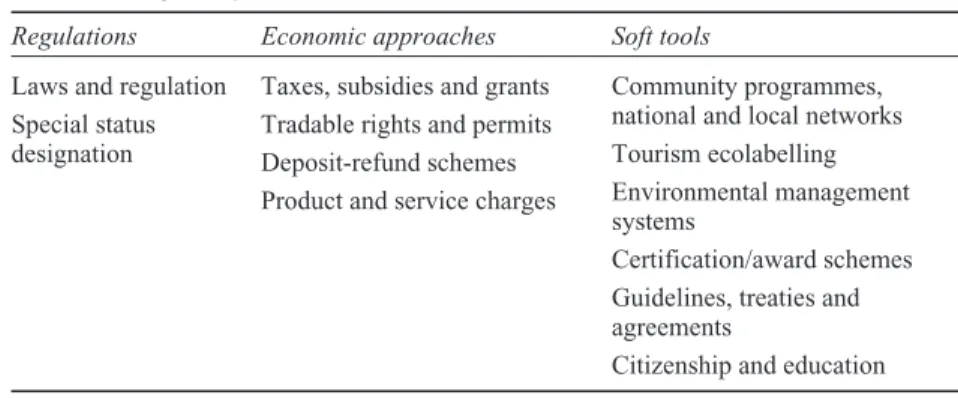
The coastal environment is the focus for the majority of coastal tourism, with extensive use of beaches as recreational areas. These range from disturbance and direct habitat damage to a more gradual deterioration of the quality of the environment (Table 6.9).
7 Deserts and savannah regions
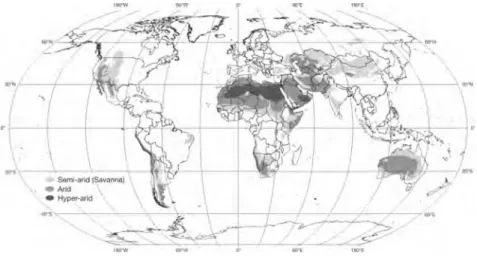
Toward the drier end of the spectrum, plant productivity tends to limit 130 Robert Preston-Whyte, Shirley Brooks, and William Ellery. It is increasingly recognized that, in the process of expanding conservation areas and tourism operations, local property rights should be protected as much as possible – that “the tradition of government appropriating all resource rights and managing them centrally has not worked to benefit either conservation or local development' (Furzeet al. Photographers wet paintings to bring out the color, damaging them irreparably; collectors 'clean' the Sahara for facilities; tour operators open new locations in an effort to offer their customers a 'unique wilderness experience'.
Sustainability therefore relies on 'the coupling of both human resilience and ecological sensitivity into a single, interactive whole'. 1995) 'The distribution of sweetveld and sourveld in South Africa's grassland biome in relation to environmental factors', African Journal of Range and Forage Science. 2003) 'The socio-economic and environmental impacts of tourism development on the Okavango Delta, north-west Botswana', Journal of Arid Environments Enclave tourism and its socio-economic impacts in the Okavango Delta, Botswana', Tourism Management (in press, corrected proof published online 29 December 2003).
2000) "Transition to sustainability: a South African perspective", South African Geographical Journal Plant Life Forms and Statistical Plant Geography. Mearns (eds) The Lie of the Land: Challenging Received Wisdom on the African Environment.
8 Tourism urbanisation and global environmental change
Michael Hall
Not only is the share of the world's population living in urban areas growing, but also the size of those urban areas. In the second half of the nineteenth century, London became the first city with several million inhabitants. Urban systems per se occupy only a small percentage of the world's land area—just 1 percent (Grubler 1994).
Although there will clearly be bioregions in the world where this number will be much higher. Three quarters of the sand dunes along the Mediterranean coastline from Spain to Sicily have disappeared. Tourism urbanization is also considered to be primarily responsible for the urbanization of the Italian coast.
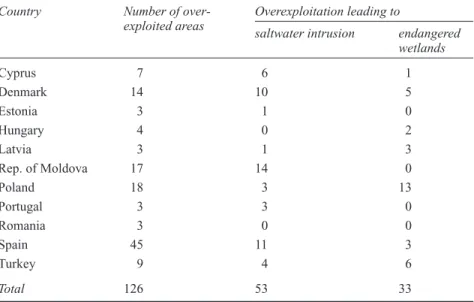
Indeed, one of the most significant impacts of tourism urbanization in the Mediterranean is considered to be the overall pressure placed on freshwater supplies, particularly through overexploitation of aquifers (CO-DBP 1999). Class Relations and the Urbanization of Tourism: The Reconstruction of the Petty Bourgeoisie and the Emergence of a New Urban Form", International Journal of Urban and Regional Research.
Global issues
9 Tourism, disease and global environmental change
Similar impacts to those in the Americas were experienced by the indigenous peoples of the Pacific. A smallpox epidemic in Hawaii in 1853 killed thousands of people, an estimated 8 percent of the population, despite quarantine and vaccination (Greer 1965; Schmitt 1970). However, malaria is not limited to Africa – 40 percent of the world's population is considered to be at risk of contracting the disease (Murphy and Oldfield 1996).
By the apparent end of the outbreak on 14 July 2003, the number of possible cases reached 8,437 worldwide – the countries most affected in terms of number of cases and deaths were China, Hong Kong, Taiwan, Canada Tourism, disease and change global environmental 167 The February 2002 outbreak of foot-and-mouth disease in the United Kingdom was the first outbreak of the disease in Britain since 1967. In addition, a number of controls were put in place to minimize the risk to the public, including visitors to the countryside. , spreading the disease.
An example of the need for a new way of dealing with global health and disease risk lies in the epidemiological characteristics of AIDS. 2001) 'The Macroeconomic Impact of HIV/AIDS in Botswana', IMF Working Paper WP/01/80, International Monetary Fund. 1993) Planetary Congestion: Global Environmental Change and the Health of the Human Species.
10 Tourism and water
On a global average, approximately 70 percent of water use may be for agriculture, 20 percent for industrial purposes, and 10 percent for domestic purposes (FAO 2003, own calculations). For example, agriculture accounts for 1 percent of total water use in Belgium or Austria, compared to 98 percent in Afghanistan or Cambodia. Domestic water use, which includes households but also municipalities, commercial establishments and public services, accounts for only 1 percent of water consumption in Ethiopia, but 83 percent in Equatorial Guinea.
Swimming pools represent another important factor of water use, accounting for about 15 percent of hotels' water demand (140 liters per tourist per day). Laundry takes up about 10 percent – 25 liters per tourist per day – of the water used in hostels and 5 percent – 47 liters per tourist per day – in hotels. Cleaning adds 5 percent to water demand in both guesthouses – 12 liters per tourist per day – and hotels – 47 liters per tourist per day.
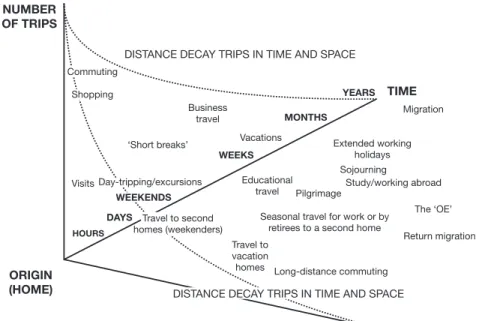
Finally, restaurants in guesthouses are responsible for 15 percent of the water used in guesthouses – 37 liters per tourist per day – and for 5 percent – 47 liters per tourist per day – in hotels. Within subregions, approximately 87 percent of all international arrivals in Europe are from Europe itself (about 350 million arrivals), while 71 percent of international arrivals are regionally in the Americas (92 million), and 77 percent in the Asia Pacific region (88 million).