The research has become an authoritative study of logistics in South Africa and is recognized as such both nationally and internationally. IMPERIAL Logistics' financial support is greatly appreciated and the company's continued commitment to the South African logistics sector is commended. Unfortunately, logistics is still seen by most as a barrier to the competitiveness of South Africa as a country and to the organizations that operate locally.
The reality is that the logistical challenges facing South Africa continue, with elevated fuel costs, underinvestment in intermodal capacity and inadequate maintenance of congested roads revealing the soft underbelly of our geographically challenged economy. In the consumer market, logistics management is recognized as a core competency of international giants investing in South Africa and as a root cause of domestic performance gaps. South Africa should take a proactive stance in this regard, hence the theme of Preparing for Change.
The research published here highlights the changes facing South Africa and provides a focused call for action. Integrated national planning is essential to the success of the government's intention to stimulate growth through sustainable infrastructure development.
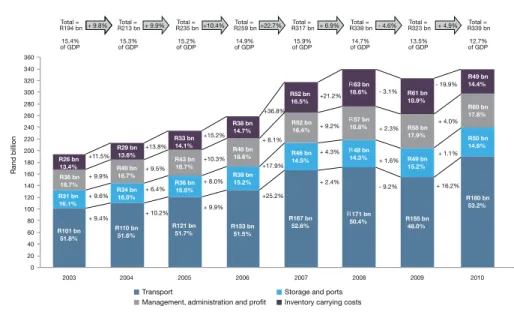
This edition also discusses the methodologies, models and metrics used to measure logistics performance, highlighting the changes that could lead to better long-term strategic planning of South Africa's macro-level logistics systems. The effect of rapid growth in South Africa's tertiary sector on this metric is only now becoming clear. The national cost of road accidents is estimated at R13.8 billion per year, while CO2 emissions would have added a further R6.5 billion to the transport bill if these emissions were taxed.
Three paradigmatic scenarios show that South African logistics costs are extremely sensitive to oil price volatility, exchange rate uncertainty and the CO2 tax. Comparison of logistics costs at country level Several countries are trying to quantify their national logistics costs as a correlation between logistics costs and country competitiveness. Given South Africa's vulnerability to transport costs, this trend poses a threat to the sustainability of current transport philosophies.
According to the LSCI, South Africa ranks 30th out of 162 coastal countries, in league with Brazil and India, and outperforms SADC coastal countries by a wide margin. Durban and Mauritius outpace other ports in coastal inland cargo tonnages increased by 5.5% while the total.
It is emphasized that the industry must be more willing to share data and knowledge to make this an even more powerful resource for decision support. In the maritime industry, a port that is well connected within the global port network offers supply chains greater access to global markets, flexibility and reliability. The Liner Shipping Connectivity Index (LSCI) is a metric tracked by the United Nations Conference on Trade and Development that measures maritime connectivity at the country level.
The Port Connectivity Index developed by the Georgia Institute of Technology uses a more sophisticated, disaggregated approach to measure connectivity at a port level. The greatest growth in terms of tonne-km was observed for metropolitan road freight, which increased by 6.1%.
TopicaL reSearch
This is confirmed by the International Monetary Fund (IMF) report, 'The World Economic Outlook for 2012'1(p xv), which states: "The global economy is in a dangerous new phase. The growth rate of the South African economy was 3.1% in 20114, which is excellent considering the financial crises in the world.In the US, on the other hand, logistics costs as a percentage of GDP rose to 8.3% in 201010 from a very low 7.7% the year before, in line with the recovery after their financial crisis, intuitively.
This increases internal logistics costs because products and raw materials have to be transported to the ports over very long distances - the same applies to the import of cars and consumer goods. However, the fact that the country's natural resources are concentrated in the country's northern interior makes this more difficult. The 'Triple-A Supply Chain' emerged at the beginning of the 21st century. was heavily promoted where: “The best supply chains are not just fast and cost-effective.
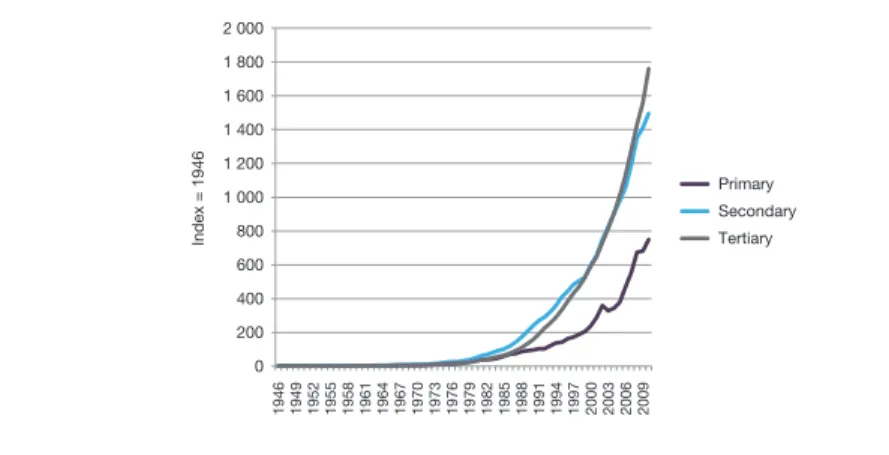
This is interesting, especially in the case of the US, where it is being seriously considered. The growth of the South African tertiary sector (Figure 1) is decreasing in percentage, while the growth of the tertiary sector in the USA is fairly stable. This once again highlights the impact of the tertiary sector on the metric that expresses logistics costs as a percentage of GDP.
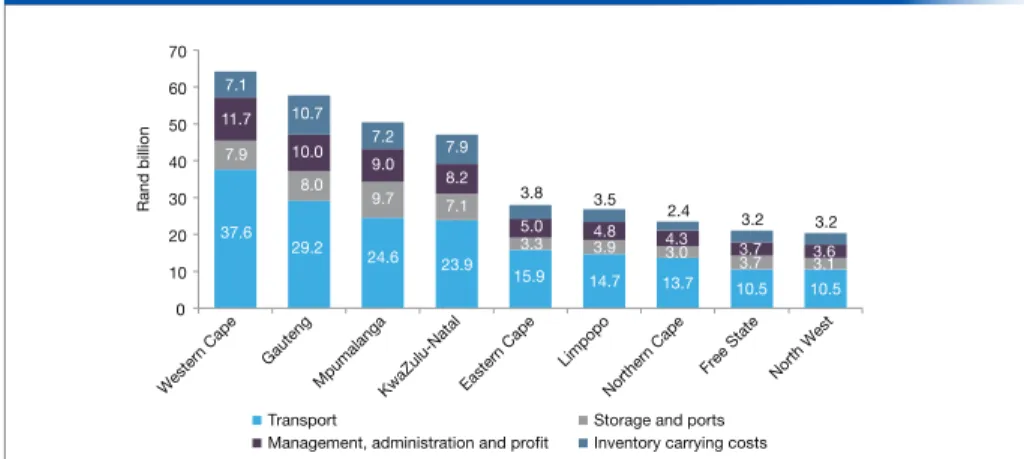
Gauteng incurs the highest inventory holding costs due to the size and value of the automotive industry in the country's most populous province. These are two of the biggest and potentially most volatile drivers of transport costs in South Africa. Most Brazilian agricultural products originate in the mid-western region of the country away from the Brazilian coast.
An accurate depiction of cargo flow requires at least a nationally representative sample of two types of data—the amount of cargo transported during a trip and the origin-destination pairs associated with the trip. The shade graphically represents a percentage of the total amount - the darker it is, the more often this combination occurs. Consider the example of Gauteng, often referred to as the "gateway to Africa" - suggesting a significant amount of traffic on the road.
The size of the largest vessel (in terms of TEUs) calling at the country's ports61. In addition, several different routes between port A and port B also create redundancy in the system, so that if one link fails - say due to trade embargo - the vessel can still reach port B through other links. There is no debate about the severity of the skills shortage in the logistics and supply chain management sectors87,88,89.
In line with the South African government's increased focus on the built environment - particularly infrastructure - CSIR uses its multidisciplinary capabilities to develop innovations and solutions that will improve the built environment in a sustainable manner.