This dissertation does not contain data, images, graphs or other information from other persons, unless it is expressly acknowledged that it originates from those persons. iv. This dissertation contains no other attributions unless specifically acknowledged as originating from the authors.
Publications
- Introduction and background of the study
- Problem statement
- Specific objectives of the study
- Sub-problems
- Rationale/Significance of the study
- Definition of terms
- Structure of the thesis
- References
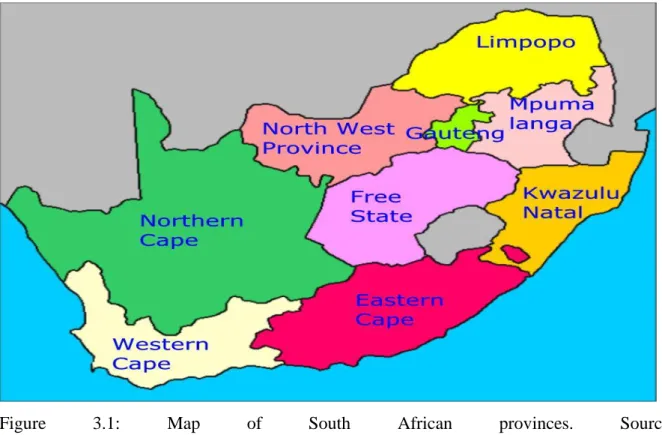
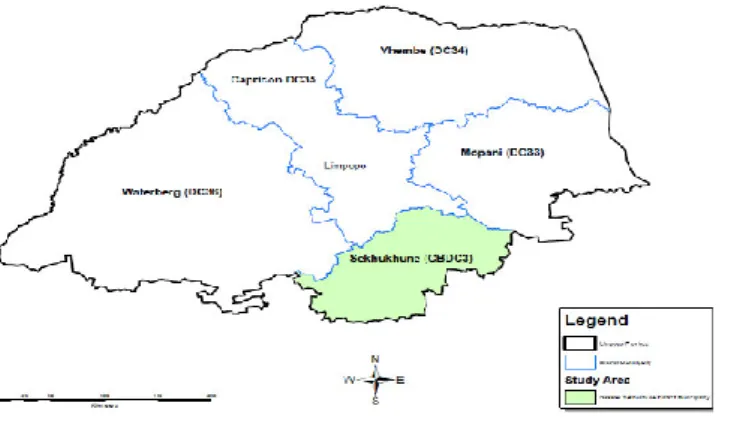
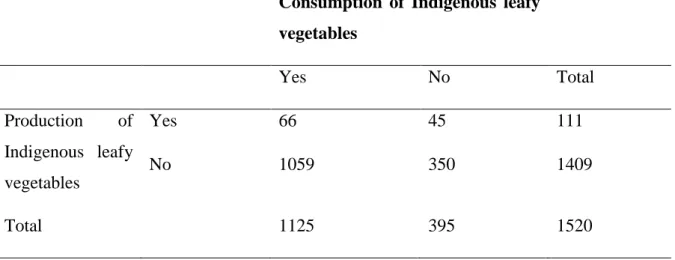
Therefore, the study aims to investigate the acceptance of indigenous leafy vegetables and their contribution to household food security in Limpopo and Mpumalanga Provinces of South Africa. What are the perceptions and attitudes of households towards the consumption of indigenous leafy vegetables.
- Brief overview on Indigenous Leafy Vegetables of South Africa
- Theory on household food security 9
- The perceptions and attitudes towards ILVs
- ILVs regarded as unhygienic foods
- Old fashioned food
- Determinants of consumers acceptance of indigenous leafy vegetables
- Demographic factors
- Institutional factors
- ILVs contribution to household food security
- Physical and sensory characteristics determine their acceptance
- Food systems and the contribution of ILVs on household food security
- Decription of the analytical techniques of the study
- Conceptual framework of the study
- References
However, Mayekiso (2021) stated that these leafy vegetables make an important contribution to the food security of the households of the rural poor. 19 Figure 2.1: Conceptual framework for consumer acceptance of indigenous leafy vegetables and their contribution to household food security.
Introduction
Description of the study area
Data collection method, source and technique
Data analysis
Introduction
Methods and materials
- Study area, methods of data collection and sampling methods
Results and discussion
- Demographic and Socioeconomic Characteristics of Farm Household
Discussion
Introduction 47
Some scientists believe that the increase in diseases due to micronutrient deficiency is due to the drastic change in consumer food preferences (Matenge et al. 2012; Mavhengama, 2013; and Mbhenyane, 2017). Households today prefer fast foods, such as fried chips, to healthy foods that could eradicate disease and improve the functioning of their bodies (Kruger et al. 2015). Such an attitude has exacerbated diseases such as obesity, diabetes, heart disease and stunted growth in children.
48 deficiency diseases because they have a high concentration of vitamins A, C, calcium, zinc and iron that the body needs for normal functioning (Sharma et al., 2020). They also have characteristics that make them ideal for future research and investment to combat food insecurity, encourage climate-resilient agriculture and develop a sustainable food system (Ngenoh et al., 2019). However, despite their perceived benefits, ILVs have been ignored by consumers who have replaced them with exotic crops such as cabbage and kale.
In addition, few of these plants are used economically, due to factors such as human perceptions, lack of consumer awareness of their benefits and cultural values (Sharma et al., 2020). On the other hand, other scholars such as Shayanowako et al. 2021) have researched the contribution of native leafy vegetables to household food security.
Conceptual framework
- Household Food Insecurity Access Scale
However, their ability to contribute to household food security is hampered by the fact that they are not part of the food system and, as a result, are less available in the market. Therefore, it is against this background that the study seeks to assess the effect of consumer acceptance of native leafy vegetables as well as their contribution to household food security. Where represents food security and food insecurity for ILVs consumers, is the latent variable as defined in Equation 1, and are vectors of the parameters to be estimated.
As a result, HFIAS measures the level of food insecurity over the past 30 days as reported by the household. The generic HFIAS questions help researchers determine the level of food insecurity in the household over the past 30 days. The maximum score for the household is 27 (if the household answered "often" to all nine occurrence questions), the minimum score is 0 (Becquey et al., 2010).
Age Age of the household member Gender Gender of the household head Marriage Marital status of the household head. Hh size Number of family members Education level of the head HIV status HIV status of the household head Grants If the household receives social grant.
Results
- Results on the impact of production and consumption of ILVs on household food security
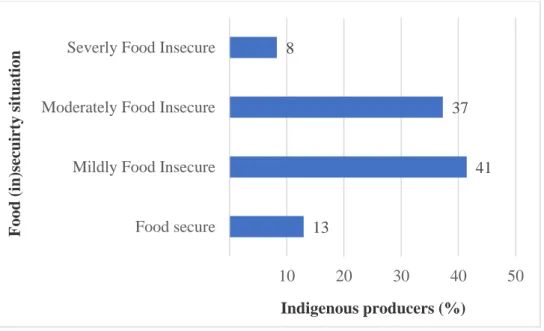
53 Table 5.3: Survey on access to food insecurity among smallholder households in the 2016/2017 season in the provinces of Mpumalanga and Limpopo. The results of this tool showed that the household answer to questions about occurrence was often 'never', especially the last two questions which focused on whether the household went a day or went to bed without eating anything (Table 5.3 ). This implies that households in these two provinces are somewhat food insecure or experience mild food insecurity.
In summary, these results show that both Mpumalanga and Limpopo provinces were food secure and experienced a bland food. These results are in contrast to those of Chinnakali et al. 2014) who stated that the study found that a total of 77.2% of households were food insecure. However, they somehow agree with Oldewage-Theron & Egal (2021) who found that the majority of respondents were food secure 67% and 4% of respondents experienced mild food insecurity.
This was followed by households that are moderately food insecure, with 37% of households in this category. It was found that 8% of the households are severely food insecure, indicating the minimal access to food of farmers participating in the survey.
Discussion
- Parameter estimates of the endogenous switching regression model (ESRM) of the
The gender of the household head had a negative effect on ILV consumption and was not statistically significant. Education of the household head had a negative effect on ILV consumption and was not statistically significant. The marital status of the head of the household had a positive effect on ILV consumption and was not statistically significant.
This means that when the marital status of the household member changes, the food security of the household is positively affected by those changes. The study concluded that when the male head of the household marries, the household diet changes dramatically. Thus, this results in a positive change in the food security status of the household. 2020) stated that dissolution of marriage in couples (divorce) significantly contributes to food insecurity.
While the household involvement variable in livestock farming had a negative impact on the consumption of ILVs and was not significant, it had a positive impact on the food security variable and was statistically significant. The 'if the household receives advice from the government' had a negative influence on the consumption of ILVs and was not significant.
Conclusion and policy recommendations
The study concluded that expanded animal husbandry activities also indirectly contribute to greater dietary diversity, which improves the household's food security situation. 2017) stated that smallholder farmers can produce livestock for commercial purposes rather than for consumption. An endogenous switch regression model showed that wage/salary had a negative effect on ILV consumption and was not significant, but had an expected positive effect on food security and was statistically significant. These findings agree with Sekhampu (2013) who stated that an increase in wage outcomes results in food security as the household can afford to buy more healthy food for its household members. 2020) suggested that some households may consume unhealthy foods when their income increases.
The government advice was found to have an unexpectedly positive impact on household food security and was statistically significant. This is somehow in line with Adekunle (2013) who stated that government extension services contribute significantly to the food security of smallholder farmers producing staple crops and ILVs as it provides them with information, resources and knowledge to increase production of basic crops. and ILVs. 2009) alluded to the fact that government advice may indirectly lead to food insecurity as it focuses on cash crops. 60 The results from this study revealed that age, gender and education had a negative influence on the consumption of ILVs.
Agricultural extension services must equally promote the consumption of exotic market crops and ILVs. Because the study found that profit-oriented policies encourage consumption of produce for sale while alienating ILV.
Potential contribution of African green leafy vegetables and maize porridge compound meals to iron and zinc nutrition. Identifying potential markets for African leafy greens: case study of farm households in Limpopo Province, South Africa. Food security status of rural households among producers and non-producers of native leafy vegetables: evidence from Coffee Bay, South Africa.
Economic assessment of indigenous leafy vegetables (ILVs) production for income generation and food income generation and food security in the Eastern Cape Province, South Africa (Doctoral dissertation). Attitudes towards the cultivation and utilization of indigenous leafy vegetables in rural communities (Doctoral dissertation). African leafy vegetables for improved human nutrition and food system resilience in Southern Africa: A scoping review.
Determinants of food security status of households receiving government grants in Kwakwatsi, South Africa. The role of traditional leafy vegetables in the food security of rural households in South Africa.
Summary
Conclusions
Production and marketing of ILVs recommendations
NGOs and agricultural programs can develop programs that encourage men to participate in agriculture as the findings of the study revealed that fewer men are involved in ILV production. To increase the acceptance of ILVs and their food safety, there should be an increase in the production and commercialization of ILVs as their availability in the market increases their accessibility to all consumers. This may require different actors to come together to tackle all the problems that prevent the acceptance of ILVs.
First, agricultural programs can educate farmers about the various nutritional and other benefits associated with the consumption and production of ILVs. This may encourage smallholder farmers to produce more ILV as the study found that as household members become more educated their production and consumption decreases. It is also mandatory for extension workers to help small farmers implement what they have been taught.
For example, training sessions can show them how to effectively produce and sell their local produce in the formal market. This in turn increases agricultural yields of ILV farmers and improves their food security overtime as the findings of the study revealed that a relatively large number of smallholder farmers suffer from food insecurity.
Limitations of the study and directions for further studies
Therefore, there must be thorough agricultural training sessions where farmers will be helped to practice what they have learned from the sessions. 69 Due to the COVID 19 pandemic and restrictions, the study used secondary data collected in 2016 to get the picture of the consumption of ILVs and their contribution to household food security of Limpopo and Mpumalanga provinces. The consumption of these leafy vegetables may have evolved, especially after the aftermath of the COVID 19 pandemic that left many families suffering from hunger and food insecurity.
Therefore, future studies can look at the consumption of these leafy greens and their contribution to household food security before and during the pandemic. This will be done to follow the trend in ILV production and consumption during the pandemic.