AN ACCESS CONTROL MODEL FOR A SOUTH AFRICAN NATIONAL ELECTRONIC HEALTH RECORD SYSTEM
by
Tamir Asrat Tsegaye
ii
AN ACCESS CONTROL MODEL FOR A SOUTH AFRICAN NATIONAL ELECTRONIC HEALTH RECORD SYSTEM
by
Tamir Asrat Tsegaye
15T0016
Thesis
submitted in fulfilment of the requirements for the degree
Master of Commerce
in
Information Systems
in the
Faculty of Commerce
of
Rhodes University
Supervisor:
Prof. Stephen Flowerday
Co-supervisor:
Prof. Graham Wright
December 2018
iii
ABSTRACT
Countries such as South Africa have attempted to leverage eHealth by digitising patients’
medical records with the ultimate goal of improving the delivery of healthcare. This involves the use of the Electronic Health Record (EHR) which is a longitudinal electronic record of a patient’s information. The EHR is comprised of all of the encounters that have been made at different health facilities. In the national context, the EHR is also known as a national EHR which enables the sharing of patient information between points of care. Despite this, the realisation of a national EHR system puts patients' EHRs at risk. This is because patients’
information, which was once only available at local health facilities in the form of paper-based records, can be accessed anywhere within the country as a national EHR. This results in security and privacy issues since patients’ EHRs are shared with an increasing number of parties who are geographically distributed. This study proposes an access control model that will address the security and privacy issues by providing the right level of secure access to authorised clinicians. The proposed model is based on a combination of Role-Based Access Control (RBAC) and Attribute-Based Access Control (ABAC). The study found that RBAC is the most common access control model that is used within the healthcare domain where users’ job functions are based on roles. While RBAC is not able to handle dynamic events such as emergencies, the proposed model’s use of ABAC addresses this limitation. The development of the proposed model followed the design science research paradigm and was informed by the results of the content analysis plus an expert review. The content analysis sample was retrieved by conducting a systematic literature review and the analysis of this sample resulted in 6743 tags. The proposed model was evaluated using an evaluation framework via an expert review.
iv
DECLARATION
I declare that the thesis entitled, An Access Control Model for a South African National Electronic Health Record System, which I hereby submit for the degree, Master of Commerce at Rhodes University, is my own work. I also declare that this thesis has not previously been submitted by me for a degree at this or any other tertiary institution and that all the sources that I have used or quoted have been indicated and acknowledged by means of complete references.
__________________
Tamir Asrat Tsegaye
v
ACKNOWLEDGEMENTS
Firstly, I would like to thank my supervisor, Professor Stephen Flowerday, for his guidance, encouragement and support. The valuable advice which he provided contributed towards this thesis. I acknowledge the constructive feedback that I received from Professor Graham Wright which assisted the study.
I would like to thank my family for their support throughout the completion of this thesis.
I am also grateful for the expert reviewers who participated in this study and made a positive contribution.
vi
TABLE OF CONTENTS
ABSTRACT ... iii
DECLARATION ... iv
ACKNOWLEDGEMENTS ... v
LIST OF FIGURES ... xii
LIST OF TABLES ...xiv
DEFINITION OF TERMS ... xv
ACRONYMS ...xvi
CHAPTER 1: INTRODUCTION ... 1
1.1. Background ... 1
1.2. Statement of the Problem ... 2
1.3. Research Question ... 3
1.3.1. Sub-Questions ... 3
1.4. Objective of the Study... 4
1.5. Significance of the Study ... 4
1.6. Initial Literature Review ... 5
1.6.1. National Electronic Health Record Adoption Internationally ... 5
1.6.2. Regulations for a Compliant National Electronic Health Record System ... 6
1.6.3. Securing the Electronic Health Record through Access Control ... 6
1.6.4. Standards for an Interoperable National Electronic Health Record System ... 7
1.7. Research Design ... 8
1.7.1. Research Paradigm ... 9
1.7.2. Research Methods... 9
1.8. Delimitation of the Study ... 9
1.9. Ethical Considerations ... 10
1.10. Contribution: Proposed Model ... 10
1.11. Outline of Chapters ... 11
CHAPTER 2: RESEARCH DESIGN AND METHODOLOGY ... 13
2.1. Introduction ... 13
2.2. Research Design and Methodology Structure ... 13
2.3. Research Paradigms ... 14
2.3.1. Positivism ... 15
2.3.2. Interpretivism ... 16
2.3.3. Pragmatism... 16
2.3.4. Design Science ... 17
vii
2.3.4.1. Information Systems Research Framework ... 19
2.3.4.2. Design Science Research Guidelines... 20
2.4. Research Methods... 22
2.4.1. Quantitative Research ... 23
2.4.2. Qualitative Research ... 23
2.4.3. Mixed Methods Research ... 24
2.5. Data Collection and Analysis Methods ... 25
2.5.1. Secondary Data ... 25
2.5.1.1. Content Analysis ... 26
2.5.2. Primary Data ... 28
2.6. Ethical Considerations ... 29
2.7. Summary ... 29
CHAPTER 3: NATIONAL ELECTRONIC HEALTH RECORD ADOPTION INTERNATIONALLY ... 31
3.1. Introduction ... 31
3.2. Types of Health Records ... 31
3.3. Current State of Countries’ National Electronic Health Record Systems ... 32
3.3.1. Canada ... 32
3.3.2. New Zealand ... 33
3.3.3. South Africa ... 33
3.3.4. Sweden ... 34
3.3.5. England ... 35
3.4. Electronic Health Record System Architectures ... 35
3.4.1. Centralised Architecture ... 35
3.4.2. Distributed Architecture ... 36
3.4.3. Architectures of Five National Electronic Health Record Systems ... 38
3.4.3.1. Canada ... 38
3.4.3.2. New Zealand ... 39
3.4.3.3. South Africa ... 41
3.4.3.4. Sweden ... 42
3.4.3.5. England ... 43
3.5. Challenges Experienced by Countries’ National Electronic Health Record Implementations 44 3.5.1. Concurrent Use of Paper and Electronic Health Records ... 44
3.5.2. Lack of Patient Adoption of Electronic Health Records ... 47
3.5.3. Network Connectivity Problems ... 48
3.5.4. Clinician Resistance to Electronic Health Record Adoption ... 50
3.5.5. Security and Privacy Issues ... 52
viii
3.5.6. Governance Issues... 54
3.5.7. Lack of Interoperability ... 55
3.5.8. Lack of Technical Support ... 57
3.6. Summary ... 58
CHAPTER 4: REGULATIONS FOR A COMPLIANT NATIONAL ELECTRONIC HEALTH RECORD SYSTEM 61 4.1. Introduction ... 61
4.2. Regulations Informing the Use of a National Electronic Health Record System ... 61
4.2.1. Data Protection Directive (European Union) ... 61
4.2.2. General Data Protection Regulation (European Union) ... 62
4.2.3. Protection of Personal Information Act (South Africa)... 63
4.2.4. Health Insurance Portability and Accountability Act (United States) ... 63
4.2.5. Data Protection Act (United Kingdom) ... 64
4.2.6. Personal Data Act (Sweden) ... 64
4.2.7. Privacy Act (New Zealand) ... 64
4.2.8. Personal Information Protection and Electronic Documents Act (Canada) ... 64
4.3. Comparison of Regulations against PoPI Act Principles ... 65
4.4. Characteristics of Regulations ... 65
4.4.1. Processing ... 67
4.4.2. Security ... 68
4.4.3. Data Protection Authority ... 69
4.4.4. Data Protection Officer ... 69
4.4.5. Data Breach Notification ... 70
4.4.6. Enforcement ... 70
4.5. Security and Privacy Standards for Aiding Compliance ... 71
4.5.1. ISO/IEC 29100 Privacy Framework ... 71
4.5.2. ISO/IEC 27001 Information Security Management System ... 72
4.6. Summary ... 74
CHAPTER 5: SECURING THE ELECTRONIC HEALTH RECORD THROUGH ACCESS CONTROL ... 75
5.1. Introduction ... 75
5.2. Identification ... 75
5.3. Authentication... 75
5.3.1. Password ... 76
5.3.2. Single Sign-On ... 77
5.3.3. Token ... 79
5.3.4. Smart Card ... 80
5.3.5. Biometrics ... 81
ix
5.3.6. Multi-Factor Authentication ... 82
5.4. Authorisation ... 83
5.4.1. Discretionary Access Control ... 83
5.4.2. Mandatory Access Control ... 85
5.4.3. Attribute-Based Access Control ... 86
5.4.4. Role-Based Access Control ... 87
5.5. Theoretical Foundation: ANSI Role-Based Access Control Standards ... 89
5.5.1. ANSI INCITS 359-2012 ... 89
5.5.2. ANSI INCITS 494-2012 ... 91
5.6. Other Security Models ... 93
5.6.1. Chinese Wall Model ... 93
5.6.2. Bell-LaPadula Model ... 94
5.6.3. Biba Model ... 95
5.6.4. Theoretical Foundation: Clark-Wilson Model ... 95
5.7. Accountability ... 98
5.7.1. Types of Auditing and Monitoring for Electronic Health Records ... 98
5.7.2. Audit Trail ... 99
5.7.3. Logging Electronic Health Record Access in an Emergency ... 101
5.8. Defence-in-Depth ... 102
5.9. Summary ... 103
CHAPTER 6: STANDARDS FOR AN INTEROPERABLE NATIONAL ELECTRONIC HEALTH RECORD SYSTEM ... 104
6.1. Introduction ... 104
6.2. Levels of Interoperability ... 104
6.2.1. Foundational Interoperability ... 105
6.2.2. Syntactic Interoperability ... 105
6.2.3. Semantic Interoperability ... 106
6.3. Standards for Interoperability ... 107
6.3.1. Health Level Seven ... 107
6.3.1.1. HL7 Version 2 ... 108
6.3.1.2. HL7 Version 3 ... 109
6.3.1.3. HL7 Clinical Document Architecture ... 110
6.3.2. Digital Imaging and Communications in Medicine ... 110
6.3.3. Terminology Standards ... 110
6.3.3.1. Logical Observation Identifiers Names and Codes (LOINC) ... 111
6.3.3.2. International Classification of Diseases - 10th Revision (ICD-10) ... 111
x
6.3.3.3. Systematized Nomenclature of Medicine - Clinical Terms (SNOMED CT) ... 112
6.3.4. Integrating the Healthcare Enterprise ... 113
6.4. Health Service Bus ... 116
6.5. Summary ... 118
CHAPTER 7: FINDINGS AND ANALYSIS ... 119
7.1. Introduction ... 119
7.2. Content Analysis ... 119
7.2.1. Selection of Content Analysis Sample ... 119
7.2.2. Content Analysis Results ... 121
7.3. Expert Review ... 128
7.3.1. Evaluation of Proposed Model ... 128
7.3.2. Other Expert Review Responses ... 130
7.4. Primary Observations ... 131
7.4.1. Use of EMR System within Hospital ... 132
7.4.2. CRM used as EMR System within Hospital ... 132
7.4.3. Use of EHR System within Hospitals ... 132
7.5. Summary ... 132
CHAPTER 8: RECOMMENDATIONS AND PROPOSED MODEL ... 134
8.1. Introduction ... 134
8.2. Research Problem Revisited ... 134
8.3. Development of Proposed Model ... 134
8.4. Critical Thinking ... 135
8.5. Argument Diagram: Proposed Access Control Model ... 136
8.6. Proposed Access Control Model ... 144
8.6.1. Distributed Architecture ... 145
8.6.2. Tiered Electronic Health Records ... 147
8.6.3. Application of Tuberculosis Scenario to Proposed Model ... 149
8.6.3.1. Testing the Patient for Tuberculosis ... 149
8.6.3.2. Patient Diagnosis of Tuberculosis ... 150
8.6.3.3. Patient Emergency ... 152
8.6.4. Access Control: Overview ... 153
8.6.5. Access Control: IAAA ... 155
8.6.5.1. Identification ... 155
8.6.5.2. Authentication ... 155
8.6.5.3. Authorisation ... 157
8.6.5.4. Accountability ... 160
xi
8.6.6. Theoretical Foundation: ANSI Role-Based Access Control Standards ... 161
8.6.7. Theoretical Foundation: Clark-Wilson Model ... 162
8.6.8. Regulations ... 164
8.6.9. Interoperability ... 166
8.7. Application of General Systems Theory to Proposed Model ... 168
8.8. Summary ... 168
CHAPTER 9: CONCLUSION ... 170
9.1. Introduction ... 170
9.2. Research Problem ... 170
9.3. Research Questions ... 171
9.4. Contribution of Study ... 174
9.5. Limitations of Study ... 175
9.6. Future Research... 175
9.7. Summary ... 176
REFERENCE LIST ... 177
APPENDIX A: EXPERT REVIEW QUESTIONNAIRES ... 191
APPENDIX B: CONTENT ANALYSIS SAMPLE ... 195
APPENDIX C: CODE FOR SCREENING PAPERS OF SYSTEMATIC LITERATURE REVIEW ... 197
APPENDIX D: CODE FOR CREATING WORD CLOUD FROM CONTENT ANALYSIS RESULTS ... 200
APPENDIX E: TUBERCULOSIS SCENARIO ... 202
APPENDIX F: EXPERT REVIEW PARTICIPATION LETTER ... 204
xii
LIST OF FIGURES
Figure 1.1: Proposed access control model ... 11
Figure 1.2: Outline of chapters ... 12
Figure 2.1: Research onion ... 14
Figure 2.2: An artefact interacting with a context ... 18
Figure 2.3: Design science research knowledge contribution framework ... 18
Figure 2.4: Information systems research framework ... 20
Figure 2.5: Research methods continuum ... 23
Figure 2.6: Triangulation applied to this study ... 24
Figure 2.7: Research choices ... 25
Figure 2.8: Answering the research question concerning a context of texts ... 27
Figure 2.9: Components of content analysis ... 27
Figure 3.1: Visual representation of the different types of health records ... 32
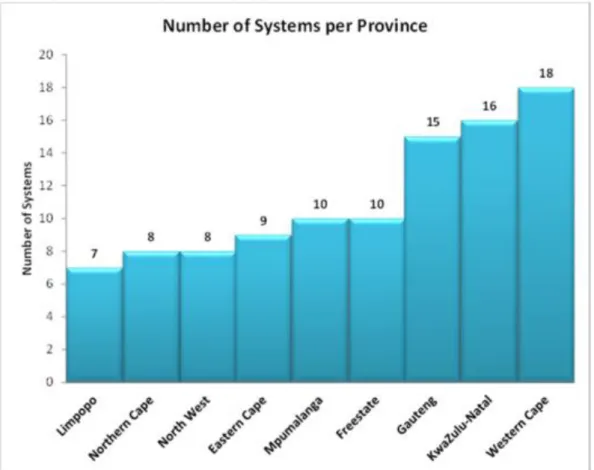
Figure 3.2: Total number of health information systems deployed per province ... 34
Figure 3.3: Centralised architecture ... 36
Figure 3.4: Distributed architecture ... 37
Figure 3.5: EHR Solution ... 39
Figure 3.6: National Electronic Health Record ... 40
Figure 3.7: Fully integrated national shared electronic health record system ... 41
Figure 3.8: Swedish eHealth architecture ... 43
Figure 3.9: NHS Care Records Service ... 44
Figure 5.1: Comparison of authentication architecture before and after SSO implementation ... 77
Figure 5.2: SSO workflow ... 78
Figure 5.3: Access control matrix used by DAC... 84
Figure 5.4: ABAC elements ... 86
Figure 5.5: RBAC standard model ... 89
Figure 5.6: RBAC policy-enhanced reference model ... 92
Figure 5.7: Chinese wall model ... 93
Figure 5.8: Comparison of Bell-LaPadula and Biba models ... 94
Figure 5.9: Clark-Wilson model ... 97
Figure 5.10: Example of an audit trail for a patient’s electronic health record ... 100
Figure 5.11: An example of a break-glass security warning ... 102
Figure 6.1: Levels of interoperability ... 104
Figure 6.2: Example of a HL7 v2.3 Admission Discharge Transfer (ADT) message ... 108
Figure 6.3: An example section of a HL7 v3 message representing guardian information for a patient ... 109
Figure 6.4: Example of a LOINC name for a laboratory test ... 111
Figure 6.5: Example of an ICD-10 code for a patient with gout ... 112
Figure 6.6: An illustration of the SNOMED CT hypertensive disorder ... 112
Figure 6.7: Relationship between standards-based profiles, base standards and interoperability specifications ... 113
Figure 6.8: The OpenHIE model consisting of an interoperability layer i.e. health service bus ... 117
Figure 7.1: PRISMA flow diagram... 120
Figure 7.2: Categories expanded ... 126
Figure 7.3: Word cloud - Categories and subcodes ... 127
Figure 8.1: Illustration of the two parts of an argument ... 135
xiii
Figure 8.2: Argument diagram ... 136
Figure 8.3: Argument diagram justifying choice of proposed model components ... 137
Figure 8.4: Proposed access control model ... 144
... 146
Figure 8.5: Proposed access control model - Retrieval of national electronic health record at Region A ... 146
Figure 8.6: Proposed access control model - Retrieval of national electronic health record at Regions B, C and X ... 147
Figure 8.7: First tier electronic health record ... 148
Figure 8.8: Second tier electronic health record ... 148
Figure 8.9: Proposed access control model – Tuberculosis scenario part 1 ... 150
Figure 8.10: Proposed access control model – Tuberculosis scenario part 2 ... 151
... 153
Figure 8.11: Proposed access control model – Tuberculosis scenario part 3 ... 153
Figure 8.12: Flowchart of clinician authentication using two-factor authentication ... 156
Figure 8.13: Flowchart of clinician authorisation using RBAC and ABAC ... 158
Figure 8.14: Flowchart of clinician requesting emergency access ... 159
Figure 8.15: Proposed access control model - Theoretical foundation ... 163
Figure 8.16: Alternate view showing relationship between regulations and other components ... 165
Figure 8.17: Proposed access control model - Interoperability view ... 167
xiv
LIST OF TABLES
Table 2.1 Comparison of research paradigms in terms of philosophical assumptions ... 15
Table 2.2: Design science research guidelines – adapted from ... 22
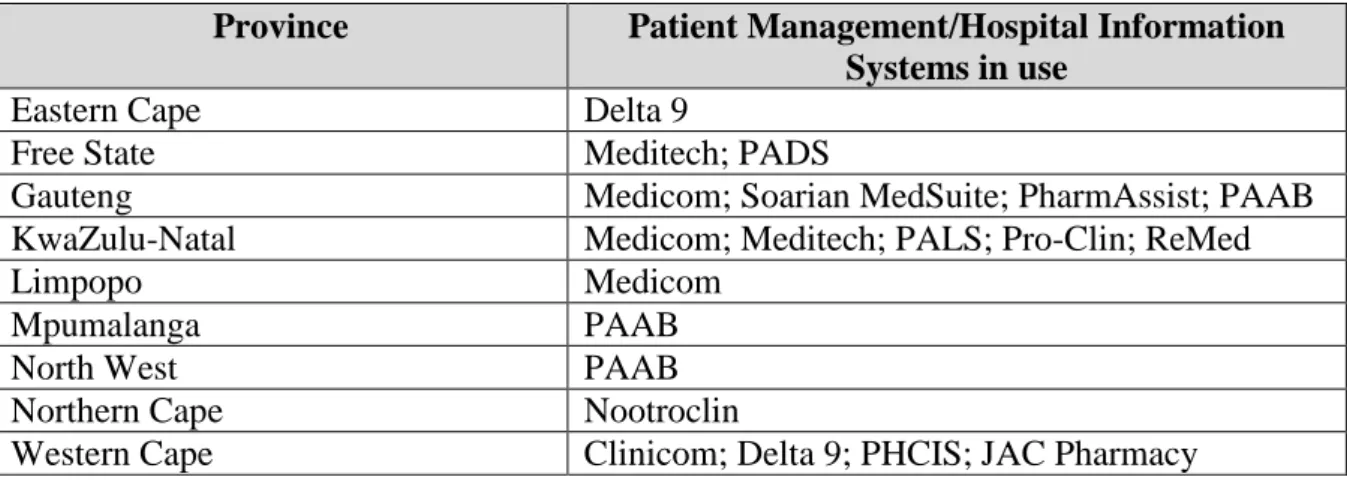
Table 3.1: Patient management/hospital information systems currently deployed in public sector facilities in South Africa ... 33
Table 3.2: Comparison of system architectures by characteristic ... 37
Table 3.3: Type of system architecture (potentially) used by examined countries ... 38
Table 3.4: Summary of challenges experienced by examined countries during national electronic health record implementations ... 59
Table 4.1: Comparison of regulations against PoPI Act principles ... 66
Table 4.2: Characteristics of regulations ... 71
Table 4.3: ISO/IEC 29100 privacy principles to PoPI principles mappings ... 72
Table 4.4: ISO/IEC 27001 control areas relevant to access control ... 73
Table 5.1: Advantages and disadvantages of examined authentication methods ... 83
Table 5.2: MAC applied to a supply chain network ... 85
Table 5.3: Advantages and disadvantages of examined access control models ... 88
Table 5.4: Summary of examined security models ... 98
Table 5.5: Audit trail example fields (Figure 5.10) answering Six Ws ... 100
Table 6.1: Mapping of functions to IHE profiles ... 115
Table 6.2: Levels of interoperability addressed by interoperability standards/initiative... 116
Table 7.1: Top 30 codes ... 123
Table 7.2: Categories after reduction ... 124
Table 7.3: Categories expanded ... 124
xv
DEFINITION OF TERMS
Access Control: a policy or procedure that restricts access to a system (Khan, 2012).
Attribute-Based Access Control: an access control model that uses the attributes of users and objects in order to make access control decisions (Sifou, Hammouch, &
Kartit, 2017).
Electronic Health Record: a longitudinal electronic record of a patient’s information which consists of one or more encounters in any health facility (Deloitte, 2015).
Electronic Medical Record: an electronic record of an episode of medical care within a single health facility (CSIR & Department of Health, 2014).
Health Information Exchange: the electronic sharing of health information between health information systems (Broyles, Dixon, Crichton, Biondich, & Grannis, 2016).
Health Service Bus: middleware which facilitates interoperability by enabling disparate health information systems to communicate with each other (Hammami, Bellaaj, & Kacem, 2014).
Interoperability: the extent to which two or more systems can exchange information and interpret the exchanged information (Kush, 2012).
One-Time Password: a password that is valid for a single authentication session (Rayes, 2011).
Role-Based Access Control: an access control model where access to certain information is granted based on the user’s role (Furnell, Katsikas, Lopez, & Patel, 2008).
Separation of Duties: a control that is used to prevent users from exceeding their position’s level of authority (INCITS, 2012a).
Single Sign-On: a mechanism that allows a user to log into an application once and allows the user to seamlessly access other applications without having to re-enter their credentials (Heckle & Lutters, 2011).
xvi
ACRONYMS
ABAC: Attribute-Based Access Control
ANSI: American National Standards Institute
CDI: Constrained Data Item
DAC: Discretionary Access Control
DSD: Dynamic Separation of Duties
EHR: Electronic Health Record
EMR: Electronic Medical Record
HIE: Health Information Exchange
HL7: Health Level Seven
HSB: Health Service Bus
IAAA: Identification, Authentication, Authorisation and Accountability
INCITS: International Committee for Information Technology Standards
MAC: Mandatory Access Control
OTP: One-Time Password
PHR: Personal Health Record
PMI: Patient Master Index
PoPI: Protection of Personal Information
PRISMA: Preferred Reporting Items for Systematic Reviews and Meta-Analyses
RBAC: Role-Based Access Control
SSO: Single Sign-On
TP: Transformation Procedure
UDI: Unconstrained Data Item
1
CHAPTER 1: INTRODUCTION
1.1. Background
Many countries have taken advantage of eHealth through the use of Information and Communications Technology (ICT) in order to improve the delivery of healthcare (Department of Health South Africa, 2012). Countries including Canada, New Zealand, Sweden and England are at different stages of implementing a national Electronic Health Record (EHR) system. A lot can be learnt from these implementations which can aid South Africa in its pursuit of having its own national EHR system.
An EHR is defined as being a longitudinal electronic record of a patient's health information, which in a national context is referred to as a national EHR (Deloitte, 2015). The EHR is longitudinal since it encompasses all the health information which is created and stored with each visit made to a hospital by the patient. This leads to benefits such as the sharing of patient information between points of care (Department of Health South Africa, 2012). This means that a patient whose EHR was updated in Region A can also be accessed in Region B, provided that both Region A and B are in the same country. Other benefits of the EHR includes monitoring diseases, a decrease in medical errors and reduced costs through avoiding redundant tests and medication (Ohuabunwa, Sun, Jean Jubanyik, & Wallis, 2016).
Although the longitudinal characteristic of the EHR has its benefits, it does have security and privacy implications. If these are not addressed effectively, this can result in the compromise of a patient's EHR leading to a loss in patient trust in the national EHR system (Alhaqbani &
Fidge, 2007). Thus, it is crucial that the EHR is secured in order to prevent unauthorised access.
This is made possible through the use of access control, which is used to limit access to the patient’s EHR by providing the right level of access (Whitman & Mattord, 2016). For instance, parties consisting of physicians, nurses and radiologists will each have a different level of access to a patient’s EHR. However, there are certain events which may require a party to have more access than they are currently allowed. For example, in an emergency, a patient may be unconscious and this would require the physician, who is working in the emergency department, to access the patient's EHR in order to effectively treat the patient. It is important that access which overrides enforced access control policies is audited in order to attribute any action back to the source. Accountability i.e. auditing is a fundamental part of access control which will be discussed later in Section 1.6.3. In addition to accountability, access control should also ensure the confidentiality and integrity of the EHR. This would ensure that certain
2 patient information contained in the EHR is not disclosed to unauthorised entities (confidentiality) as well as ensuring that only authorised clinicians can modify the EHR (integrity) (Gregg, 2017). The theoretical foundation of this study, which is presented in Section 1.6.3, focuses on addressing the security and privacy issues from the research problem by ensuring the confidentiality and integrity of the EHR.
In addition to ensuring a secure and privacy compliant health information system, interoperability is needed to realise a national EHR system. This would ensure that the interoperability of health information systems would be possible at a national level. Access control and interoperability are linked: without interoperability, access control cannot be enforced on a national EHR system as this system would not exist without interoperability.
Regarding a lack of interoperability, it is evident that South Africa currently faces an issue with regards to disparate systems in each of its provinces. Some provinces have health information systems which cannot communicate with other provinces, while some provinces are still paper- based (Department of Health South Africa, 2012; Ohuabunwa et al., 2016). Thus, all provinces are required to follow a common set of standards in order to ensure interoperability. The interoperability and security problems will be discussed next under the statement of the problem.
1.2. Statement of the Problem
The EHR consists of digitally stored health information which represents the patient’s lifetime (Canada Health Infoway, 2006c). Consequently, since the EHR represents the patient’s lifetime, it is required that the confidentiality of this information is ensured. However, a problem arises since the EHR should be shared between clinicians in order to treat the patient.
As a result, confidentiality cannot be ensured since access to the patient’s EHR by clinicians would violate the patient’s confidentiality. Thus, access control is needed to provide the right level of secure EHR access to authorised clinicians.
In the context of South Africa, a national EHR system would also be susceptible to the security and privacy issues which would occur due to the sharing of patients’ EHRs with clinicians. In addition, there has been a lack of interoperability between many South African health information systems as a result of disparate systems which cannot communicate with one another (Department of Health South Africa, 2012). Consequently, this will not allow the sharing of EHRs between authorised clinicians. This can be addressed through the realisation of an interoperable national EHR system which will enable the sharing of EHRs between
3 authorised clinicians. However, the right level of access control will be needed in order to prevent the patient’s EHR from being compromised.
Thus, the research problem is that there is complexity involved in balancing the requirements of security, privacy and access of the EHR. The security and privacy of patients’ EHRs are at risk due to the sharing of the EHRs with an increasing number of parties. This complexity would need to be addressed through the use of access control.
Additionally, by addressing interoperability, access control can be enforced on a national EHR system. The next section covers the research questions of the study.
1.3. Research Question
The main research question below has been generated from the research problem.
How should access control be enforced to realise a secure and private South African national electronic health record system?
1.3.1. Sub-Questions
The main research question has been divided into four sub-questions in order to answer the research problem.
What can South Africa learn from other countries in order to implement a secure national electronic health record system?
South Africa can learn from other countries that have implemented or are in the process of implementing a national EHR system. This would include national EHR system architectures for ensuring a secure EHR as well as lessons learned from other countries’ national EHR implementations.
What type of regulations must be followed in order for a compliant national electronic health record system to be achieved?
The national EHR system must comply with local regulations such as the Protection of Personal Information (PoPI) Act and should also follow international standards such as ISO/IEC 29100 and ISO/IEC 27001 to ensure patient privacy and security.
How can access control be used to restrict electronic health record access to authorised clinicians while also logging electronic health record access?
4 Access control consisting of Identification, Authentication, Authorisation and Accountability (IAAA) should be used to identify, authenticate and authorise the clinician by providing the right level of access and finally audit the actions taken by the clinician when accessing the EHR.
What is required to realise an interoperable national electronic health record system?
The national EHR system should implement interoperability standards that ensure all three levels of interoperability: foundational, syntactic and semantic interoperability in order for an interoperable national EHR system to be realised.
1.4. Objective of the Study
The objective of this study is to develop an access control model which will address the security and privacy issues which South Africa's national EHR system will face.
In order to achieve a national EHR system, interoperability challenges will also need to be addressed. This proposed model i.e. artefact was developed under the design science research paradigm, which is discussed in Section 1.7.1. In addition, an extensive literature review was conducted which comprised of the national EHR implementations of other countries, regulations, access control and interoperability standards, which informed the proposed model.
Next, the significance of the study is covered.
1.5. Significance of the Study
Patient information has been identified as the most sensitive type of personal information (Canada Health Infoway, 2006a; Tipton, Forkey, & Choi, 2016). Unlike other types of personal information, it contains confidential information about the patient that cannot be changed such as the patient’s medical history. Thus, the EHR, which contains patient information, needs to be protected from unauthorised entities. The fact that many countries have embarked on realising a national EHR system puts patients’ EHRs at risk. This is because EHRs which were once only available at the local health facility will be accessed anywhere in the context of a national EHR. Hence, the security and privacy of patients' EHRs is imperative. Countries such as South Africa, which aim to have a national EHR system, will be required to secure patients' EHRs by complying with local regulations such as the PoPI Act (PoPI Act, 2013). These regulations provide requirements for the implementation of security controls such as access control which can be used to address the security and privacy risks faced by EHRs. The proposed model was developed with an emphasis on access control which is needed to ensure
5 the security and privacy of EHRs along with regulations that inform access control. In addition to the security and privacy of EHRs, an interoperable national EHR system is essential in order for authorised clinicians to share patients’ EHRs securely between disparate systems (Department of Health South Africa, 2012). As a result, better healthcare can be realised with a secure, private and interoperable national EHR system (Canada Health Infoway, 2006a). The initial review of related literature is discussed next.
1.6. Initial Literature Review
The literature review was conducted by utilising themes. These themes were categorised into four sections: national EHR adoption internationally, regulations for a compliant national EHR system, securing the EHR through access control and standards for an interoperable national EHR System. The theoretical foundation of this study is covered in Section 1.6.3. The first chapter of the literature review is summarised below.
1.6.1. National Electronic Health Record Adoption Internationally
Before a national South African EHR system can be realised, the national EHR adoption of various countries including Canada, New Zealand, Sweden and England will be examined.
Each of these countries is at a different stage of their national EHR programme. The Canada Health Infoway programme comprised of developing a network of interoperable EHR solutions residing at each region (Canada Health Infoway, 2006c). This puts Canada at the regional level of an EHR. Similarly, New Zealand’s EHR strategy places emphasis on a single 'physical' EHR with regional repositories which provide the foundation. However, currently in New Zealand, a virtual EHR is being used within a point-to-point model. A virtual EHR is defined as systems which assemble disparate data on demand and this combined data is displayed via interfaces and software (Deloitte, 2015). Positioned at an advanced stage of providing access to a national EHR, Sweden’s disparate health information systems have been able to exchange information through the use of a national Health Information Exchange (HIE) platform (Hägglund & Scandurra, 2017). With regards to England’s Summary Care Record (SCR) i.e.
EHR, Parkin (2016) states that “As of February 2016, 55.06 million people have had a SCR created” (p. 3). This SCR contains patient information such as medication, allergies and adverse reactions. Each of the examined countries has experienced challenges during their national EHR implementations (as discussed in Chapter 3: Section 3.5). These challenges can serve as lessons learned for South Africa’s national EHR system so that the same mistakes are not repeated. Regulations that can assist in ensuring a secure and private national EHR system are examined next.
6 1.6.2. Regulations for a Compliant National Electronic Health Record System
ISO/IEC 27001 (2013) states that an access control policy should be established, documented and reviewed based on organisation and information security requirements. This is imperative since the definition of an access control policy will determine how access to a patient’s EHR will be controlled. On the other hand, ISO/IEC 29100 provides a privacy framework for protecting personal information, such as a patient’s EHR, which could be at risk during the processing of personal information (ISO/IEC 29100, 2011). Thus, ISO/IEC 29100 is aligned with regulations such as the PoPI Act since it also focuses on the processing of personal information. The PoPI Act, which was enacted in South Africa in 2013, is a regulation that emphasises the protection of personal information which is processed by public and private bodies (PoPI Act, 2013). Both public and private hospitals that will be part of the national EHR system would need to comply with the PoPI Act. Implementing an access control policy which would safeguard patients’ personal information through the use of access control, would aid compliance with the PoPI Act. Access control needed to secure the EHR is discussed below.
1.6.3. Securing the Electronic Health Record through Access Control
Access control is a policy or procedure that restricts access to a system (Khan, 2012). Access control comprises of several components: identification, authentication, authorisation and accountability. Identification involves identifying the clinician attempting to access the system. Authentication is used to verify the identity of the clinician who will then be granted a certain level of access via authorisation. Lastly, accountability is needed in order to monitor a system and record any actions that are made on the system. Additionally, in the event that a clinician accesses a patient’s EHR without their permission, the accountability component would ensure that this access is recorded.
Authorisation is an essential part of the IAAA since the type and configuration of this component will determine how access control decisions will be made when a clinician accesses a patient’s EHR. Four potential access control models that can be used to secure an EHR are discussed by Furnell, Katsikas, Lopez, and Patel (2008). These include Discretionary Access Control (DAC), Mandatory Access Control (MAC), Attribute-Based Access Control (ABAC) and Role-Based Access Control (RBAC). DAC allows the owner of a file to grant file access to new users. In the context of an EHR, a doctor who has access to a patient’s EHR can grant access to a specialist whom a patient is referred to. On the other hand, in MAC access control decisions are made based on the security level (top secret > secret > confidential > unclassified)
7 of users and files. For example, a user with the security level of ‘confidential’ would be able to access a file that has the ‘confidential’ or ‘unclassified’ security level. On the contrary, in ABAC access is granted based on the attributes of subjects and objects. For instance, by using ABAC, access to a patient’s EHR can be granted in the event of an emergency. In contrast, in RBAC access to certain information is based on the user’s role. For example, the physician role which is assigned with the append permission to a patient’s EHR will allow the physician to add notes to the EHR.
There are numerous theoretical models which ensure the confidentiality or integrity of information. Firstly, adhering to the ANSI RBAC standard ensures that access control is based on roles and not individual users (INCITS, 2012a). Additionally, the ANSI RBAC policy- enhanced standard, which is an enhancement of the ANSI RBAC standard, can also be used to handle dynamic events such as emergencies via ABAC (INCITS, 2012b). Chen, Shing, Lee, and Shing (2007) discuss the Bell-LaPadula model where a subject possesses a security clearance and an object has a security classification. The goal of this model is to ensure confidentiality by preventing read access to objects with a higher security classification than the subject’s clearance. Wu, Ahn, Hu, and Singhal (2010) discuss the Chinese wall model which also ensures the confidentiality of information. It does this by making use of subjects and objects to prevent information flows which cause a conflict of interest. In addition to the three discussed models, Byun, Sohn, and Bertino (2006) cover two models which ensure integrity: the Biba model and Clark-Wilson model. The Biba model prevents data corruption by limiting information flow among data objects. The Clark-Wilson model also ensures integrity by preventing improper data modification by enforcing mechanisms such as separation of duty and well-formed transactions. Gregg (2017) adds that the Clark-Wilson model specifies that users must access data through an application and mentions that auditing is mandatory. This is relevant to this study since access control will be part of the application and will consequently restrict access to the patient’s EHR while auditing is an essential part of access control which will be used for recording EHR access. Standards for ensuring an interoperable national EHR system are discussed below.
1.6.4. Standards for an Interoperable National Electronic Health Record System
Adhering to interoperability standards is important in order to realise an interoperable national EHR system. This would require that health information systems, which are connected together to form a national EHR system, adhere to interoperability standards. Adherence to interoperability standards should ensure all three levels of interoperability: foundational,
8 syntactic and semantic interoperability. Broyles, Dixon, Crichton, Biondich, and Grannis (2016) discuss each level of interoperability. Foundational interoperability enables systems to exchange information over network. This level of interoperability is fundamental as it ensures that systems are connected together. On the other hand, syntactic interoperability requires that the exchanged information is in a format that is recognised by the communicating systems.
However, syntactic interoperability does not enable the receiving system to interpret the information. This is addressed by semantic interoperability which ensures that the communicating systems can interpret the received information. Hence, in order for interoperability to be realised, the national EHR system would need to achieve all three levels of interoperability.
In summary, Section 1.6.1 discussed a number of countries and the current stage that they are in with regards to implementing a national EHR system. Section 1.6.2 covered regulations which are needed to enforce access control along with standards which can be used as a guide when complying with regulations. Next, Section 1.6.3 covered four access control models. In addition, six theoretical models were also covered which are based on the examined access control models. Out of these six theoretical models, three will be used as the theoretical foundation of this study: the ANSI RBAC standard, ANSI RBAC policy-enhanced standard and the Clark-Wilson model. The ANSI RBAC standard was selected since access control decisions can be made based on clinicians’ roles. The ANSI RBAC policy-enhanced standard was also selected since it addresses RBAC’s limitation of not supporting dynamic events such emergencies. The Clark-Wilson model was chosen since its concepts, such as auditing, separation of duties and well-formed transactions, can be applied to the new context of a national EHR system. Finally, Section 1.6.4 examined interoperability which is needed in order to realise an interoperable national EHR system. The research design comprising of research paradigm and methods is discussed below.
1.7. Research Design
This section introduces the design science research paradigm which was followed by this study.
Additionally, the research methods, including a content analysis and expert review, are also covered which includes a discussion of the data collection and analysis methods which were used in this research study. The design science research paradigm, which served as a basis for the development of the proposed model, is discussed next.
9 1.7.1. Research Paradigm
The research paradigm followed in this study is design science. Design science addresses a research problem by creating and evaluating an artefact designed to meet an identified need (Hevner, March, Park, & Ram, 2004). The design science research paradigm was chosen for this research study since the creation of the proposed model i.e. artefact was appropriate for addressing the research problem. In design science, artefacts are defined as constructs, models, methods or instantiations (Hevner et al., 2004). Models assist problem and solution understanding and frequently represent the connection between problem and solution components. The creation of a model was the focus of this study. This study followed the seven design science research guidelines proposed by Hevner et al. (2004) when creating the proposed model. The seven design science research guidelines are available in Chapter 2:
Table 2.2. Next, the research methods, which were used by the study, are covered.
1.7.2. Research Methods
The research methods which were used in this study included a content analysis and expert review. The content analysis method was selected since it was able to quantify the qualitative literature which resulted in tagged codes in the area of access control and the EHR. An expert review, consisting of security and health experts, was also conducted to evaluate the credibility of the proposed model which resulted in feedback. The expert review was selected since it meets design science research guideline 3 (which is discussed in Chapter 2: Section 2.3.4.2).
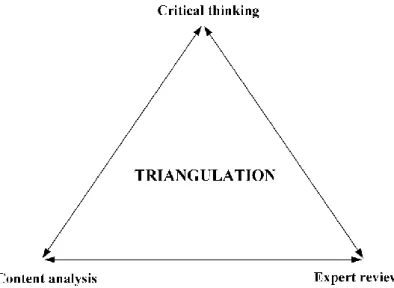
In addition, the proposed model was also informed by conducting an extensive literature review using critical thought. The results of the content analysis, expert review and critical thinking informed the proposed model which indicated that the proposed model was triangulated and was informed by multiple research methods, thus increasing the validity of the study. The study followed a mixed methods approach in order to triangulate the proposed model. The selected research methods are discussed in more detail in Chapter 2: Section 2.5. The delimitation of the study is discussed below.
1.8. Delimitation of the Study
The scope of this study focuses on the access control part of EHRs. The low-level details regarding how the national EHR is created are not covered. In addition, the study focusses on logical access control. Standards that ensure the security and privacy of EHRs are included along with healthcare interoperability standards for ensuring an interoperable national EHR system. Standards that focus on the usability of the EHR i.e. usability standards are not covered by this study. This study does not focus on the costs of national EHR systems. Health
10 insurance and medical aid companies are not included in the scope of this study. Ethical considerations applicable to this study are covered in the next section.
1.9. Ethical Considerations
This study abided by a number of principles for ethical conduct in research including honesty, openness, respect for intellectual property and confidentiality (Shamoo & Resnik, 2015). The communications of the study were honestly reported. This included the honest reporting of methods used, results and publications. The principle of openness was also followed when receiving feedback from the expert review. Respect for intellectual property was ensured by acknowledging the research contributions made by others. The confidentiality of the expert reviewers, who participated in the study, was preserved by ensuring that they remained anonymous. Ethical clearance was obtained from the Rhodes University Ethics Committee (ethical approval number: CIS18-03) before the selected expert reviewers were invited to take part in the study. An overview of the proposed model, which is the contribution of this study, is covered below.
1.10. Contribution: Proposed Model
The proposed model, illustrated in Figure 1.1, was created to address the research problem which was discussed in Section 1.2. This is achieved through the use of access control which controls access to the national EHR. This ensures that only authorised clinicians have access to the patient’s EHR while also ensuring that clinicians only have access to patient information which they require to perform their job function. The manner in which access control limits access to the patient’s EHR is informed by the study’s theoretical foundation, which was introduced in Section 1.6.3. As a result, access control decisions are made based on the role of the clinician using RBAC while EHR access can be granted in an emergency via ABAC. Since the proposed model also includes the accountability component of access control, exceptional access in the event of an emergency is audited. This ensures that clinicians are held accountable for any misuse of patient information. While the main focus of the proposed model is on the security and privacy aspects of the research problem, it also addresses the interoperability issues which would arise due to the use of disparate systems in different regions.
Interoperability is an important aspect of a national EHR system since without interoperability, access control cannot be enforced on a national EHR system which can only exist if interoperability between regional health information systems is realised. The justification of
11 Figure 1.1: Proposed access control model
the key components which were included in the proposed model are covered in Chapter 8:
Section 8.5. Chapter 8: Section 8.6 covers the proposed model in more detail by focussing on each of its key components. The next section outlines the chapters of this research study.
1.11. Outline of Chapters
The outline of the chapters is illustrated in Figure 1.2. Chapter 1 introduced the reader to the background of the study followed by the statement of the problem which this research study addresses. The research question, which is divided into four sub-questions, was then covered along with the objectives and significance of the study. This was followed by an introductory literature review in the area of access control and EHRs. Next, the research design, comprising of the research paradigm and research methods, was introduced. Chapter 1 ended with the delimitation of the study and ethical considerations. Chapter 2 discusses the extended research design and methods including the content analysis and expert review which informed the proposed model. An extended literature review is covered over Chapters 3, 4, 5 and 6. Chapter 3 discusses the national EHR adoption internationally. Chapter 4 covers the regulations needed for a compliant national EHR system. Chapter 5 covers securing the EHR with access control.
Chapter 6 examines standards for an interoperable national EHR system. Next, Chapter 7
12 discusses the findings and analysis of the study and Chapter 8 covers the recommendations and proposed model. Finally, the study is concluded in Chapter 9.
Figure 1.2: Outline of chapters
13
CHAPTER 2: RESEARCH DESIGN AND METHODOLOGY
2.1. Introduction
This chapter sets out to explain the research design and methodology used in this study. The research design and methodology which were followed were influenced by the research problem of balancing the requirements of the security, privacy and access of the EHR. The discussion begins with examining the research design and methodology structure which highlights the different layers of this structure. Next, a number of key research paradigms are compared and the chosen paradigm is justified as this paradigm determined how the research was conducted. The different types of research methods are also discussed along with the data collection and analysis methods which were determined by the selected research method.
Lastly, the ethical considerations which were applicable to the study are highlighted. The structure of the research design and methodology, which were used in this study, are discussed below.
2.2. Research Design and Methodology Structure
The structure of this research design and methodology chapter will be discussed with regards to the research onion. Saunders, Lewis, and Thornhill (2009) discuss the research onion in terms of the various elements of the research process which this research onion represents.
These elements are represented as layers and a core as illustrated in Figure 2.1. The elements which are used in this study are circled in the red. The research process starts at the outermost layer which focuses on research philosophies or paradigms. The selected research paradigm will determine how the researcher views the world and which methods will be chosen for the study. Thus, the researcher should not start with the centre of the research onion (data collection and analysis) but should start with the outermost layer. It is the outermost layer that will determine the type of data collection and analysis methods that will be chosen. The research philosophy that was selected for this study was design science. The next layer is the approaches layer, which consists of the deductive and inductive approaches. The deductive approach comprises of placing a theory under a rigorous test. On the other hand, in the inductive approach the data would first be collected after which a theory would be developed (Creswell, 2014). In terms of this study, an inductive approach was followed. The next layer, which is research strategies, is not covered in this study along with the time horizons layer.
The following layer is the choices layer and in the context of this study, mixed methods was selected. Finally, the core of the research onion represents techniques and procedures
14 Figure 2.1: Research onion – adapted from Saunders et al. (2009)
comprising of data collection and analysis methods. Since this study is based on mixed methods, it used a combination of qualitative and quantitative methods with more emphasis being placed on the qualitative approach. For instance, the MAXQDA software programme was used to quantify the qualitative literature while the expert review feedback was analysed qualitatively using narration. The next section compares the various research paradigms which is followed by a more thorough discussion of the selected research paradigm for this study:
design science.
2.3. Research Paradigms
The type of research paradigm that is selected is significant as it will determine how the research is conducted. Wahyuni (2012) states that a research paradigm consists of important assumptions and beliefs where the world is perceived and the chosen research paradigm will guide the researcher’s behaviour. The research paradigm that the researcher chooses will be unique in terms of its ontology, epistemology, axiology and methodology. Vaishnavi and Kuechler (2015) state that ontology is the study which defines the nature of reality e.g. what is real and what is not. On the other hand, epistemology is the study which focuses on the nature of knowledge e.g. what does the knowledge depend on and how can one be certain of what they know. Axiology is defined as the study of values. It focuses on the values which are held by the researcher and the reason why those values are chosen. Lastly, the methodology is also
15 Table 2.1 Comparison of research paradigms in terms of philosophical assumptions –
adapted from (Creswell, 2014; Goldkuhl, 2012; Saunders et al., 2009; Tsang, 2014;
Vaishnavi & Kuechler, 2015; Wahyuni, 2012)
important as it will determine if the researcher will base their study on a qualitative, quantitative or a mixed methods approach. The four research paradigms which are discussed in this chapter vary widely in terms of their ontology, epistemology, axiolgy and methodology as represented in Table 2.1. The first research paradigm, positivism, is discussed below.
2.3.1. Positivism
In positivism, reality is represented by objects that have an existence which is separate from the researcher (Saunders et al., 2009). Ontologically, this reality is represented as a single objective reality which is the same for everyone irrespective of their values. Thus, the data that is collected by the researcher is objective since it is less prone to bias. Olivier (2009) elaborates on this by stating that the researcher does not influence the results and another researcher who repeats the research will end up getting the same results regardless of their personal characteristics. On the other hand, Saunders et al. (2009) state that some may argue that it is impossible for the researcher to not include their values in the study. For example, the positivist can choose which problem to study, what research objectives to select and what type of data to collect. Regarding epistemology, Tsang (2014) mentions that positivists use a deductive approach with the aim of discovering law-like relationships involving causation. This achieved through the use of a structured methodology that involves the use of quantitative methods such as experiments and statistical analysis. With regards to axiology, the positivist values truth
Assumptions Positivism Interpretivism Pragmatism Design Science Ontology Single objective reality Multiple realities viewed as
being socially constructed
Based on actions in a world that is in a constant state of change
Multiple world-states
Epistemology Discovering law-like relationships involving causation
Interpreting subjective meanings and actions of subjects
Knowledge useful for action and change
Knowing through making
Methodology Quantitative methods such as experiments and statistical analysis
Qualitative methods such as interviews
Mixed methods Developmental and measurement of artefact impact
Axiology Values truth Value bound Values have a role in
interpreting results
Values problem solving
and improvement Research Paradigms
16 (Vaishnavi & Kuechler, 2015). This is due to the objective nature of the positivist’s study.
Interpretivism, which contrasts positivism, is covered next.
2.3.2. Interpretivism
Interpretivism emphasises that researchers should understand the subjective meanings that their subjects attach to the world through interaction (Wahyuni, 2012). This is in contrast to positivism where the emphasis is on objects as opposed to people. Tsang (2014) further contrasts interpretivism with positivism by stating that interpretivism considers the methods of natural science insufficient for conducting social science research. Ontologically, this is due to interpretivists viewing multiple realities as being socially constructed and are thus subjective. Epistemologically, knowledge is created by interpreting the subjective meanings and actions of subjects according to the interpretivist’s own frame of reference. Regarding ontology and epistemology, Goldkuhl (2012) states that these two assumptions are linked since knowledge, comprising of understanding and meanings, is important in the ontological assumptions of the constitution of the world. On the other hand, ontology and epistemology are separate in positivism. In interpretivism, the subjective meanings and actions of subjects are interpreted through the use of qualitative methods such as interviews (Wahyuni, 2012).
The axiology of the interpretivist is also affected by subjectivity and is thus value bound. This is due to the interpretivist’s research which can never be bias-free due to being influenced by the researcher’s thoughts, feelings, opinions and experiences (Bunniss & Kelly, 2010). The third research paradigm, pragmatism, is examined next.
2.3.3. Pragmatism
In pragmatism, it is normal for the pragmatist to work with variations in ontology, epistemology and axiology (Saunders et al., 2009). This differs to both positivism and interpretivism where each of these research paradigms have a more rigid view on these three assumptions. Creswell (2014) adds that pragmatism is not bound to any one system of philosophy and reality. This allows the pragmatist to draw from both the positivism and interpretivism stances on ontology, epistemology and axiology. Ontology in pragmatism is based on actions and change i.e. people act in a world that is in a constant state of change (Goldkuhl, 2012). Thus, actions are fundamental to the pragmatism research paradigm.
Epistemologically, the pragmatist views knowledge as being useful for action and change. This knowledge is not restricted to explanations (as is the case with positivism) and understanding (under interpretivism). Regarding the pragmatist methodology, it is evident that pragmatism draws from both positivist and interpretivist methods. Creswell (2014) mentions that
17 pragmatists are free to choose the methods, techniques and procedures that best suit their needs.
This is done through the use of mixed methods which draws from both quantitative and qualitative methods. Lastly, the axiological stance of pragmatism states that values have a role in interpreting results (Wahyuni, 2012). In addition, the pragmatist adopts both subjective and objective points of view. Design science, which is the selected research paradigm for his study, is covered below.
2.3.4. Design Science
Similar to pragmatism, design science is a research paradigm that also places an emphasis on action through the practical application of a solution. Design science does this through addressing a research problem by creating and evaluating an artefact designed to meet an identified need (Hevner et al., 2004). Vaishnavi and Kuechler (2015) discuss the beliefs of design science under ontology, epistemology, methodology and axiology. Ontologically, design science researchers believe in multiple world-states, which is in contrast to positivism where a single reality is believed. Additionally, the multiple realities of the interpretivist are not the same as the multiple world-states of the design science researcher. Regarding the epistemological stance of the design science researcher, the emphasis is on knowing through making. This is evident since design science is about developing an artefact which should result in the creation of new knowledge. The design science methodology emphasises the development of the artefact and that the impact of the artefact must be measureable. The measurement of the impact is important as it will identify what contributions the artefact will make in a specific context. In terms of axiology, design science values problem solving and improvement. This is imperative as the artefact which is produced from the problem solving process should make an improvement to the applied context.
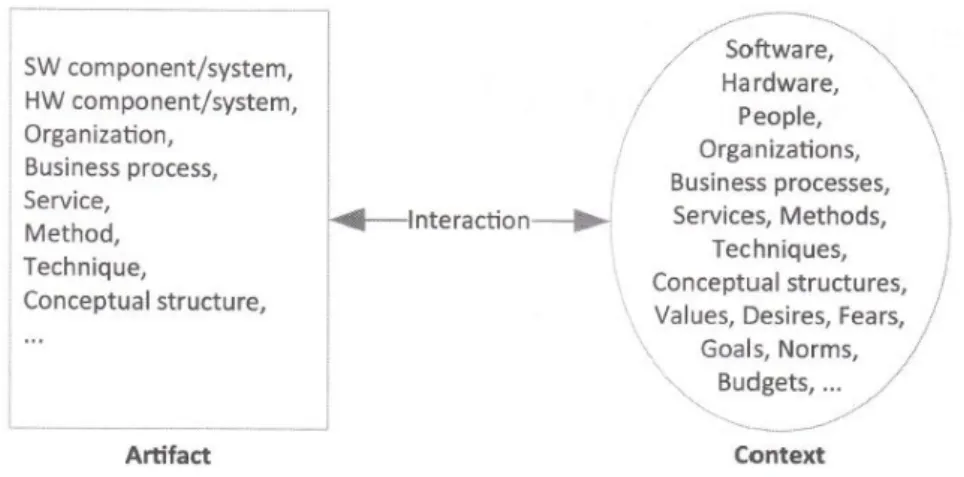
Thus, the design science paradigm has been chosen for this study since the creation of an artefact is appropriate for addressing the research problem within the context of a national EHR system. In design science, artefacts are defined as constructs, models, methods or instantiations (Hevner et al., 2004). Models assist problem and solution understanding and frequently represent the connection between problem and solution components. The creation of a model was the focus of this study. Figure 2.2 depicts an artefact which interacts with a context (Wieringa, 2014). This artefact can be a method, technique, conceptual structure, etc. In terms of this study, the artefact is the conceptual structure i.e. model. On the other hand, the context is made up of various components. In the context of a national EHR system, this is comprised of more than one component such as the software, hardware, people, etc. Figure 2.2 illustrates
18 that the artefact cannot solve a problem by itself. It is the interaction between the artefact and context which contributes to solving the problem. This problem has a context in which the aim is improvement and in order to understand the problem the context must be understood.
Figure 2.2: An artefact interacting with a context (Wieringa, 2014)
Gregor and Hevner (2013) discuss a design science research knowledge contribution framework which is used to identify the different types of contributions a design science research study may make. It is represented in Figure 2.3 as a 2 x 2 matrix of research study contexts and potential design science research contributions. The focus of this study is in the
Figure 2.3: Design science research knowledge contribution framework – adapted from Gregor and Hevner (2013)