The results of this research showed that adolescent knowledge and awareness of sexual abuse is limited in the rural areas of the Northern Cape. No research has been done specifically on adolescent knowledge about sexual abuse in the rural areas of the Frances Baard areas of the Northern Cape.
PROBLEM STATEMENT
According to discussions with social workers in Frances Baard's areas in the Ministry of Social Services and other organizations, there are no prevention programs that specifically test the knowledge of adolescents about sexual abuse. What is the extent of knowledge and awareness of young people in the rural area of Frances Baard in the Northern Cape regarding sexual abuse.
RATIONALE FOR THE STUDY
They recommend more research in South Africa on adolescents' knowledge and awareness regarding the role that aspects such as poverty, drug abuse, peer pressure, cultural beliefs, overcrowded households, bad relationships with parents and low self-esteem can play in the sexual abuse of adolescents. . With this background in mind, the researcher wants to investigate adolescents' knowledge and awareness regarding sexual abuse, especially in a rural area that is mostly isolated from support services.
AIM OF STUDY
No specific research has been conducted on the knowledge of adolescent sexual abuse and the risk factors that contribute to adolescent sexual abuse in the rural Northern Cape. With this research, the researcher aims to quantitatively investigate the knowledge and awareness of adolescents about sexual abuse that may contribute to adolescent sexual abuse in the rural areas of the Northern Cape province (Botma et al. Fouché & De Vos Thyer, 2001:131). The researcher concluded that youth in the rural Northern Cape have limited knowledge and awareness of sexual abuse.
Sexual abuse concept learning and reliability of the CKAQ=R111 in the South African context. Project Title: Knowledge and Awareness of Adolescents on Sexual Abuse in a Rural Area of the Northern Cape. The aim of this research is to investigate the knowledge and awareness of young people about sexual abuse in a rural area of the Northern Cape.
Knowledge about sexual abuse (appendix 4). The questionnaire measures the knowledge and awareness of selected adolescents regarding sexual abuse in the Frances Baard rural area of the Northern Cape Province, whose families are under the attention of social workers.
CENTRAL THEORETICHAL ARGUMENT
ANALYSIS OF THE LITERATURE
The literature review was based on sexual abuse, incidents of adolescent sexual abuse in South Africa, stages of adolescent development and risk factors that contributed to adolescent sexual abuse in particular. A detailed analysis of the literature was made by the researcher on the knowledge of adolescents regarding sexual abuse.
EMPIRICAL INVESTIGATION
- R ESEARCH CONTEXT
- R ESEARCH APPROACH
- R ESEARCH DESIGN
- P OPULATION AND SAMPLING
- S AMPLE INCLUSION CRITERIA
- S AMPLE EXCLUSION CRITERIA
- R ESEARCH PROCESS
- D ATA COLLECTION
- D ATA ANALYSIS
The Statistical Consultancy Services of the North-West University, Potchefstroom Campus quantitatively analyzed the data. The purpose of this analysis was to compile a description of the sample in terms of their level of knowledge and awareness.
ETHICAL ASPECTS
The researcher arranged a meeting with the adolescents and their primary caregivers to explain the purpose of the study, the pros and cons of participating in the study, and the ethical aspects of the study. Data received from the Statistical Consultation Services of North-West University, Potchefstroom Campus, was stored on a password-protected computer belonging to the researcher. Indirect benefits to the participants in this study were that the researcher drew conclusions and made recommendations to the managers of the Ministry of Social Development.
With the permission of the young people, the researcher also passed on these results to the managers of the organizations where prevention programs could be developed.
LIMITATIONS OF THE RESEARCH
If necessary, they were reimbursed if they used transport and this was paid for by the researcher out of her own budget. The results of the study were presented to the reading public in written form by means of a thesis and will also be introduced as an article in an accredited journal.
DEFINITIONS OF TERMINOLOGY
- A DOLESCENT
- A WARENESS
- K NOWLEDGE
- R URAL AREA
- S EXUAL ABUSE
For the purpose of this research, the researcher included adolescents between the ages of 15 to 17 years. The Merriam-Webster Dictionary (2015a) describes awareness as, "knowing that something (situation, condition, or problem) exists and the feeling experienced or aware of something (such as a sound, sensation, or emotion) and to know and understand a lot about what is happening in the world or around us.” The Oxford Dictionary (2015a) describes awareness as, "the knowledge or perception of a situation or fact and to raise public awareness of the issue." The purpose of this research was to determine whether adolescents are aware of the dynamics of sexual abuse and to determine whether there is a lack of awareness and risks related to sexual abuse. Knowledge according to the Oxford Dictionary (2015b) is, "facts, information and skills acquired through experience or education, the theoretical or practical understanding of a subject" and the Merriam-Webster Dictionary (2015b) defines knowledge as, "information, understanding or skill gained from experience or education.".
According to the definition of National Geographic Education (2015) “a rural area is an open area of land that has few houses or other buildings, and not many people.
RESEARCH RESULTS
B IOGRAPHICAL DETAILS OF ADOLESCENT
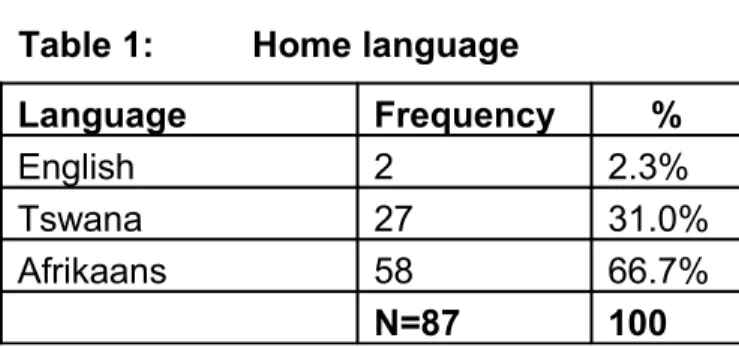
- Home language of the adolescent
- Age and gender of adolescents
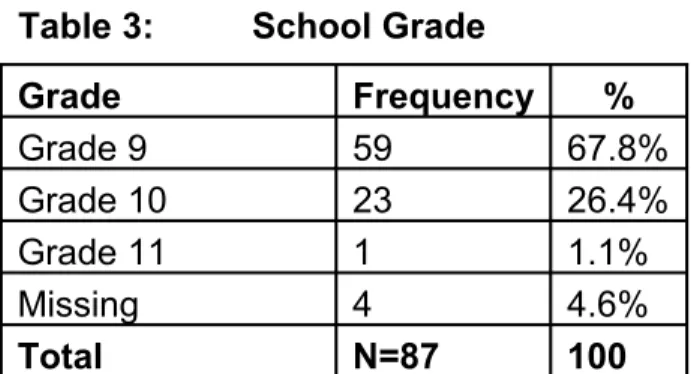
- Highest school grade completed by the adolescents
- Rural area or town the adolescents resided in
- Type of house the adolescents live in
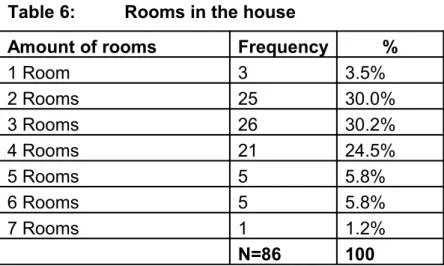
- Amount of rooms in the house the adolescents live in
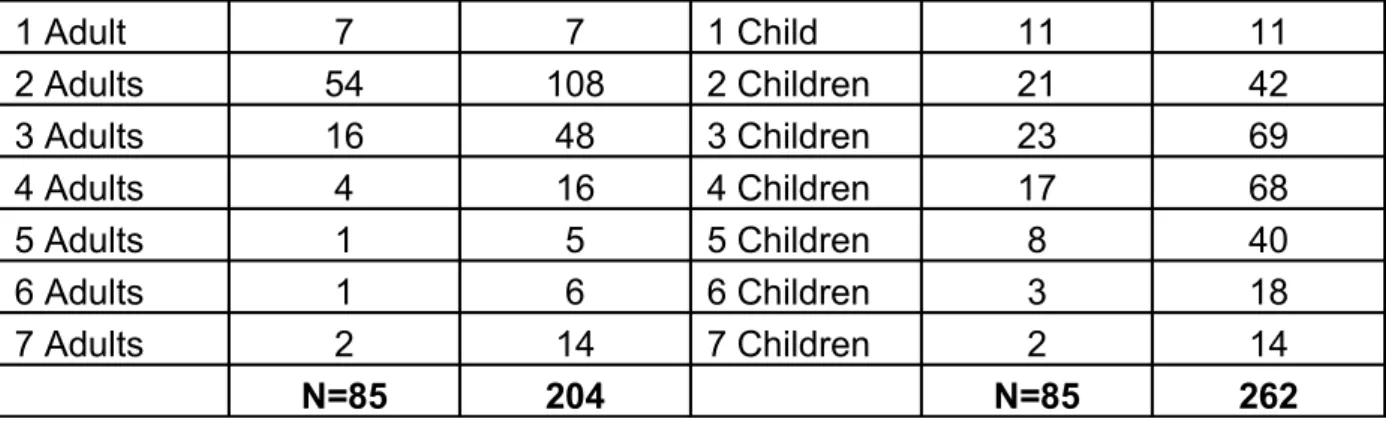
- Number of people in the house
- People the adolescents share a sleeping space with
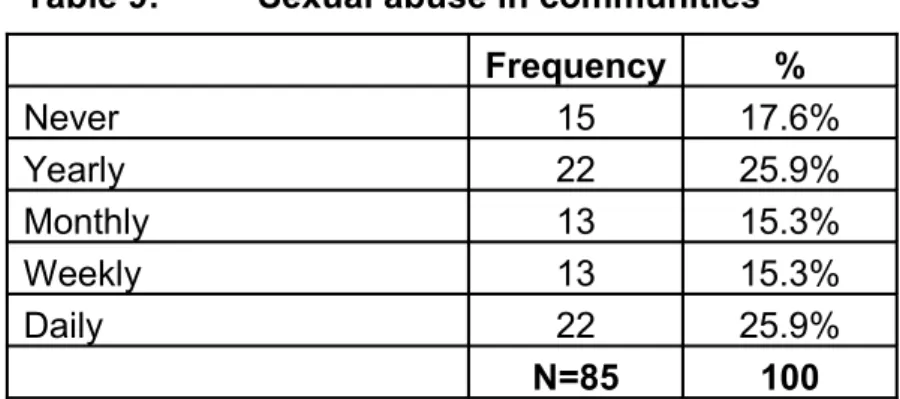
- Sexual abuse of a child in the adolescents’ community
- Adolescents in own age group being sexually abused
All the teenagers in the survey were from rural areas with those residing in Hartswater. The researcher wanted to explore whether teenagers are aware that children in their community are victims of sexual abuse. From the answers received, it is clear that only 25.9% of the teenagers in this research are aware that a child in their community is sexually abused on a daily basis.
The researcher also wanted to explore whether teenagers are aware that teenagers in their community are also victims of sexual abuse.
K NOWLEDGE AND AWARENESS OF ADOLESCENTS REGARDING SEXUAL ABUSE
- Definition of sexual abuse
- Statements of adolescents regarding sexual abuse
- Situations contributing to sexual abuse
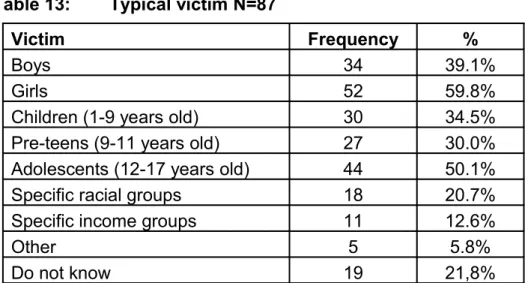
- Typical victim of sexual abuse
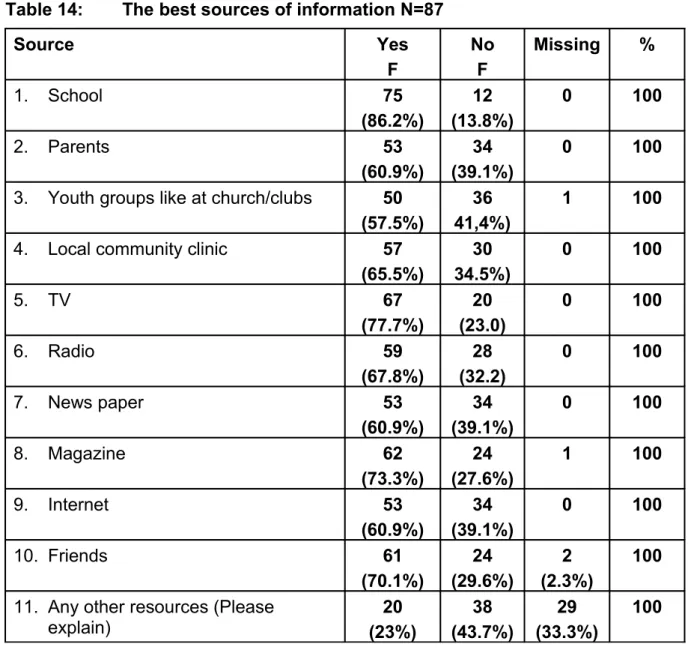
- Sources of information regarding sexual abuse
No definition of sexual abuse was given to the participants in this study and these statements were answered according to the adolescents' knowledge and awareness of sexual abuse. According to the results of the above table, there are many signs that the adolescents in this research do not have enough knowledge of sexual abuse. The responses of adolescents in this research indicated that little knowledge exists regarding the legal aspects of sexual abuse.
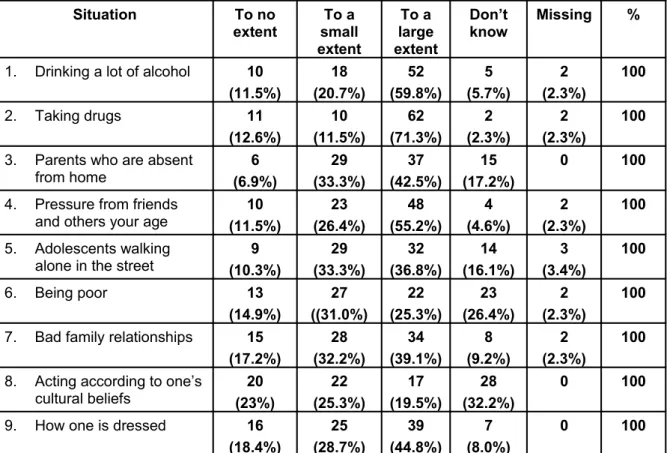
From the above table it is clear that teenagers have limited knowledge about situations that can contribute to sexual abuse.
RESEARCHER’S OBSERVATION
This is also what the researcher experienced in the rural areas of the Frances Baard area in the Northern Cape Province. The researcher can testify that the primary and secondary schools have not provided any services or programs in this area in the past six years.
SUMMARY
RECCOMMEDATIONS
Churches, youth clubs, youth organizations in communities and other stakeholders should be educated about the dynamics of sexual abuse and should be supported to develop programs in their organizations. Social workers in various departments and non-governmental organizations in communities should initiate empowerment programs not only for adolescents, but also for parents and other adult caregivers. Interest groups in the community should take responsibility to be part of these campaigns where they can spread their responsibilities to young people and help teenagers and other children to stand up against sexual abuse in their schools and communities.
More research is needed in rural areas not only on sexual abuse and the effect it can have on young people, but also on the effect it has on social systems and interpersonal relationships within households and communities.
CONCLUSION
ETHICAL APPROVAL
The researcher wrote a letter to the social workers' managers in the Department of Social Development, Caritas Community Focus and Child Welfare of the Frances Baard area, which consists of Warrenton, Jan Kempdorp (including Ganspan), Pampierstad and Hartswater, to to do the research. with adolescents whose legal guardians are on the caseloads of these organizations. They were informed that participation in the study was voluntary and that no one should feel guilty.
LETTER TO MANAGERS
With these programs, adolescents will be empowered with knowledge and awareness regarding the factors that contribute to the sexual abuse of adolescents. Research conducted by Buchanan (2015:29) and Mamabolo (2014:25) in rural areas of the Free State and North West Provinces also concluded that the adolescents in their research have limited knowledge regarding sexual abuse. Parents must first be educated about the dynamics of sexual abuse and they must communicate this information to their children.
Risk factors and child sexual abuse among secondary school students in the Northern Province (South Africa). Identification of factors contributing to vulnerability to sexual abuse of rural orphans. Indirect benefits for youth will be the development of services (such as prevention programs) where youth are empowered with knowledge and insight into factors that contribute to youth sexual abuse.
ASSENT ADOLESCENTS
The questionnaire will be completed in one of the offices of the welfare organization known to you. Anonymity will be ensured because no private information about you will be released to the public. No, you will not be paid for taking part in the study, but refreshments will be available after completing the questionnaire.
The results of the research are completed in the form of a mini-dissertation and also published as an article in an accredited journal.
CONSENT LEGAL GUARDIAN
Anonymity is guaranteed because no private information about your adolescent is disclosed to the public. He/she is assigned a number in advance, for example participant 1, instead of using his/her name. No, your adolescent will not receive compensation for participating in the study, but refreshments will be available after completing the questionnaire.
Travel expenses will be paid for those participants who need to travel to the office of the social worker.
QUESTIONNAIRE
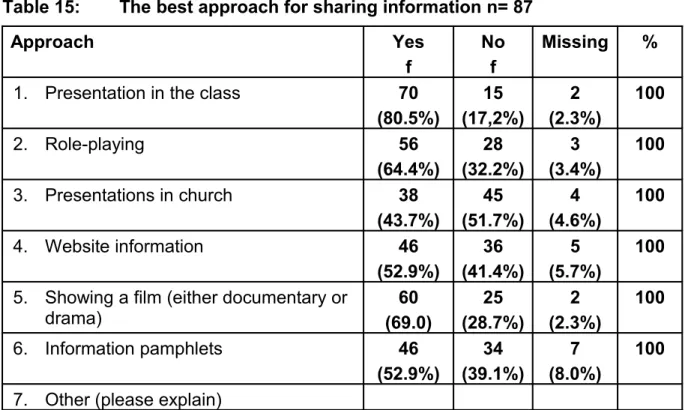
It is against the law to send nude photos of yourself to other adolescents or adults. TO WHAT EXTENT DO YOU THINK THE FOLLOWING CAN CONTRIBUTE TO THE SEXUAL ABUSE OF AN ADOLESCENT. WHAT DO YOU THINK IS THE BEST APPROACH TO SHARING INFORMATION WITH PEOPLE YOUR AGE ON THE SUBJECT OF SEXUAL ABUSE.