The basic purpose of this study was to analyze the main marketing strategies used to develop and sustain tourism in the Eastvaal region. However, the study was limited to the evaluation of the current strategies used to measure their impact in relation to the growth and sustainability of tourism in Eastvaal.
CHAPTER ONE
INTRODUCTION AND BACKGROUND
- Introduction
- Background of the study
- Motivation for conducting the research
- Value of the project
- Problem statement
- Objectives of the study
- Limitations
- Structure of the study
- Summary
Two of the seven tourist regions in the province are located in the Eastvaal district. The study will focus on the essential role of marketing strategies in the tourism industry.
CHAPTER TWO
THEORITICAL BASE 2.1 Introduction
Definitions of strategy
According to Walker, Boyd & Larreche (1999:8), a strategy is a fundamental pattern of an organization's current and planned objectives, resource deployment, and interactions with markets, competitors, and other environmental factors. According to Fifield (1998: XXV), marketing strategy is the marketing logic by which the business unit expects to achieve its marketing objectives.
Role of Tourism destinations
- Attractions
- Amenities
- Accessibility
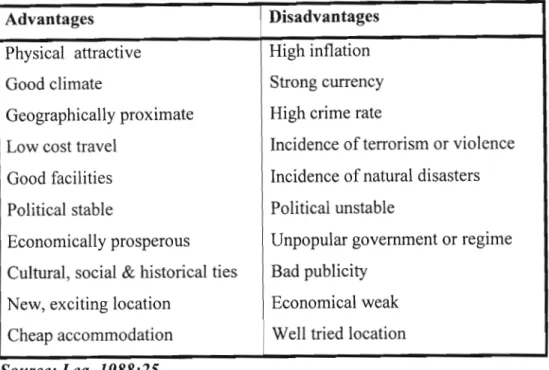
Infrastructure and transport are necessary to help ensure the accessibility of destinations for tourists (Mill & Morrison). However, marketers must assess the characteristics of each tourism destination to understand the pros and cons of their tourism products.
Role of Market segmentation
Kotler and Armstrong defined "market segmentation as the division of the market into distinct groups of buyers with different needs, characteristics, or behaviors who may require separate products or marketing mixes". Heath (op. a.) went on to explain that market segmentation, on the other hand, is based on the assumption that differentiated market segments have different needs, product awareness and exposure to different communication channels. Middleton (1988:65) observed that market segmentation is a practical expression in business of the theory of consumer behavior orientation.
The importance of segmentation is very important in the Eastvaal tourism industry as the potential for market growth can only be recognized after effective market segmentation. Yankelovich (1964) notes that market segmentation makes it much easier to define and achieve objectives, while Witt and Moutinho argue that segmentation is critical in guiding decisions about promotion and distribution and can be very useful in the process of matching the product.
Role of Target marketing
Target markets are selected from the overall pool of market segments as the markets most likely to respond to a destination's marketing efforts. The decision about which target markets to select from the set of market segments must address four issues (Mill and Morrison, 1985:365). If the product or service is relatively homogeneous, it will be aimed at a target market.
Early in a product's life cycle, it will only target one target market. Competitors' marketing strategy plays an integral role and will determine the number of target markets that can be served.
Role of Marketing mix
- Promotion
- Distribution
The destination may be able to revise or modify its range of services and products to meet the needs of the chosen target market. Both the choice of target markets and the elements of the marketing mix can be manipulated to achieve the desired destination outcome. Price can be seen as the most important element of the marketing mix because it is the only element that can generate income and without income the entity cannot survive.
Therefore, the goal of destination promotion is to project certain images of the destination in order to make it desirable. Due to the nature of the tourism product, it cannot be stored, so there must be a constant flow of visitors to the destination.
The role of Market positioning
Mandell points out that distribution refers to the process of making the services available and accessible for visitors to use. Decisions to be made relate to which channels will be used to deliver a service from the manufacturer to the visitor, which wholesalers and retailers to choose, and how to achieve cooperation with these intermediaries. Saayman (1995:56) notes that distribution is different in the tourism industry than in the case of traditional products.
When high capacity is maintained, the growth rate will increase, as will the rest of the industry. Kotler and Armstrong (1996:26) went further when they added that once a product position is chosen, the seller should take serious steps to deliver on the position and communicate the desired position to the target consumers.
Competitor analysis in the tourism market
Such an approach requires dedication and discipline, as it is not easy to turn your back on potential buyers. However, the effect of creating a clear, meaningful position is to focus on target segments rather than being limited by the response of other segments." All the discussions so far have focused on marketing strategies and customer analysis, but it is also important to look at competitor analysis as reviewed in the literature.
Thompson and Strickland argue that in order to gain a sustainable competitive advantage, companies should be able to develop core competencies and specific competencies. This study will examine how tourism product and service providers in the Eastvaal have used competitive marketing strategies to effectively market local attractions to their target market.
Summary
Meanwhile, some experts argue that the five strategies have become basic for companies to survive in today's business world. The respective competencies are competencies that empower a company to build competitive advantage in an industry compared to its competitors.
CHAPTER THREE
CASE STUDY: TOURISM MARKETING IN THE EASTVAAL
Introduction
The Eastvaal region: tourism development - the current situation
According to an article published in Discovering SA, p.2 (2002, September-December), Cosmos is the center of South Africa's coal-petroleum production and home to the world's largest underground mining complex. The region explodes with color when the beautiful pink and white cosmos flowers bloom in late summer. The main cities that make up the Oostvaal region are shown in the table below.
Furthermore, the two tourism regions mentioned above appeal to a variety of tourists because they boast a varied product offering as indicated in PMR, pA5 (2002, August). Based on the facts presented by the aforementioned tourism researchers, I will then refer to tourism in the Eastvaal region of Mpumalanga province as 'rural tourism', to recognize the qualities of what is rural in tourism terms.
The role of local authorities in tourism development
- A statement of strategic intent on tourism development for the Eastvaal district
- Strategy
- Grass and Wetlands tourism region
The Eastvaal District Tourism Committee was established to undertake capacity building initiatives that would be sufficient to ensure the sustainability of tourism in the district. D Developing an effective marketing strategy for tourism in the Oostvaal district in collaboration with regional and local tourism organizations. The two tourism regions (cosmosland and grass and wetlands) in the Eastvaal are each assigned to a regional tourism organization with the following key roles in tourism development and tourism marketing.
The local tourism organizations are developed to promote the local towns in the local council areas. The following section of the case study will look at the strategic growth initiatives of individual tourism providers in the Eastvaal area.
Summary
This chapter provides an assessment of the findings regarding the current status of tourism marketing in Eastvaal. According to the case study on the status of tourism in the Eastvaal region, it is clearly stated that the development of tourism and its marketing is still quite new. The elements of the marketing mix are interrelated and periodically adjusted to reflect changes in the marketing environment (Pride and Ferrell, 1989).
The information in the case is limited to only two of the four elements of the marketing mix, namely; product and distribution. It is not clear how the promotion and pricing of tourism products and services is done in the two tourist regions of Eastvaal.
Findings
The literature has emphasized the importance of market positioning which includes the development of positioning strategy that includes a set of perceptions, impressions and feelings that consumers may have for products and services compared to competing products or services (Kotler and Armstrong, 1996). The case contains information regarding marketing strategies and it did not answer the views of customers, therefore the purpose of this study was to analyze marketing strategies. However, after completing this study, the research realizes the importance of consumer behavior as far as the perceptions, impressions and feelings are concerned regarding the tourism products and services offered by the destinations in the Eastvaal region compared to other competing regions.
Although the literature emphasizes methods that can be used to segment the market, identify the target market, build a market position, conduct competitive analysis and use the marketing mix, promotional mix and cooperative marketing in effectively marketing a product or service, is an empirical study or case study on the status of tourism development in the Eastvaal had its own limitations. This has led to limited involvement of providers, even though the district council has established a regional tourism organization to address certain inabilities.
Summary
Introduction
Summary
In addition, through literature review or research, secondary sources have highlighted the methods that can be used for market segmentation, target market identification, market position building, competitor analysis, and the use of marketing mix, promotional mix, and cooperative marketing in establishing marketing strategies. for effective marketing of a tourist product or service. With improved facilities and aggressive marketing, Eastvaal can reap great economic benefits for the province and its people. Media coverage appears to be limited, leaflets and brochures and tourist maps at activity sites are few and far between, and tourist information offices are limited.
The provincial body MTA can assist district councils and local municipalities in their marketing efforts. All four promotional tools (personal selling, public relations, advertising and promotions) are not being used well to inform and attract people to the region.
Recommendations
Each town in the region should have a tourist information office with brochures or information on local offers, attractions, destinations, facilities, a calendar of events, etc. Local regional and national media should be used extensively to advertise local attractions and events. Local economic development (LED) should focus on building the infrastructure necessary to promote tourism growth.
Integrating Community Values Into Rural Tourism Development
Suggestions for further research
Researcher recommends that a research be conducted on visitors' or tourists' perceptions of the tourism offers and attractions in the Eastern Vaal. The involvement of tourists in the study will enable all players in the tourism industry to develop better marketing strategies that will contribute to the growth of the industry. The effective marketing of small-scale tourism enterprises through national structures: lessons from two-way comparative study of farm tourist accommodation in the United Kingdom.
Tourism and the Environment: Regional, Economic and Political Issues, Environment and Assessment, Volume 2, Dordrecht: Kluwer Academic Publishers. Do you participate in workshops or meetings organized by the local authorities regarding the development of tourism infrastructure.