The study aimed to investigate the level of population growth of Southern African countries by assessing fertility rates, mortality rates as well as fertility replacement rates in order to determine whether the generation of women in these countries is replacing itself or not. Recommendations were made for local and national governments in these developing countries to periodically track replacement fertility rates for their countries. This research project aims to investigate fertility replacement rates in Southern African countries to understand whether the generation of women in these countries is replacing itself or not.
The study is guided by the perception that the 'Fertility Replacement Levels in Southern African Countries' are above 2.1 children per woman, due to the current high levels of fertility and mortality in these countries. Worldwide, there is a huge misconception about the replacement fertility level which is widely perceived as a static value constantly set at 2.1 children per woman. These differences have resulted in changes in the population transition between developed and developing countries and may produce changes in replacement fertility rates.
These countries are experiencing high maternal and HIV mortality rates and there is a bump in fertility rates, but we are still talking about 2.1 children per woman as the general replacement fertility levels for all countries. The main aim of the study is to investigate the level of growth of populations of Southern African countries by estimating the fertility levels, the mortality levels as well as the replacement fertility levels to determine whether the gender of women in these countries is.
Introduction and Background
- Introduction
- Background of the Study
- Problem Statement
- Aim and Objectives of the Study
- Research Objectives
- Questions to be asked
- Justification of the Research
- Outline of the Study
- Conclusion
In addition, Sub-Saharan Africa has the world's highest infant mortality rate (IMR) of 68/1000. While global life expectancy at birth has increased from 67 years to 76 years for developed countries, for developing countries, mainly sub-Saharan Africa, it has settled at 55 years or less (UNAIDS, 2011). So, given the current prevailing demographic and health conditions in these countries, it is of great importance to investigate whether the replacement fertility level of 2.1 children per woman would be adequate to accurately replace their population from one generation to the next in these prevailing conditions. .
Literature Review
Introduction
Theoretical Framework
Trends in Fertility Transition
- Global Fertility Transition
- Fertility Transition in Europe
- Fertility Decline in sub-Saharan Africa
- Fertility Decline in Southern Africa
- South Africa
- Swaziland
- Lesotho
- Namibia
- Zimbabwe
Replacement Level Fertility
Factors Determining the Level of Fertility Decline
- Direct / Proximate Factors of Fertility Decline
- Contraception use
- Marriage (Age at Marriage)
- Abortion availability
- Indirect Determinants of fertility
- Level of Education
- Parents preference for male children
- Infant Mortality/ Children Survival
- Urban Versa Rural Residence
- Religion
- Mass Media
- Maternal and Child Health
The Impact of HIV/AIDS Mortality on the Population Size
Conclusion
Methodology
Introduction
Sources of Data
- Data
- The Demographic Health Survey Data
- The Demographic Health Survey Data for South Africa, Swaziland, Lesotho, Namibia
- South Africa Demographic Health and Survey Data
- Swaziland Demographic Health Survey Data
- Lesotho Demographic and Health Survey Data
- Namibia Demographic and Health Survey Data
- Zimbabwe Demographic and Health Survey Data
Limitations of the Demographic Health Survey Data
Methods of Data Analysis
- Analysis of Fertility Levels
- The Age Specific Fertility Rate (ASFR)
- The Total Fertility Rate
- Analysis of Mortality
- Mortality of women of child bearing age (15-49)
- Childhood Mortality
Generating the Gross Reproductive Rate (GRR) and Net Reproduction Rate (NRR)
- The Gross Reproduction Rate (GRR)
- The Net reproduction Rate (NRR)
Conclusion
PRESENTATION OF RESULTS
Introduction
Analysing Fertility Levels for the Southern African Countries
Total Fertility Rates for Southern African Countries
Age Specific Fertility Rates
- Age Specific Fertility for South Africa
- Age Specific fertility Rates for Swaziland
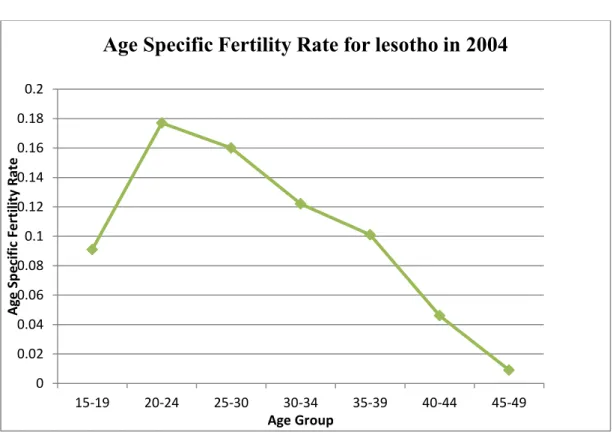
- Age Specific Fertility Rates for Lesotho
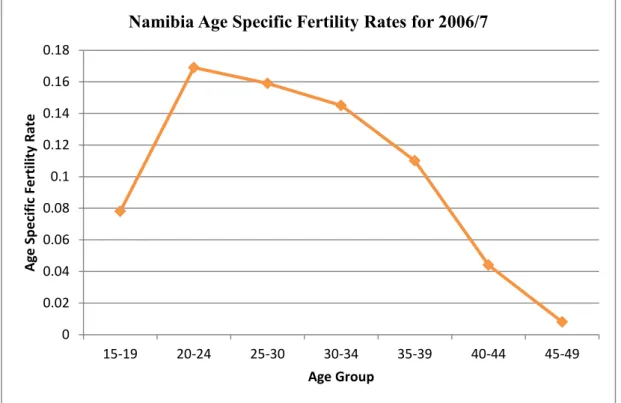
- Age Specific Fertility Rates for Namibia
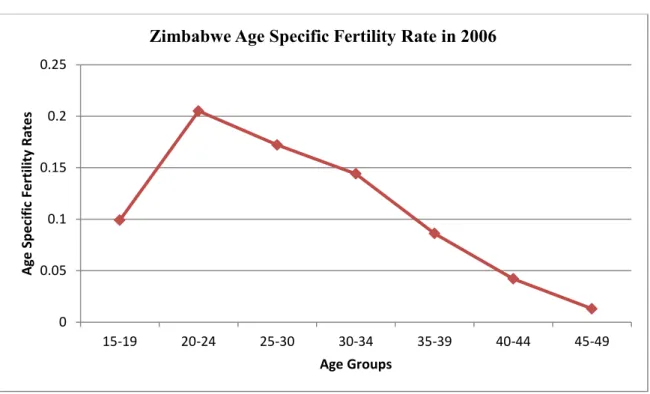
- Age Specific Fertility Rates for Zimbabwe
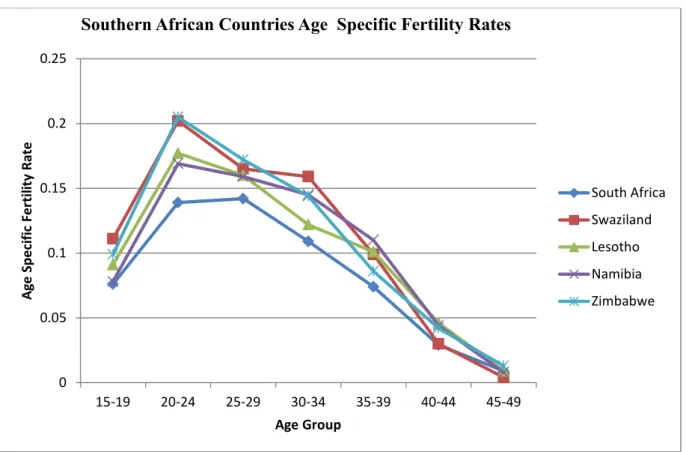
- Age Specific Fertility Rates for Southern African Countries
Analysing Mortality Levels for Southern African Countries
Generating Gross Reproductive Rate (GRR)
Age Specific Fertility Rate for Girls for Southern African Countries
Generating the Net Reproductive Rate (NRR)
- South Africa Net Reproduction Rate (NRR)
- Swaziland Net Reproduction Rate
- Lesotho Net Reproduction Rate
- Namibia Net Reproduction Rate
- Zimbabwe Net Reproduction Rate
DISCUSSION, RECOMMENDATIONS AND CONCLUSION
Introduction
This study is a comparative analysis between countries and thus contributes to existing literature on fertility and mortality rates for Southern African countries by using one of the most comprehensive data sources, the Demographic Health Survey (DHS) data for the individual countries. What is the contribution of the different age groups to the level of fertility in Southern African countries. What is the contribution of deaths of women and children to the levels of fertility in Southern African countries.
Summary of findings
- Summary of findings from Literature Review
- Summary of findings from Primary Study
What are the fertility levels (TFR) for Southern African Countries
What is the contribution of the different age groups to the level of fertility in Southern
The beginning of the fertility transition in Europe began even before the Industrial Revolution contributed to an improvement in fertility. Since fertility level estimation began in the 1960s, fertility levels in most sub-Saharan countries have remained very high compared to the rest of the world, with an average total fertility rate (TFR) of 5.48 children per woman in the UN, 2009). In Southern African countries, fertility is also influenced by the cultural background of the different countries (Weeks, 2008).
South Africa is one of the countries in Southern Africa that gained independence at the end of 1994. The main purpose of the study was to investigate the level of population growth of Southern African countries as measured by the Total Fertility Rate. The 1998 South African Demographic Health Survey (SADHS) data is one of the data sources to be used for the analysis in this study. There is a second DHS survey that was conducted in South Africa, which is the 2003 Demographic Health Survey 2003 SADHS). The reason why the researcher will use the 1998 SDHS data is because the 2003 SADHS data present many challenges that may compromise the quality of the results for this study.
One of the challenges with the 2003 SADHS is related to the sample response rate. In order to analyze the fertility rates of the five countries in southern Africa, the age-specific fertility rates as well as the total fertility rates of the five southern African countries were analyzed. The total fertility rate (TFR) for each of the countries was estimated to determine the level of population growth in each country.
ASFR, Age Specific Fertility Rates (ASFR) shows the contribution of each age group to the country's total fertility levels. The sex ratio at birth for each of the countries in southern Africa is 1.05 as shown in the table. For all the age groups of the population of Swaziland for women, the introduction of the mortality level has resulted in a decrease to the ASFR for girls.
For all age groups in the Southern Lesotho Population for females, the introduction of the mortality rate has resulted in a decrease in the ASFR for females. For all age groups in the Lesotho Population for females, the introduction of the mortality rate has resulted in a decrease in the ASFR for girls. For all age groups in the Zimbabwean female population, the introduction of the mortality rate has resulted in a decline in the ASFR for girls.
First, the fertility levels of the various countries that form part of this study were presented as measured by Total Fertility Rates (TFR) and Age-Specific Fertility Rates. The gross reproduction rate (GRR) was also estimated for each of the countries in Southern Africa. Finally, the net reproduction rate was estimated for each of the five countries and for Southern Africa as a region.
What is the contribution of the different age groups to the fertility level in southern African countries (ASFR?).
What is the contribution of mortality of women and children to the level of fertility in
What is the level of replacement fertility in Southern African Countries?
- Recommendations of the study
- Limitation of the study
- General Conclusion
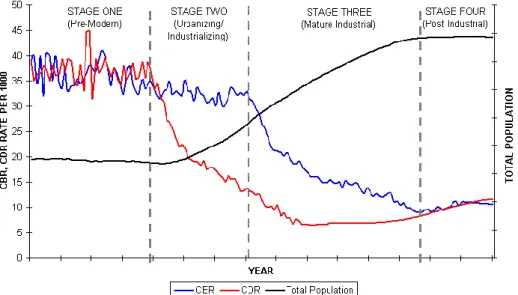
The literature for this study will be discussed under the guidance of the following concepts; Theoretical framework, trends in fertility transition, European fertility transition, sub-Saharan and Southern African fertility transition and issues related to replacement fertility levels in Southern Africa. The demographic transition theory is of the idea that a decline in fertility is caused by the changes taking place in social life. Critics of the classic demographic transition model say that this model is a culmination of the experience of European countries, especially for England and Wales (Coale & Watkins, 1986). The experience of European countries may not necessarily be relevant to that of other regions, especially developing countries.
In 1950, the population of Zimbabwe was 12,571 (UN, 2011). The population of Zimbabwe has grown the most during the twentieth century, following the model of a developing country with high birth rates and declining death rates (UN, 2009). This has resulted in high population growth rates of around 3% and above since the 1960s (UN, 2013). Put another way, Morgan & Taylor (2006) state that "the driving force behind fertility decline is socio-economic development, particularly declines in mortality, women's education and labor force participation, urbanization and family planning programmes". Gows (2011) defines literacy as "the percentage of people aged 13 and over with at least a Grade 6 qualification, which equates to a total of six years of schooling" (p. 5).
The World Health Organization (2005) claims that “the occupancy rate of health care facilities decreases as distance increases and the quality of transportation and road conditions increase” (p.67). The DHS dataset used for each of the Southern African countries spans between the years 1998 and 2007. Of the total 5,500 sampled households, 5,086 were occupied at the time of the fieldwork.
A total of 2,750 households were selected in the sample, of which 2,543 were occupied at the time of the fieldwork. For this analysis, the focus is on women of childbearing age (15-49), which is women in the age groups 15-49. Second, information such as the respondent's age, children's birth dates, and age at marriage refer to events in the past.
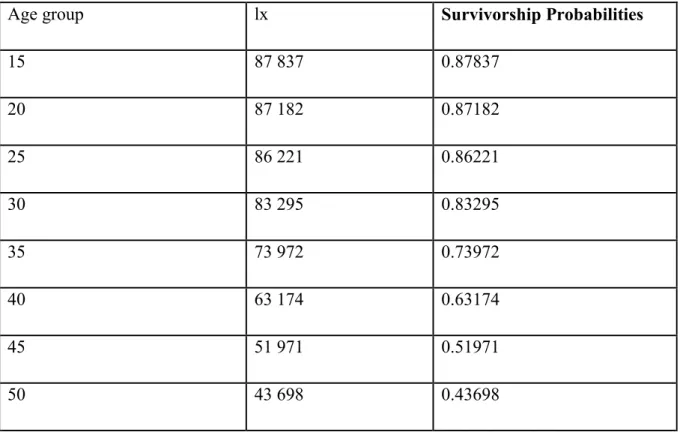
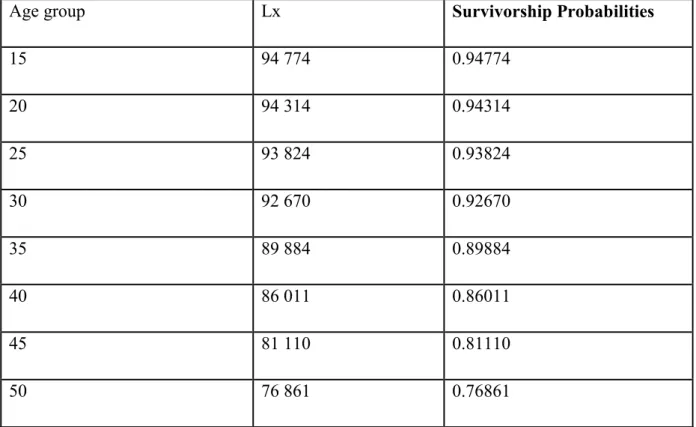
To take HIV/AIDS into consideration during the development of the UN Women's Survival Table, spectrum modeling software was used by UNAIDS to make national and regional estimates of HIV/AIDS infection, (UNAIDS, 2012). Spectrum modeling software is a computer program that has four modules. Replacement fertility levels refer to the total number of daughters that each woman must have in order to be able to replace herself and ensure the replacement of generations of the population (Weeks, 2008). This high birth rate is typical of birth rates in developing countries as suggested by the demographic transition theory that countries in the first stage of the demographic transition have very high birth and death rates.
This study differs in terms of methodology from one conducted by Engelman and Leah (2006) on the variation in replacement fertility in sub-Saharan countries. While replacement fertility levels for some developed countries vary between 2.1 children per woman and below, most of the developing countries have their replacement level fertility well above 2.1 children per woman. Replacement-level fertility: The unlikely endpoint of the demographic transition. In: Jones, G.W., Douglas, R.M., Caldwell, J.C. (saved).
The indicators used to monitor the progress of the population development program in South Africa.
Southern African Countries Gross Reproduction Rate (GRR)
Generating Gross Reproduction Rate for Swaziland
Generating Gross Reproduction Rate for Lesotho
Generating Gross Reproduction Rate for Namibia
Generating Gross Reproduction Rate for Zimbabwe