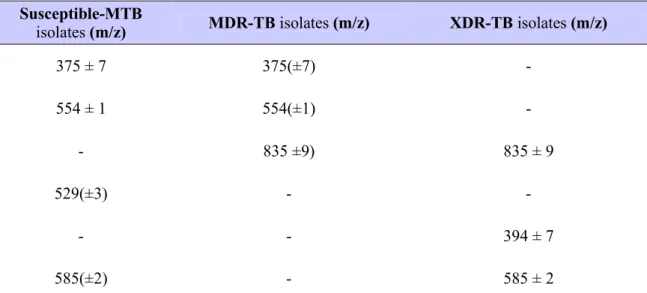
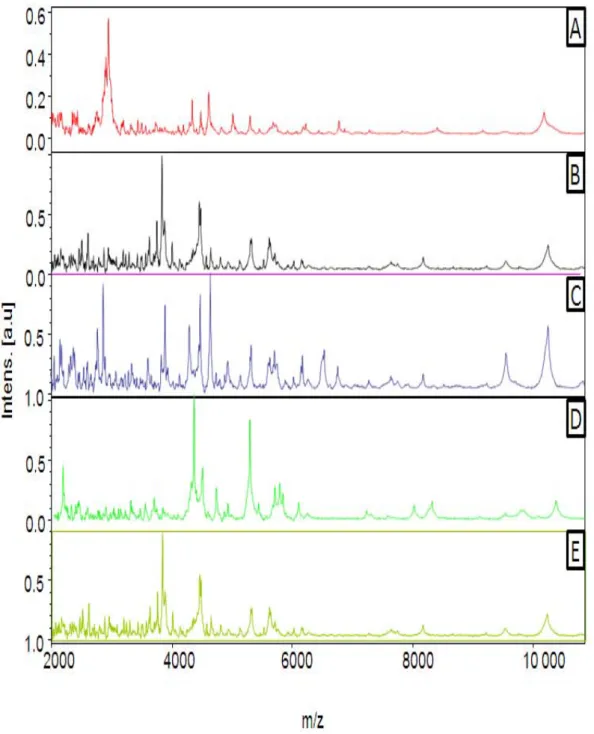
Correct differentiation of tuberculosis isolates depends on a sample preparation method that can ensure a high protein content. By MALDI-TOF MS and the chloroform/methanol-based method, all mycobacterial isolates used in the proof-of-concept were correctly identified and sequenced. He has received training from Bruker Daltonics approved instructors in the use and maintenance of the MALDI-TOF MS.
INTRODUCTION AND PROJECT AIMS
INTRODUCTION AND PROJECT AIMS
- INTRODUCTION
- AIMS OF THIS STUDY
Rapid detection of infectious TB is essential to offer immediate and appropriate treatment (Brosch, et al., 2002). As a result, it became the preferred choice for the analysis of sensitive biological samples (Hettick, et al., 2006). Compared to other diagnostic methods, MALDI-TOF MS is fast, requires minimal sample preparation and fewer reagents (Hettick, et al., 2006).
LITERATURE REVIEW
Identification of Mycobacterium tuberculosis
2 IDENTIFICATION OF MYCOBACTERIUM TUBERCULOSIS
INTRODUCTION
- Tuberculosis: The disease
Tuberculosis can be diagnosed with symptoms such as mild sputum, fatigue, anorexia, weight loss, sweating, chills, fever and chest pain (Oduwole, 2008). Currently, the main challenges facing clinical laboratories are based on the characterization and identification of virulence determinants in M. An attenuated strain of tuberculosis such as H37Rv has been used in an attempt to highlight the pathogenicity of M.
TRANSMISSION AND EPIDEMIOLOGY OF TUBERCULOSIS
- Cord factor
- Wax D fraction
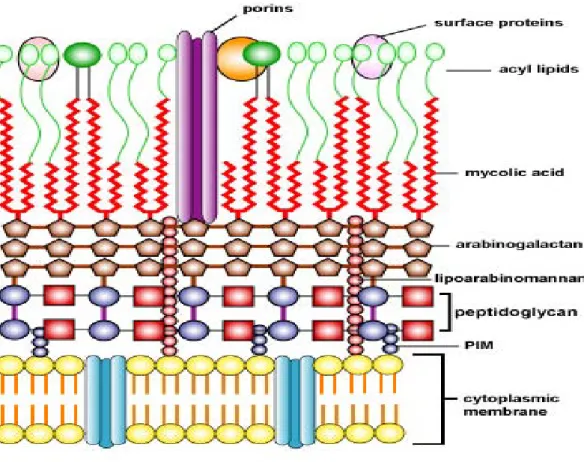
Loosely attached lipids on the cell can be extracted with organic solvents (Liu, et al., 1995). Furthermore, it is responsible for formations of serpentine strands, which are observed only in virulent mycobacterial strains (Saito, et al., 1975). It was concluded that the presence of the peptide moiety was essential for the adjuvant effect in the clinical Mycobacterum strains (Saito, et al., 1975).
VIRULENT PROTEINS OF MYCOBACTERIUM TUBERCULOSIS
- Glutamine synthase
- Fibronectin-binding proteins (fbp’s)
- Two-component signal transduction system
- Multidrug-resistant tuberculosis (MDR-TB)
- Extensively Drug-Resistant tuberculosis (XDR-TB)
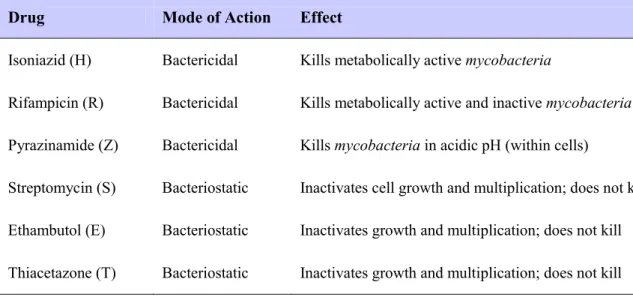
The string factor (trehalose-6,69-dimycolate) is surface glycolipid or toxic trehalose mycolate present in virulent TB strains (Laval, et al., 2001). Interestingly, 85 complex antigens, which were discovered to be fbp's, were previously thought to be involved in phagocytosis by macrophages (Garbe, et al., 1 996). XDR-TB is considered an MDR-TB that is resistant to at least one of the fluoroquinolones (ofloxacin) plus an aminoglycoside/cyclic peptide (kanamycin, capreomycin) (Salmoniere, et al., 1997).
TB PANDEMIC CONTROL STRATEGIES
- Culturing methods
- BACTEC™ 460TB System Mycobacterial Culture Media
- Molecular Methods
- Spoligotyping
- IS6110 restriction fragment length polymorphism (RFLP) typing
- Immunological Techniques
- Matrix-Assisted Laser Desorption Ionization Time of Flight Mass Spectrometry (MALDI –TOF MS)
- Application of MALDI-TOF MS in bacteriology
Emphasis on second-line drugs is emphasized when first-line drugs are not effective against strains of tuberculosis (Gandhi et al., 2006). Microbial growth is monitored by changes in oxygen concentration, which causes fluorescence (Drobniewski, et al., 2003). In the 1990s, researchers extensively used molecular methods to investigate the genetics of tuberculosis strains (Olano et al., 2007).
Gene expression has been used to elucidate the phenotypic characteristics of mycobacterial species (Målen, et al., 2011). 15 Figure 2.2 Schematic representation of spoligotyping pattern for each organism according to their geographical distribution (Ruelle, et al., 2004). The IS6110 sequence is present in all members of MTBC, although they are not epidemiologically related due to DNA variability (Haas, et al., 1997).
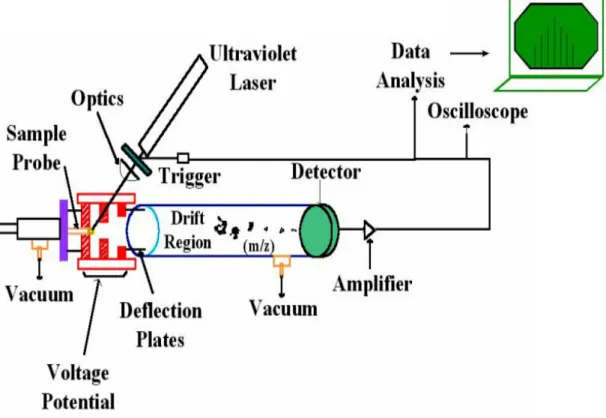
Similarly charged ions travel with the same kinetic energy but are separated according to their different molecular weight sizes (Frieden, et al., 2003). However, changing the potential difference changes the mass range of ions passing through the system (Willoughby, et al., 1998). Several mass spectrometric applications have been established, and MALDI TOF-MS and ESI have been proposed for the analysis of thermolabile biological samples (Gustafsson, et al., 2011).
These cell extracts can be peptides, proteins, carbohydrates, nucleic acids or synthetic polymers (Marvin, et al., 2003).
However, the lack of a mycobacterial database was a limiting factor for mycobacterial identification; this can be remedied by increasing the entries of mass spectra in the database. 2010) Identification of Brucella by MALDI-TOF mass spectrometry. Harth G, C lemens D L & H orwitz M A (1994) Glutamine synthetase from Mycobacterium tuberculosis: Extracellular release and characterization of its enzymatic activity. He H & Zahrt T C (2005) I dentification and characterization of a regulatory sequence recognized by Mycobacterium tuberculosis persistence regulator MprA.
Laval F, L aneelle MA, Deon C, Monsarrat B & D affe M (2001) Accurate determination of the molecular mass of mycolic acids by MALDI-TOF mass spectrometry. Målen H, Souza GAD, Pathak S, Søfteland T & Wiker HG (2011) Comparison of membrane proteins of Mycobacterium tuberculosis H37Rv and H37Ra strains. Marvin LF, Roberts MA & Fay LB (2003) Matrix-assisted laser desorption/ionization Time of flight mass spectrometry in clinical chemistry.
Oduwole EO (2008) Generation of a database of mass spectra patterns of selected Mycobacterium species using MALDI-TOF mass spectrometry. 2010). Romanus II, Eze AE, Egwu OA, Ngozi AF & Chidiebube NA (2011) Comparison of matrix assisted laser desorption ionization time of flight mass spectrometry with conventional culture and biochemical method for species level identification of bacteria. 29 Sherburn RE & Jenkins RO (2003) A novel and rapid approach to yeast differentiation using matrix-assisted laser desorption/ionization time of flight light mass spectrometry.
Streicher E M (2007) An application of spoligotyping to the understanding of the dynamics of Mycobacterium tuberculosis strains in crowded communities.
RESEARCH RESULTS I
Optimization of the sample preparation protocol for matrix assisted laser
- ABSTRACT
- Bacterial strains
- Media and cultivation conditions
- Ethanol-formic acid-glassbead (EFAGB) sample preparation protocol
- Chloroform-methanol e thanol-formic acid (CMEFA) sample preparation protocol
- MALDI-TOF MS settings
- Mass spectral data analysis
- RESULTS
- DISCUSSION
- ACKNOWLEDGEMENTS
- REFERENCES
Members of the Mycobacterium tuberculosis complex (MTBC) are the main causative agents of tuberculosis as intracellular parasites of acrophages (Homolka, et al., 2009). Consequently, the tubercle bacilli grow until they reach the acute stage of infection (Bahk, et al., 2004). Currently, there is no rapid, reliable and inexpensive method for the detection of Mycobacterium tuberculosis at an early stage of infection (Bahk, et al., 2004).
However, MALDI-TOF MS offers a potentially promising approach for rapid, reliable, and inexpensive TB diagnosis. This study was used to evaluate the potential of MALDI-TOF MS and an optimized sample preparation protocol to distinguish closely related members of the Mycobacterium tuberculosis complex. This demonstrates the efficiency of MALDI-TOF MS to obtain low r results regardless of geographic isolation of the same M.
Biotyping technology based on MALDI-TOF MS can correctly identify some bacteria at the genus, species and subspecies levels (Welker & Moore, 2011). It has been reported that MALDI-TOF MS technology can separate Mycobacterium species down to the strain level (Hettick, et al., 2006). Gutacker MM, Smoot JC, Migliaccio CAL, et al. 2002) Genome-wide analysis of synonymous single-nucleotide polymorphisms in Mycobacterium tuberculosis complex organisms:.
Strain-level discrimination of intact mycobacteria: a combined MALDI-TOF MS and biostatistical analysis.
RESEARCH RESULTS II
Collection and identification of clinical Mycobacterium tuberculosis isolates
- ABSTRACT
- MATERIALS AND METHODS
- Screening and culturing of clinical M. tuberculosis isolates
- RESULTS
- DISCUSSION
- ACKNOWLEDGEMENTS
- REFERENCES
Eight million cases of TB infection and two million deaths are reported each year (Bahk, et al., 2004). Moreover, expensive and toxic second-line drugs are used; therefore, immediate and appropriate control of the MDR-TB pandemic is urgently needed (Moodley, et al., 2011). TB has been observed to occur in a linear fashion with human immunodeficiency virus (HIV) (Gandhi, et al., 2006).
This can be done, for example, on the smear positive and negative sputum samples, but it is cumbersome and time consuming (Dixit, et al., 2012). Therefore, it is suggested that the DNA extraction process should be performed in biosafety level II or III practices (Warren, et al., 2005). Nucleic acid amplification tests (NATs) have been shown to be effective in detecting mycobacteria directly from the clinical specimens (Khorshidi, et al., 2009).
This is an assay on D NA extraction, P CR, reverse p hase hybridization and band mutation detection (Hillemann, et al., 2007). Also, all M DR-TB line isolates were evaluated for the presence of XDR-TB using the agar dilution drug susceptibility protocol described below (Abe, et al., 1999). Therefore, clinical laboratories have developed different sample preparation methods suitable for their laboratory environments and sample type (Hosek, et al., 2006).
Moodley P, Shah NS, Tayob N, et al. 2011) Spread of drug-resistant tuberculosis in KwaZulu-Natal Province, South Africa.
RESEARCH RESULTS III
- ABSTRACT
- MATERIALS AND METHODS .1 Clinical M. tuberculosis isolates
- Media and cultivation conditions
- RESULTS
- DISCUSSION
- ACKNOWLEDGEMENTS
- REFERENCES
The genus Mycobacteria includes approximately 100 heterogeneous species of slow- and fast-growing, acid-fast bacilli (Pignone, et al., 2006). It has been suggested that mycobacteria are not sensitive to a single protein extraction method due to variations in the cell wall composition of different species of this genus (Gumber, et al., 2007). TB has become a major threat in public health care and correctional facilities (Hettick, et al., 2006).
Moreover, it can persist in a changing environment within the host endosomal system (Maciag et al., 2007). These chromosomal mutations result in single nucleotide polymorphisms (SNPs), insertions, and deletions (Olano et al., 2007). Biochemical tests are also used, but they are time-consuming, laborious, tedious and solely dependent on cultivation methods (Saleeb, et al., 2011).
This method has been used successfully, although it is subject to many limitations and ambiguities (Blower, et al., 1996). This tool has been successfully used for the identification of yeasts and bacteria from protein extracts (Saleeb et al., 2011). The quality of the spectra depends on the sample preparation method and the bacterial culture (Gustafsson, et al., 2011).
It has previously been suggested that MALDI-TOF MS technology can discriminate mycobacteria at a sound rain level (Hettick, et al., 2006).

GENERAL DISCUSSION AND CONCLUSION
GENERAL DISCUSSION AND CONCLUSION
Current delays in the diagnosis of Mycobacterium tuberculosis are hindered by the slow growth of the organism on agar culture plates. Therefore, rapid detection of infectious tuberculosis is essential for prompt and appropriate treatment (Brosch et al., 2002). Unfortunately, these methods have proven laborious, error-prone, and time-consuming; therefore, it cannot be used for medical emergencies.
Furthermore, these approaches have a limited number of species-specific probes for known organisms; therefore cannot be used for the classification of unknown origin of bacterial samples (Sauer, et al., 2008). Matrix-assisted laser desorption/ionization mass spectrometry of flight (MALDITOF M S) is a potentially promising approach for rapid, reliable, and inexpensive diagnosis of tuberculosis. MALDI mass spectrometry analysis has been successfully applied for the discrimination of yeast and bacteria in the clinical laboratories (Saleeb, et al., 2011).
However, there have been limited studies reported on the use of MALDI-TOF MS for Mycobacterium tuberculosis strain discrimination based on their unique protein fingerprints. Based on the results of this study, it is shown that MALDI-TOF MS c is an effective tool for the rapid d iscrimination of challenging T B strains in clinical laboratories. Initial information about the type of strain is required before the database can be created for further identification of known species or organisms.
The results obtained in this study suggest that MALDI-TOF MS can be included in routine settings for the diagnosis of tuberculosis.