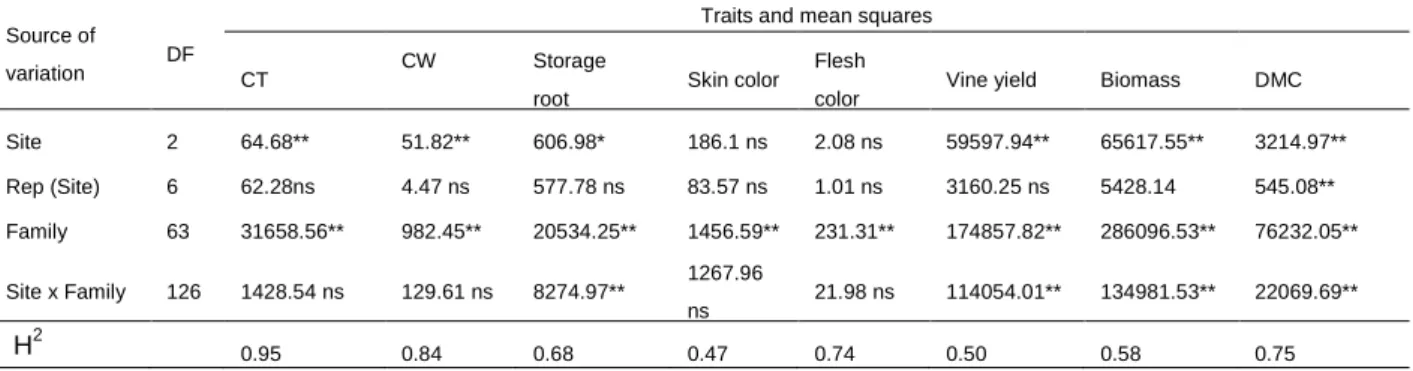
119 Table 5.5: Average canopy temperature (CT), canopy wilting (CW), yield of storage roots and vines, total biomass and dry matter content of storage roots of families and parents of sweet potato clones evaluated over three sites in Rwanda. There are no maternal effects and specific combining ability on the inheritance of drought tolerance and dry matter content of sweet potato.
Chapter One: A review of the literature
Introduction
In sub-Saharan Africa, farmers prefer sweet potato varieties with high dry matter content (Mwanga et al. 2007; Cervantes-Flores et al. 2011). A dry matter content above 25% is an important element for the acceptability of a new sweet potato variety by farmers (Shumbusha et al. 2010).
Physiological mechanisms and conventional breeding of sweetpotato for drought-
- Effects of drought stress
- Mechanisms of adaptation to drought stress in plant species
- Consequences of adaptation mechanisms to drought stress
- Drought stress on sweetpotato
In addition, they act in cohesive network reactions and mainly use redox reactions (Lin et al. 2006b). The drought escape strategy is based on a short life cycle and developmental plasticity (Yue et al. 2006).
Storage root formation, dry matter synthesis, accumulation and genetics in
Products expressed by KNOXI genes were identified in initial and growing sweet potato storage roots (Tanaka et al. 2008). This observation suggested an active involvement of products of KNOXI genes in the formation of storage roots of sweet potato (Tanaka et al. 2008).
Breeding of sweetpotato
- Breeding of sweetpotato for drought tolerance
- Breeding of sweetpotato for high dry matter content
Therefore, field selection for drought tolerance is complicated by unpredictable environmental conditions (Lafitte et al. 2004). Molecular markers are alternative tools that can be used in screening for high dry matter content (Cervantes-Flores et al. 2011).
Gene action and correlation between traits
This method is based on a high positive correlation between dry matter and starch content (Ma et al. 2009; Cervantes-Flores et al. 2011). A negative correlation was also noted between dry matter and soluble sugar content of sweet potatoes (Gruneberg et al. 2009).
Genotype by environment (G×E) interaction and yield stability
- Approaches to evaluate G×E interaction and yield stability
- G×E interaction and yield stability of sweetpotato
The genotype mean effects explained 49.5% of the total variation and G×E interactions explained 23.5% (Caliskan et al. 2007). Caliskan et al., (2007) and Hermann (2005) suggested that the additive main effects and multiplicative interaction (AMMI) approach is best for evaluating the G×E interactions and stability of sweet potato genotypes in multilocation trials.
Conclusions
In investigating G×E interactions and stability analysis of sweet potato genotypes, Caliskan et al. 2007) observed a significant correlation between at least one parameter of the methods of Russell and Eberhart, Tai and Shukla. Studies to determine the stability of sweet potato genotypes in multilocus trials have revealed that the methods of Russell and Eberhart (1966), Tai (1971), Shukla (1972) give the same results (Bacusmo et al. 1988).
A study of the effect of drought stress on sweet potato growth and measures to improve drought resistance and stabilize yield. Variability of morphological characters and dry matter content in sweet potato (Ipomoea batatas [L] Lam) hybrid progeny.
Chapter Two: Farmers’ perceptions, production and productivity constraints,
Introduction
Participatory plant breeding is usually carried out to ensure the adoption of newly developed crop cultivars and their production packages by small farmers of marginal agro-ecological and socio-economic groups (Ceccarelli et al. 2007). In the selection of high-yielding genotypes, Ceccarelli et al. 2009) observed that farmers have the same selection ability as breeders.
Materials and methods
- Description of the study areas
- Sampling method
- Data collection
- Data analysis
The results of the study can help with the breeding and sustainable production of sweet potatoes in Rwanda and countries with similar agro-ecologies. A matrix scoring method was used following Ceccarelli's (2012) to rank farmer and consumer preferences, constraints of sweet potato production, characteristics of good storage roots and sweet potato cultivars, and the role of gender in sweet potato production in Rwanda.
Results
- Demographic description of the study areas
- Farmers’ perception and sweetpotato production
- Constraints of sweetpotato production
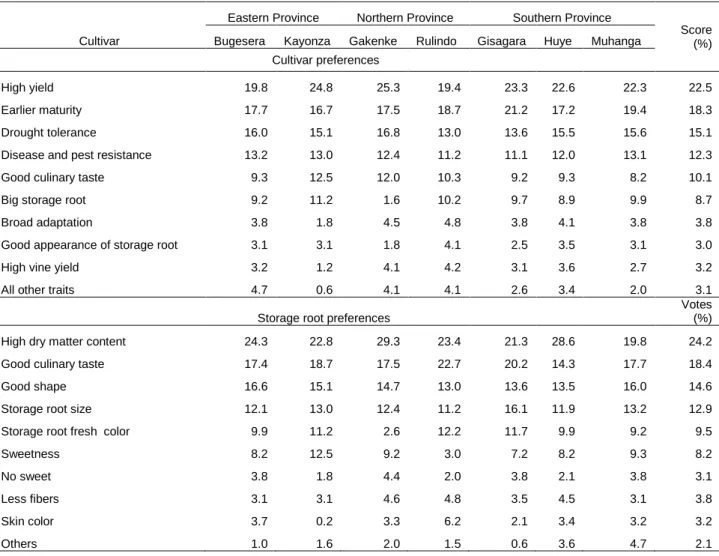
- Farmers’ preferences for sweetpotato cultivars and storage root traits
- Sweetpotato farming practices
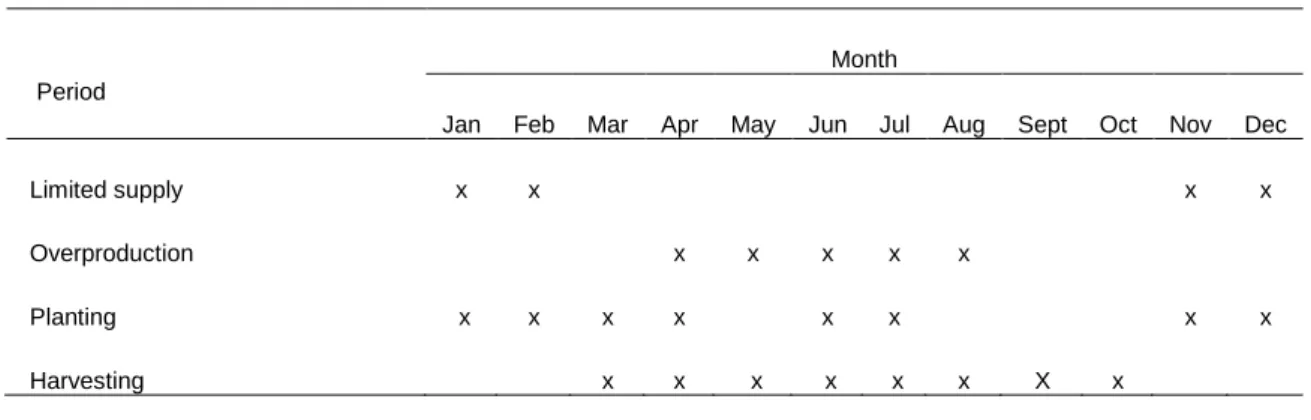
- Seasonal calendar of sweetpotato production and market
- Gender and sweetpotato production
Shortage of improved cultivars, drought and pests have been the major constraints on sweet potato production in Kayonza district. In Rulindo District, drought, diseases and shortage of vines were considered the main constraints on sweet potato production.
Discussion
- Use of sweetpotato for food security and income generation
- Constraints to sweetpotato production
- Attributes of good sweetpotato cultivars and storage roots
- Agronomic management of sweetpotato
- Seasonal calendar of sweetpotato production
- Gender and sweetpotato production
Low fiber and high dry matter content, and taste were the main characteristics that influenced the choice of good storage root by Kenyan women farmers (Githunguri et al. 2006). In a participatory cultivar selection, characteristics such as high yield, early maturity and large storage root were the main characteristics of a good cultivar (Gibson et al. 2008).
Conclusions
Agriculture is the main activity of small farmers and women farmers who make up the majority of the small farm system. This is related to the finding that women's crop production contributed more to household food security than cash crop income usually administered by men (Quisumbing et al. 1995).
In addition, a sweet potato breeding program must consider all the documented traits desired by farmers, such as disease and pest resistance, high yield, and early maturity. An overview of South Africa's poverty and food security issues: Is agriculture the solution?
Chapter Three: Phenotypic characterization of sweetpotato genotypes grown in
Introduction
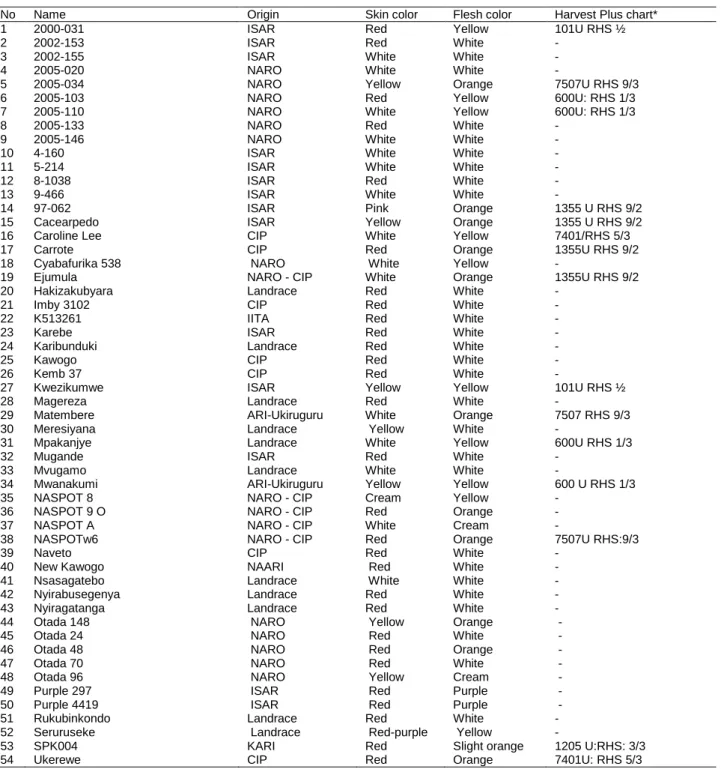
Sweet potato and beans (Phaseolus vulgaris L.) are the main food crops grown in Rwanda (Ndamage et al. 1992). A combined use of morphological, biochemical and molecular (DNA) markers has been proposed for studies of genetic diversity (Elameen et al. 2011).
Materials and Methods
- Plant materials
- Study sites
- Experimental design and trial establishment
- Data collection
- Data analysis
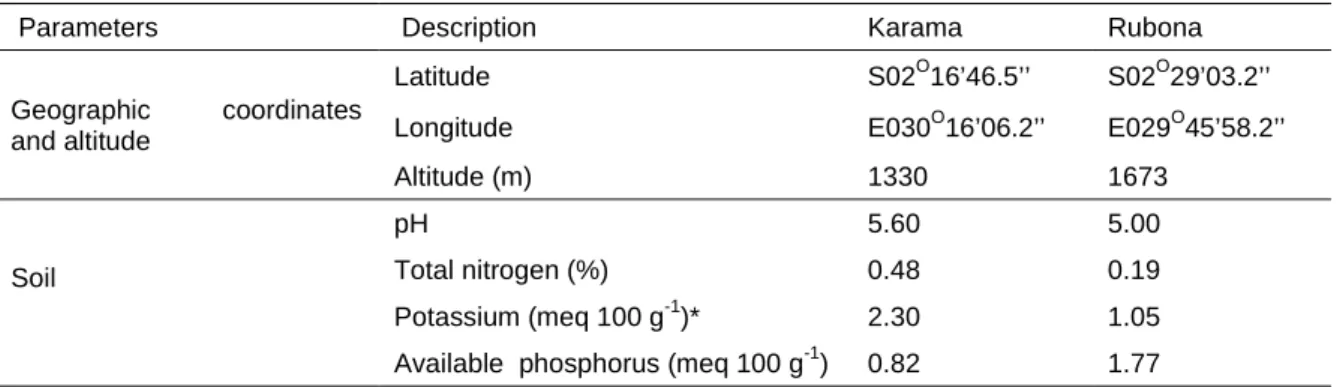
Sweet potatoes are grown by more than 98% of Rwandan farmers across all agro-ecological zones of the country (Ndirigwe 2006; Njeru et al. 2008). Details of the study sites ([geographic coordinates and soil composition [pH, total nitrogen, potassium and available phosphorus]) are presented in Table 3.2.
Results
- Flowering ability
- Yield, yield components and dry matter content
- Genotypic relationship
- Principal component analysis
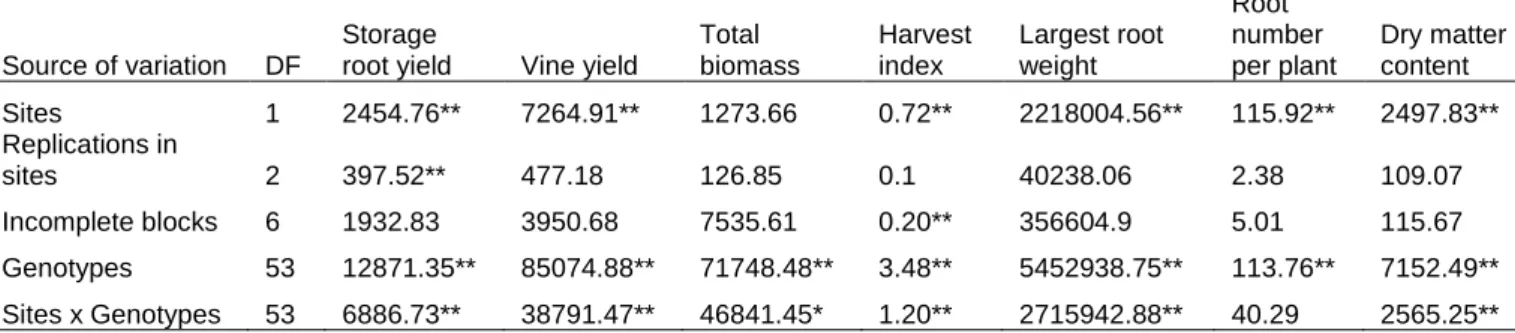
Genotype and genotype by environment (GGE) interaction two-plots are presented in Figure 3.2 A, B, C and D on storage root yield, dry matter content, vine yield and total biomass. The Karama site had the longest vector for dry matter content, vine yield and total biomass while the Rubona site had the longest vector for storage root yield.
Discussion
- Phenotypic traits
- Genetic relationships among sweetpotato genotypes
- Principal component analysis
Most sweet potato genotypes naturally flower under short day conditions in the tropics (Miller 1937; Jones et al. 1986). Cluster analysis using morphological and SSR markers separated some Kenyan sweet potato genotypes into two major groups (Karuri et al. 2010).
Conclusions
Molecular, morphological and agronomic characterization of sweet potato (Ipomoea batatas L.) germplasm collection from Mozambique: Genotype selection for drought prone regions. Genotyping and evaluation of genetic relationships in elite sweetpotato breeding cultivars in Taiwan based on SAMPL polymorphisms.
Chapter Four: Comparison of greenhouse and in-vitro screening of sweetpotato
Introduction
Breeding for drought tolerance remains the most sustainable, feasible and economical approach to drought management. Limited progress has therefore been made in identifying genetic determinants of drought tolerance in sweet potato.
Materials and methods
- Plant materials
- Greenhouse experiment
- In-vitro experiment
- Data collection
- Data analysis
Selection under managed environments such as greenhouse and in vitro are alternative approaches to improve selection gains. Drought tolerance of sweet potato genotypes was investigated under in vitro conditions according to a modified method of Guo et al.
Results
- Greenhouse experiment
- In-vitro experiment
- Relationship between drought tolerance parameters of greenhouse and in-
98 Table 4.5: Average storage root yield and dry matter content, vine yield and total biomass production of 54 sweet potato genotypes under continuous irrigation (T1) and drought stress condition of three months (T4). 101 Table 4.8: Average fresh weight, dry matter content and water content, of 54 sweet potato genotypes grown in vitro for four weeks in a basic culture medium (control: T1) and supplemented with 0.6 M sorbitol (T4).

Discussion
- Intensity of drought stress under greenhouse and in-vitro experiments
- Effects of drought stress
- Correlation between drought tolerance parameters during greenhouse and in-
Both the greenhouse and in vitro approaches showed the same trend; As drought stress conditions increased, Ψw decreased. There was a significant difference between plants grown under continuous irrigation and drought stress conditions (Figure 4.3).
Conclusions
Selection for drought tolerance is complicated by the lack of rapid and reproducible screening approaches, and constant water stress conditions to efficiently evaluate a large number of genotypes (Ramirez-Vallejo and Kelly 1998; Talebi et al. 2009). These indices are either based on drought resistance or susceptibility of genotypes (Talebi et al. 2009).
The effects of drought stress and leaf senescence on leaf photosynthesis and electron transport in photosystem 2 in sweet potato (Ipomoea batatas Lam.) cultivars. Effect of drought on storage root development and gene expression profile of sweet potato under greenhouse and field conditions.
Chapter Five: Combining ability, maternal effects and heritability of drought tolerance,
Introduction
Sweet potato flour can be used as a partial substitute for wheat flour in bakery and pasta products, allowing import substitution for wheat flour (Tan et al. 2007). 112 Genetic studies in sweet potato are limited due to self- and cross-incompatibility, high level of polyploidy, and limited flowering ability and seed set (Lin et al. 2007).
Material and methods
- Plant materials
- Crosses and mating design
- Field establishment for evaluation of clonal families
- Data collection
- Data analysis
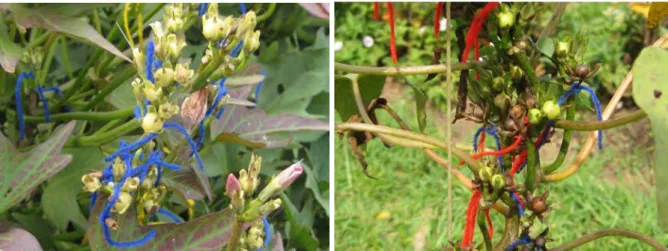
A crossbreeding block was established between May 2013 and February 2014 at the Rubona research station of the Rwanda Agricultural Council (RAB). Data on yield, dry matter content from storage root and leaf temperatures were subjected to analysis of variance using the GLM procedure of the SAS 9.2 statistical program (SAS Institute, 2004).
Results
- Compatibility among twelve selected sweetpotato genotypes
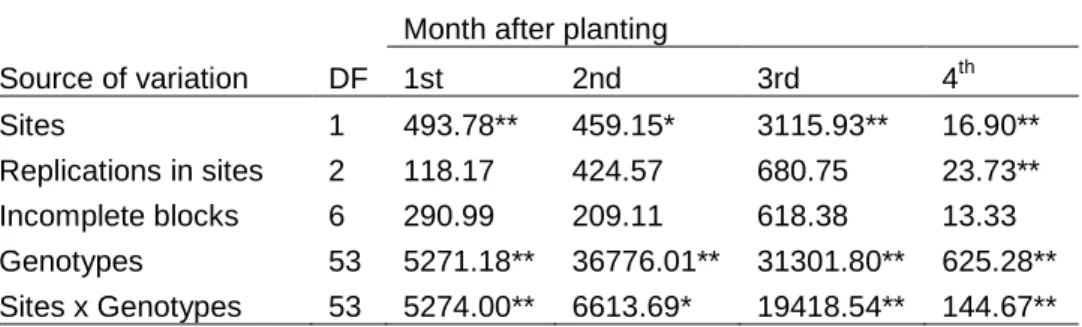
- Analysis of variance
- Field performance of families and parents
125 Table 5.7: Estimates of GCA effects for crown temperature, crown wilting, storage root yield, skin color, flesh color, wine yield, total biomass and dry matter content in eight sweet potato parents. The maternal effects were significant on CT, CW, storage root yield, flesh color, wine yield, total biomass and dry matter content of storage roots (Table 5.6).
Discussion
- Success rate of crosses, seed set and germination
- Performance of newly developed families and parents
- Drought tolerance
- Yield of storage roots
- Dry matter content of storage roots
- Heritability
- General and specific combining ability effects
- Maternal effect
The dry matter content of storage roots of sweet potato depends on the effects of location and genotype (Shumbusha et al. 2010). A previous diallel analysis showed significant effects of GCA and SCA in a heritability study of putative sweet potato drought adaptation traits (Mwije et al. 2014).
Conclusions
Maternal effects were significant among families for canopy temperature, canopy wilting, flesh color, dry matter content, vine yield, and total biomass. The existence of maternal effects is important to sweet potato breeders in considering the direction of crosses to be made to improve a particular trait.
Genotype x environment interaction and yield stability estimation of some sweet potato (Ipomoea batatas [L.] Lam] breeding lines in South Africa. Plant growth and yield stability of orange-fleshed sweet potato (Ipomoea batatas) genotypes in three agro-ecological zones in Malawi.
Chapter Six: Genotype by environment interaction and yield stability of sweetpotato
Introduction
The performance of a crop variety is quantified in terms of its broad or specific adaptability and yield stability (Abidin et al. 2005). Grunerberg et al., (2005) observed a small GxE interaction for nutritional traits of sweet potato in multi-environment trials.
Materials and Methods
- Plant materials
- Description of the study sites
- Experimental design and field establishment
- Data collection
- Data analysis
42 Kwezikumwe x 2005-020 Newly bred High DMC and drought tolerance Pink White 46 Kwezikumwe x 2005-020 New yield and drought tolerance Yellow cream. 577 Nsasagatebo x Otada 24 High DMC Drought Tolerant Cream 613 Otada 24 x Purple 4419 DMC Newborn Drought Tolerant White White.

Results
- Analysis of variance and performance of genotypes
- AMMI analysis
- GGE biplot analysis
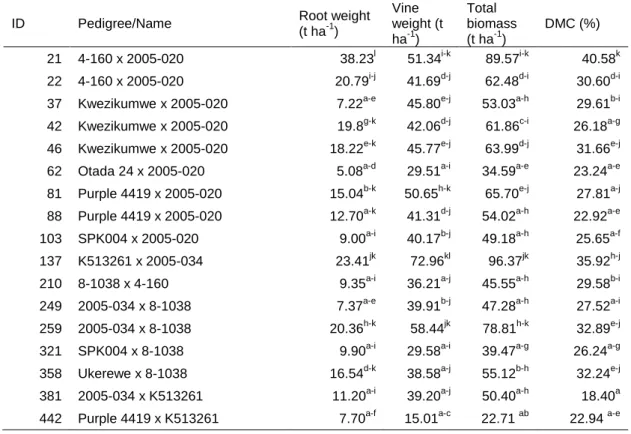
Mean dry matter content (DMC) of fresh stock root weight of clones ranged between 18.4 and 40.6. Yield of storage roots (t ha-1) Yield of vines (t ha-1) Dry matter content of storage roots.
Discussion
- Analysis of variance response of sweetpoato genotypes
- AMMI analysis
- GGE biplot analysis
Previous studies reported wide variation among genotypes in dry matter content of storage roots (Courtney et al. 2008). In Rwanda, Shumbusha et al. 2010) showed that high storage root dry matter content is a.
Conclusions
Based on the previous information, E3 media are the ideal media for discriminating genotypes for storage root yields. This study showed that E3 medium is the ideal medium for testing sweet potato clones for their yield potential and storage root dry matter content.
AMMI analysis of yield trials, in: Kang M S and Gauch H G (eds), Genotype by environment interaction, CRC Press, Boca Raton, FL. Quality and yield stability of orange-fleshed sweet potato (Ipomoea batatas) varieties grown in different agroecologies.
Chapter Seven: Overview of the study
The GCA effects of the parents and the SCA effects of the crosses were significant (P<0.01) for CT, CW, storage root yields, vine and biomass, and storage root dry matter content. Clone x site x season, clone x site and clone x season interaction effects on yields and dry matter content of storage roots were significant (p=0.001).