To my husband Ngcebo, thank you for your trust in me and for your support, encouragement and time and space to study. The main objective of this study was to determine the career progression of women in higher education. Due to the low response rate, the results could not be generalized to higher education institutions, especially technological universities.
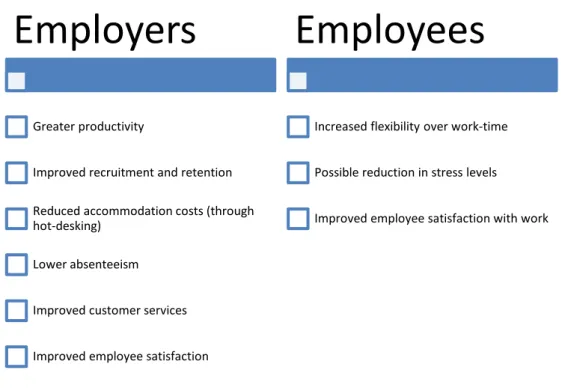
The findings also revealed that the majority of respondents had not experienced barriers in their careers, but organizational barriers identified by 43% of respondents were lack of internal networking opportunities, lack of support from line managers and ethnicity. For women to progress in their careers, Higher Education Institutions (HEIs) can promote being an equal opportunity employer by providing training and development, mentoring, networking, gender empowerment, flexible working arrangements and work-life balance .
List of acronyms and abbreviations
MIT Massachusetts Institute of Technology MUT Mangosuthu University of Technology Stats SA Statistik Sydafrika.
INTRODUCTION AND STUDY OVERVIEW
INTRODUCTION
MOTIVATION FOR THE STUDY
For women aspiring to be in leadership positions, or those already in leadership positions, this research will provide useful information about the types of barriers that exist in organizations. The information from this study will provide aspiring women with key knowledge on how to overcome organizational barriers that may hinder their upward mobility. The research will also help policy makers to introduce legislation and ensure better implementation of policies aimed at increasing women's participation in organizations.
This study will add to the already existing knowledge about barriers that women face in their career paths and is specific to higher education. Potential areas for further research are included in Chapter 5, and such research may further contribute to the existing knowledge of the barriers to the vertical progression problems.
FOCUS OF THE STUDY
PROBLEM STATEMENT
The research focused on technical universities in KwaZulu-Natal, to understand the barriers women face and their career progression into senior management.
RESEARCH OBJECTIVES
LIMITATIONS OF THE RESEARCH
THE STUDY STRUCTURE
The chapter provides some background information on women's career development, followed by barriers women experience to upward mobility in their careers, including family, social and organizational barriers. It details the findings based on the objectives to determine whether or not they have been achieved. It also concludes the study with a summary of key findings, recommendations and potential areas for possible future research.
SUMMARY
LITERATURE REVIEW
- INTRODUCTION
- CAREER PROGRESSION OF WOMEN
- BARRIERS TO CAREER PROGRESSION
- Family-related barriers
- Societal-related barriers
- Organisational barriers
- WOMEN IN HIGHER EDUCATION
- Global perspective
- South African perspective
- Factors that hinder women from progressing to senior management A study done in Malaysia and Australia cited commitment to family or personal
- SUMMARY
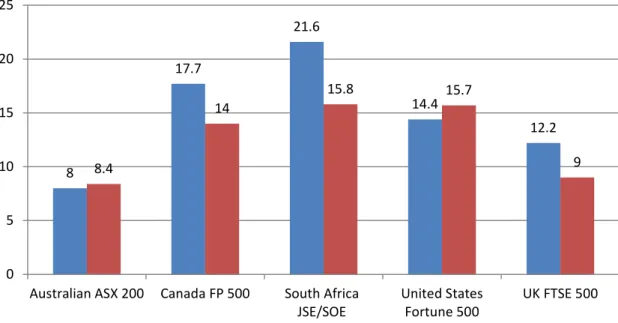
The IBR research covers both listed and private companies and shows that the involvement of women in senior management worldwide is very low. This low representation of women in senior management can be attributed to career barriers that women experience throughout their careers (Wood, 2008). It also influences the evaluation of women's performance in management positions (Wood, 2008).
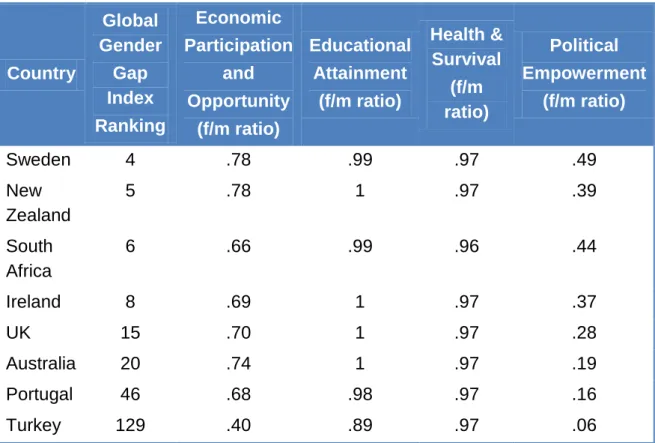
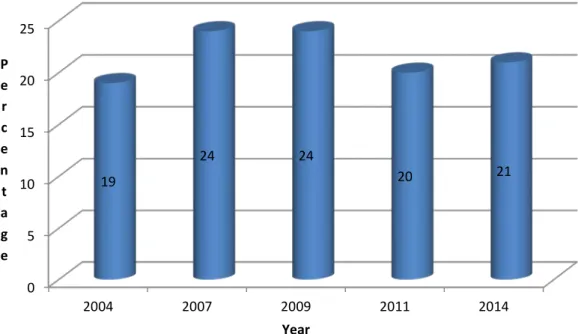
There is evidence that negative stereotyping by others is a powerful barrier to women's career advancement in management (Lyness & Heilmann, 2006). This means that the increasing number of women in the workplace does not translate into more women in management positions (Tlaiss & Kauser, 2010). This shows that Turkey has a high representation of women in professorships and an underrepresentation in senior management, while the opposite is the case in Australia.
The persistently low number of women in senior management reported by the CHE statistics warrants a critical analysis.
RESEARCH METHODOLOGY
- INTRODUCTION
- AIM AND OBJECTIVES OF THE STUDY
- PARTICIPANTS AND LOCATION OF STUDY
- SAMPLING TECHNIQUE AND SAMPLE DESCRIPTION
- Sampling
- Sample description
- Sample size
- DATA COLLECTION STRATEGIES
- RESEARCH DESIGN AND METHODS
- Description and purpose
- Pretesting and validation
- Administration of the questionnaire
- ANALYSIS OF THE DATA
- SUMMARY
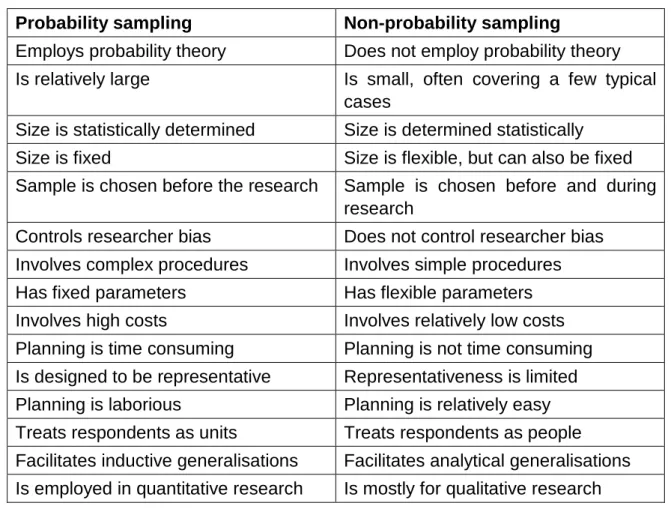
The key factor is to ensure that the sample is representative of the population from which it is drawn. The sample size is determined using statistical and non-statistical methods, but should be as representative as possible of the general population. However, for this study, which used non-probability sampling, it is not possible to generalize the results to the entire population.
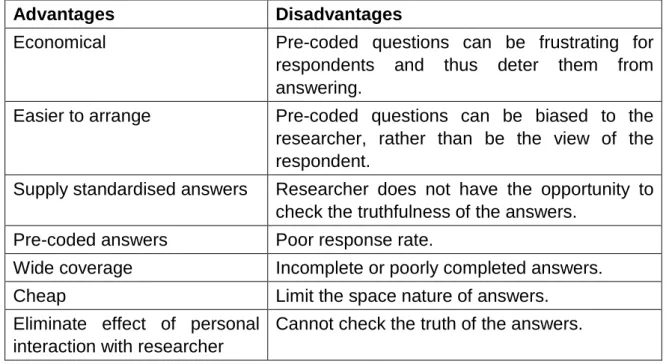
The purpose of qualitative studies is to provide a better understanding of the research problem and is exploratory in nature (Sekaran & Bougie, 2013). Easier to adjust pre-coded questions can be biased to the researcher, rather than being the respondent's perspective. Give standardized answers The researcher has no way to check the authenticity of the answers.
The main advantage of closed questions is the structure imposed on the respondents' answers, which makes it easy to quantify and compare the analysis of the data. Prior to the administration of the questionnaires, gatekeeper's letter had to be obtained from Durban University of Technology and Mangosuthu University of Technology where the research was to be conducted. The letter contained information about the purpose of the study and stated that participation was voluntary and that participant confidentiality would be maintained at all times.
To help respondents understand what the study was about, the study title and purpose of the study were explained on the consent page of the questionnaire. The chapter outlined the research design process from the aim and objectives to the analysis of the data. Pre-testing and validation of the test instrument is necessary to ensure that the results obtained were reliable, consistent and stable.
ANALYSIS AND DISCUSSION OF RESULTS
INTRODUCTION
PROFILE OF RESPONDENTS
- DESCRIPTIVE STATISTICS OF CAREER PROGRESSION OF WOMEN Descriptive statistics has been used to gauge the frequency of the respondents’
- Objective 1: To investigate barriers faced by women in achieving higher positions at Universities of Technology
- Objective 2: To determine if personal traits influence vertical progression
- Objective 3: To make recommendations for the facilitation of upward mobility of women at Universities of Technology
- INFERENTIAL STATISTICS
- Cross tabulations
- SUMMARY
This shows that women's progress is happening, but at a slow and unacceptable pace. The top reason given by the majority of respondents for not advancing in their career is that they have not applied for a promotion (67%). The results show that the invisible barriers encountered included lower promotion rates (37%), a lack of career development opportunities (30%), significant income disparities (18%), a lack of assignment to highly visible positions (11%) and lower level of responsibility (4%).
This result indicates that the respondents who experienced organizational barriers did not progress in their careers. The majority of respondents (22%) have work experience of 15 years or more, less than five years (21%) and between five and nine years (20%) and agree that they have not experienced an invisible barrier that hinders their career progression. This indicates that the longer time spent working, the more likely it is that there are no invisible barriers experienced by the respondents.
This indicates that the majority of respondents did not experience an invisible barrier in their careers, but did not progress in their careers. This suggests that the lower the number of dependents, the more invisible barriers are experienced. This suggests that the different marital statuses experienced different invisible barriers in their different stages of their lives.
This shows that the main reason why respondents have not progressed in their career is because they have not applied for promotion and the main reasons why they are in their current positions are due to self-motivation (49%) and qualifications ( 44%). . This indicates that respondents who did not experience the glass ceiling in their institutions also did not experience obstacles in their career progression. Data analysis shows that the majority of respondents are married, African educators between the ages of 36 and 45, with no dependents and work experience of 15 years or more, and with a master's degree as their highest qualification.
The main reason for the lack of progression was that the respondents had not applied for promotion. The results also revealed that the majority of respondents had not experienced barriers in their career path and that there are no invisible barriers preventing them from progressing in higher education.
DISCUSSIONS AND RECOMMENDATIONS
- INTRODUCTION
- DEMOGRAPHICS OF STUDY
- CAREER PROGRESSION
- Objective 1: To establish barriers that women face in achieving higher education positions at Universities of Technology
- Objective 2: To determine if personality traits influence vertical progression
- Objective 3: To make recommendations for the facilitation of upward mobility of women at Universities of Technology
- RECOMMENDATIONS ARISING FROM THE STUDY
- Training and development
- Mentorship
- Gender empowerment
- Networking
- Employment Equity
- LIMITATIONS OF THE STUDY
- Sample size
- Questionnaire measurement scale
- Response rate
- RECOMMENDATIONS FOR FURTHER RESEARCH
- SUMMARY
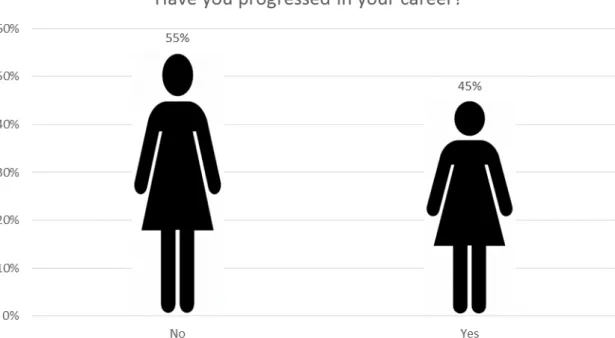
More than half of respondents (55%) agreed that they had not made any progress in their career. The majority of respondents (67%) agreed that the reason they had not progressed in their career was because they had not applied for a promotion. Seventy-six percent (76%) of respondents denied that there was an invisible barrier preventing women from advancing in their careers.
Cross-tabulations of "glass ceiling" and non-progression were found to be significant and indicated that the majority of respondents did not experience invisible barriers to their careers but have not progressed in their careers (p=0.05). 57% of the respondents stated that they have not experienced barriers in their career, while 43% have experienced barriers in their career. When respondents were asked if they experienced an invisible barrier in their institutions, the majority of respondents (76%) answered that there are no invisible barriers preventing them from advancing in their careers.
The majority of respondents (45%) agreed that lack of education and qualifications is the main factor preventing women from seeking promotion. The majority of respondents agreed that qualifications (49%) and self-motivation (43%) helped them reach their current position. The majority of respondents (52%) cited societal norms as a personal barrier to their career path.
The majority of respondents (40%) indicated that universities of technology could promote the advancement of women if they were equal opportunity employers. Most respondents cited flexible work arrangements (37%) and work-life balance (36%) as factors that facilitate career advancement. The majority of respondents (49%) agreed that qualifications were what led them to their current positions.
Asian women managers: participation, barriers and future prospects, in V. Women in Asian Management, Routledge: New York, pp. Perceptions of barriers to the advancement of women in management and leadership positions in South Africa. Women in management worldwide: overview of facts, figures and analyses. ed.), Women in Management Worldwide: Progress and Prospects.
Distorted view through the glass ceiling: The. building women's understanding of promotion and leadership positions. Finding the key to the executive suite: challenges for women and people of color. ed.), The 21st century executive: Innovative practices for building leadership at the top, pp. The contradictions and intersections of class and gender in a global city: Place working women's lives on the research agenda.
Between a rock and a hard place: Exploring women's experiences of participation and advancement in managerial careers.
Letter of informed consent and questionnaire
If the answer to question 12 is yes, which of the following organizational barriers have you encountered at your institution?