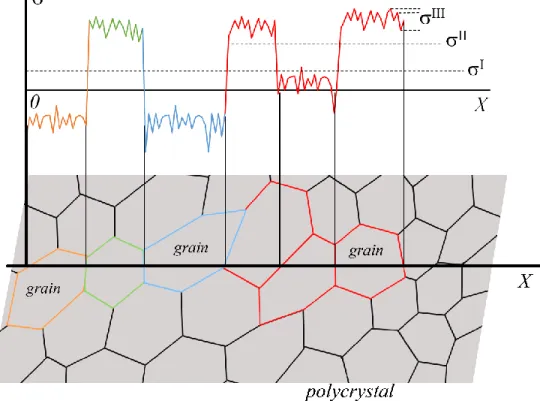
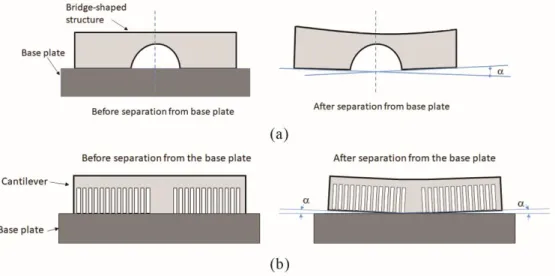
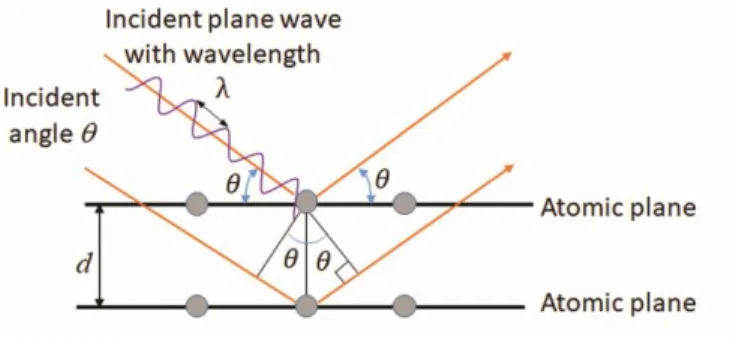
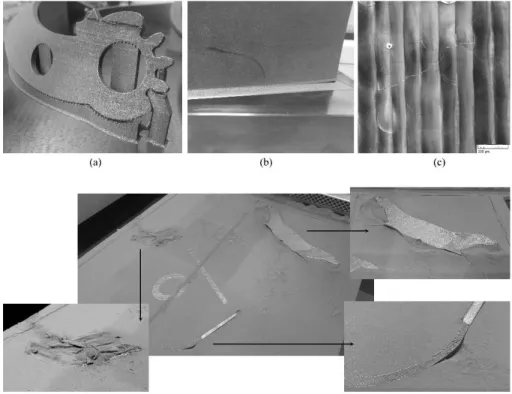
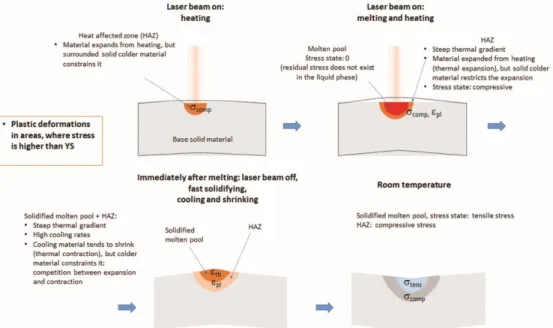
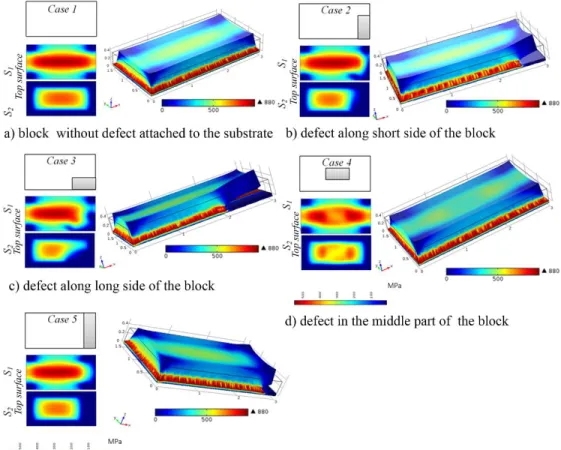
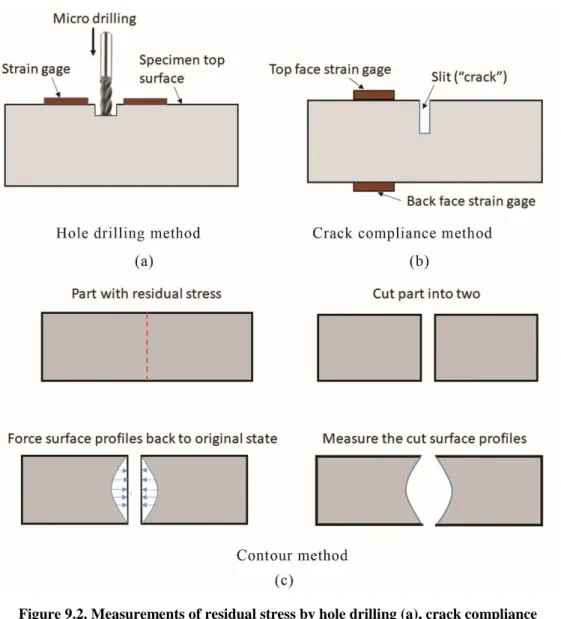
Two broad approaches can be used to evaluate residual stress—nondestructive and destructive methods. Detailed explanation of residual stress measurement techniques can be found in (Withers and Bhadeshia, 2001a). Digital image correlation (DIC) is a widely used method for measuring residual stress in L-PBF fabricated components.
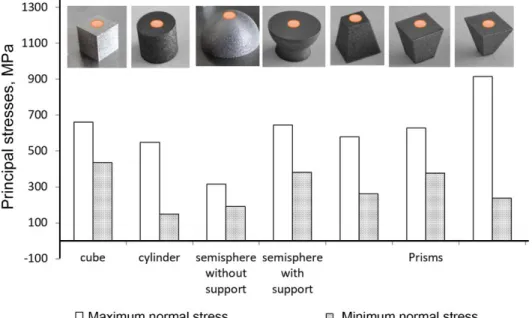
The effect of residual stress on dimensional and shape deviations has been widely demonstrated in Neugebauer et al. On the top surface, higher residual stress values were also found in the scanning direction. Surface refraction in Ti6Al4V objects of simple geometries (Figure 9.8) was measured by X-ray diffraction (XRD).
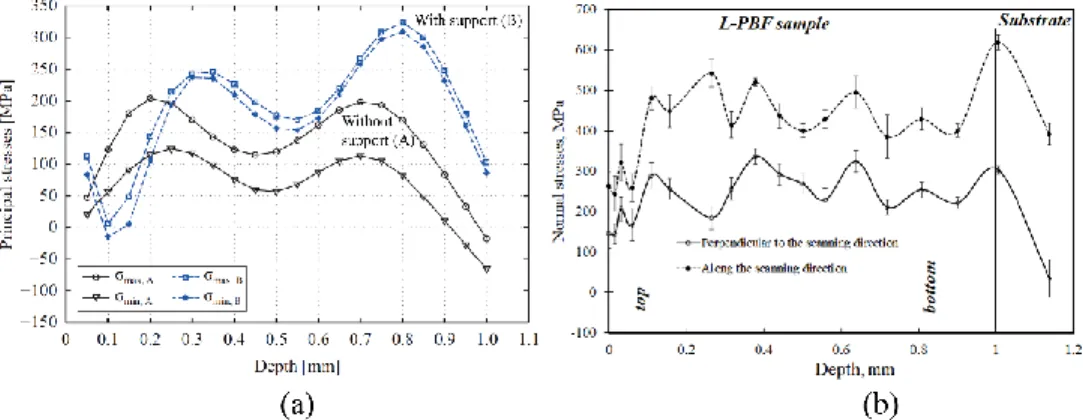
Previously, similar oscillatory behavior of residual stress with depth in L-PBF specimens was shown in (Yadroitsev and Yadroitsava, 2015), Figure 9.9b. Roughness has an influence on the residual stress value, as can be seen in figure 9.9b. It was found that the value of the residual stress was about two-thirds of the yield.
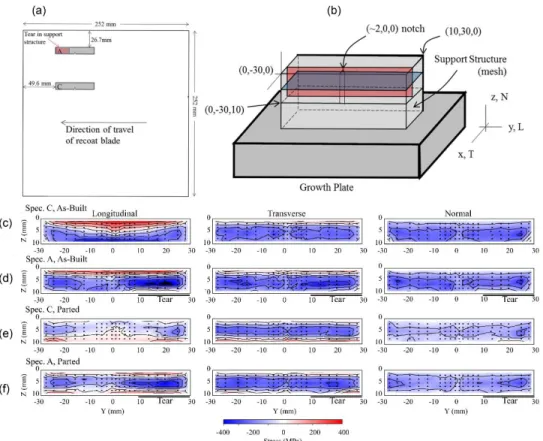
The greatest residual stress in as-built samples was in the longitudinal direction (Fig. 9.10a and b).
MODELING OF L-PBF PROCESS AND RESIDUAL STRESS EVOLUTION
MODELING OF THE L-PBF PROCESS AND THE EVOLUTION OF THE RESIDUAL STRESS. particles; thermal properties of powder, liquid and solid material; material properties at different temperatures; thermal gradient and cooling rates; microstructural and stress evolution; Size and geometry of the melt pool, etc. As shown by Debroy et al. 2018), the residual stress in AM is highly variable in the spatial and temporal domains, so high-quality experimental data and accurate numerical simulation are required. Melt pool geometry and temperature monitoring and control are essential in managing residual stress in place.
Limitations of the resolution, long image processing and cost implications make monitoring of the melt pool very complex. Despite these challenges, machine learning is increasingly being used to study the large data that can be collected from camera-based melt pool monitoring. Finite Element Analysis (FEA) is commonly used to predict residual stresses and strains during L-PBF.
In L-PBF, 3D finite element modeling is currently widely used, although 2D elements still find useful applications in residual stress prediction. 2017) used a 2D thermomechanical model to study the melt pool and residual stress characteristics of AlSi10Mg parts using FEA and experimental evaluation using X-ray diffraction. Their simulation and experimental results coincided with experimental results showing compressive stress at the midsection of the specimen and tensile stress at the edges. The predicted and experimental results showed concentration of thermal stress at the ends of the tracks and the edges of the formed surface.
Researchers can overcome this challenge by simultaneously modeling a group of layers (Afazov et al. developed a thermomechanical continuum model that approximates the powder as a continuous medium with effective material properties to avoid modeling powder particles individually. -PBF samples produced by similar process parameters can exhibit significant variation of measured residual stress (Georgilas, Khan and Kartal, 2020) Developments in AM modeling have resulted in mesoscale modeling developed by Li et al. 2017) developed an approach to modeling at the component scale.
Jayanath and Achuthan (2019) developed an FEA model that hybridizes the conventional FEA and inherent strain tensor based models. 2018) presented an experimentally validated analytical model that can be used to predict residual stress distribution in L-PBF parts. Researchers are also increasingly using machine learning methods, such as deep learning (Francis and Bian, 2019) to predict residual stress and deformations from thermal images and local heat transfer information. 2019) analyzed simulation strategies in residual stress prediction during L-PBF. This overview clearly indicates that at the current stage of L-PBF, mesoscale modeling is more widely adopted compared to macroscale simulations.
POST-PROCESSING STRESS RELIEVING 1. Heat treatment
Mechanical treatment
Laser shock peening (LSP) can be applied in AM as a surface modification technique that changes the surface microstructure and mechanical properties (Guo et al., 2018). LSP is quite effective in reducing residual stress magnitudes, and even in introducing desired compressive stress on the surface (Munther et al., 2020). Kalentics et al., 2017) used the hole drilling technique to investigate the effect of LSP parameters on surface residual stress.
The value and depth of compressive residual stress that was introduced was found to depend on the selected LSP parameters. In addition to relieving the residual stress and compressive stress that forms at the surface, the method was shown to close the near-surface porosity in (du Plessis et al., 2019), all of which contribute to improved fatigue properties. The cost of LSP prohibits the widespread use of this stress relief method, but it can be applied to localized high stress areas for critical applications in the aerospace, power generation, and nuclear industries (Hackel et al., 2018).
Industrial applications require high surface quality to prevent premature component failure that could result from the formation of cracks during use. Thus, many L-PBF parts inevitably require machining, and these machining operations also change the stress state of the components. For example, surface tensile stress and a subsurface compressive stress caused by the milling operation were observed in L-PBF AlSi10Mg parts (Piscopo et al., 2019).
In a study by Sarkar et al. 2019), a compressive residual stress of –300 MPa was found on the machined surface of 15-5PH specimens made of L-PBF. UIT was tested on parts of L-PBF by Malaki and Ding (Malaki and Ding, 2015), Lesyk et al. 2019) applied this technique to test pieces of Inconel 718 turbine blades manufactured by L-PBF. Surface roughness, microhardness and subsurface porosity were also improved. 2019) showed that UIT increases the lifetime of Ti6Al4V parts fabricated from L-PBF by 200%, while significantly improving surface integrity and introducing compressive stress into the components.
However, ultrasonic waves can lead to powder entrapment near edges, leading to reduced accuracy and high defect on the side surfaces of the final product. UIT-induced smoothness of the surface of the treated layer also leads to problems with powder delivery to the next layer. Many of the post-process interventions to control residual stress are quite effective, but they are unable to reverse stress-induced deformations.
IN SITU STRESS RELIEF
- Base plate and build chamber preheating
- Process parameter optimization
- Scanning strategy and in situ residual stress control
- Optimization of support structures
- Optimization of alloy composition
2018) "Residual stress evaluation in selective laser melting additively manufactured titanium (Ti-6Al-4V) and inconel 718 using the contour method and numerical simulation," Additive Manufacturing. The International Journal of Advanced Manufacturing Technology pp. residual stress and mechanical properties of selective laser melted Ti6Al4V,” Journal of Materials Engineering and Performance. 2018) "An Analytical Method for Predicting Residual Stress Distribution in Selective Laser Melted/Sintered Alloys," in Materials Research Proceedings.
2020) "Electrochemical studies on the effect of residual stress on the corrosion of 316L produced by selective laser melting," Corrosion Science. 2020) "Review on Residual Stress in Selective Laser Melting Additive Manufacturing of Alloy Parts," Optics and Laser Technology. 2019) "The effect of process parameters on residual stress evolution and deformation in the laser powder bed fusion of Ti-6Al-4V," Additive Manufacturing.
2018) "Modeling of Temperature and Residual Stress Fields in Selective Laser Melting," International Journal of Mechanical Sciences. 2019) "Multi-Scale Computational Modeling of Residual Stress in Selective Laser Melting with Uncertainty Quantification," Additive Manufacturing. 2018) "Influence of Process Parameters on Residual Stress-Related Strains in Selective Laser Melting," Procedia Manufacturing.
2010) "Measurement of multiple residual stress components using the contour method and multiple cuts", Experimental Mechanics, 50(2), pp. 2019) “Geometric Effects on Residual Stress in Selective Laser Melting”, Additive Manufacturing. 2016) “Understanding the effect of laser scanning strategy on residual stress in selective laser melting through thermomechanical simulation”, Additive Manufacturing. 2018) “Determining the effect of scanning strategy on residual stress in laser powder bed fusion additive manufacturing”, Additive Manufacturing.
2019) “Reducing Residual Stress through Large Area Selective Diode Heating During Laser Powder Bed Fusion Additive Manufacturing”, Additive Manufacturing. 2018) “The role of scanning strategy on residual stress distribution in Ti-6Al-4V alloy prepared by selective laser melting”, Optik. 2014) “Residual stress via the contour method in compact stress specimens produced via selective laser melting”, Scripta Materialia, 87, pp. 2016) Study of residual stresses in selective laser melting.
2017) "Numerical analysis of residual stress evolution of AlSi10Mg produced by selective laser melting," Optik. 2015) "Evaluation of Residual Stresses in Stainless Steel 316L and Ti6Al4V Specimens Produced by Selective Laser Melting," Virtual and Physical Prototyping.