UNIVERSITY OF KWAZULU-NATAL
Coaching as an effective management development tool in Nedbank
by
Kogie Moodley
A dissertation submitted in partial fulfilment of the requirements for the degree of
Master of Business Administration
College of Law & Management Studies Graduate School of Business and Leadership
Supervisor: Dr A Kader
2015
ii
Coaching as an effective management development tool in Nedbank
Kogie Moodley
Supervisor: Dr Abdul Kader 2015
iii ABSTRACT
Globalisation and technological advancements have significantly changed the competitive landscape, such that it has become important for businesses to differentiate themselves from their competitors by achieving a strong competitive positioning through the attainment of a competitive advantage. The effective leveraging of human capital within an organisation provides a sustainable approach in achieving a competitive advantage.
The aim of this study is determine how the use of coaching as a management development tool can facilitate an improvement in the overall effectiveness of the organisation, thus providing a platform for the development of a competitive advantage, which will ultimately enhance the competitive positioning of the organisation. The study was carried out in Nedbank Retail, Kwa-Zulu Natal and it comprises of a literature review, which includes the following concepts: definitions of coaching, coaching theories, the core competencies of coaching, types of coaching, coaching models, measuring the effectiveness of coaching and coaching outcomes.
These topics provided valuable insights into coaching and the various factors that have a direct/indirect bearing on the coaching process. A quantitative research methodology approach was used for this study to understand the relationship between coaching, employee performance, employee motivation, team effectiveness, leadership effectiveness and employee’s personal effectiveness. As the research was carried out in Nedbank Retail Kwa- Zulu Natal only, the researcher used a non-probability convenience sampling method.
The finding of the study revealed that coaching is an effective management development tool within Nedbank Retail in Kwa-Zulu Natal. The main finding was that coaching was effective in improving employee work performance from both a quality and responsiveness to customers’ needs perspective. This is significant because superior quality and responsiveness to customers are two of the building blocks on which a competitive advantage can be built.
One of the primary recommendations of this study is that the organisation implements a change management system that supports the effective implementation of coaching programs throughout the entire organisation going forward.
iv
Whilst, there is evidence of support and commitment for coaching throughout the organisation there are pockets of uncertainty amongst some employees, which could either adversely impact the coaching process going forward or it could result in lost opportunities to develop high potential employees.
v
ACKNOWLEDGEMENTS
I would like to acknowledge the following individuals, who have given me support and encouragement during this study.
• I would like to thank my husband Ugen, without whom this would not have been possible. Your unwavering support and belief in me helped me stay the course. I, sincerely appreciate all the sacrifices that you have made for me to achieve my aspirations.
• I want to thank my sons, Taygan and Darien for their understanding and patience throughout my academic journey.
• I would like to especially thank my parents for the many sacrifices that they made to educate me and most especially my late mother who instilled in me a passion for learning.
• To my sister Shireen, thank you for your advice and guidance over the years.
• I would like to thank all the respondents of this study who took the time to complete the questionnaire, without their contributions this study would not have been possible.
• Finally, I would like to thank my supervisor, Dr Abdul Kader for the time and effort he has put into ensuring my success in relation to this study.
vi
Declaration
vii Table of Content
Description Page
Title page ... i
Abstract ... ii
Acknowledgements ... iii
Declaration ... iv
List of Figures ... x
List of Tables ... xi
CHAPTER ONE ... 1
Introduction ... 1
1.1 Introduction ... 1
1.2 Motivation for the study ... 1
1.3 Focus of the study ... 2
1.4 Problem statement ... 3
1.5 Objective of the study ... 3
1.6 Research questions ... 3
1.7 Limitations of the study ... 4
1.8 Chapter outline ... 4
1.9 Summary ... 5
CHAPTER TWO ... 6
Literature Review... 6
2.1 Introduction ... 6
2.2 Definition of coaching... 6
2.3 History of coaching ... 8
2.4 Coaching theories ... 9
2.4.1 Coaching and therapy ... 9
2.4.2 Coaching and training ... 9
2.4.3 Coaching and mentoring ... 10
2.5 Coaching core competencies ... 11
2.5.1 Directive versus non-directive approach to coaching ... 11
2.5.2 Core elements of good coaching ... 12
viii
2.6 Types of coaching ... 13
2.6.1 Goal orientated coaching... 13
2.6.2 Executive coaching ... 14
2.6.3 Transactional and transformational coaching ... 14
2.6.4 Self-coaching... 14
2.6.5 Business coaching ... 14
2.6.6 Personal / life coaching ... 15
2.7 Coaching models ... 15
2.7.1 An integrated model of goal-focused coaching ... 15
2.7.2 GROW model ... 16
2.8 Measuring the effectiveness of coaching ... 17
2.8.1 Tangible benefit of coaching - return on investment (ROI) ... 18
2.8.2 Intangible benefits of coaching - 'soft benefits' ... 18
2.8.3 Evaluating the overall effectiveness of coaching ... 19
2.9 Coaching outcome ... 20
2.9.1 Employee performance ... 20
2.9.1.1 Impact of the organisational context on employee performance ... 21
2.9.1.2 Coaching strategies for managers ... 22
2.9.1.3 Internal vs external coach ... 233
2.9.1.4 Positive psychology of coaching ... 23
2.9.1.5 Employee engagement ... 24
2.9.2 Employee morale ... 25
2.9.2.1 Coaching as a motivational tool ... 25
2.9.2.2 Motivation theories ... 26
2.9.3 Team effectiveness ... 27
2.9.3.1 Individual coaching vs team coaching ... 28
2.9.3.2 Group coaching as a means of enhancing team effectiveness ... 28
2.9.4 Leadership effectiveness ... 2929
2.9.4.1 Why organisations choose coaching to develop leaders ... 29
2.9.4.2 Coaching as an enabler of effective communication by leaders ... 30
2.9.4.3 Coaching utilised as a tool to facilitate the management of conflict ... 30
ix
2.9.4.4 Coaching enhancing leaders’ ability to collaborate ... 30
2.9.4.5 Coaching aiding leaders to develop human capital... 31
2.9.5 Employee’s personal effectiveness ... 31
2.9.5.1 Theories of self-esteem ... 31
2.10 Coaching within the financial services industry ... 34
2.10.1 Finance leader engagement ... 35
2.10.2 Focus of coaching in the financial service industry ... 35
2.10.3 Coaching best practises in the financial service industry... 35
2.11 Opposing views on the effectiveness of coaching in the financial services industry .. 37
2.11.1 Intent of the coachee ... 37
2.11.2 Mitigating factors that contribute to the ineffectiveness of coaching ... 38
2.11.3 Coaching success for financial advisors ... 38
2.12 Summary ... 38
CHAPTER THREE ... 40
Research Methodology ... 40
3.1 Introduction ... 40
3.2 Statement of research problem ... 40
3.3 Aim and objectives of the study ... 41
3.3.1 Aim ... 41
3.3.2 Objectives ... 41
3.4 Focus ... 41
3.5 Research methodology ... 42
3.6 Sampling ... 42
3.6.1 Non-profitability sample ... 43
3.6.2 Profitability sample ... 44
3.7 Population size ... 45
3.8 Sample size... 44
3.9 Data collection method and approach ... 45
3.9.1 Discription and purpose ... 45
3.10 Questionnaire design ... 46
3.10.1 Common sources of error ... 47
3.10.2 Construction of the questionnaire ... 47
3.10.3 Pretesting and validation ... 48
x
3.10.3.1 Validaity ... 48
3.10.3.2Riability... 48
3.11 Data capturing methods... 49
3.12 Data analysis method ... 49
3.13 Ethical consideration ... 50
3.14 Summary ... 50
CHAPTER FOUR ... 51
Presentation of the Results ... 51
4.1 Introduction ... 51
4.2 Data collection ... 51
4.3 Reliability of statistics ... 51
4.4 The research findings and interpretations ... 52
4.5 Conclusion ... 66
CHAPTER FIVE ... 67
Conclusions and Recommendations ... 67
5.1 Introduction ... 67
5.2 The key research findings ... 67
5.2.1 Objective One: To determine the impact of coaching on employee work performance…... 67
5.2.2 Objective Two: To determine the impact of coaching on employee morale ... 6969
5.2.3 Objective Three: To investigate the impact on an employee’s individual learning and personal effectiveness ... 72
5.2.4 Objective Four: To investigate the influence of coaching on team effectiveness... 73
5.2.5 Objective Five: To determine the impact of coaching on leadership effectiveness ... 74
5.3 Limitations of the study ... 75
5.4 Recommendations for future research ... 75
5.5 Summary ... 75
Bibliography ... 76
Appendix 1: Introductory letter ... 83
Appendix 2: Consent letter ... 84
Appendix 3: Ethical clearance ... 85
Appendix 4:Questionnaire ... 95
xi
List of Figures
Figure 2.1 Directive and non-directive coaching 12
Figure 2.2 Core elements of good coaching 13
Figure 2.3 The GROW model and RE-GROW model 17
Figure 2.4 Effective caching model 19
Figure 2.5 Thomas F. Gilbert – model 22
Figure 2.6 Differences between internal and external coaches 23
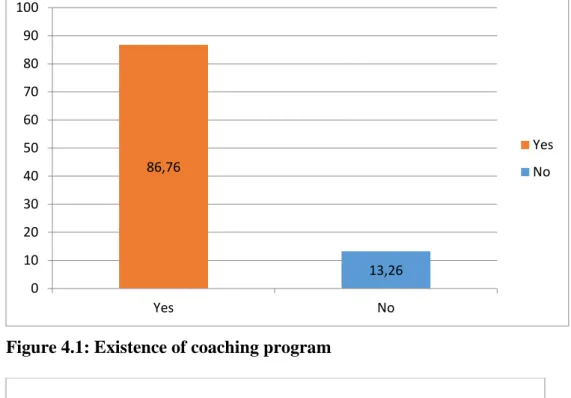
Figure 4.1 Existence of coaching program 53
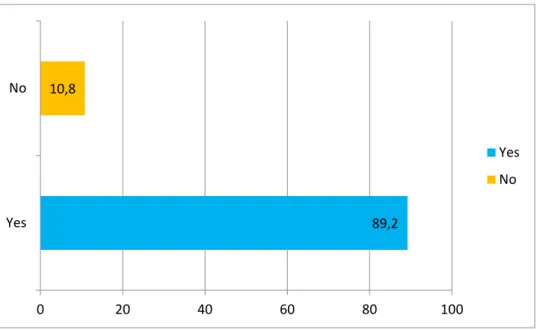
Figure 4.2 Duration of coaching program 53
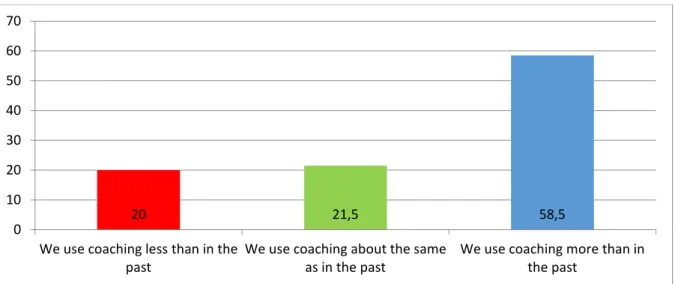
Figure 4.3 Plan of implementing the coaching program 54 Figure 4.4 Distribution of organisation’s use of coaching 55
Figure 4.5 Average duration of coaching arrangement 55
Figure 4.6 Impact of coaching on leadership effectiveness 61
Figure 5.1 Prosci ADKAR model for change management 68
Figure 5.2 Levels of advancement vs. types of coaching 71
xii
List of Tables
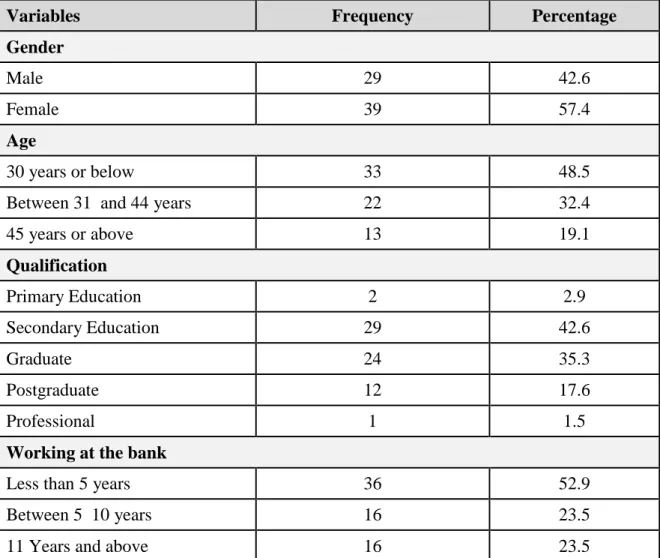
Table 4.1 Distribution of socio-demographic information 52 Table 4.2 The impact of coaching on employee work performance 56 Table 4.3 The influence of coaching on employee morale 57 Table 4.4 The impact of coaching on an employee’s individual learning 59
and personal effectiveness
Table 4.5 The influence of coaching on team effectiveness 60
Table 4.6 Pearson correlation analysis output 62
Table 4.7 Descriptive statistics for the subsections with regards to gender 63
Table 4.8 T-test for equality of means 64
Table 4.9 Descriptive statistics of all subsection with regards to age of the 64 participants
Table 4.10 ANOVA test output 65
1
CHAPTER ONE
INTRODUCTION
1.1 Introduction
Business coaching is presently one of the leading innovations in management development.
Its broad appeal in the business world has resulted in it gaining a significant amount of traction in recent years. Even though business coaching is being extensively implemented in the business world, many do not have an understanding of what constitutes business coaching nor do they understand how to effectively leverage this form of coaching within an organisational context.
The origins of business coaching are deeply entrenched in the executive coaching sessions of former years. Originally, executive coaching sessions were specifically used to deliver precise and quantifiable results through the use of predetermined goals and benchmarks.
Today, however the uses and benefits of business coaching are vast and over the years corporate coaching has been successful in achieving significantly higher return on investments (ROI) than regular corporate training initiatives (Edward, 2012).
Business training programs adopt a classroom learning approach aimed at skills transference, business coaching does not follow this approach. The premise of business coaching is to be motivational and to inspire employees to attain their full potential both personally and professionally. According to Edwards (2012) the primary focus of this form of coaching is to concentrate on the individual, their respective happiness and what these individuals can do to assist the organisation that employs them to be successful. Business coaching, when implemented through all the hierarchical levels of the organization has the ability to fundamentally change the way that organisation operates in a positive manner.
1.2 Motivation for the study
According to (De Haan, 2008 cited in Maritz, 2013) business coaching in the global marketplace is fast reaching maturity. The development of business coaching in South Africa has been stifled because of our years of isolation from the mainstream professional development, hence business coaching is considered to still be in its infancy in South Africa (Maritz, 2013).
2
Maritz (2013, 2) posits that “developing management is at the heart of South African progress”. However, there are challenges that are unique to South Africa, most significantly is the existence of multicultural societies (Maritz, 2013). This is exacerbated by South Africa’s socio-political policies that are aimed at redressing past inequalities that result in unique demands on developmental offerings (Horwitz & Jain 2008). According to Maritz (2013) the prevailing shortage of managerial skills combined with the socioeconomic and labour market issues present significant managerial and business challenges in South Africa.
With these prevailing realities in South Africa, business coaching is being positioned as a key enabler of management development.
This study investigated the impact of coaching as a management development tool, with a view to determine the impact thereof on the overall effectiveness of an organisation. The research was conducted in Nedbank Retail within Kwa-Zulu Natal, a province of South Africa. Having been previously employed at Nedbank, I have had first experience and knowledge of the various management development initiatives being undertaken at Nedbank Retail over the years. Nedbank Retail has been investing in coaching programs that are aimed at facilitating management development through the attainment of key coaching outcomes that are aligned to business expectations. The success and effectiveness of these coaching initiatives have not been quantified and remains uncertain. The lack of tangible evidence of the impact of coaching as a management development tool within Nedbank Retail provided the motivation for this study.
The study provides valuable insight into the impact of coaching within Nedbank Retail. The findings of the study were analysed, conclusion were drawn and practical recommendations have been made on how Nedbank can better leverage the coaching process as a means of enhancing their overall effectiveness going forward. These recommendations can be extended to other similar businesses within the financial services industry.
1.3 Focus of the study
The focus of this study was to determine to what degree coaching as a management development tool impacts the overall effectiveness of an organisations.
3 1.4 Problem statement
Coaching as a professional is still developing in South Africa hence, the lack of reliable evidence often results in the leadership of organisations being uncertain as to whether coaching presents a viable investment in relation to management development. The research on this topic within a South African context is limited (Maritz, 2013). This study considers this topic from both a local and industry specific perspective (Maritz, 2013).
1.5 Objective of the study
Coaching has the potential to improve the effectiveness of management within an organisation and hence is viewed by many as a suitable management development tool. The banking industry is largely service orientated, hence the success of the organisation is largely dependent on their employees and their effectiveness in their various roles. Therefore, in order to gain a better understanding of the impact of coaching as a management development tool, the research objectives below were proposed. Improvements to employee work performance, morale, employee learning and personal effectiveness, team and leadership effectiveness are vital to the success and sustainability of both organisation and the individual.
• To determine the impact of coaching on employee work performance
• To determine the influence of coaching on employee morale
• To investigate the impact of coaching on an employee’s individual learning and personal effectiveness
• To investigate the influence of coaching on team effectiveness
• To determine the impact of coaching on leadership effectiveness.
1.6 Research questions
With research objectives as a basis, the following questions were compiled to ensure that there was alignment between the research objectives and the study.
• Is employee work performance improving at Nedbank Retail?
• Is employee morale improving at Nedbank Retail?
• Are there improvements to employee skills and competency levels?
• Is there effective collaboration across the business units within Nedbank Retail?
4
• Is the leadership demonstrating improvements in their overall ability to lead the organisation?
1.7 Limitations of the study
The study will be conducted across all the Nedbank Retail branches in the province of Kwa- Zulu Natal only and not nationally. Only employees that hold a managerial position will be allowed to participate in this study.
1.8 Chapter outline Chapter One: Introduction
This chapter commences with an outline of the research problem, it also provides valuable details on the background and context within which the study was conducted. Insight into the objectives of the research and the key research questions are also outlined in this chapter.
This chapter concludes with details on the significance of the study and the limitations of the study.
Chapter Two: Literature review
This chapter presents literature on the historical foundation of coaching, the theory of coaching and its impact on a business. The literature also focuses on the core competencies of coaching and the coaching models that are critical to the success and effectiveness of a coaching program. The literature in this chapter highlights the significant relationship between the coaching process and coaching outcomes.
Chapter Three: Research methodology
This chapter details the research methodology approach utilised in this study. This chapter will provided valuable insights into the research design utilised, the sampling approach selected, the research instrument utilised and the process of data collection. The method utilised for the statistical analysis of the data will also be detailed in this chapter. This chapter includes a discussion on the reliability and validity of the research instrument. This chapter concludes with a discussion on the ethical considerations relevant to this study.
5 Chapter Four: Presentation of results
In this chapter the research findings of the study are presented in various graphical formats, namely graphs and tables. The research findings are interpreted and discussed and the research questions and objective are then discussed in relation to the key research findings of the study.
Chapter Five: Interpretation of results
This chapter provides a summary of the research findings in relation to the research objectives. It highlights the conclusions drawn and the practical recommendations offered.
1.9 Summary
Gaining valuable insight into the actual impact of coaching as a management development tool is challenging, due to the factor that there are multiple coaching outcomes and further that the impact of coaching may vary between outcomes due to other mitigating factors.
However, the insights gained from the study provide invaluable to the leadership of Nedbank as they attempt to better leverage their human capital through coaching. The study provides insights that are both understandable and practical.
6
CHAPTER TWO LITERATURE REVIEW
2.1 Introduction
The environment in which businesses and organisations currently operate is characterised by rapid change, varying degrees of complexity and escalating levels of competition (Chowthee, 2013). According to (Daft, 2008 cited in Chowthee, 2013, p.14), the increasing levels of competition, technological innovations and customer sophistication have resulted in customers demonstrating a broader spectrum of needs, which has been instrumental in organisations seeking more effective methods to capacitate and empower their respective managers so that they may be suitably equipped to take on these current challenges.
Hunt & Weintraub (2007) suggest that changes to knowledge, skills and capabilities of both employees and managers need to be aligned with the on-going changes that are occurring within the organisation. Organisations should also focus greater effort in the development of the learning skills of both their employees and managers (Hunt & Weintraub, 2007). The research conducted by Hunt & Weintraub suggests that managers could utilise coaching as an enabler of the overall effectiveness of employees.
The aim of this literature review was to assemble and integrate research material relating to the impact of coaching on the overall effectiveness of employees within the financial services industry. The main sources used for this literature review comprised of books, journal articles and the internet. The primary focus of this chapter is to position coaching as an intervention within the current study. The scope of this chapter covers the origins of coaching, the definition of coaching, as well as the core competencies of coaching. This chapter also details the existing coaching theories, as well as the different methods coaching. Finally, the impact and effectiveness of coaching interventions is deliberated.
The chapter concludes with summary of all the salient factors discussed in this chapter.
2.2 Definition of coaching
Coaching can be defined in many different ways, the definition approach used is ultimately dependant on the specific elements of coaching the writers would like to stress (Huang, 2011).
7
Research carried out by authors Hall, Otzao, & Hollenbeck (1999, cited in Huang, 2011, p.11) submit that “coaching is meant to be a practical, goal focused form of personal, one-one learning for busy executives and may be used to improve performance or executive behaviour, enhance a career or prevent derailment, and work through organisational issues or change initiatives.” This view is supported by Witherspoon (2000, p.167) who states that
“coaching is an action-learning process to enhance effective action and learning agility”.
Killburg (1996b, p.142) states that coaching is “a helping relationship formed between a client who has managerial authority and responsibility in an organisation and a consultant who uses a wide variety of behavioural techniques to help the client achieve a mutually identified set of goals to improve his or her professional performance and personal satisfaction and, consequently, to improve the effectiveness of the client’s organisation within a formally defined coaching agreement.”
The concept of coaching being a helping relationship is supported in definition of coaching as cited in Firsch (2001) who purports that it is a “one-on-one intervention designed to support professional growth from within the organisation, and should be distinguished from other general advisory roles provided by inside consultants and human resource professionals because it is focused at the individual level”.
From the definitions that have been presented we are able to extract some key principles of coaching. Firstly, coaching is about a professional relationship between the coach and coachee that is characterised by reciprocity and strongly emphasized on trust and commitment (Huang, 2011). Secondly, coaching is a partnership or a relationship in which both the coach and client share an interest in the development of the client’s goals and aspirations (Maynard, 2006). The establishment of mutually identified goals is achieved through an individualised process that utilises tools and instruments to evaluate the central person.
Which then facilitates the attainment of the third components, the coaching outcomes, which can be realised through a systematic action plan (Huang, 2011). Coaching is instrumental in improving personal effectiveness because it guides an individual’s resources such as time and energy. Whilst coaching is a personal learning process, it also contributes largely to the overall learning of the organisation that employs the coachee.
8 2.3 History of coaching
The earliest literature on coaching was based on a peer-review article that was based on a study by Gorby (1937). The study was carried out on senior employees that were employed under a profit sharing plan. The senior employees were required to coach the newer employees on how to reduce waste and increase profits Maynard (2006). In the years that followed there were sporadic articles on coaching appearing in literature.
It is during this period that it emerged that coaching was useful in improving sales performance within an organisation (Bigelow, 1938). Growing support and confidence in coaching was further demonstrated in Hayden (1955) encouraging the coaching process to follow the performance evaluations process as a means of improving productivity levels, as well as facilitating sustainable behavioural changes. Mold (1951) reported on the first managerial training program that focused on interpersonal communication skills utilising coaching techniques.
After a period that span over 10 years Mahler published research on the training of managers to be more effective coaches (Maynard, 2006). He later published a book for management teams within large corporates, this effectively marked the inception of professional coaching within a business context, with managers and executives being the first client population.
During the late 1980’s the use of coaching as a performance tools became more widespread (Tobias, 1996).
The authors Hall, Otaza & Hollenbeck (1999) state that coaching is strongly rooted in the field of applied psychological sciences. However, (Stein, 2004 cited in Maynard, 2006) suggests that coaching has its roots in educational theory, communication studies, social systems theory, the self-help movement, management and leadership theory, the holistic movement, athletic motivation theory, psychotherapy, and adult development theories.
Tobias (1996) suggests that the initial use of the term coaching was made as an alternative reference to the practices of consulting and counselling in an attempt to make these practices appear to be less threatening and remedial. Stern (2001) affirms the positive impact of the re- labelling efforts, because media coverage in the late 1990s branded coaching as a hugely sought after benefit is being made available by organisations that were keen to support their employee’s individual growth and progress.
9
The research conducted by Kilburg (1996, p.59) suggests that coaching is as an “emerging competency in the practice of consultation” lends support to the re-labelling theory of how coaching initially began from the field of consulting and counselling.
The increasing popularity of coaching over the years can be ascribed to various reasons, some of the more commonly identified reasons are the rapidly changing business environment, globalisation and a greater focus on the development of human capital, most reasons are purely speculative and without substance (Tobias, 1996). However, the most simplest and popular reasoning is provided by Witherspoon and White (1996a, p.124) who state that
“coaching brings out the best in people”, it also can be used as a platform to learn new skills, increase work performance and prepare individuals for change and advancement.
2.4 Coaching theories
2.4.1 Coaching and therapy
Coaching and therapy have a common background, however whilst coaching is considered to be therapeutic because it focuses on enhancing an individual’s performance or life experiences, it still remains distinctly different from therapy. Coaching is focused on developing the individual’s future and is wellness orientated, whilst therapy focuses on the individual’s past and is illness orientated. A fundamental difference between coaching and therapy, is that coaching is all about discovering, whilst a therapy is focused on recovering and uncovering (Wright, 2005).
2.4.2 Coaching and training
The primary object of training is to prepare trainees to effectively perform specific post- training tasks. The training agenda is usually determined by the trainer and the trainees are required to adapt to the process and structure of the training (Wright, 2005). The coaching process allows the client to establish both the agenda and the goals that are to be achieved.
Trainers have the ability to be excellent coaches and coaches have the potential to be trainers.
According to Schmidt & Bjork (1992 cited in Wright, 2005, p.326) there are occasions when the successful completion of a training initiative does not result in an improvement in performance.
10
The reason for this occurrence according to Wright (2005, pp. 326) is the fact that training lacks the teaching of metacognitive skills to trainees. Hesketh (1992) defines metacognitive skills as the ability to think about one’s thoughts, feelings and behaviours, which are all essential in the mastering of new skills.
The definition of metacognition according to Hesketh (1992) comprises of two components, the knowledge and control of self and knowledge and control of process. These two components are collectively significant in the self-regulation of commitment, attitude, attention and executive control behaviour (Wright, 2005). Metacognitive skills are a central area of focus for the coaching process. According to research conducted by Olivero, Bane &
Kopelman (1997), productivity resulting from a training program was significantly improved with the addition of coaching compared to just training alone.
2.4.3 Coaching and mentoring
Mentoring occurs within an organisational context and it usually comprises of a traditional hierarchical relationship between a senior employee and a junior employee. The purpose of this relationship is to facilitate the transference of the domain specific knowledge of the senior employee to the junior employee. The primary consideration when drawing a comparison between coaching and mentoring is the fact that mentoring requires an individual with expert knowledge in a specific domain to transfer that specific knowledge to another individual who does not possess that specific knowledge or expertise (Wright, 2005).
Conversely, the coaching process facilitates learning in the client. There are three key practice areas in which coaching and mentoring differ, focus, skill and ownership. From a focus perspective, a coach aims to assist the client to learn how to increase his/her level of achievement, whilst a mentors aims to be a resource to the person being mentored. The skills requirement for a mentor include people skills, training skills and teaching skills, whilst the requirements for a coach focus on knowledge, techniques, as well as the skills to assist the client achieve their desired goals without directing the client.
Wright (2005) posits that coaching and mentoring differ in terms of their fundamental requirements; the requirements of coaching are self-direction and ownership of performance by the client.
11
Whilst, the requirements of mentoring necessitate the ownership of performance to be jointly allocated between both the mentor and client. Coaches are able to draw on their high level of expertise in a specific area of business to facilitate a client’s learning. Although, it is possible for mentors to possess good coaching skills, it is not a requirement of mentoring. The effectiveness of mentoring can be significantly enhanced should mentors embark on explicit training in coaching skills (Wright, 2005).
2.5 Coaching core competencies
The International Coaching Federation (ICF) and the International Association of Coaches (IAC), both certified bodies have identified coaching core competencies as meeting ethical guidelines and professional standards, establishing the coaching agreement, establishing trust and intimacy with the client, coaching presence, active listening, powerful questioning, creating awareness, designing actions, planning and goal setting, and managing process and accountability (Wright, 2005).
2.5.1. Directive versus non-directive approach to coaching
Gwyther-Jones (2011) posits that coaching is an intervention that supports the coachee to develop and discover a sustainable approach to resolving challenges and achieving success. It is not a requirement of the coach that he/she provide all the answers, solve all the problems or teach/instruct. The role of the coach is to be a facilitator, a sounding board and an awareness creator (Gwyther-Jones, 2013). The focus is on a management process that is viewed as being
“non-directional” as opposed to “directional” (Gwyther-Jones, 2011).
12 Figure 2.1 Directive and non-directive coaching
The characteristics of directive and non-directive coaching is defined as follows:
COACHING
Instructing Listening to understand
Giving advice Asking questions to raise awareness
Making suggestions Reflecting back
Offering guidance Paraphrasing
Providing answers Summarising
Providing solutions Giving feedback
Source: Nieuwerburg (2011).
2.5.2 Core elements of good coaching
An effective coach will need to have skills to establish rapport, consolidate trust and ask the appropriate questions that generate self-awareness for the coaches (Gwyther-Jones, 2011). A tenet of coaching is the conviction that the coachee has the ability to solve their own problems. On this basis the coach does not attempt to “fix” the coachee but rather to create an awareness of factors that may be instrumental in inhibiting the coachee’s performance (Gwyther-Jones, 2011). Passmore (2006) suggests that there are certain characteristics that constitute good coaching, and an effective coach should possess most if not all of these characteristics. These characteristics are vital because it highlights the coach’s business skills and acumen, expertise, experience, people skills, dedication and commitment to the coaching process, which ultimately defines the success or failure of the coaching process.
Directive Non -
Directive
13 Figure 2.2: Core elements of good coaching
Source: Passmore (2006, p.15).
2.6 Types of coaching
Over the years the sports coaching model has been used as a platform on which many coaching models have been developed. Different coaching approaching have been developed for individuals and teams. The coaching approaches relevant to individuals are as follows:
2.6.1 Goal orientated coaching
Coaching is a vital tool to support organisational change (Fielden, 2013). Coaching, facilitation and training implementation are all considered collectively, when an organisation is in the process of creating strategies to manage change. There are many within organisations that hold the belief that coaching is actually counselling that occurs in the work environment, despite the fact that there are significant difference between coaching and counselling (Fielden, 2013). A primary difference between coaching and counselling is the fact that coaching applies a goal setting approach.
Focus
Intution
Objectivity
Strenght
Goals
Actions Clarifying
Questioning Empathy
Listening Perspective
Strategies
14 2.6.2 Executive coaching
Executive coaching is centred on developing fast-track and high-performing leaders and focuses on technical issues and psychological considerations (Fielden, 2013).Executive coaching is built on the premise that the executives that hold these positions are either at the top or close to the top of their organisations.
As a result of the office they hold, they fully understand the dynamics of their environment and are fully supportive of the need for constant improvement. In this scenario the coach takes on the role of a neutral, objective party with whom the executive can discuss opportunities and challenges. The importance of the role of the coach in this scenario cannot be sufficiently stressed.
2.6.3 Transactional and transformational coaching
Over the years there has been a progressive shift in the approach that coaches utilise, where in the past coaches utilised a transactional model, which essentially focused on competencies, learning skills and techniques. Today, coaches utilise a transformative model that is primarily concerned with shifting individuals’ views, values and sense of purpose (Fielden, 2013). Building awareness, commitment and practice are the three core skills that are necessary to enable effective transformational coaching.
2.6.4 Self-coaching
Self-observation is an important part of self-coaching. Coaches are required to conduct an introspective assessment of themselves by posing questions to themselves on aspects such as their coaching experience, the views they hold, their opinions and their beliefs in relation to coaching.
2.6.5 Business coaching
At present there is no clear distinction between the boundaries of executive coaching and business coaching. The aim of business coaching is “operational mastery” that focuses on business transforming the business, improving growth opportunities, transformation, improving the working atmosphere and morale of staff (Zeus and Skiffington, 2002).
Business coaching is an interactive collaborative partnership which focuses on reaching personal and professional goals, “business coaching enables the client to understand and enhance his or her role in achieving business success (Zeus and Skiffington, 2002).
15
The business coach helps the client discover how personal characteristics, including a sense of self and personal perspectives, affect personal and business processes, and the ability to reach objectives within a business context” (World Wide Association of Business Coaches, 2008). In general, business coaching therefore, is concerned with organisational objectives and deals with the task or work with which the individual is engaged.
2.6.6 Personal/Life coaching
The emphasis in personal or life coaching is on the individual outside of an organisational context, although there may be an overlap where work concerns are discussed. Personal coaching is a series of conversations that are related to the coachee’s learning and progress in life, which focuses on helping the coachee to create positive change in his/her life (Starr, 2003).
For example, an exploratory study by Grant (2003) found evidence that a life coaching programme facilitated goal attainment, improved mental health and enhanced the quality of participant’s life. Therefore, in personal coaching there is an emphasis on improving personal effectiveness, which leads to personal growth in the coachee.
2.7 Coaching models
The purpose of a coaching model is to provide a framework for the coach, it provides the coach with an underlying strategy that can be utilised when the coach is coaching the coachee (Simon, 2012). Grant (2012) suggests that a coaching model is a high level strategy that allows the coach to adequately respond to diverse coaching situations. The ability of coaches to utilise multiple coaching models allows coaches to better meet the coaching challenges in the current rapidly changing business environment.
2.7.1 An integrated model of goal-focused coaching
Grant (2012, p.146) posits there is much controversy with respect to the goal-focused approach, much of this controversy is centred around the view that the “goal setting is overly- linear process that constricts that coaching conversation and acts as a barrier to working with emergent issues within the complex dynamic system that is coaching conversation”. Goal setting is also linked to coaches encouraging a coachees to pursue either outdated or inappropriate goals (Grant, 2012).
16
Clutterbuck (2010) suggests that goal setting often focuses on the measure of issues that can be measured but that often have low level of importance. Whilst, the views on goal setting may vary, there is merit in goal setting most especially within the context of self-regulation.
According Grant (2012) “goal-focused self-regulation sits at the core of the coaching process”.
The premise of this model is that the individual is responsible for determining the goal. That individual then establishes an action plan and commences action. The individual then monitors and evaluates his or her performance by comparing the performance to a standard.
The outcome of the evaluation process results in the individual modifying their actions so as to enhance performance and hence facilitate the attainment of the goals. Grant (2012, p.149) states that “the role of the coach is to assist the coachee with their movement through the self- regulation cycle onwards, towards the attainment of the goals”.
2.7.2 The GROW model
The GROW Model has been successful throughout the world, across a broad spectrum of people from diverse backgrounds and with varied experiences. Globally, it is the most common basis of coaching within many organisation and universities. Grant (2011) posits that the GROW Model is presently the most favoured coaching model within the international coaching community, because of its ability to deliver outstanding results it is able to assist people to achieve within a personal context, as well as within as organisational context.
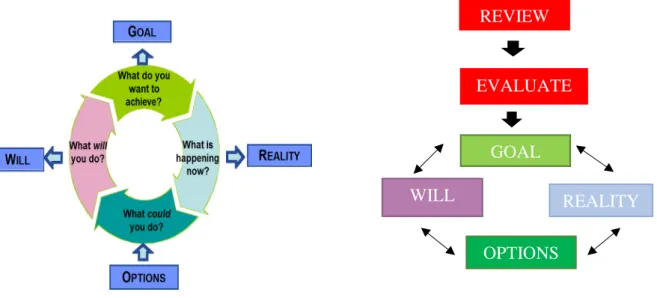
According to Grant (2011, p.118), “the GROW Model is an acronym standing for (G)oals, (R)eality, (O)ptions and (W)ill, highlighting the four key steps in the implementation of the GROW Model”. As the coach and coachee advance through the four stages of this model it results in an increase in the awareness of the coachee of his/her own aspirations, it also facilitates a better understanding of the current context, it highlights the various possibilities that are accessible to the coachee and the relevant actions that are available to achieve both their personal and professional goals (Grant, 2011). Through the process of defining and setting specific, measurable, achievable goals, and the establishment of a realistic time frame for their achievement, the GROW Model successfully promotes confidence and self- motivation, leading to increased productivity and personal satisfaction (Grant, 2011).
17
Figure 2.3: The GROW model and RE-GROW model
Source: Grant (2011, p.125)
According to Grant (2011, p.124) “without a clear and explicit link from one session to the next, the coaching engagement runs the risk of becoming a series of disjointed conversations”. Present coaching models focus on the structuring of single coaching sessions, the RE-GROW model as proposed by Grant (2011) is aimed at integrating the learning from earlier sessions into the current session. The inclusion of Review and Evaluate, ensures that each coaching session commences with a review and evaluation of the learning and actions from the last session.
2.8 Measuring the effectiveness of coaching
It is hugely challenging to definitively prove the benefit of any employee development activity, including coaching (Trenner, 2013). In an organisational context there are a minimal number of organisations that follow rigorous processes for the specific purpose of measuring individual productivity and this is further complicated by the fact that there is no direct link between the performance of an individual to the output of their function or to the organisation’s profits (Trenner, 2013).
Currently only a small number of organisations that utilise coaching have a system in place that allows for the proper evaluation of its effectiveness. Trenner (2013) postulates that the existence of both hard and soft data indicates that coaching does provide value for money.
REVIEW
EVALUATE
GOAL
WILL REALITY
OPTIONS
18
The primary approaches utilised to assess the benefits of coaching as defined by Trenner (2013) return on investment for the organisation, the contribution of coaching towards the company’s strategies for developing people, the impact that coaching has on the client in terms of changing their ways of working or achieving their coaching goals and feedback from clients about the effectiveness of the coaching and their overall satisfaction levels.
2.8.1. Tangible benefit of coaching - return on investment (ROI)
The most effective means of calculating ROI in relation to coaching, is in businesses where measurement is already occurring (Trenner, 2013). According to Trenner (2013), process improvement initiatives that include coaching may reveal direct savings over a period of time in relation to the reduction of costs, alternatively sales employees that are receiving coaching may achieve improvements in their sales performance as a direct result of their coaching.
The challenge in both these scenarios is determining the exact extent to which to these successes may be attributed to coaching specifically. Increases in ROI as a result of coaching initiatives span 200 – 700 percent. Trenner (2013) posits that ROI can be quantified on the basis of the following coaching translates into doing, doing translate into impacting the business and the impact can be quantified and maximised.
A study conducted on 100 executives from 56 different organisations over a 6 – 12 month period revealed a 570 percent or 5.7 times return on the original cost of coaching Trenner, 2013). The specific improvements that were reported by the participants of the study were as follows productivity (53%), quality (48%), customer service (39%), reduced complaints (34%) and cost reductions (23%) (Trenner, 2013).
2.8.2 Intangible benefits of coaching – “soft benefits”
In addition to the financial benefits that were identified from the study, it was also determined that coaching also provides a vast array of intangible benefits, which are hugely important to organisations. The specific improvements that were reported by the participants of the study were as follows improved relationships (direct reports – 77%, stakeholders – 71%, peers – 63%, clients – 37%), improved teamwork (67%), increased job satisfaction (61%) , reduced conflict (52%); increased commitment to their organisations (44%) (Trenner, 2013). These findings have been supported by other studies that have also identified additional benefits such as, decreased stress, depressions and anxiety at work, increased resilience, well-being, and workplace engagement (Trenner, 2013).
19
2.8.3 Evaluating the overall effectiveness of coaching
According to Leonard-Cross (2010), the evaluation process of coaching should extend beyond just the feedback and performance of the coachee but should rather be inclusive of other sources as well. The viewpoints of the coach can add valuable insights into aspects of the coaching relationship and as well as individual outcomes (Leonard-Cross, 2010).
Fairhurst (2007) cited in Leonard-Cross, (2010) suggests that the four main sources for evaluation should be coaches, coachees, organisational perspective and documents. In addition to the above, the evaluation process should also comprise of attitude questionnaires that include rating scales, this will facilitate both positive and negative perceptions, as well as face-to-face interviews which allow for a more detailed exploration (Leonard-Cross, 2010).
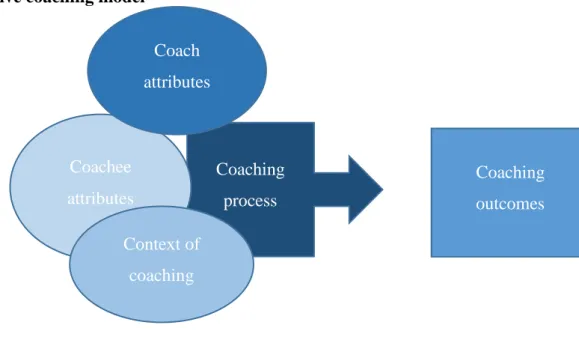
The model below aptly summarises the conditions for effective coaching.
Figure 2.4: Effective coaching model
Source: Jarvis (2004 cited in Fielden, 2005)
The model proposed by Jarvis suggests that for the coaching outcomes to be successfully achieved, the attributes of both the coach and coachee must be considered to ensure that they are at an acceptable level of competence. The coaching context must be considered to ensure that the environment is supportive of the coaching process. The coaching process must be aligned to the coaching objectives. Consideration of all of these aspects will improve the likelihood of the attainment of the coaching outcomes.
Coaching process Coachee
attributes
Coach attributes
Context of coaching
Coaching outcomes
20 2.9 Coaching outcome
Opinions and perceptions in relation to coaching differ significantly (Leonard-Cross, 2010).
However, the growing awareness of coaching has been instrumental in coaching being viewed as a more accessible development tool that can facilitate the overall shortening of the learning curve, as well as the adaptation to new environments or roles (Leonard-Cross, 2010).
Coaching within an organisational context has the ability to impact a broad spectrum of work life aspects.
According to Williams & Offley (2005 cited in Leonard-Cross, 2010, p. 37) the benefits of coaching comprise of improved performance, job-satisfaction, teamwork, quality, communications, flexibility, ownership, leadership, succession planning and career planning.
Future talent development requires organisations to search both internally and externally for employees that can be nurtured and developed into roles and further that the traditional development areas be extended beyond technical skills and job experience to include interpersonal skills as well.
Bloch (1996) posits that coaching is one of the most powerful methods of developing these
‘soft’ skills, however cognisance must be taken of the fact that as with any development intervention, the levels of success are contextually driven in relation to the individuals that are participating and or the situations.
2.9.1. Employee performance
In a business context it is imperative that managers have solid coaching skills, these skills are instrumental in assists individual employee and teams in the delivery of the bottom line results (Demarco, 2013). According to Demarco (2013), a manager who is able to “coach” is able to make a profound improvement in the performance of employees while keeping them motivated. Many studies demonstrate that correctly coaching employees positively impacts the bottom-line and further that organisations that have adopted a combination approach of training and coaching have achieved significant bottom-line profitability. Training as a stand-alone employee development tool is able to improve productive by only 22.4%, however as combination of both training and coaching increases productivity by approximately 88% (Demarco, 2013).
21
However, according to Heslin et al. (2006) and authors Heslin an Latham (2004) whilst organisations and managers acknowledge the possibility that coaching can improve performance, often the implementation of coaching does not deliver the desire outcomes and results. This view is shared by Whitmore (2003, cited in Agarwal et al., 2009, p.2112) who argues that “coaching effectiveness could be limited by organisational and behavioural barriers”. Illustrations of this could be implementing coaching in an organisational environment that is not supportive of coaching orientated behaviour or implement coaching because it is a managerial fashion or fad without demonstration it usefulness or its strategic value (Agarwal et al., 2009).
Managers may perceive coaching to be an obstacle and view it as an alternative form of a performance appraisal (Agarwal et al., 2009). Further some individuals within the organisation may not benefit from high performance work practices such as coaching, teamwork or developmental programs because these practices may heighten the individual’s awareness and the pressure they experience in relation to the delivery of results, the resultant stress and the instability of the situation (Agarwal et al., 2009).
When there is a lack of mutual support on both the part of the coachee and manager it could result in a poor coaching outcome in relation to performance, because other parties could view coaching as an obstacle that distracts them from their day-today activities (Whitmore 2003, cited in Agarwal et al., 2009, p.2112). Strict time constraints and growing workloads result in managers focusing more of business-related activities and less on developing employee relationships and developing the foundations for long term performance (Green, 2006). Appelbaum et al. (2000) suggest that as organisations introduce high performance practices such as coaching, employees may view this and other similar initiates as the organisation becoming more demanding and that the increasing work demands are being disguised through offering the opportunity for development, motivation and improvement.
2.9.1.1 Impact of the organisational context on employee performance
Contel (2012) suggests that all employees come to work with the intention of doing a good job. However, the existence of organisational and process barriers result in much frustration for employees, which has a ripple effect of reducing the employees desire to perform their jobs well.
22
The resultant decline in productivity or performance is usually instrumental in the leadership of the organisation implementing corrective action in the form of coaching (Contel, 2012).
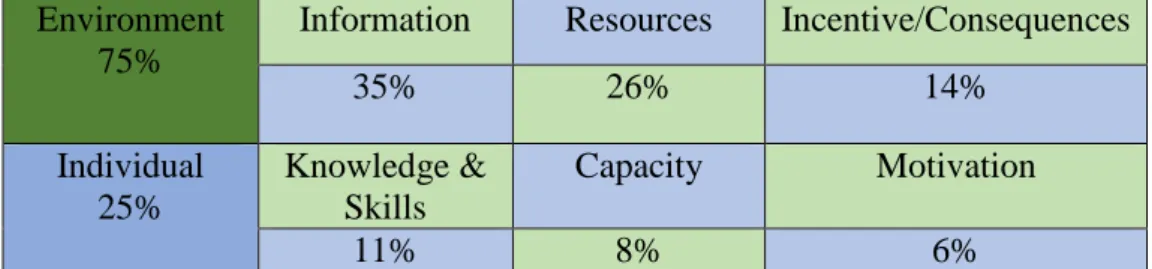
Research indicates that 75% of the factors that have a direct bearing on an individual employee’s performance in the workplace relate to system issues rather than personal issues.
The system issues differs in every organisation and for every job, hence the coach needs to have an understanding of the organisational context and the system issues to effectively coach the coachee to achieve higher levels of performance (Contel, 2012).
The figure below details the various system issues:
Figure 2.5: Thomas F. Gilbert – Model Environment
75%
Information Resources Incentive/Consequences
35% 26% 14%
Individual 25%
Knowledge &
Skills
Capacity Motivation
11% 8% 6%
Source: Harold, et al., (2004 cited in Contel, 2013).
In order to effectively address the various system issues identified, coaches have to adopt multiple coaching strategies.
2.9.1.2 Coaching strategies for managers
The coaching process is a combination of open communication and feedback between the coach and the coachee, which requires a substantial amount of investment in both time and effort. The ability of the coach to effectively perform his/her role significantly raises the performance level of the coachee, however for the coaching process to be successful it also requires the coachee be receptive of the coaching process. The coaching strategies that managers could adopt as defined by Demarco (2013) as follows, build a foundation of trust, clear communication, be a motivator and morale builder, listen and ask powerful questions.
The effective implementation of these strategies is contingent on the calibre of the coach, the selection of a coach often creates much debate amongst the leadership of an organisation.
23 2.9.1.3 Internal vs external coach
According to Tyler (2000 cited in Maynard, 2006) historically coaches were hired external to the organisation, however due to the fast pace of change occurring within organisations, the development of existing internal resources to meet coaching needs is fast growing traction.
Notwithstanding the growing trend towards the use of internal coaches, a 100% of the executives surveyed by Wasylyshyn (2005), demonstrated a strong preference for external coaches, citing trust and confidentiality as the primary reasons for their preference (Maynard, 2006).
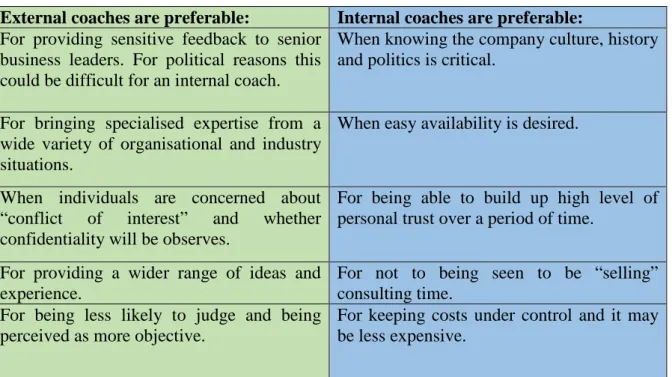
The following table provides a summary of the differences between external and internal coaches (Fielden, 2005):
Figure 2.6: Differences between internal and external coaches
External coaches are preferable: Internal coaches are preferable:
For providing sensitive feedback to senior business leaders. For political reasons this could be difficult for an internal coach.
When knowing the company culture, history and politics is critical.
For bringing specialised expertise from a wide variety of organisational and industry situations.
When easy availability is desired.
When individuals are concerned about
“conflict of interest” and whether confidentiality will be observes.
For being able to build up high level of personal trust over a period of time.
For providing a wider range of ideas and experience.
For not to being seen to be “selling”
consulting time.
For being less likely to judge and being perceived as more objective.
For keeping costs under control and it may be less expensive.
Source: Jarvis (2004 cited in Fielden, 2005)
2.9.1.4 Positive psychology of coaching
Organisations have started to implement “positive” organisational practices, such as coaching that are aimed at enhancing employee skills, happiness or well-being to achieve optimal performance, as opposed to the “plugging” of development gaps to achieve an “acceptable”
level of performance (Crabb, 2011).
24
According to Linley & Harrington (2005 cited in Crabb, 2011) the literature available on coaching psychology correlates strongly with positive psychology, this is significant because both these specified approaches are clearly focused on the enhancement of performance and well- being, which is attained by focusing on the positive side of human nature as opposed to what is flawed or negative.
Over the recent years practitioners rather than academics have started to focus a significant amount of attention on employee engagement, a type of positive organisational practice.
In a leading study on the drivers of employee engagement, Robinson et al. (2004) define employee engagement as ‘a positive attitude held by the employee towards the organisation and its values (Crabb, 2010).
2.9.1.5 Employee engagement
The relevance of employee engagement is that an engaged employee is cognisant of the prevailing business context and hence collaborates with other employees for the specific purpose of improving the performance within the job such that it benefits the organisation.
Crab (2011) posits that an organisation must focus its efforts on developing and nurturing employee engagement, employee engagement requires a “two-way relationship between employer and employee”.
Coaching fosters and supports employee engagement, resulting in business leaders viewing coaching as an appealing management tool and research demonstrates that there are multiple organisational benefits that may be derived from an engaged employees. This is supported by the findings in Towers Perrin Global Workforce Survey, (2007/2008) that revealed that
“organisations with engaged employees create higher performance levels and remain ahead of their competitors”. Further, a survey that specifically focused on the attitudes of employees revealed two important findings, firstly that that engaged employees were less absent from work and secondly, that these engaged employees were less likely to leave their employer as opposed to their less engaged colleagues (Towers Perrin Global Workforce Survey, 2007/2008).
25
Research conducted by Chartered Institute of Personnel and Development (CIPD) across 30 organisations in various industry sectors revealed that coaching improved performance in both individuals and the team, it also reduced the element of human error and hence the need to spend time correcting errors, a visible improvement in the level of performance was acknowledged by both coachee and line manager and finally the need for managerial supervision was reduced due to an increase in the confidence of individuals in their performance (Chartered Institute of Personnel Development, 2005).
2.9.2 Employee morale
Gellerman (1992 cited in Crumpton, 2013) in his book Motivation in the Real World, defines
“motivation as the art of helping people to focus their minds and energies on doing their work as effectively as possible”. As the world continues to experience rapid change and rising levels of economic challenges the term “focus” in Gellerman’s definition has become very significant, resulting in both managers and supervisors searching for creative ways to direct employee’s attention productively (Crumpton, 2013).
2.9.2.1 Coaching as a motivational tool
Human motivation is complexly linked to emotions and the ability of an individual to maintain focus on what is accomplishable as opposed to what is not, this can be a very formidable task for an individual. An employee’s motivation has a direct bearing on the attainment of social achievement goals. It also correlates strongly to the emotional intelligence of the employee. Managers often use emotional intelligence principles to enable other’s self-awareness, this facilities the finding of solutions through others Crumpton (2013).
Crumpton (2013) suggest that basic motivational techniques require managers and supervisors to play an active role in coaching others. Active coaching towards motivating employees includes providing positive feedback and rewarding good behaviours, public recognition of efforts, providing incentives, even if they are non-monetary, leading by example and demonstrating willingness to be part of the team, listening to what is being said and responding appropriately and asking questions, and showing interest and empathy in the details.
26
These basic motivation technique are regularly used by both managers and supervisors during periods when the work environment is relatively normal. The challenge arises though when managers need to keep their employees motivated during periods of adversity, this requires a combination of basic motivation techniques and strong leadership. A regular manager could be transformed into an effective leader, this is largely dependent on his/her ability to react to.
Whilst managers are goal-oriented and problem solvers, leaders are required to be able to look beyond the mechanics of the situation in order to stimulate people on a personal level (Crumpton, 2013).
2.9.2.2 Motivation theories
According to Ball (2012) needs theories defines motivation as “the willingness to exert high levels of effort towards the attainment of organizational goals, conditioned by the individual’s efforts and ability to satisfy some individual need”. Within the context of needs theories, a “need” is considered to be an internal state that creates a scenario where some outcomes seems attractive (Ball, 2012).A need that is unsatisfied has the ability to generate tension which then encourages drive within the individual. This drive has the ability to stimulate a search type of behaviour aimed at identifying particular goals. Should the individual be able to attain these particular goals it will result in the need being satisfied and hence, a reduction in the tension.
• McClelland’s Theory
McClelland’s theory is based on his belief that four critical factors drive motivation the need for achievement refers to the drive an individual has to compete and succeed (Efere, 2005). Every person has their own standard against which they measure their success. The need for affiliation refers to the desire for compassionate, warmth and sociable contact with other individuals (Efere, 2005).
The need for power refers to the desire that an individual exhibits to influence others, as well as the need to have authority over other people (Efere, 2005). The need for avoidance refers to the avoidance of conflict or negativity when relating with individuals (Efere, 2005).
27
These four needs are present within all individuals, however some needs may be more dominant than others, hence an individual may exhibit the need for power, affiliation and achievement simultaneously (Armstrong, 1991). Maharaj (2011), suggests that a leader is not able to effectively motivate an individual if they is not aware of what is important to that individual. According Jones and George (2008) the significance of the needs are revealed by individuals, it is reliant on the occupation of individuals and different occupations will benefit from different needs sets.
Leaders within the organisation must take the initiative to learn to read emotional signals from employees, this will allow them to effectively motivate at whatever level of concern could be most impacted. People will always have concerns, but determining which concerns within the workplace influence a personal need is key to providing the best motivation Crumpton (2013). This view is reinforced by Herzberg’s motivation-hygiene (maintenance) theory, this theory is especially significant within the context of sustaining motivation through a financial crisis. Herzberg’s The Motivation to Work study (Herzberg, 1959) presented the role of the organisation as providing maintenance of factors outside the employee’s control. These factors were crucial to the providing of a platform for employees to feel motivated, this was achieved through internalised factors such as praise, recognition or opportunities for advancement.
This affirms that the leadership of the organisational have the opportunity to make a difference by crafting a culture that is supportive of their employees, even though certain changes and occurrences could render the situation less than ideal.
Research conducted by Chartered Institute of Personnel and Development (CIPD) across 30 organisations in various industry sectors revealed that coaching results in an individual’s level of self-confidence increasing resulting in the individual becoming more proactive, and work performance improving. It also revealed that coachees are motivated by the support that is being provided to them, resulting in their attitude towards self-directed progress being boosted (Chartered Institute of Personnel and Development, 2005).
28 2.9.3 Team effectiveness
The authors Ives & Cox (2012) suggest that literature on coaching has frequently not recognised that individual coaching is not able to progress effectively without group cooperation, this aspect of group cooperation is especially significant when the individual goals of employees overlap with the goals of other employees all within the context of a single organisation. The importance of group coaching is reinforced in Clutterbuck (2010) who argues that there are circumstances in which certain prevailing external factors have a substantial impact on an individual and that these circumstances then render group coaching to be vital.
2.9.3.1 Individual coaching vs team coaching
Individual coaching has limitations and group coaching can be a more appropriate coaching option Hudson (1999). Research conduct by Haug (2011) with a project management team based in Germany affirms this view. Haug’s research revealed that team dynamics has the ability to cause ineffective, as well as potentially destructive behaviour and that the use of group coaching tends to mitigate against this sort of behaviour.
In the same way, Woodhead’s (2011, pg. 114) research that was based on professional multi- disciplinary teams in the National Health Service, demonstrates how coaching supports team- work by providing: “a forum for dialogue and thereby improving communication, giving focus and clarity of shared goals, increasing trust and collaboration that allows participants to see beyond each other’s professional image, and enabling a systemic understanding and approach to problem solving, decision making and commitment to achieving collective outcomes”.
2.9.3.2. Group coaching as a means of enhancing team effectiveness
Group coaching focuses on identifying methods that both individuals and groups can use to create more satisfied lives not only for themselves but for their respective communities as well. A combination of individual and group work is most beneficial according to (Shulman, 2008 cited in Cox, 2012, p. 38) because “rather than robbing the individual work of its vitality, group discussion often enriches the content of the individual sessions”. The significance of this dual approach is that it provides a platform for individuals to be exposed to the issues of other individuals.