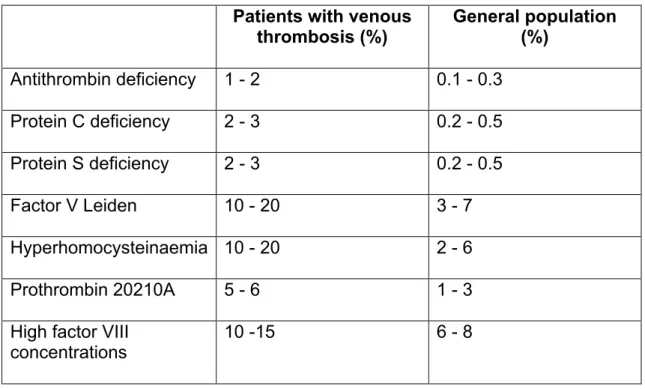
Where use is made of the work of others, this is acknowledged in the text. Venous thromboembolism (VTE) is a cause of significant morbidity and mortality.[4] The main manifestations of venous thrombosis are deep vein thrombosis (DVT) in the lower extremities and pulmonary embolism. The frequency of the main hereditary forms of hypercoagulability varies significantly within healthy populations and among patients with venous thrombosis.
Up to 60% of patients with central venous catheters will develop a complication, thrombosis being one of the most common [16]. Certain congenital thrombophilic disorders, such as factor V Leiden and the prothrombin gene mutation, are extremely rare in blacks.[14] At the time this study was initiated, there were few reports of venous thrombosis in HIV-positive patients.
One of the earliest reports of VTE in HIV-infected individuals was by Lafeuillade et al., who reported 2 cases of thrombosis in HIV-positive patients.[22] The first patient was a 29-year-old gay man who had. Coagulation studies showed that all three patients with thrombosis and 16 of the 22 patients without thrombosis had decreased free protein S levels. In light of the uncertainty surrounding the causes of thrombosis in HIV-infected patients, Feffer et al.
Many of the above studies have alluded to the increased prevalence of venous thromboembolism in HIV-positive patients.
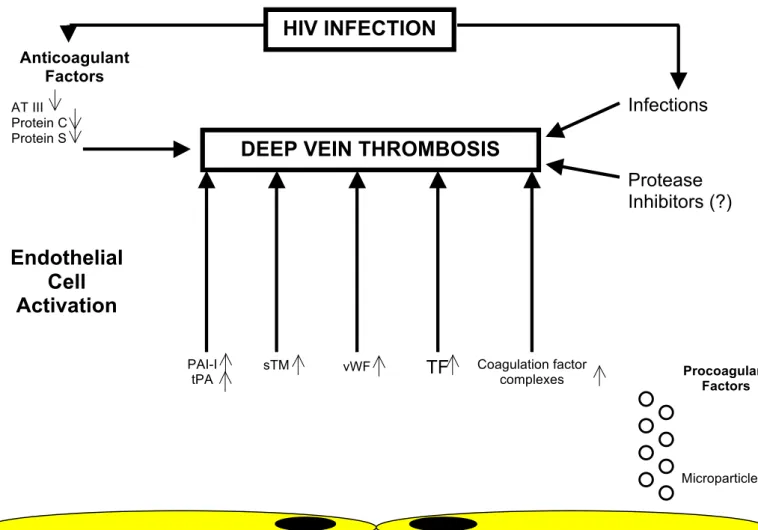
DEEP VEIN THROMBOSIS HIV INFECTION
Cell Activation
PATIENTS AND METHODS
African (black) patients over 18 years of age with acute upper segment deep venous thrombosis were eligible to participate in the study. Patients with DVT were recruited from the diagnostic vascular laboratory, wards and clinics at King Edward VIII Hospital. The control group consisted of patients known to be HIV positive but without any symptoms or signs suggestive of thrombotic disease.
These patients were recruited from the HIV clinic and the wards at King Edward VIII Hospital. Patients with suspected DVT underwent duplex ultrasound at the vascular laboratory at King Edward VIII Hospital. Upper segment deep vein thrombosis of the lower extremities is defined as venous thrombosis of the iliac, femoral and or popliteal veins, that is, thrombosis above the popliteal trifurcation.
Any patient positive for acute upper segment DVT who did not have any obvious risk factors as described in the exclusion criteria was enrolled in the study. Patients who tested positive for HIV and wanted to be informed of the result received post-test counseling). ANF and ACA were processed by the immunology laboratory using an in-house standardized assay.
CD4:samples were subjected to monoclonal antibodies after being aliquoted into 100 μl of PortiSample, incubated for 30 min, and then passed through the Coulter workstation. The study protocol was submitted and approved by the research ethics committee before the start of the study. Assistance with data analysis was obtained from Ms. Tonya Esterhuizen (biostatistician) after completion of the study.
To identify potential risk factors, baseline characteristics of HIV-positive patients who had deep vein thrombosis were compared with baseline characteristics of HIV-positive patients without deep vein thrombosis. Risk factors were tested for association between HIV and DVT using log rank tests. Eligible patients with GVT who were found to be HIV-negative were compared with an HIV-positive thrombotic group.
RESULTS
Fifty HIV-positive patients with deep venous thrombosis (who formed the HIV-positive DVT arm) were enrolled in the study. In the HIV-positive DVT arm, 19 patients had right-sided DVT, 25 left-sided DVT, and 6 patients had bilateral DVT. CD4 counts were available in 30 of 50 patients in the HIV-positive DVT arm and in 50 of 56 patients in the control arm.
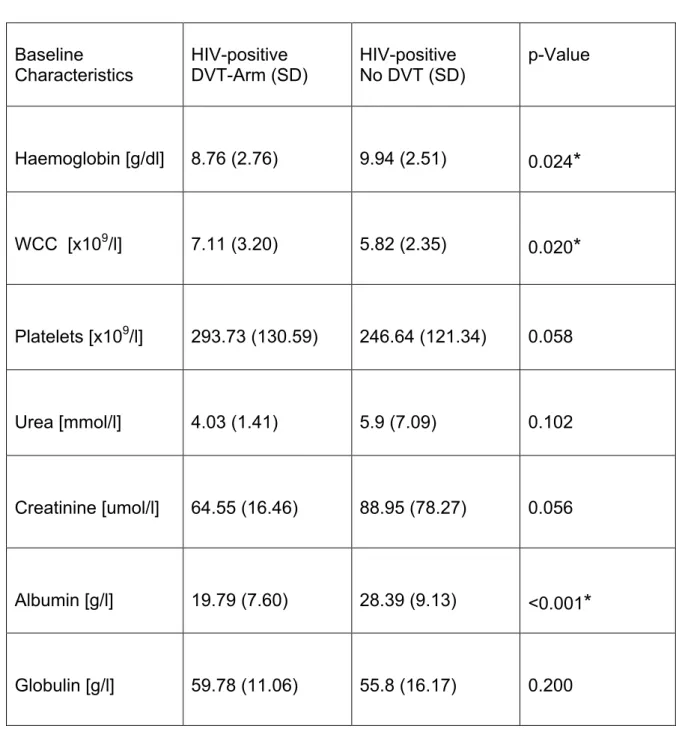
According to the exclusion criteria, none of the included patients had a history of malignancy or recent surgery. The mean platelet count was higher in the HIV-positive DVT arm, but was within the normal range and the difference was of borderline statistical significance (p = 0.058). The mean white blood cell count was higher in the HIV-positive DVT arm (7.11 versus 5.82), but within the normal range.
The mean globulin level was increased in the HIV-positive DVT arm compared to controls, but this was not statistically significant (p = 0.20). Mean albumin levels were lower in the HIV-positive DVT arm and this was statistically significant (p < 0.001). The anticardiolipin antibody (ACA) was positive in 18 of the 46 patients (39%) tested in the HIV-positive DVT arm and 26 of the 47 patients (42%) tested in the control arm.
The mean international normalized ratio (INR) and partial thromboplastin time (PTT) were within the normal range in both the HIV-positive GVT group and the control group, and there was no statistical difference between the two arms. The mean level of total protein S was lower in the control group compared to the HIV-positive GVT group (69.29% and 81.15%, respectively) and the difference was statistically significant (p = 0.047). Mean antithrombin levels were normal in both the control and HIV-positive GVT groups, and there was no statistically significant difference between the two arms (p = 0.661).
Of the 41 patients analyzed in the HIV-positive DVT arm, 4 had an elevated lupus anticoagulant. Of the 26 patients analyzed in the HIV-positive DVT arm, all had normal levels of activated protein C resistance. The difference between the HIV-positive DVT arm and the control arm was statistically significant (p < 0.001).
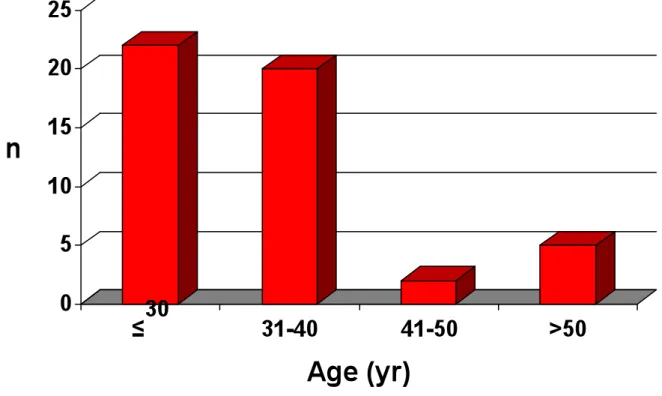
Group B: HIV-positive and negative patients with DVT
DISCUSSION
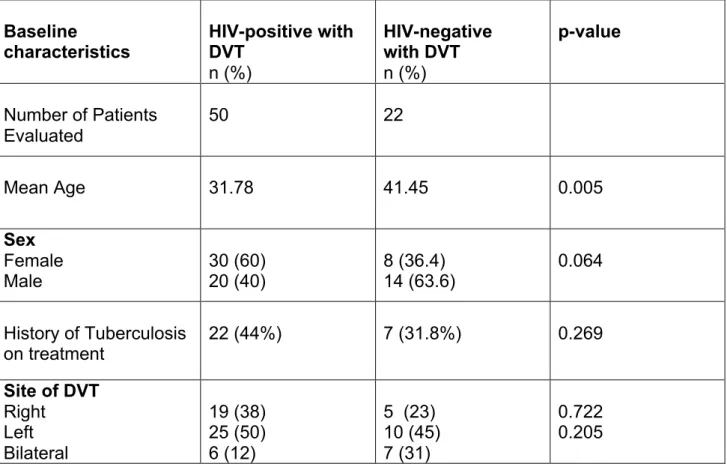
There were 72 patients in the GVT group and 56 patients in the control group (HIV-positive patients without thrombosis). In the GVT arm, 50 patients were HIV positive, while 22 patients were HIV negative. Six (6) patients in the HIV-positive DVT group and seven patients in the HIV-negative thrombosis group had bilateral thromboses.
There were more women in group A compared to men in both the HIV-positive GVT group (30 of 50) and the control group (40 of 56), but this was not statistically significant. Importantly, 31.8% of patients in the HIV-negative cohort with thrombosis had a history of tuberculosis during treatment. Mean globulin levels were increased in both the HIV-positive GVT group and the control group, and there was no statistically significant difference between the two arms.
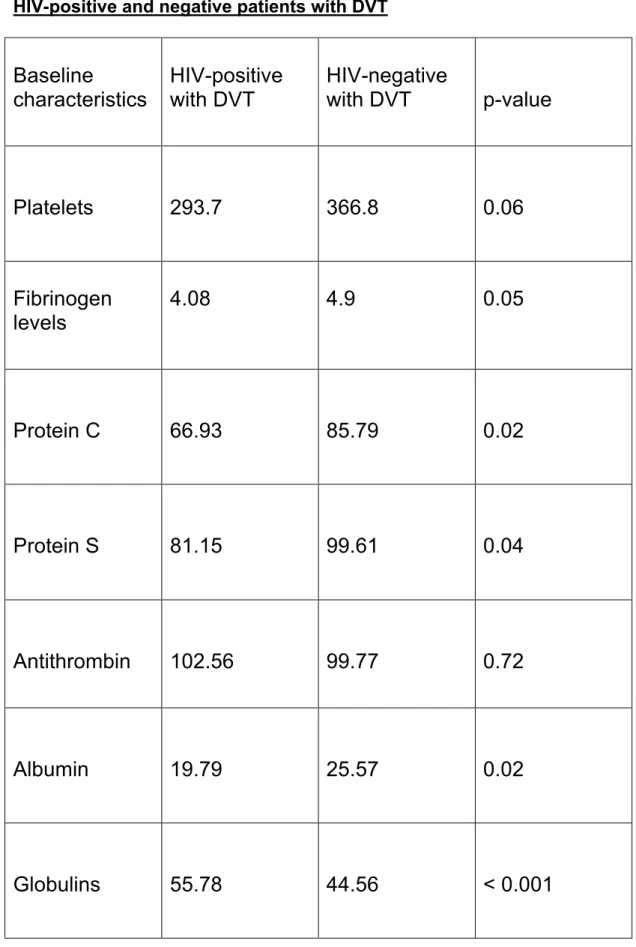
The mean hemoglobin as well as albumin levels were significantly reduced in the HIV-positive DVT arm (p = 0.024 and < 0.001 respectively). However, when comparing HIV-positive and negative patients with thrombosis, mean fibrinogen levels were elevated and significantly higher in the HIV-negative group of patients (p = 0.05). Eighteen (18) patients in the HIV-positive DVT group and 20 patients in the control group had positive ACA screens.
Mean protein C levels were significantly reduced in the HIV-positive DVT arm compared to HIV-positive controls (p = 0.016) as well as compared to HIV-negative patients with thrombosis (p = 0.02). Mean total protein S levels were higher in the HIV-positive DVT arm compared to the control arm (81.15 vs. 69.29). When comparing HIV positive and negative patients with thrombosis, total protein S levels were significantly lower in the HIV positive group.
In this study, protein S levels were assessed in only 41 of the HIV-positive patients with DVT. Mean activated protein C resistance (APCR) values were normal in the HIV-positive thrombosis group as well as in the control group. Mean antithrombin levels were normal in the HIV-positive DVT arm, the control arm, and the HIV-negative group with thrombosis.
CONCLUSIONS
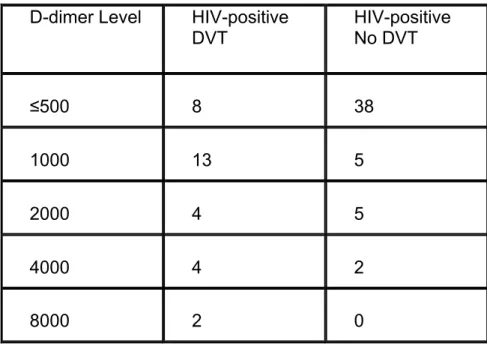
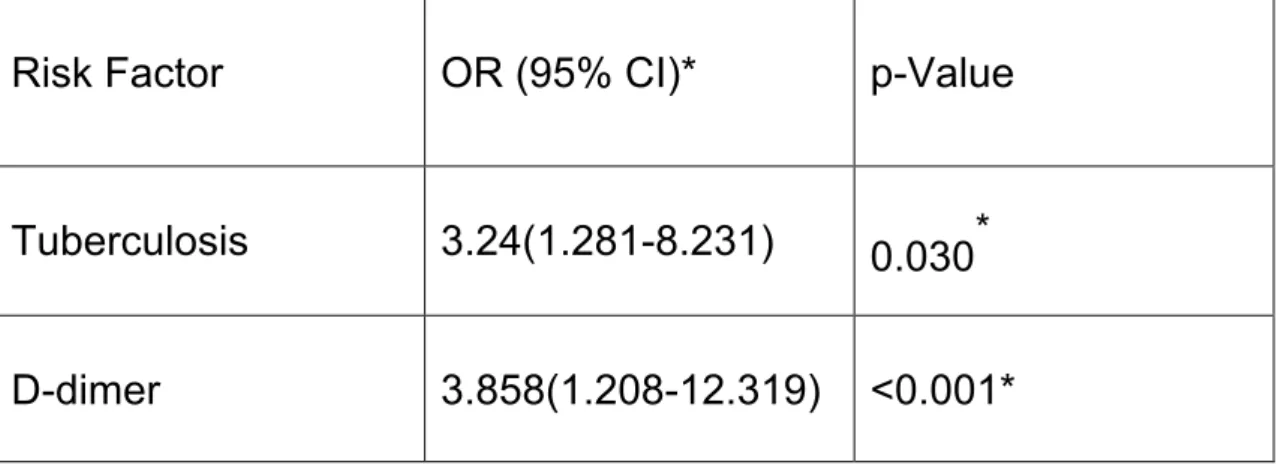
Mean antithrombin levels were normal in the HIV positive and negative DVT groups as well as in the control arm and there was no statistically significant difference between the groups. A positive D-dimer was significant both on bivariate and multivariate analysis in HIV-positive patients with thrombosis compared to the HIV-positive control group. Although not a primary aim of the study, tuberculosis was a significant factor predisposing to the development of DVT in the HIV-positive patients both on univariate and multivariate analysis.
Also important is that 7 of the 22 patients (31.8%) analyzed in the HIV-negative group with thrombosis had a history of tuberculosis during treatment. Since both HIV and tuberculosis are endemic in our population, tuberculosis may be an important risk factor predisposing to DVT in both the HIV-positive and negative patients. Patients with classic thrombophilic risk factors such as malignancy and recent surgery were excluded from the study.
The results of his study add credibility to the postulates of other authors that the pathogenesis of thrombosis in HIV-infected patients is multifactorial. It suggests that a combination of factors including infections, malignancy and immobilization together with reduced anticoagulant factors results in the development of thrombosis. Patients with HIV infection are also predisposed to developing cancer, which further predisposes patients to thrombosis.
The lack of consensus on the pathogenesis of thrombosis in HIV-positive patients may be partly explained by the variability and multiplicity of predisposing factors depending on the stage of infection, associated infections, malignancy, and drug history. Thrombotic complications in HIV-infected patients in the era of highly active antiretroviral therapy: a case series. HIV/AIDS and the risk of deep vein thrombosis: a study of 45 patients with lower extremity involvement.
Prevalence of Factor V Leiden in three ethnic groups of patients with deep vein thrombosis in the Western Cape Province of South Africa. You will be treated in the same way as all patients with deep vein thrombosis. If you refuse to participate in the study, your further management will not be prejudiced.
![Table 1: Risk factors for venous thrombosis [5]](https://thumb-ap.123doks.com/thumbv2/pubpdfnet/10630487.0/12.892.122.769.311.1014/table-1-risk-factors-venous-thrombosis-5.webp)