T T I I T T L L E E
Anneline Chetty
Student Number: 961113383
Promoter:
Prof Urmilla Bob
Submitted in fulfilment of the requirements for a PhD in the Discipline of Geography, School of Environmental Sciences
University of KwaZulu Natal, Durban, 2009
A critical analysis of current
approaches to SMME development and support within the eThekwini
Municipal Area
DEDECCLLAARRAATTIIOONN
The Registrar Academic University of KwaZulu-Natal Howard College
Durban
KwaZulu Natal Dear Sir/ Madam
I, Anneline Chetty, Registration Number 961113383, hereby declare that this PhD thesis entitled:
A critical analysis of current approaches to SMME development and support within the eThekwini Municipal Area
represents original work by myself and has not been submitted in part or full for any degree or to any other university. Where use has been made of the work of others, it has been duly acknowledged and referenced in the text. The findings presented and the conclusions arrived at in this PhD are entirely those of the author.
The research for this thesis was performed under the supervision of Professor Urmilla Bob, of the Discipline of Geography, School of Environmental Sciences, University of KwaZulu Natal, Durban.
_________________ ______________
Anneline Chetty Date
_________________ ______________
Prof Urmilla Bob (Supervisor) Date
D D ED E DI IC C A A TI T IO ON N
To the late Ruth Chetty, my grandmother, whose initial investment in my education has led me to this destination. Thank you for all you have meant to me, your memory will live on in me forever.
ACKNOWLEDGEMENTS
Firstly, I thank the Lord Jesus Christ, for all the wisdom that He has blessed me with and sustaining me through this thesis and giving me strength to persevere in the face of adversity.
The following individuals have been very helpful to me in different ways and I am grateful to them for all their assistance rendered:
• Professor Urmilla Bob, whose initial encouragement motivated me in this direction and supported and assisted me throughout the duration of the thesis. Thank you for your dedicated support and belief and for the many sacrifices and late nights you have put in on my behalf. You have become more than my Supervisor.
•
•
Anu Pather, for all her encouragement, support and her unwavering confidence in my abilities in various areas of my life. Thank you for being my pillar of strength and supporting me at all times and for your contribution to my work.
• The entire Chetty Family for their belief in my abilities, support and constant encouragement in all areas of my life.
Dr Ajiv Maharaj, whose own dedication and perseverance has inspired me to follow in a similar direction.
• To my sisters, Vasantha and Lynette and my brothers, Ivan and Clive, my nephews, Joash, Kemuel and Kenan and my niece, Cheyenne, thank you for being a tower of strength to my family and myself and standing by us at all times.
• To the stalwart and pillar in my life, my MUM. Thank you for always being there for me and always wanting and believing in the best for me. It is your pride in my achievements that has always inspired me to aim higher.
• To my husband Sean, who believes in my abilities and encourages me to be the best I can be at all times.
•
Finally, but most certainly not least, to my gorgeous precious sons Jeriah and Jasiel whose belief that Mum’s studies is “going to help make people better” has been my source of inspiration and courage. This one is for you boys and hopefully one day you will create your own path on the road to success!
Abstract
Small, Medium and Micro Enterprises (SMMEs) are considered to be the engines of growth of any economy. In the light of recent economic events and the recession that is surging rapidly across the globe, more and more attention is being focused on SMME development and support.
Whilst there are a number of organisations (both public and private) which provide support to SMMEs within the eThekwini Municipality Area (EMA), the overall impacts of these initiatives on SMME growth and development is minimal and there is a dearth of studies that critically examine business support services for SMMEs which the public and private sectors provided.
One of the major reasons for this minimal impact is the lack of communication and coordination between various service providers which often results in fragmentation and duplication of services. This study analyses the support measures offered to SMMEs not only from the perspective of the SMMEs themselves but also examines the perspectives of service providers from both the public and private sectors. This study is also placed within a multi-disciplinary conceptual framework which includes the political economy approach, neoliberalism, the public- private-sector debate and empowerment theories with specific reference to the South African context. This study is unique in that it analyses SMME development and support within the EMA from various perspectives within a single study.
The objectives of this study were to investigate the awareness and experiences of SMMEs with regards to their support and development and also to critically examine the attitudes and perceptions of service providers (both public and private) towards SMME development and support. In addition, this study sought to assess the capacity of both the private and public sectors to provide effective support and development to SMMEs. An additional objective of this study was to determine the value placed on support measures by determining SMMEs’ willingness to pay for services provided, but more importantly to determine the attitudes of the public and private sectors towards the payment for services offered. Both qualitative and quantitative methods were adopted. In terms of the latter, quantitative surveys were conducted with 250 SMMEs who attended various fairs and conferences held across the EMA. Semi-structured interviews (qualitative approach) were conducted with representatives from the private and public sectors that provide support or services to the SMMEs in the EMA. In this regard, 53 representatives from the public sector and 50 from the private sector were interviewed. The analysis was undertaken thematically and, where relevant, findings pertaining to the different stakeholders interviewed were compared and discussed.
Some of the key findings indicate that SMME respondents were more aware of local government and the services they provide than any other tier of government. Furthermore, SMME respondents within the study did not fully grasp the concept of Business Development Services (BDS) and the associated benefits for their business. SMMEs rely heavily on government to provide services free of charge. The main finding is that private sector service providers are better qualified, positioned and trained to provide BDS than the public sector whose main roles should be that of regulator, facilitator and promoter. Whilst government has been a strong proponent of SMME development and support since 1994, this study presents a strong case for the increased role of the private sector. In addition, this study also motivates that local government through their Municipalities can play a significant role in SMME development and support in partnership with the private sector.
List of Tables i TABLE OF CONTENTS
List of Figures iv
List of Abbreviations v
CHAPTER ONE: Introduction and Context
1.1. Introduction 1
1
1.2. Motivation for the study 2
1.3. Aims and objectives 5
1.3.1. Aim 5
1.3.2. Objectives 5
1.4. Chapter Sequence 7
1.5. Conclusion 8
CHAPTER TWO: Conceptual and Theoretical Framework 10
2.1. Introduction 10
2.2. Political economy approach 12
2.2.1. Political economy of South Africa 15
2.2.2. The public–private sector debate of the provision of services 18 2.2.2.1. Public–private sector debate and neo-liberalism 26
2.3. Public choice theory 32
2.4. Empowerment Theory 38
2.5. Conclusion 42
CHAPTER THREE: Background to study area and methodology 44
3.1. Introduction 44
3.2. The study area : Ethekwini Municipal Area (EMA) 44
3.2.1. Demographic profile of the EMA 47
3.2.2. The economy of the EMA 48
3.3. Primary data collection 56
3.3.1. Quantitative component 57
3.3.1.1. The Questionnaire 58
3.3.2. Qualitative component 62 3.3.2.1. The semi-structured interview 64 3.4. Secondary data collection 65 3.5. Sampling method 66 3.6. Challenges encountered during the research 70
3.7. Conclusion 71 CHAPTER FOUR: Literature Review 72
4.1. Introduction 72
4.2. Definitions of SMMEs 72 4.3. Who is an entrepreneur? 77 4.4. Critical issues and challenges in SMME development 79 4.4.1. Policy issues 79
4.4.2. Gender dynamics 84 4.4.3. Access to technology 89
4.4.4. Training for SMMEs 93
4.4.5. Facilitating access to finance for SMMEs 97 4.4.6. Facilitating access to markets for SMMEs 101
4.5. Strategies used to improve the competitiveness of SMMEs 102
4.5.1. Creating a conducive environment for SMMEs 103
4.5.2. Facilitating access to skills and capacity building for SMMEs 107
4.5.3. Facilitating access to markets for SMMEs 113
4.5.4. Facilitating access to finance for SMMEs 116
4.6. The rationale for the provision of Business Development Services (BDS) 119
4.6.1. What is Business Development Services (BDS)? 121
4.7. The roles of the public and private sectors in SMME development 124
4.8. Conclusion 132
CHAPTER FIVE: International, National and Local contexts of SMMEs 133
5.1. Introduction 133
5.2. Lessons from international experience 134
5.3. Support for SMMEs in South Africa 137
5.4. Description of the eThekwini Municipal Area 147
5.4.1. History of SMME support within the eThekwini Municipal Area 149
5.5. Conclusion 153
CHAPTER SIX: The analysis of data of questionnaires administered to
SMMEs within the EMA 156
6.1. Introduction 156
6.2. Similar studies conducted on SMMEs in South Africa 156 6.2.1. A discussion of socio-economic profile of SMME respondents
within the EMA 161
6.2.2. Business Profiles of SMMEs respondents in the EMA 169 6.2.3. The role of the public sector in providing SMME support in the EMA 183 6.2.4. Type of support respondents needed to address problems the enterprise
experienced 189
6.2.5. Role of the private sector in providing support to SMMEs in the EMA 194 6.2.6. SMMEs awareness of Business Development Services offered 195 6.2.7. SMMEs payment for Business Development Services received 204
6.3. Conclusion 208
CHAPTER SEVEN: Analysis of semi-structured interviews conducted
with respondents from the Public sector 210
7.1. Introduction 210
7.7.22.. PuPubblliicc sseeccttoorr rreessppoonnddeennttss wwhhoo pprroovviiddee BBuussiinneessss DeDevveellooppmmeenntt
Services to SMMEs in the EMA 212
7.3. Organisational capacity of Public sector respondents to provide
Business Development Services to SMMEs in the EMA 214
7.4. Training to improve the capacity of Public sector respondents to provide
Business Development Services in the EMA 218
7.5. The level of customer care the Public sector offered SMME clients
in the EMA 221
7.6. Public sector respondents’ attitudes towards payment for Business
Development Services SMMEs received 225
7.7. The role respondents believed all spheres of government
should play in SMME development 227
7.8. Conclusion 234
CHAPTER EIGHT: Analysis of semi-structured interviews conducted
with respondents from the Public sector 236
8.1. Introduction 236
8
8..22.. PrPriivvaattee sseeccttoorr rreessppoonnddeennttss wwhhoo pprroovviiddee BBuussiinneessss DDeevveellooppmmeenntt
SeSerrvviicceess ttoo SSMMMMEEss iinn tthhee EEMMAA 232377 8.3. Organisational capacity of Private sector respondents to
provide Business Development Services to SMMEs in the EMA 237 8.4. Training to improve the capacity of the Private sector respondents
to provide Business Development Services in the EMA 241 8.5. The level of customer care the Private sector offered to SMME
clients in the EMA 243
8.6. Private sector respondents’ attitude towards payment for
business development services received 248
8.7. The role respondents believed the Private sector should play in
SMME development 250
8.8. Conclusion 257
CHAPTER NINE: Key findings, recommendations and conclusions 258
9.1. Introduction 258
9.2. Key findings 258
9.2.1. Objective One 261
9.2.2. Objective Two 265
9.2.3. Objective Three 270
9.2.4. Objective Four 280
9.3. Recommendations 284
9.3.1. SMME Coalition Hub 286
9.3.2. SMME Support Information Centre 287 9.3.3. Certified Service Providers and SMME Database 287 9.3.4. SMME Mentorship and Business Linkages Programme 288
9.3.5. SMME Advertising Corporation 289
9.3.6. SMME Technology Support Company 289
9.4. Concluding remarks 290
10. References 296
11. List of Appendices
Appendix 1: SMME Questionnaire 315
Appendix 2: Private sector questionnaire 324
Appendix 3: Public sector questionnaire 330
List of Tables
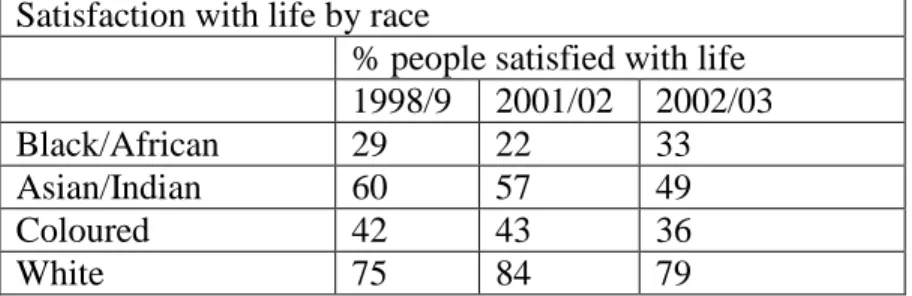
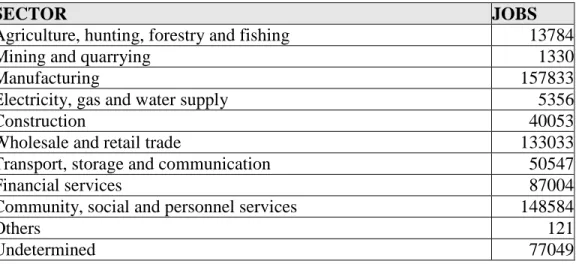
Table 3.1: Perception of Satisfaction of Life according to race in the EMA 48 TaTabbllee 33..22:: NuNummbbeerr ooff jjoobbss ppeerr eeccoonnoommiicc sseeccttoorr iinn tthhee EEMMAA 5522
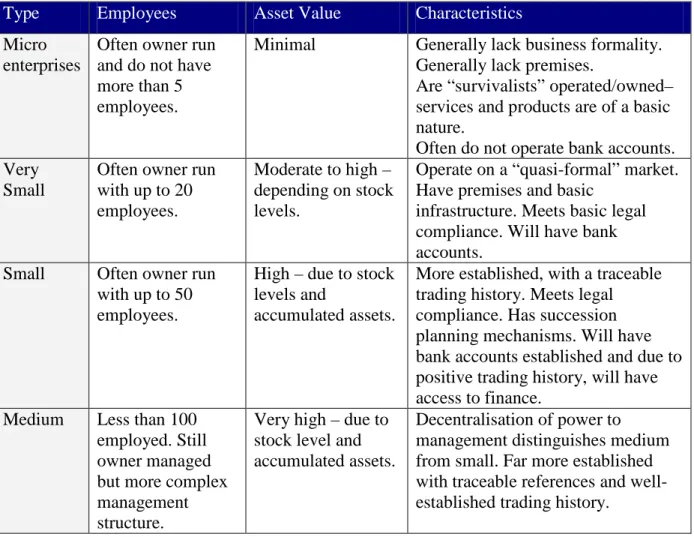
Table 4.1: Definitions of SMMEs 74
Table 4.2: A description of different types of BDS available 123 Table 6.1: Location of business of respondents business in the EMA 169 Table 6.2: Number of years that the SMME is operation in the EMA 170 Table 6.3: Area in which the SMME is located in the EMA 171 Table 6.4: Average monthly turnover of respondents in the EMA 172 Table 6.5: Sectors of business activity that respondents within the EMA are
involved in 172
Table 6.6: Size of SMME businesses in relation to number
of persons employed in the EMA 173 Table 6.7: SMMEs in this study are registered with an agency 174 Table 6.8: Respondents rating of eThekwini Municipality
as a place to conduct their business in 175 Table 6.9: Advantages of respondents locating within the EMA 176 Table 6.10: Disadvantages respondents identified of being located
within the EMA 177
Table 6.11: The extent to which the respondent considered the
enterprise to be successful 177 Table 6.12: Problems respondents were experiencing in their enterprises
in the EMA 179
Table 6.13: Respondents accessed support from any sphere of government to
improve their business 184 Table 6.14: Improvement of the business environment by local government
in the EMA 185
Table 6.15: Improvement of the business environment by provincial government
in the EMA 186
Table 6.16: Improvement of business environment by national government 188
Table 6.17: Type of support required from respondents to improve their business 189 Table 6.18: Respondents who accessed business support from
local government in the EMA 189
Table 6.19: Level of satisfaction respondents experienced with the
business support offered from local government 190 Table 6.20: The role respondents believed that the private sector
should play in improving their enterprises 194
Table 6.21: Awareness of the availability of Business Development Services
in the EMA 1967
Table 6.22: Awareness of specific Business Development Services available
in the EMA 197
Table 6.23: List of Business Development Services which respondents
would make use of 199
Table 6.24: Main providers of BDS in the EMA 201 Table 6.25: Respondents rating of BDS they received in the EMA 201 Table 6.26: Relevance of service to the respondents business in the EMA 202 Table 6.27: The service improved the respondents business in the EMA 202 Table 6.28: The respondents would make use of service again 203 Table 6.29: Respondents are prepared to pay for business development
services received 205
Table 6.30: Amount of money spent on business development
services received by respondents 206 Table 6.31: SMMEs willingness to pay for business development services
received 207
Table 7.1: Level of position and education of public sector respondents
who provide services to SMMEs within the EMA 213 Table 7.2: Respondents organisation had a vision/mission statement
which guided their operations 215
Table 7.3: If respondents were aware of relevant legislation applicable to
small business 216
Table.7.4: If respondents organisation had structure in place to address
small business development 217 Table 7.5: If respondents received training which helped improve their
capacity to offer business development services 219 Table 7.6: Respondents belief in the need for an organisation
to have structured training programmes in place to improve
their skills levels in the area of small business development 219 Table 7.7: If respondents were able to assist in addressing clients needs in
relation to their business 223
Table 7.8: Agencies/organisations which respondents referred clients
to for assistance 223
Table 7.9: Programmes respondents’ organisations had in place to
address the needs of small businesses 224 Table 7.10: Problems respondents experienced in the delivery of
small business services to SMMEs in the EMA 228 Table 7.11: Suggestions respondents made to improve small business
development services by the public sector in the EMA 230 Table 8.1: List of business development services the private sector
offered to SMMEs in the EMA 238
Table 8.2: Level of occupation and education of private sector respondents who
provide services to SMMEs within the EMA 242
Table 8.3: Who the recipients of services offered were 244 Table.8.4: Private sector respondents are able to address the small business
needs of SMMEs 246
Table 8.5: Programmes and procedures private sector respondents
had in place to address the needs of SMMEs 246 Table 8.6: Problems private sector respondents experienced in the
delivery of small business services to SMMEs in the EMA 251 Table 8.7: Suggestions respondents made to improve small business
development services by the private sector in the EMA 253
List of Figures
Figure 3.1: Map of the eThekwini Municipality Area (EMA) 46
Figure 3.2: Workforce Employment and life satisfaction trends 47
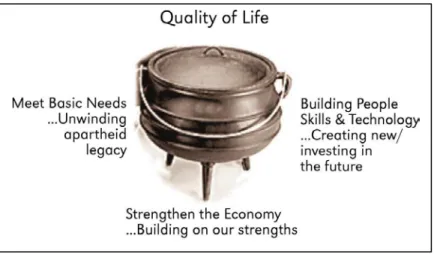
Figure 3.3: Quality of Life Triangle 49 Figure 3.4: Key challenges faced by the eThekwini Municipality 54 Figure 4.1: Changing approaches to BDS provision 127
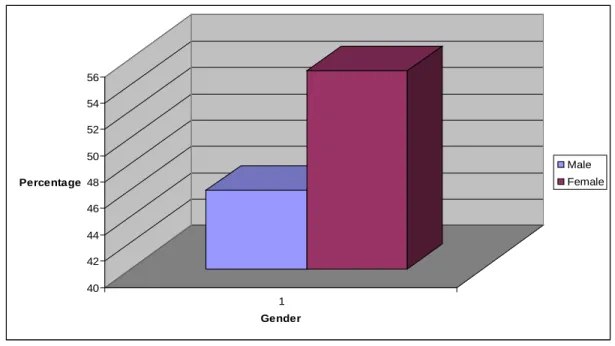
Figure 6.1: Gender of SMME respondents in the EMA 162
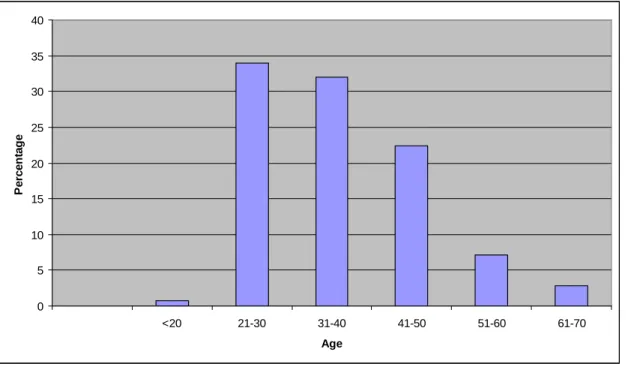
Figure 6.2: Age of SMME respondents in the EMA 165
Figure 6.3: Race of SMME respondents in the EMA 166
Figure 6.4: Educational level of SMME respondents in the EMA 168
List of Abbreviations
ABSA: Amalgamated Bank of South Africa
ASGISA: Accelerated and Shared Growth Initiative of South African BDS: Business Development Services
BBBEE: Broad-based Black Economic Empowerment BEE: Black Economic Empowerment
BPCC: Best Practices City Commission
CIDA: Canadian Investment Development Agency CLR:
COSBI: Coalition of Small Business Initiatives Commercial Lending Review
CSIR: Centre for Social and Institutional Research DEDS: Draft Economic Development Strategy DMC: Durban Metro Council
DTI: Department of Trade and Industry EAP: Economically Active Population (EAP) EDD: Economic Development Department EMA eThekwini Municipal Area
EM eThekwini Municipality
EPPA: Enterprise Policy Performance Assessment ESKOM: Electricity Supply Commission
EU: European Union
FSB: Financial Services Board
GEAR: Growth Employment and Redistribution GEM: Global Entrepreneurship Monitor GGP: Gross Geographic Product GoA: Government of Albania GoS: Government of Serbia
GTC: German Technical Cooperation
ICT: Information and Communication Technology INK: Inanda Ntuzuma KwaMashu
ISBDS: Integrated Small Business Development Strategy
LBSC Local Business Support Centres LED: Local Economic Development LIP: Local Industrial Parks
MAC: Manufacturing Advice Centres MDA: Market Development Approach
MFRC: Micro Finance Regulatory Council (MFRC) NPI: National Productivity Institute
NRC: National Research Council
OECD: Organisation for Economic Co-operation and Development OSS: One-Stop-Shops
PDI: Previously Disadvantaged Individuals PMSPO: Prime Ministry State Planning Organisation RDP: Reconstruction and Development Programme RFI: Retail Financial Intermediaries
RSA: Republic of South Africa SAB: South African Brewery SACN: South African Cities Network SARS: South African Revenue Services SARB: South African Reserve Bank SBP: Strategic Business Partnership
SEDA: Small Enterprise Development Agency SEED: Southeast Europe Enterprise Development SMME: Small, medium and micro enterprise SPSS: Statistical Package for Social Sciences TBDC: Thekwini Business Development Centre TEO: The Enterprise Organisation
UK: United Kingdom
UNIDO: United Nations Industrial Development Organisation UNDP: United Nations Development Programme
US: United States
USAID: United States Agency for International Development
CHAPTER ONE Introduction and Context
1.1. Introduction
One of the most important challenges facing the South African government is that of promoting economic development and job creation. The last two decades have seen increasing attention being paid to the role of the small, medium and micro-enterprise (SMME) sector in economic development. Berry, von Blottnitz, Cassim, Kesper, Rajaratnam, van Seventer (2002) and Kesper (2002) maintained that in order to attain the objectives of economic growth through competitiveness on the one hand, and employment generation and income redistribution on the other, increased policy attention had focused on the promotion of the country’s SMMEs.
Hallberg (1999) indicated that in common with the experience of many developing countries, post-apartheid South Africa has been at the forefront of the development and implementation of a set of pro-SMME policies. One such policy which was devised by the Government of National Unity was the National Small Business Strategy whose objective it was to promote small business development in South Africa. This strategy, according to McGrath (2005), presented an optimistic vision of the potential of SMMEs as a means to address a range of South Africa’s developmental goals, including equity and redress, Black economic empowerment, economic competitiveness, employment creation and poverty reduction.
South Africa has placed emphasis on SMME development for the purposes of achieving some of its developmental goals. Both the public and private sectors play a significant role in trying to provide services to SMMEs. The purpose of this thesis was to evaluate the effectiveness of the approaches which were used by the public and private sectors to have met the needs of SMMEs and to have made recommendations in that regard. This chapter introduced the thesis which explained the motivation for the study. In addition, it discussed the aims and objectives of the study before presenting the chapter sequence of the thesis.
1.2. Motivation for the study
The Department of Trade and Industry (DTI) (1996) developed the National Small Business Act (Act 102 of 1996) which provides definitions for various SMME categories. These are underpinned by the fact that the enterprises must be a separate and distinct business entity, and must be owner/s managed. According to the DTI (1996), an SMME can be defined as an enterprise, which is owner operated and functions with the primary focus of providing a livelihood for the owner and the immediate employees. An SMME distinguishes itself from ‘big business’ as it typically has a smaller turnover, marginal asset value, smaller number of employees, simpler organisational structures, generally lower barriers to entry and, less onerous legal obligations and regulative compliance issues (DTI, 1996). A further distinguishing element of an SMME, when compared to ‘big business’, according to the DTI (1996), is that often the growth, development and ultimate survival of the SMME hinges on the skills level, morality, innovation and resources applied by its owner. While the researcher recognises the wide range of definitions that do exist for SMMEs, for the purposes of this thesis the focus will be on the small and micro-enterprises (SMEs) and excludes street traders. This will be discussed later in the thesis.
At the same time that the National Small Business Strategy was being promulgated, perceptions about the developmental role of local government had undergone a transformation, specifically in terms of local government being viewed as a crucial agent of economic development (Rogerson, 2002). Thus, development initiatives placed increasing importance on the SMME sector and how to strengthen it; and SMME support increasingly became a local (rather than national, regional or parastatal) issue. Rogerson (2002) argued that government support was often in the form of subsidies to ensure the delivery of support services of various kinds which included credit training, business management skills training, technical training, and assistance with identifying and accessing new markets. A tremendous responsibility is also placed on the private sector which, according to the National Small Business Strategy, has an important role to play through the supply of commercialised services for small enterprises, cooperation and subcontracting between small and bigger enterprises, partnerships, joint ventures and franchises as well as social responsibility commitments of the corporate sector related to small business development (DTI, 1995: 1).
In his 2006 State of the Nation Address, President Thabo Mbeki spoke on the Accelerated Shared Growth Initiative of South African (ASGISA) (RSA, 2006). ASGISA is essentially the micro-economic reforms within the Growth Employment and Redistribution (GEAR) macroeconomic framework. According to the President of South Africa, ASGISA is about the efficiency of the State, better conditions for business, closing the skills gap in the short and long- term, linking the first and second economy, clearing up on governance and red-tape and ensuring that accelerated growth is shared by all South African citizens (RSA, 2006). ASGISA consists of a set of interventions that are intended to serve as a catalyst to the accelerated and shared growth and development initiative. The main objectives of ASGISA are to reduce poverty and unemployment by 50% by the Year 2014, and enable South Africa to achieve and sustain average growth rates of 4.5% between 2005 and 2009 and 6% between 2010 and 2014 (RSA, 2006: 4). The constraints that ASGISA identified included:
• Unnecessary regulatory obstacles to growth and employment which result in limiting the growth of SMMEs;
• Deficiencies in State organisations;
• Lack of capacity and strategic leadership, with the greatest impact felt at local government level;
• Lack of sector development strategies and barriers to entry in some sectors of the economy;
• The cost and efficiency of the national logistics system and capacity of infrastructure and bottlenecks;
• Shortage of appropriately skilled labour at suitable costs;
• Disjointed spatial settlement patterns which contribute to labour costs; and
• Relative volatility of the currency.
(RSA, 2006)
ASGISA has also identified practical and substantial strategies to address these issues. These strategies are expected to optimise public expenditure, improve an environment to do business in South Africa and remove bottlenecks within government.
These systematic initiatives will:
• Have a significant improvement in monitoring and evaluation of all policy implementation by all members of the executive and the Presidency;
• Encourage partnerships between government, State-owned enterprises, private sector and civil society ensuring better coordination and integration of agreed programmes;
• Focus on outcomes and timely interventions; and
• Target women and youth ensuring that they have access to finance across the board, fast- tracking them out of the Second Economy, ensuring their significant participation beyond SMMEs and improve their access to basic services and their participation in the Public Works Programme.
(RSA, 2006)
There are currently a number of organisations that provide support to SMMEs within the eThekwini Municipal Area (EMA), however, the overall impact of these initiatives on SMME growth and development, from the researcher’s observation is minimal. One of the major reasons for this minimal impact is the lack of coordination between service providers. This often, according to Karungu, Marabwa and Stettler (2000), results in duplication and fragmentation of services. The researcher has worked in the eThekwini Municipalities Business Support Unit (BSU) since it has been established in 2001. The BSU is responsible for developing and implementing strategies to encourage the development of and support existing SMMEs, in the EMA. It is also responsible for coordinating SMME initiatives with the public and private sector partners.
From the researcher’s work with various organisations and government departments, a number of organisations which offer support to SMMEs within the EMA were identified, apart from BSU. An entity in the form of the Thekwini Business Development Centre (TBDC) which had been established by the erstwhile Durban Metropolitan Council has also been charged with the responsibility of providing support services to SMMEs. It should be noted that this entity is in fact a DTI initiative and has been reconstituted to form the Small Enterprise Development Agency (SEDA) which incorporates the Manufacturing Advice Centres (MACs) and the Local Business Support Centres (LBSCs). At a provincial level, the Department of Economic
Development and Finance provides targeted support to SMMEs within the EMA. At a National level, services are offered to SMMEs within the EMA through the regional offices of the DTI.
There are also a host of other organisations along this continuum which provide support services to SMMEs such as the Durban Chamber of Commerce through the SMME Desk, and the University of KwaZulu-Natal through an organisation called the Coalition of Small Business Initiatives (COSBI). Within the private sector, there are also a host of banks and training providers which provide support services to SMMEs within the EMA.
While a number of studies such as Bernstein (2004), Hallberg (1999) and Rogerson (2004b) have assessed the contribution of government initiatives to SMME development in South Africa, the overall impact of several approaches to SMME development within the EMA has not been analysed. Bernstein (2004) also indicates a need to assess the private sector contribution to entrepreneurial support. Hence this thesis analyses both the public and private sector approaches towards the provision of Business Development Services (BDS) to SMMEs within the EMA.
1.3. Aims and objectives 1.3.1. Aim
The aim of this study is to critically analyse current approaches towards SMME development and support within the EMA.
1.3.2. Objectives
The research objectives of this study are to:
1. Ascertain the business and socio-economic profile of SMMEs.
2. Assess SMMEs’ awareness of, and attitudes towards, business development service providers and services and the extent and frequency to which they make use of such
services.
3. Critically examine the attitudes and perceptions of the public and private sectors towards SMME support and development within the EMA and their capacity to provide effective BDS to SMMEs.
4. Determine the attitudes of SMMEs, public and private sectors towards payment for BDS provided.
In order to respond to the above objectives, the research methodology of the study comprises a multi-faceted approach made up of both secondary and primary research methods. In this study both qualitative and quantitative research methods were employed in the collection of relevant data, aiding in the provision of a comprehensive understanding of SMME development and support in the EMA. Literature on evaluation and applied research techniques tend to support the combined use of qualitative and quantitative methods to achieve the most accurate results (Bernard and Renz, 1998). A qualitative approach is deemed to be the most appropriate method to be used when dealing with people’s attitudes, perceptions and opinions. In terms of a quantitative approach, the researcher made use of questionnaires as a tool to gather data. The Statistical Package for Social Sciences (SPSS) was used to analyse the data. In terms of a qualitative approach, the researcher made use of semi-structured interviews to gather data from officials from both the public and private sectors.
This study cannot be framed within a single, ‘grand theory’. However, this thesis draws on elements of the political economy approach which in itself is multi-dimensional and will provide a framework in understanding the current approaches to SMME support and development within the EMA. Political economy was the original term for the study of production, the acts of buying and selling, and their relationships to laws, customs and government (Merchant, 1992). In the present context, political economy refers to a variety of different, but related, approaches to studying economic and political structures (Stiglitz, 1988). The key role players who provide support to SMMEs are those who exist along a continuum ranging from the public to the private sectors that sometimes come together and create partnerships on certain initiatives. The public- private sector dilemma has been debated extensively at a global level and to date that debate goes on. The public-private sector dilemma in the provision of services has its roots in neo-liberalism policies that nation states developed and adopted. The term neoliberalism is a recent concept and is used to describe a political-economic philosophy that had major implications for government policies. It began in the 1970s and became increasingly prominent since the 1980s because it de- emphasises or rejects positive government intervention in the economy (Cerny, 2004).
Privatisation has its foundation in the arguments underpinning the neo-liberal paradigm. Neo- liberalism is a set of economic policies that became widespread during the last thirty years.
“Liberalism” refers to the new wave of thinking or re-emergence of ideas in economics, politics
and religious thought. The addition of the prefix “neo” implies that this is a new kind of liberalism. The main thrust of neoliberalism includes the rule of the market, that is, the liberation of private enterprise from any restrictive regulations imposed by the State. The fundamental belief is that an unregulated market is the best way to increase economic growth, ultimately filtering through to benefit everyone (Quiggin, 1997).
The whole public-private sector debate, while being widely debated on a global scale, has not reached conclusive evidence as to which has been the better model to use in the delivery of services. The Public Choice theory is another approach within which the whole public-private sector debate can be located and explained. According to Buchanan (1990), Public Choice theory demonstrates why looking to governments to fix things can often lead to more harm than good.
This theory makes a strong case for private sector provision of services as opposed to the public sector since it is premised on the notion that if public servants do not act from selflessness and benevolence, privatisation may thus be a more logical path to pursue. Another important approach is the whole notion of empowerment. Empowerment is a process that enhances the ability of disadvantaged individuals or groups to challenge existing power relations that place them in subordinate economic, social and political positions (Anderson, 1990). An economic empowerment approach is particularly relevant since SMME development in South Africa is strongly linked to, and associated with, Black Economic Empowerment (BEE). In South Africa, the economic empowerment approach has focussed on improving the capacity of Black people to become more economically self-sufficient (that is, earn an income, own assets and manage their own finances).
1.4. Chapter sequence
Chapter one, is the introductory chapter which broadly outlined the context for the thesis.
Chapter one also served to provide a motivation for the present study and sets out the aims and objectives of the research. It also looked briefly at the study area which is discussed in more detail in Chapters three and five.
Chapter two presents a conceptual framework for the understanding of SMME development and the public and private sector approaches. Chapter three provides the foundation for the
background to the case study area the eThewkwini Municipal area, the research methodology and describes the methods and techniques used in the study. Chapter four provides a review of the literature which focuses on SMMEs and entrepreneurship. It looks at the definitions of these concepts. In addition, it identifies the various challenges that are faced by SMMEs before suggesting strategies to deal with such challenges. It also looks at the roles of the public and private sectors in SMME development and support. Chapter five represents a continuation of the review of SMMEs but within international, national and local contexts.
Chapter six provides a discussion and analysis of the primary data. This chapter focuses on the analysis of questionnaires which were administered to SMMEs. This is done against the backdrop of similar studies conducted. Chapter seven analyses and discusses the findings derived from semi-structured interviews that were conducted with officials from the various departments representing the three spheres of government. Chapter eight provides an analysis and discussion of the semi-structured interviews that were conducted with officials from the private sector.
Chapter nine amalgamates the research data, theoretical concepts and understandings to present key findings, produce recommendations around appropriate roles for the public and private sectors as well as possible programmes that will advance the support offerings to SMMEs within the EMA.
1.5. Conclusion
The need to critically examine the current approaches to SMME development in South Africa, and in the case of this thesis, in the EMA in particular, cannot be over-emphasised. This study attempts to broaden the scope of understanding the roles of the public and private sectors in as far as SMME development and support is concerned. In spite of the fact that government has injected increased resources into the SMME sector, there has been minimal impact. It is now time for government to reconsider its approach to SMME development. The researcher expects, through this thesis, to improve the understanding of SMMEs expectations and perceptions towards business development service providers from both the public and private sector. The body of knowledge which this thesis contributes to is the public-private sector debate for SMME development at a Municipal level. The interrogation of the attitudes and perceptions of the public
and private sectors contributes a deeper understanding of the approaches these sectors used in SMME development.
CHAPTER TWO
Conceptual and theoretical framework
2.1. Introduction
The processes of economies in transition and SMME development have been a popular research topic over the past decade. Yet, the question of possible theoretical approaches to capture the essence of the change processes has remained a key challenge. The conducting of research is an exploratory process and the researcher, whilst, having certain objectives in mind, does not know exactly what might be discovered in his/her findings.
This seems to be particularly true when doing research on economies in transition as is the case of the economy of the eThekwini Municipality (EM). There is no single theory that can be used as a framework for conducting research on SMMEs.
This thesis is located within the broader field of Geography. According to the National Research Council (NRC - 1997), Geography is a comparatively small but lively and challenging academic discipline providing a distinctive approach to many of today's societal problems and issues: economic and social inequality; cost and quality of health care delivery systems; urban and suburban growth; efficient transport systems; patterns of food supply and hunger; health and disease; education and child labour; environmental and pollution problems; economic impacts of natural catastrophies (floods, earthquakes);
appropriate utilisation of water and energy resources; local and locational repercussions of new communications technologies; the activities and behaviours of transnational corporations; and many more.
The subject of SMME development and support is located within the areas of Economic and Business Geography. According to NRC (1997), a broad definition of this sub- discipline would include a reference to the way in which individuals and enterprises organise their economic activities in space and the extent to which society recognises the socio-economic impacts of such activities across space and uses its institutions to influence these interdependencies and impacts.
Such emphases lead almost naturally to three different perspectives of the spatial structure of economic activities, namely:
• the perspective of location and spatial distribution of economic activities, including questions of "place", "locality", "site and situation" and land use;
• the perspective of spatial interaction and economic dependence and interdependence (exchange, trade, transportation, migration, information and capital flows, communication networks and the economic geography of the internet); and
• the perspective of economic change in a spatial context (regional growth or decline, technological innovation, processes of structural change [that is, long-run compositional and interdependence changes in the economy] regional economic development, etc.).
(NRC, 1997)
The NRC (1997) asserted that it therefore becomes necessary to draw not only from geographic theory, explanatory frameworks and analytical methods, but also from economics, political economics, business administration and other disciplines.
Furthermore, this sub-discipline, as well as this thesis, is interested in practical problems and 'real world' issues in the private and public sectors and tries to connect these problems and issues to established and emerging bodies of theories and methodologies in order to enhance our understanding and the bases for potential intervention (NRC, 1997).
In addition to many remaining similarities, Economic and Business Geography looked quite different from what it was just a few years ago. According to NRC (1997), a much increased emphasis is now placed on societal and economic facets such as:
• Communications-related transactions in the space economy, from face-to-face communication via paper-and-pen to digital, GIS and internet-based presentations and exchange of information.
• The differentiation, turbulence and rapid restructuring in the service sector.
• How to run your own small business?
• The breakdown of traditional boundaries and the surge of boundary-spanning economic activities and transactions, manifested by international economic flows, inter-organisational strategic alliances, and collaboration and teamwork at all levels covering highly differentiated spatial realms.
• The many changes in the nature of jobs and work.
This particular study on SMMEs and entrepreneurship, which is conducted in a transition economy such as that of the EMA, cannot be framed within a single, over-arching theory.
This thesis therefore adopts a multi-conceptual framework in understanding the current approaches to SMME support and development within the EMA. This thesis, while being located within the broad field of Geography, and more specifically in the sub-disciplines of Economic Geography or Business Geography, is conceptualised within different theories, a political economy approach which in itself is multi-dimensional, public choice theory and the empowerment theory. In analysing both the public and private sectors, it then becomes necessary to debate the issues of privatisation and anti-privatisation. This chapter also embraces the concept of neo-liberalism in as far as it is relevant to the public-private sector debate. Over and above the political economy approach, this chapter also discusses the public choice theory and it’s relevant to the provision of services by the public and private sectors. Finally, this chapter looks at the empowerment theory and in particular focuses on the Black Economic Empowerment (BEE) strategy within South Africa and its relevance to SMME development and support.
2.2. Political economy approach
Political economy focused on the patterns of uneven development within a capitalist system and their differential economic and social effects of a global market economy that has been emerging since the 16th century (Merchant, 1992). According to Merchant (1992), political economy was the original term for the study of production, the acts of buying and selling, and their relationships to laws, customs and government. Stiglitz (1988) posited that political economy refers to a variety of different, but related, approaches to studying economic behaviour, which range from combining economics with other fields, to using different fundamental assumptions which challenge those of
orthodox economics. He further asserted that political economy is most commonly used to refer to interdisciplinary studies that draw on economics, law and political science in order to understand how political institutions and the political environment influence market behaviour (Stiglitz, 1988). Within political science, according to Stiglitz (1988), the term referred to modern liberal, realist Marxian and constructivist theories concerning the relationship between economic and political power among States.
According to Ricardo (1973, cited in Williams, 2004: 571):
The principal problem in political economy is to determine the laws which regulate the distribution of the produce of the earth all that is derived from its surface by the united application of labour, machinery and capital among the three great classes of the community, namely, the proprietor of the land, the owner of the stock or capital necessary for its cultivation, and the labourers by whose industry it is cultivated.
Williams (2004) argued that one of the most elementary questions of political economy relates to the way in which disparity arises. He notes that the increasing discrepancy in the prosperity of nations and among the diverse classes created an abstract formulation of welfare problems based in neo-classical economics. He further argued that political economy has hence become very popular among writers, with a principal focus on Marxian-economics. Karl Marx, following Friedrich Engels (Williams, 2004: 571), indicated that political economy starts with alien labour and for him capital is not an object but a social relation between people who can be mediated through things.
According to Marx (1967), while classical economics views capital as a production function, it should be understood as an adjective present in a relation, such as surplus labour, surplus value, but never as a noun such as the surplus. Marx (1967) sets out the relations that make up capitalist production. Marx (1967: 74) intended to resolve the mystery of labour in relation to the source of value and asked the relevant question: “If labour is the source of value, and labour is paid at its value, how would capitalists come out with a profit?” Williams (2004) argued that labour produces the surplus value, which is appropriated by the capitalists and landowners in the form of profits and rent. He further argued that as “Man makes God in his own image and subjects himself to the product of his own imagination, so do workers produce capital, to which they become
subordinate and on which they came to depend for their livelihoods” (Williams, 2004:
571).
Marx (1967) posited that in the social production of their being, man (or woman) inexorably enters into definite relations, which are autonomous of their will, namely relations of production apposite to a given stage in the development of their material forces of production. He further posited that the entirety of these relations of production comprise the economic structure of society, the real foundation on which appears a legal and political superstructure and to which correspond definite forms of social consciousness. According to Marx (1967), the method of production of material life conditions the general process of social, political and intellectual life and it is not the consciousness of man that determines their existence, but their social existence that determines their consciousness. Marx (1967) argued that at a certain stage of development, the material productive forces of society come into conflict with the existing relations of production or – this merely expresses the same thing in legal terms – with the property relations within the framework of which they have operated hitherto and it is from these forms of development of productive forces that relations turn into problems. This therefore leads to an era of social revolution. The changes in the economic foundation lead sooner or later to the transformation of the whole immense superstructure (Marx, 1967).
According to Wiseman (1989), political economy also concedes that economic decisions are not taken remotely but influenced by a range of social decisions. He observes that government is a significant player in the economy and makes decisions not only on the basis of economic analysis but are also informed by social and political factors. He therefore pointed to the deliberation of social and political circumstances and its impact on economic thought. Thus, while conservative economics is preoccupied with the study of individual choice-through-markets, political economy studies decisions and choice- situations and particularly those commonly referred to as political, or administrative/
bureaucratic, which also influence the relevant outcomes (Wiseman, 1989). According to Wiseman (1989), these decisions transpire directly from the politico-bureaucratic process with economic behaviour as normally construed influencing outcomes less directly.
2.2.1. Political economy of South Africa
According to Venter (2001), the political economy of a country is the way in which the production, distribution and consumption of wealth are organised within that society.
Venter (2001) pointed out that the State has the authority and the power, through its powers of legislation and its legitimate control of force, to make and implement laws, rules, regulations and policies. He further indicated that a State’s economic policy is referred to as a macro-economic policy and is formulated and implemented by the State no matter what form of government it has (democratic or authoritarian). The State therefore provides leadership and coordination for economic growth and development. In the case of democratic governments, macro-economic policy formulation and implementation are usually open processes, conforming broadly to liberal economic principles underlying the free-market system and indicating a limited role for the State on the economy (Venter, 2001). In authoritarian States, according to Venter (2001), governments may or may not subscribe to free market principles. All States play a role in the national economy, although the nature and the size of this role differ. Venter (2001) believed that State intervention is therefore a given and one of the reasons why we use the term “political economy”. He further believes that despite the oft-cited principle that
“the State must not intervene in the economy”, there is no State that is or can be fully separated from its domestic economic environment (Venter, 2001: 191). The mixture of intervention and free market application may differ from State to State, but as Venter (2001) remarked it has become an article of public faith and a widespread expectation that that in addition to security, governments’ main tasks are to provide their citizens with social services and promote economic growth and efficiency, and these tasks generally enhance or sustain public welfare.
In South Africa, according to Venter (2001), the transition to majority rule in 1994 brought with it expectations and demands by the voting public for education, jobs, houses and improved social services in the fields of health, welfare and other social amenities.
He added that in order to provide these services, the government formulated two broad macro-economic policies. The first of these programmes is the Reconstruction and Development Programme (RDP) which focuses on the demand side of the economy. This
particular programme did not prove to be very effective. Subsequent to this, the second programme introduced is referred to as Growth, Employment and Redistribution (GEAR) strategy and it deals with the supply side of the economy. GEAR is intended to stimulate the growth necessary to provide the services envisaged in the RDP. Both programmes represent a mixed economy. The mix of State intervention and free market principles gives rise to many debates and South Africa is no exception (Venter, 2001).
According to Venter (2001), the most salient aspects of the South African political economy is inequality in terms of the distribution of wealth and, at least up to the late 1980s, inequalities relating to opportunities for participation in the economy. In South Africa, Venter (2001) posited, the political economy has three major characteristics: the first of which is a profound and racially skewed distribution of wealth; the second one being a typical developing economy with the usual problems of poverty; and finally, an oversupply of unskilled labour within a diversified economic base.
Venter (2001) pointed out that it is in relation to these characteristics that one can identify the main political and economic challenges facing the country in the late 1990s. He further pointed out that the first and overarching challenge is two-fold. South Africa will have to decide on a definition of development; it will also have to critically analyse the extent to which current economic policies and programmes, such as the RDP and GEAR, are compatible with development objectives. South Africa also has to examine how viable these objectives are within the context of the South Africa’s position in and dependence on the global economy. Venter (2001) posited that at the theoretical level, it is important to distinguish between the policy instruments and objectives, as confusion between the two may inhibit economic growth for development, an example of which is privatisation. He questions whether privatisation is in fact an objective or a policy instrument. Venter (2001) argued that if it is an objective, then if the distribution of wealth created by implementing a privatisation strategy is not necessarily taken into account, there is no guarantee that such wealth will trickle down to benefit the broad population or those previously excluded from full access to the market. He further argued that if it is a policy instrument then it means that privatisation is linked to specific
objectives and the way in which such a strategy is implemented offers a potential for redistribution through access to possible wealth creation.
According to Venter (2001), the main characteristic of the South African political economy is the high inequality in living standards between rich and poor where these inequalities are race-related, with the vast majority of the poor being Black and the majority of the rich being White. Big business is owned mainly by a small group of White companies. Venter (2001) argued that although South Africa has now disposed of apartheid, the more equal distribution of political power within the population if measured in terms of franchise does not mean that economic power and benefits have been redistributed. He adds that the economy is classified as an open economy, meaning that it is deeply influenced by and dependent on changes in the international economy.
Venter (2001: 193) added that that economic globalisation supported by the altitude of the free-thinking creed “to the level of a doctrine” in the last quarter of the 20th Century significantly impacts national economic policies and the extent to which States can determine their domestic socio-economic policies. Venter (2001) argued that this does not mean that the economic role of the State is necessarily reduced, rather that it is changing. In South Africa, with its apartheid legacy of deeply entrenched inequality and its dependence on international trade and investment to eradicate this gap and to deepen and broaden economic growth, the role of the State is crucial.
Although the role of the State and the exact mix between State intervention and market freedom, according to Venter (2001), is a continuing focus of political and economic debates, the participation of the socio-economically disenfranchised sector of the population in these debates and deliberations is still minor. It was political and economic dissatisfaction with and opposition to apartheid that brought about the demise of apartheid and transition to democratic rule in South Africa. However, Venter (2001) contended that continued and growing poverty, deprivation and unemployment may in the long run undermine societal cohesion, political stability, the moral fibre of society, confidence in the country and the legitimacy of the government. He further contends that it is for political reasons that economic growth and development would seem to be the
only way in which to thwart a decline into the global perimeter. The challenge to the South African economy, according to Venter (2001), is therefore one of moral and normative dimensions to reduce the high level of absolute poverty in which the population finds itself
2.2.2. The public–private sector debate of the provision of services
According to Kesper (2000), following the elections of April 1994, the issues of Black economic empowerment and a more equal income distribution have been placed high on the agenda of the new government of South Africa. Nonetheless, Kesper (2000) argued that there is the need to take the South African economy onto a higher road, that is, a diversified economy in which productivity and international competitiveness are enhanced, wage levels are high, investment is stimulated and entrepreneurship flourishes.
In the National SMME Strategy the government assigns the SMME sector a key role in South Africa’s socio-economic transition. In particular, SMMEs are seen as a vehicle to accomplish a number of initiatives with the most significant being alleviating high unemployment levels in South Africa as they have a high labour-absorptive capacity (DTI, 1995: 10).
According to Kesper (2000), the South African government suggested that the SMME sector with the help of government support is capable of fulfilling these objectives and has introduced a number of supply-side measures to promote the formerly neglected sector. The government ultimately strives to “to create an enabling environment” and “to level the playing field” (DTI, 1995: 10) in terms of national, regional and local policy frameworks for SMME development. Kesper (2000: 11) added that policy measures are aimed at “addressing the obstacles and constraints that SMMEs face to promote (faster) growth; enhancing their capacity to comply with the challenges of globalisation and an internationally competitive economy; and, strengthening their cohesion to increase the leverage of policy”.
According to Torrpa (2006), around the world, small-scale enterprises are seen as an important vehicle for addressing the challenges of poverty reduction through private
sector development. Torrpa (2006) argued that it is recorded that small and medium size enterprises are often the biggest employers in an economy. He further states that given often the lower barriers of entry into the markets, small and medium size enterprises are considered to be the main engines of job creation, growth and innovation. Economic growth engendered by small-scale enterprises is seen to have greater societal benefits than big business driven growth which in general is capital intensive and thus creates less jobs. According to Beck (2003), however, while there is a commonly accepted consensus on this, empirical research in fact suggests that even if there is a strong link between the prevalence of SMMEs and economic growth, there seems to be no evidence that SMME growth has an effect on poverty reduction. Hallberg (1999) argued that a realistic strategy should work on both sides, encouraging the development of private markets for SMME services, and rationalising public expenditure on SMME assistance programmes to reduce their distortionary effect. Rationalisation, argued Hallberg (1999), could include gradual increases in cost recovery, using the private sector to deliver publicly-funded services, conditioning budget allocations on the achievement of impact, improving the targeting of interventions, and privatising service providers while ensuring financial sustainability.
The key role players who provide support to SMMEs are those who exist along a continuum ranging from the public to the private sectors which sometime comes together to create partnerships on certain initiatives. The public-private sector dilemma has been debated extensively at a global level and to date that debate goes on. In economic terms, according to Quiggin (1997), the dominant policy trend of the 20th century was that of nationalisation in countries such as the United States of America and the United Kingdom. Quiggin (1997) argued that in almost all countries and on almost all measures the range of economic activities undertaken by governments was substantially larger at the end of the 20th Century than at the beginning. He further contends that during the past 20 years there were sustained and to some extent successful attempts to reduce the role of governments. According to Quiggin (1997), centrally planned economies collapsed and thus began a transition towards a market-oriented model. Private sector participation, according to Gomez-Echeveris (1997), emerged due to the failure or inability of the State
to deliver basic services and that advocates of privatisation deem private market actors to be able to deliver many goods or services more efficiently than government due to free market lead to lower prices, improved quality, more choices, less corruption, less red tape, and quicker delivery. He further argued that while many advocates do not propose that everything should be privatised the reality of problems such as can be privatised, including the State itself.
The basic economic argument given for privatisation, according to Gomez-Echeveris (1997), is that governments have few are well run. Gomez-Echeveris (1997) indicated that one problem is the lack of competitiveness in State monopolies and that it is problematic to know in advance if an enterprise is competent or not without contenders to compare against. He further indicated that another problem is that the central government administration, and the voters who elect them, have difficulty in assessing the efficiency of numerous and divergent enterprises. In addition to the above, a private owner, often specialising and gaining great knowledge about a certain industrial sector, can evaluate and then reward or punish the management in much fewer enterprises much more efficiently.
Faulkner (1997) argued that if there are both private and State-owned enterprises competing against each other, then the State-owned enterprise may borrow money more cheaply from the debt markets than private enterprises, since the State-owned enterprises are ultimately backed by the taxation and printing press power of the State, gaining an unfair advantage. He further argued that privatising a non profitable company which was State-owned may force the company to raise prices in order to become profitable.
However, on the other hand this would remove the need for the State to provide tax money in order to cover the losses.
According to Pessoa (2006), opponents of privatisation dispute the claims concerning the alleged lack of incentive for governments to ensure that the enterprises they own are well run, on the basis of the idea that governments are proxy owners answerable to the people.
Pessoa (2006) argued that a government which runs nationalised enterprises poorly will lose public support and votes, while a government which runs those enterprises well will gain public support and votes. Thus, democratic governments do have an incentive to maximise efficiency in nationalised companies, due to the pressure of future elections.
Letwin (1998) conceded that opponents of certain forms of privatisation believe that certain parts of the social terrain should remain closed to market forces in order to protect them from the unpredictability and ruthlessness of the market (such as basi some of the utilities which government provides benefit society at large and are indirect and difficult to measure or unable to produce a profit, such as that administrated by the State (Letwin, 1998).
The dominant ethical issue, according to Letwin (1998), in the anti-privatisation perspective is the need for responsible stewardship of social support missions. Letwin (1998) asserted that market connections are all directed by egocentricity, and successful actors in a healthy market must be dedicated to charging the maximum price that the market will bear. He further asserted that privatisation opponents deem this model to be incompatible with government missions for social support, whose prime objective is delivering affordability and quality of service to society. According to Lane (1985), many privatisation opponents also warned against the practice's intrinsic inclination toward corruption as many areas which the government could provide are essentially profitless, the only way private companies could, to any degree, operate them would be through contracts or block payments. Lane (1985) argued that in these cases, the private firm's performance in a particular project would be removed from the equation, and misappropriation and perilous cost cutting measures might be taken to exploit profits.
Letwin (1998) also indicated that privatising certain functions of government might impede coordination, and charge firms with specialised and limited capabilities to perform functions for which they are not suited. He further pointed out that in rebuilding a war torn nation's infrastructure, for example, a private firm would, in order to provide
security, either have to hire security, which would be both necessarily limited and complicate their functions, or coordinate with government, which, due to a lack of command structure shared between firm and government, might be difficult. Letwin (1998) asserted that a government agency, on the other hand, would have the entire military of a nation to draw upon for security, whose chain of command is clearly defined. According to Letwin (1998), opponents may have argued that this is a false assertion since numerous books refer to poor organisation between government departments.
Lane (1985) asserted that in sectors that are results of privatisation are much more mixed, as a privat same as a public one i the operation of an existing public sector is sufficiently inferior, privatisation (or threat thereof) has been known to enhance the situation. However, changes improved lucidity and responsibility of management, improved internal controls better financing, rather than privatisation itself.
According to Clifton, Comy and Dyaz (2006), the privatisation literature is divided into two main paradigms: the British paradigm, and the European paradigm. The British paradigm, argued Clifton et al. (2006), emphasised the British privatisation experience by accentuating characteristics such as an ideological partiality for market solutions, individual ownership and an aversion to State intervention. They further argued that this is often associated with the right-wing ideology of Margaret Thatcher and that many authors who adopt the British paradigm also adopt a pro-privatisation position themselves, and hold that all countries should welcome the wisdom of privatisation if they are to be incorporated in the modern global market economy. Clifton et al. (2006) contended that although there have been diverse routes chosen to privatisation across the world, in terms of timing, motivation, rationale, scale and scope; this perspective interprets privatisation as a single, homogeneous process that can be implemented in diverse countries and yet have the same kinds of results.