Acknowledgments go to the many employees of Eritrean Marine Products Company who were interviewed during the study. It also examines the overall quality and safety policies of the Eritrean Marine Products Company (EMPC).
BACKGROUND OF THE STUDY
In conclusion, one of the biggest challenges for fish exports relates to meeting quality standards set by importing countries. Similarly, if EMPC is to be competitive on the world market for fisheries, issues of fish quality should be prioritized.
MOTIVATION FOR THE RESEARCH
Due to the increasing health awareness of consumers, the global consumption of fish is growing worldwide. Thus, this current global competitive environment necessitates proactive application of specific strategies for quality fish exports.
VALUE OF THE RESEARCH
International business changes over time and companies face new regulations, practices, competitive pressures and opportunities related to the export of quality seafood.
PROBLEM STATEMENT
OBJECTIVES OF THE STUDY
RESEARCH METHODOLOGY .1 Research Design
Methods of data Collection
In order to collect the relevant information for the survey, we will first conduct an in-depth interview with knowledgeable people and experts from the industry. After this, all the actors who are directly or indirectly concerned with fish quality will be interviewed.
Sample Design
Quality of the Research Design
In our research, for example, we will collect most of the data from the administrative documents of the relevant institutions and interviews. These factors are beyond the scope of the study and are assumed to be favorable to the company's activities.
STRUCTURE OF THE STUDY
It includes a detailed discussion of the actors in the network model, their activities and resources. Finally, the company's most significant limitations with regard to quality fish that export to EU markets are presented.
SUMMARY
After a brief overview of fisheries exports in Eritrea, this chapter discusses a company profile and government fisheries policy. The export requirements of the EU countries and the general quality policy of the focus company are also discussed in detail in this section.
INTRODUCTION
IMPORTANCE OF FISH
Despite these benefits, fish consumers are at risk of morbidity and mortality from poisoning or infection. This means that although the increased worldwide fish consumption is an attractive opportunity for countries with extensive inland waters or with access to the seas, quality regulations for fish and shellfish products are a prerequisite for successfully exploiting this opportunity.
DETERMINANTS OF SEAFOOD QUALITY
Determination of procedures for verifying the correct operation of the HACCP system (functional control system). Establishing a system for effective documentation management related to the HACCP plan (data collection, documentation organization).
THE VALUE CHAIN AND COMPETITIVE ADVANTAGE
Inbound logistics: - activities related to the receipt, storage and distribution of the firm's products. The perishability of many food products places great demands on the duration and conditions of storage, and conditions of transport facilities at all stages of the supply chain.
Operations: - activities performed to transform the firm's inputs to outputs
ASSESSMENT OF THE QUALITY OF THE RAW FISH
The sensory process involves three activities of the evaluator; detection of a stimulus by the human senses, evaluation and interpretation by a mental process; and finally the rater's response to the stimuli. Although this method is the cheapest, easiest and fastest way to assess fish quality in terms of manpower, time and cost, inter-individual variations in response to the same level of stimuli can contribute to an inconclusive response to the test.
IMPORTANCE OF QUALITY IN FISH EXPORTING BUSINESS
On the other hand, most exporters of fish from less developed countries, who have to adapt to the new and strict regulations related to fish quality and safety, find it difficult to meet the requirements of the importers at least in the short to medium term. term. In addition, most of the fish exporting firms in LDCs have poor levels of personal hygiene and sanitation, and poorly defined institutional frameworks.
THEORIES RELATED TO INTER-ORGANIZATIONAL COOPERATION Finns or organizations are the context in which social relations and economic exchange
- Swedish Network Model (SNM)
Each actor has its own resources, its specific activities and knowledge about their activities, resources and other actors in the network. The basic assumption in the network model is that the individual firm is dependent on resources controlled by other firms (Johansson and Mattson 1993).
BASIC STRUCTURE OF THE NETWORKING MODEL
- Activities: According to Hakansson and Johansson (1992), an activity occurs when one or several actors combine, develop, exchange and create resources by utilizing other
- Resou rces
Transformational activities are those directly controlled by one actor and through which resources are changed. Indirectly, the resources can be controlled by the actors who have relations with the actor who directly controls the resources.
The network is useful in ensuring the quality and safety of seafood in that it enables buyers to fully evaluate the quality attributes of sellers' products during the transaction. This helps to avoid asymmetry of information between the buyer and the seller regarding the quality of the product.
SUMMARY
To conclude, the concept of network theory implies cooperation between persons, business enterprises, government bodies, other organizations and other entities that are interconnected by activities and resources. This means that the network concept provides a supportive environment for all actors and provides them with all the resources essential for their competitiveness and survival in the market.
INTRODUCTION
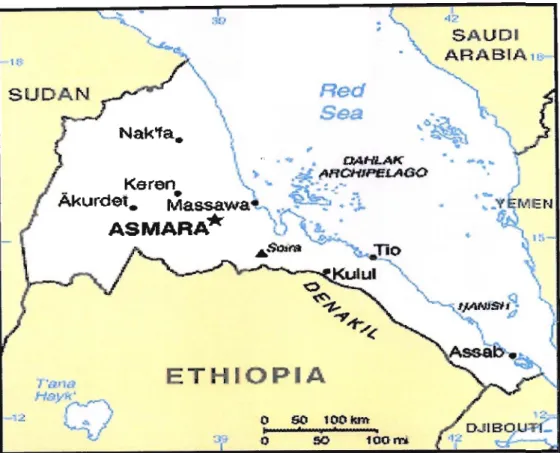
COUNTRY PROFILE
ETHI,OPIA
HISTORICAL REVIEW OF ERITREAN FISHERIES
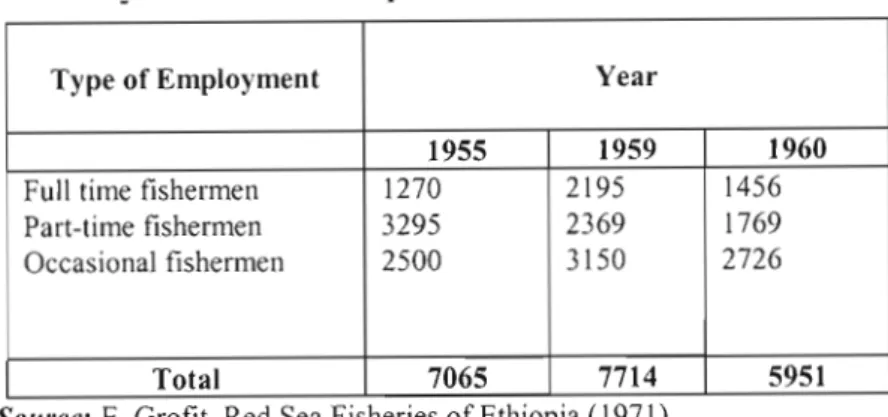
As shown in the figures below (Figures 3.2 and 3.3), the main sources of fish in Eritrea are artisanal and industrial fisheries. Artisanal fishing is recognized as a major employer in the coastal region, which should also be developed to improve the standard of living in the coastal region.
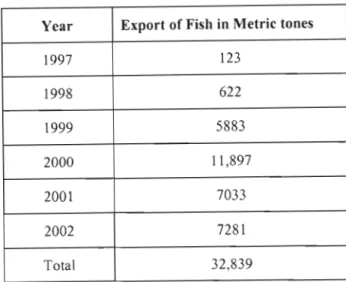
FISHERY EXPORTS IN ERITREA
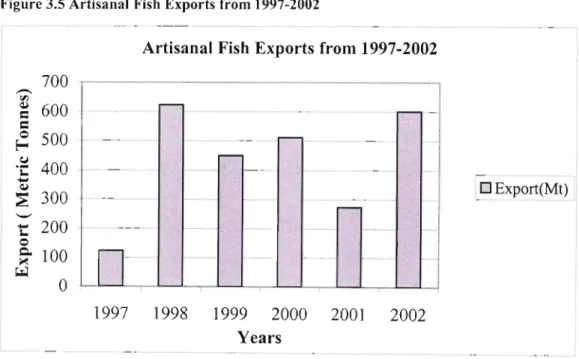
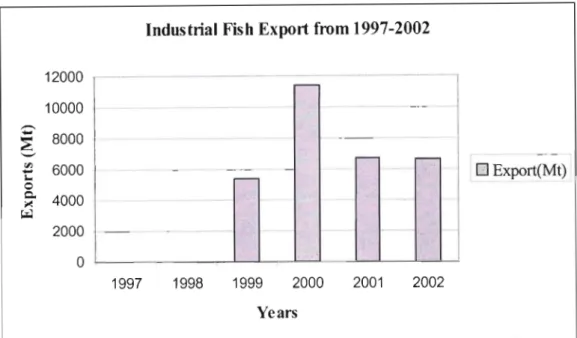
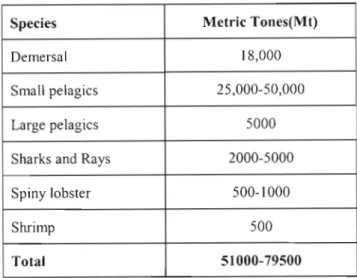
Since 1991, the Ministry of Fisheries (MoF) has taken steps to revive the country's fishing industry and increase fish catches. The contribution of artisanal and industrial fishing to the country's total fish exports is shown in Figures 3.5 and 3.6 below.
COMPANY PROFILE
To rehabilitate the fish export business, and since the Ministry of Fisheries is needed as a policy-making body, the company transferred to the Navy and restarted operations as an autonomous business entity in January 2002. The product lines produced at the company include: Fresh fillets (vacuum packed/skin packed) and frozen fish (whole/guts) for the export market and spiny lobster (fresh/frozen) and shrimp (fresh/frozen) for the local market.
GOVERNMENT'S FISHERY POLICY
SUMMARY
The company's main export targets are the Netherlands, Germany, England, Italy and the US, which are characterized by strict regulations on imported fishery products. The next chapter discusses the fish quality and safety requirements of the importers and the quality and safety policy of the EMPC.
INTRODUCTION
THE NETWORK MODEL
The design of the network model not only benefits the focal finn, which is EMPC, but also the other actors, FIQCD and the EU inspectors in the model. The networking among these actors creates adaptations and familiarity with the parties, which means mutual orientation.
THE ERITREAN MARINE PRODUCTS COMPANY (EMPC)
FISH INSPECTION AND QUALITY CONTROL DIVISION
- Inspection Unit
- Post Harvest Research, Standards and Training Unit
- The Coordinator
A defect in one of these requirements leads to the deterioration of the quality of the final product. The subdivision also reports the results of the audit to the head of the Division to receive a.
THE FOOD AND VETERINARY OFFICE (FVO)
The competent authorities monitor and enforce this responsibility through the operation of national surveillance and control systems; and the Commission concentrates on evaluating the ability of competent authorities to deliver these systems through audits and inspections at national level. In this case, it should be clear that the task of the FVO is not to evaluate the performance of individual plants or enterprises, but to assess and report on how the relevant authorities in member states or third countries fulfill their responsibility to ensure that community legislation is properly implemented in their areas.
THE EXPORT REQUIREMENTS OF EU COUNTRIES
Based on the results of inspection services provided to Eritrea in April 2003, there is an optimistic expectation that the country will be a List I exporter in the near future. Thus, imports from third countries carry an identification mark with the establishment's license number so that the source of the fishery product can be easily traced.
GENERAL QUALITY POLICY OF THE EMPC
- General quality statement ofERI-Fish
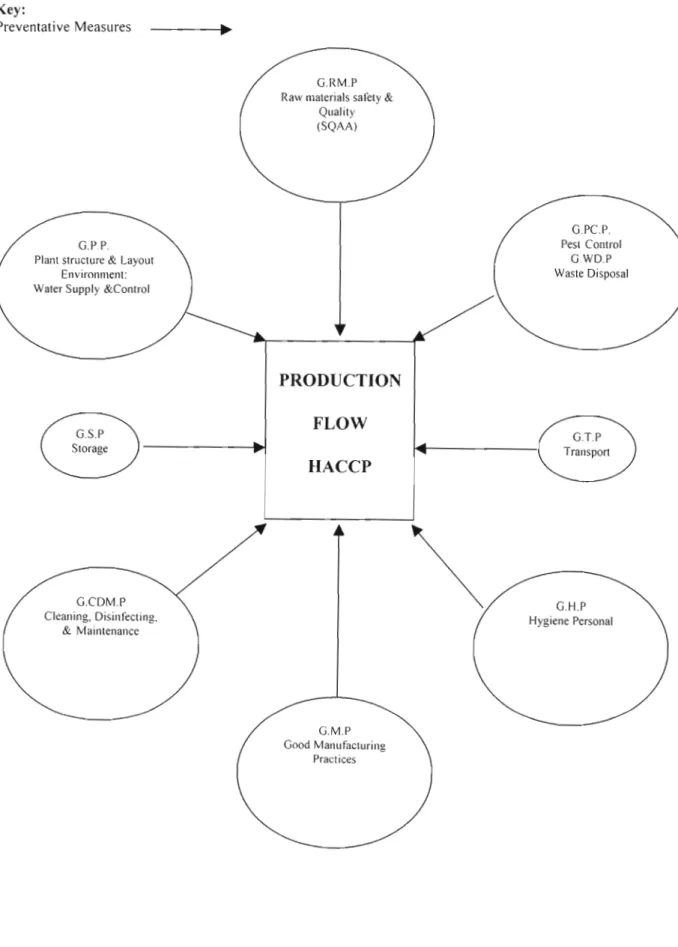
Based on ISO 9002, each category of the good practices is structured in three levels in which level one includes the policy and its objectives, level two deals with procedures and level three with instructions. The main contents of the nine categories of Good Practices can be summarized in the following paragraphs.
Good Plant Maintenance and Water Control Practices
- Good Plant and Maintenance Practices
- Good Potable Water Control Practices
The Maintenance Engineer is responsible for implementing and maintaining the plan and also reports weekly the maintenance, defect and repair log to the Plant Manager with a copy to the QM. The QM performing a microbiological and physicochemical test is responsible for implementing, maintaining and verifying this practice.
Good Raw Materials Practices
The purpose of the plan is to ensure that the water that comes into contact with fish and/or fish contact surfaces, or that is used in the production of ice, is drinkable and safe, in accordance with the Drinking Water Regulations of Legal Notice No. In consultation with the competent authority the QM selects and organizes the disinfectant to make the water safe and drinkable.
Good Cleaning and Disinfecting Practices
Good Personal Hygiene Practices
Good Pest Control and Practices
Good Manufacturing Practices
Good Storage Practices
- Cleaning and Disinfecting Practices- SSOP Item 2
- Prevent Cross Contamination - SSOP Item 3
- Personal Hygiene- SSOP Item 4
- Adulteration- SSOP Item 5
- Chemicals- SSOP Item 6
- Employee Health- SSOP Item 7
- Pest Control- SSOP Item 8
- SAFETY POLICY OF THE EMPC COMPANY
- RELATIONSHIP OF THE FIQCD AND THE EU INSPECTORS
- RELATIONSHIP BETWEEN THE EMPC AND FIQCD
Thus, the transport medium is selected according to the type of product to be transported. The objective of this process is to ensure the safety of water that comes into contact with food or food contact surfaces or is used in the production of ice.
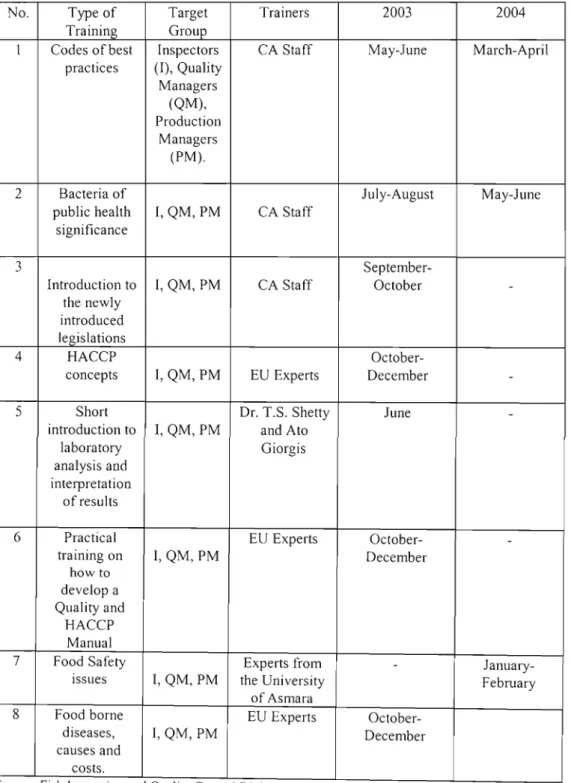
The competent authority shall monitor the overall performance of the processing plants through an inspection service carried out at appropriate intervals. These activities help the BA to gather general background information about the installation/equipment to be inspected and the extent to which it meets the requirements.
Vessel inspection: The vessel inspection activity by the CA collects the vessel inspection background data, which provides them with general information about the
- CONSTRAINTS OF THE EMPC IN QUALITY FISH EXPORTING
- SUMMARY
- CONCLUSION
- RECOMMENDATIONS
- Policy Level Recommendations
- Industry level recommendations
- Firm Level recommendations
This results in the likelihood of contamination of the finished products consequently weakening its quality. In the study, a lack of sufficient expertise of the HACCP concepts and applications was observed at the processing firms. However, one of the major obstacles in the OBPC is a lack of commitment to quality assurance measures.